Tools
Klein vs Milwaukee: Non-Contact Voltage and IR Temperature Sensors Compared
Two combo voltage testers and infrared thermometers with identical specs, slightly different execution, and a small price gap that helps decide the winner.
Introduction
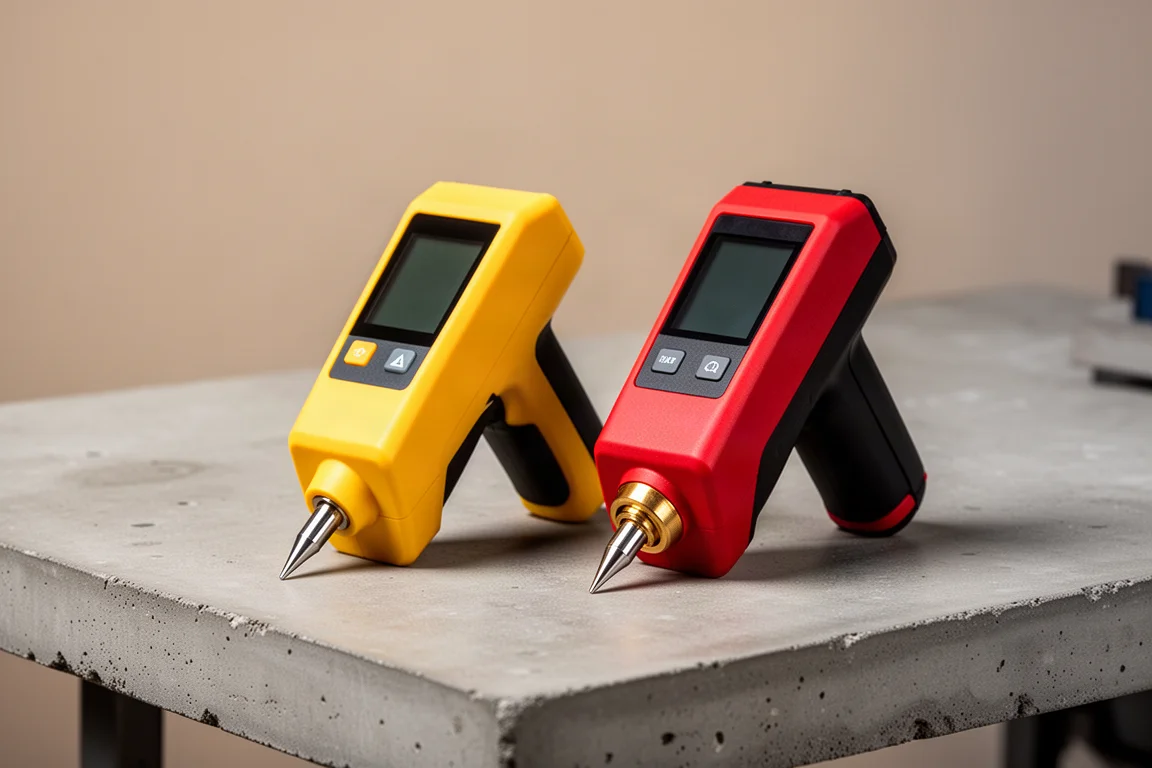
Some product matchups are almost suspiciously close. Two combination tools that combine a non-contact voltage sensor with an infrared temperature sensor land with the exact same operating range of -22 to 482 degrees Fahrenheit and the exact same voltage detection range of 12 to 1,000 volts. One is the Klein version, the other the Milwaukee equivalent, and once you get past the color scheme, they are remarkably similar devices.
That similarity makes the comparison genuinely useful: the differences are small, real, and come down to fit, finish, audible feedback, and a few degrees of temperature reading. Here is how they stack up.
Design, Feel, and Everyday Handling
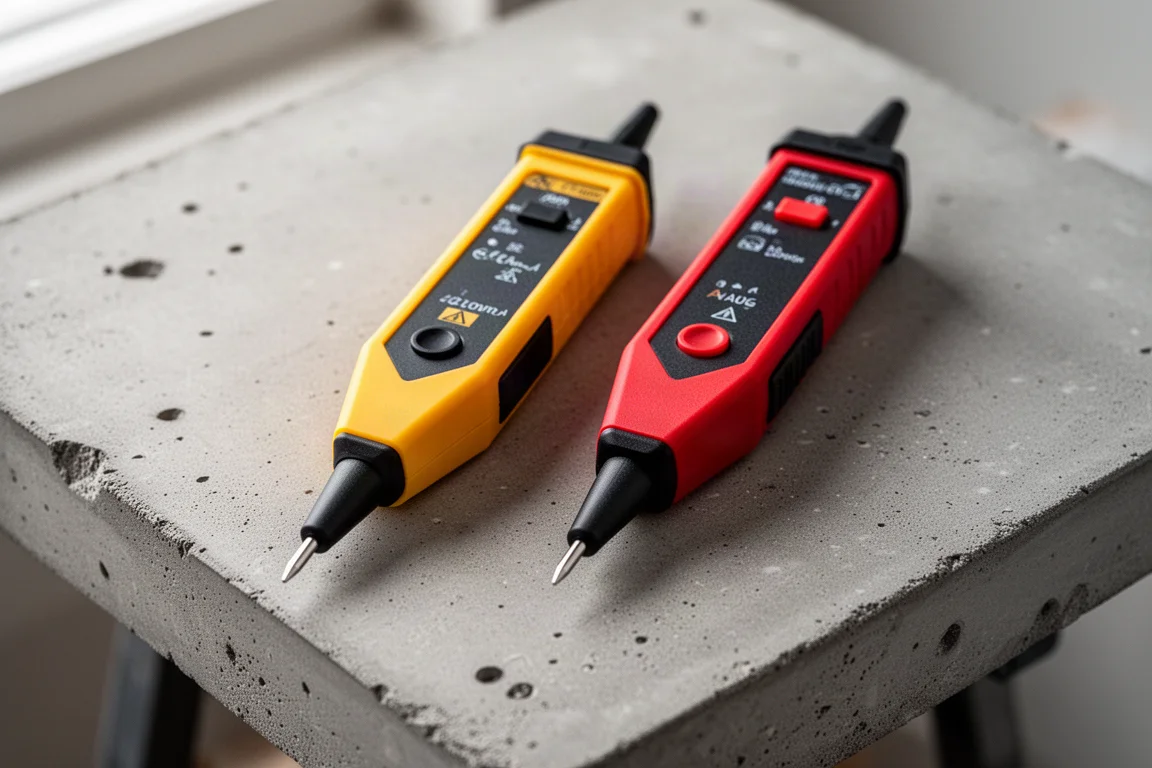
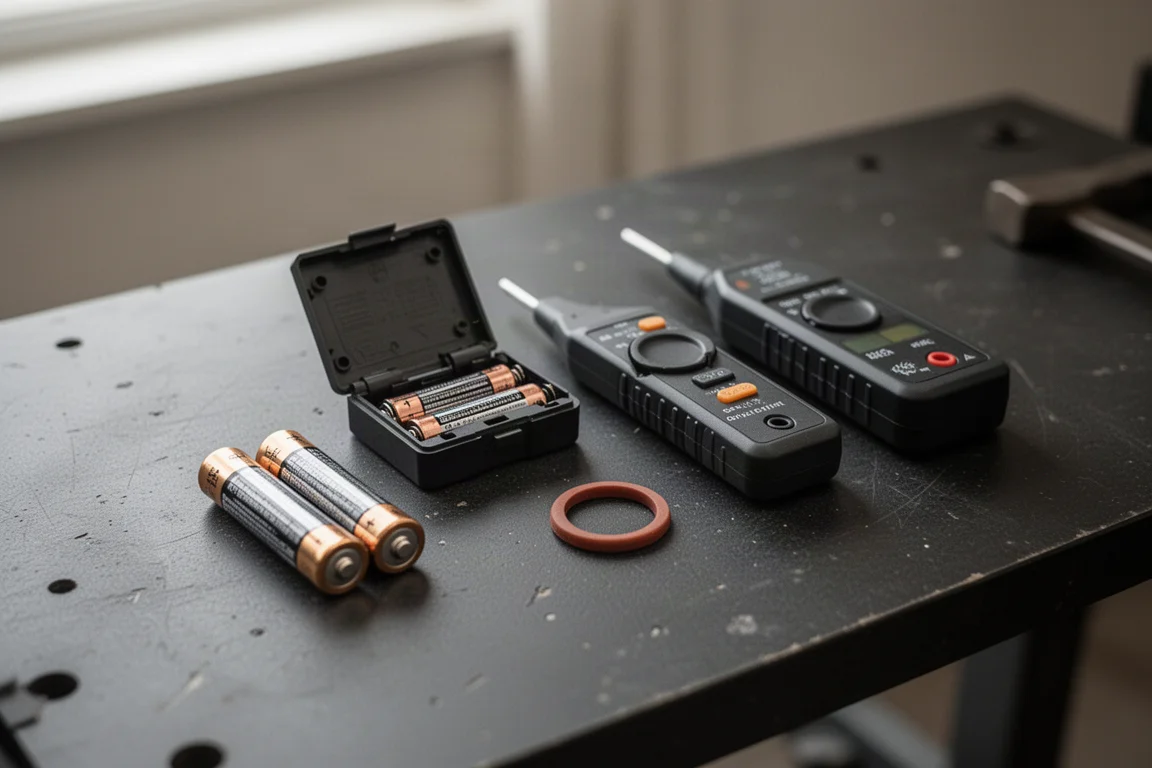
Both tools share a trapezoid-shaped front end with a sensing tip, two-button operation, a pocket clip, and a housing that opens with a twist to reveal the battery compartment. Each runs on two AA batteries, and each has an O-ring seal on the removable cap. The Milwaukee adds a small gold accent around the sensor eye, which is a nice visual touch.
The Klein’s cap removal feels noticeably more solid and snug, and that matters. A looser cap could theoretically pop open in a tool bag if it took a knock just right, and the spring-loaded battery contact inside has enough force to launch a battery a surprising distance. The Klein’s fit makes that less of a worry. Pocket clips on both are equally average, and the Klein’s bright yellow finish is easy to spot in a cluttered drawer, even if it is not the orange people might expect from the brand’s family of tools.
Voltage Detection Performance
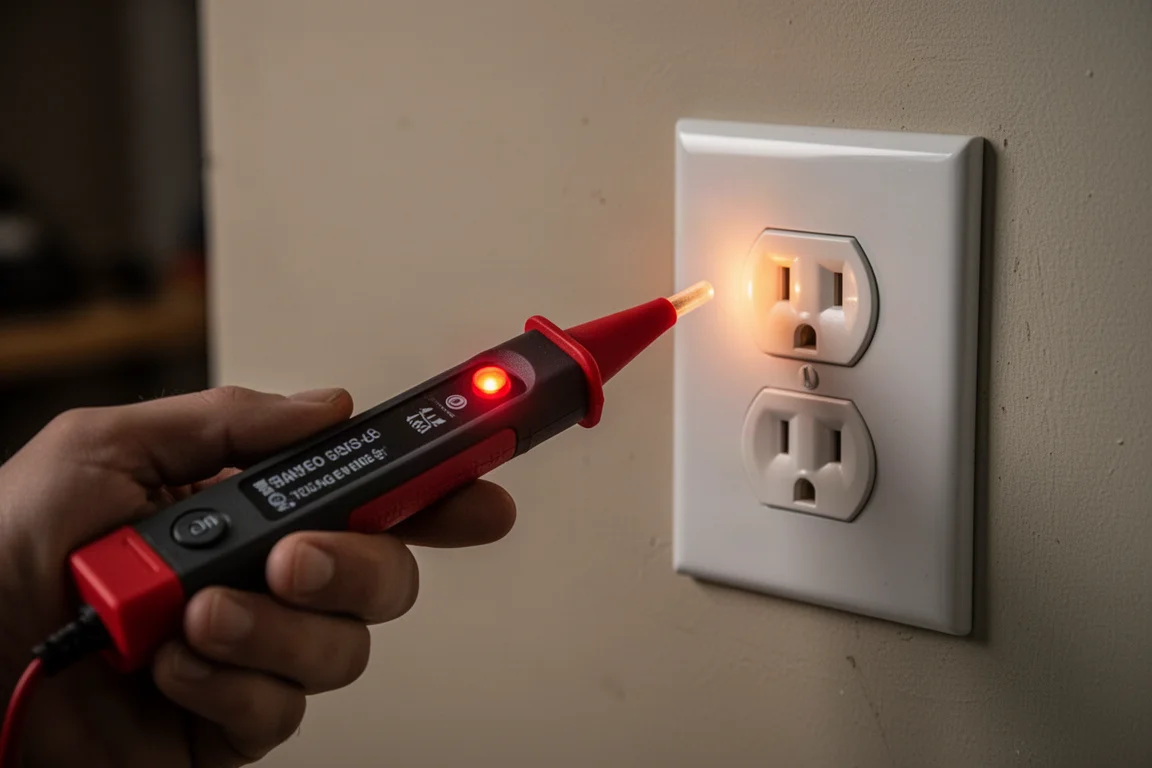
In voltage sensing mode, both tools perform well. Pressing the voltage button activates an indicator light on each: blue on one, green on the other. Held near a live wire, both stay lit to confirm detection, and both handled the test without any hesitation.
There is one meaningful difference in feedback. The Klein’s audible alert is nice and loud, while the Milwaukee’s audible tone is noticeably quieter. For anyone working around noisy job sites or machinery, the louder alert is easier to miss. The green indicator also reads as more intuitively obvious than the blue one. Neither tool includes a flashlight, so if you want one you are paying for a separate device.
Temperature Accuracy in Practice
In infrared mode, both devices project a laser point and display a temperature reading. Pointing both at the same surface at the same time showed readings within a couple of degrees of each other in many tests, and roughly within a degree of a reference temperature gun in the best cases.
Results varied by material. On plastic from a tool case, the Klein read 65 while the Milwaukee came in higher. On a polymer pouch, readings of 64, 61, 64, and 63 bounced around a bit. On wood, one test produced 66 and 59, then 64 and 69, before settling to a much closer 63 and 62. Across the tests, the Klein’s readings tracked slightly more consistently.
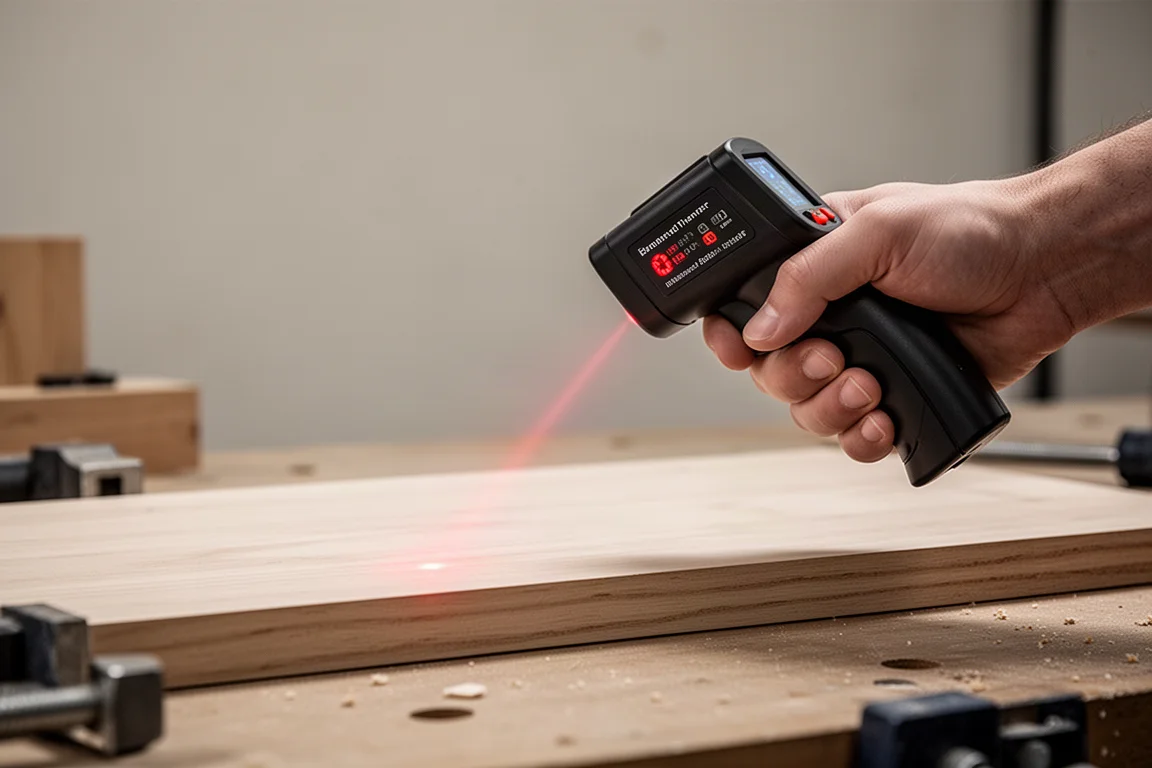
The honest takeaway: treat the temperature function as a close-enough indicator rather than a precision instrument, and do not count on either sensor being accurate to better than a couple of degrees. For quick spot checks around the house or shop, that is usually fine.
Which One Should You Buy
Both tools sell at a modest price, with the Milwaukee at about $44 and the Klein at around $39 and change, and both go on sale regularly. Functionally, either one is plenty good: same voltage range, same temperature range, same battery type, same basic operation.
The Klein gets the nod. It is a bit less expensive, it has a long track record with no real problems, the battery compartment fits more securely, and the louder audible alert is genuinely useful for voltage detection. The Milwaukee’s quieter alert and slightly jumpier temperature readings put it just behind, though it remains a solid choice, particularly if you find it discounted.
Conclusion
These two sensors are near twins on paper, and neither one disappoints in use. If you want a non-contact voltage tester with a bonus infrared thermometer, either will serve you well. The Klein’s lower price, sturdier battery fit, and louder alert make it the slight favorite, while the Milwaukee is a fine alternative if the price is right. Just remember that the temperature readings on both are approximate, and neither includes a flashlight.
Product link
View more details for Klein Non-Contact Voltage and IR Temperature Sensor
This product is mentioned in the review. Check the specifications, options, and compatibility before buying.
View more details for Klein Non-Contact Voltage and IR Temperature SensorFurther reading
Related Reviews

Tools
Best Contractor Grade Tape Measures 2026: Eight Models Tested Head to Head
We tested eight contractor grade tape measures from Milwaukee, DeWalt, Crescent Lufkin, Tajima, Stanley, Irwin, Gelan, and Craftsman to find the best value and performance.

Tools
Best Precision Screwdriver Sets 2026: Manual and Electric Options Compared
We compare 19 precision screwdriver sets, from budget manual kits to electric drivers, to find the strongest bits and best value.

Tools
Best Stud Finders 2026: Five Popular Models Put to the Test
We tested five popular stud finders on drywall, firewall, and lath and plaster surfaces to see which ones really find studs and avoid false readings.