Tools
Klein All-in-One Electronics Screwdriver Kit vs iFixit Toolkit: Which One for iPhone Repairs?
A hands-on comparison of two electronics screwdriver kits, focused on the one bit that matters most for opening an iPhone: the P2 pentalobe.
Introduction
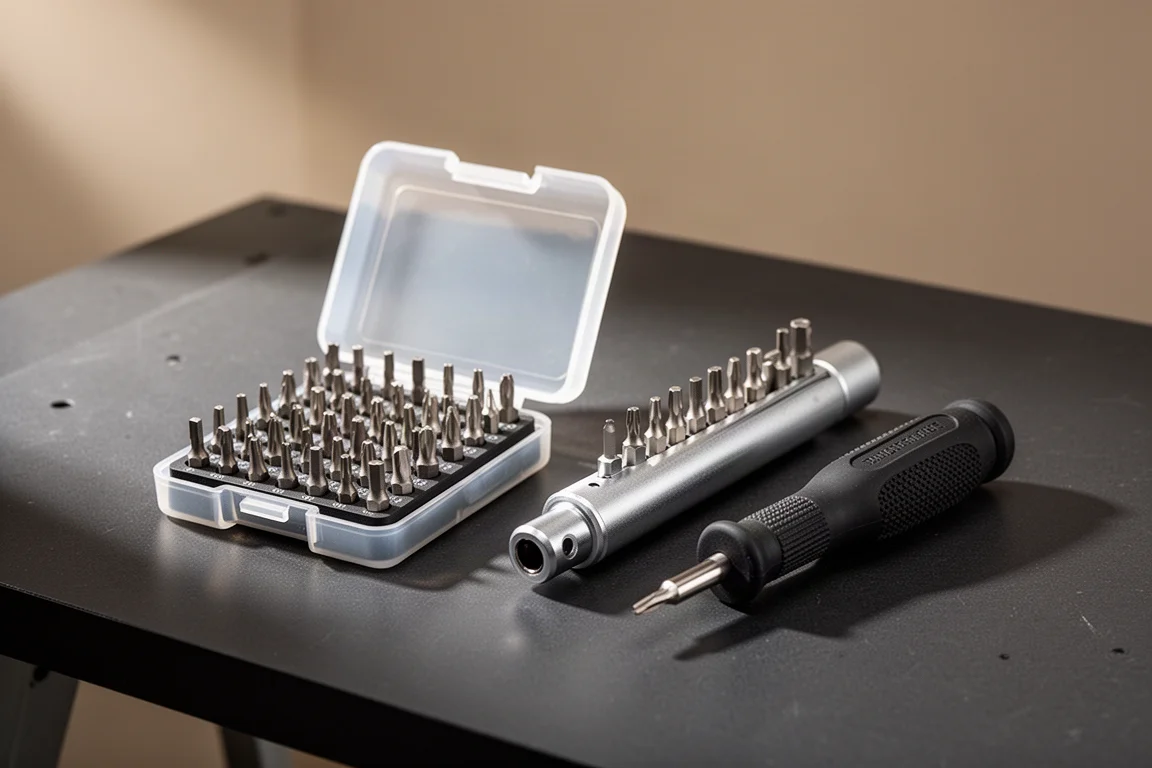
When a phone repair project calls for a new toolkit, the choice usually comes down to a dedicated repair brand kit versus a general-purpose electronics driver set. That is exactly the situation here: a broken iPhone screen needed replacing, and two kits were on the bench. The iFixit toolkit that ships alongside replacement parts, and the Klein all-in-one electronics screwdriver kit, picked up as an alternative worth testing.
Both kits promise to cover Apple devices, and both look well made on the surface. But the real test came down to a single, critical bit.
The Test: Opening an iPhone
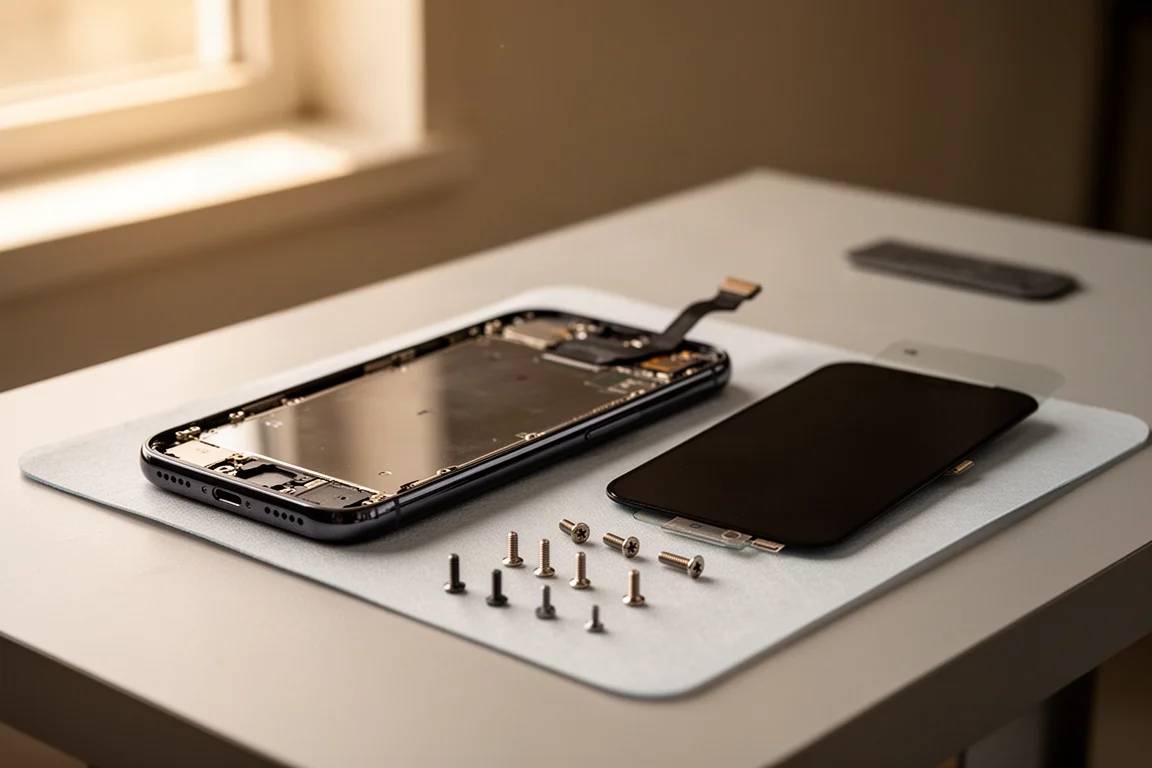
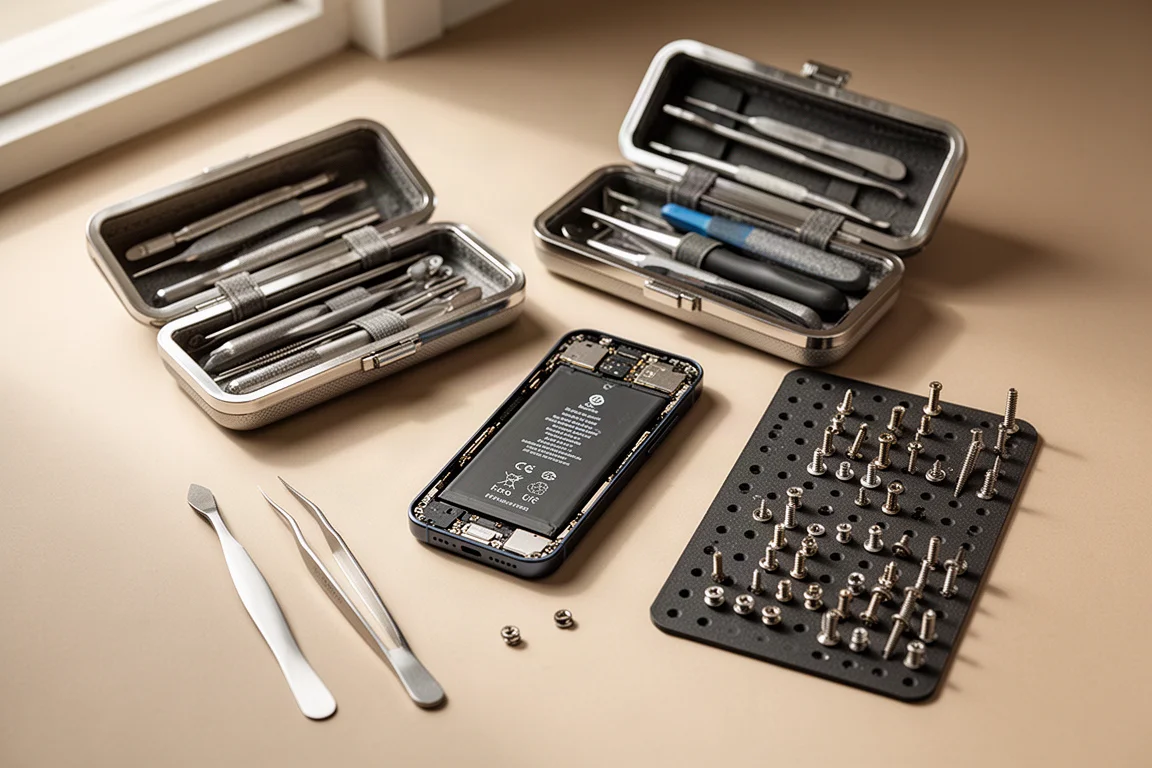
The job itself is straightforward. An iPhone in otherwise good condition with a broken screen and a failed digitizer, a replacement part ordered along with a small toolkit that includes the tools needed to swap screens. The critical tool is the P2 pentalobe driver, the bit that removes the two small screws at the charging port and provides access to the inside of the phone. Without it, nothing else matters.
That bit is effectively the skeleton key for Apple products, so any kit claiming Apple compatibility has to get it right.
Klein All-in-One Electronics Screwdriver Kit
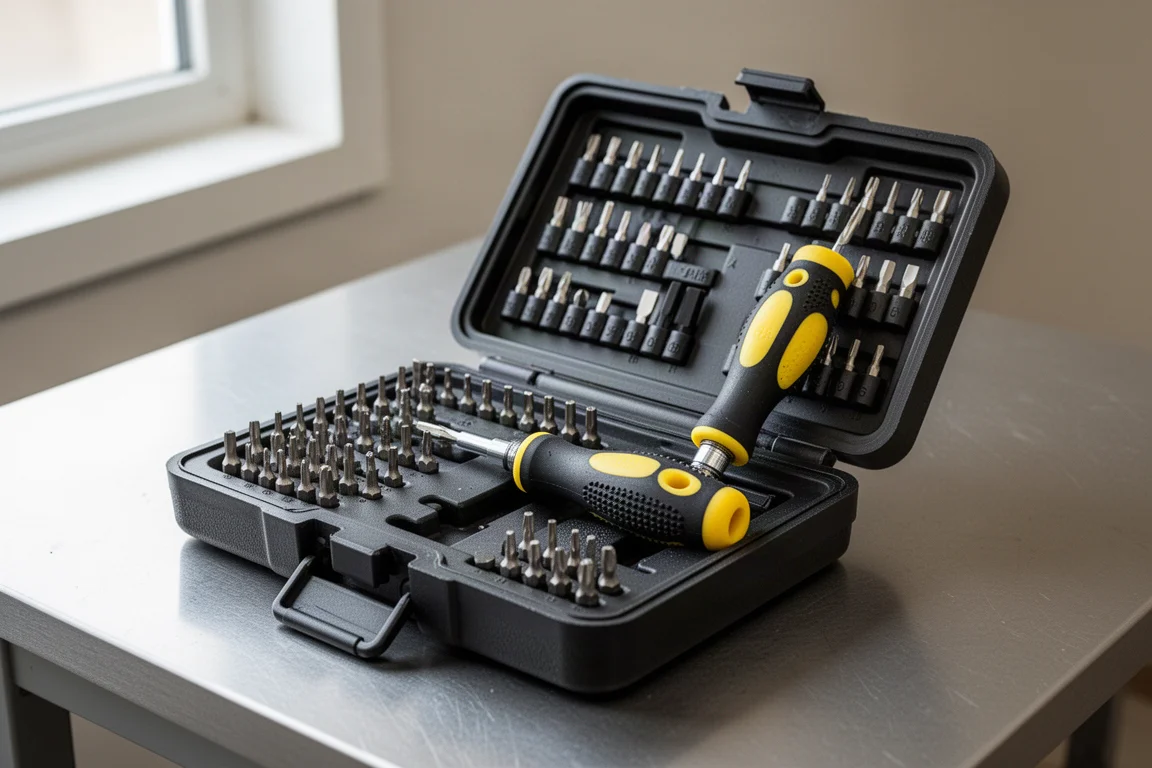
The Klein kit makes a strong first impression. The fold-out case feels substantial, with good, heavy plastic and an automatic latch that locks the case shut. The handle is a genuine highlight: comfortable, with a smooth spin that suits long precision work. The kit includes 39 bits, including Phillips, hex and security hex, slotted, Torx, square, triangle, and a few other patterns, plus a reversible shaft that can be flipped to make the driver long or short depending on the job.
The packaging even calls out Apple product compatibility, including the P2 pentalobe bit. That claim is what sold the test.
Where the Klein Kit Falls Short
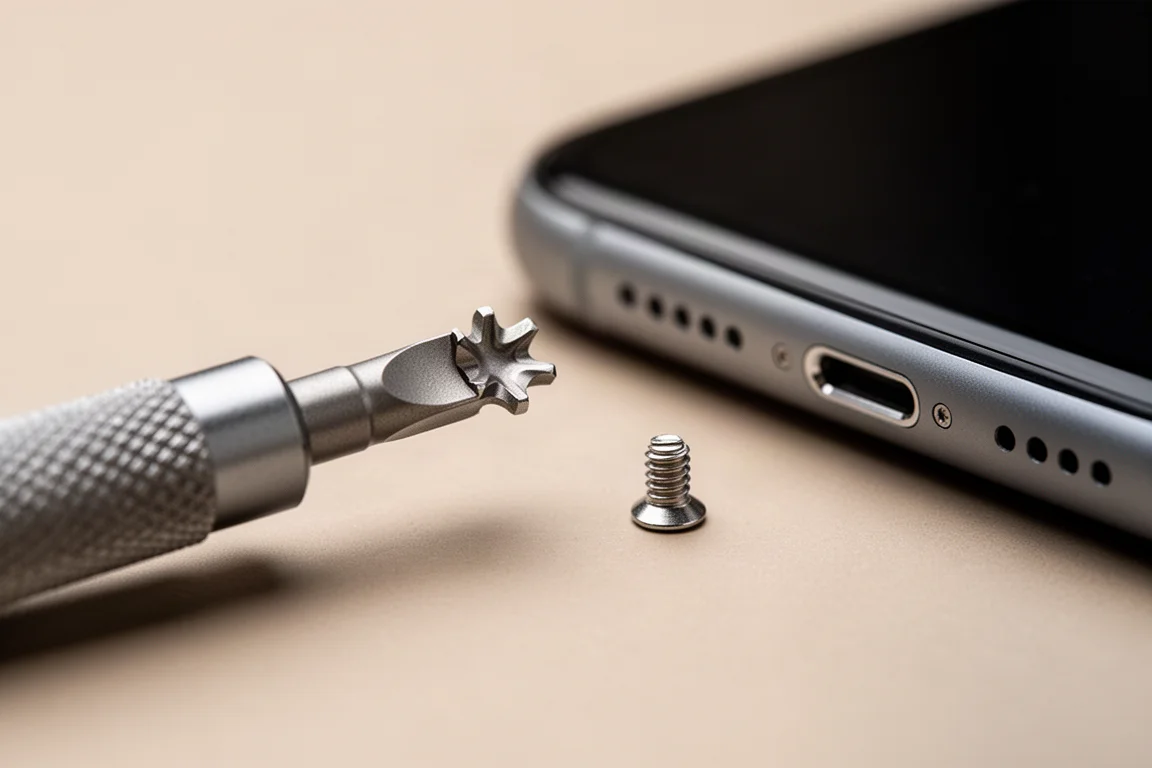
The P2 bit spins in the pentalobe screws. It does not grip. Swapping to the bare bit without the handle makes no difference: the tip is simply too large for the screw, with no purchase at all. This is the one bit required to begin the entire repair, and on this kit it does not fit.
Bit Size Comparison
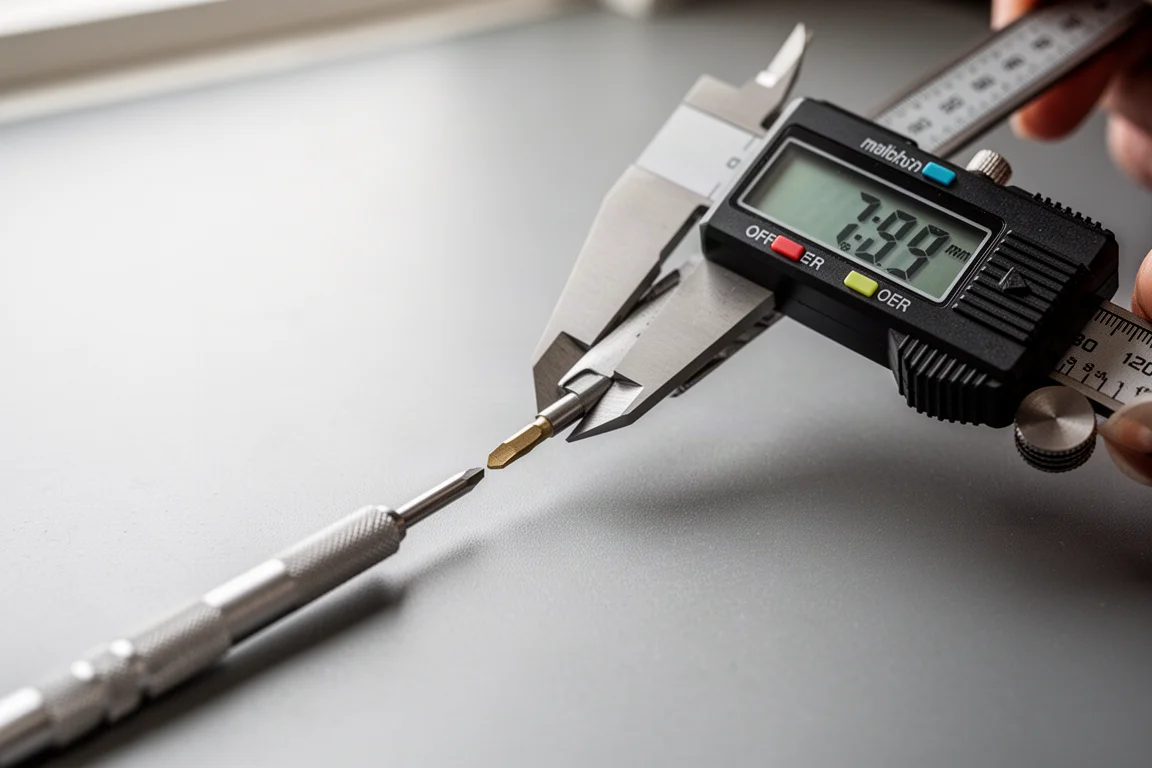
Measurements confirm what the spinning suggested. The iFixit P2 bit measures around 3.94mm across the shank, while the Klein bit measures about 3.5mm. At the working tips, the Klein pentalobe measures roughly 0.93mm across, noticeably larger than the iFixit equivalent, which seats firmly in the screw with almost no free play. The iFixit P2 drops straight in and turns the screw solidly, so much so that it barely turns under finger pressure alone.
What the iFixit Toolkit Gets Right
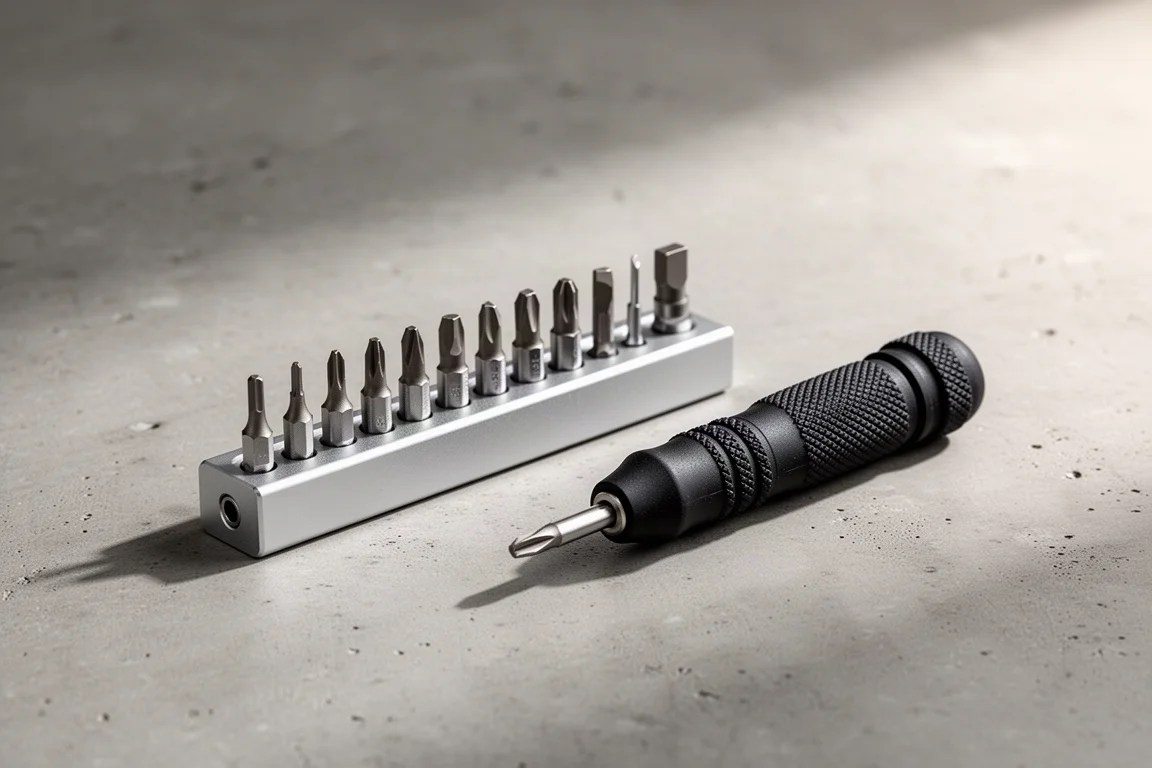
The iFixit kit does what it is advertised to do. Its P2 pentalobe bit is correctly sized, seats securely in the port screws, and provides reliable access to the phone. The aluminium bit holder is less appealing than Klein’s handle, and some may find the older, compact driver sets charming by comparison, but when the job is getting into an iPhone, the correct bit size is the whole game.
Which Kit Should You Buy?
For Apple phone repairs, the recommendation is clear: the iFixit toolkit is the safer purchase. Its P2 works as expected, and the kit is designed around exactly this kind of repair. The Klein kit is harder to fault on build quality. The handle, the case, the locking mechanism, and the reversible shaft are all genuinely nice, and at around $29 it seems like a solid value on paper. But a kit that advertises Apple bits and cannot open an Apple product with its own P2 has a fundamental problem. Until that bit is fixed, the iFixit kit is the one that belongs on the workbench.
Conclusion
This comparison came down to a single measured difference. Both kits are well built, but only the iFixit toolkit includes a correctly sized P2 pentalobe bit, and that bit is the gatekeeper to any iPhone repair. The Klein kit earns points for feel, finish, and thoughtful engineering, yet it fails the one task it claims to support. If your projects involve opening iPhones, size up the P2 before you buy.
Further reading
Related Reviews

Tools
Best Contractor Grade Tape Measures 2026: Eight Models Tested Head to Head
We tested eight contractor grade tape measures from Milwaukee, DeWalt, Crescent Lufkin, Tajima, Stanley, Irwin, Gelan, and Craftsman to find the best value and performance.

Tools
Best Precision Screwdriver Sets 2026: Manual and Electric Options Compared
We compare 19 precision screwdriver sets, from budget manual kits to electric drivers, to find the strongest bits and best value.

Tools
Best Stud Finders 2026: Five Popular Models Put to the Test
We tested five popular stud finders on drywall, firewall, and lath and plaster surfaces to see which ones really find studs and avoid false readings.