Running Shoes
Kiprun Kipstorm Tempo vs Hoka Mach 7: Two Versatile Daily Trainers Compared
Two versatile daily trainers that lean towards speed, compared on design, fit, ride feel, and value to help you pick the right one.
Introduction
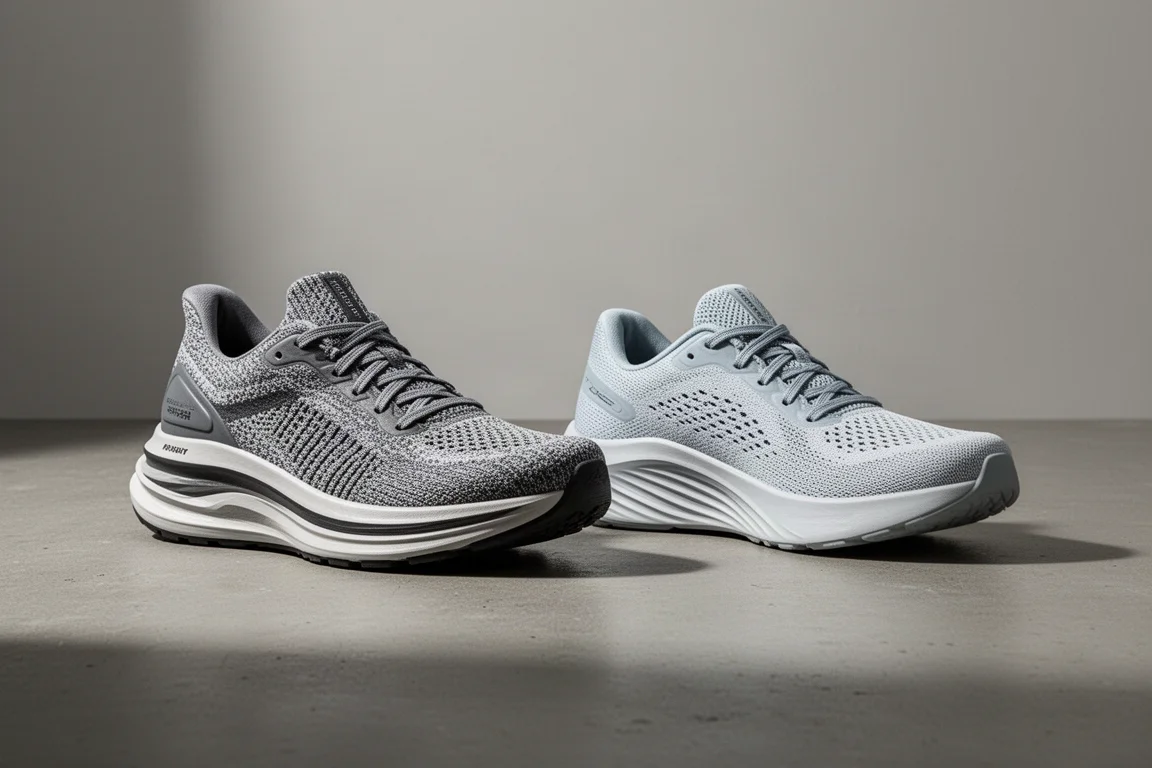
The Kiprun Kipstorm Tempo and the Hoka Mach 7 are two versatile daily trainers that lean a bit more towards speed, yet both proved effective across a wide range of runs during testing. They just go about it in very different ways, and understanding that difference is the key to choosing between them.
Specs and Pricing at a Glance
The Kipstorm Tempo costs £120 in the UK or $170 in the US, while the Mach 7 will cost you £140 in the UK or $145 in the US. The Kipstorm Tempo weighs 234 g (8.3 oz) in a UK 8.5, which is a US 9.5, while the Mach 7 weighs 225 g (7.9 oz) in a UK 9, also a US 9.5. Despite one being a much bigger shoe, the weights are surprisingly close.
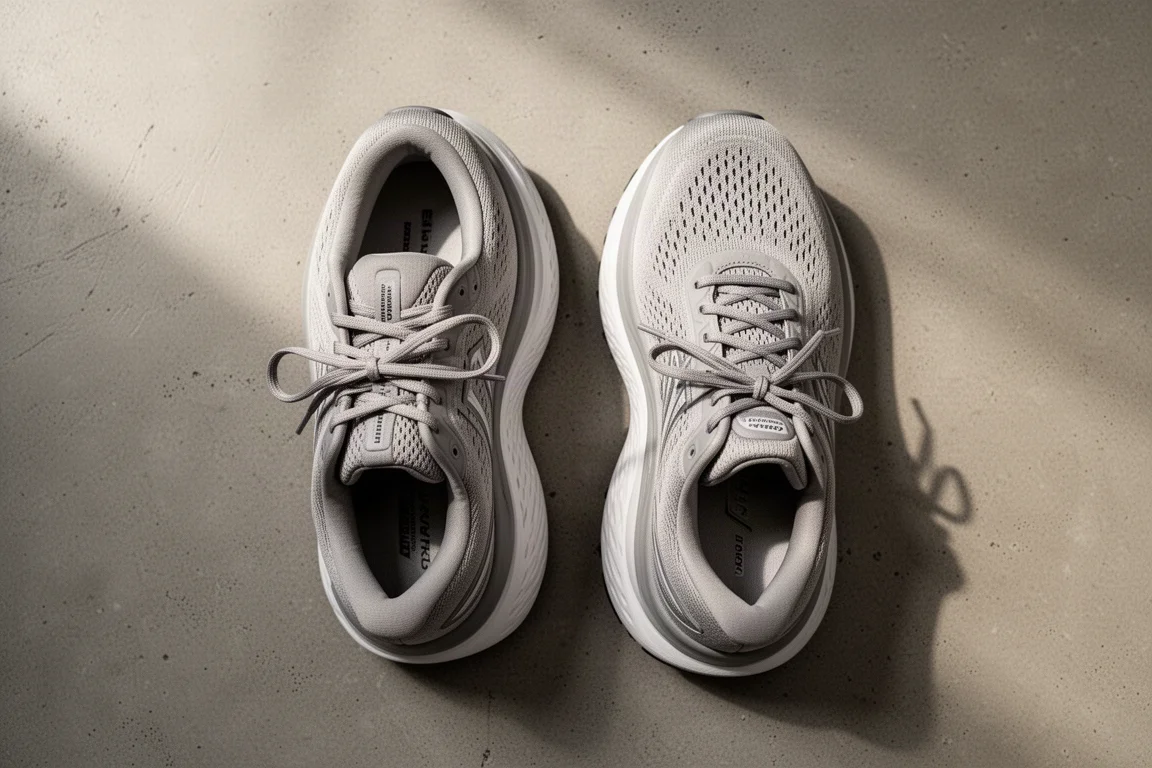
The Kipstorm Tempo has an 8 mm drop and a high stack of 45 mm at the heel and 37 mm at the forefoot. The Mach 7 has a 5 mm drop and is a relatively low stack shoe by today’s standards, sitting around 38 to 39 mm at the heel. It is also worth noting that the Mach 7 builds closely on the Mach 6 platform, so much of what applies here applies to the Mach 6 too, which can often be found more cheaply in sales.
Design and Construction
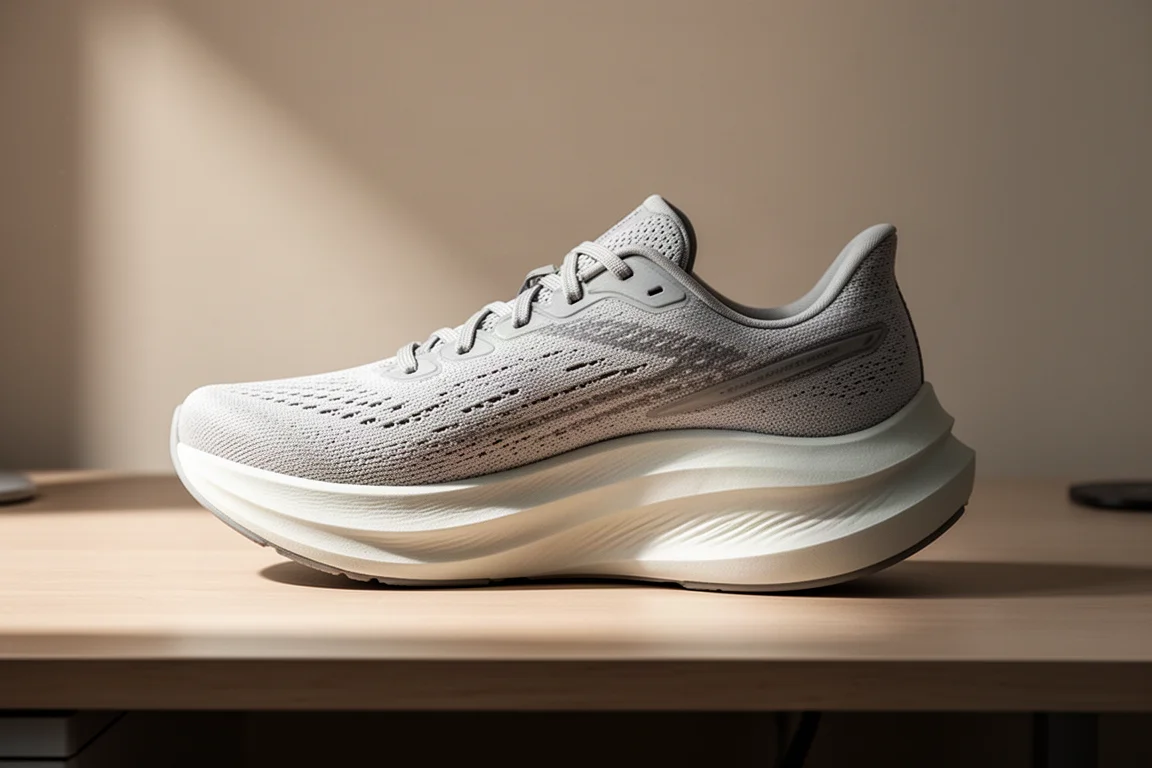
The Mach 7 keeps things simple. It has a lightweight mesh upper with a bit of padding around the heel and a small internal heel counter, making for a minimal, fuss-free package. The midsole is super critical EVA with Hoka’s classic rocker geometry, and the outsole uses two different rubbers: a sticky rubber for most of the shoe and a higher abrasion rubber on part of the heel for added durability.

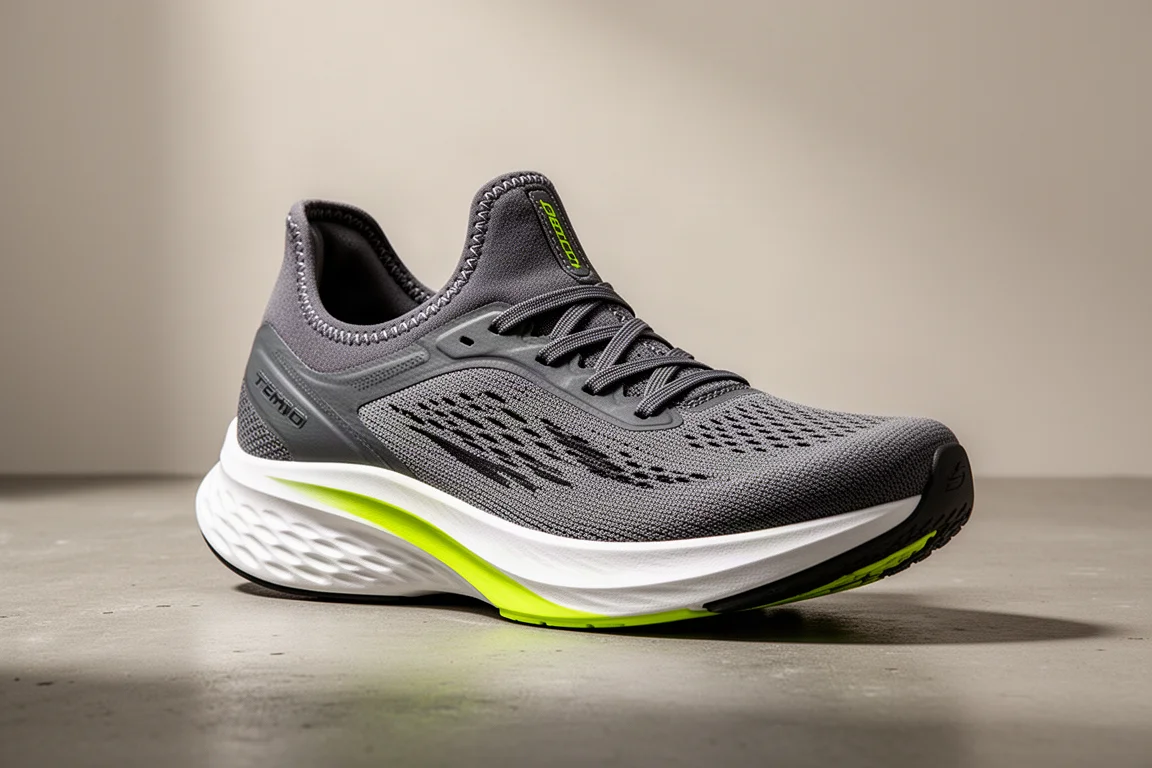
The Kipstorm Tempo is a more involved design. It has a knit upper with a slightly fussier overall feel, a booty-style tongue with a bit of sponginess, and a plastic clip around the back for stability, while remaining fairly lightweight. The midsole layers two foams: Fasttek Plus, an aliphatic TPU, on top, with a compression molded EVA layer underneath that adds rigidity and stability. The outsole offers good rubber coverage at the forefoot plus strips covering the heel and lateral midfoot, in a thick layer that should hold up well.
Fit and Sizing
The Mach 7 fits true to normal size, the same size used across the Hoka range and most running shoes. It is not the widest shoe out there, but a wide version is available, and the fit overall is fuss-free.
The Kipstorm Tempo runs long, so going half a size down is the safer bet, which is a common adjustment for Kiprun shoes in general. The knit upper is not to everyone’s taste, with some finding it fussy and hard to get into, but during testing it caused no trouble, and the plastic clip at the back proved no irritant either.

Ride and Performance
The Mach 7 is the nimbler of the two. It relies heavily on its midsole rocker, and the super critical EVA foam, while not as lively as modern super foams, still has a bit of pop. Combined with the lightweight build, it works well across a wide range of paces and distances, from easy and steady daily runs to a 15 mile long run with marathon-pace sections. The rocker rolls you smoothly onto the forefoot and the shoe feels like an extension of the foot, with more ground connection than the Kipstorm Tempo.
The Kipstorm Tempo is a much bigger shoe underfoot and loses some nimbleness, but the lightweight foam keeps the weight close to the Mach 7. The ride is bouncier thanks to that aliphatic TPU midsole, and despite the firm-feeling EVA layer, the shoe runs slightly softer than expected and transitions very well from heel to toe, with a bouncy feeling off the forefoot. It handled easy runs, a 15 mile long run, short reps, and tempo workouts impressively, maintaining fast paces over longer sessions.

The Mach is the more naturally stable shoe thanks to its lower profile, wider design, and mild rocker. The Kipstorm Tempo is not worryingly unstable though; its base is not the widest, but there was never real concern, even on uneven pavements.
Buying Advice: Which One Should You Choose?
In the UK, this is a fairly easy call: the Kipstorm Tempo at £120, often reduced to £99, is an absolute steal for a shoe that competes with the best super trainers on the market. In the US, the calculus shifts, since the Mach 7 at $145 is the better value there, while the Kipstorm Tempo at $170 is a step up that is probably worth the extra outlay for most people. In the US, the Kipstorm Tempo is also worth comparing against the plated Hoka Mach X 3, which delivers similar performance but is a bit heavier.
If you prefer a more connected, natural feeling run, the Mach 7 delivers that, though with less energy return than the Kipstorm Tempo. If you got on well with the Mach 6, it remains a valid cheaper alternative while stocks last. For most runners, though, the Kipstorm Tempo is the recommendation: more impressive foams, more cushioning for long runs and workouts, and the more accomplished modern super trainer.
Conclusion
Both shoes are versatile daily trainers that lean towards speed and handle a wide range of runs well. The Kipstorm Tempo is the more modern super trainer with bouncier foam and better value in the UK, while the Mach 7 offers a simpler, nimbler, more ground-connected ride that suits runners who value natural feel. Match the shoe to the ride you prefer, and either will serve you well.
Further reading
Related Reviews

Running Shoes
Best Road-to-Trail Running Shoes: Three Versatile Options for Mixed Terrain
A practical guide to three road-to-trail running shoes that handle both pavement and mild trails, with clear strengths and trade-offs for different runner types.

Running Shoes
Best Running Shoes for Achilles Tendonitis: Three Options Explained
Three running shoes with different heel drops and support features designed to help reduce Achilles tendon pain during walking and running.

Running Shoes
Best Running Shoes for Women: Five Top Choices Ranked
A ranked guide to five women's running shoes, from versatile daily trainers to high-performance racing options, with real strengths and trade-offs for each.