Running Shoes
Kiprun Kipstorm Lab Review: A $350 Hyper Shoe That Struggles to Justify Its Price
Kiprun's top-tier hyper shoe promises elite-only speed, but a hard race-week workout exposed a firm, flat forefoot and questionable value at $350.
Introduction
Kiprun is the house brand of Decathlon, the European sporting goods chain, and for years it built its reputation on value. A few years ago the brand pivoted, telling its designers to create top-tier performance shoes without budget constraints. The result is a growing lineup that includes the non-plated Tempo, the soft and bouncy Kipride Max, and the Kipstorm Elite race shoe. At the very top sits the Kipstorm Lab, a $350 hyper shoe positioned one tier above a super shoe and aimed squarely at rivals like the ASICS Metaspeed Sky, the Adidas Pro Evo, and the Puma Fast-R 3.
The positioning is bold. Kiprun even suggested that the shoe is so aggressive that only seriously fast runners should use it. After putting it through a 3 x 1 mile race-week workout, the verdict is complicated: some genuinely good elements, wrapped around a forefoot experience that never fully delivered.
Who This Shoe Is For
On paper, the Kipstorm Lab targets the fastest end of the market: elite 5K through half marathon racing, and the kind of athlete development programs that Kiprun is building with runners like Jimmy Gressier. But it is worth questioning that framing. Many of the best carbon shoes today still feel good across a wide range of paces, from 5:30 down to 8:30 per mile. A shoe that supposedly only works for 4-minute-mile pace raises an obvious question about who it is actually for.
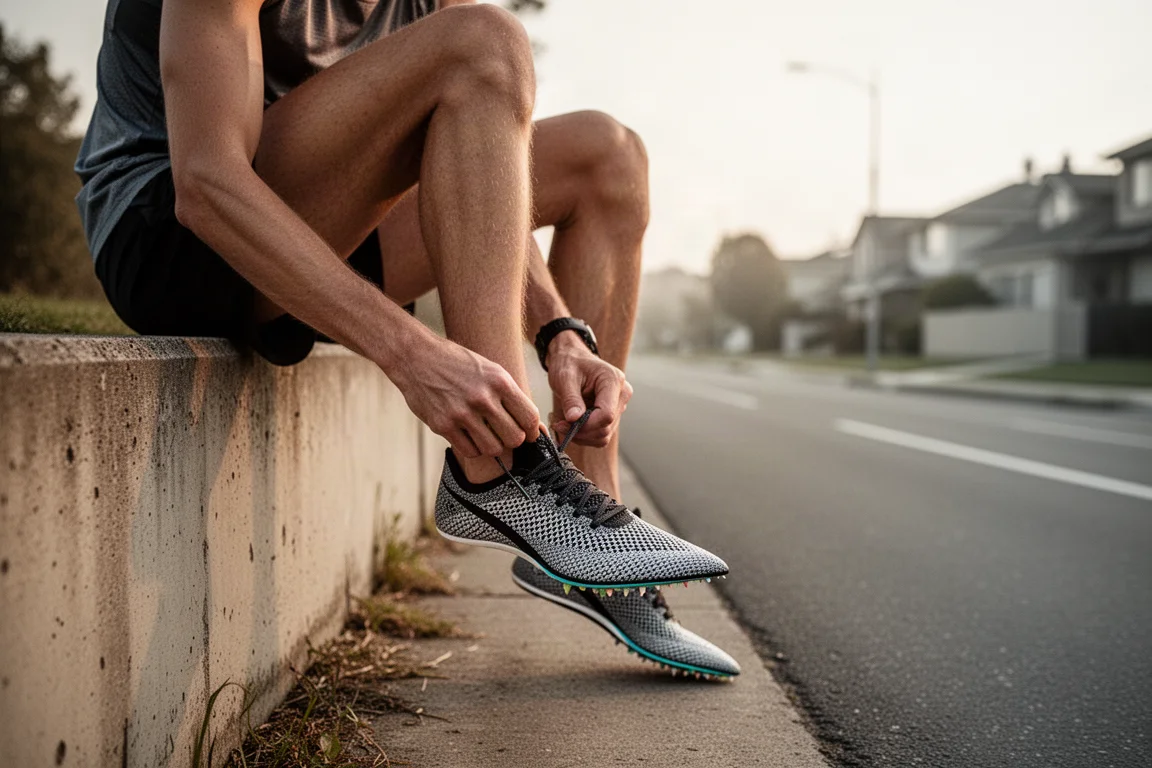
For everyday runners curious about carbon shoes, this is not the entry point. Kiprun’s own cheaper shoes, particularly the Kipride Max, make a stronger case for most people.
Specs and On-Foot First Impressions
The numbers tell an interesting story. In a size 10.5, the Kipstorm Lab weighs about 183.7 g. That is competitive with the Puma Fast-R 3 at 187 g, but well behind the ASICS Metaspeed Sky at 140 g and the Adidas Pro Evo 2 at 149 g. It is also $350, sitting $50 above the Metaspeed Sky while being heavier. The heel stack measures around 36 mm with a 4 mm drop, roughly 4 to 7 mm lower to the ground than the Metaspeed Sky.
The midsole platform is wide, around 82 to 83 mm at the front, and the heel bevel is not the most aggressive in the category. What is aggressive is the toe spring, which juts up dramatically and demands serious power at the front of the shoe.
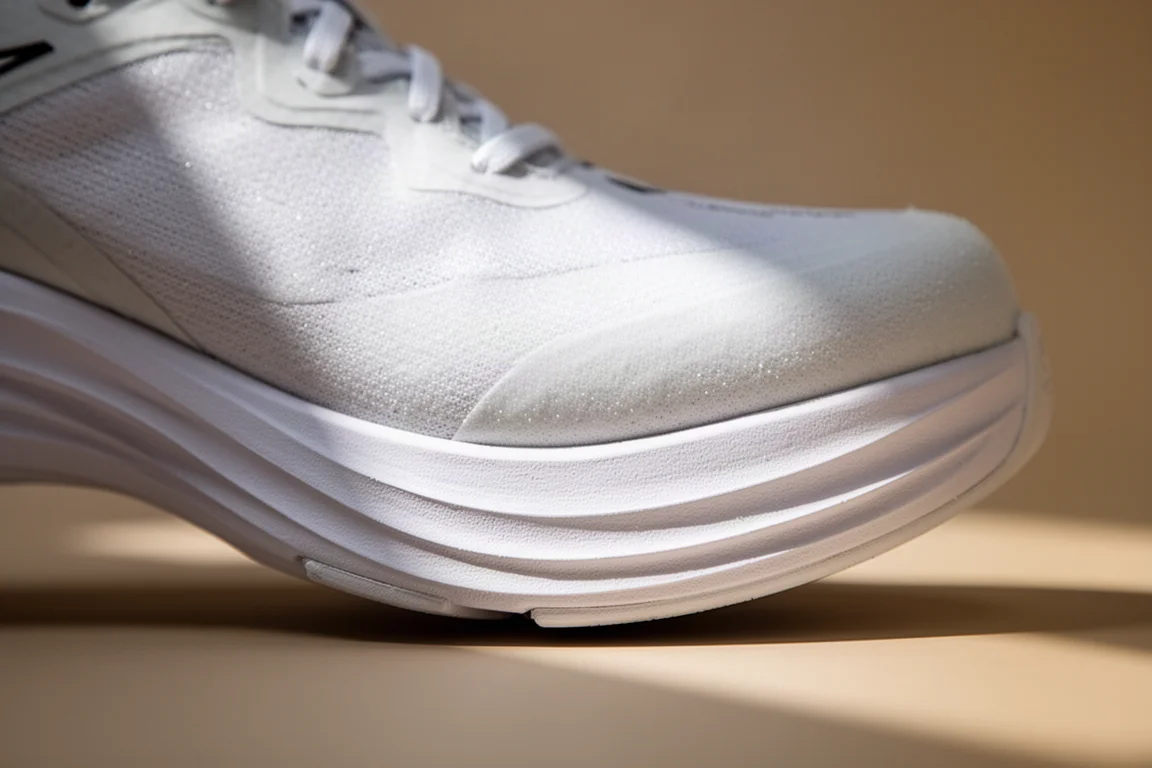
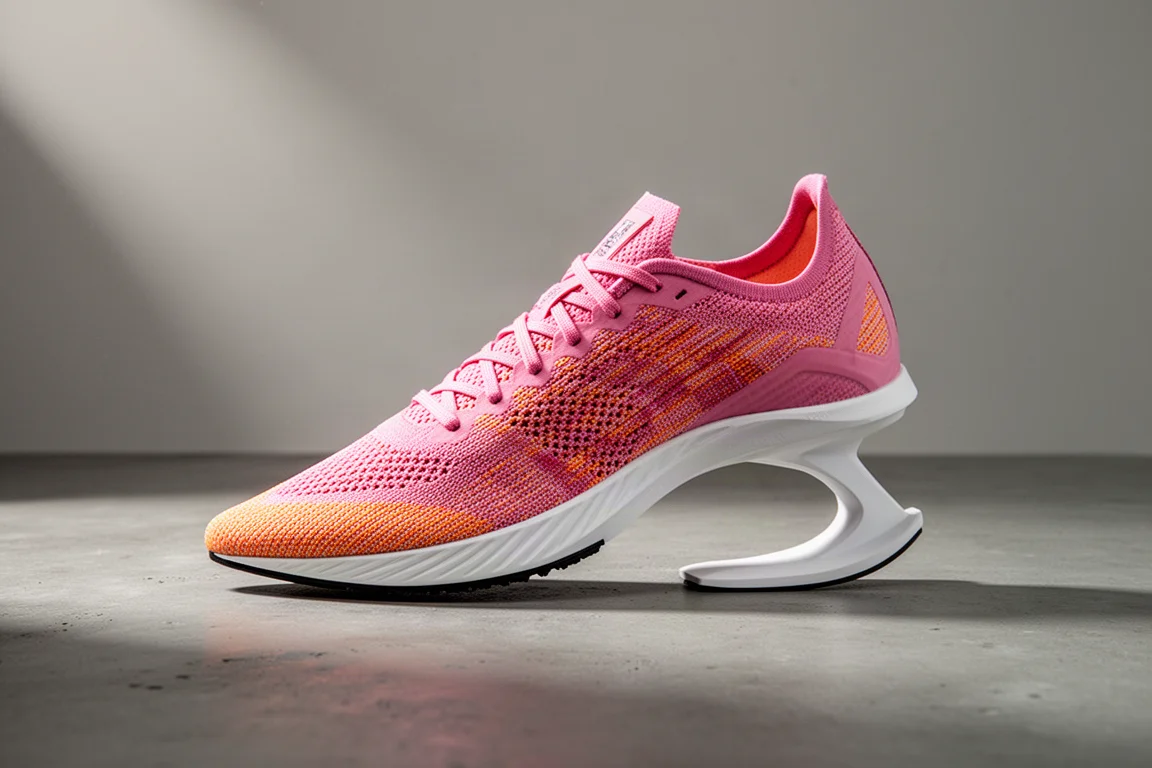
On foot, the first impression was surprisingly positive. The foam feels soft when pressed by hand, the wide base makes the shoe feel stable despite its reputation, and the upper molds to the foot with a secure, locked-in feel. There is even a thin foam lip at the very front, similar in concept to the Fast-R 3, that could lengthen the shoe. The design is genuinely one of the best-looking race shoes available, with sharp lines, a striking pink accent stripe, and crisp orange detailing on the tongue.
One important caveat: sizing runs about half a size big. Testers consistently reported this, and the brand has not flagged it clearly at retail. Consider going down half a size.
Workout Performance: Flat at the Front
The test was a 3 x 1 mile session at 5:20 to 5:30 pace, executed at 5:29, 5:19, and 5:22 on a hot day. The result was mixed in a way that is hard to ignore. At the toe-off, the shoe feels firm and flat. There is very little bounce or pop from the forefoot, even when driving hard at faster paces. The aggressive toe spring does not pair with a smooth rocker transition, and landing directly on the front of the shoe produces a loud, slappy, lifeless feel.

Oddly, the shoe works better when landing midfoot or toward the heel, where it feels softer and more cushioned, and it improved as the workout went on. But that inverts the whole premise of a hyper shoe: the more you dig in and push off your toes, the less it gives back.
To be fair, this is not a shoe that actively slows you down. It is neutral, the race foam does provide some energy return, and it handles everything asked of it. It simply does not add the 3 to 7 seconds per mile that the best shoes in this category deliver. Compared to the Metaspeed Sky Paris at a similar weight, the toe-off satisfaction simply is not there.
The Good Parts
It is not all bad. The upper material and fit are genuinely nice once you accept the half-size sizing quirk. Stability is better than expected, and cornering was fine aside from some forefoot hot spots during a hard 180-degree turn. The shoe is light, though 180 g in 2026 no longer cracks the top five lightest race shoes. And the design is a genuine standout that communicates speed better than almost anything else on the shelf.
The forefoot disappointment is the real problem. Kiprun’s cheaper shoes, the Kipstorm Elite and the Kipride Max, both offer more bounce and more fun than their own flagship development product.
Value and Durability
At $350, this is one of the most expensive shoes on the market, and price communicates where a brand believes its product stands. Kiprun is asking you to place it alongside the Adidas Pro Evo line. The performance does not back that up. It is not better than the Metaspeed Sky, not better than the Fast-R 3, and a step behind shoes like the Sky Tokyo and Edge Tokyo that cost less.
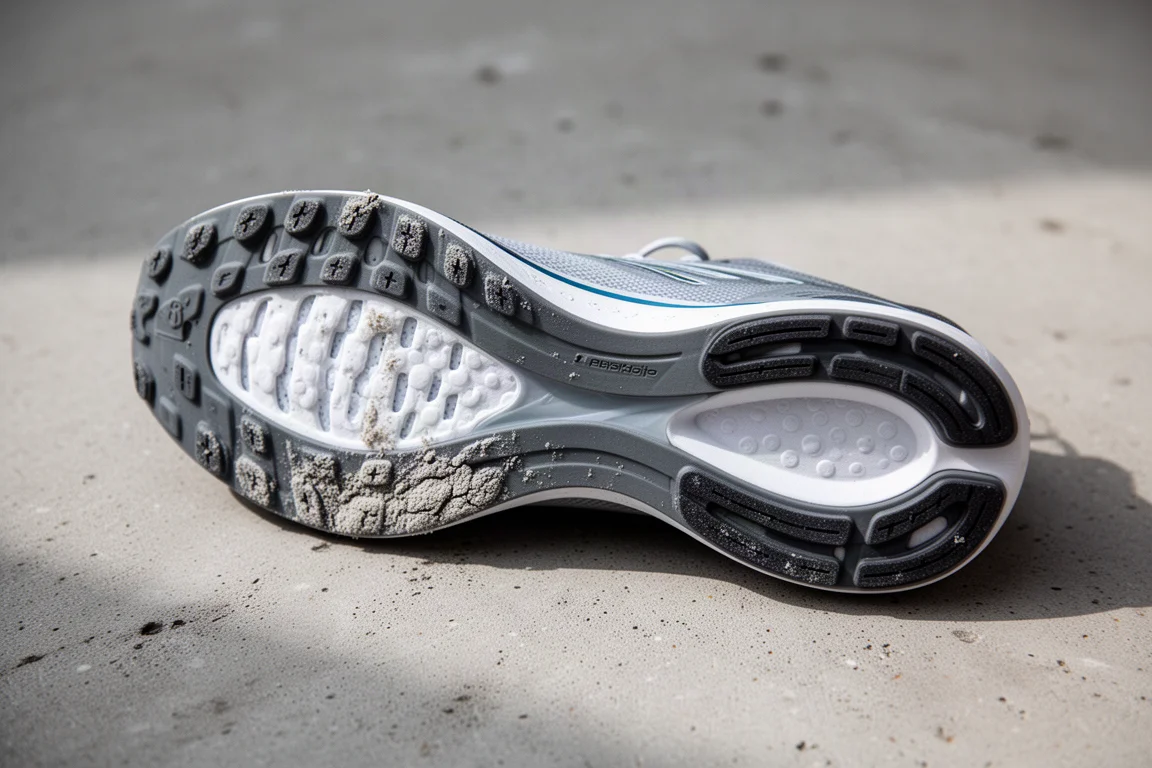
Durability is also a concern. After a single workout, there was visible foam and rubber wear, and the shoe can be bent in half afterwards. A $350 race shoe that cannot comfortably handle more than 10 miles and shows wear this quickly has a very narrow use case.
Buying Advice
Without the price, this is a B to B-minus shoe: fine, neutral, occasionally decent at midfoot paces. With the price, it drops to a D. At $200 to $250, as a 5K-focused race shoe, it would make far more sense. At $350 against the Metaspeed Sky and Fast-R 3, the value proposition is very hard to see.
If you want a Kiprun shoe, the Kipride Max is the better buy. If you want a top-tier hyper shoe, the Fast-R 3, Metaspeed Sky, or Cielo 3 all deliver more, and the Pro Evo line has the specs to back its price.
Conclusion
The Kiprun Kipstorm Lab is a striking-looking shoe with a comfortable, lockable upper and stable platform, undermined by a firm, flat forefoot, a confusing ride that rewards heel strikers more than toe runners, early durability concerns, and a price that promises more than it delivers. The “too fast for slow runners” marketing does not hold up. This is a pass at $350, and a curious curiosity at half that price.
Product link
View more details for Kiprun Kipstorm Lab
This product is mentioned in the review. Check the specifications, options, and compatibility before buying.
View more details for Kiprun Kipstorm LabFurther reading
Related Reviews

Running Shoes
Best Road-to-Trail Running Shoes: Three Versatile Options for Mixed Terrain
A practical guide to three road-to-trail running shoes that handle both pavement and mild trails, with clear strengths and trade-offs for different runner types.

Running Shoes
Best Running Shoes for Achilles Tendonitis: Three Options Explained
Three running shoes with different heel drops and support features designed to help reduce Achilles tendon pain during walking and running.

Running Shoes
Best Running Shoes for Women: Five Top Choices Ranked
A ranked guide to five women's running shoes, from versatile daily trainers to high-performance racing options, with real strengths and trade-offs for each.