Ski Gear
Kessler Paragon 107 vs 101: Two New All-Mountain Skis Compared
A close look at the Kessler Paragon 107 and Paragon 101, two new metal-laminate all-mountain skis with different strengths in chopped snow, trees, and firm conditions.

Introduction
The Kessler Paragon line is new, and two models sit at the centre of it: the Paragon 107 and the Paragon 101. A narrower Paragon 93 rounds out the family, but the 107 and the 101 are the pair most riders will be deciding between.
Both skis share a fresh build. The core uses thin stringers of poplar, beech, and paulownia rather than a single wood species, and it is pressed with two sheets of metal. The chassis comes from the ZX series, which means the 107 lines up closely with a ZX 108 and the 101 lines up almost exactly with a ZX 100.
They were skied back to back in roughly five inches of dense fresh snow sitting on a firm, scraped-off base, across trees, moguls, chopped groomers, and ice underneath. That mix of conditions is a fair test for a ski of this width, because most days do not offer untouched powder from top to bottom.
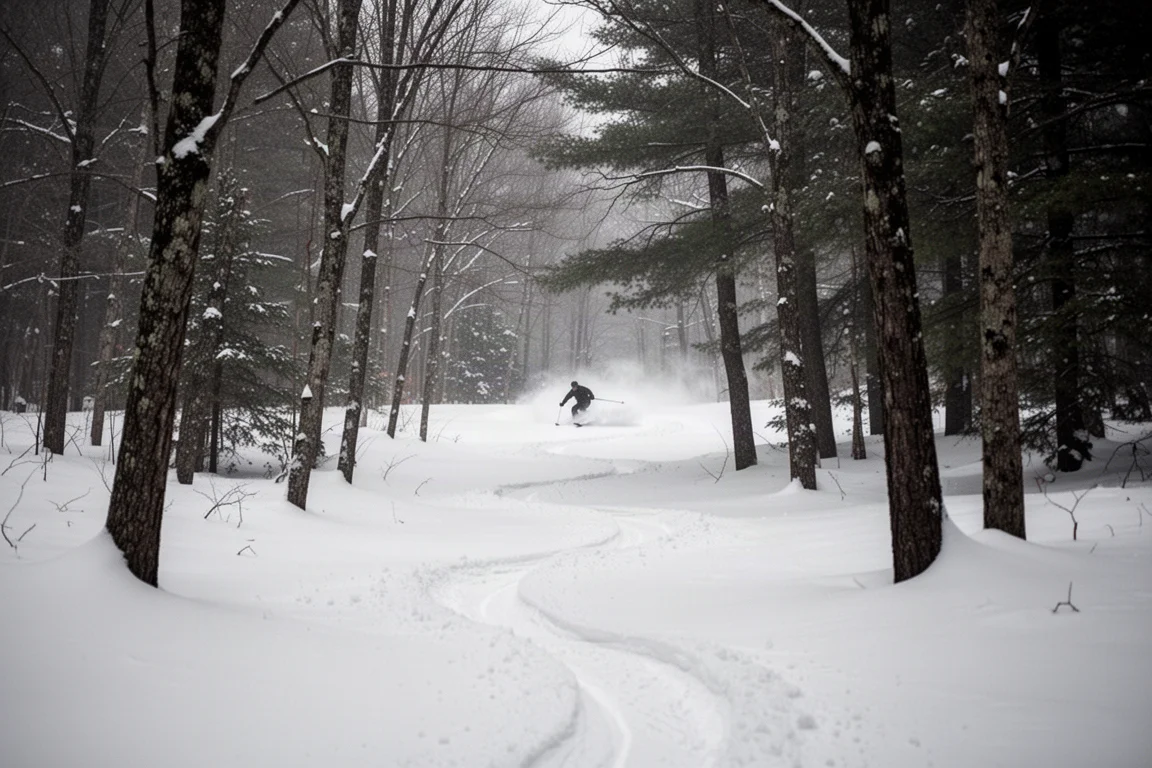
The useful question is whether the added metal and the more complex wood core make these skis genuinely more capable, or simply heavier. The short answer is that both remain easy to ski, and the differences between them are more about turn shape and stability than about construction.
What Defines the Kessler Paragon Line
The Paragon build is a deliberate blend. A directional, freeride-influenced shape is paired with two full sheets of metal, which is an unusual combination: metal usually signals a firm, frontside-oriented ski, while the shape here points toward soft snow.
The multi-species core is part of how Kessler keeps that balance. Thin stringers of poplar, beech, and paulownia let the core be tuned section by section, so the ski can stay calm underfoot without becoming inert.
Kessler has also kept the Hollow Tech cutaway in the tip. Removing material ahead of the contact point lowers swing weight, which matters most in tight trees and quick direction changes, where a heavy tip is felt immediately.
Because the shapes are inherited from the ZX line, the Paragon skis start from a platform that was already known for being easy to throw sideways. The open question was whether adding metal would take that quality away. On snow, it does not appear to.
Kessler Paragon 107: Flotation and Precision in Chopped Snow
The 107 is the wider of the two, and it is the one that stood out most once the fresh snow had been cut up. With roughly 107 mm underfoot, it has enough surface area to stay on top of soft snow, while the two metal sheets give it a planted feel when the surface below turns rough.
Where it impressed most was in crud. Tracked-out snow tends to either deflect a ski or make it feel dead, and the 107 does neither. It holds a line through inconsistent snow, and the metal makes itself felt when the base underneath is firm. It also carves well for its width, which makes it more versatile than a pure soft-snow shape.
Playfulness is the surprise here. Despite the metal and the directional build, the 107 is easy to throw sideways and pops out of divots, moguls, and troughs, so a rider can use the terrain rather than simply point the ski downhill.
Sizing is worth noting. The 107 was skied at 184 cm, and that length felt right even for a rider who would not step up in more open terrain. The ski wants to run, and it rewards a rider who lets it.
Kessler Paragon 101: Quickness and Agility Underfoot
Drop to the 101 and the character changes more than the 6 mm difference would suggest. The narrower waist, shorter turn radius, and more pronounced taper make the ski come around noticeably faster. Edge to edge transitions are quick, and in tight trees it feels flickable in a way the 107 cannot match.
That quickness comes with a trade-off. In chopped-up snow, the 101 feels less stable and less powerful than the 107, and it is less confidence-inspiring when you let it run. Shorter, more measured turns suit it better than long straight lines.
On firm snow, though, the metal does its job. On a hard, refrozen day the 101 held an edge well and stayed composed, which is a genuinely useful quality in a ski of this width.
Length is the other variable. The 101 was skied in a shorter size, and a longer option exists in the model for riders who want more ski, though on tight terrain that extra length may be more than the conditions ask for.
How the Paragon 107 and 101 Compare in Practice
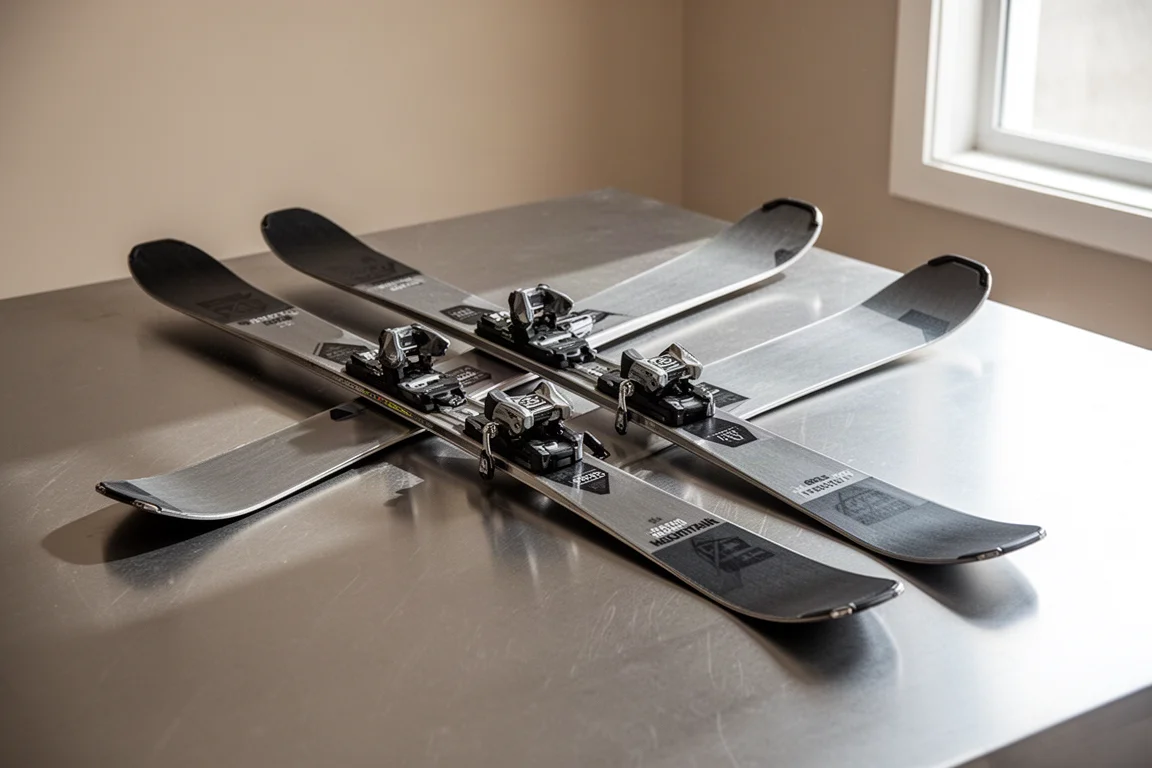
Back to back, the differences are easy to feel. The 107 has the edge in float and in stability through variable snow, and it carries speed with less effort. The 101 is quicker, more agile, and easier to place in tight terrain.
The two are closer than the width numbers suggest on groomers. Both carve cleanly for their class, and both have a smooth, damped feel rather than a snappy, poppy one. Against a comparable metal all-mountain ski such as the Armada Declivity 102 Ti, the Paragon shape feels slightly more surfy and easier to smear, with a mount point set further back, though the Declivity carries a little more spring.
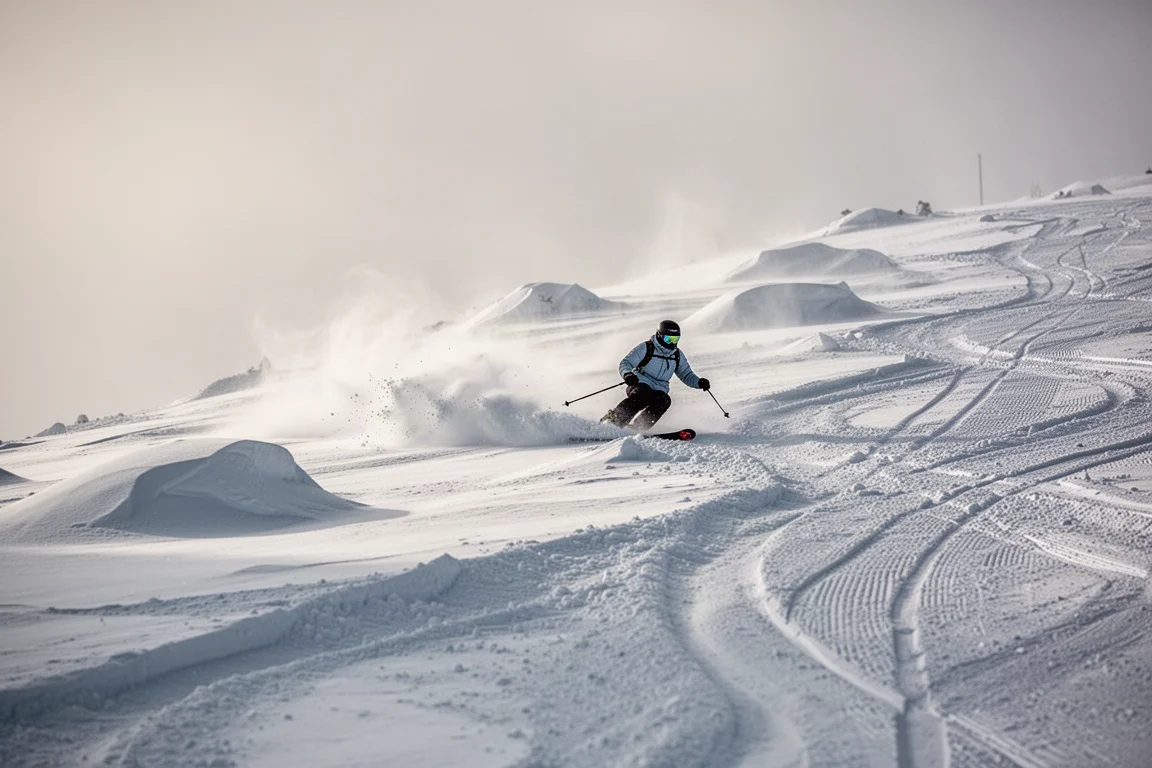
Both skis share an intuitive, predictable feel. They behave the way you expect when you change direction or when the snow changes underfoot, and that consistency matters more than any single number on a spec sheet.
Length, Mount Point, and Turn Shape
Sizing deserves attention before you commit. The 107 was skied at 184 cm and felt like the right length, even for a rider who would not go longer in more open terrain. The 101 was skied in a shorter size, and a longer option is available in that model.
The mount point sits further back than on many all-mountain skis, which puts more ski in front of the boot. That is a large part of why the 107 feels so composed at speed, and it is also why the ski favours a directional, driving style rather than a centred one.
Turn shape separates the two more than width does. The 101 has a more dramatic taper and a shorter radius, so it comes around easily and encourages shorter turns. The 107 has more of a straight-line mentality and rewards a rider who lets it run.
Choosing Between the Paragon 107 and 101
If you want one ski that handles fresh snow, chopped groomers, and whatever firm patches sit underneath, the 107 is the more versatile pick. Its blend of flotation and precision is the standout quality of the line, and it stays stable when the snow gets rough.
If your days lean toward tighter terrain, shorter turns, and quick direction changes, the 101 is the better fit. It gives up some float and some top-end stability, but it makes up for that with agility and a lighter feel edge to edge.

The honest answer is that both are useful tools across a wide range of conditions. The right choice depends on whether you value float and stability more than quickness and flickability.
How the Paragon Line Handles Firm Snow
Metal-laminate skis tend to earn their keep when the snow is hard. On a refrozen, boilerplate day, the 101 held well and stayed predictable, and the same firm-snow composure is built into the 107.
The metal also helps in mixed conditions. When fresh snow sits on top of a firm base, the ski does not get pushed around by whatever is underneath, and the vibration damping keeps the ride from feeling nervous or twitchy.
This is the practical argument for the Paragon build. It delivers a ski that can handle soft snow without giving up grip on the days when the mountain is scraped down to ice, which is exactly the trade most all-mountain skiers are looking for.
Buying Advice
Decide first what your typical day looks like. If most of your skiing happens in tracked-out snow, crud, and soft groomers, the Paragon 107 is the natural starting point. Its width and metal give it a wide usable range, and it is stable enough to stay enjoyable when conditions turn rough.
If you ski tighter terrain, prefer shorter turns, or already own something wider for deep days, the Paragon 101 makes more sense. Its quickness is the defining trait, and it does not give up much on groomers to get there.
Both are directional skis with a set-back mount point and a freeride-influenced shape, so they suit riders who like to drive the front of the ski. Neither is a park or freestyle shape, and neither is built for a centred stance.
Conclusion
The Kessler Paragon 107 and Paragon 101 share a build that pairs a multi-species wood core with two sheets of metal on a ZX-derived chassis, and they take that shared foundation in two different directions. The 107 leans toward flotation and precision in chopped snow. The 101 leans toward quickness and agility in tighter terrain.
Neither is a one-condition ski. Both handle soft snow, firm snow, and the messy in-between state that most days actually offer, and both feel predictable from the first turn. Choosing between them comes down to which of those two personalities matches how and where you ski.
Further reading
Related Reviews

Ski Gear
2023 Blizzard Hustle vs Rustler: Six Freeride Skis Compared
Blizzard's 2023 Hustle collection rebuilds the Rustler shape with a lighter core and no metal. Here is how all six skis differ, and which one suits your riding.

Ski Gear
2023 Skis of the Year: Atomic Maverick 88 TI, Salomon QST 106, and Look SPX 12 Pro
Three standout ski picks for all-mountain carving, powder days, and reliable binding performance, with practical buying notes for 2023 models.

Ski Gear
2025 Nordica Enforcer 104 Review: A Directional Charger Replaces the 104 Free
The 2025 Nordica Enforcer 104 drops the Free name and the twin-tip personality, gaining weight, stiffness and composure in rough snow. Here is what changed and who it suits.