Audio
KEF LSX II LT Review: Compact Active Speakers for TV, Desk, and Turntable
A compact fully active two-speaker system with HDMI ARC, USB-C, optical, and phono inputs. Here is what it does well, and what to check before you buy.
Introduction
The KEF LSX II LT is a compact, fully active two-speaker system built for modern living. It pairs a 12th-generation Uni-Q driver array with dedicated amplification for each driver, and it accepts almost every source most people already own: a television over HDMI ARC, a computer over USB-C, a game console over optical, a CD player over line-level RCA, and a turntable through a built-in moving magnet phono stage.
That breadth is the point. Instead of a single box tucked under a television, this is a pair of speakers that can carry a proper stereo image across a room while still fitting comfortably on a bookshelf, a desk, or a media console.
Who the KEF LSX II LT Is For
This system makes the most sense in three kinds of setups.
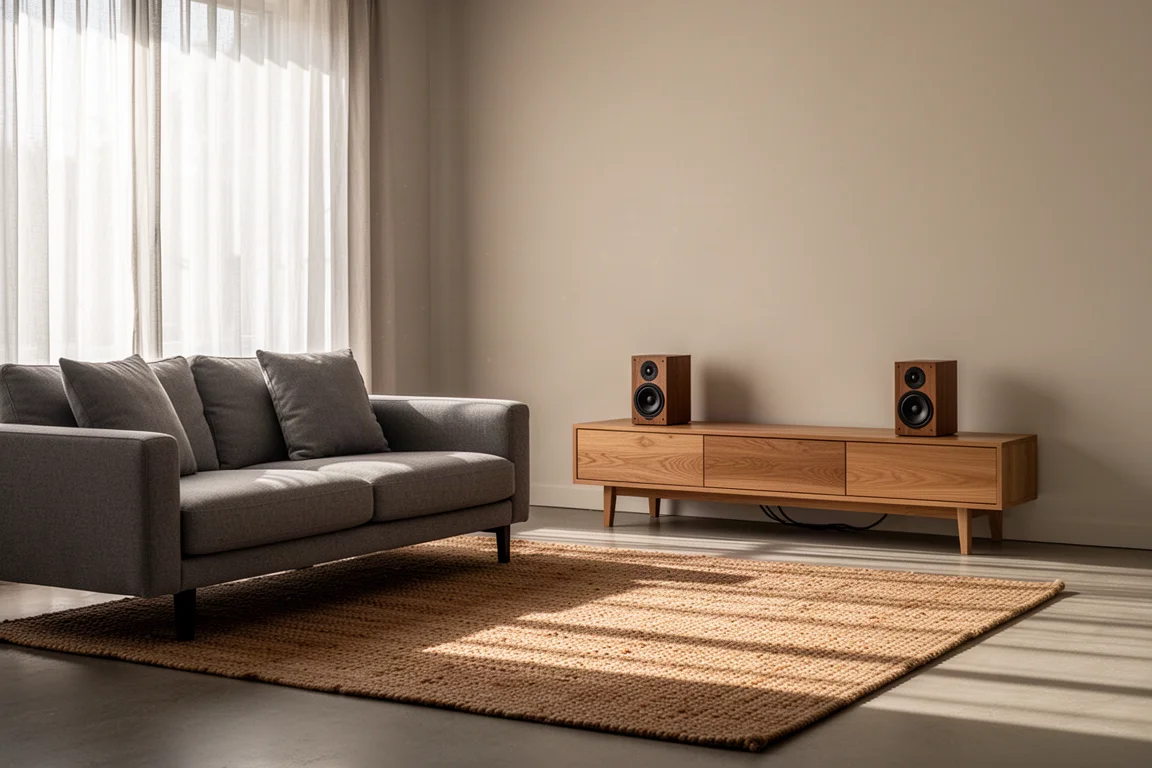
The first is a television setup in a small to medium room. Stepping up from built-in TV speakers or a mid-tier soundbar, the LSX II LT offers a wider and more realistic stereo image, more intelligible dialogue, and bigger dynamics. It does not generate the virtual height effects of an Atmos soundbar, but the clarity and separation on offer make films and series feel considerably more natural and engaging.
The second is a desktop system. The USB-C input accepts up to 24-bit/192 kHz audio from a computer, which is the highest-quality path into the speakers, since there is no built-in network streaming. That makes lossless playback from a computer straightforward, without extra gear.
The third is a vinyl setup. The dedicated RCA phono input includes a built-in moving magnet preamp, so most turntables can connect directly without an external phono stage, and the ground post and ground lift switch help deal with hum in awkward power setups.

It is a less obvious fit for listeners who want a single streaming speaker that pulls music from apps on its own. There is no Wi-Fi inside the cabinet, so app-based streaming is not part of the package.
Main Strengths: Design and Build Quality
The cabinets are clean and modern, with a ribbed baffle that frames the Uni-Q driver and adds a subtle texture to the front face. The look feels intentional rather than decorative, and it settles naturally onto a console, a bookshelf, or a desk.
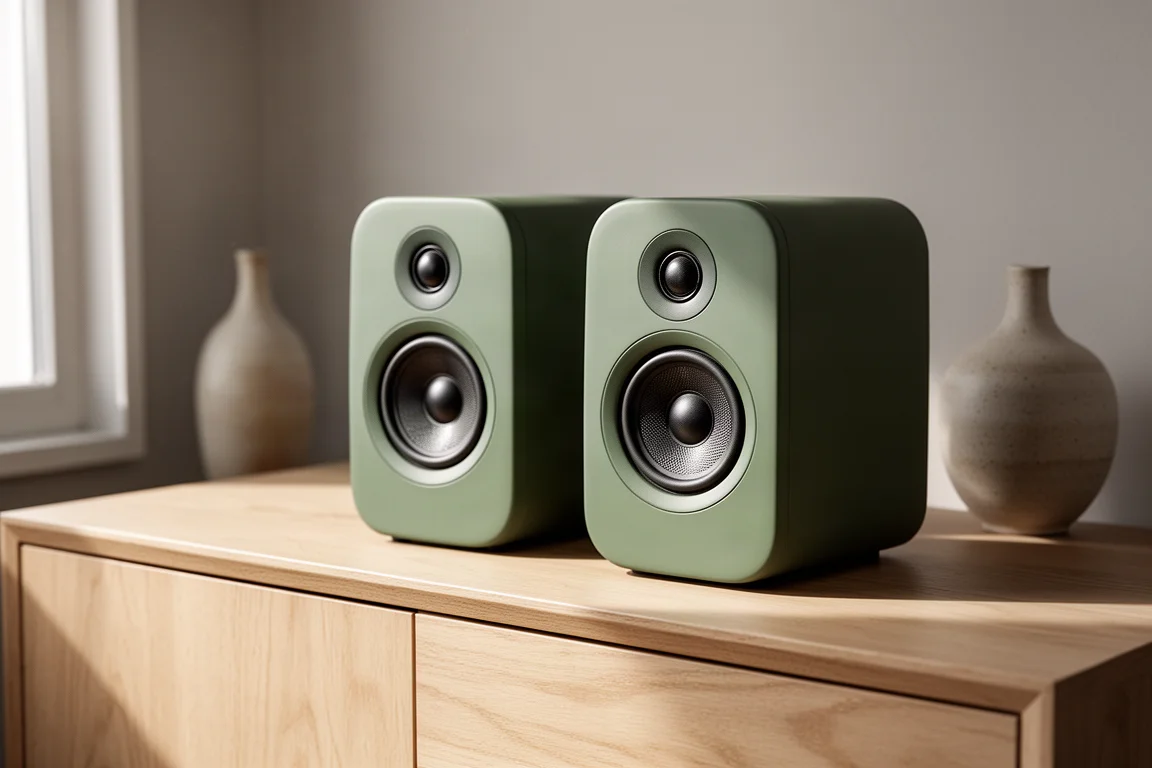
Five finishes are available, which makes it easier to match a room. Vintage burgundy brings a warm, classic tone with depth. Nickel grey and dark titanium lean modern and architectural. Moss green and midnight blue add a touch of colour for anyone who wants something more distinctive.
Each cabinet measures roughly 11.2 inches tall, 6.6 inches wide, and 10.6 inches deep. That is compact enough for typical media furniture, yet large enough to fill a living room or office with convincing sound. At 24.9 lb for the pair, the system has a substantial, solid feel, the kind of build quality that suggests it is meant to last years rather than be replaced quickly.
The included inter-speaker cable connects the two cabinets over USB-C and provides around 10 feet of length, which covers most setups. For a wider media console or a desk with more space between speakers, a longer 26-foot cable is available separately and makes placement more flexible.
The top panel of the main speaker carries physical controls for power, source selection, volume, and Bluetooth pairing. Because powered speakers usually sit within arm’s reach on furniture or a desk, being able to adjust volume or switch inputs directly on the cabinet is genuinely convenient day to day.
Main Strengths: Connectivity for TV, Desktop, and Turntables
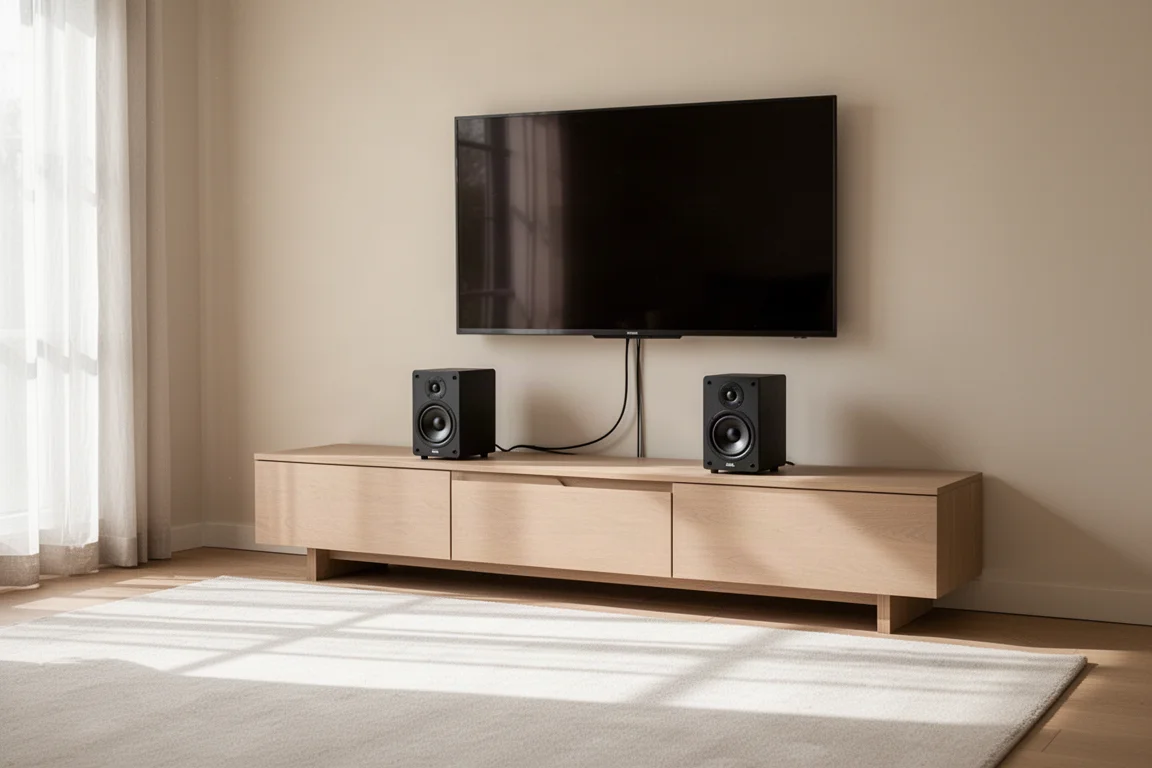
HDMI ARC is the headline connection. It links the speakers directly to a television and lets you control volume with the TV remote you already use. Compared with TV speakers or a mid-tier soundbar, the result is a wider stereo image, more intelligible dialogue, and greater dynamic range. If you are stepping up from a soundbar or building a simple, high-quality TV sound system, this is the input that matters most.
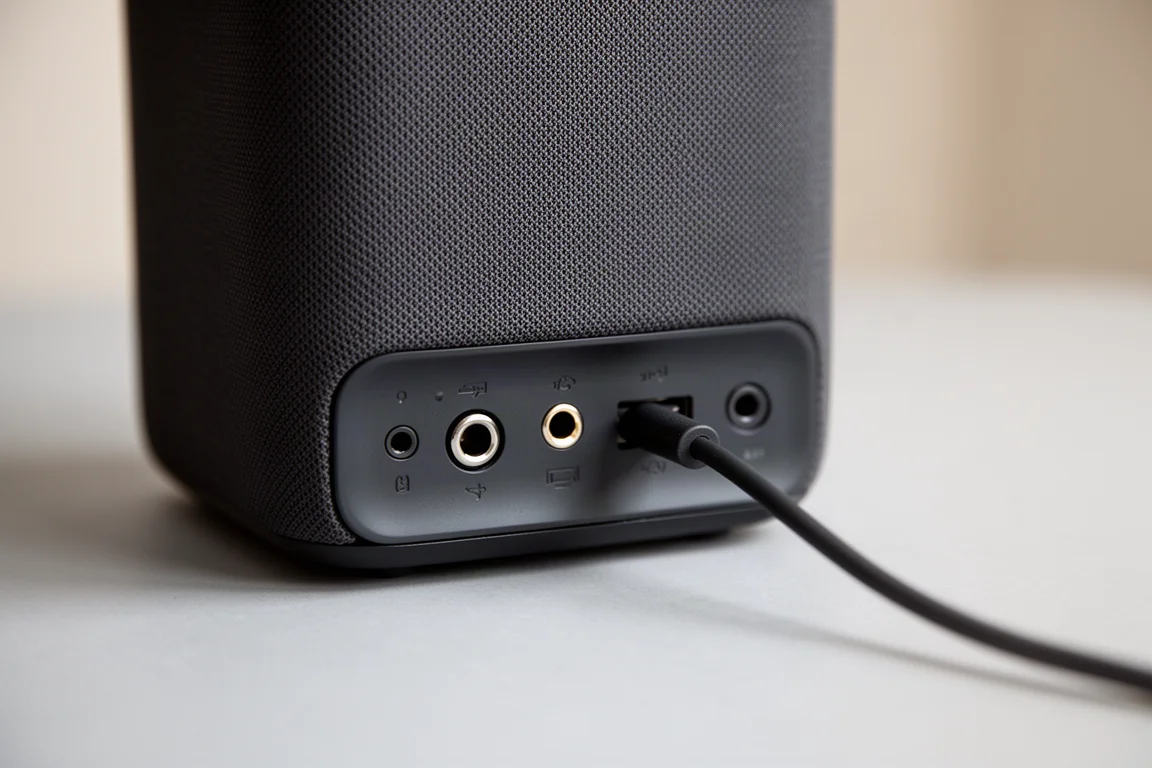
USB-C handles up to 24-bit/192 kHz from a computer and is the best route for high-quality playback from streaming services, given the absence of Wi-Fi. Optical supports up to 24-bit/96 kHz and suits a game console or an older television without HDMI ARC. A stereo RCA line-level input covers a CD player or any other analogue source.
The phono stage is not a bolt-on convenience. It was fully designed in house, with an analogue gain stage and RIAA equalisation handled in the music integrity engine using precision digital filters. The result is a transparent and musical curve that keeps the warmth of vinyl intact while maintaining detail and balance. The ground post and ground lift switch are a thoughtful addition, and choosing this system over a model without a phono stage can save the cost of a separate preamp.
For film fans, the subwoofer output works in the same way as other models in the LS series. Once a subwoofer is connected and enabled in the companion app, you can set crossover frequency and level to suit the room and the sub. The app applies an internal high-pass filter to the main speakers and sends only low frequencies to the subwoofer, which produces tighter, more balanced bass and lets the LSX II LT play cleaner and louder because it no longer has to handle the deepest notes. Where running a cable to a subwoofer is impractical, a wireless subwoofer adapter can send a lossless signal from the speakers to a compatible sub, using a small transmitter at the speaker end and a receiver at the subwoofer input.
Bluetooth is available for quick pairing and casual listening, but the HDMI ARC, phono, and USB-C inputs take far better advantage of what these speakers can do. Adding network streaming is also possible: a compact streamer connected through the optical input, available for around $149, opens up major streaming platforms and high-resolution audio without changing the simplicity of the system.
Main Strengths: Uni-Q Driver and Active Amplification
The Uni-Q array is the defining part of the sound. First introduced in the late 1980s, it places the tweeter at the exact acoustic centre of the mid-range and bass cone so the two behave as a single point source. Instead of radiating from two separate locations, every frequency reaches your ears at the same time. Instruments and voices stay locked in place, imaging feels more natural, and the sound remains consistent wherever you happen to sit in the room.
The 12th-generation Uni-Q driver in the LSX II LT carries forward more than three decades of refinement. A 25 mm aluminium dome tweeter sits at the centre of a 130 mm magnesium-aluminium alloy mid/bass cone, which produces smooth, even dispersion throughout the room.
Each driver has its own dedicated amplifier, with 70 watts powering the woofer and 30 watts for the tweeter. Because the system is fully active, digital signal processing can shape the crossover, time alignment, and driver behaviour to match the exact cabinet design. That tuning, part of the music integrity engine, keeps the sound balanced and controlled even at high volume, and helps deliver smoother bass and a more coherent presentation than a compact powered speaker would normally manage.
Main Strengths: Listening Impressions
The overall character is open and balanced. Vocals sit comfortably in the room rather than being pushed forward or buried under effects, and the clarity makes film dialogue effortless without needing to raise the volume. Music feels engaging at ordinary listening levels, which matters more over long sessions than a system that only impresses when pushed hard.
With films, voices carry a fullness and weight that makes scenes feel grounded, and subtle elements such as footsteps and room tone come through with better separation than most soundbars manage.
On its own, the LSX II LT delivers impressive bass for its size. It reaches low enough to give drums and soundtracks a solid foundation, though it cannot dig as deep as a larger speaker or a full subwoofer system. Adding a compact subwoofer rounds out the last octave and gives the system a more cinematic scale that easily fills a small to medium room.
For music, the same composure carries over. The mid-range has a smooth, unforced tone, and the aluminium dome tweeter keeps the top end detailed without ever turning harsh. Whether the source is a record, a computer, or Bluetooth, everything sounds clean and cohesive over long stretches.
Placement, Stands, and App Tuning
These speakers only perform as well as you let them. The LSX II LT uses a rear port, so leave at least a few inches of space between the back of the cabinet and the wall to let the bass breathe. Sliding them closer to the wall adds a little more low-end weight, while pulling them further forward tightens things up if the sound feels thick.
Matching floor stands are designed specifically for this model and place the drivers at the ideal listening height, which is the best route for performance and stability. On a desk or media console, isolation stands are a good alternative: they decouple the speakers from the surface, reduce vibration, and tilt the drivers toward your ears for better clarity and imaging.
The app handles minor EQ adjustments, placement presets that can clean up low-end boom or add a touch of warmth, and firmware updates so the system stays current over time.
Things to Consider Before Buying
The most important limitation is the lack of Wi-Fi. The companion app covers settings and firmware updates but not music streaming, so if you want the speakers themselves to be the streaming source, a model with network support will suit you better. A separate streamer over optical solves this, but it is an extra box and an extra cost.
Bass depth is the second consideration. For a compact cabinet the low end is strong, but anyone who wants genuine cinematic weight should plan on adding a subwoofer, along with the app crossover setup that goes with it.
Placement is the third. The rear port means these speakers want a little breathing room, and a system squeezed flat against a wall or boxed into a shelf will not show what it can do. Floor stands or isolation pads are worth budgeting for.
Finally, the long inter-speaker cable, a wireless subwoofer adapter, and a network streamer are all optional extras rather than included items. Each one is genuinely useful in the right setup, but they should be part of the plan rather than an afterthought.
Buying Advice
Start with your sources. If a television is the centre of the system, HDMI ARC and the TV remote volume control are the features that will shape daily use. If a computer is the main source, the USB-C input and its 24-bit/192 kHz support matter most. If vinyl is the priority, the built-in moving magnet phono stage removes an entire component from the chain and keeps the setup simple.
From there, decide how much low end you want. The speakers alone handle music and dialogue confidently in a small to medium room. Add a subwoofer if you want the last octave and a more cinematic scale, and use the app to set the crossover so the main speakers hand off the deepest notes cleanly.
Then plan the room. Leave clearance behind the cabinets, choose stands or isolation pads for the surface you have, and take a few minutes with the app’s placement presets. Those small changes make a bigger difference than most people expect.
Finally, choose the finish that fits the space. With vintage burgundy, nickel grey, dark titanium, moss green, and midnight blue on offer, it is easy to match a room rather than work around a single default colour.
Conclusion
The KEF LSX II LT stands out for how easy it is to live with. It handles a television, a computer, and a turntable without extra boxes, delivers detail and natural sound for both music and film, and fits into a design that suits almost any room. The trade-offs are clear and specific: no built-in Wi-Fi streaming, bass that benefits from a subwoofer, and a little care needed over placement. For anyone who wants a compact, well-built stereo system built around real sources rather than an app, this is a straightforward and satisfying choice.
Product link
View more details for KEF LSX II LT
This product is mentioned in the review. Check the specifications, options, and compatibility before buying.
View more details for KEF LSX II LTFurther reading
Related Reviews

Audio
Apos x Geshelli Merlin DAC Review: A Natural Match for the Gremlin Amp
The Apos x Geshelli Merlin DAC pairs balanced and single-ended outputs with a smooth, natural sound that complements the Gremlin tube amp.
Audio
Audio Gear That Beats Pricier Rivals: Nine Value Picks for 2026
Nine turntables, streamers, speakers, and amplifiers that deliver far more than their price suggests, plus the trade-offs worth checking before you buy.
Audio
Best Amplifiers Under $200: Four Compact Stereo Amps Worth Considering
Four compact amplifiers under $200, from a class AB design with a headphone section to a DAC-equipped integrated amp and a low-cost pick from a US-based brand.