All-Mountain Skis
Kästle FX 96 TI Review: A Stable, Powerful All-Mountain Ski
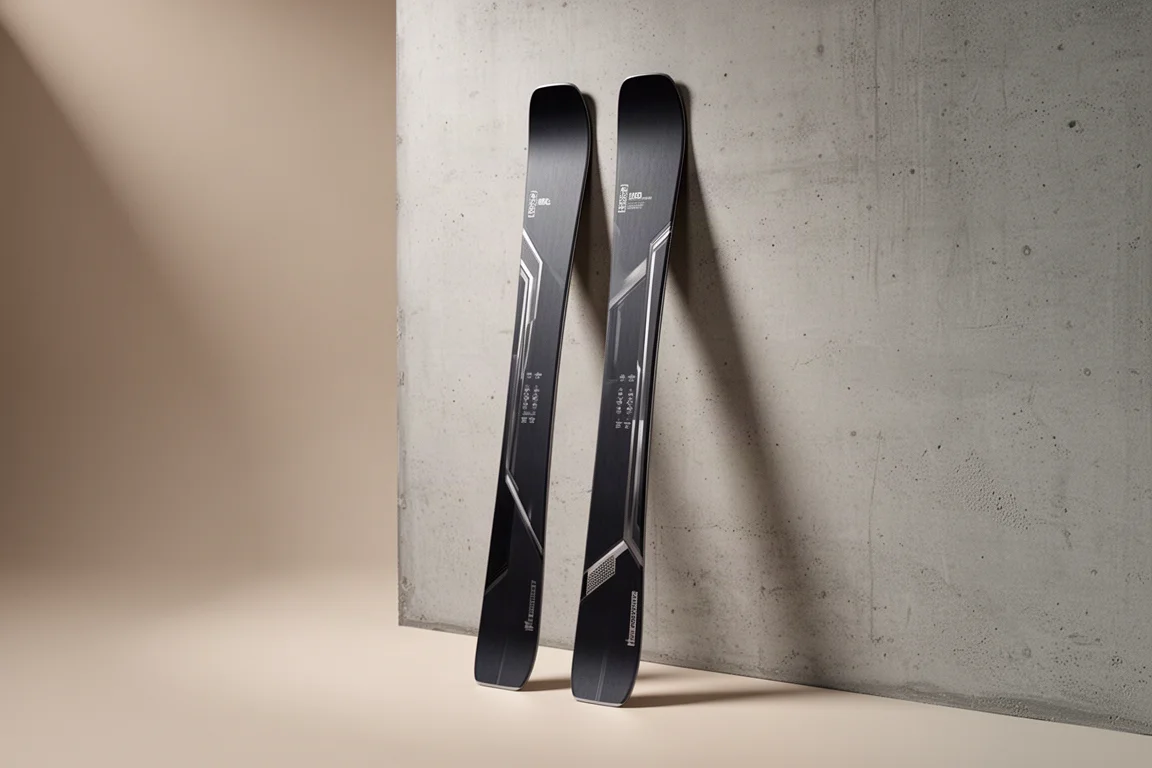
The Kästle FX 96 TI is a carryover mid-90s all-mountain ski built around a dense wood core, metal laminates, and a directional, carving-focused personality that suits advanced and expert skiers.
Introduction
The Kästle FX 96 TI comes back as a full carryover model, unchanged from the previous season. In a category that keeps drifting toward lighter builds, that consistency is worth noting, because this ski has a very specific identity: a stable, powerful, directional all-mountain platform built for skiers who want a crisp carve and dependable composure at speed.
The story here is partly about construction lineage. An earlier version of this ski moved toward a fiberglass and carbon layup, which produced a lighter and more flexible feel. The TI version brings metal laminates back into the build and restores the personality the ski was originally known for: strong, rugged, and versatile in the mid-90s width class.
Who This Ski Is For
This is a ski for advanced and expert skiers. The weight and the overall stiffness through the mid-body make it a demanding ride, particularly once you leave the groomed surface, where you have to work a little harder to get the ski to do what you want. Riders moving up from an intermediate level may find that effort noticeable, and lighter alternatives in the same width range, such as the ZX 92 or ZX 100, are considerably easier to maneuver.
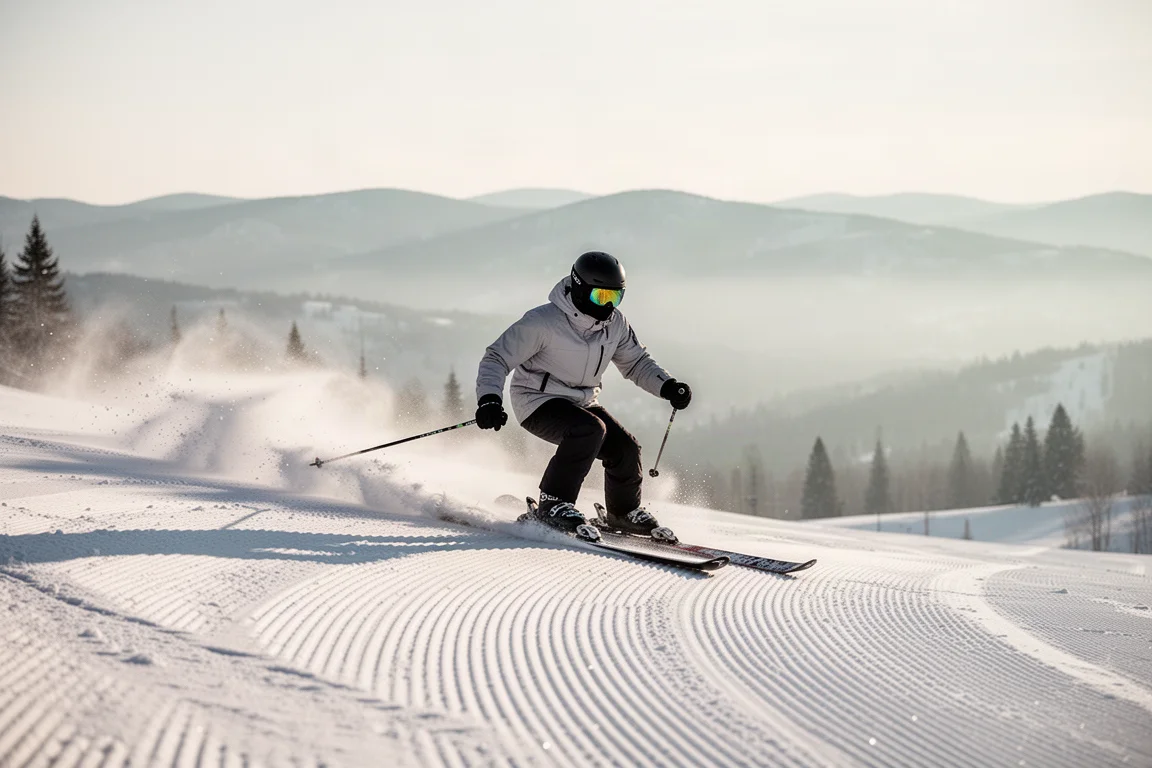
What you get in exchange is a ski that feels planted and confident. It has a directional, powerful character that wants to stay on the ground rather than pop and play, so it rewards a skier who drives the front of the ski and lets the sidecut do its job. If your priority is a stable platform that holds up under pressure, this is the profile that delivers it.
Build and Construction
The build is sophisticated, and that sophistication is what pushes the ski toward a higher price point. Through the middle of the core, the ski uses a blend of poplar and beech wood stringers in a raised section, where the denser wood occupies more vertical space. Toward the edges, the core thins out with a blend of poplar and lighter woods, which keeps the extremities quicker and more agile and adds a slightly drifty quality to the ski without compromising the power and stability of the center.
Metal laminates and fiberglass sit within that structure, contributing power and damping while helping to keep vibration under control. The shovel uses a hollowed construction that removes mass from the front of the ski, which helps the tip return to its original state more easily. Less mass in the tip means less vibration up front, and combined with the rest of the layup it produces a smooth and powerful feel across the whole ski.
On-Snow Performance and Carving
Underfoot there is camber, backed by a thick core profile, and the tip rocker is modest, starting roughly where the hollowed shovel section begins. That geometry makes the very front of the ski more flexible while the rest of it feels close to race-like in character.
In the 172 cm length, the turn radius is 16 meters, which sits on the short side for this class. You feel the sidecut drawing the ski around and producing clean, round turns across the fall line. The squared-off tail carries only a small amount of rocker, noticeably less than many mid-90s skis, and combined with the metal in the layup it makes the ski sing when it is locked into a carved turn.
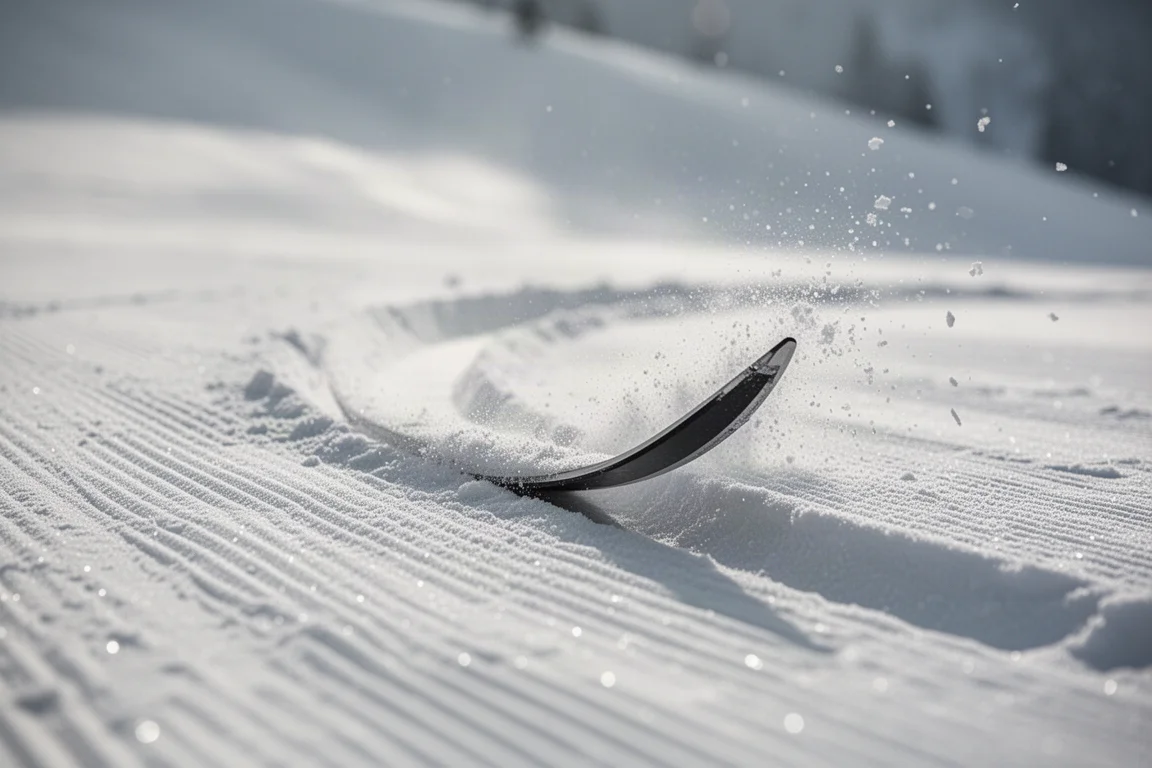
The result is a ski that feels most at home on trail, where its carving character is crisp and clean. It is not a shape that encourages smearing or pivoting through every turn, and that is deliberate. The design points toward a skier who wants a precise, engaged edge through the whole arc of the turn.
Off-Piste and Mixed Conditions
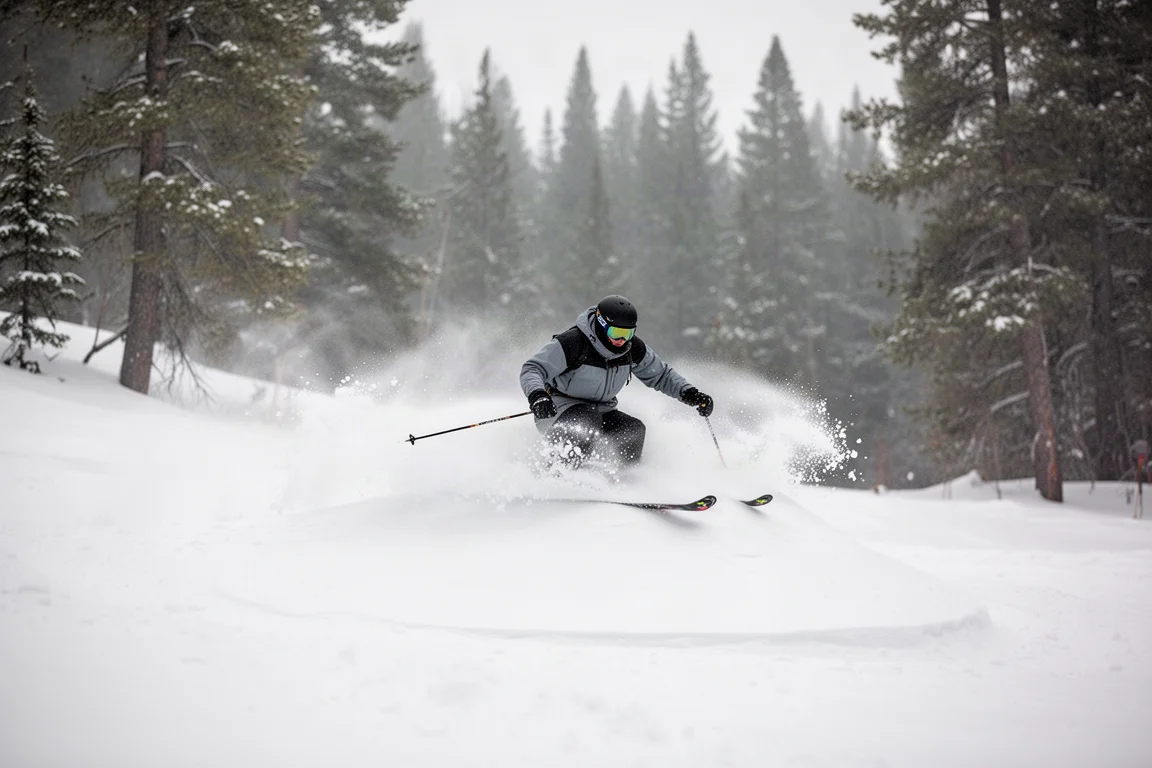
Where the rocker and the hollowed shovel section meet, the ski shows its greatest flex, and that is what keeps it manageable away from the groomed surface. It helps the ski stay playful and easy to turn in bumps, trees, and soft snow, so the all-mountain side of the format is genuinely usable rather than nominal. The width contributes here too, giving the ski more range than a dedicated carving model.
Even so, this is not a light and forgiving off-trail ski. Once you leave the groomed surface, the weight and stiffness ask for a more deliberate, physical style. Skiers who spend most of their time in tight terrain may prefer something easier to maneuver, while skiers who mix groomed runs with occasional soft-snow detours will find the trade-off reasonable.
Things to Consider Before Buying
Three things are worth weighing before committing. First, the weight and mid-body stiffness make the ski demanding, especially off trail, so it suits a strong skier rather than someone looking for an easygoing all-mountain companion.
Second, the shape is conservative in the context of the category. There is not a lot of tail rocker and not a great deal of taper, so the ski behaves more like a directional carving platform than a loose, surfy freeride tool. Skiers who want a ski that pivots easily in tight trees should look at shapes with more rocker.
Third, the sophisticated layup comes with a higher price tag. That cost is tied to the wood core construction, the metal laminates, and the fiberglass, so it is worth being honest about whether your terrain and ability level will let you use what the ski is built to do.
Length selection also matters more than usual here. The 16 meter radius in the 172 cm size gives the ski a fairly quick feel, and moving up or down in length will shift how much of that sidecut you feel underfoot.
Buying Advice
If you are an advanced or expert skier who spends most of your time on groomed terrain and wants a stable, powerful, carve-focused all-mountain ski, the FX 96 TI is a coherent choice. Its metal laminates, dense center core, and squared-off tail all point toward a ski that holds an edge and stays composed when you push it.
If maneuverability is your priority, or if you are still building confidence in variable snow, the ZX 92 or ZX 100 are easier to handle and will likely feel less taxing over a full day. That is not a knock on the FX 96 TI, just a recognition that it asks for more input.
Because this is a carryover model, the ride you read about last season is the ride you get now, which removes some of the guesswork from buying. Decide based on your ability level, how much of your day is spent on trail, and whether you want a ski that rewards a strong, forward stance rather than one that flatters a relaxed one.
Conclusion
The Kästle FX 96 TI is a purposeful mid-90s all-mountain ski with a build that justifies its price positioning and a personality that has been consistent since metal returned to the layup. It is stable, strong, and versatile in the way a directional ski can be, with a carving character that borders on race-like and enough tip flex to stay usable in bumps and soft snow.
Buy it if you are an advanced or expert skier who wants a planted, powerful platform for groomed terrain. Skip it if you want a light, playful ski that is easy to maneuver off trail, or if you are still developing the technique the ski is designed to reward.
Product link
View more details for Kästle FX 96 TI
This product is mentioned in the review. Check the specifications, options, and compatibility before buying.
View more details for Kästle FX 96 TIFurther reading
Related Reviews
All-Mountain Skis
100mm All-Mountain Skis Compared: 23 Versatile Models Worth Knowing
A practical walkthrough of 23 all-mountain skis around 100mm underfoot, covering weight, rocker, metal construction, and the rider each model suits best.
All-Mountain Skis
2026 Black Crows Camox Review: A More Stable, More Versatile All-Mountain Twin Tip
The 2026 Black Crows Camox adds an ash layer underfoot, wider tips and tails, and a revised rocker profile. Here is what those changes mean on snow.
All-Mountain Skis
Armada Antimatter 88 Review: A Light, Lively All-Mountain Ski That Rewards Any Style
The Antimatter 88 pairs a poplar core with carbon stringers for a surprisingly energetic ride that suits intermediates and experts alike.