Studio Monitors
Kali LP-UNF Review: A Compact Desktop Monitor That Gets the Fundamentals Right
A nearfield desktop monitor pair with USB-C, RCA, TRS and Bluetooth inputs, plus rear switches for tuning the sound to a desk and a room.
Introduction
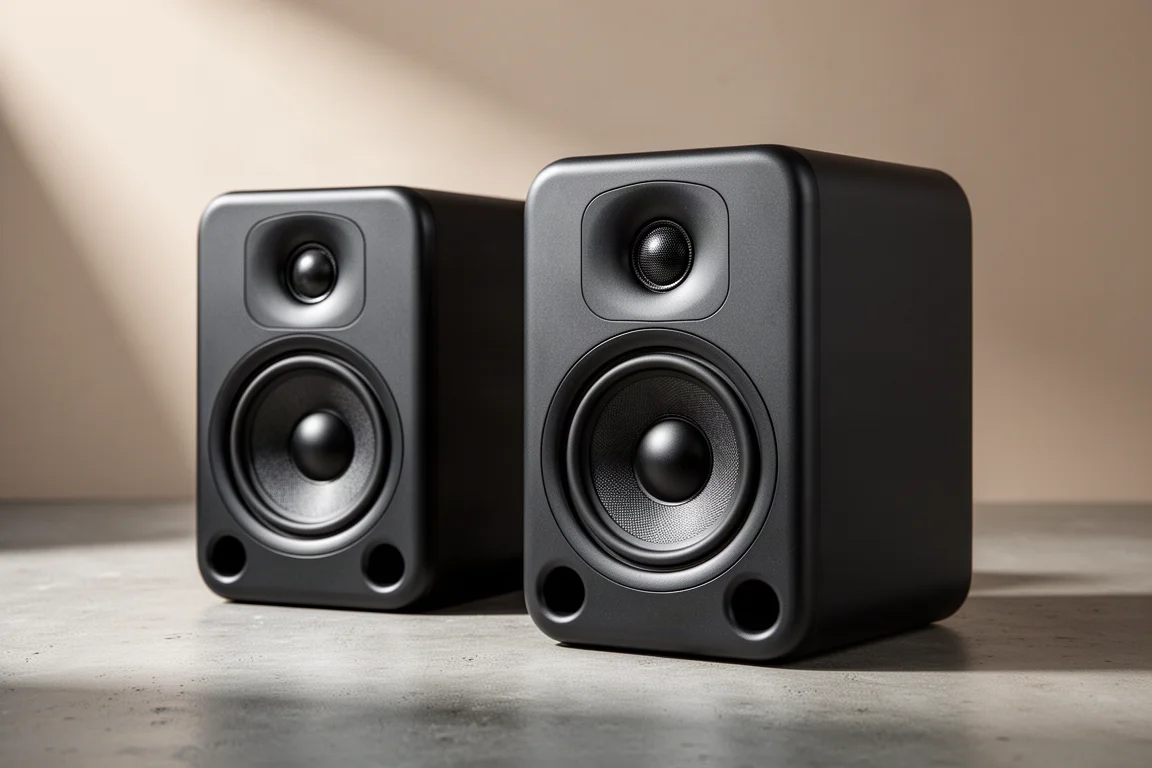
The Kali LP-UNF is a compact powered desktop monitor sold as a matched pair at around $300, designed for close listening rather than room-filling playback. It arrives with a feature set that is unusual in this price bracket: USB-C, RCA and TRS inputs, Bluetooth, and a bank of rear-panel switches for adapting the sound to the desk and the room around it.
For anyone assembling a small studio or a desktop listening setup, those details often matter more than raw output. The LP-UNF is built around a simple idea: a monitor should stay neutral and predictable at the distance where people actually sit and work.
Who This Product Is For
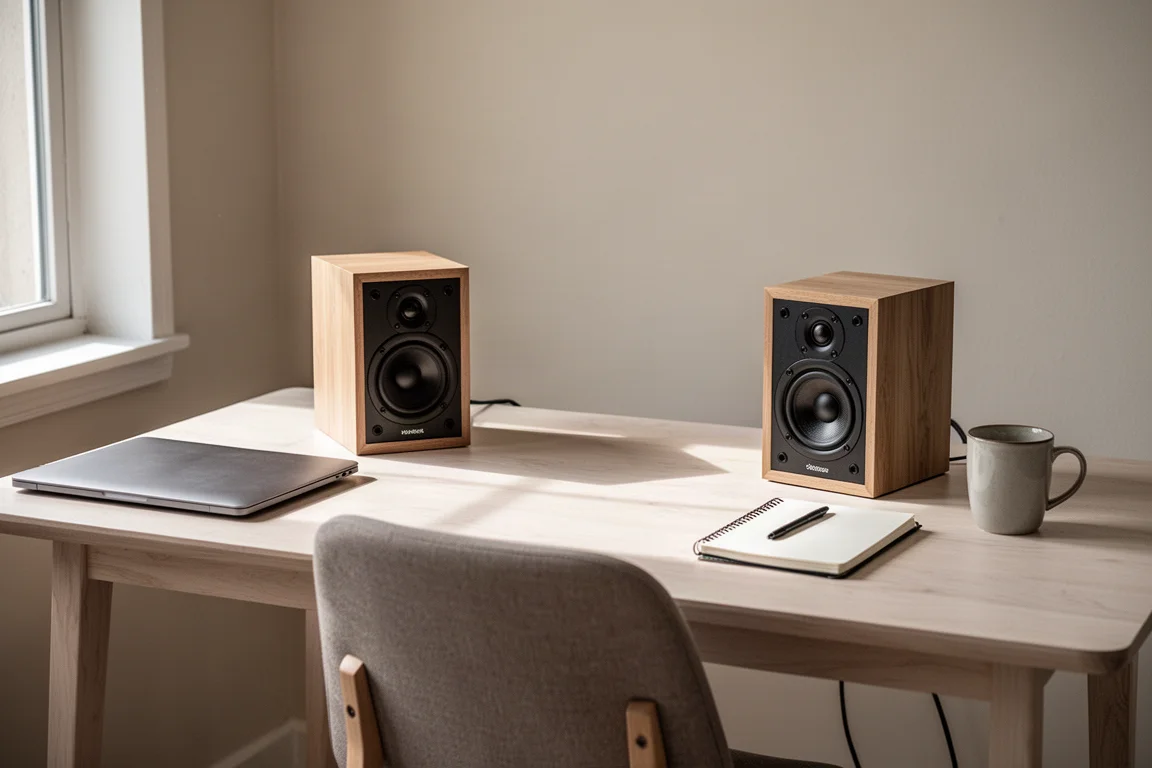
The LP-UNF is a nearfield monitor. The manual recommends a listening distance of about 0.8 meters, roughly arm’s length, which places it in the same working space as a laptop or a single display. That makes it a good fit for mixing at a desk, everyday music listening, gaming, and even a small television setup where volume stays moderate.
It is not the right choice for a large room or for listeners who want a lot of low-frequency weight. The cabinet is ported, but the design targets accuracy at close range rather than high output. If your setup involves speakers placed across a living room and played loud, this is not that product.
Main Strengths
The strengths here are less about spectacle and more about the qualities that make a monitor usable day after day.
Neutral, Controlled Sound
The LP-UNF is voiced to stay neutral rather than flattering. Measurements show an F3 of 54 Hz and an F10 of 39 Hz, so there is useful low-frequency information down to around 40 Hz before the response rolls off quickly. Harmonic distortion stays below 3 percent at 86 dB, and at higher levels a limiter steps in to protect the drivers, which keeps the response controlled instead of letting it come apart.
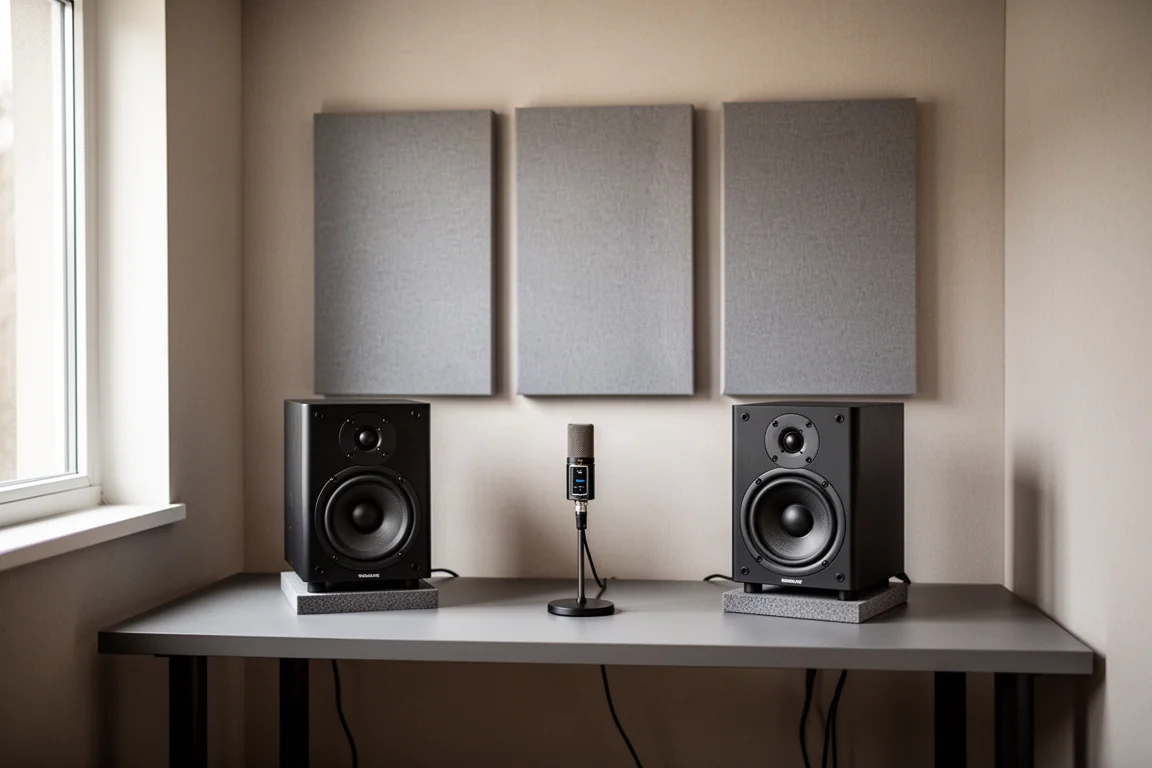
Across the midrange the presentation stays even, without exaggerated upper mids or a boosted top end. That kind of balance is what makes a monitor useful for mixing, because decisions made on it are more likely to hold up on other systems.
Inputs and Room Tuning
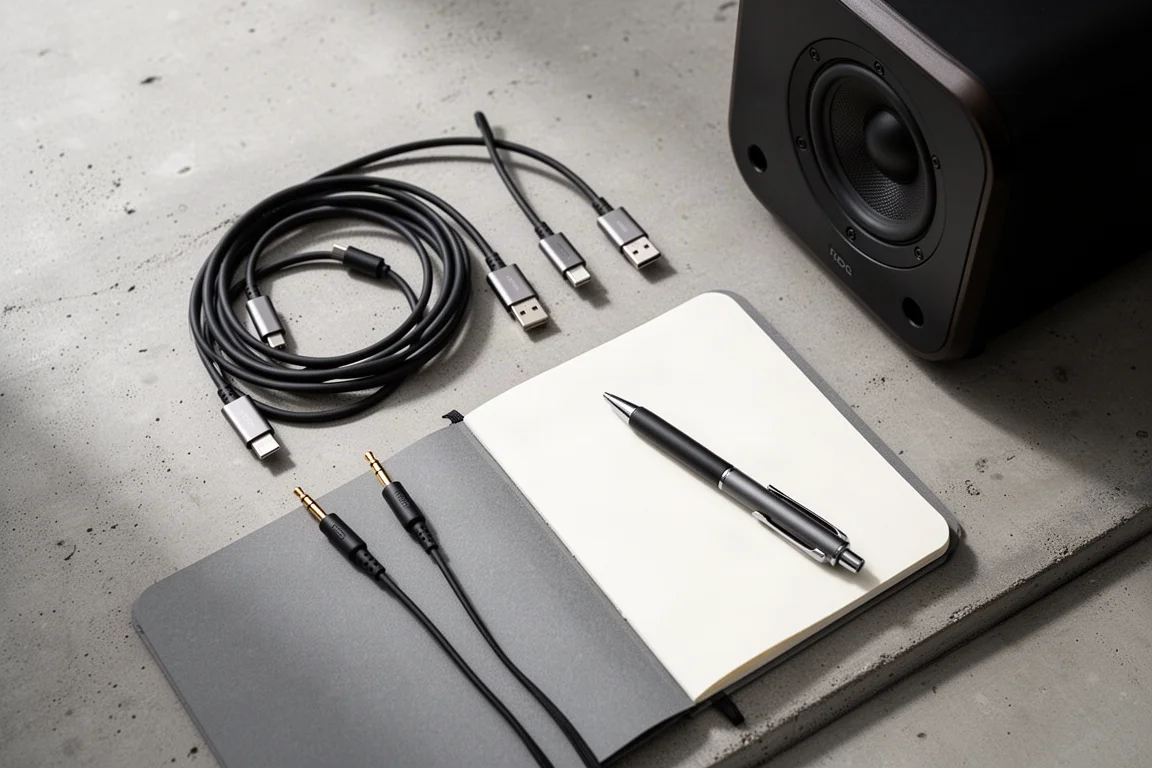
Connectivity covers most desktop situations. There is USB-C for a direct computer connection, RCA and TRS inputs for other sources, and Bluetooth for wireless playback, with the pairing status shown on the front indicator.
The rear panel also carries a set of switches that adjust the response for placement. There are settings for free-standing use, for desk placement, and for how close the cabinet sits to a wall, including a position within half a meter. Treble can be raised or lowered by 2 dB, and there is a switch for reducing bass. Used together, these options let the speaker compensate for a desk surface and a nearby wall without extra software.
Desk-Friendly Design
Each cabinet holds a 1-inch dome tweeter mounted in a shallow waveguide above a 4.5-inch midwoofer, with the reference axis running between the two drivers. The crossover is set at 1900 Hz, low enough that the two drivers behave more like a single source, which widens the usable vertical window. Horizontal coverage holds to roughly plus or minus 70 degrees up to about 8 kHz.
Only one cabinet needs mains power. The second is fed by an included cable from the first, which simplifies wiring on a crowded desk.
Things to Consider Before Buying
The trade-offs are predictable for a monitor of this size, and they are worth weighing against your room and your listening habits.
Output Limits and Bass Extension
Volume is the main compromise. A single cabinet reaches around 91 dB at one meter before the limiter takes over, and adding the second speaker raises the system total by roughly 6 dB. That is plenty for nearfield work, but it is not a party speaker. Low bass also tapers off quickly below 40 Hz, so kick drums and bass lines come through clearly without much sub-bass weight.
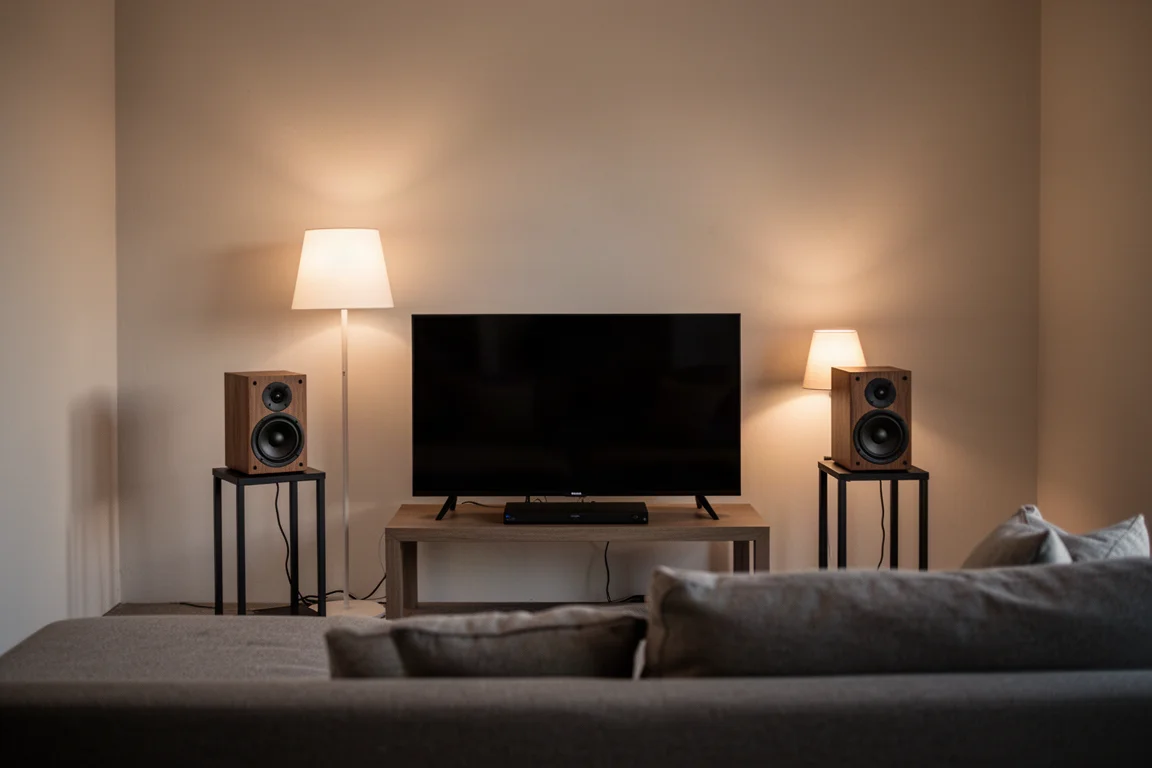
If you sit well above the tweeter axis, the treble response will change, and the switches are the tool for correcting that. Angling the cabinets, or raising them so the drivers point closer to ear level, gives more predictable results.
No Subwoofer Output
The LP-UNF does not have a dedicated subwoofer output, which is a limitation for anyone who plans to extend the low end later. A matching subwoofer in the same range can handle the crossover internally and pass the filtered signal on to the mains, so a two-box system remains possible without a subwoofer output on the monitor itself.
Buying Advice
At around $300 per pair, the LP-UNF sits in a price bracket where genuinely neutral behavior is rare. If you work at a desk and want a monitor that sounds balanced out of the box, with inputs that cover a computer, an audio interface and a phone, this is a straightforward choice.
Two practical points before ordering. First, plan the desk layout: the recommended 0.8 meter listening distance means the cabinets should sit fairly close, and the switches should be set for desk placement and wall proximity once they are in position. Second, availability can be limited. These monitors are not always carried by large general retailers, so it is worth checking specialist audio dealers as well.
If deeper bass matters to you, budget for a subwoofer alongside the pair rather than expecting the monitors to cover that range on their own.
Conclusion
The Kali LP-UNF gets the fundamentals right: a neutral tonal balance, distortion that stays low at sensible listening levels, flexible inputs, and switches that adapt the sound to a real desk in a real room. Its limits, maximum output and deep bass extension, are clearly defined, and they only matter if you ask it to do a job it was not designed for. For close-range listening at around $300 per pair, it is an easy recommendation.
Product link
View more details for Kali LP-UNF
This product is mentioned in the review. Check the specifications, options, and compatibility before buying.
View more details for Kali LP-UNFFurther reading
Related Reviews
Studio Monitors
ADAM Audio A8H Review: A Three-Way Studio Monitor That Also Knows How to Have Fun
A three-way active studio monitor with an 8-inch woofer, a handmade AMT tweeter, and two distinct tunings, the ADAM Audio A8H aims to satisfy both critical work and everyday listening.

Studio Monitors
Best Studio Monitors 2026: Six High-End Options Compared
We tested six premium studio monitors in a real studio space to see which ones deliver the best mix of accuracy, musicality, and value.
Studio Monitors
Focal Alpha 65 Evo Review: An Honest Studio Monitor With Real Bass
A bi-amplified active studio monitor with deep bass, useful tone controls and a truthful, uncoloured voicing, assessed for small studios and home setups.