Studio Monitors
Kali Audio SM-5 Review: A Three-Way Studio Monitor With Built-In DSP
A powered three-way monitor with coaxial drivers, per-speaker DSP, and wall mounting, plus the bass limits to weigh before buying.
Introduction
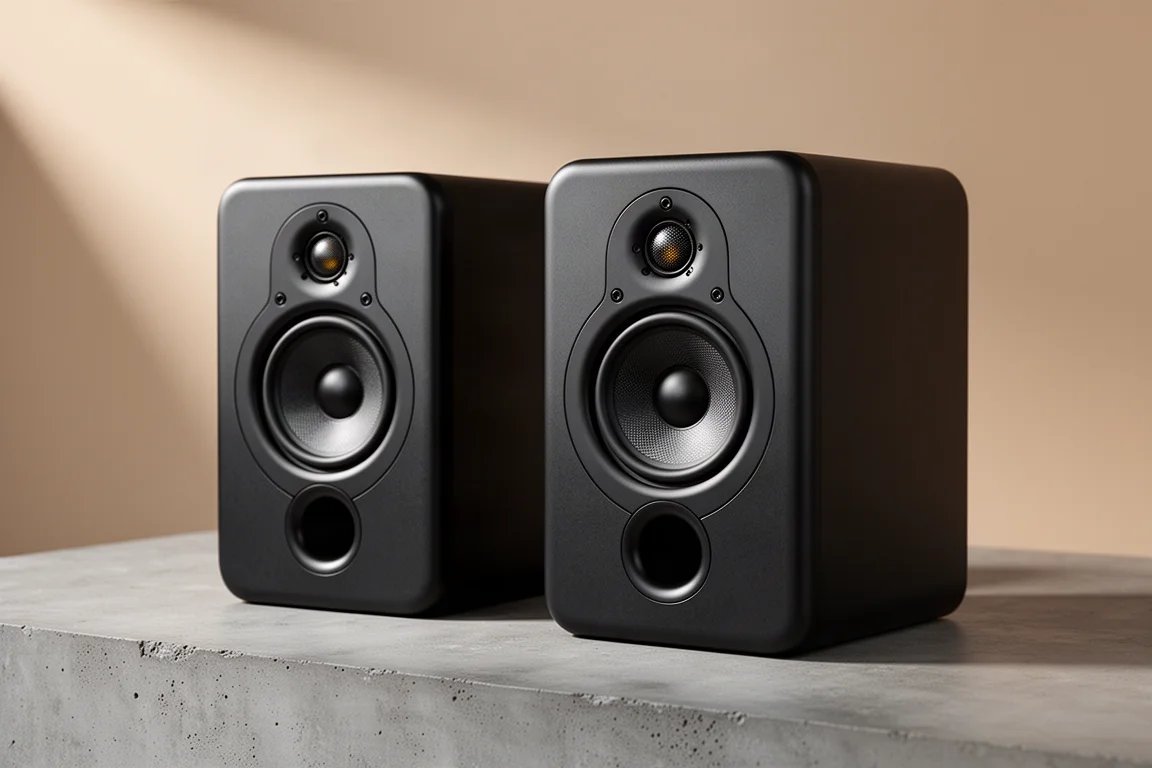
Kali Audio’s SM-5 is a powered three-way studio monitor that pairs a coaxial midrange and tweeter assembly with a 5-inch mid-bass driver, roughly 150 watts of onboard amplification, and a set of DSP tools that are unusual at this size. Retail pricing sits at about $1,700 per speaker, which places it in the upper tier of nearfield monitoring. The pair used for this evaluation was supplied by the manufacturer.
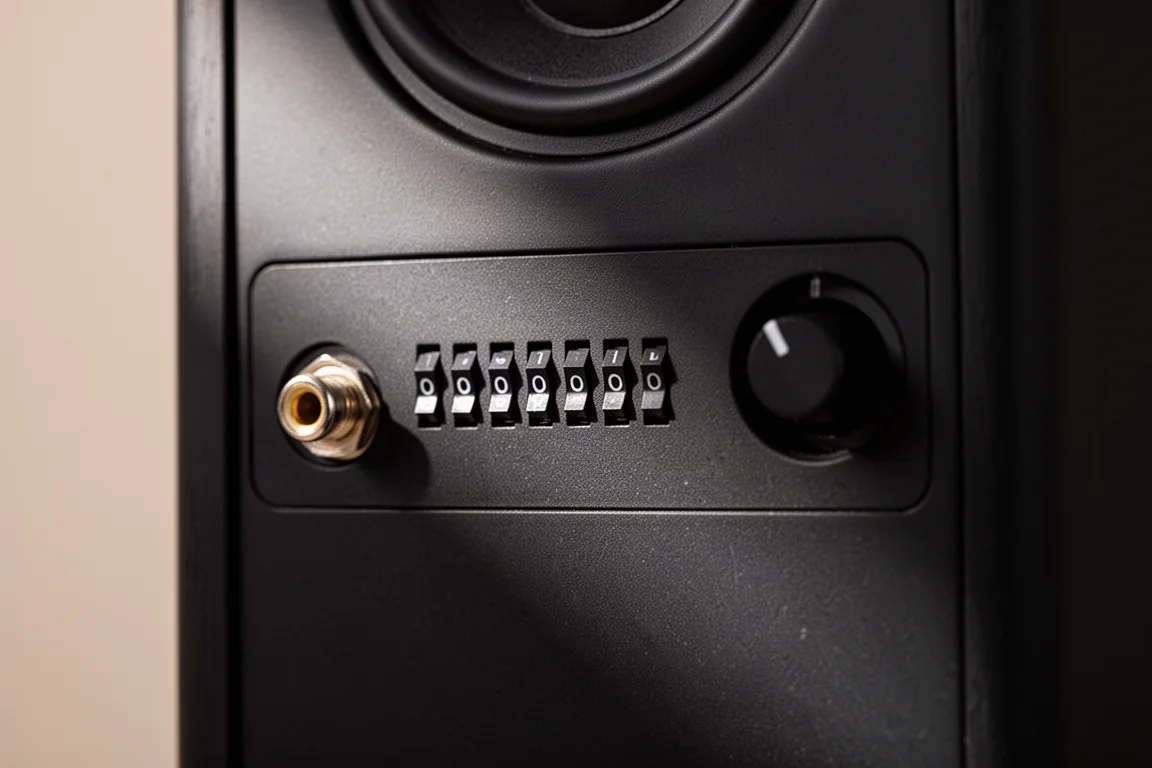
The interesting part is not only the driver layout. The SM-5 is built to be adapted. Dip switches cover boundary, desk, and free-field placement, an onboard control trims system output, and free software from Kali Audio gives access to each speaker individually for EQ changes.
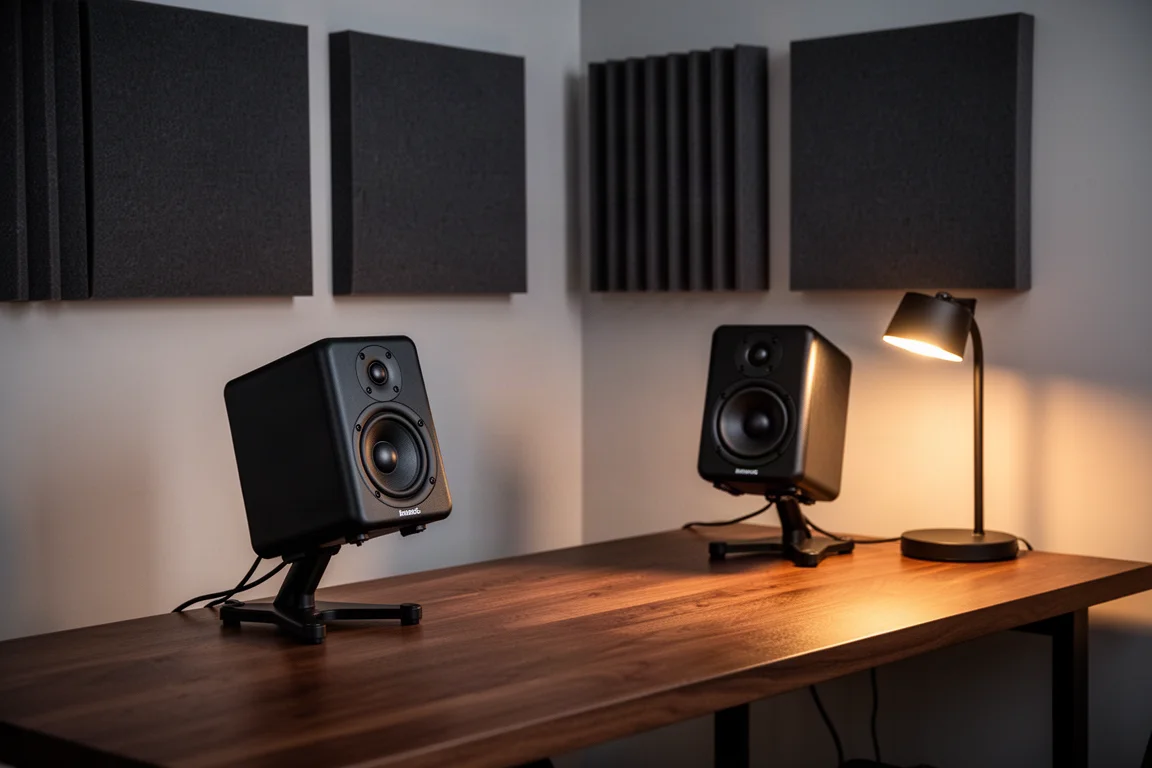
That combination of coaxial directivity, per-speaker DSP, and wall-mounting hardware makes the SM-5 an unusual proposition. It is a monitor you can tune to a room rather than a room you have to rebuild around a monitor.
Who the Kali Audio SM-5 Is For
The SM-5 makes the most sense for listeners who need to work in rooms they cannot fully treat. Its DSP gives you a way to address low-frequency problems at the speaker itself instead of covering walls with absorption.
It also suits desk-based setups where the listening position moves around. Because the tweeter is mounted inside the midrange, the vertical window is wider than on a conventional design, so you have more room to sit above or below the tweeter axis before the tonal balance starts to fall apart.
Typical fits include:
- Producers and mixers in small or shared rooms who need practical control over low-frequency peaks.
- Desktop users who sit close to their speakers and cannot always stay exactly on axis.
- Home theater and immersive audio builders who need wall-mountable speakers for front heights, rear surrounds, or ceiling positions.
- Anyone who wants to adjust each speaker separately without adding an outboard EQ processor.
Main Strengths
The headline feature is the built-in DSP. Free downloadable software from Kali Audio provides access to each speaker individually, so you can change the EQ for the position that speaker occupies or simply to alter its character to taste. Because the correction happens inside the speaker, no outboard processor is required to make it happen.
Directivity is another genuine strength. Horizontal coverage is broad, at roughly 55 degrees to either side, and vertical coverage runs about 50 degrees above and 40 degrees below. In practice that means a fairly consistent tonal balance whether you sit slightly above or slightly below the tweeter line. With this design you can also move 5 to 10 degrees off axis to the side and get a better overall response than you would sitting directly on axis.
Wall mounting adds flexibility that most monitors in this class do not offer. In a studio, a smaller home theater setup, or an immersive system, the SM-5 can be mounted to a wall for front heights, rear surrounds, or ceiling duty.
On sound quality, overall linearity is good, with a few small areas that are less even. In-room extension reaches roughly 40 to 45 Hz, which is respectable for a cabinet this size, though it is not a substitute for dedicated low-frequency hardware.
Design, DSP, and Placement Flexibility
The SM-5 is a three-way design with a 5-inch mid-bass driver, a 4-inch midrange, and a 1-inch tweeter, with about 150 watts of total onboard power. Input is a balanced XLR connection, and a system output volume control sits alongside the dip switches that configure boundary loading, desk placement, or free-field use.
The coaxial arrangement is the design centerpiece. The tweeter is mounted inside the midrange, so the midrange cone acts as a waveguide for the high frequencies. Kali Audio extends that idea further by shaping the front baffle itself as a continuation of the waveguide, which is a more extensive treatment than relying on the midrange cone alone.
The DSP side is straightforward to live with. Software downloaded free from the manufacturer opens up each speaker individually, letting you adjust the response for the way the speaker is positioned or for personal preference. Adjustments made here apply to whatever you feed through the balanced input, which keeps the rest of the signal chain simple.
Measured Performance and Sound Character
On axis, the SM-5 rolls off in the bass at around 40 Hz, keeps the midrange essentially neutral, shows a small dip near 80 Hz, and varies by roughly 1.5 dB through the upper midrange. Around 3.5 to 4 kHz there is a mild lack of presence that can read as slightly reduced dynamics on some material.
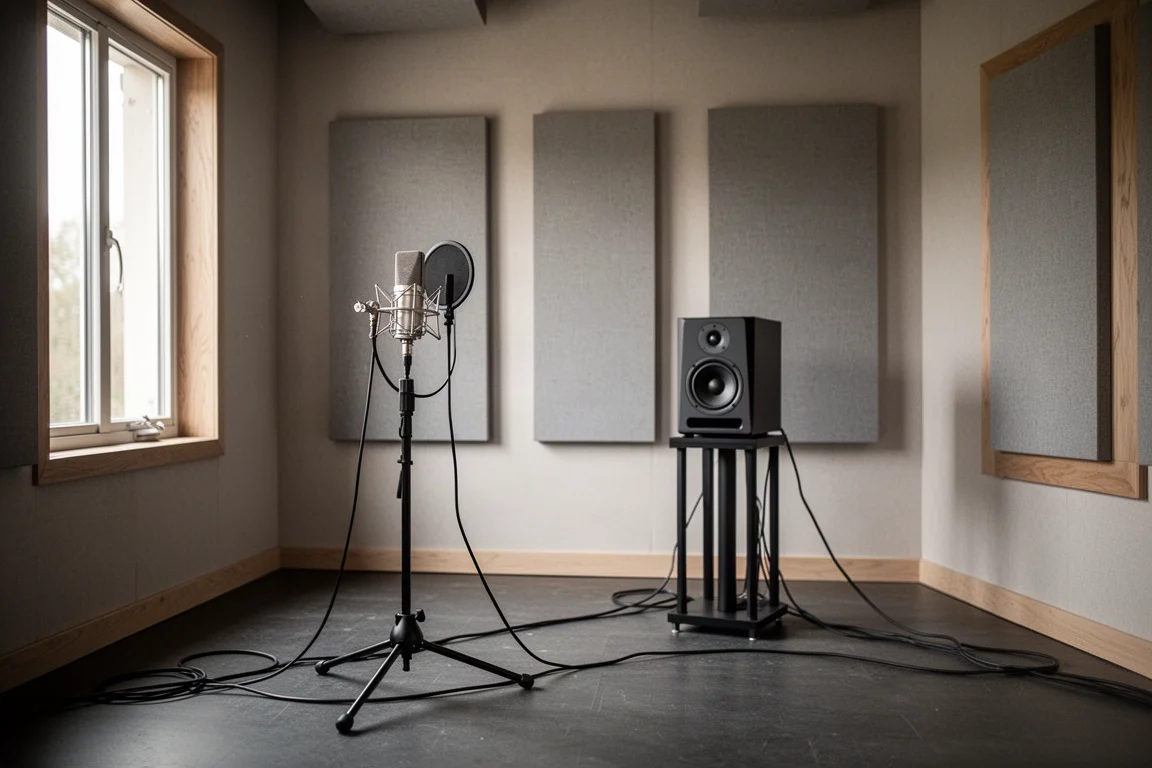
Directivity holds up well across the range, which is what makes the speaker such a good candidate for EQ. An estimated in-room response, derived from full 360-degree measurements, tracks closely with how the speaker actually sounds at a listening distance of about 10 feet, with the cabinet positioned anywhere from one to three feet from the back wall.
Burst decay shows a mild high-Q resonance lingering around 2.5 to 4 kHz. It persists for a while but is not strong, and it is far from the worst behavior in this category.
Distortion performance is solid. At 96 dB at 1 meter, midrange distortion stays low, with a small amount of breakup near 3 kHz that corresponds to the dip in the on-axis response. Multi-tone distortion also looks good across the tested output range.
On compression, longer-term testing with pink noise shows modest compression, with the largest deviation around 150 Hz. Faster, transient-oriented testing suggests the dynamic range ceiling sits somewhere around 96 to 102 dB at 1 meter.
Within Kali Audio’s own lineup, measured behavior is close to the IN-5, with similar bass rolloff, similar on-axis linearity, and comparable distortion. The IN-5 shows more diffraction above roughly 7 kHz, and while it does not react as strongly to dynamic range testing, it also runs out of headroom near 102 dB at 1 meter. On raw performance the two are close, and the SM-5’s practical advantages come down to its built-in DSP and its wall-mounting hardware.
Things to Consider Before Buying
Bass output is the clear limitation. A 5-inch mid-bass driver has limited excursion, so the SM-5 will not deliver deep low end at high playback levels. It would be a stronger speaker if it could go lower and louder at the same time, and anyone working on bass-heavy material at volume should treat this as the main constraint.
Price is the other consideration. At about $1,700 each, a pair is a significant investment, and the value case rests on features rather than brute output. The DSP, the coaxial directivity, and the wall-mounting hardware are what you are paying for.
Setup also deserves time. The dip switches exist for a reason, and working through the boundary, desk, and free-field options will change the low-frequency balance more than most buyers expect. Skipping that step leaves performance on the table.
Buying Advice
The strongest reason to choose the SM-5 is room correction without construction work. Room problems typically sit below about 400 Hz, where deviations tend to be both wide and strong. Trimming those resonances inside the speaker is a practical alternative to filling a small room with large bass traps, and it is the kind of flexibility that pays off every day in an untreated space.
If you are building an immersive or home theater system, the wall-mounting support is a second clear argument in its favor, since front heights, surrounds, and ceiling positions all benefit from a speaker that can be mounted properly.
If neither of those matters to you and you simply want the most measured performance for the money, the IN-5 is worth comparing directly. It is close on linearity, bass rolloff, and distortion, though it shows more diffraction above roughly 7 kHz. Either way, the SM-5 earns its price through adaptability rather than output.
Conclusion
The Kali Audio SM-5 is a well-rounded three-way monitor with genuinely useful room-adaptation tools. Its coaxial driver layout and baffle-integrated waveguide give it wide, consistent directivity, its DSP makes per-speaker EQ possible without extra hardware, and its wall-mounting support opens up placements that most studio monitors cannot handle.
The trade-off is bass. A 5-inch mid-bass driver sets a real ceiling on low-frequency output, and at about $1,700 per speaker the SM-5 is priced for buyers who will actually use its flexibility. For a small room, a desktop setup, or an immersive system where placement and EQ matter as much as raw output, it is a compelling choice. For deep bass at high levels, plan accordingly.
Product link
View more details for Kali Audio SM-5
This product is mentioned in the review. Check the specifications, options, and compatibility before buying.
View more details for Kali Audio SM-5Further reading
Related Reviews
Studio Monitors
ADAM Audio A8H Review: A Three-Way Studio Monitor That Also Knows How to Have Fun
A three-way active studio monitor with an 8-inch woofer, a handmade AMT tweeter, and two distinct tunings, the ADAM Audio A8H aims to satisfy both critical work and everyday listening.

Studio Monitors
Best Studio Monitors 2026: Six High-End Options Compared
We tested six premium studio monitors in a real studio space to see which ones deliver the best mix of accuracy, musicality, and value.
Studio Monitors
Focal Alpha 65 Evo Review: An Honest Studio Monitor With Real Bass
A bi-amplified active studio monitor with deep bass, useful tone controls and a truthful, uncoloured voicing, assessed for small studios and home setups.