Studio Monitors
Kali Audio LP-6 V2 vs LP-8 V2: Which Studio Monitor Fits Your Room?
A practical comparison of the Kali Audio LP-6 V2 and LP-8 V2 powered studio monitors, covering output headroom, tonal linearity, placement switches, and the listening distance each one suits.
Introduction
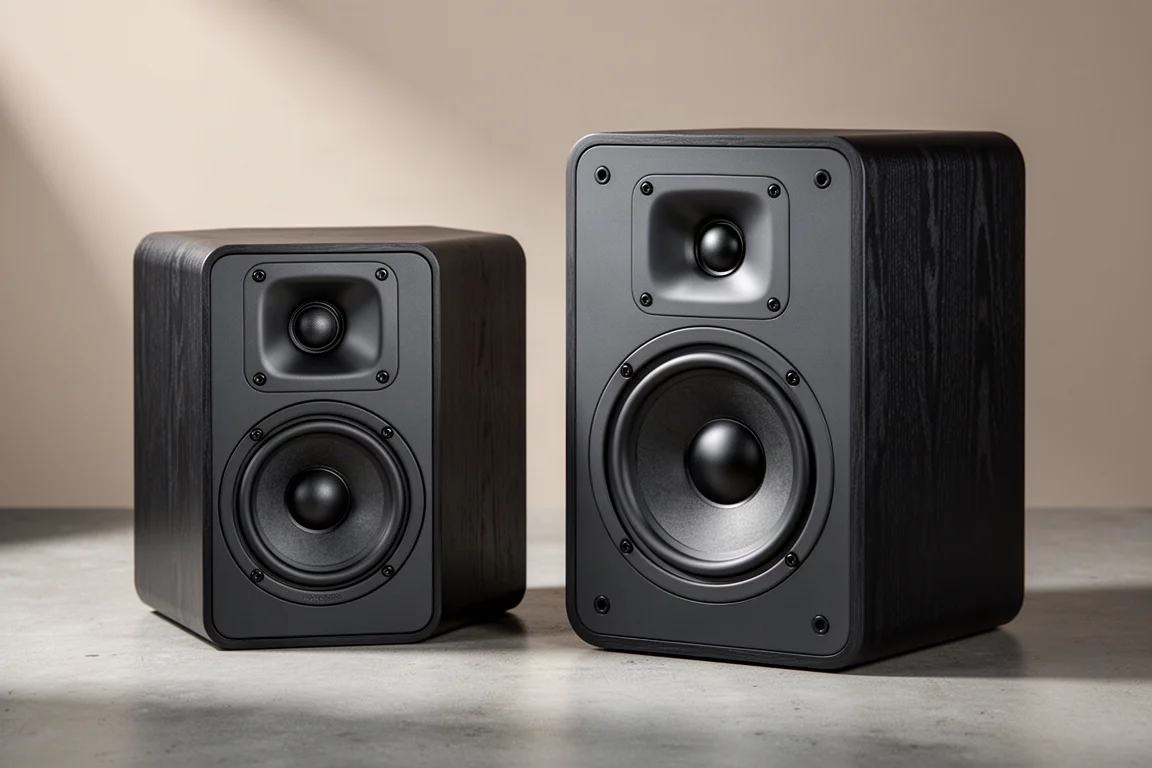
Kali Audio’s LP-6 V2 and LP-8 V2 are powered studio monitors built around the same cabinet language and the same feature set, which makes the choice between them narrower than the price gap suggests. Both use a plastic front baffle, an MDF enclosure, and a built-in amplifier with XLR, TRS, and RCA inputs. Both also carry a bank of rear dip switches for matching the response to the way you position them.
The LP-6 V2 is priced at around $400 per pair and the LP-8 V2 at around $500 per pair. Both are also available as single units, which matters if you are building a multi-channel setup rather than a stereo pair.

The short version: the LP-8 V2 plays louder and holds its composure better at high levels, while the LP-6 V2 is the more linear of the two. The deciding factor is usually listening distance and how much output you actually need.
What Both Kali Audio Monitors Share
Both are ported designs with a roll-off of roughly 24 dB per octave, which is typical for a ported enclosure. Each can play flat anechoically down to about 40 Hz, and in a room the low end will be reinforced further. Even so, neither goes deep enough to make a subwoofer unnecessary: below roughly 30 Hz in room you will still want one. Kali Audio builds a dedicated subwoofer that either monitor can connect to, and it includes its own dip switches so it can recognise which speaker it is paired with and adjust the bass crossover point accordingly.
Horizontal dispersion is a clear strength. The horizontal radiation pattern is smooth on both models and among the better examples in this price range. Vertical directivity is the weaker axis, though not severely so.
Kali Audio LP-6 V2: The Compact Reference
The LP-6 V2 is the more linear speaker of the pair, and that is the main reason it suits close listening. There is a mild resonance between roughly 1 kHz and 2 kHz, low enough in amplitude that it is not disruptive and spread across about a third to two thirds of an octave, which makes it a reasonable candidate for a small amount of EQ. The on-axis response also shows a dip where the woofer hands off to the tweeter, a modest bump around 4 kHz, and a lift above roughly 12 kHz, a pattern common to waveguide designs that can be trimmed if you prefer a softer top end.
In-room estimates calculated for a listening distance of about two metres show a bump near 1.2 kHz and a slightly plateaued treble region, which tends to read as brightness because more energy is sent off axis at high frequencies. High-frequency dispersion is a little wider than on the LP-8 V2, so the sense of space is good. Harmonic distortion at 96 dB at one metre is a touch higher in the lower midrange than the larger model, and the limiter engages through the midrange at all levels and more heavily at very high levels, which means bass output tapers as you keep turning the volume up.
Kali Audio LP-8 V2: More Headroom for Bigger Rooms
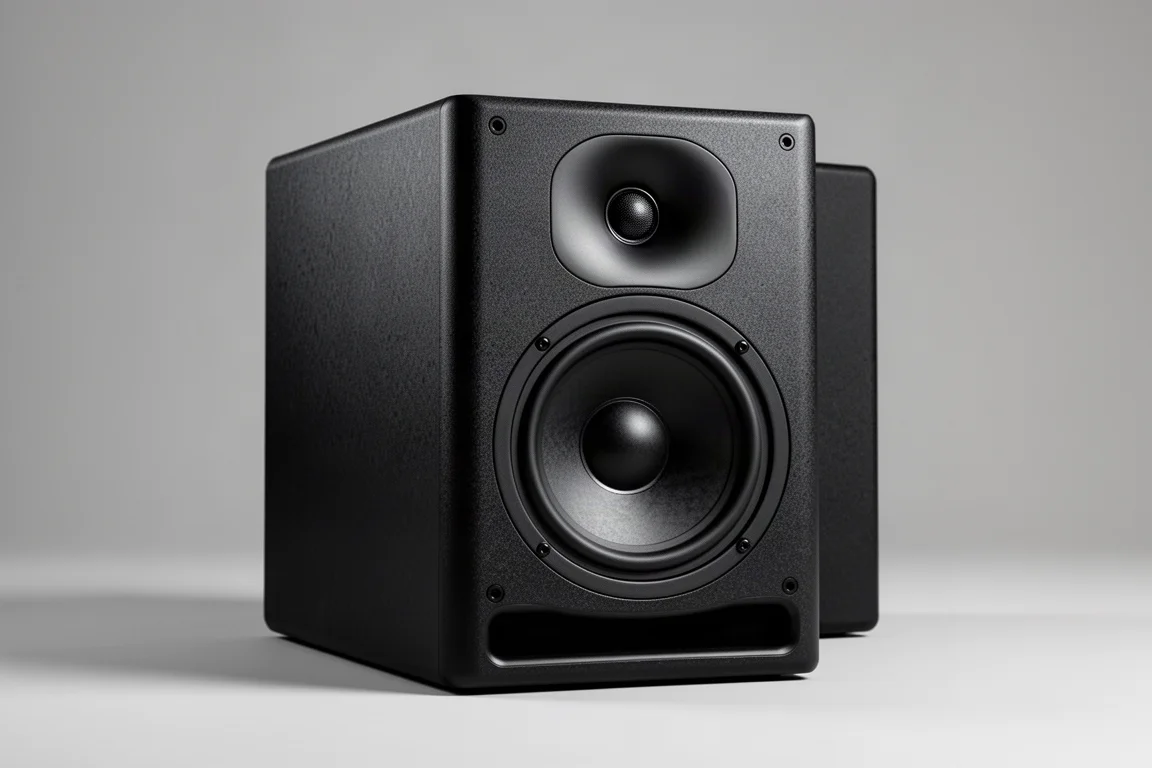
The LP-8 V2 pairs its larger eight-inch woofer with about 2 dB more dynamic range than the LP-6 V2, and that advantage lands mostly below roughly 200 Hz. Compression behaviour shows around 1.5 to 2 dB less limiting than the smaller model, so it stays cleaner as playback level rises. What it does not do is go dramatically deeper: bass extension improves by only about three hertz, and the in-room estimate shows a slightly shallower roll-off and a small bass lift rather than a different class of low-frequency performance.
That combination is what makes the LP-8 V2 the better pick for midfield and far-field listening, including home theatre and hi-fi setups where the listening position sits three metres or more from the speakers.
Sound Character: Resonances, Treble, and Directivity
Tonally the two are close, but they place their imperfections in different regions. The LP-8 V2 is the less linear speaker, with resonances in the upper midrange around 800 Hz to 1 kHz, plus a region near 600 Hz that stands out as chesty. A cut of about 1.5 dB in that area added noticeable clarity, particularly on female vocals, whose fundamentals and harmonics sit higher. The LP-6 V2 keeps its resonance higher up, between 1 kHz and 2 kHz.
Neither resonance is severe enough to rule a speaker out, and both models measure as flat and well behaved on axis. Treble behaviour is the other shared trait: a gentle rise above about 12 kHz that can sound bright to some listeners and that responds well to a little equalisation. Room furnishings, curtains, and wall treatments will change how much of that top-end lift you actually hear, as they would with any monitor.
Placement Flexibility and Subwoofer Support
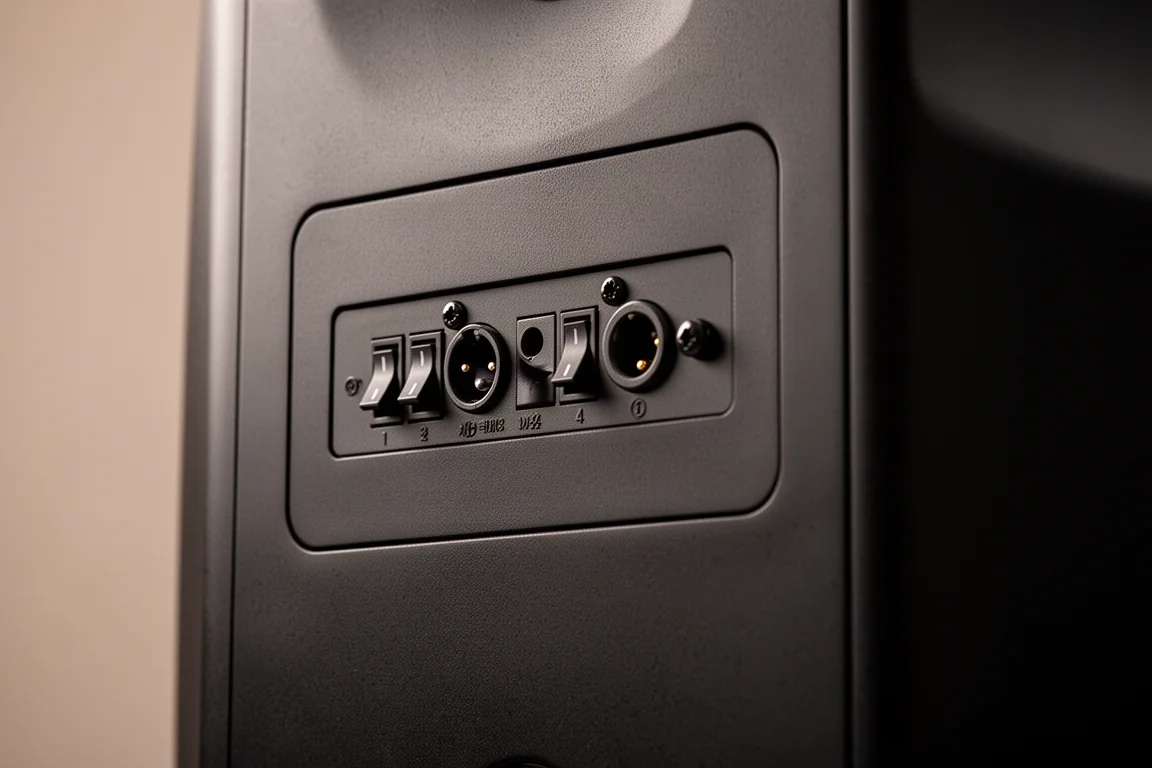
The rear dip switches are the feature that makes either speaker easy to live with. You can set them for free air placement away from a wall, free air near a wall, a console position, or a desk stand, and the response is adjusted to match. That flexibility is unusual at this price, and it means you can put the monitors where the room works rather than where a manual insists.
Both models also integrate with Kali Audio’s dedicated subwoofer, which reads the dip switch setting of the connected speaker and adjusts its crossover point to suit. If deep bass matters to you, budget for a subwoofer as part of the system rather than expecting either monitor to cover the bottom octave on its own.
Which One Should You Buy?
If you listen in the near field, at a desk a metre or two from the speakers, the LP-6 V2 is the safer choice. It is more linear, it has more than enough output for that distance, and it costs less. Worrying about output at near-field distances is largely unnecessary.
If you sit three metres or more away, or you are building a system for home theatre or relaxed hi-fi listening, the LP-8 V2 earns its extra cost through greater output capability and dynamic range. The trade-off is a slightly less linear midrange that benefits from a small EQ cut, and bass that is only marginally deeper than the smaller model.
Conclusion
Both monitors deliver a level of performance that is hard to match at their prices, and the decision comes down to distance and headroom rather than overall quality. Choose the LP-6 V2 for a desk and a tighter budget. Choose the LP-8 V2 if you listen from further back and want the extra dynamic range, accepting a midrange that responds well to a touch of EQ.
Further reading
Related Reviews
Studio Monitors
ADAM Audio A8H Review: A Three-Way Studio Monitor That Also Knows How to Have Fun
A three-way active studio monitor with an 8-inch woofer, a handmade AMT tweeter, and two distinct tunings, the ADAM Audio A8H aims to satisfy both critical work and everyday listening.

Studio Monitors
Best Studio Monitors 2026: Six High-End Options Compared
We tested six premium studio monitors in a real studio space to see which ones deliver the best mix of accuracy, musicality, and value.
Studio Monitors
Focal Alpha 65 Evo Review: An Honest Studio Monitor With Real Bass
A bi-amplified active studio monitor with deep bass, useful tone controls and a truthful, uncoloured voicing, assessed for small studios and home setups.