Studio Monitors
Kali Audio LP-6 Second Wave Review: Deep Bass and Clean Off-Axis Response for $400 a Pair
A near-field studio monitor with 42 Hz extension, strong horizontal off-axis behavior, and practical room-tuning switches, plus a few setup rules worth respecting.
Introduction
The Kali Audio LP-6 Second Wave is a powered studio monitor built for near-field work, and it arrives with a clear pitch: a lower noise floor, higher input sensitivity, and a deeper layer of onboard DSP that keeps the on-axis response flatter than the previous generation. At $400 per pair, that combination lands in a crowded part of the market, so the useful question is not how it reads on a specification sheet but how it behaves in a real room.
The short answer is that the LP-6 Second Wave is easy to recommend at its price, provided the listener is willing to sit in the right place and work within the speaker’s natural limits.
Who This Speaker Is For
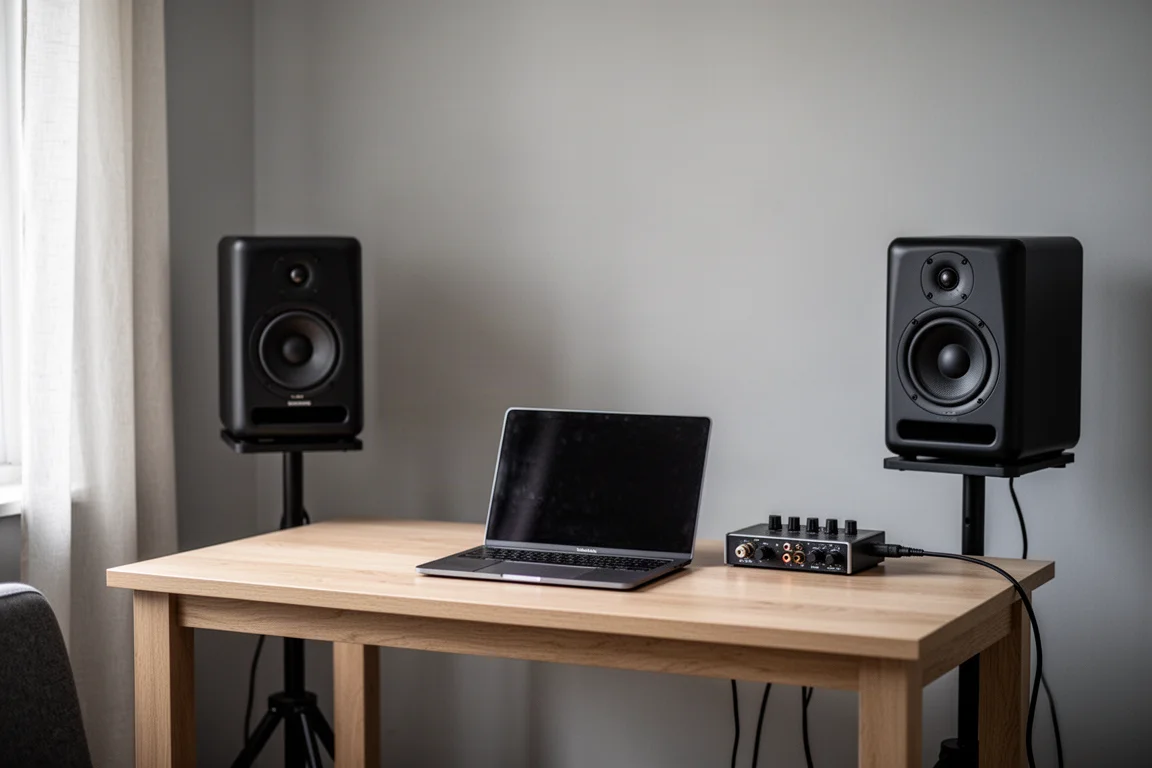
The LP-6 Second Wave is specified as a near-field to midfield monitor, with a recommended listening distance of roughly 0.5 meters to 2.5 meters for a stereo pair. That makes it a natural fit for small and mid-sized studios, home production desks, and anyone mixing at moderate levels rather than trying to fill a large room.
Low-frequency extension is a major part of the appeal. The F3 is specified at 42 Hz, which is unusually deep for a monitor in this price bracket, and it means the speaker reaches below the 50 to 60 Hz range that many comparable models settle for.
Listeners who simply want good playback for music can enjoy it as well, but the design rewards a disciplined setup far more than a loud, distant listening position.
Design and Connectivity
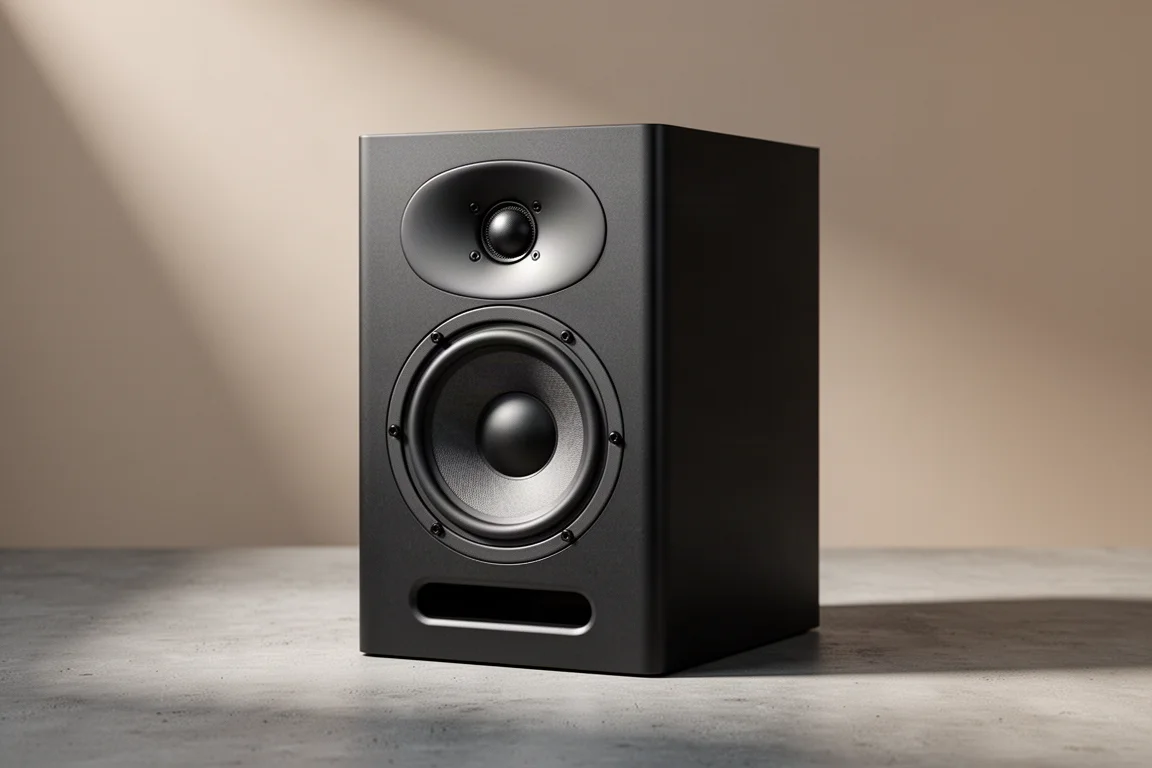
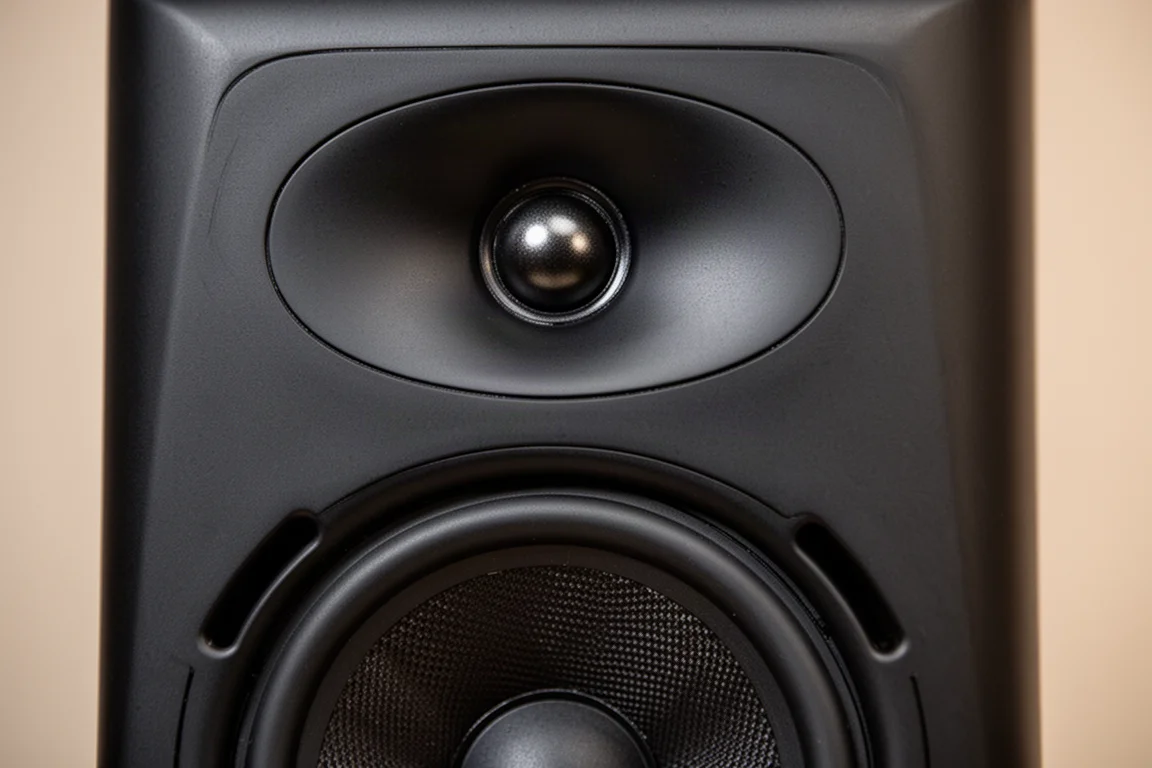
Physically, the LP-6 Second Wave is a two-way design with a 6.5-inch woofer and a 1-inch dome tweeter set into an elliptical waveguide. A slot port sits on the front baffle, which gives some freedom in how close the cabinet can sit to a wall without the port loading up against a surface.
The rear panel covers the practical side well. There is an RCA input, a quarter-inch TRS input, and an XLR input, so the speaker can connect to consumer gear and balanced studio interfaces alike. A gain knob adjusts input sensitivity, and a bank of dip switches tailors the speaker to its surroundings: freestanding, on a console, or on a table, with separate bass boost or cut and treble boost or cut options.
Measured Performance and Sound Quality
On axis, the response is largely linear, with one notable feature: a gentle bump in the 1 to 2 kHz region. It is tempting to read that area as a pair of recesses on either side, but the measurements point to an elevation rather than dips.
What matters more is where the irregularity comes from. Horizontal off-axis behavior is strong and consistent as the microphone moves away from the on-axis position, with no abrupt changes and only a small amount of bunching that may relate to diffraction or to the tweeter’s transition into the midrange. The vertical response is the source of the directivity irregularity through that same 1 to 2 kHz band. Sitting above or below the tweeter axis introduces audible issues; sitting level with the tweeter avoids them.
The estimated in-room response follows a reasonably linear slope with a mild plateau in the high frequencies, and the on-axis linearity data stays close to a plus or minus 1.5 dB window across the 300 Hz to 3 kHz range, well inside the wider plus or minus 3 dB tolerance.
The speaker also responds well to equalization, and that follows directly from its clean horizontal off-axis behavior: adjustments change not only the direct sound but the energy radiated into the room. A small lift of roughly 1.5 dB around 8 kHz added shimmer to cymbals and a sense of air to the overall presentation, while cutting the 1 to 1.5 kHz region did not produce an improvement.
What the Measurements Reveal About Placement
The dip switches are not decorative. Tweeter level can be set to +2 dB, flat, or -2 dB, and the low-frequency settings account for whether the speaker sits on a table more than half a meter from a boundary or on a console. Those choices visibly change what the onboard DSP is doing.
Output capability is another area where the data sets expectations. Compared with a 76 dB baseline, the response at 86 dB and 96 dB stays within a reasonable amount of variation, while 102 dB shows a much more varied result. For a near-field to midfield monitor used at sensible levels, that is not a practical limitation. Listening at around 80 dB leaves roughly 20 dB of headroom for peaks and dynamic range.
Living With the LP-6 Second Wave
In use, the LP-6 Second Wave is quiet. No hiss was audible from about three feet away, which matters for anyone working close to their monitors for long sessions. Driven from a MOTU M2 audio interface with streamed music, it behaved without issue across the session.
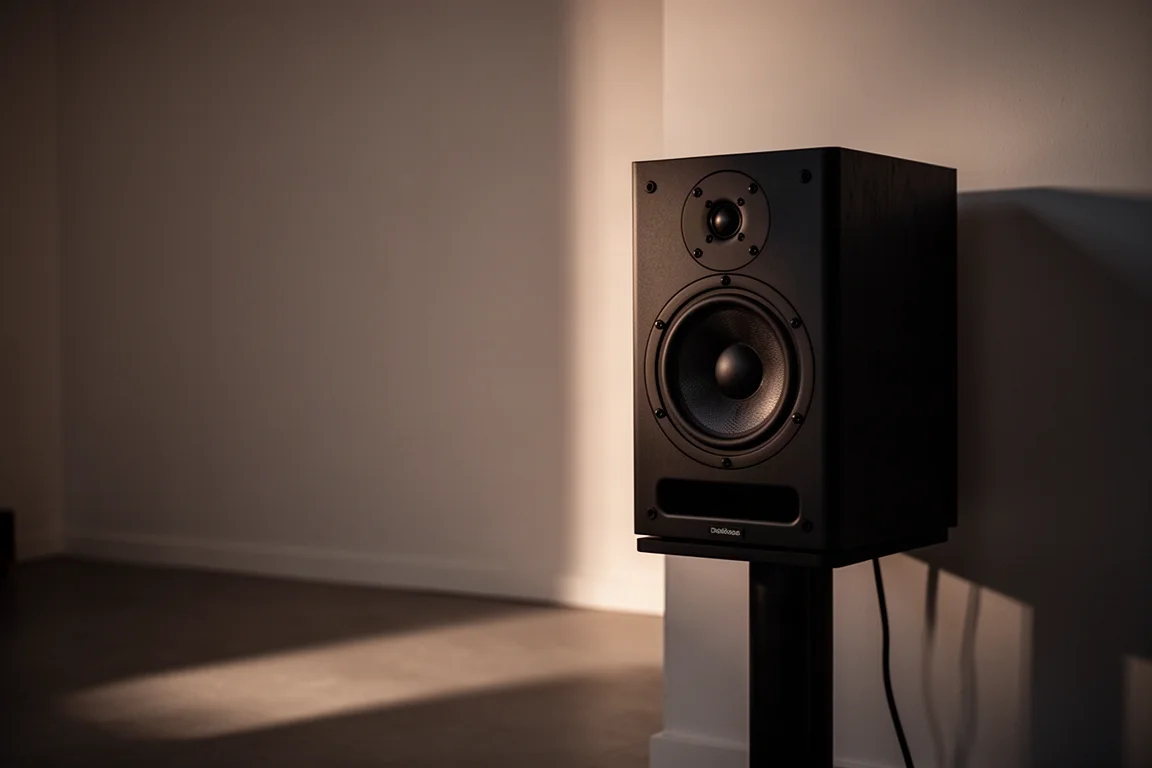
Bass is the other headline. With an F3 of 42 Hz, the speaker digs deeper than most of its peers, and placing it near a wall will shore up the low end further. The roll-off is steep, though, so listeners who need genuine sub-bass for bass-heavy material may still want to add a subwoofer.
For the majority of users, and especially for those mixing, the stock low-frequency performance should be enough on its own.
Things to Consider Before Buying
Three points are worth weighing before purchase.
The first is vertical directivity. The 1 to 2 kHz irregularity comes from the vertical plane, so the speaker asks for a setup where the ears sit level with the tweeter. That is a reasonable request at this price, but it is a real constraint on desks or in rooms where the tweeter cannot be placed at ear height.
The second is the steep low-frequency roll-off. Deep extension is present, but it falls away quickly, which limits how much usable sub-bass is available without assistance.
The third is volume. Pushed toward 102 dB, the response becomes noticeably more varied than at lower levels. Treat the LP-6 Second Wave as a monitor that excels at moderate listening levels rather than one built to fill a large space.
Buying Advice
At $400 per pair, the LP-6 Second Wave is difficult to argue with. The horizontal off-axis response is the strongest part of the design, and it is the reason the speaker takes equalization so gracefully: corrections affect the whole radiated sound rather than a narrow on-axis window. The built-in dip switches add a second layer of adjustment for room and placement, so a buyer can adapt the speaker instead of fighting the room.
Anyone who wants a flatter response out of the box can apply a small high-frequency lift and leave the midrange alone, while listeners who prefer the stock tuning can simply place the speakers at tweeter height and enjoy them as they are. Either way, the fundamentals are in place.
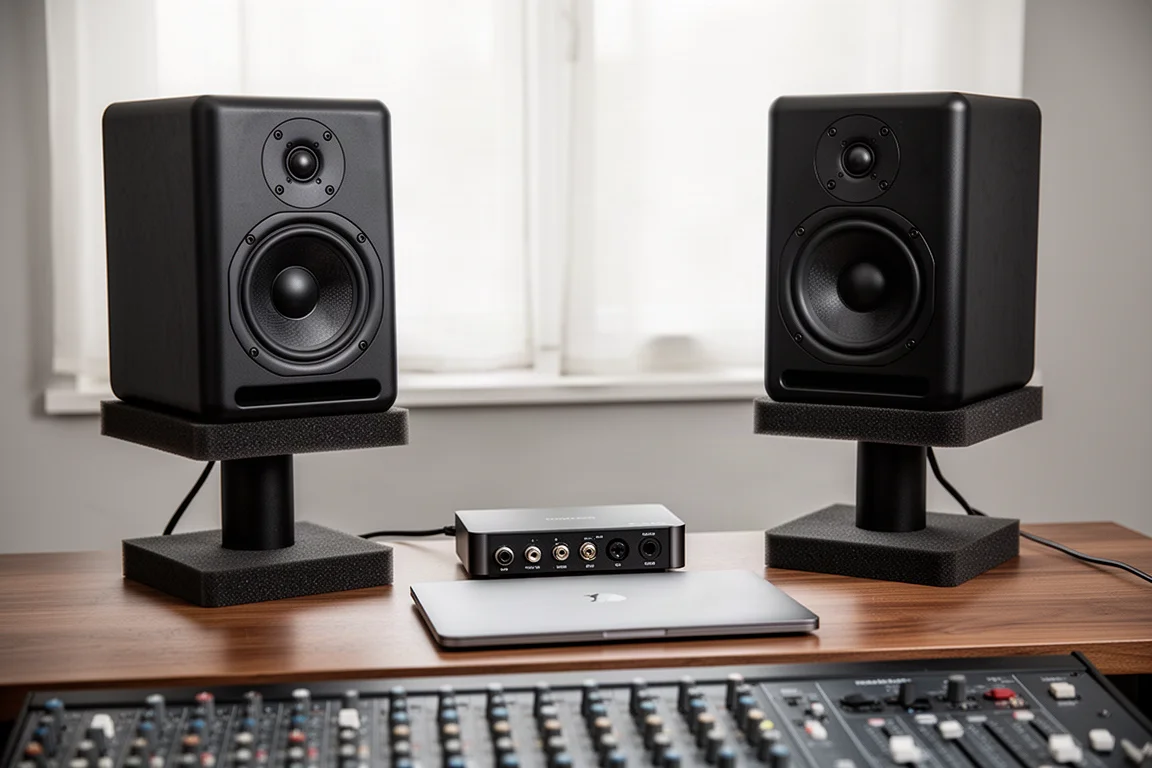
Buyers should budget for proper stands or a desk arrangement that puts the tweeter at ear level, since that single setup decision matters more here than any accessory.
Conclusion
The Kali Audio LP-6 Second Wave delivers deep low-frequency extension, a genuinely clean horizontal response, useful room-tuning switches, and a low noise floor for $400 per pair. Its weaknesses are narrow and predictable: vertical directivity that demands correct tweeter alignment, a steep bass roll-off, and output limits at high volumes. For near-field mixing and production in a small or mid-sized room, those are easy trade-offs to accept.
Product link
View more details for Kali Audio LP-6 Second Wave
This product is mentioned in the review. Check the specifications, options, and compatibility before buying.
View more details for Kali Audio LP-6 Second WaveFurther reading
Related Reviews
Studio Monitors
ADAM Audio A8H Review: A Three-Way Studio Monitor That Also Knows How to Have Fun
A three-way active studio monitor with an 8-inch woofer, a handmade AMT tweeter, and two distinct tunings, the ADAM Audio A8H aims to satisfy both critical work and everyday listening.

Studio Monitors
Best Studio Monitors 2026: Six High-End Options Compared
We tested six premium studio monitors in a real studio space to see which ones deliver the best mix of accuracy, musicality, and value.
Studio Monitors
Focal Alpha 65 Evo Review: An Honest Studio Monitor With Real Bass
A bi-amplified active studio monitor with deep bass, useful tone controls and a truthful, uncoloured voicing, assessed for small studios and home setups.