Electrical Tools
KAIWEETS KT303P Circuit Breaker Finder Review: A Practical Look
A hands-on look at the KAIWEETS KT303P circuit breaker finder, covering its outlet testing, NCV probe, and how it compares with the KT301P.
Introduction
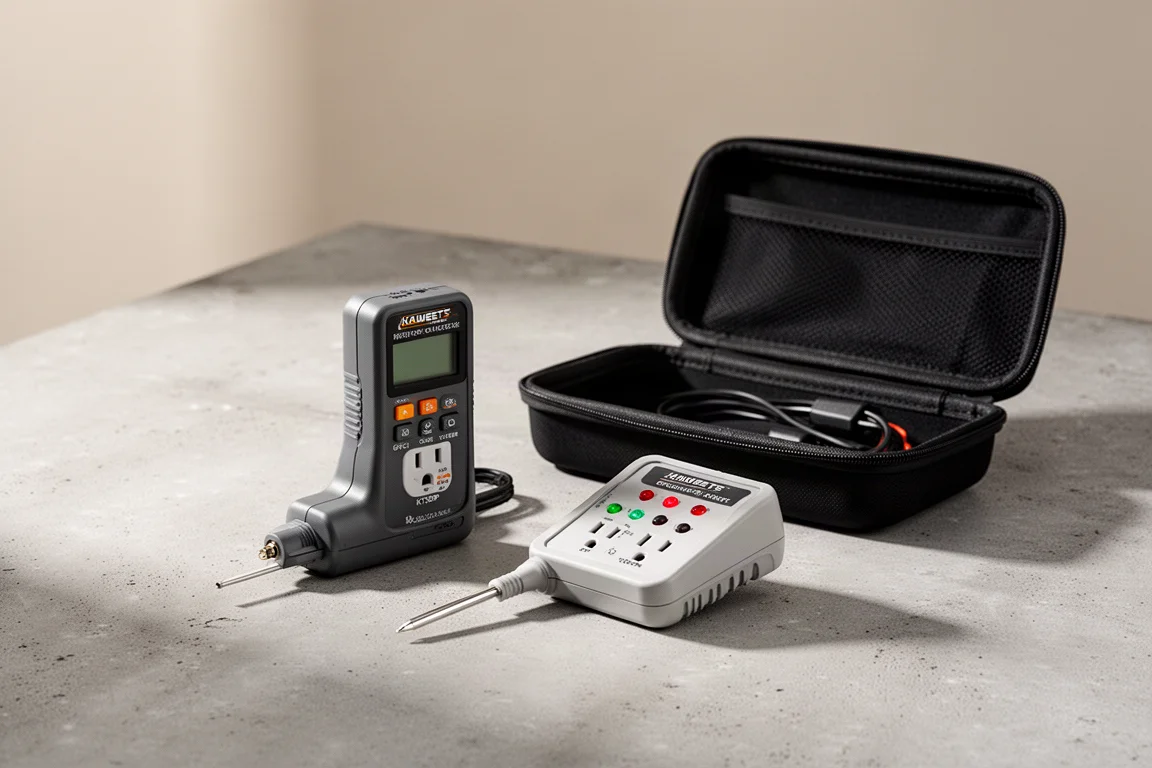
The KAIWEETS KT303P is a circuit breaker finder designed to help you test wall outlets and trace which breaker controls them. It combines a GFCI outlet tester, a non-contact voltage (NCV) probe, and a receiver that can locate the matching circuit breaker in your panel. This makes it a useful tool for homeowners and anyone who wants to work on household wiring more safely.
In this review, we will look at what comes in the box, how the main test functions work, and how the KT303P compares with the KAIWEETS KT301P, another circuit breaker tester from the same brand.
What Comes in the Box
The KT303P arrives in a sturdy carrying case that keeps everything organized. Inside, you get the circuit breaker tester, which also serves as the receiver when tracing wires. Two AAA batteries are included and install under a small cover secured by a flat screw.
The transmitter is built into the GFCI tester. It plugs into an outlet and works with the receiver to trace the circuit. The kit also includes additional adapters for testing light bulb sockets and outlets without a ground connection. A test cable with clamps lets you connect to bare electrical wires for testing.
One thoughtful design detail is that the transmitter can plug directly into the end of the receiver. This means you can store both pieces together in your toolbox without worrying about losing the transmitter.
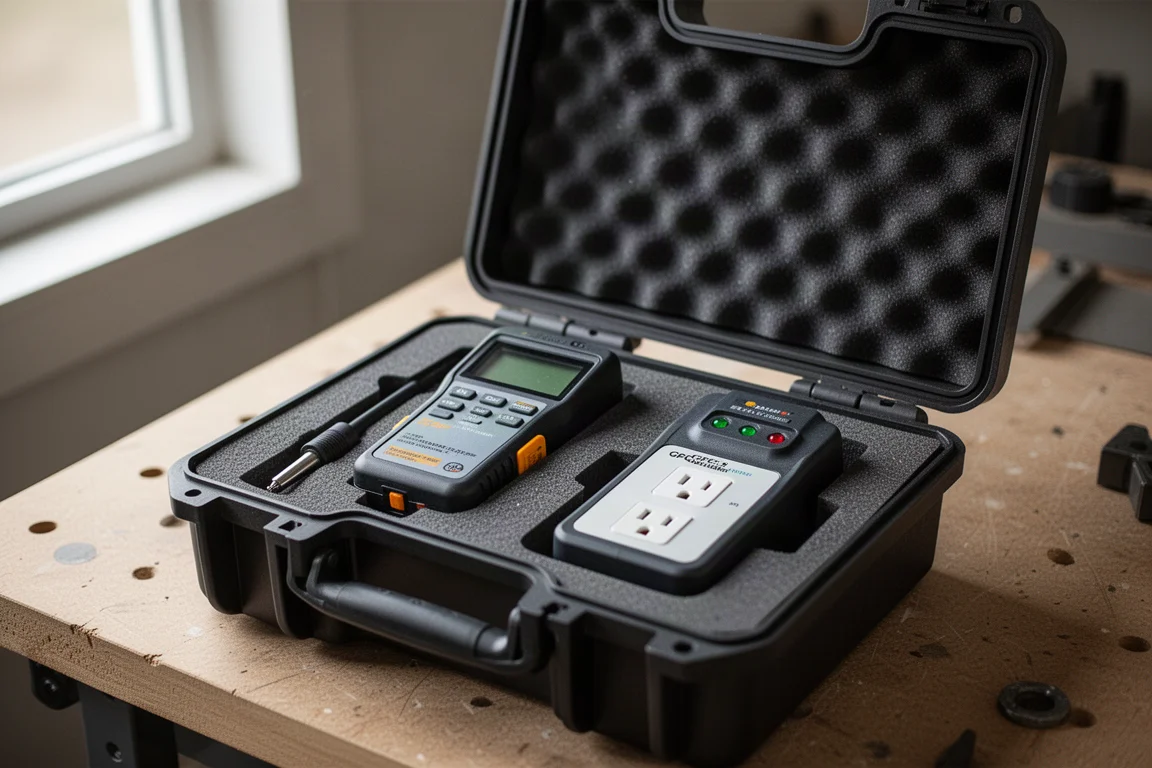
The kit also includes a user manual with important tips on using the circuit breaker finder, blank sheets for recording circuit information, and a sticker sheet for labeling breakers once you identify them.
Testing Outlet Wiring
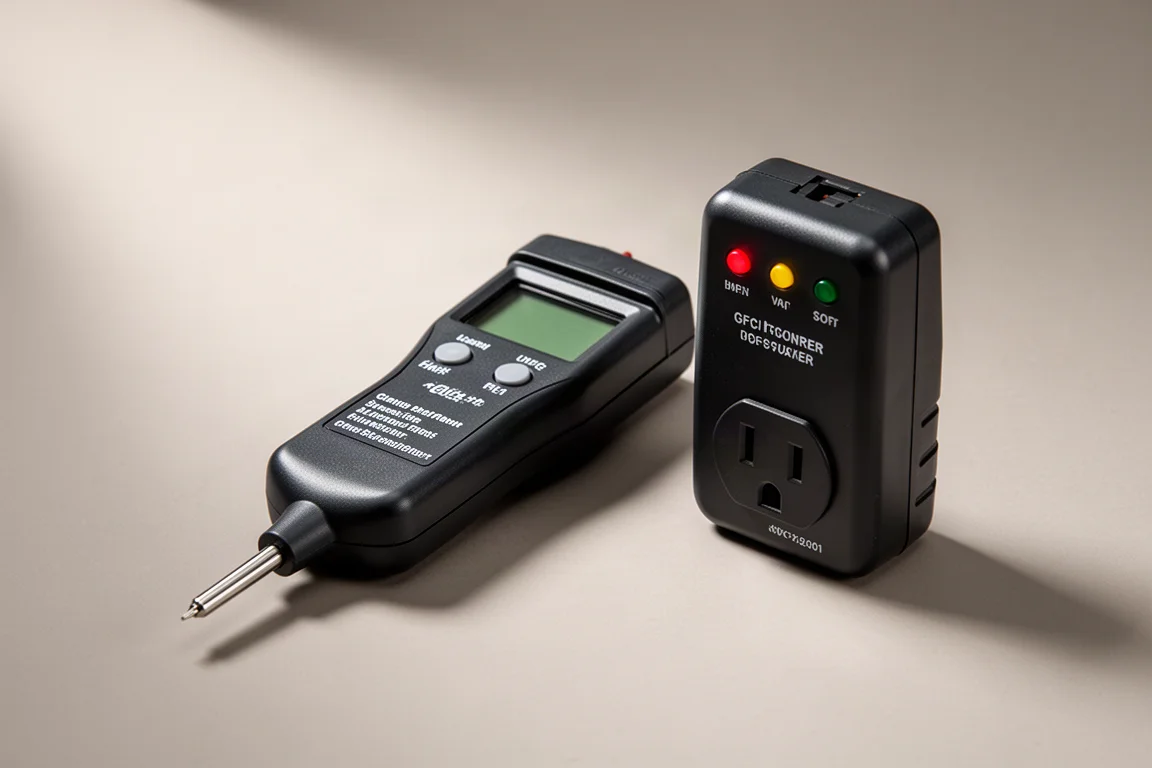
The KT303P functions as a basic GFCI outlet tester. When you plug the transmitter into an outlet, three status lights on the end indicate whether the wiring is correct. Two amber lights mean the outlet is wired correctly. If any wires are crossed, the lights will show an error.
To test a GFCI outlet, plug the tester in and confirm the two amber lights are on. Press the GFCI test button, and the outlet should trip, confirming it is working correctly. Press the reset button on the outlet to restore power.
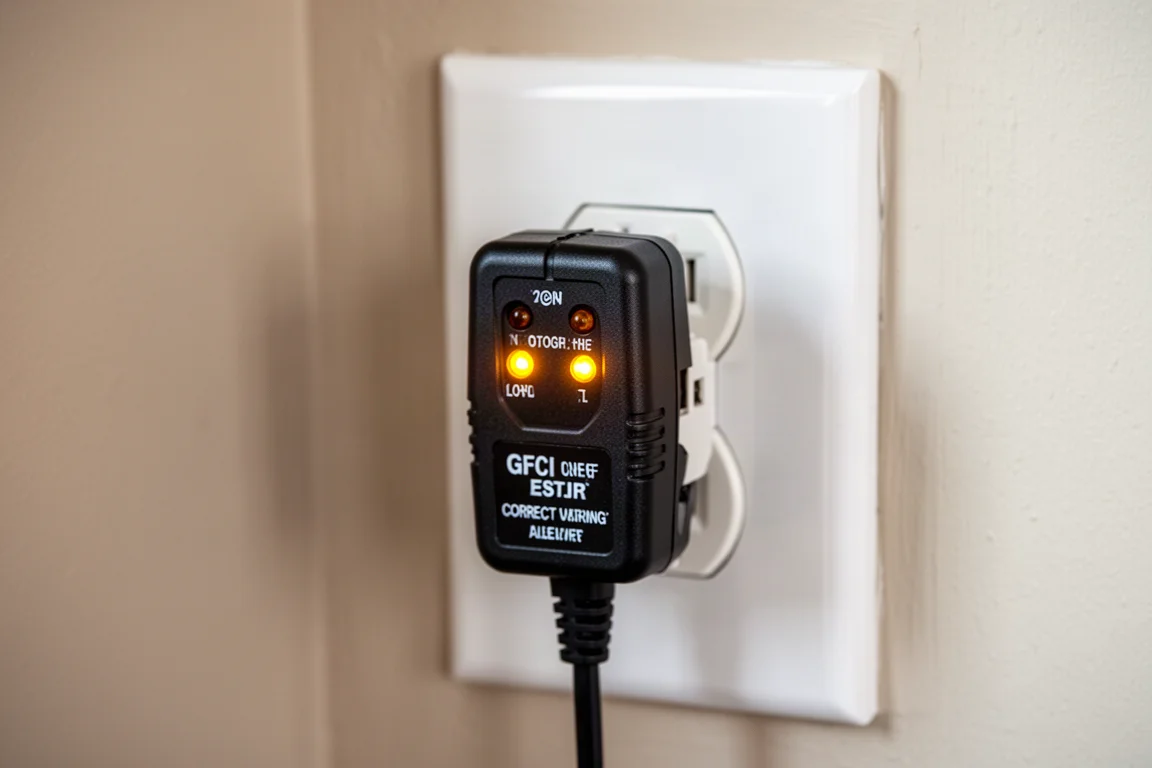
This tester does not have an LCD display like the KT301P. Instead, it relies on the three-light indicator system, which is simpler but still effective for verifying outlet wiring.
Using the NCV Probe
The KT303P includes a non-contact voltage probe at the end of the receiver. To use it, press the function button to enter NCV mode. Then place the probe near a wire or outlet to check if it is carrying live AC voltage. This is a safe way to test wires without making direct contact.
Press the function button again to return to receiver mode. In receiver mode, the display shows a scrolling bar and a magnifying glass icon, indicating the tool is ready to trace circuits.
Finding the Right Breaker
To find which circuit breaker controls a specific outlet, plug the GFCI tester into the outlet and confirm the wiring is correct. Then use the receiver to trace the circuit.
The receiver needs to go through a learning process that involves two passes along the breaker panel. On the first pass, run the probe along the entire length of all the circuit breakers. You may hear some beeps during this pass, but you should ignore them and continue. This first pass allows the receiver to learn the circuit.
After the first pass, the scrolling bar on the display stops, indicating the learning phase is complete. On the second pass, run the probe along the breakers again. When you reach the correct breaker, the display turns red and the receiver beeps. That is the breaker for the outlet you are testing.
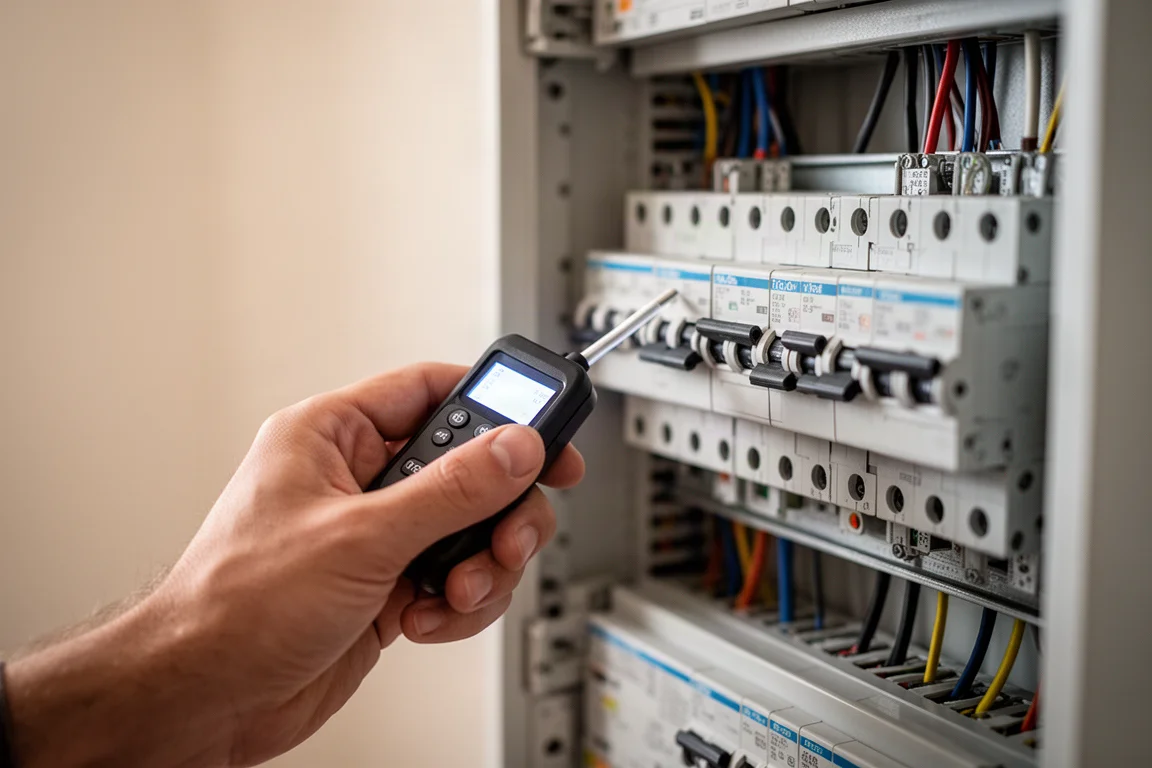
When using the probe, hold it at an angle against the surface of the circuit breaker rather than perpendicular to it. This improves the accuracy of the reading.
To run another test, press the reset button and repeat the two-pass process.
KT303P vs KT301P: Key Differences
The KAIWEETS KT301P is a more feature-rich version of the same type of tool. The most obvious difference is the display. The KT301P has a larger backlit LCD display on both the receiver and the GFCI tester. This display shows the AC voltage being measured and clearly indicates any faults on the outlet. The KT303P, by contrast, uses a smaller display on the receiver and only three status lights on the GFCI tester.
Another difference is battery usage. The KT301P uses four AAA batteries, making its receiver noticeably larger. The KT303P uses only two AAA batteries, resulting in a more compact tool.
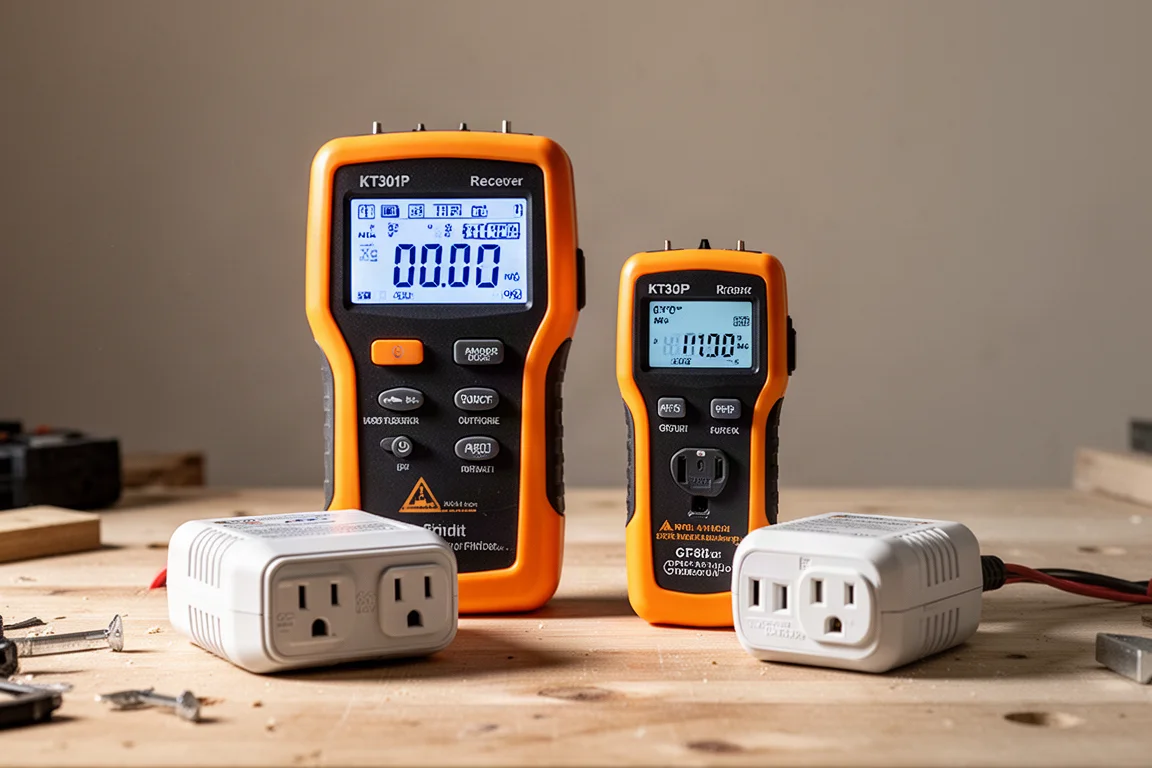
There is also a price difference. The KT301P retails for $65, while the KT303P retails for $50. If you want a more affordable option and do not need the voltage readout on the display, the KT303P is a solid choice. Both tools will help you quickly and safely find the correct circuit breaker.
Buying Advice
The KAIWEETS KT303P is best suited for homeowners and DIYers who want a straightforward, affordable way to test outlets and locate circuit breakers. Its compact size and included carrying case make it easy to store and transport.
If you regularly work with electrical wiring and want to see the actual voltage reading on the outlet, the KT301P’s larger LCD display may be worth the extra cost. But if you only need to confirm wiring is correct and find the right breaker, the KT303P covers those tasks well.
Conclusion
The KAIWEETS KT303P is a practical circuit breaker finder that combines outlet testing, non-contact voltage detection, and breaker tracing in one compact kit. It is easy to use, comes with useful accessories, and is more affordable than the KT301P. For anyone who wants to identify circuits safely without opening the fuse panel and probing live wires, the KT303P is a reliable option.
Further reading