Winter Traction
Kahtoola MICROspikes Review: Is Premium Winter Traction Worth It?
A practical look at the Kahtoola MICROspikes, covering durability, fit, spike layout, and whether premium traction devices are worth the price over budget alternatives.
Introduction
Icy ground is unforgiving. A single slip on a steep, frozen trail can turn a good day into a bad fall, and traction devices are the simplest insurance against it. Compact spike-style traction aids pack down small, add little weight, and let you walk with confidence on ice and hard-packed snow in both spring and winter conditions.
The Kahtoola MICROspikes sit at the premium end of that category at $75. Very affordable alternatives sell for anywhere from around $6 to $20 or more. This article looks at what you actually get for the difference, covering durability, ease of use, comfort, and traction.
Who the Kahtoola MICROspikes Are For
These are for people who end up on icy or hard-packed ground often enough that reliability matters: winter hikers, spring shoulder-season walkers, and anyone whose local trails hold ice well into the season.
Kahtoola offers four sizing options covering women’s size 6 through men’s size 14. The spikes weigh just over 380 grams, roughly the same as typical budget alternatives. The pair carries a two-year warranty, compared with the one-year warranty common on budget options.
The company is a small team based in Flagstaff, Arizona. Manufacturing happens overseas, as it does for most competitors, but design and testing take place in Arizona. The budget alternatives sold through large marketplaces are typically drop shipped by companies based overseas.
Main Strengths: Durability and Build Quality
Two failure points show up most often in owner reports for this category of product: the eyelets where the chains attach to the harness, and the loops where the stainless steel chains attach to the spike plates.
Kahtoola addresses the first with a patented reinforced TPU eyelet built directly into the harness material. Since introducing the feature, the company says eyelets ripping out of the harness have essentially stopped being a problem. For the second, Kahtoola uses stainless steel that is 10 to 20 percent thicker than what budget spikes use, and that applies across the whole product, including the chains and the spikes, not only the attachment loops.
Budget designs take a different route at the harness, simply thickening the material in the hope that the chain will not tear out. At the chain-to-plate loops, they do comparatively little.
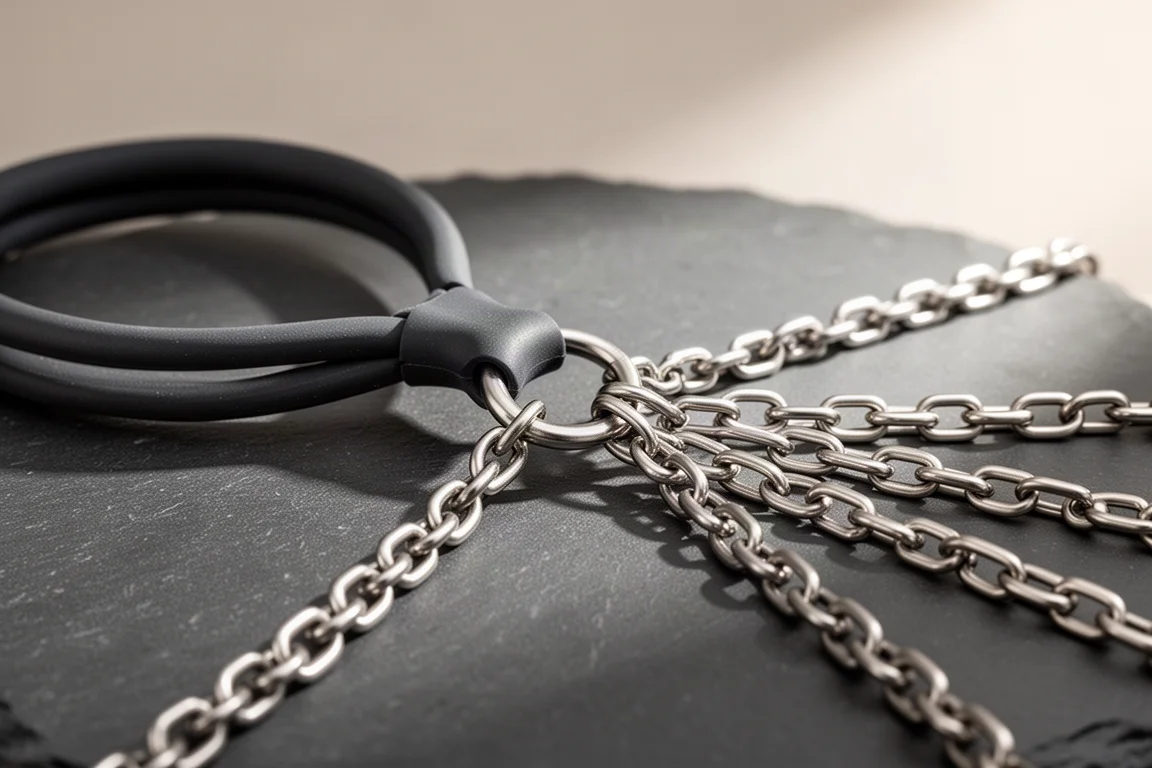
The practical takeaway is that the Kahtoola spikes feel more solidly made and have clearly been engineered around the specific points where traction devices tend to fail.
Ease of Use and Comfort
Budget spikes use a silicone harness that is very stretchy, which makes them quick to pull on and off. Some also add a hook-and-loop strap across the top of the foot for extra security.
Kahtoola uses a stiffer TPE harness instead. That makes the spikes slightly harder to get on and off, but it also locks the harness onto the shoe or boot more firmly. Coverage over the forefoot is generous enough that the harness stays put without an added strap.
The trade-off matters in practice. A stretchier harness shifts more as you walk, and the fit can feel less snug on the foot. The stiffer harness holds position better, which is exactly what you want when you are edging across a slope.
Design Choices That Affect Traction
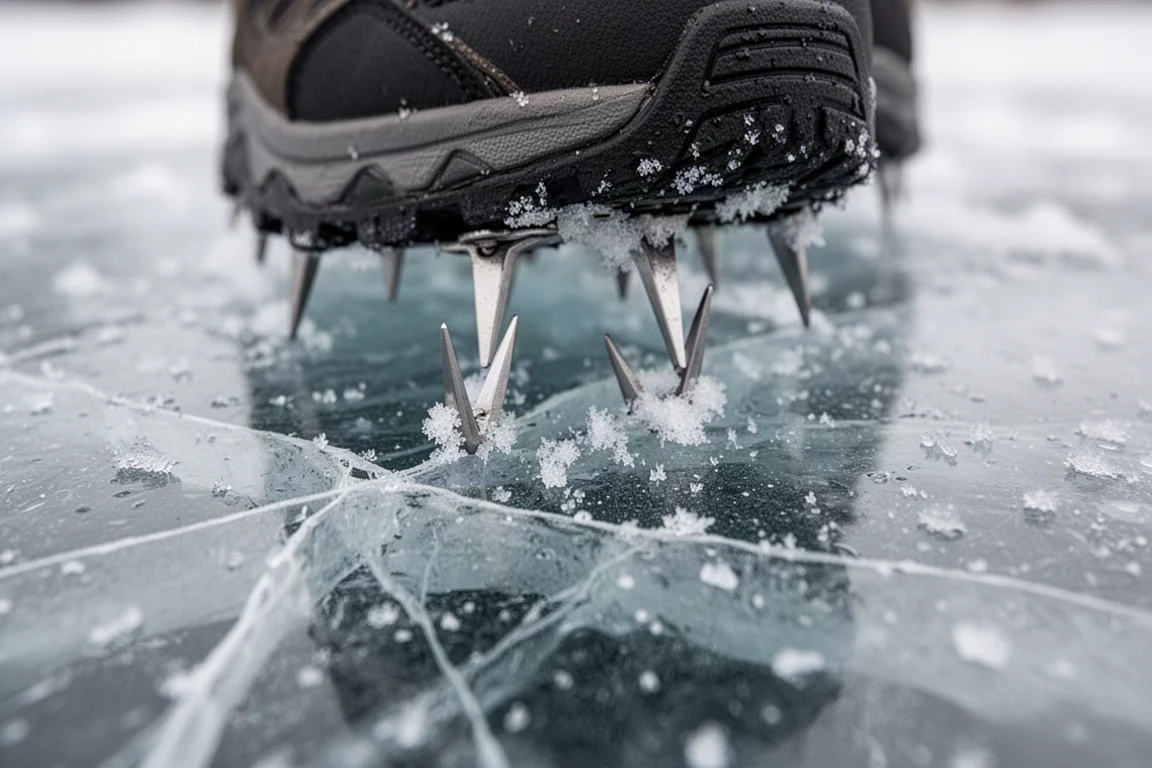
Both Kahtoola and budget spikes use spikes in the 11 to 12 millimetre range, a length that grips well on ice and hard-packed snow.
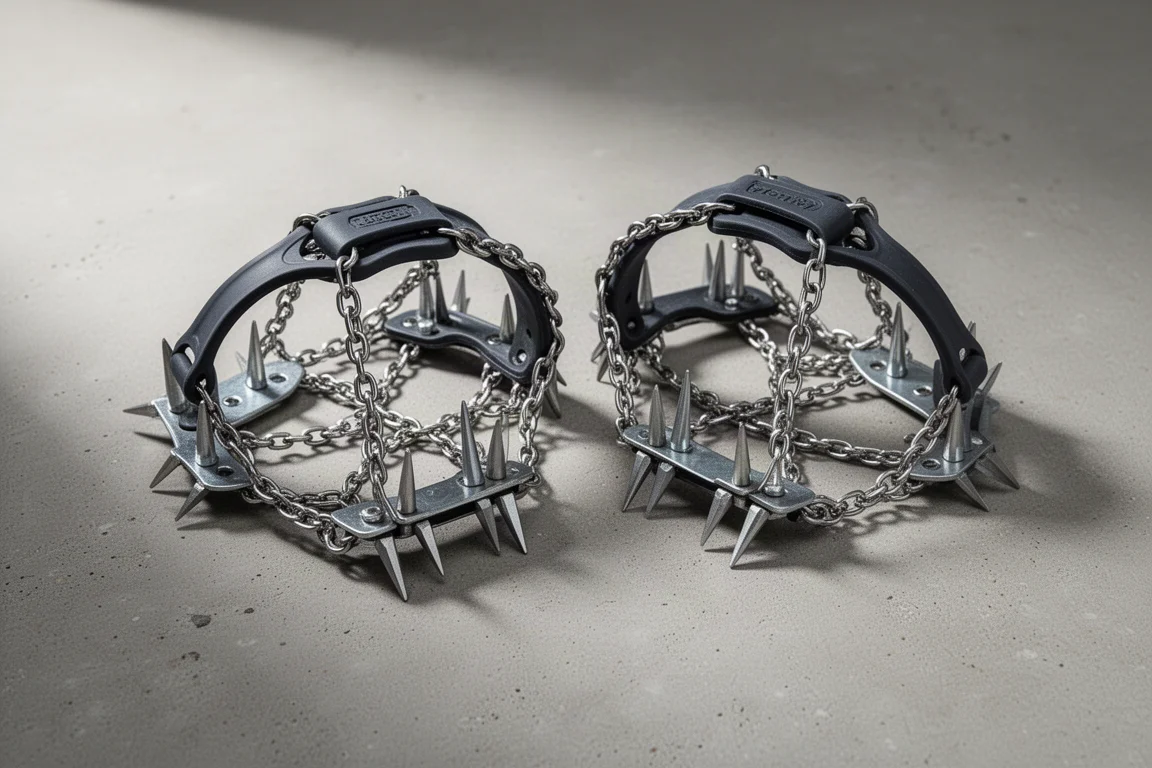
Where they diverge is spike count and layout. Kahtoola fits 12 spikes: eight at the front and four at the rear. Many budget options carry 20 or more, arranged in circular clusters on each plate.
More spikes is not automatically better. Fewer points of contact means less load spreading, so each spike presses harder into the ice and bites more effectively. The clustered arrangement on budget plates also tends to cup snow and slush. Think of pressing an upside-down cup into sticky snow: pull it out and the snow comes with it. The same thing happens inside those tight spike clusters. Kahtoola places spikes only on the outside of each plate, which avoids that effect, and noticeably less snow builds up on the underside as a result.
Things to Consider Before Buying
Fit is the single biggest factor in how long any pair of spikes lasts. A poorly fitting pair sits loose on the shoe, and walking on hard ice then applies torque to every connection point. Overlap between plates and chains can add more of the same. Buying the correct size for your footwear matters more than any number on the box.
The stiffer harness takes a little more effort to pull on, particularly with gloves on. That is a small inconvenience traded for a more secure fit.
Price is the other consideration. At $75, these cost several times what a budget pair does. If you only encounter conditions that call for spikes once or twice a year, the cheaper option is a reasonable choice and will still help on ice.
Buying Advice
The decision comes down to how often you will use them and how much you value a more polished product.
If your outings on ice are occasional, a budget pair covers the basics. If you are out regularly, want a product designed and tested by a team focused on traction devices, and prefer something that holds up over seasons of use, the Kahtoola MICROspikes justify the higher price. Kahtoola also supports conservation initiatives, including 1% for the Planet, and states that it is a carbon neutral company.

Sizing is worth getting right before you order. Measure your footwear and match it against the size chart rather than guessing, since a loose fit is what most often shortens the life of any traction device.
Conclusion
Kahtoola MICROspikes are not the cheapest way to walk on ice, but they are among the more carefully engineered. The reinforced eyelets, thicker stainless steel, and outside-only spike layout all target real-world problems. For occasional use, a budget pair is fine. For anyone who spends real time on icy ground, these are the ones to consider.
Product link
View more details for Kahtoola MICROspikes
This product is mentioned in the review. Check the specifications, options, and compatibility before buying.
View more details for Kahtoola MICROspikesFurther reading
Related Reviews

Backpacking Gear
Building a 10 lb Base Weight: An Ultralight Backpacking Gear List
A practical walkthrough of the ultralight pieces behind a 10 lb base weight, from a 765 g pack and a roomy one-person tent to a full camp chair and a dependable water filter.

Road Bikes
10 New Road Bikes Worth Watching: Aero, Titanium, Steel and Endurance Standouts
A practical roundup of 10 new road bikes, from aero flagships chasing single-watt gains to titanium, steel and endurance platforms built for real roads.
Bikepacking Gear
11 Bikepacking Essentials for Long-Distance Cycling
Eleven bikepacking essentials for long-distance cycling, from a steel gravel frame and a two-person tent to helmet lights, packable gloves, and a frame bag that puts weight in the right place.