Snowboard Boots
K2 Thraxis Snowboard Boots After a 150-Day Season: What Holds Up and What Fails
A long-term look at the K2 Thraxis snowboard boot after roughly 100 days of hard riding, plus the wear points worth inspecting and how Remind Insoles fit into a multi-season boot setup.
Introduction
Snowboard boots absorb more punishment than anything else on the hill. A shell that feels crisp in December can be creased, packed out, and stubborn to loosen by the end of April, and that wear rarely happens at random. The K2 Thraxis is a stiff, supportive boot built for riders who spend a lot of days on snow, and a 150-day season split across two pairs shows exactly where the design earns its keep and where it eventually gives up.
This breakdown covers what holds up on the Thraxis, the failure points worth inspecting before they end a season, and how a replaceable footbed fits into a longer-term boot strategy.
How a 150-Day Season Treats a Snowboard Boot
Heavy-mileage riders rarely run one pair from opening day to closing day. A common pattern is to start the season in last year’s boots for 15 to 20 days, then move into a fresh pair from late November onward and transfer the old liners into the new shells. That swap is worth copying if you buy the same model every year: a broken-in liner recreates the familiar flex points straight away, so the new shell skips a second break-in period.
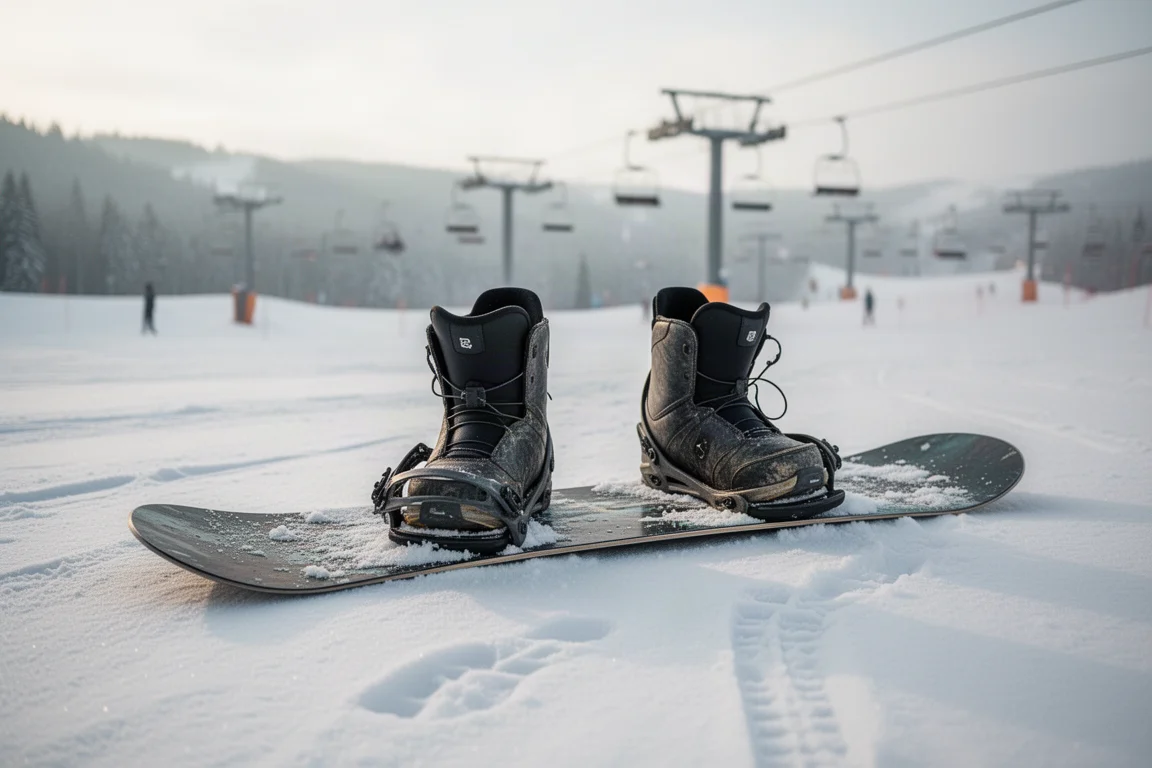
Day counts matter more than calendar time. Typical boot life for a recreational rider lands somewhere around 60 to 80 days, which stretches across several seasons when someone only rides a handful of days a year. Riders on the hill five days a week from October into late May will burn through boots far faster, which is exactly why a stiffer, more expensive model often makes more sense for them.
K2 Thraxis Snowboard Boots: What Held Up
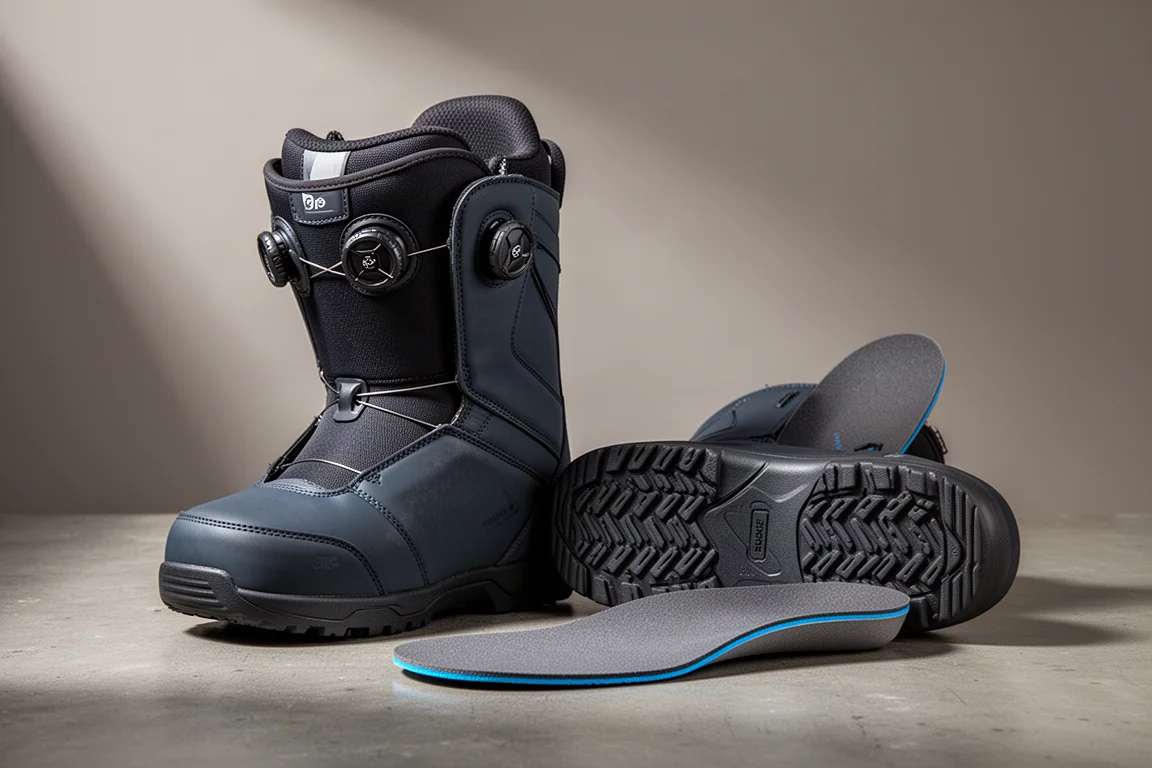
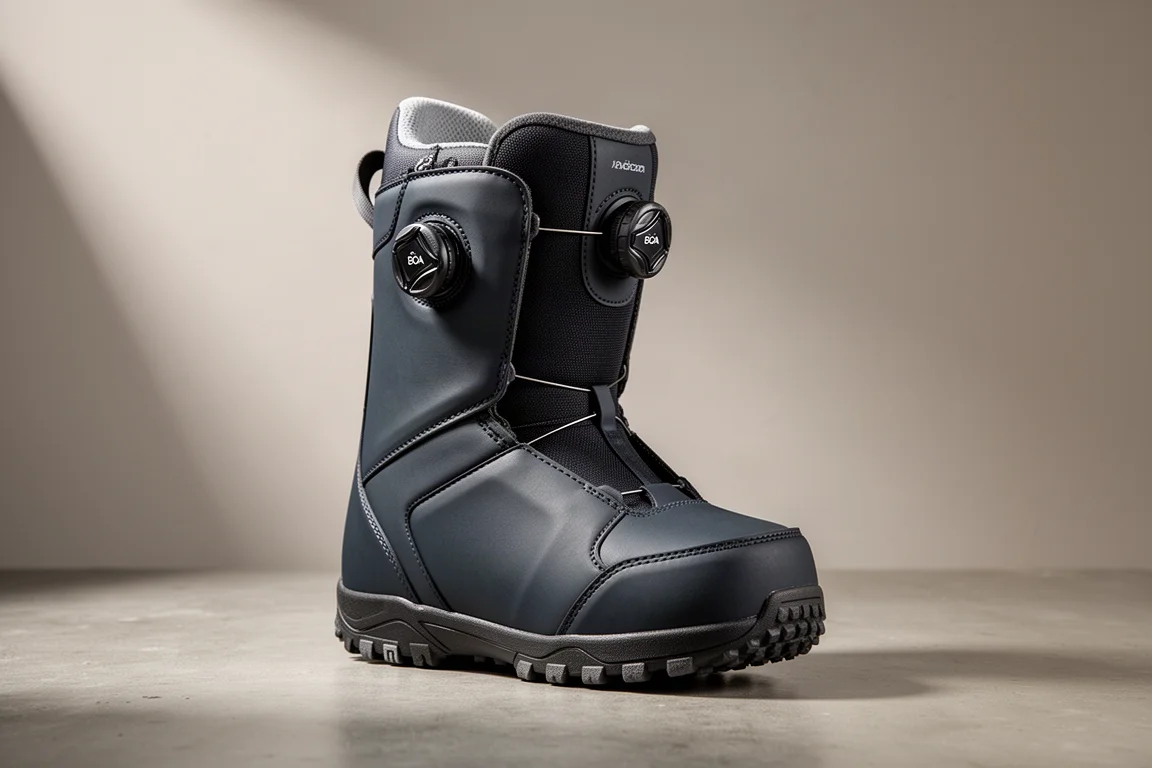
The Thraxis pairs a stiff, supportive flex with BOA lacing and a Vibram outsole, and the durable parts of the build did their job over a heavy season. The Vibram sole stayed grippy from first day to last, with the visible tread wear concentrated at the toe and under the front of the foot and only slight wear at the heel. After roughly 100 days the BOA dials were all original, and the lace system kept locking the heel down even as the shell packed out.
Fit needed one small correction. Pressure on the ankle bone came from the internal BOA guide, and two pieces of foam placed over the liner solved it without changing how the boot rode. The liner itself, which carried close to 300 days across two shells, showed only normal creasing.
Where the K2 Thraxis Wears Out
Two areas deserve attention. The first is the internal harness. Riders with a prominent inner navicular bone press the BOA conda cable into the inside of the shell, which creates a crease point in the harness over time. Heel hold survives, but the boot becomes harder to loosen, and somewhere around 80 to 90 days it can feel like a trap on the foot. That process usually starts between 50 and 70 days.
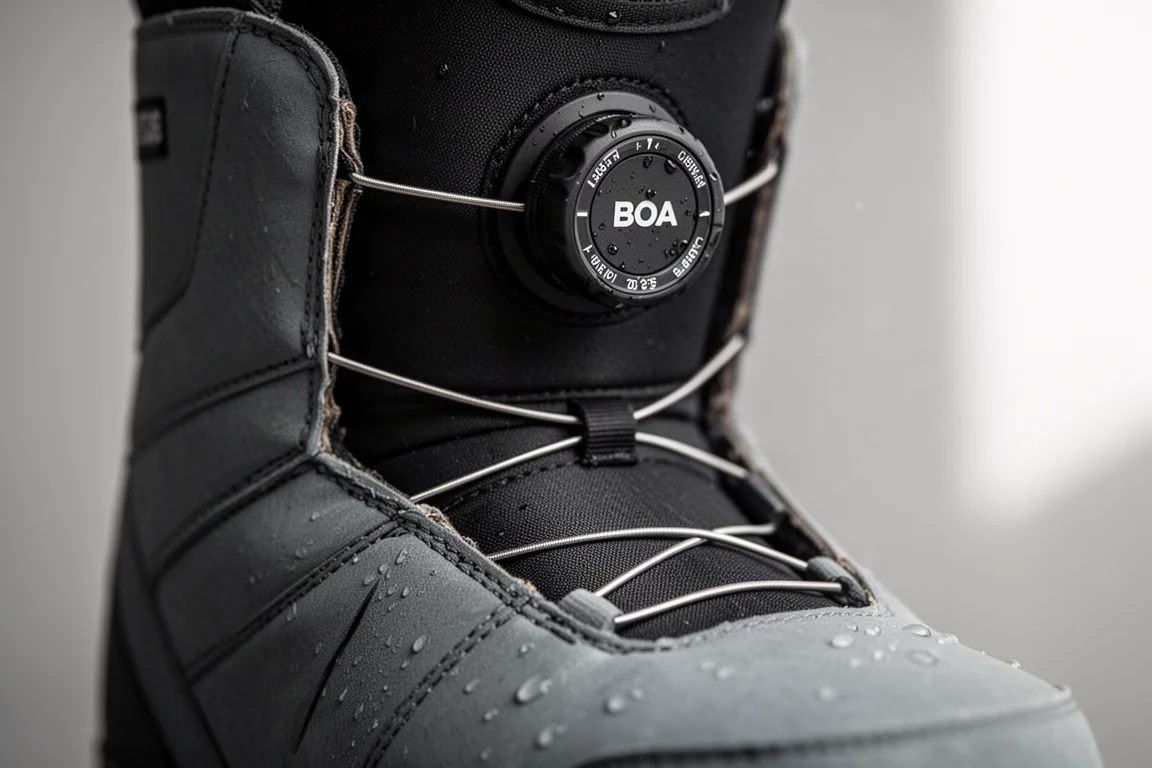
The second is the cable housing. On one pair the cable ate through the housing at the front coiler, leaving the lace path unusable and ending that boot’s season. A warranty claim was an option, though the practical answer was to buy replacements. The housing is the part most likely to fail first, well before the shell or the sole gives out. Seam wear at the back of the boot, where the board rests on the back foot, is another common sight, along with a flex crease from walking and light binding rub marks near the sole.
Remind Insoles: A Footbed Worth Rotating
Aftermarket footbeds are a quiet upgrade that tends to outlast most boot components. Remind Insoles kept their shape through extended use, with no real breakdown in the heel pad underneath, and they contoured well for the arch shape they were matched to. Rotating a fresh set roughly every two years keeps underfoot support consistent, and having a spare set on hand makes a mid-season change simple. When they do finally go, the blue foam deteriorates, the housing cracks, and the footbed flattens, with toe pressure marks showing in the top surface. They will not suit every foot shape, but the support holds up across multiple seasons.
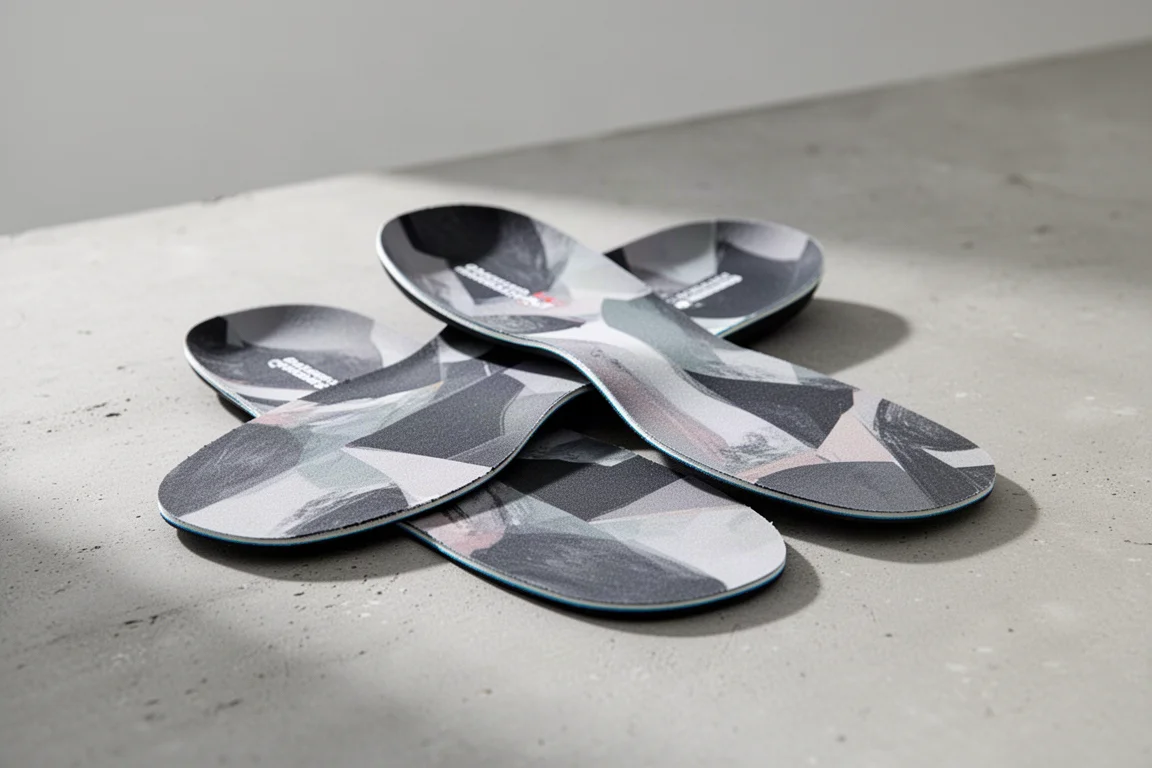
Snowboard Boot Wear Points to Inspect
A quick end-of-season check covers most of what matters:
- Cable housing and lace guides on both sides of the shell
- The internal harness where the BOA cable crosses the instep
- Liner heel pad and ankle foam for compression
- The rear seam where the board rests on the back foot
- Tread at the toe, forefoot, and heel
- Binding rub marks and compressed foam at the heel
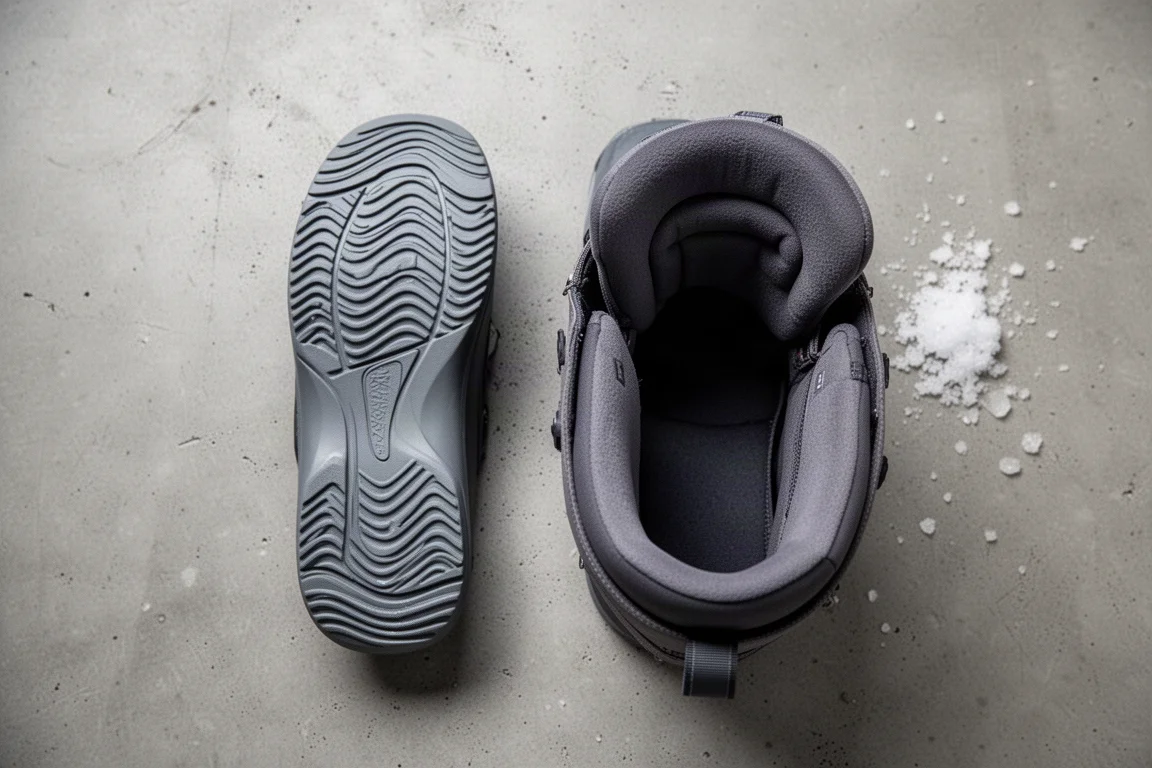
Most of these take only a few minutes to inspect, and catching housing or harness damage early is the difference between finishing a season in the boots you already own and shopping for replacements mid-winter.
Fit Fixes and Small Repairs That Extend Boot Life
Keeping spare liners around is the highest-value habit in a boot rotation. Pulling a liner from a retired pair and running it in a new shell skips break-in entirely, and the same liner can go back in mid-season if the current one packs out, which restores the flex feel without a fresh shell. Small foam shims relieve localized pressure from the internal cable guide. Replacing the footbed every couple of seasons restores underfoot support for far less than a new boot. Binding rub at the heel and light foam compression are cosmetic and rarely need attention.
Buying Advice: Choosing Stiff, Supportive Boots for High-Mileage Riding
For riders who log a lot of days, boots are a consumable. A stiff, supportive model with a durable rubber outsole and a lacing system that can be serviced tends to deliver more usable days than a softer boot that packs out quickly, which is why many high-mileage riders pay more up front for a stiffer shell. Before committing to a replacement, weigh the failure points above: a shell with an intact harness, a healthy cable housing, and a solid outsole still has plenty of riding left, while a boot already creasing at the instep may not.
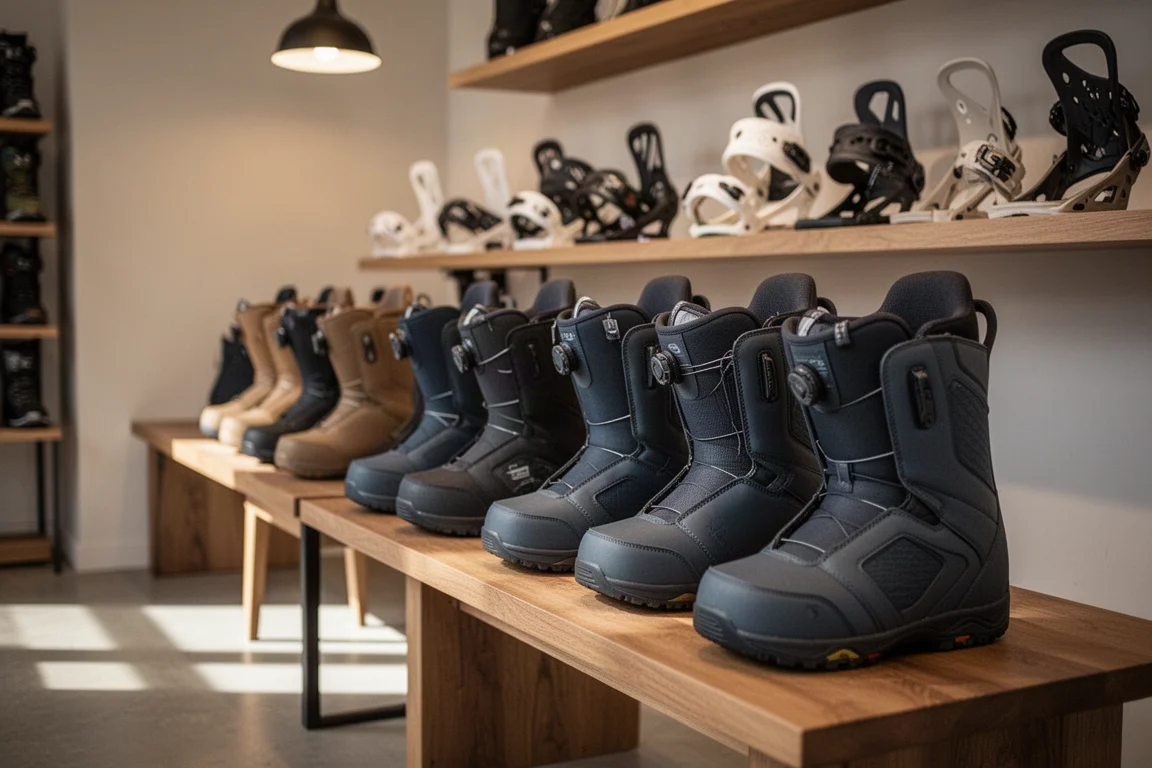
Buying the same model season after season also lets you treat liners and footbeds as replaceable parts, which is cheaper than replacing complete boots more often.
Conclusion
The K2 Thraxis held up well over roughly 100 days, with a Vibram outsole that stayed grippy and BOA hardware that kept working. The real risks are the cable housing and the internal harness, both of which can end a season before the shell wears out. Pairing the boot with a footbed that lasts multiple seasons and inspecting the wear points above will help you get the most out of every pair you buy.
Further reading
Related Reviews

Snowboard Boots
32 Team Two Double Boa Review: 32's Highest-End Women's Snowboard Boot
A closer look at 32's top-tier women's snowboard boot, from the 3D molded toe box and double Boa lacing to the Performance Fit liner and heat-reflective footbed.

Snowboard Boots
Bataleon Acid BOA Snowboard Boot Review: A Serious First Entry from a Board Brand
Bataleon's first snowboard boot, designed by a former Burton boot designer, brings a stiff flex, dual BOA closure, and a heel hold system worth a closer look.

Snowboard Boots
Battalion Acid Boot Review: A Stiff, Aggressive Boot Built to Last
The Battalion Acid Boot is the brand's highest-end offering, built with seamless construction, TPU reinforcement, dual BOA lacing, and a heat-moldable liner. Here is what to know before buying.