Snowboard Boots
K2 Theory Snowboard Boot Review: Rigid TPU Shell Meets an Unusual Side-Lace Design
A closer look at the K2 Theory men's snowboard boot, from its exposed Form Fit lacing and TPU toe cap to the heat-moldable Intuition wrap liner and dual Boa H5 system.
Introduction
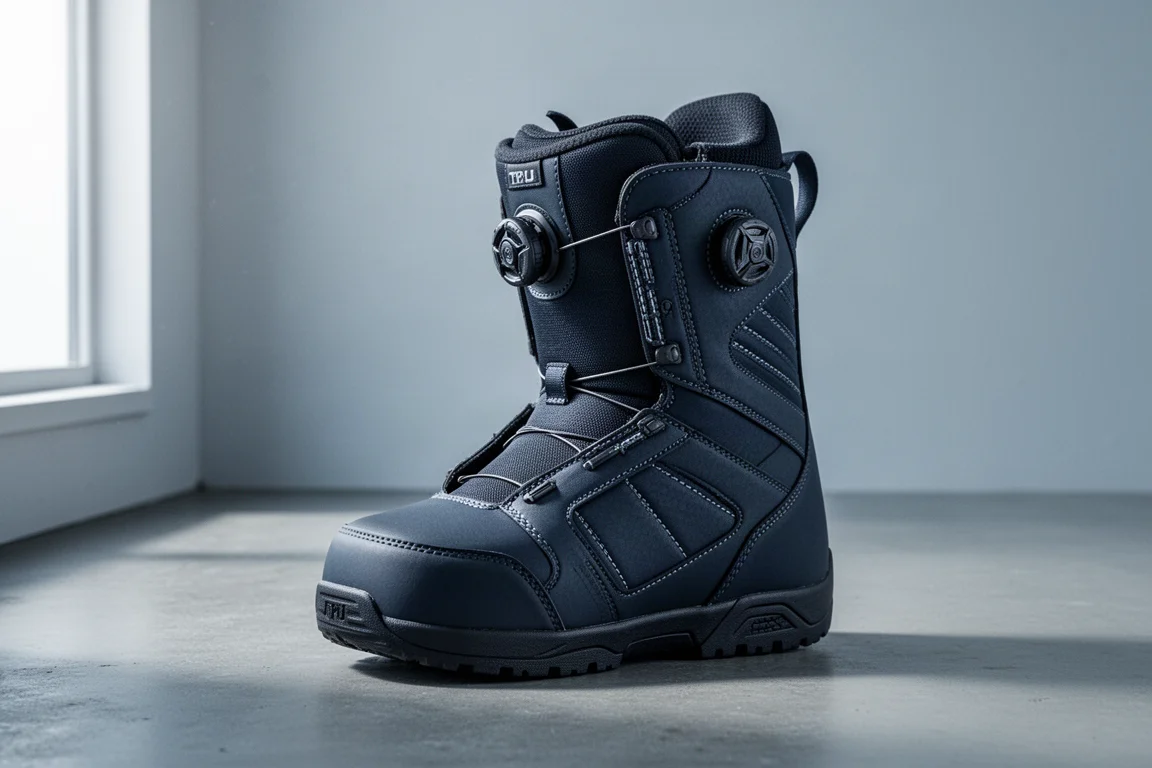
The K2 Theory is a new men’s snowboard boot with an unusual look: the lacing is exposed on the side of the shell. That is not a styling choice but a functional feature, marketed as Form Fit optimization for ride and mobility, and it is designed to influence both how you are locked into the boot and how it flexes. This breakdown walks through the shell, lacing, liner, sole, and fit so you can decide whether it belongs on your shortlist.
One piece of advice before anything else: if this boot interests you, get sized properly at a local shop. Ordering several sizes online and shipping back the rejects is a worse experience for everyone, and boot fit is too personal to gamble on.
Who This Boot Is For
K2 positions the Theory as a slightly stiffer boot, stiffer than middle of the road but not a super stiff option. It suits riders who push a little harder, spend more time in their boots, and want something that will not break down as quickly. Keep in mind that a boot is only as stiff as it is on day one; it progressively softens as you ride it. Flex also feels relative to the rider: a six-foot, 200-pound rider will flex a size 10 very differently from a 165-pound rider in the same size.
Shell, Flex, and Durability Details
The shell leans heavily on TPU, especially in the toe cap. That rigidity helps when kicking into firm snow or hiking, and it adds protection. A double stitch seam connects the gusset, and that seam sits recessed into the rubber, so even if you hack the boot with your board edge it stays protected. The side of the shell stretches far back, which means most toe straps will not press into that seam when you crank a strap down, reducing pinch points. The rigidity also makes the shell resistant to collapse at the flex point.
Ankle articulation is on the stiffer side and will take some time to break in. On the back spine you get Endo construction, though it does not rise as high as on some other boots in the K2 line, and it still delivers rebound. At the top of the back spine there is a cutout that gives riders with bigger calves a bit of push-out room. It is not as generous or as soft as what some other brands offer, but it is worth noting.
The exposed lower laces are the most talked-about design element. There is no long-term data yet on whether the exposure causes problems, but there are upsides: you can see what is happening inside, and if a lace ever breaks, re-lacing is easier. The tongue has some flex built in to encourage more forward flexion.
Lacing and Fit Adjustment
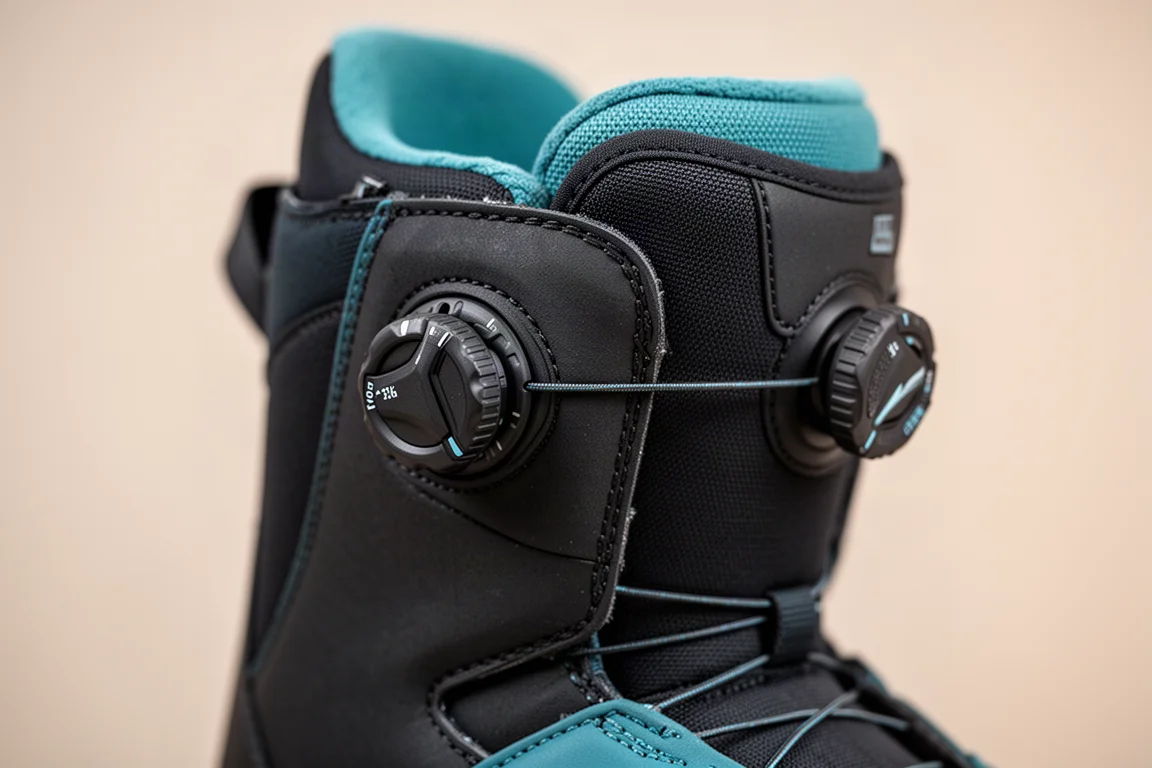
The Theory is a dual Boa boot: the front dial handles the upper zone, the side dial handles the lower. Both run the new H5 coiler, which lets you back out a few clicks if you overtighten. For an aggressive session, pop the dial and let it open fully. One quirk to know: depending on the boot, the H5 is righty-tighty or lefty-tighty, so check which direction yours tightens. Running upper and lower zones independently gives you real customization over how the boot fits your foot.
Inside the shell there is a teal internal harness sewn into the shell, with a free-floating liner that gets sucked back into place on a drawstring. The front of the harness has a small piece of fabric you can shift left or right to fine-tune where it sits. Ideally it centers down the middle, but it is another way to optimize fit.
Liner and Internal Fit Features
The Theory comes with the Control Foam wrap liner, an Intuition liner that can be heat molded. If you ride more than 10 to 15 days a season, it will likely break in on its own unless the fit is really snug; lighter riders can heat mold it to speed up break-in. It is called a wrap liner because it burrito wraps around the top rather than opening like a conventional liner. That overlap adds material over the tongue and changes the power dynamic when you drive into the boot, especially for riders with narrower calves because it absorbs more volume.
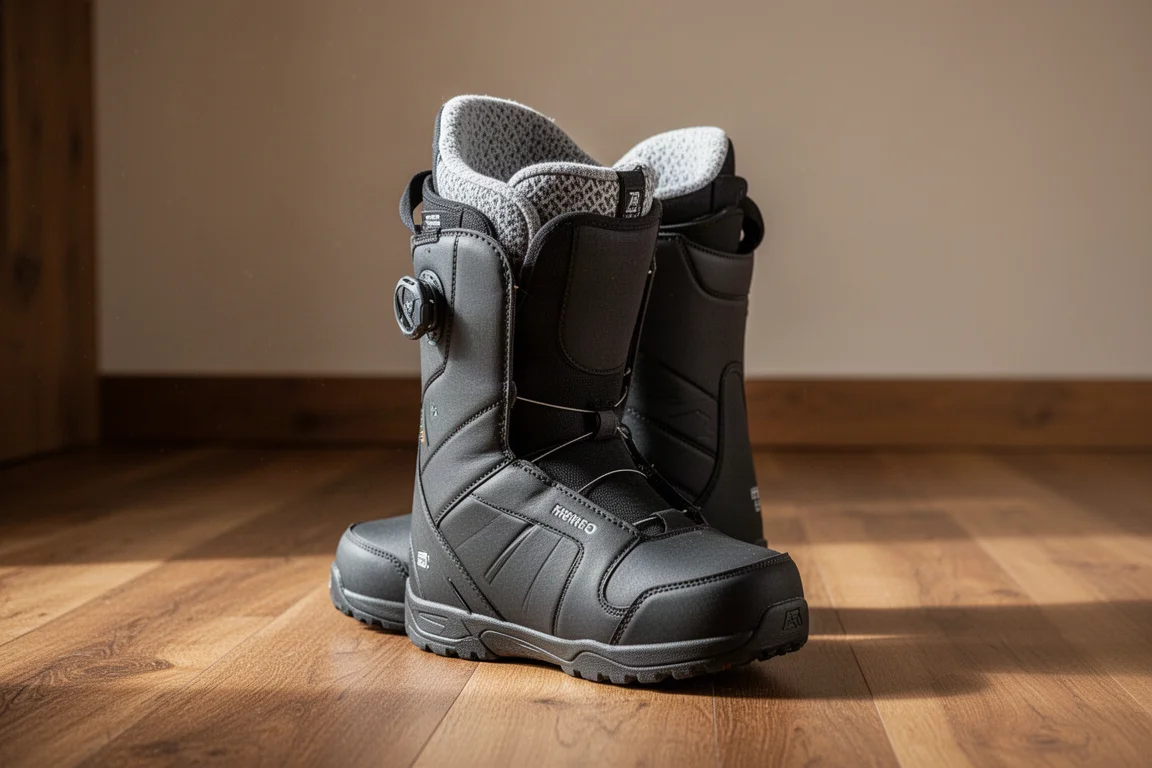
The biggest seam of note sits where the toe piece and the side come down from the wrap, right at the pinky toe; some riders will feel it, others will not. There is a J-bar heel pocket designed so your ankle bone sits in it, and a large C-bar underneath that adds rigidity for lateral flex and drive. J-bars inside create a tighter heel pocket, while the forefoot runs a bit wider, so the fit profile is wide up front narrowing into a tighter V-shape.
The stock insole is marshmallow foam. It damps some impacts but is not the most supportive option out there, and the arch collapses with minimal pressure. If you ride more than 10 to 15 days a year, plan on swapping in an aftermarket insole; your feet will thank you. At 5 to 10 days a season, you probably will not notice the difference. It is still better than the cheap felt sheets some brands include.
Heat reflective tape sits at the bottom of the shell, bouncing heat back into the liner to keep feet warmer in cold conditions.
Sole and Standing Comfort
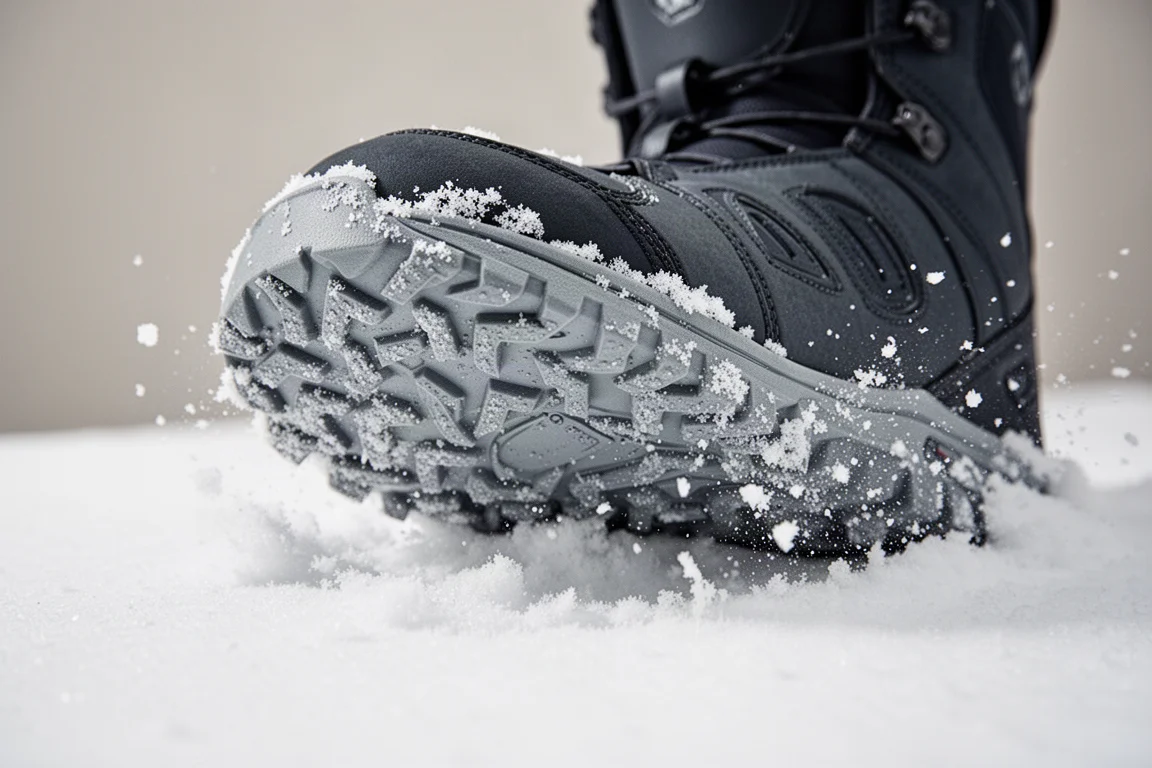
The outsole combines Vibram-style construction with marshmallow damping to absorb kinetic energy and add grip. The lug pattern is strong and the sole is very rigid, which helps kill foot fatigue, a real consideration if you have sensitive feet. The stack is not the tallest, so you sit a little closer to the board in your bindings.
For reference, on a size 10 the shell measures about 10.75 inches at the back and 10 inches at the front, the liner roughly 11.5 inches at the back and just shy of 11 at the front, and the sole length about 12.25 inches. The widest shell section measures around 4.5 inches, the forefoot a hair past 4 inches, and the liner is about 10.5 inches long and 3.75 inches wide, confirming that slightly wider fit.
Things to Consider Before Buying
This is a new boot with a new lacing approach that has not been proven over time yet. Some riders will be skeptical, others open to it. The concept aims to alleviate pressure over the instep and add targeted play in the boot while keeping performance optimized. There is a lot of TPU, so it is more rigid than it may look, and the break-in will take a bit of patience.
Buying Advice
The Theory makes sense for riders who want a slightly stiffer, durable boot with an unusual lacing system, a burrito wrap liner, and solid damping underfoot. If that description does not match your priorities or your foot shape, plenty of other options exist, and a proper in-person fitting matters more than any spec sheet. The stock insole budget for an upgrade if you are a high-volume rider.
Conclusion
The K2 Theory brings genuine innovation with its exposed Form Fit lacing, TPU-heavy shell, heat-reflective footbed area, and Intuition wrap liner. It is stiffer than average, built to hold up for riders who go hard, and the fit runs wider in the forefoot with a snug heel. Try it on at your local shop first; if it fits your foot and your riding style, it could be a rewarding boot for seasons to come.
Product link
View more details for K2 Theory
This product is mentioned in the review. Check the specifications, options, and compatibility before buying.
View more details for K2 TheoryFurther reading
Related Reviews

Snowboard Boots
32 Team Two Double Boa Review: 32's Highest-End Women's Snowboard Boot
A closer look at 32's top-tier women's snowboard boot, from the 3D molded toe box and double Boa lacing to the Performance Fit liner and heat-reflective footbed.

Snowboard Boots
Bataleon Acid BOA Snowboard Boot Review: A Serious First Entry from a Board Brand
Bataleon's first snowboard boot, designed by a former Burton boot designer, brings a stiff flex, dual BOA closure, and a heel hold system worth a closer look.

Snowboard Boots
Battalion Acid Boot Review: A Stiff, Aggressive Boot Built to Last
The Battalion Acid Boot is the brand's highest-end offering, built with seamless construction, TPU reinforcement, dual BOA lacing, and a heat-moldable liner. Here is what to know before buying.