Tools & Garage
Best Jump Starters Compared: Harbor Freight Viking Lithium Packs vs Lead Acid Classics and More
Instrumented bench testing of eight jump starters, including the Harbor Freight Viking 1000 and 2000 amp packs, measured for peak watts, cranking duration, and cold weather performance.
Introduction
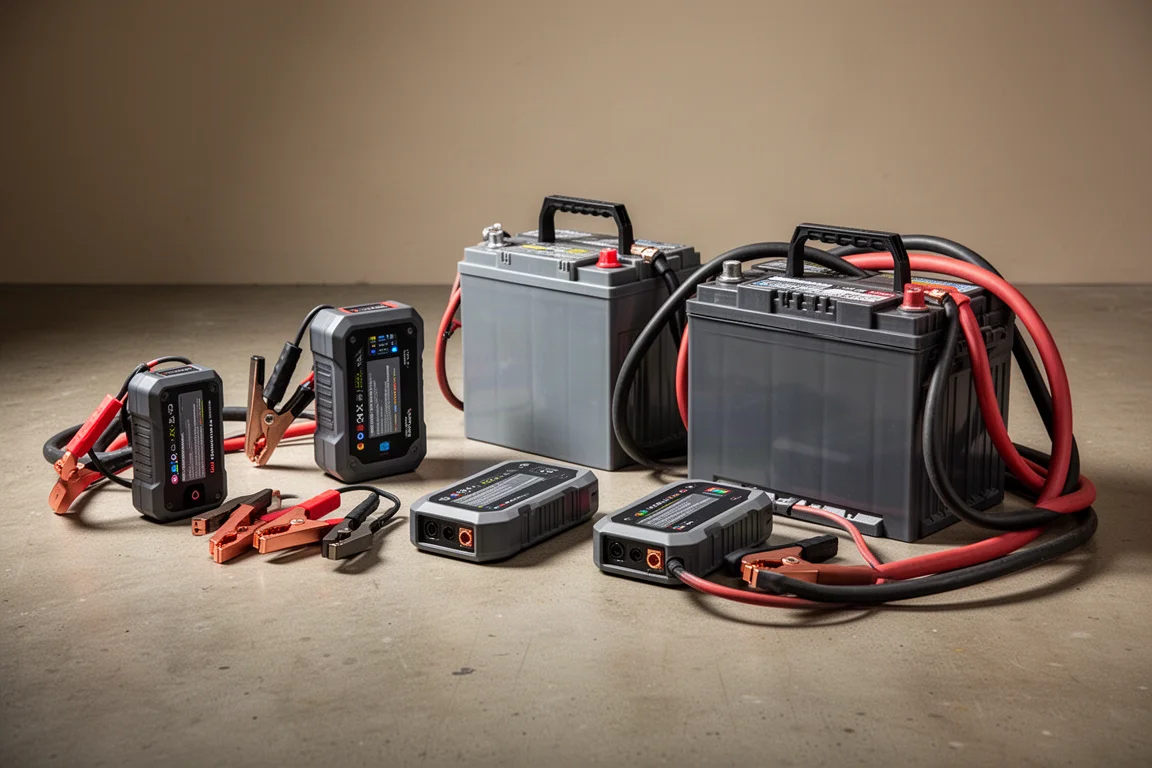
Cordless jump starters all make amp claims that are hard to believe, so the only fair way to compare them is to measure what actually comes out of the clamps. We put eight packs through instrumented bench testing, including Harbor Freight’s Viking lithium models, the classic Jump-N-Carry JNC660, a Caterpillar lead acid box, and several popular lithium alternatives. Everything was sampled hundreds of times per second and plotted live, so nothing got hidden in an average.
What we measured goes well beyond advertised amps: peak power in watts, cranking speed, cranking duration, and how much performance each pack loses when frozen solid for 24 hours at 0 degrees Fahrenheit.
How We Tested
Each pack faced a graduated series of loads, starting with a four-cylinder style request, then a six-cylinder load, then a heavier V8-class test, followed by the freezer. We looked at sustained wattage rather than momentary spikes, total energy delivered before voltage cutoff, and voltage sag under load.
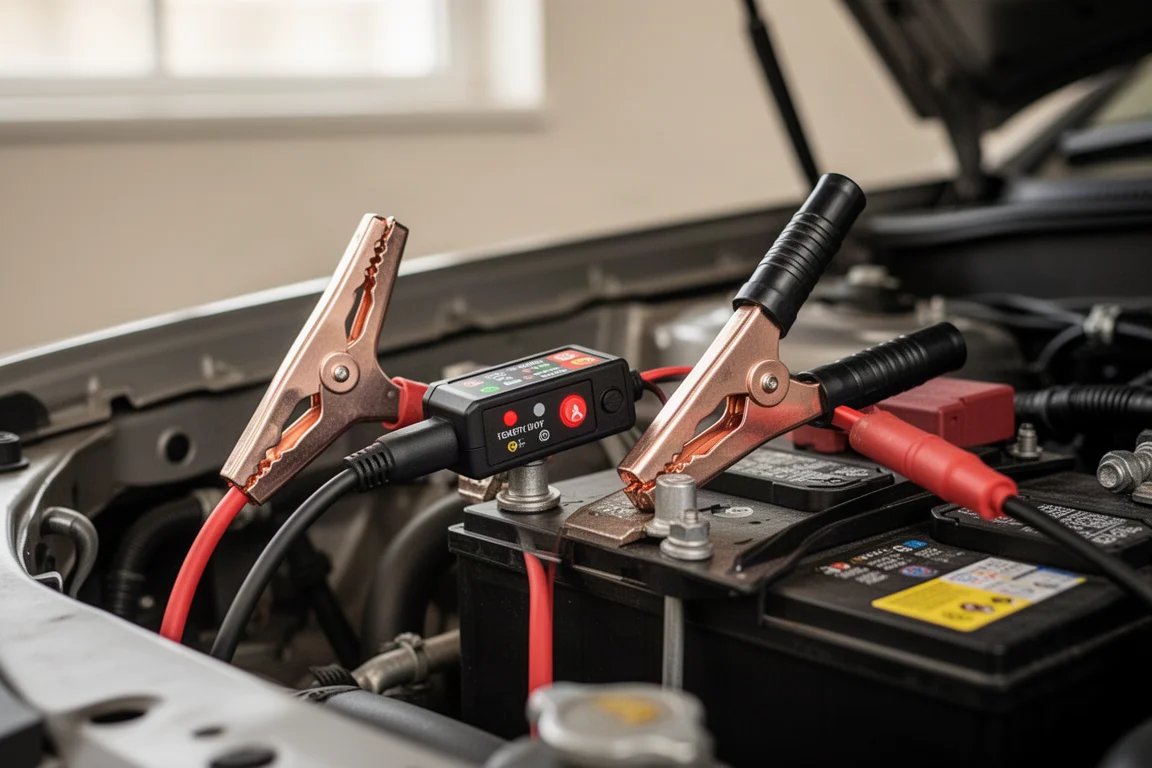
One thing became obvious early: not every pack behaves the same way. Some deliver steady cranking power for long stretches. Others pulse, check for a connected battery, and only fire in short bursts. That difference shapes which pack is right for your vehicle.
Harbor Freight Viking 1000 Amp Lithium
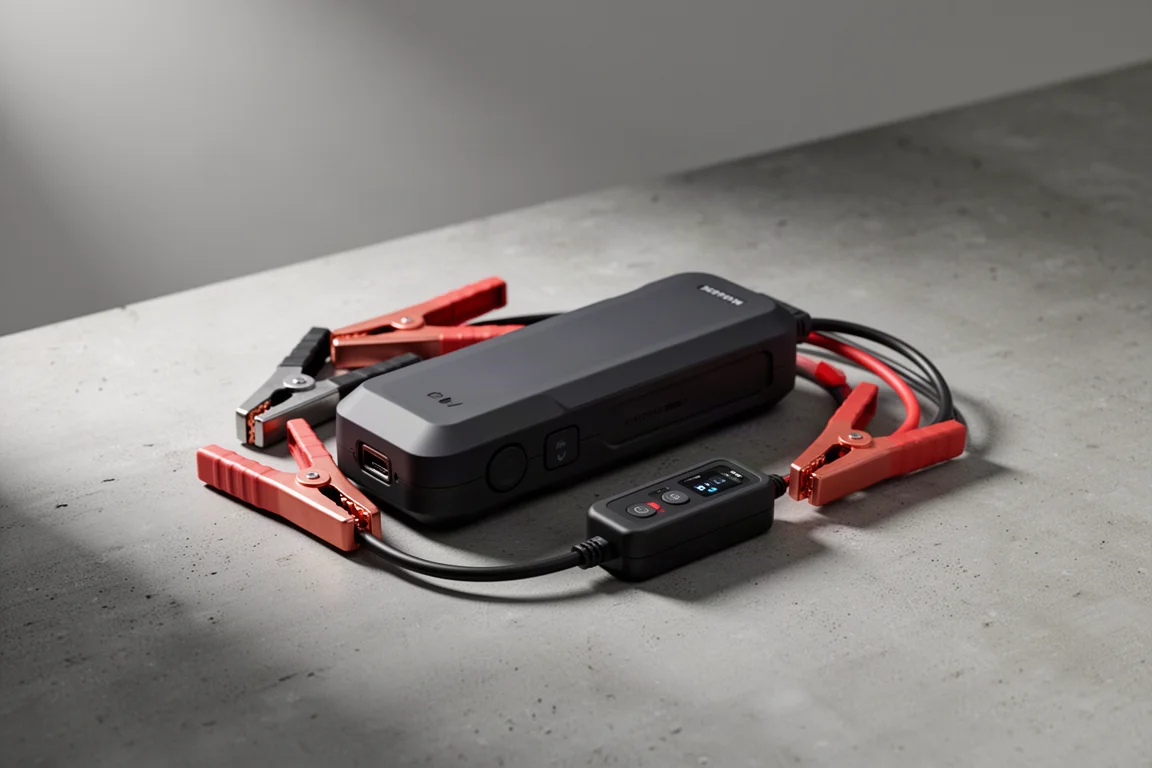
Priced at $90, the Viking 1000 amp sits right in line with the NOCO Genius Boost 1000 and is similar in size. Its clamps include a small control module with safety electronics inside, which is good for protection but introduces a real quirk: this pack wants to see a battery. If it senses low voltage, it beeps and shuts down, even when simulating a dead battery up front. If your vehicle’s battery is truly dead, lights-left-on dead, there is no override.
When it is happy, though, it performs respectably. It delivered a more stable voltage curve and higher sustained wattage than the similarly priced NOCO 1000 under the same load. Against the $110 Wolfbox, the Wolfbox still wins on overall output. The Viking’s trick is very short high-power spikes, tenths of a second each, that push its peak wattage figures well above what its sustained curve shows. Those spikes pump up the headline numbers, and while it is a slightly sneaky way to claim peak power, they might genuinely help kick over a sluggish starter.
Harbor Freight Viking 2000 Amp Lithium
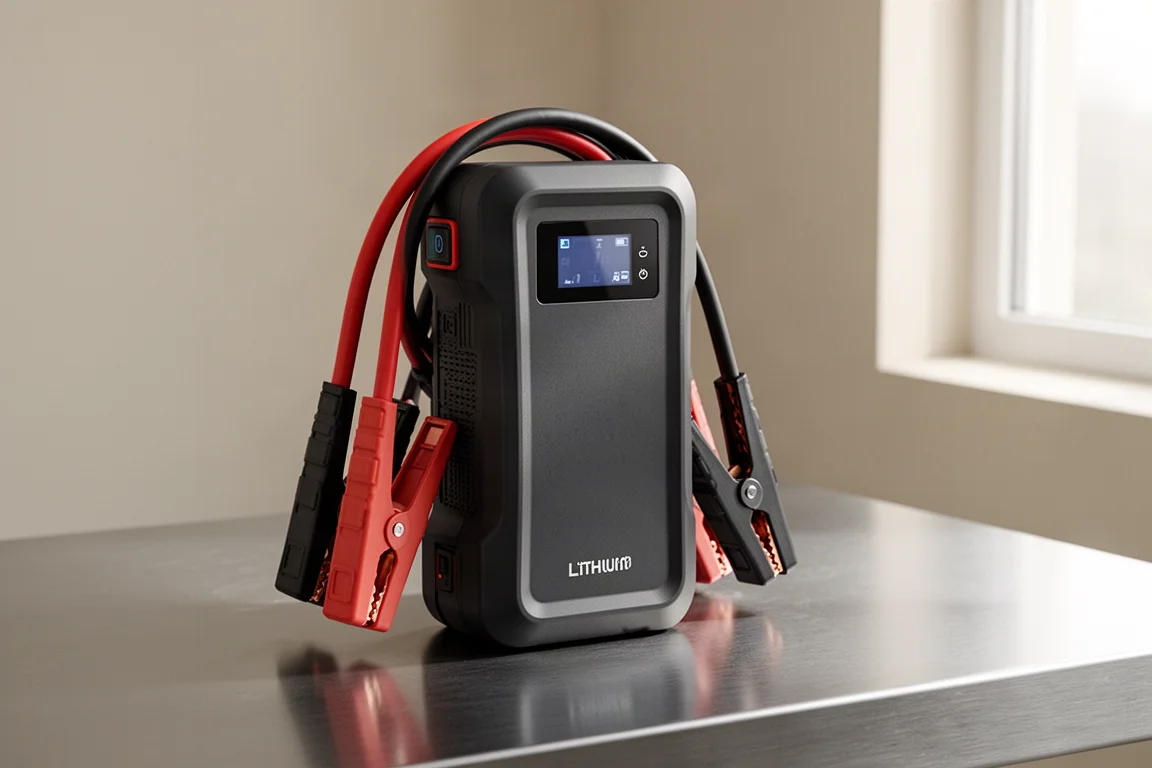
Bought for $140, the Viking 2000 is about one and a half times the size of the 1000 amp model, with a digital charge display and nicer seven-gauge cables versus the smaller pack’s eight gauge. Both Vikings charge at around 30 watts over USB-C, which is decent, and the digital display is not super accurate for charge level.
The larger Viking shares the same picky battery-sensing behavior, with dips and spikes, just at higher power levels. Its spike strategy pushed it above the Wolfbox in spots, and it posted the best peak numbers of anything purchased for this comparison, hitting 3896 watts at its best. The catch is endurance: under heavier loads it could not hold on as long as the others, with only a few watt-hours of output before its thermal protection beeped. Under the hardest test, it delivered around two amp-hours of cranking versus 21 from the JNC660, and it dropped about 50% of its charge after each hard test.
Lead Acid Classics: Caterpillar 1200 and Jump-N-Carry JNC660
Next we lined up the traditional lead acid packs: the Caterpillar 1200 amp with built-in inflator at $170, and the Jump-N-Carry JNC660, rated at 1700 amps for around $135. The difference in build is immediately noticeable. The JNC660 runs two-gauge cables and massive clamps, while the Caterpillar looks closer to six gauge.
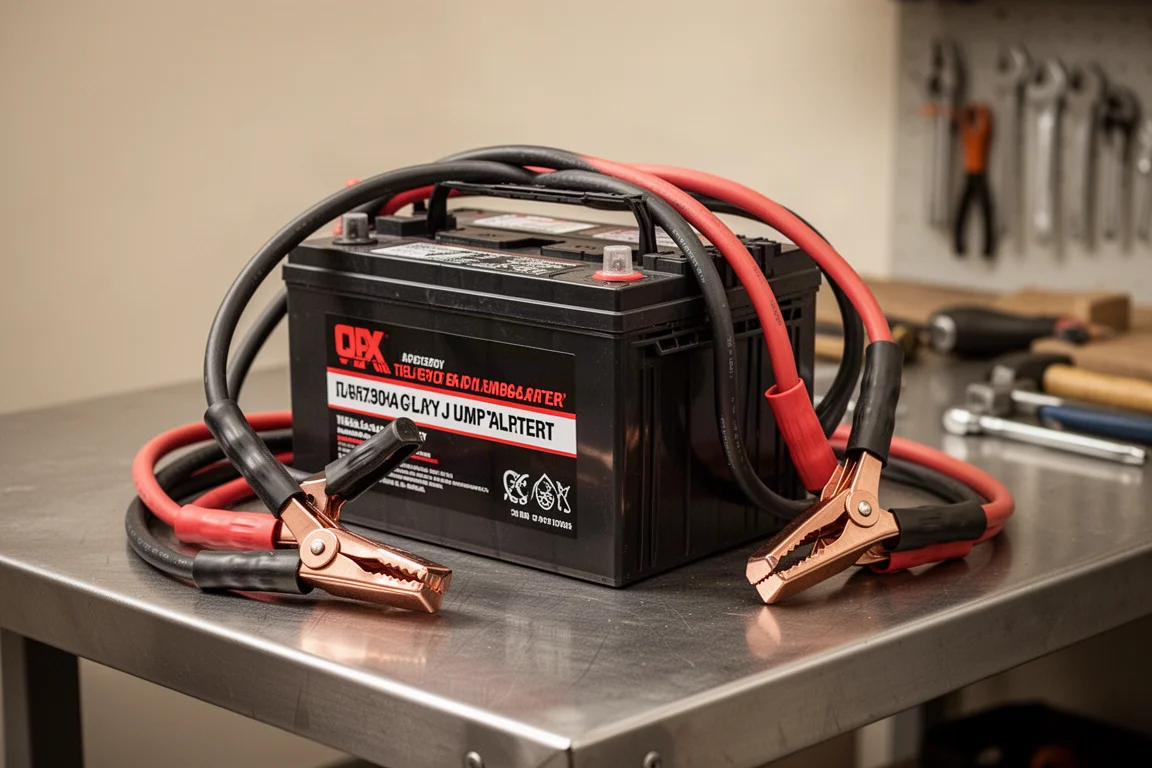
The Caterpillar was the disappointment of the group. Under the initial four-cylinder load it only managed 116 watts peak, a very low 6.6 volt floor, and 10.7 watt-hours before cutting off, similar output to the NOCO 1000, which is not a compliment. In the six-cylinder test it bowed out entirely, maxing out at just 246 amps, well below its advertised 1200. It earns last place in this comparison, likely because you are partly paying for the inflator and inverter functions. That said, its cold weather performance was respectable for a lead acid pack: 25% off peak watts, 31% off voltage, and 90% off total energy after freezing.
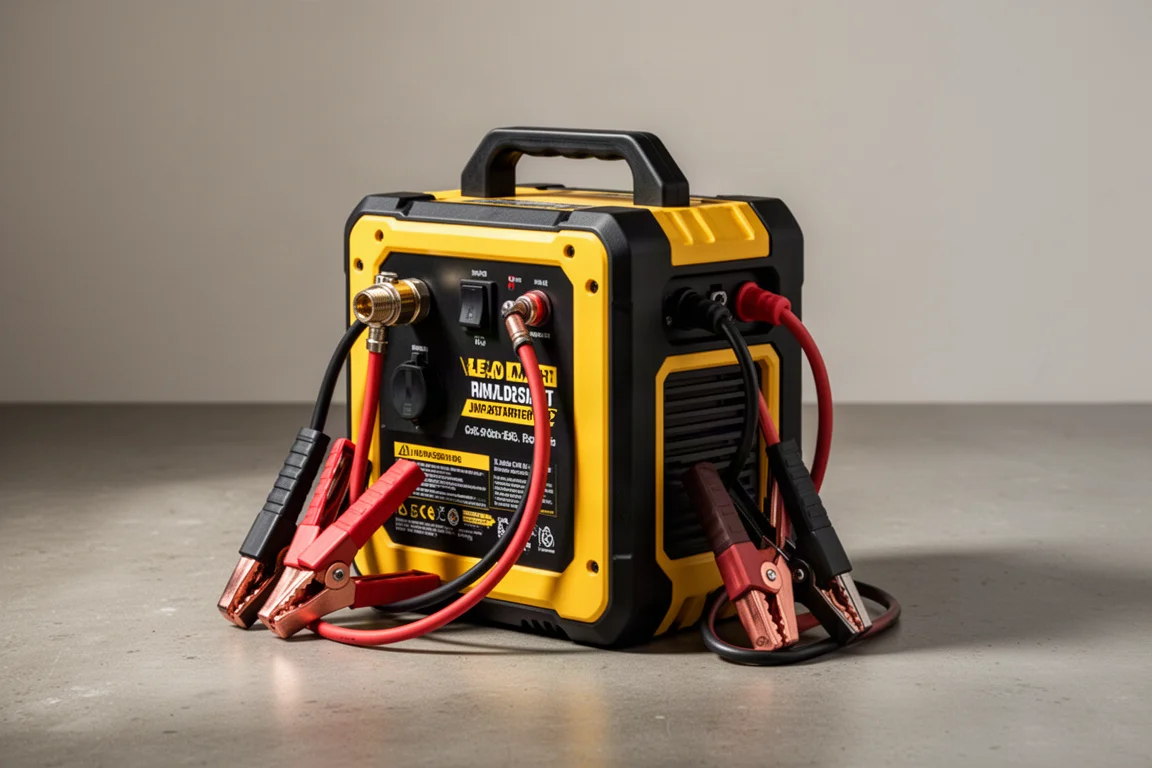
The JNC660 is the opposite story. It is like the small-block Chevy of jump boxes: not flashy, just dependable. Under the four-cylinder load it never nosedived, kept voltage stable for good cranking speed, and delivered 17.2 watt-hours at the highest sustained voltage seen so far. In the six-cylinder test it peaked at 2442 watts and kept going, and in the hardest test it delivered a record 31.8 watt-hours, roughly 32 times the total output of the Viking 1000. It is one of the few packs that can be cranked on over and over, which makes it ideal for older vehicles that do not want to start quickly.
Lithium Alternatives: NOCO, Wolfbox, and Milwaukee
The NOCO Genius Boost 1000, priced similar to the Viking 1000, serves as a useful benchmark. The Viking edges it on sustained output for $10 less, but the NOCO packs also share a weakness in the cold, dropping sharply in the freezer test alongside the Viking.
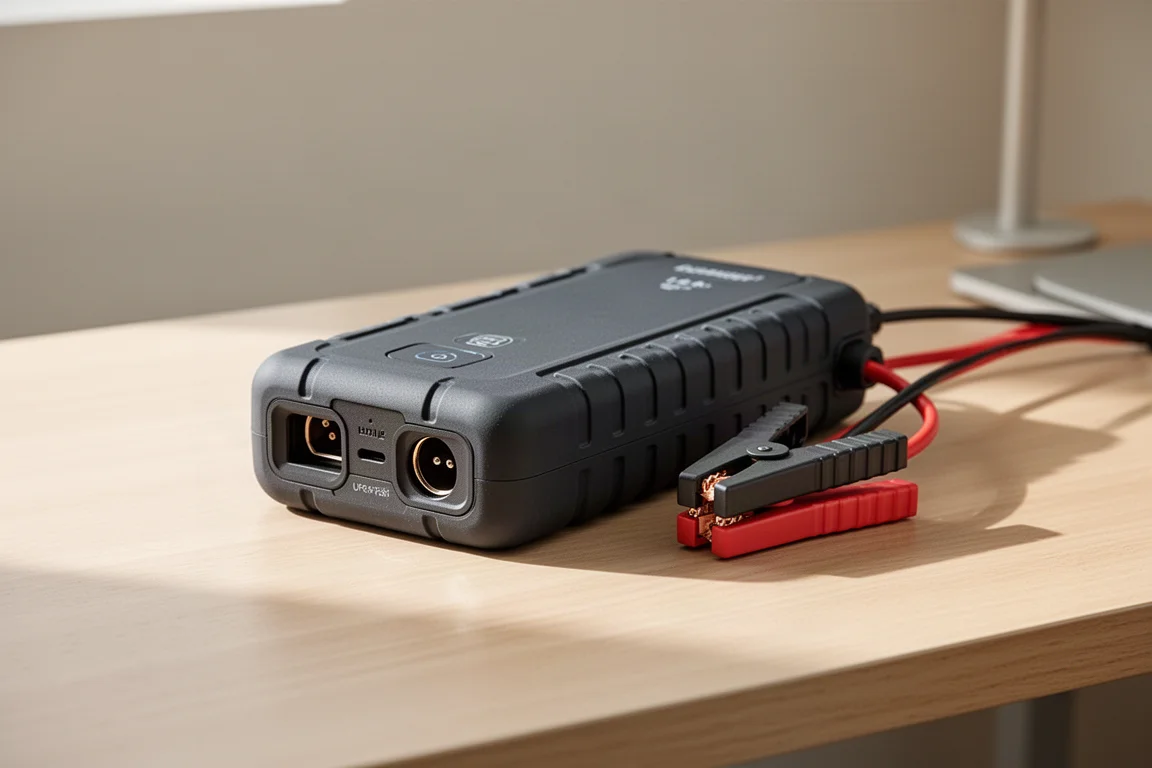
The NOCO 1750 and Wolfbox remain the top two overall scorers across everything tested. The Wolfbox stands out as the best value performer for the money, produces more overall output than the Viking 1000, and, along with the NOCO models, includes a battery override that the Vikings lack. The NOCO 1750 charges faster, around double the Viking’s 30 watts, and takes the brownie points for peak ranking placement.
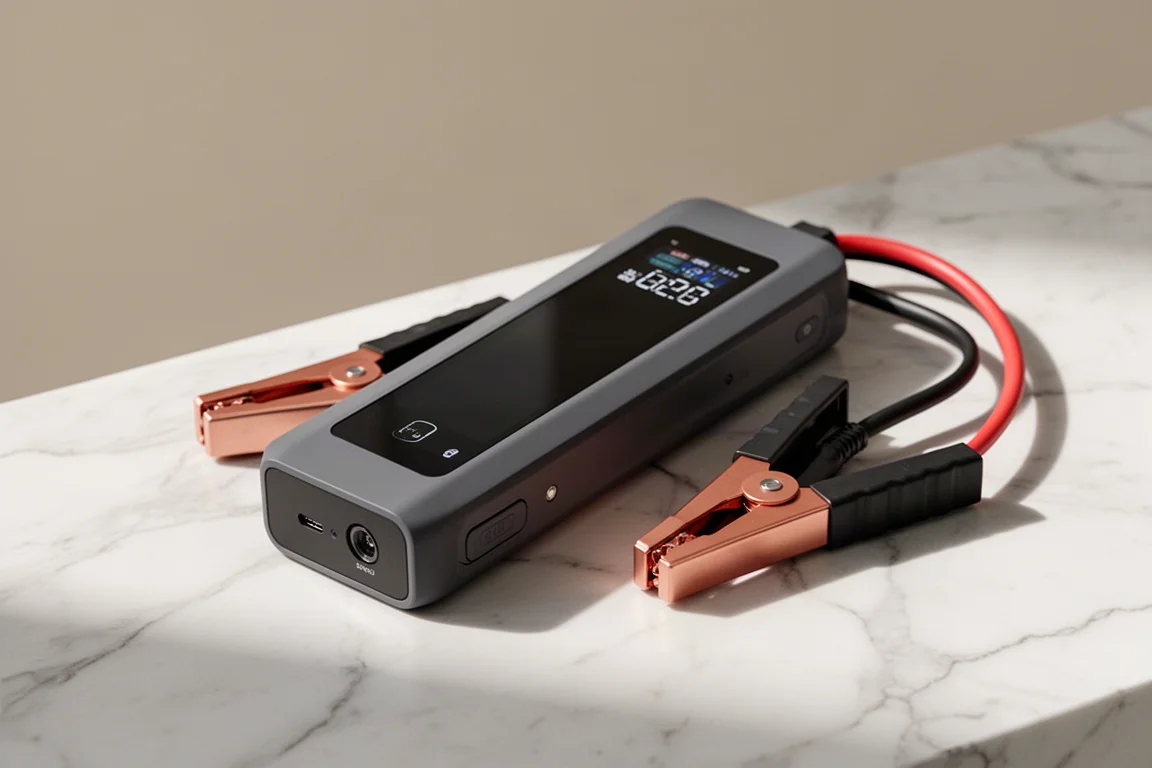

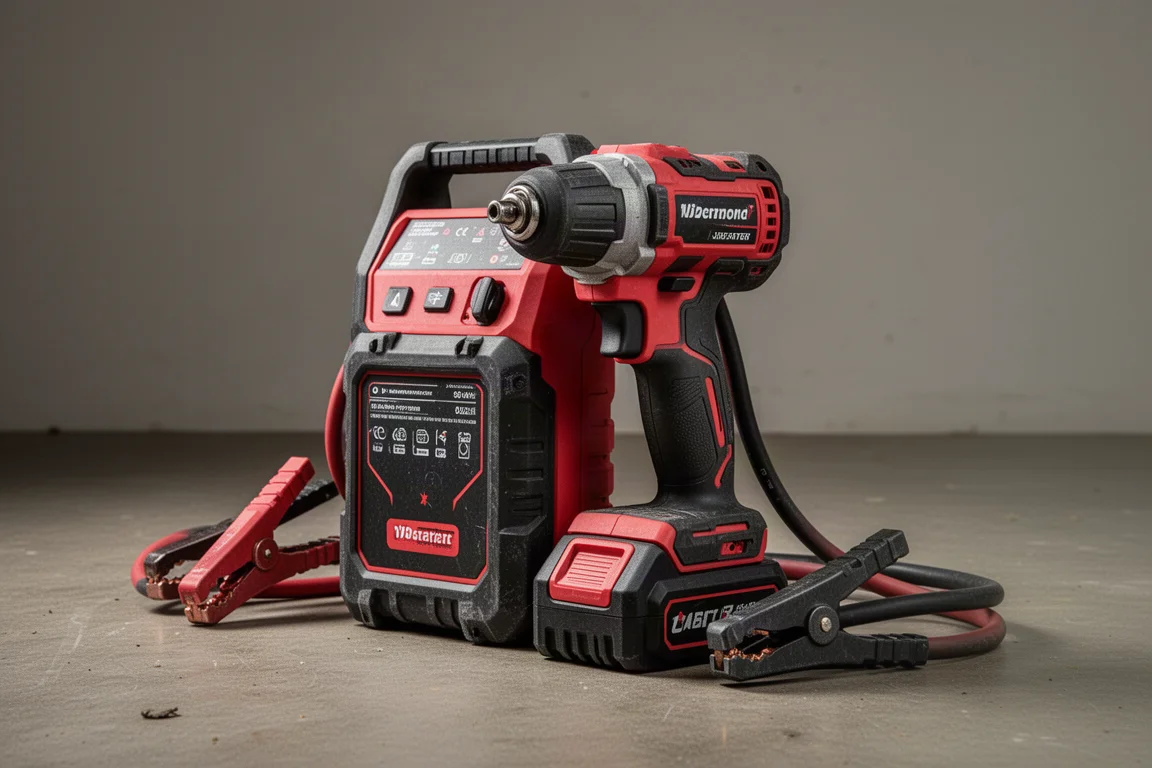
The Milwaukee M18 capacitor jump starter is in a class of its own for cold weather. Capacitor-based designs are barely phased by temperature, and it posted the best cold-weather resilience of everything tested, second only in raw numbers to nothing else in the freezer. It also beat the JNC660 in total number of jumps per charge, the only pack to do so.
Cold Weather Testing: Where Lead Acid Shines
After 24 hours in a 0 degree Fahrenheit freezer, the differences were dramatic. The Viking 1000 was nearly the worst cold performer tested: 59% down on peak watts, 40% down on voltage, and 95% less total energy. The Viking 2000 did much better for its higher price, losing 45% on watts and 67% on total energy, toward the best reduction among lithium packs.
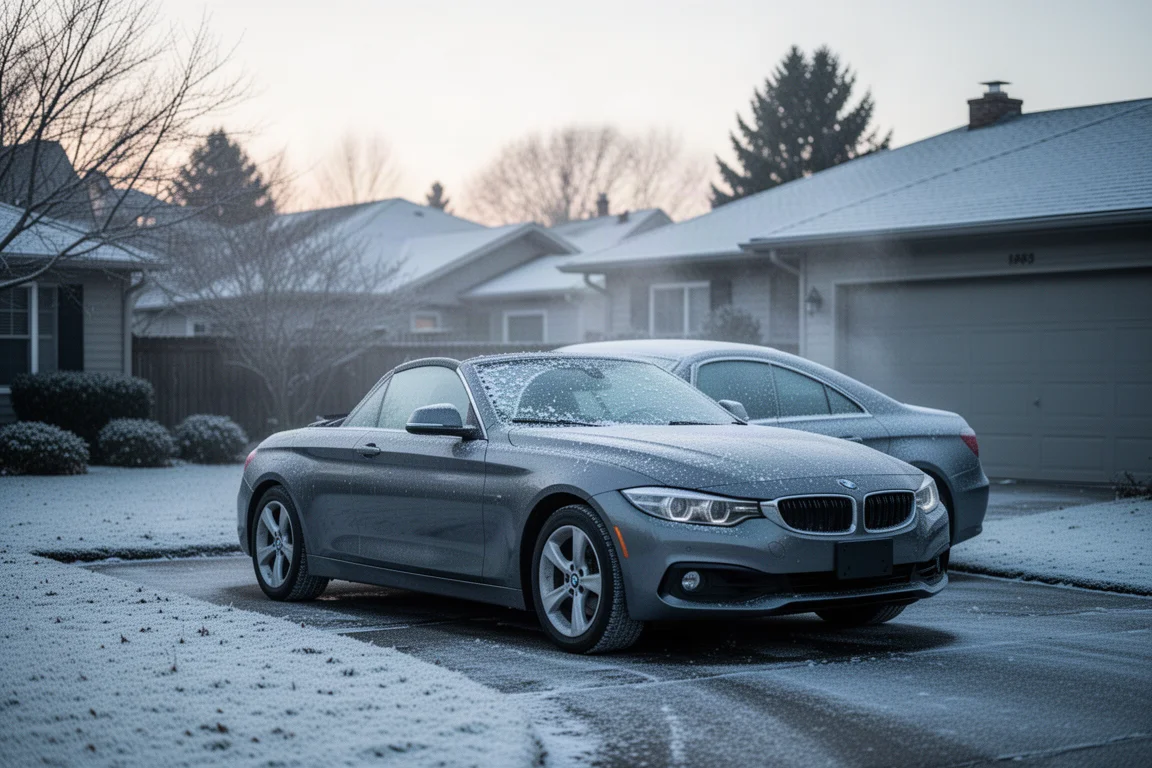
The JNC660 was the surprise, losing only 18% on peak watts and around 21-22% across the board, second best to date behind the Milwaukee capacitor design. If freezing mornings are part of your reality, that stat matters more than any peak amp claim.
Final Rankings and Buying Advice
Scoring everything against all packs tested to date, the lowest totals win. The Viking 1000 came in at 6.71, slightly better than the NOCO 1000 for $10 less, so it is hard to be too mad at it. The Caterpillar scored 7.59, and you might be mad at that one. The JNC660 landed an excellent 3.47, with the NOCO 1750, Wolfbox, and Viking 2000 clustered near the top of the rankings.
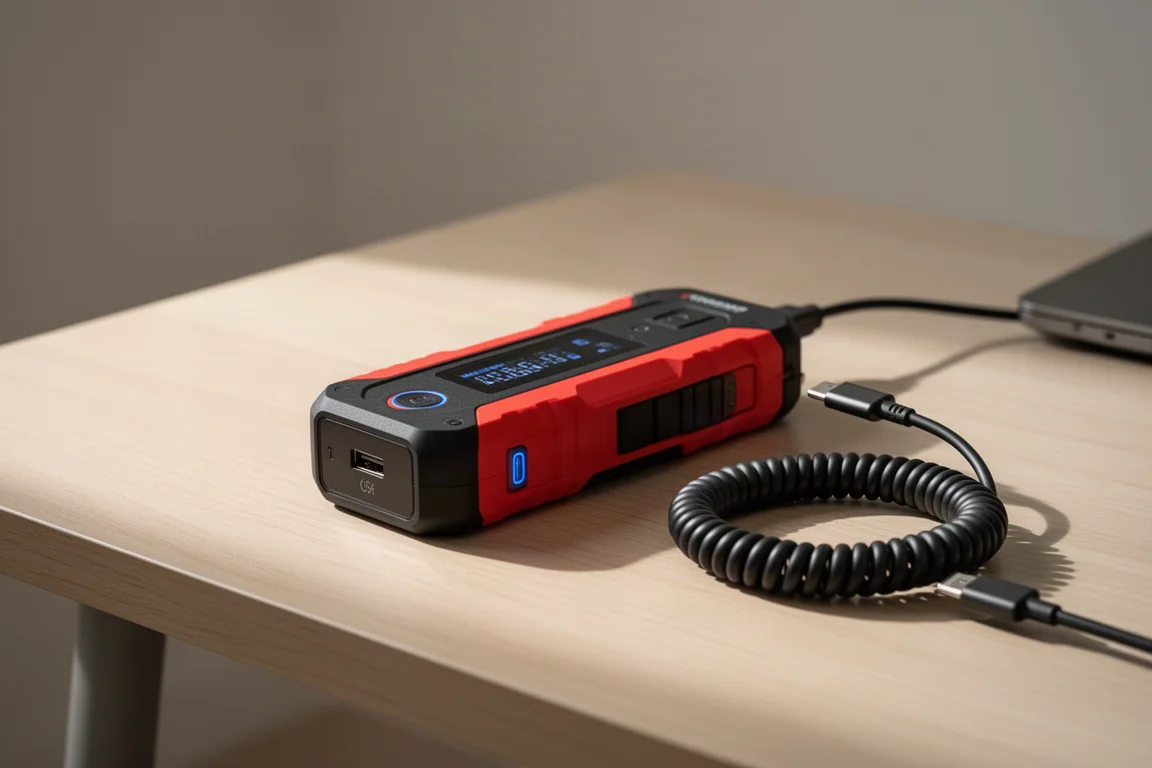
A note on honesty: the Viking 2000’s box claims up to 2000 amps, but the fine print on the product itself lists 1000 amps starting current and 890 amps cranking power, which is more believable against what we measured. That goalpost-moving is worth knowing before you buy.
Our verdict by use case: the NOCO 1750 wins on peak ranking placement, the Wolfbox is the best overall value, the JNC660 is the best pick for older, stubborn vehicles and cold mornings thanks to its relentless cranking endurance, and the Milwaukee M18 capacitor pack is the cold weather specialist with the most jumps per charge. The Viking 2000 is the best of the Harbor Freight lithium pair if you want peak spike power and faster recovery in the cold, while the Viking 1000 makes sense as a budget-conscious option if your battery is merely weak rather than fully dead.
Conclusion
Lead acid is not dead. The Jump-N-Carry JNC660 outlasted everything in sustained cranking and handled freezing temperatures better than most lithium packs. Among lithium options, the NOCO 1750 and Wolfbox remain the strongest all-rounders, while Harbor Freight’s Vikings offer sharp pricing with real limitations around dead batteries, cold weather, and honest amp ratings. Match the pack to your vehicle’s age, your climate, and how many retries you are willing to live with.
Further reading
Related Reviews
Tools & Garage
Best Air Chucks for Tires and Airbag Suspensions: Three Reliable Options
Three air chucks that snap on and off Schrader valves without leaking, including open flow designs built for airbag suspension work.
Tools & Garage
Best Garage Jacks and EDC Tools Worth Buying Right Now
From low-profile long-reach floor jacks to compact bit sets, flashlights, and utility knives, these workshop picks earn their spot.
Tools & Garage
Best Portable Jump Starters After a Year of Real Use: 4 Units Compared
Four jump starters tested for over a year in trucks, ATVs, and around the property. Two impressed, two badly disappointed.