Drone Kits
Joshua Bardwell QAV-S2 Sub250g FPV Drone Kit Review: A Durable Build for Learners
A complete sub-250g FPV drone kit with step-by-step guidance, strong frame durability, and practical trade-offs when pairing with digital FPV systems.
Introduction
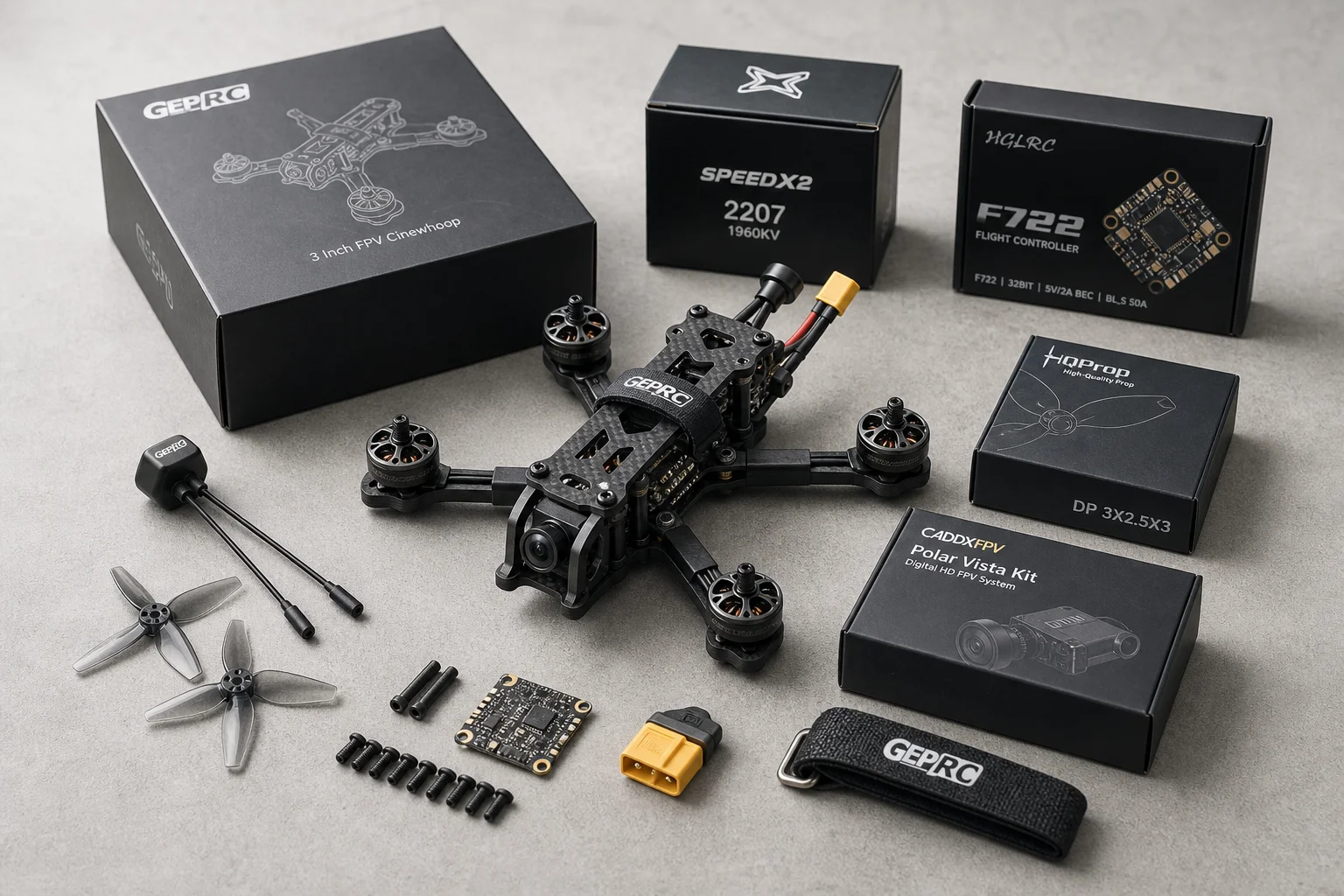
Building your own FPV drone offers a rewarding combination of hands-on learning and the confidence that comes from understanding every component. The Joshua Bardwell QAV-S2 Sub250g kit removes much of the guesswork by bundling everything needed for a complete 3-inch build, paired with step-by-step video guidance that walks you through assembly and configuration. This kit is designed for both newcomers tackling their first build and experienced pilots seeking a durable, easy-to-maintain freestyle trainer that stays under the 250-gram regulatory threshold. The real strength lies not just in what arrives in the box, but in the comprehensive build series and community support that accompanies it.
Frame Design and Durability
The QAV-S2 frame is the centerpiece of this kit, and it stands out for its robust construction. Rather than using detachable arms, the frame employs a 3.5-millimeter thick monoplate design that is both stronger and lighter than segmented alternatives. This approach uses fewer screws and simplifies assembly, though it does mean that a broken arm requires rebuilding the entire frame rather than swapping a single component.
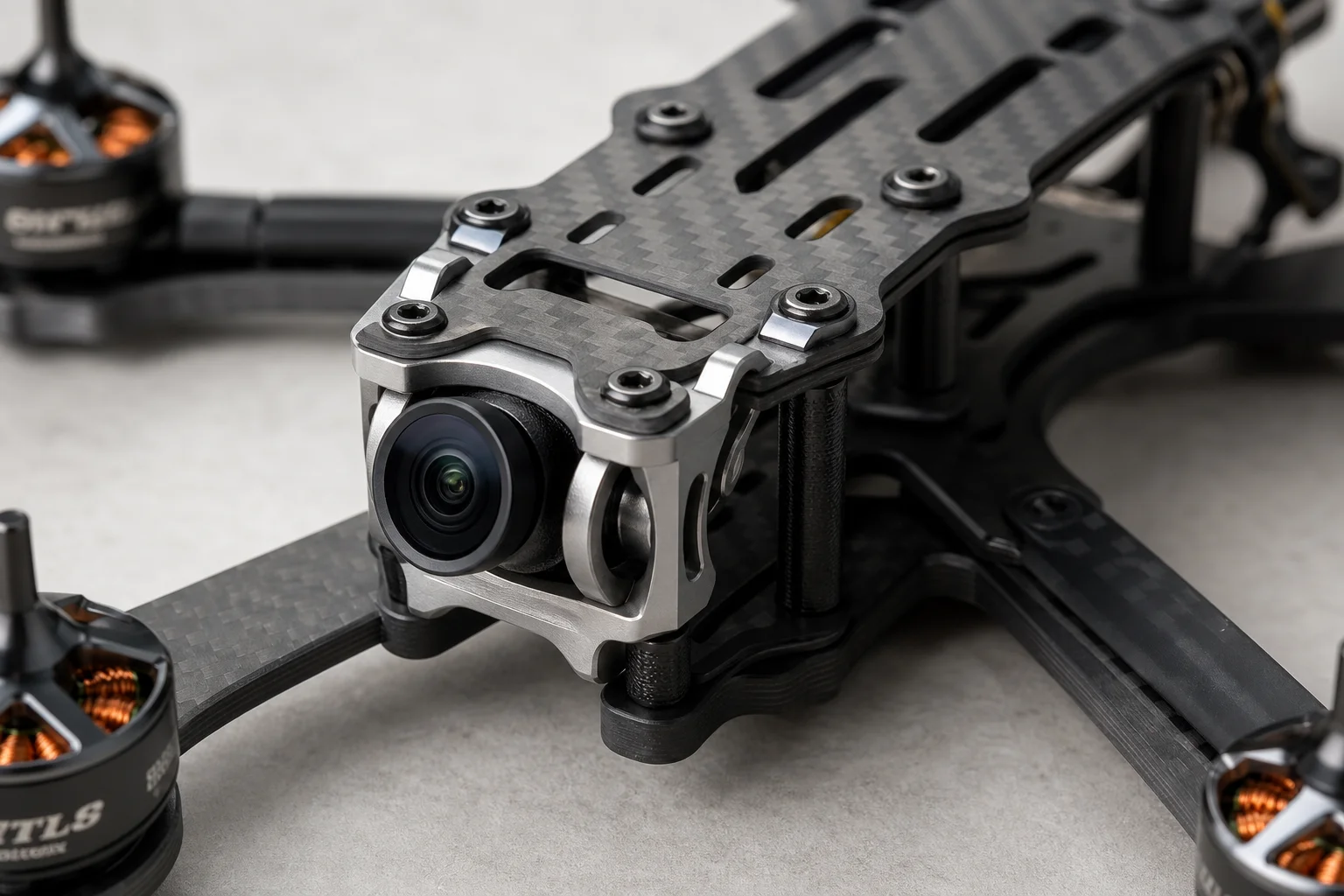
The aluminum camera mounting plates lock securely into the carbon fiber structure using M3 hardware, providing excellent camera protection while maintaining a clean aesthetic. The M3 standoffs throughout the frame represent a meaningful upgrade over the M2 hardware typically found in sub-250g quads, contributing to overall rigidity and repairability. The frame weighs just 55 grams before adding motors, flight controller, and battery, yet it feels noticeably more substantial than competing 3-inch designs. The 3-inch size itself is well-chosen: large enough to fly smoothly with digital FPV systems but light enough to remain under 250 grams with reasonable battery capacity.
What Comes in the Kit
The kit ships in a protective case containing all necessary components. You receive XYO Stealth 1404 4500KV motors with a matte black finish, a Luer Lux all-in-one flight controller board with 35-amp ESCs running AM32 firmware, three sets of GemFan 3020 propellers (3-inch diameter, 2-inch pitch), and the QAV-S2 frame with aluminum structural components, carbon fiber plates, battery straps, hardware, and 3D-printed antenna and VTX mounts. The kit comes in both analog and HD versions; the analog variant includes a camera and video transmitter, while the HD version requires a separate digital FPV system purchase.
Building and Soldering
The build process is guided by Joshua Bardwell’s detailed video series, which significantly reduces the learning curve. Before committing to permanent connections, a dry assembly of the frame with test-fit components helps identify any fitment issues or cable routing challenges. This approach prevents costly mistakes.
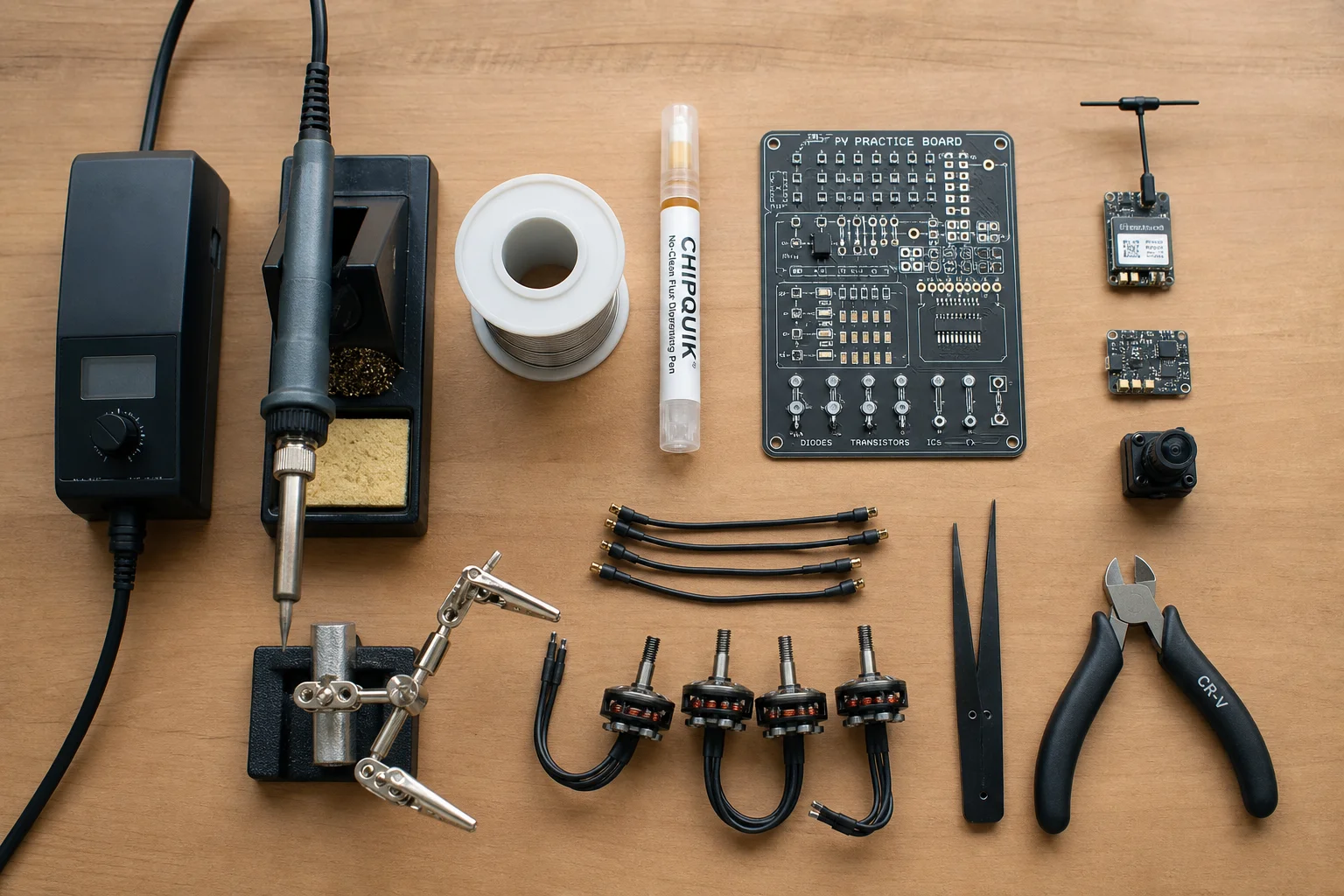
Soldering is largely minimal thanks to pre-installed connectors on the flight controller. You’ll primarily solder motor wires, the battery lead, and the receiver. A quality adjustable-temperature soldering iron makes a substantial difference, especially when working with both thick battery leads and delicate receiver pads. If you’re new to soldering, practicing on a dedicated board beforehand and using flux pens will improve results significantly. The included wire harnesses use all-black wiring, which makes it slightly harder to identify polarity at a glance compared to color-coded alternatives, but careful reference to the wiring diagram prevents errors.
Digital FPV System Integration
The kit is marketed as compatible with the DJI O4 Lite, a popular lightweight digital FPV system weighing around 8 grams and costing approximately $110. However, integration requires some workarounds. The frame was originally designed for analog or walksnail systems, so using the DJI O4 Lite necessitates 3D-printed camera adapters (not included in the kit, though STL files are available free online). The stock DJI antenna is too short to reach the included antenna mount, requiring either zip-tying the antenna to the frame or sourcing a third-party lightweight antenna. A lightweight 11-centimeter antenna (around 1.6 grams) can be secured with VHB tape and zip ties to fit the included mount while maintaining durability in crashes.
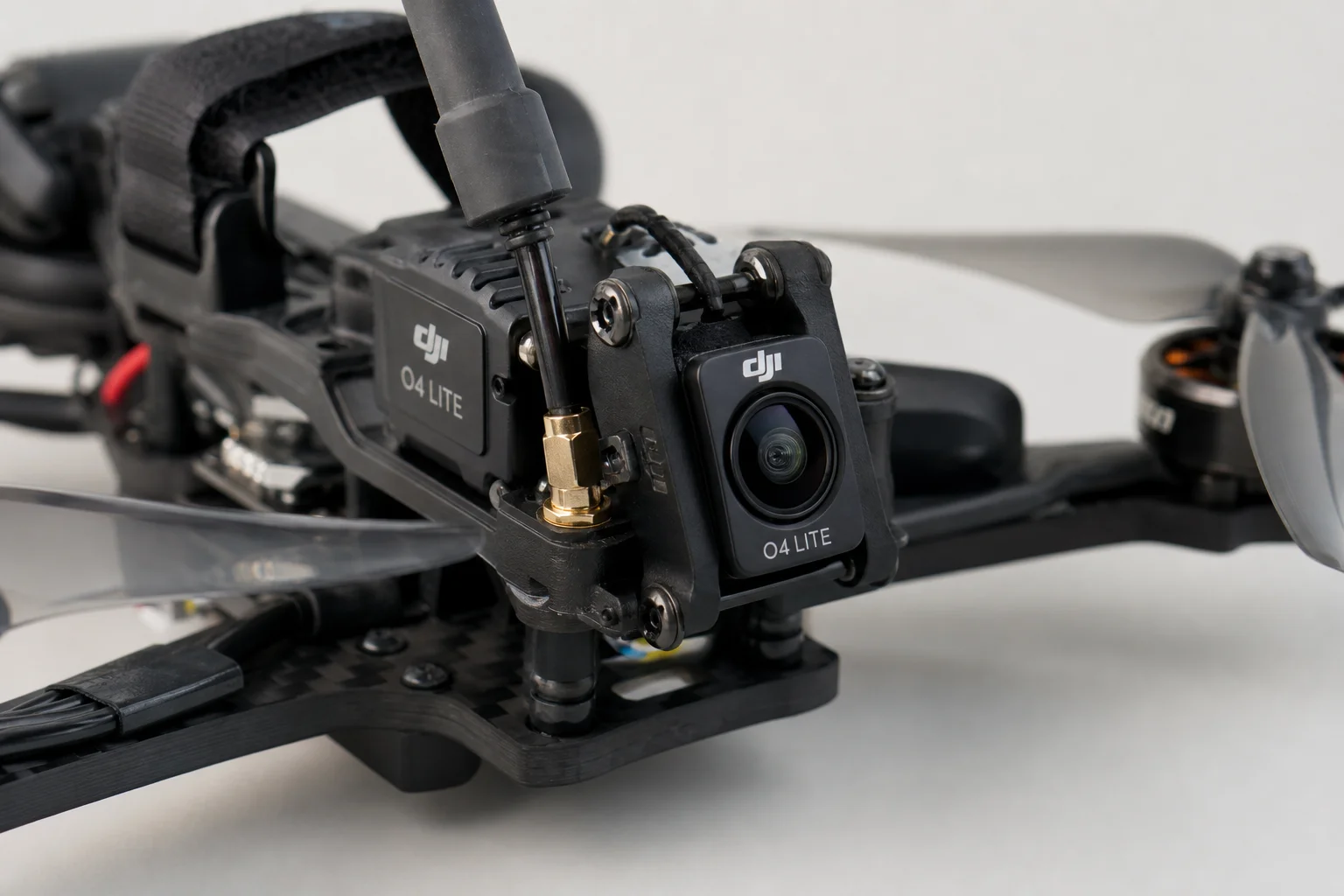
Installing the DJI O4 Lite on top of the flight controller stack requires longer screws and careful spacing to avoid contact with the air unit. The camera cable on the DJI O4 Lite is short enough that rear mounting (the traditional position for digital cameras on this frame) would require a longer cable swap, adding complexity and cost.
Flight Performance and Handling
In practice, this drone is straightforward and enjoyable to fly. The conservative 2-inch pitch of the included GemFan props makes it forgiving for learners, though pilots accustomed to higher-altitude flying or more aggressive maneuvers may prefer higher-pitch alternatives like HQ 3x3x3 props. The 3.5-millimeter monoplate is unlikely to break under normal flying conditions, and the aluminum structural components provide confidence in durability.
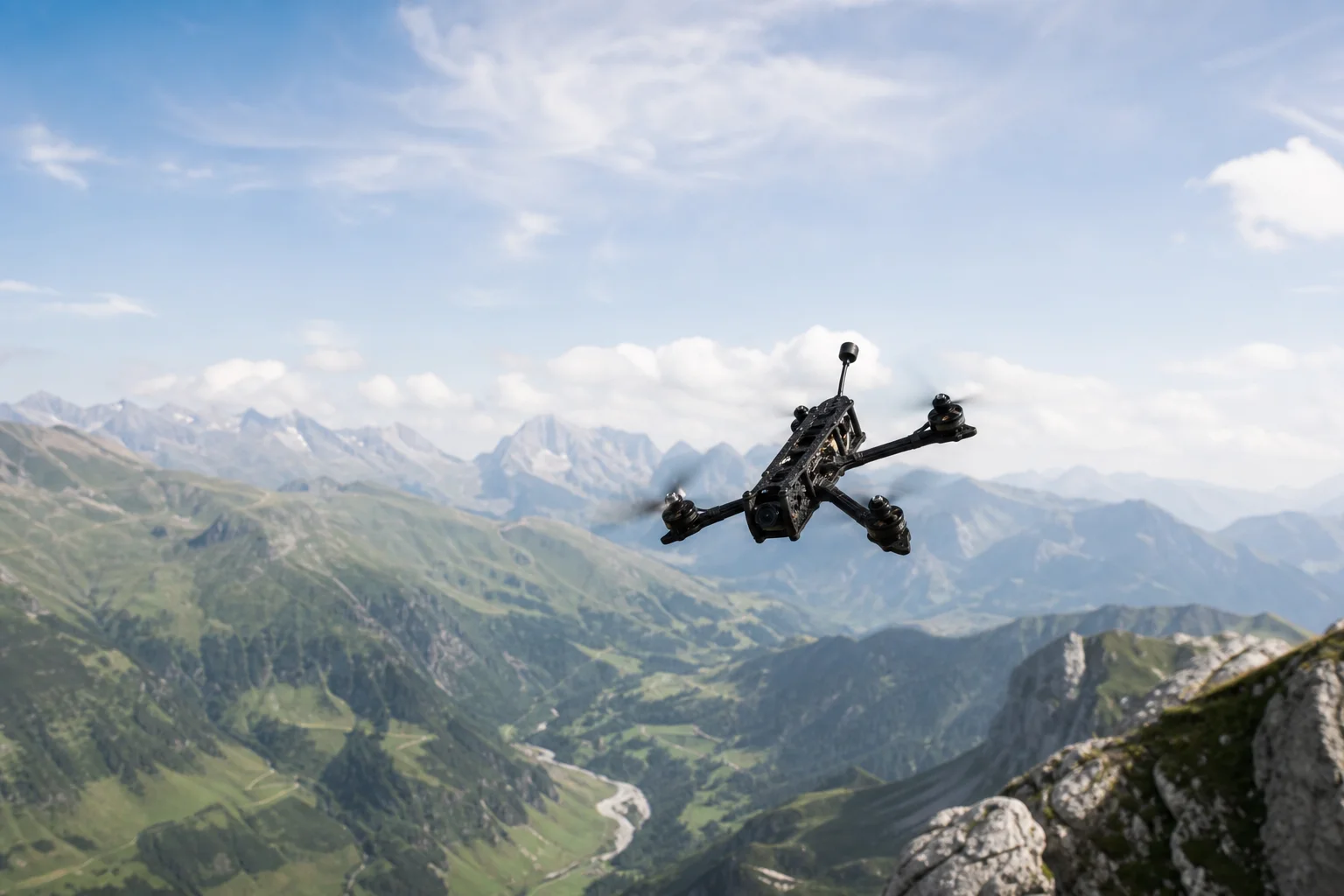
The DJI O4 Lite system delivers excellent range and signal penetration, a significant advantage for sub-250g builds. However, the camera is sensitive to vibrations, and jello artifacts appeared in recorded footage despite adjustments to ESC firmware PWM frequency (changing from 24 kHz to 48 kHz helped but did not eliminate the issue entirely). This is a limitation of the DJI O4 Lite itself rather than the frame design. For learning FPV and freestyle flying, the trade-off between lightweight digital video and perfect footage quality is reasonable.
Weight and Battery Considerations
With a sub-250g build, every gram counts. The frame itself at 55 grams leaves 195 grams for motors, flight controller, battery, and accessories. A 650-milliamp 4S battery brings the total to approximately 238 grams, while a 720-milliamp battery (which may weigh less depending on brand) results in around 217 grams. An 850-milliamp battery pushes the build slightly over 250 grams unless you eliminate optional components like external antennas, buzzers, or landing feet. Battery selection should prioritize actual weight rather than capacity alone, as different manufacturers vary significantly.
Betaflight Configuration
The flight controller arrives with Betaflight 4.5 pre-loaded. Key configuration steps include setting MSP display port on UART 1 for the DJI system and serial RX on UART 2 for the ELRS receiver. The Heads Up Racing preset recommended in Bardwell’s series provides a good starting point for conservative rates suitable for learning. Motor direction verification and ESC protocol setup (Dshot 300 with bidirectional Dshot enabled) are straightforward when following the provided guidance.
Strengths and Considerations
The kit’s greatest strength is its completeness and the accompanying support ecosystem. Shipping from the US with US-based support, a comprehensive video build series, and free STL files for customization makes this an excellent choice for first-time builders. The QAV-S2 frame itself is notably durable and well-designed for sub-250g constraints.
The primary considerations relate to DJI O4 Lite integration: the frame requires 3D-printed adapters and antenna workarounds to accommodate this popular digital system. While these solutions are straightforward and inexpensive, they represent additional steps not immediately obvious from the product description. The jello artifacts in DJI O4 Lite footage are a known limitation of that camera system across multiple frame designs rather than a flaw specific to this kit.
Conclusion
The Joshua Bardwell QAV-S2 Sub250g kit delivers on its promise of a complete, well-supported entry point into FPV drone building. The frame is genuinely durable, the component selection is sensible, and the video guidance significantly reduces the learning curve. For newcomers or pilots seeking a reliable freestyle trainer that avoids regulatory registration requirements, this kit represents solid value. Be aware of the DJI O4 Lite integration quirks if you choose that digital system, but these are manageable rather than deal-breaking. The real payoff comes from understanding your build inside and out, knowing how to repair it, and enjoying the satisfaction of flying something you assembled yourself.
Product link
View more details for Joshua Bardwell QAV-S2 Sub250g Kit
This product is mentioned in the review. Check the specifications, options, and compatibility before buying.
View more details for Joshua Bardwell QAV-S2 Sub250g KitFurther reading
Related Reviews
FPV Drones
Best 5-Inch FPV Drones 2026: Vapor D5 vs Mark 5 Comparison and Review
A detailed comparison of the GEPRC Vapor D5 and Mark 5 5-inch FPV drones, covering performance, durability, price, and which suits different flying styles.
Drones
Best Budget Drones Under $200: Five Practical Options for 2026
Five budget-friendly drones with GPS, 4K cameras, and FPV capabilities. Real strengths and trade-offs to consider before buying.
Drones
Best FPV Drones 2021: Five Practical Options for Racing and Photography
A practical roundup of five FPV drones evaluated on price, quality, and durability, from budget racing models to the all-around DJI FPV.