Snowboards
Jones Ultra Mountain Twin Review: A Beefier All-Mountain Freestyle Snowboard
A close look at the Jones Ultra Mountain Twin, a stiffer all-mountain freestyle snowboard built on Cam Rocker, with strong pop, predictable edge hold, and clear limits to weigh up.
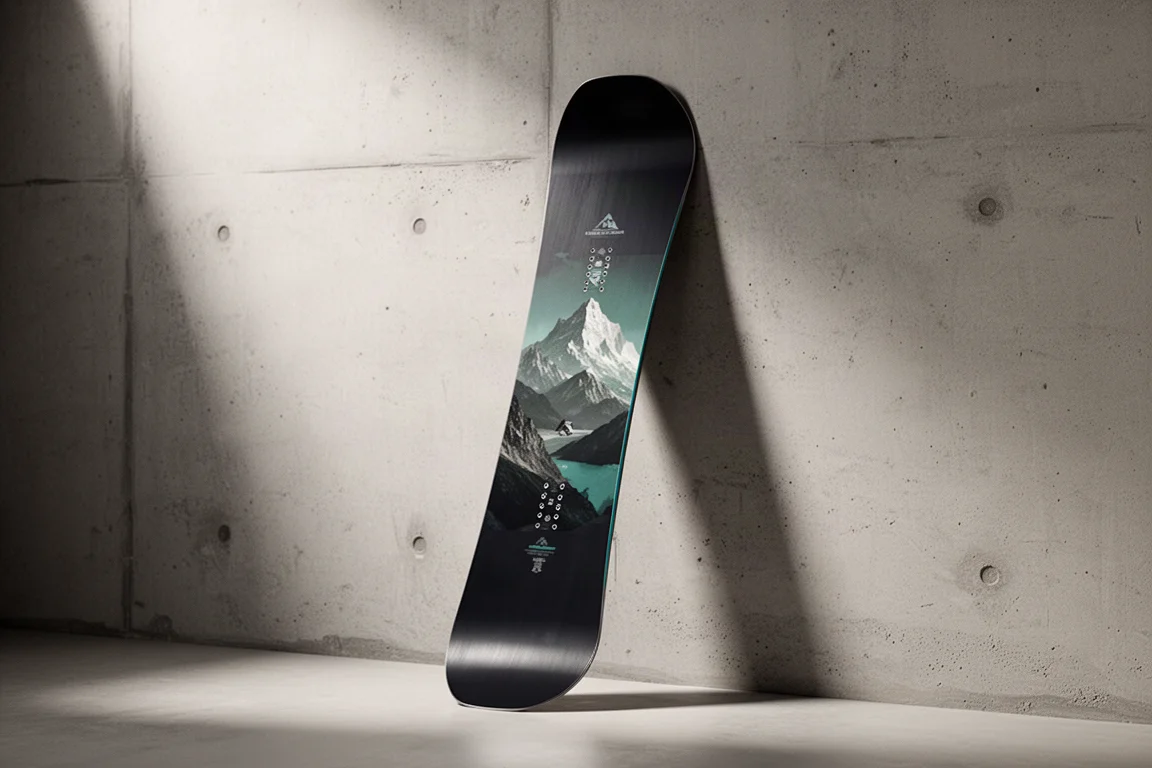
Introduction
The Jones Ultra Mountain Twin is the more aggressive side of the Mountain Twin family. It uses Jones’s Cam Rocker profile, which places camber between the feet and rocker in the nose and tail. That combination is designed to deliver the load, pop, snap, and drive of traditional camber underfoot, while the rocker sections make turn entry and exit easier and improve float in powder. It was ridden across a mixed day of bluebird sunshine, blower powder, heavier snow beneath the surface, and fresh corduroy, with occasional wind moving through. That range of conditions is a fair test for a board positioned as a single-deck answer for all-mountain freestyle riding.
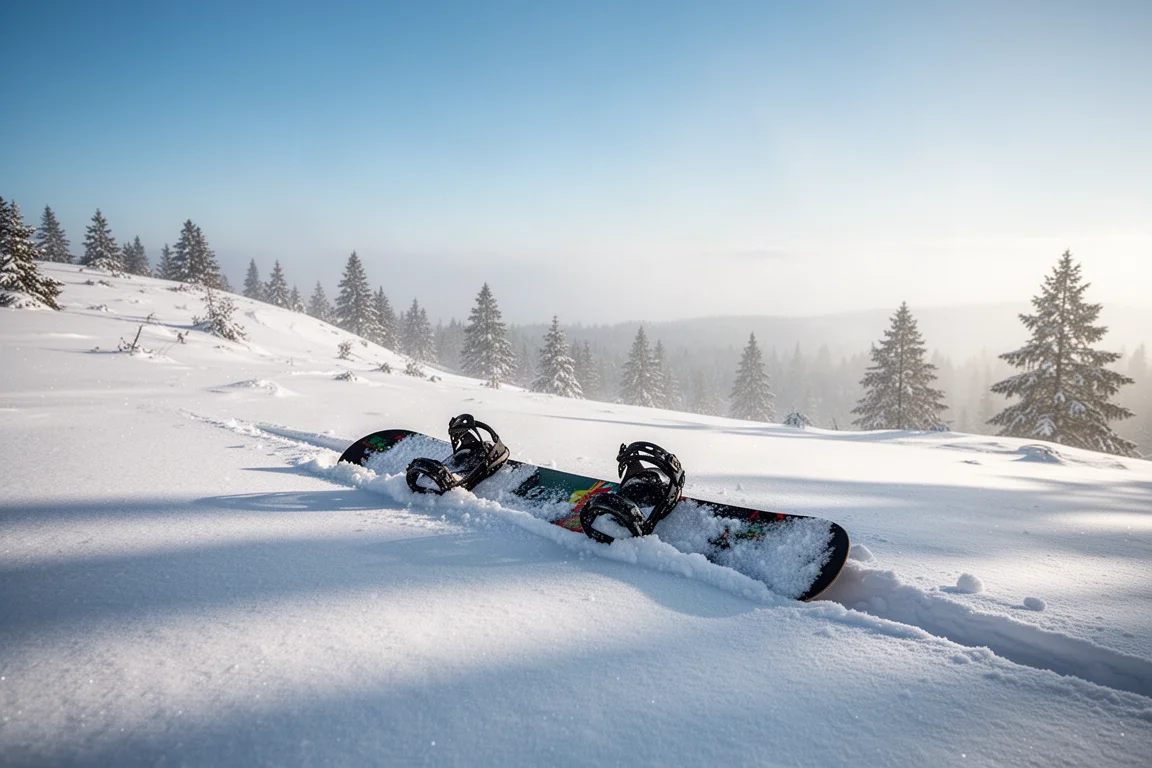
It is available in 154, 156 wide, 157, 159 wide, 160, 162 wide, 163, and 165 wide.
Who This Board Is For
This board targets the high-end all-mountain freestyle rider who wants something beefier underfoot. It has been made a little softer in the nose and tail and slightly softer torsionally than earlier versions, which makes it more approachable than it once was, but it is still an aggressive, stiff-feeling deck. It does not demand constant attention, yet it does ask for a more precise game: you have to pay attention to how it is going to ride.
For a rider who wants a single snowboard for chasing powder in the morning, ripping groomers at midday, and taking park laps when the mood strikes, this is a genuinely capable option. The current tune makes it a realistic deck of one for a strong intermediate rider moving up, as well as for the advanced rider it was originally built around.
Flex and the Cam Rocker Profile
The Ultra Mountain Twin sits on the stiffer side of the all-mountain freestyle spectrum, a hair stiffer than much of what else is on the market. The stiffest section runs through the center of the board where the camber sits, and it softens toward the tip and tail where the rocker takes over. There is still some torsional flex, but not an overwhelming amount, so twisting the board is not a constant concern.
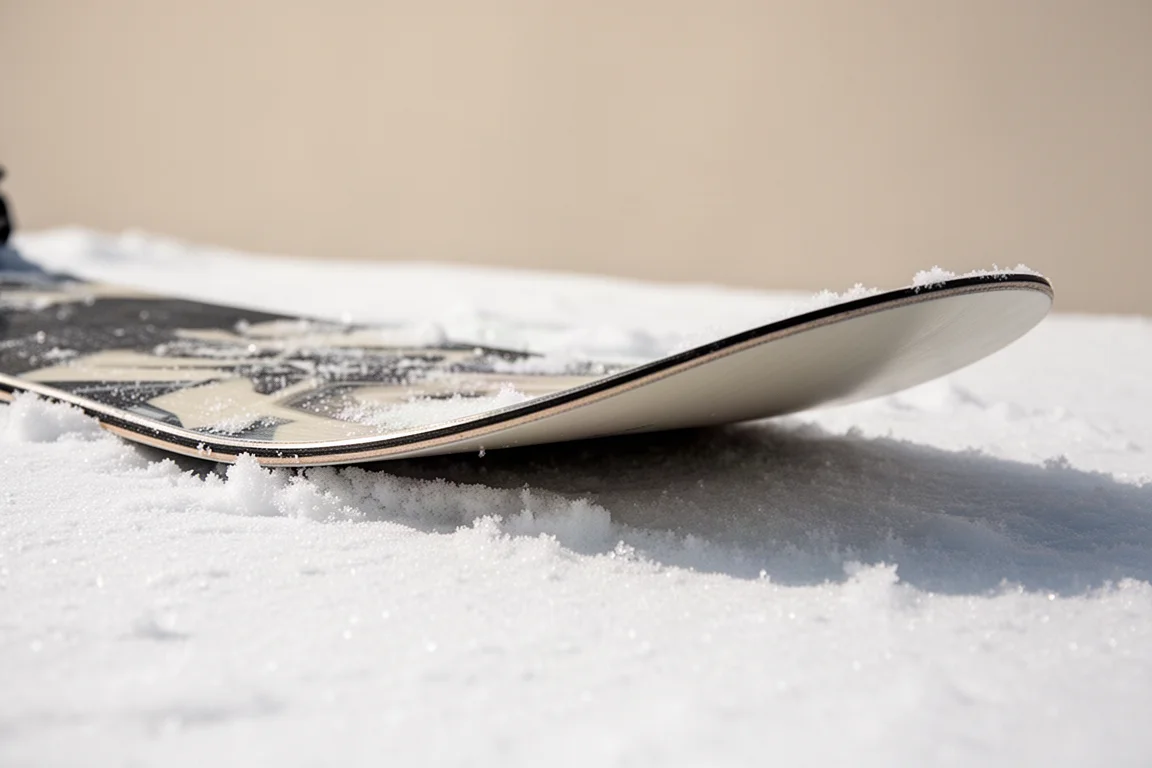
On snow, the flex produces a lively yet damp feel through the center. A good deal of vibration and chatter is absorbed there, which improves the overall ride and keeps the board composed when conditions turn rough. The trade-off is a bit of chatter in the nose that resonates slightly underfoot. The damping in the middle section is what keeps the deck comfortable through variable snow.
Pop, Powder, and Park Performance
In rutted-out terrain, the stiffer flex wants to creep up on top of the mess or push straight through it. Drop down hard and some of that body-jarring chatter comes through, resonating in the knees and ankles and building up by the end of a long day.
Popping takes a little more effort than the standard Mountain Twin. The camber has to be loaded a bit harder, but once it is loaded, the rocker in the tail engages and creates a springboard effect. For side hits and rollers, plan to load the board and come in a little hotter. In the park, it wants to boost: go fast, pop hard, and it handles small, medium, and large features with room to spare.
The 3D shaping in the nose and tail, combined with the rocker, helps with buttering. You can press into it and get sideways without the contact point at the tip hooking up. It takes more pressure and more weight shifted over the nose or tail to lock a butter in, but when it locks, it holds rather than washing out, and the camber section pops you back out of it.
Things to Consider Before Buying
The nose chatter is real, and on hard, heavy landings it resonates enough to feel in the knees and ankles. Loading the camber for pop takes more effort than the regular Mountain Twin, so riders who want an easy, low-effort freestyle feel may prefer a softer deck.
On edge, there is a limit to how far the board will lay over, and it simply stops there. Riders chasing deep, fully laid-out carves will not find them here. Jibbing is possible but not a strength: the stiff center section hugs features rather than cradling them, so this is not the board to buy specifically for rail and jib work. It is also worth noting that the deck expects a reasonably precise riding style, which is a meaningful change from softer all-mountain boards that flatter sloppy technique.
Edge Hold, Carving, and Jibbing
Getting the Ultra Mountain Twin on edge feels locked in. The transmission is quick, smooth, and fluid, and it is very predictable: the edge engages, then you drive it from under the front foot back through the tail. It is not pure ankle steering from the front foot, but the engagement starts there and loads from the center back.
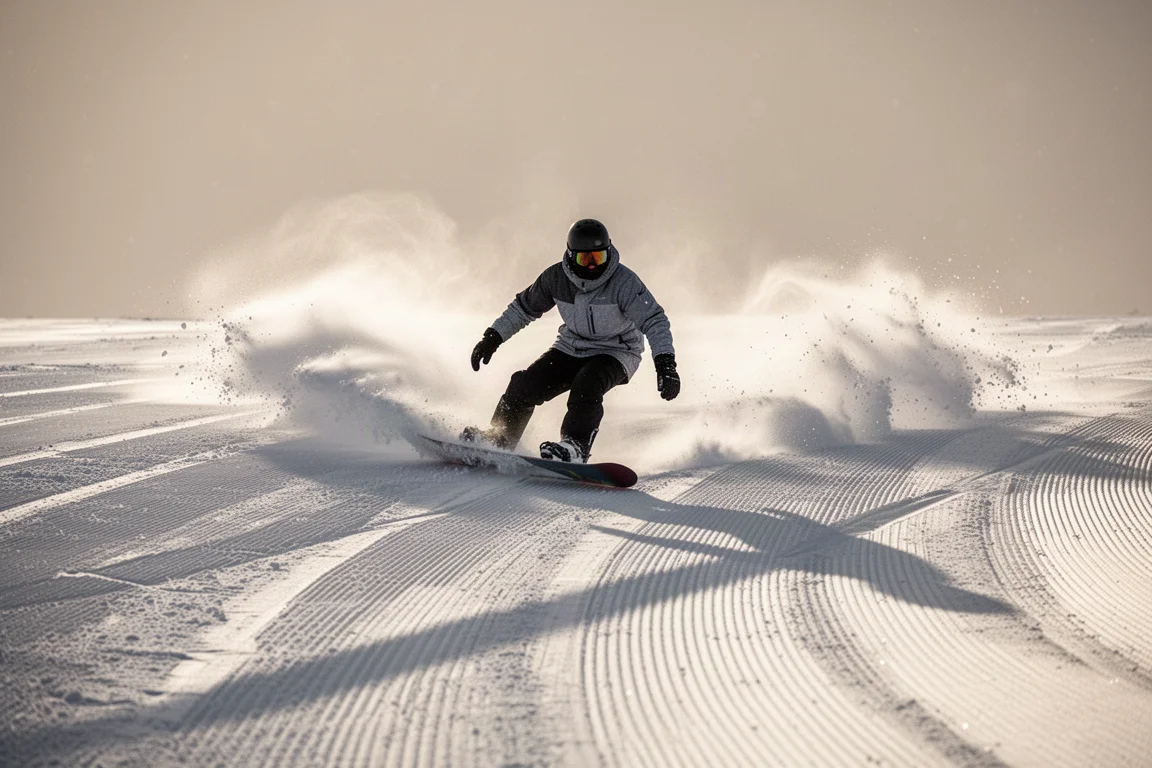
The limitation is the lay-over angle. Drive into it as hard as you can and it will only go so far before it refuses to go further. Short, tight, quick setup turns are fine, as are medium mellow carves and long, hard carves that travel from one side of the trail to the other. You can feel the power of the camber zone engaging the rocker section and giving a small snap out of each turn.
Jibbing rewards speed and commitment: go a little faster, press a little harder, and the board locks into presses, holds, then wants to snap out. Because the center is the stiffest part, it does not fully cradle around a feature, more of a gentle embrace before it slides. It is not the best jibbing board and not one to buy for that purpose, but it can be done.
Sizing and Availability
The Ultra Mountain Twin comes in 154, 156 wide, 157, 159 wide, 160, 162 wide, 163, and 165 wide. The wide versions give heavier riders and those with larger boots a more appropriate platform without stepping outside the intended size range. Choosing between the standard and wide options should come down to boot size and stance width rather than riding style.
Buying Advice
Comparable boards worth cross-shopping include the Capita Super DOA, the Ride Benchwarmer, and the Nitro Beast. Binding pairings that suit this deck include the Rome Katana, the Ride C8, and the Now Select.
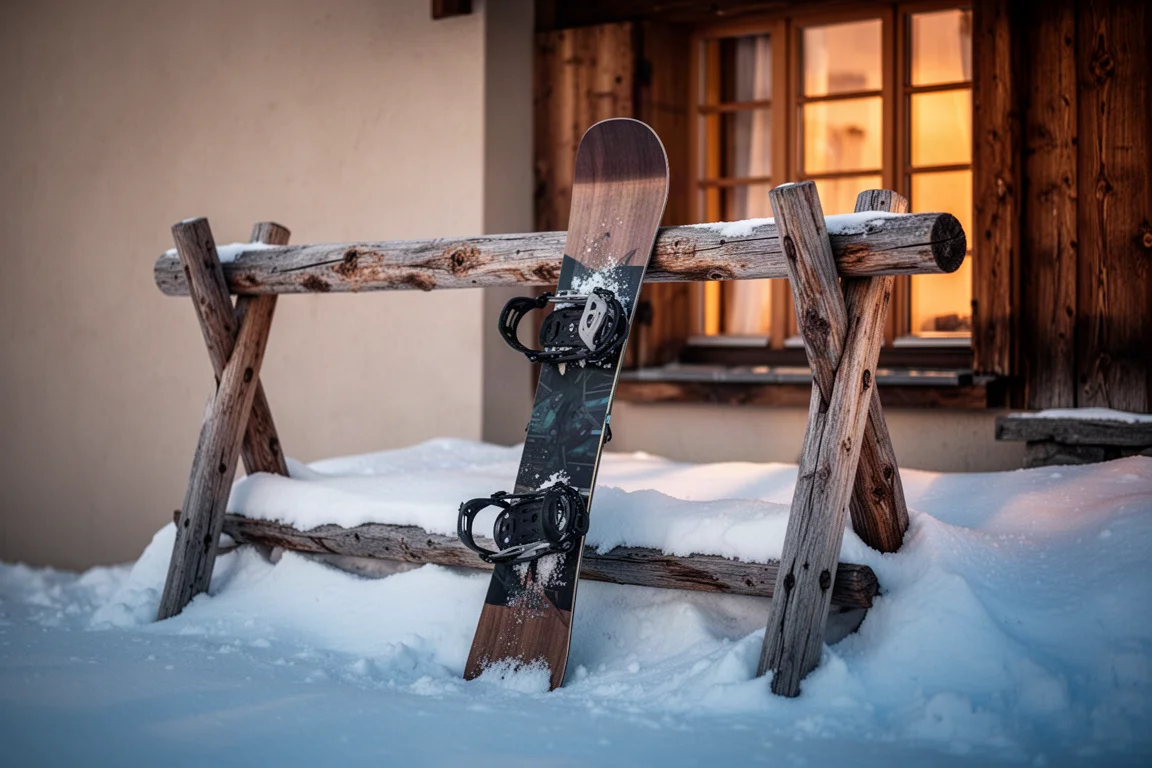
The core decision is whether you want the beefier version of this shape. If you want more pop, more stability, and a board that rewards an aggressive, precise approach, the Ultra Mountain Twin makes sense. If you would rather have a lighter, easier freestyle feel with less loading required, the regular Mountain Twin is the more sensible pick.
Conclusion
The Jones Ultra Mountain Twin is a capable, aggressive all-mountain freestyle snowboard built around Cam Rocker. It floats in powder, snaps out of turns, boosts in the park, and stays predictable on edge. It asks for a bit more effort and precision than softer alternatives, and it has clear limits when it comes to deep carves and dedicated jibbing. For the rider who wants one board to handle powder mornings, groomed runs, and the occasional park lap, it is a strong candidate.
Product link
View more details for Jones Ultra Mountain Twin
This product is mentioned in the review. Check the specifications, options, and compatibility before buying.
View more details for Jones Ultra Mountain TwinFurther reading
Related Reviews
Snowboards
32 Middle Earth Scott Stevens Pro Model Snowboard Review: A Park Board With a Reversed Flex
A medium traditional camber park board with carbon V reinforcement that is stiffer in the tips and more playful between the feet. Here is how it rides and who it suits.
Snowboards
32 Snafu Review: A Directional All-Mountain Freestyle Board with Serious Pop
The 32 Snafu pairs a directional camber-rocker profile with a stiffening tail for powerful carves, big ollies, and a surprisingly damp ride.
Snowboards
32 XXX Pat Fava Pro Snowboard Review: A Stiff Camber Beast for Hard-Charging Riders
A full-width traditional camber deck that rewards aggression with stability and edge power, but demands effort everywhere else.