Snowboard Bindings
Jones Mercury Phase Review: A Step-On Binding That Finally Rides Like a Real One
Three weeks on the Jones Mercury Phase at Steamboat reveal a fast-entry binding with a genuinely responsive ride, minimal moving parts, and a few quirks to know before buying.
Introduction
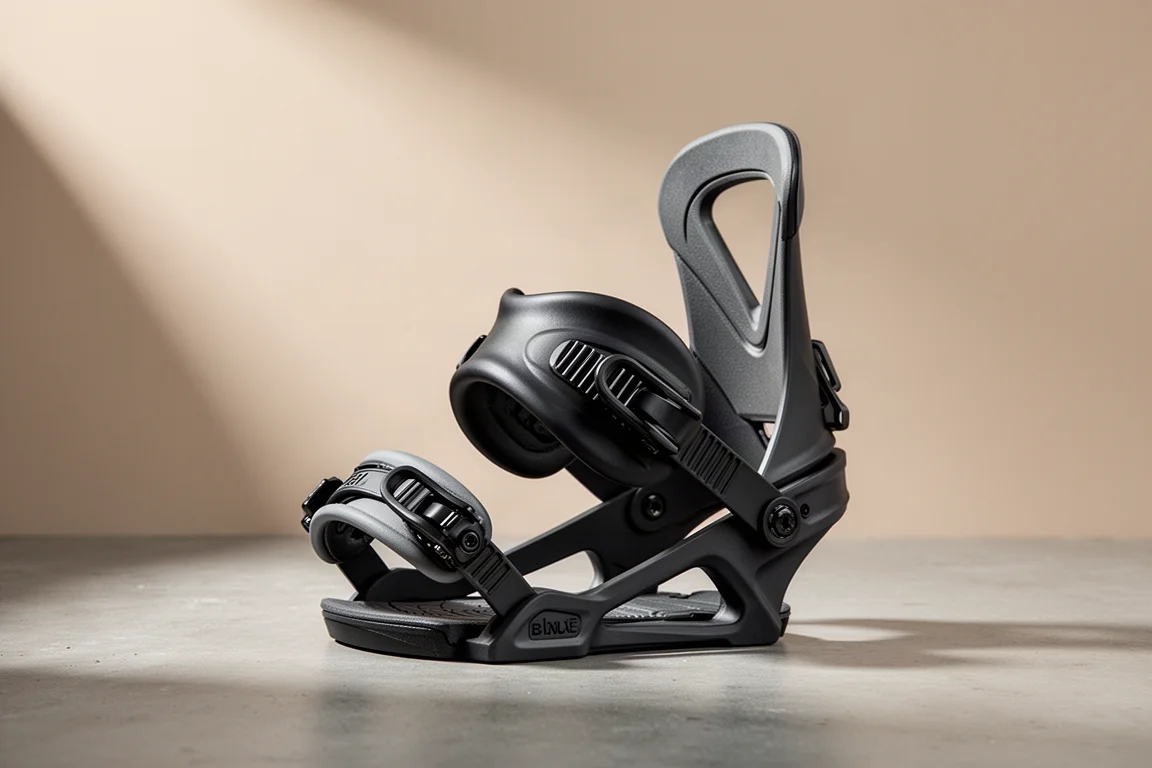
Some bindings are easier to pin down than others. The Jones Mercury Phase is the fast-entry binding that took a few runs to warm up to and then refused to leave. After roughly three weeks of riding them at Steamboat Resort, including a day with fresh groomers, over a foot of new snow from the previous two days, and tree-run stashes on the hike-to terrain, the verdict is clearer than expected: this is a real binding, not just a convenience product.
Tested with Ride Fuse boots on a Jones Strato snowboard, the Mercury Phase rides like a genuinely responsive freeride binding. It is not merely a good step-in option for instructors and beginners. It competes, feel-wise, with far more expensive bindings, and it does so with almost no exposed moving parts to go wrong.
Who This Product Is For
This binding is made for the rider who needs a responsive setup but does not want to deal with strapping in twice at the top of a peak or on steep, technical terrain. Step in, ratchet the ankle strap once, done.
If you ride aggressive boards, charge technical lines, or simply value performance and are tired of sitting in the snow tightening straps, the Mercury Phase fits that profile. If you want a soft, surfy, loose ride, this is not that binding. It sits firmly on the responsive side of the flex spectrum.
Adjustability and Design
Adjustability is very standard, bare-bones Jones: not a lot of moving parts, which for this type of binding is a genuine strength. It is nearly idiot-proof.
The ankle and toe straps are toolless. To remove a strap you have to flip the ratchet all the way open; there is no screw head involved. If you do not open it fully, it stays locked, which is reassuring because the straps cannot come undone mid-ride.
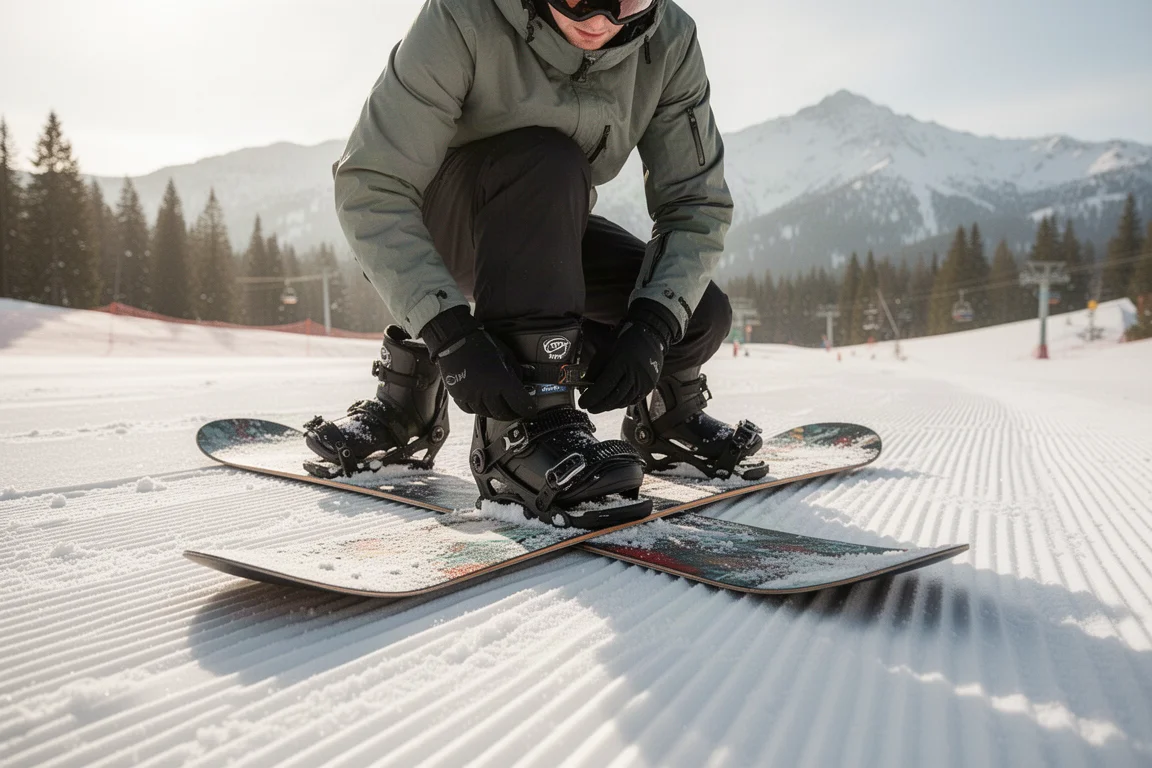
The forward lean works differently from most bindings: pop the piece off, twist the tab so it slides, twist it back, and pop it into place. The toe ramp can also be adjusted by unscrewing it, flipping it around, and sliding it down, which helps reduce toe drag. As with every Jones binding, the disc lets you center your boot so you are not too toe- or heel-heavy.
Straps and Ratchets
The ankle strap is stiffer than the regular Mercury strap, and for good reason. Since the Phase chassis does not have skate tech, there is more lateral play underfoot, so the stiffer, more responsive ankle strap keeps you locked in and lets you drive even the most aggressive board.
The toe strap is very rigid. It did not fit the square Fuse toe box perfectly, but once locked in it does not move at all. It disappeared underfoot in the best way: the boot simply felt totally secured, with zero problems over three weeks. Ideally a future version would be slightly softer and more moldable, but as-is it is a durable, reliable strap with no gouging on the teeth even after being cranked down hard.
The ratchets may be the best Jones makes. The toe ratchet has a lock so it does not drift when on your foot, and there is essentially no play in either ratchet. You get plenty of clicks per pull, they grip hard, and nothing dug into the ladder over three weeks of use. It is a really solid mix of precision and hold.
The Highback and Entry Mechanism
The first thing you will notice on the highback is a small lever. When you step in, it closes the highback for you. You can also fold the highback fully forward when getting on the lift, which solves the classic low-chairlift problem where an open rear entry design cracks the highback. Here, you just kick it forward, and a quick hit backwards locks it back in place.
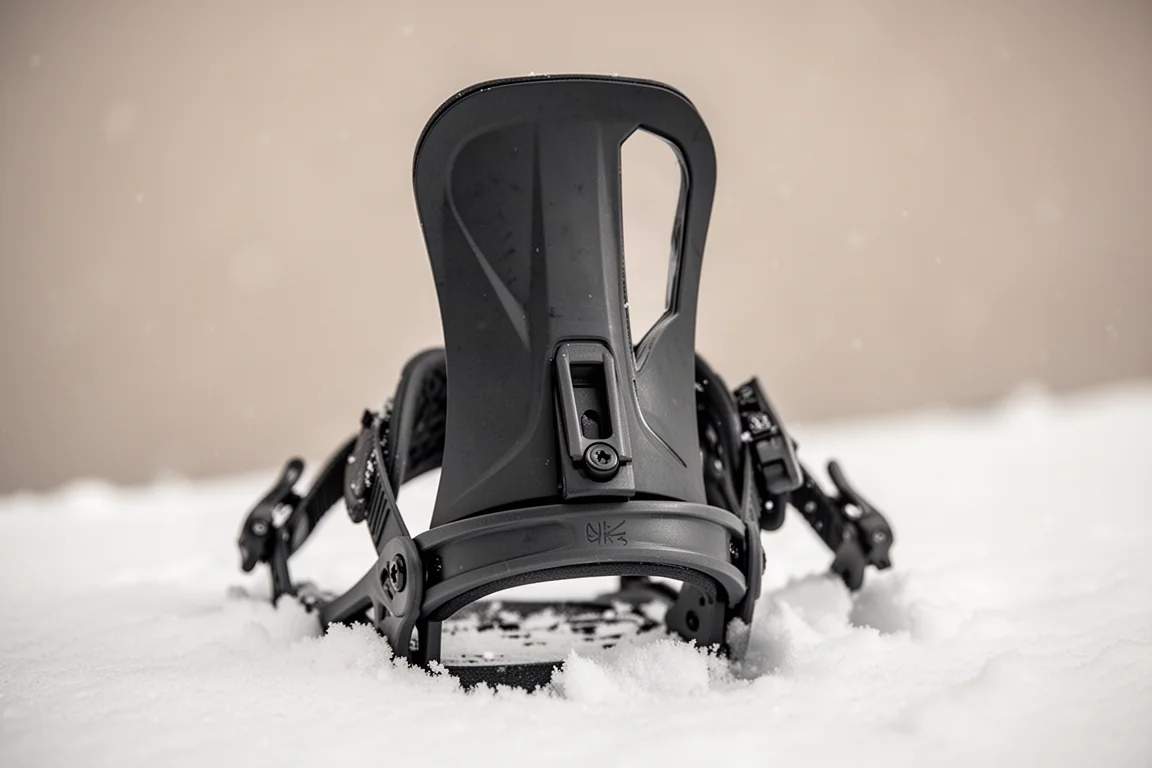
After three weeks of hard use, there was zero wear and tear, not even discoloration, on the two plastic closure pieces. If they ever do need replacing, it takes a flathead screwdriver to pop the sides out and swap the pin. The highback itself has some lateral play, but a reinforcing piece on the back keeps it responsive. You get power on the inside edge while keeping a bit of outside play for presses and butters. Heel-to-toe response is crisp, the padding sits low enough that it never interfered with the boot cuff, and overall the highback is more responsive than soft. It is slightly softer than the standard Mercury highback, but do not expect Meteorite-level flex.
Ride Feel and Damping
Overall flex is on the responsive side rather than loose. Without skate tech on the chassis there is a bit more lateral play, largely remedied by that stiffer ankle strap. The bigger win is what Jones fixed compared to the Supermatic: the dead spot. This binding flexes freely with the board instead of feeling like a rigid slab bolted underneath your foot.

Heel-to-toe it is definitely responsive, and paired with the highback it puts pressure exactly where you want it. Toe-side edges are reached quickly and held well. You can confidently run it on a stiffer board without control problems.
On damping, the Phase is not as damp as the standard Mercury, but it cuts chatter well. The fresh corduroy was noticeable underfoot, while the hard, crusty patches found late in the day were absorbed without complaint. Foam on top and underneath does the job even though there is less of it than on a standard Jones binding. A flat-landing drop put a little impact in the heels, though that is more a comment on landing to flat than on the binding. Overall: a very comfortable binding.
Getting In and Out
The elephant in the room with any step-on binding is entry, and it took a couple of runs to figure out. Once the toe strap is dialed in properly, it is extremely easy: undo it, pull your foot out, and the binding automatically opens right up. If you are in a hurry and kick the ankle strap, it pops apart and feeds right back in on the lift, which is genuinely handy on uneven surfaces.

The real proof came on the hike-to terrain, where the snow was about three feet deep. Board down, stomp in, no board shifting, no sliding off down the face. You do not even need to stomp hard; a firm pop and slight push down closes the binding and holds you in. Expect a short learning curve on the first couple of runs, particularly if the toe strap is set a touch tight, but after that it is a non-issue.
Buying Advice
The Phase line includes comparable options such as the Rome Katana Phase, the Batallon Blaster Phase, and the Nitro Supermatic if you want to explore fast-entry technology further. For daily riders who want responsiveness without the strapping ritual, though, the Mercury Phase is the standout: minimal moving parts, no exposed mechanisms like the Supermatic, and a ride quality that genuinely holds its own against premium strapped bindings.
Conclusion
The expectation going in was “another fast-entry binding, great for instructors.” That expectation was wrong. The Jones Mercury Phase is a genuinely well-engineered, responsive binding with the fewest moving parts in its class, a clever self-closing highback, and a ride that does not give up much of anything to far pricier options. Once dialed, entry and exit are quick and reliable, even in deep snow on technical terrain. For riders who want performance and convenience in one package, this is exactly what fast-entry bindings have always wanted to be.
Product link
View more details for Jones Mercury Phase
This product is mentioned in the review. Check the specifications, options, and compatibility before buying.
View more details for Jones Mercury PhaseFurther reading
Related Reviews
Snowboard Bindings
2024 Union Ultra Snowboard Bindings Review: A Cushy, Freestyle-Focused Favorite
Two seasons on the 2024 Union Ultra: a lightweight, tweakable freestyle binding with standout comfort, a damp molecular bushing, and thoughtful hardware fixes.
Snowboard Bindings
32 Team Phase Binding Review: A Fast Entry Binding Built for Freestyle Laps
The first binding from 32 uses the Phase chassis for quick step-in entry with a softer, freestyle-leaning flex. Here's how it performed on the snow.
Snowboard Bindings
Arbor Cypress Snowboard Binding Review: A Laid-Back Cruiser That Can Charge
A closer look at the Arbor Cypress binding's adjustability, strap feel, and that oddly tall highback before you decide to buy.