Snowboard Bindings
Jones Apollo Bindings Review: Stiff, Powerful, and Built for Freeride
A close look at the Jones Apollo, the stiffest binding in the Jones line, covering strap design, adjustability, ride feel, and who it actually suits.
Introduction
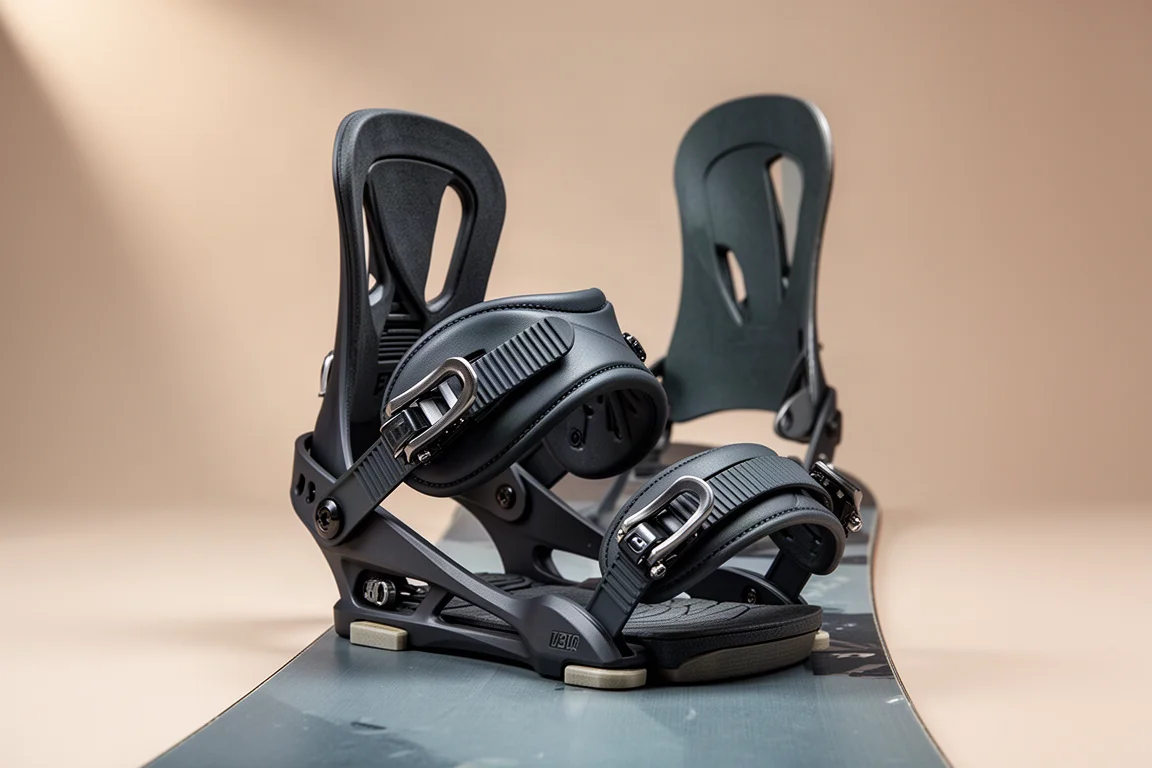
The Jones Apollo is the stiffest highback binding in the Jones lineup, and it arrives with a few refinements for the 2022 season. It was put through a wide spread of conditions: dust on crust, heavy powder, ice, chunder, and firm fast groomers, on a sunny bluebird day with moderate to high winds. That range is exactly what a freeride binding has to survive, because the snow underfoot rarely stays consistent from first chair to last.
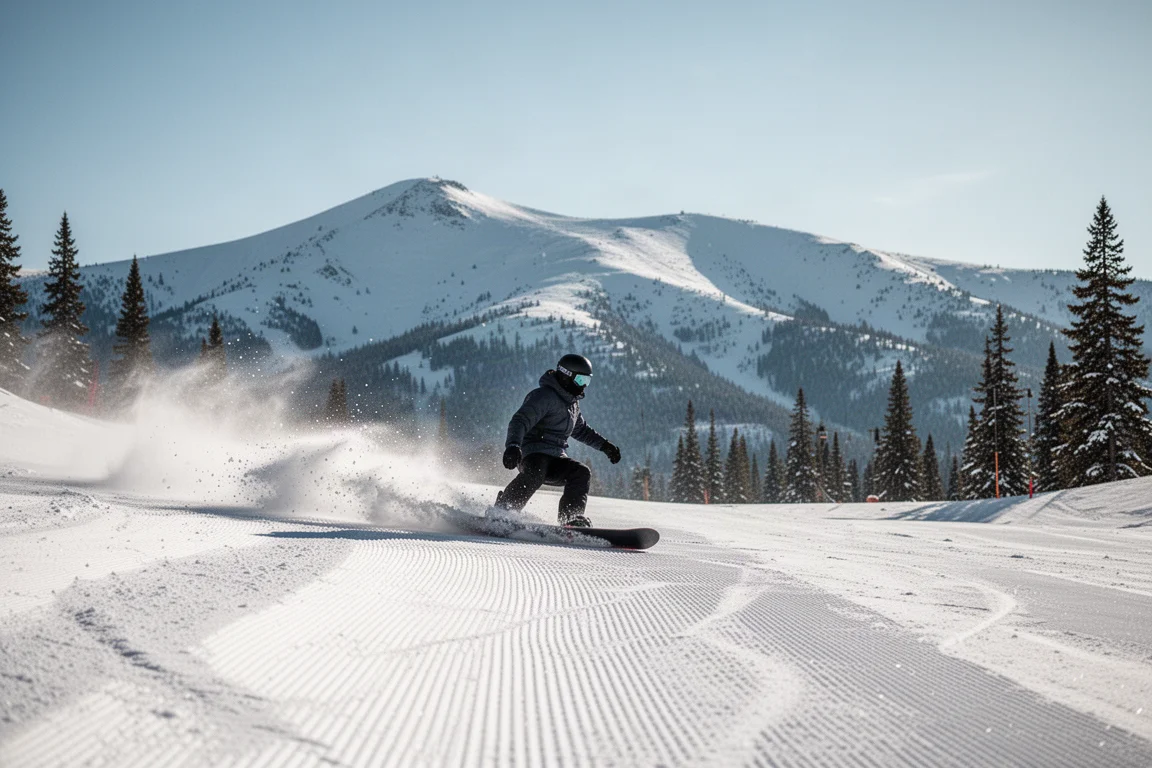
Paired with a K2 Cool Bean snowboard and K2 Thrax boots, the Apollo established its character early: this is a binding built to drive power into the edge rather than to feel loose and playful underfoot.
Who the Jones Apollo Is For
This binding is aimed squarely at the all-mountain freeride rider who wants to hard charge. If your priority is stiffness, precision, and the ability to push a board hard through a heel side or toe side turn, the Apollo is designed around that intent.
It is a less natural fit for riders who prefer flex to come from the boot. The Apollo carries a stiff highback and a built-in forward lean, and that combination shapes the entire ride.
Main Strengths: Power Transfer and Strap Design
The defining trait is power. The highback is the stiffest in the Jones range, and that stiffness is felt immediately when driving back into it. A small amount of lateral play at the wing keeps it from feeling fully locked, but the overall ride is more powerful and more precise than comparable bindings, and the difference shows up on both heel side and toe side turns.
SkateTech is the other half of that story. The rocker between the toe and the heel drives more power down into the edge of the board, which translates into better control. A stiff baseplate carries that same firm feel underfoot.
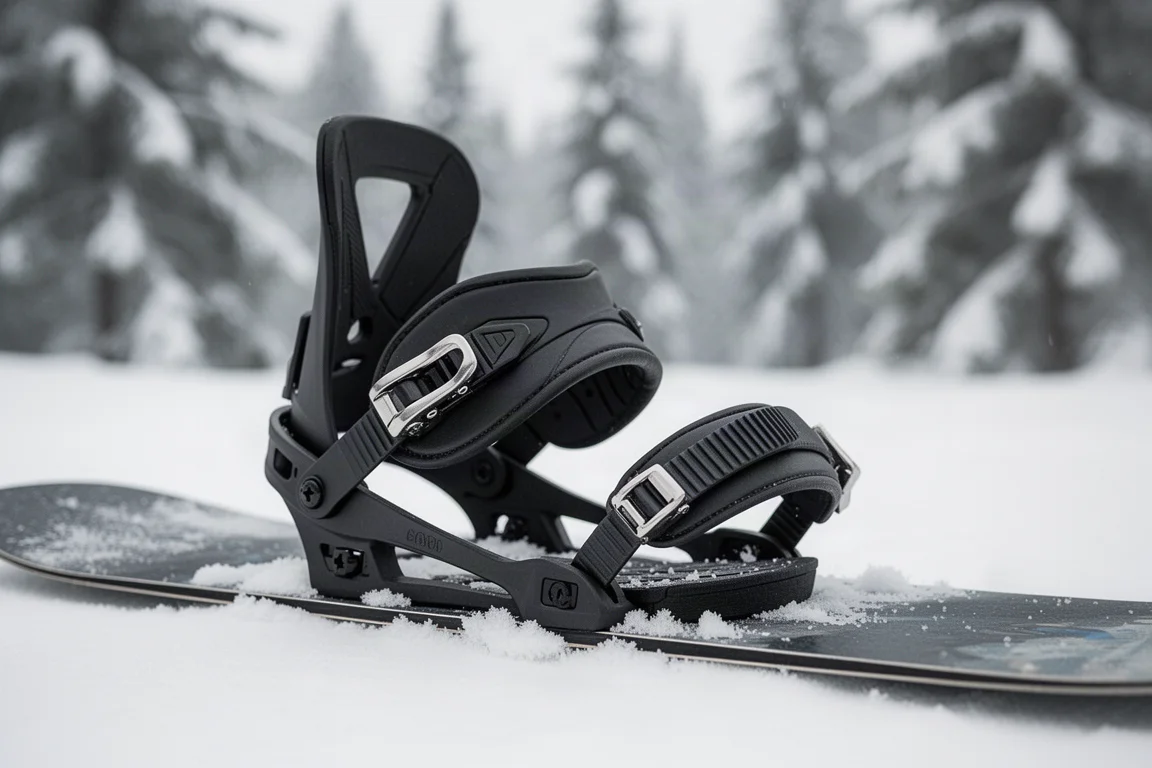
The ankle strap uses a minimal Power Spine design with no excess material. It contours around the instep of the boot, so the padding comes from the boot liner and shell rather than from the strap itself, which helps avoid break in and odd pressure points. A slight hinge piece helps move the strap out of the way when strapping in.
The Flip-It heel strap offers two modes. Surf mode is more playful and easier to drive into, while freeride mode is stiffer and delivers more power and precision. Straps grip well and hold without feeling flimsy.
The toe strap is a rubber design with ridges that grip. Earlier Jones and Now bindings were weaker in this area, and the revised toe strap is a clear step forward: it holds, it locks in, and it does not slip, while still contouring around the toe box.
Ratchets climb well and stay locked in. The heel has a one-finger quick release with a wider mouth that feeds cleanly, and nothing about the hardware suggests it will become problematic before it is genuinely worn down.
Adjustability and Setup Options
Setup is straightforward. Flip cams on the toe and heel straps lengthen or shorten the straps as needed.
Forward lean can be twisted and moved, or loosened with an allen key and flipped to change how it sits, so riders who want more or less lean can dial it in to taste.
Four bushings can be swapped between soft, medium, and hard densities, which changes how the binding flexes on the board and how it feels underfoot.
Things to Consider Before Buying
The most important consideration is the natural forward lean. If a boot already carries its own forward lean and does not contour to the binding’s angle, ankle bite is possible. Riders who dislike forward lean in a binding and prefer their boots to supply it should look closely at this before committing.
Stiffness is the second trade-off. The Apollo is stiffer than many riders want, and the flip side of all that power is a firmer, less forgiving feel underfoot.
The toe strap also lacks the one-finger quick release found on the heel. It can be gripped at the front and released without much effort, and it never sticks, but the two ratchets are not uniform.
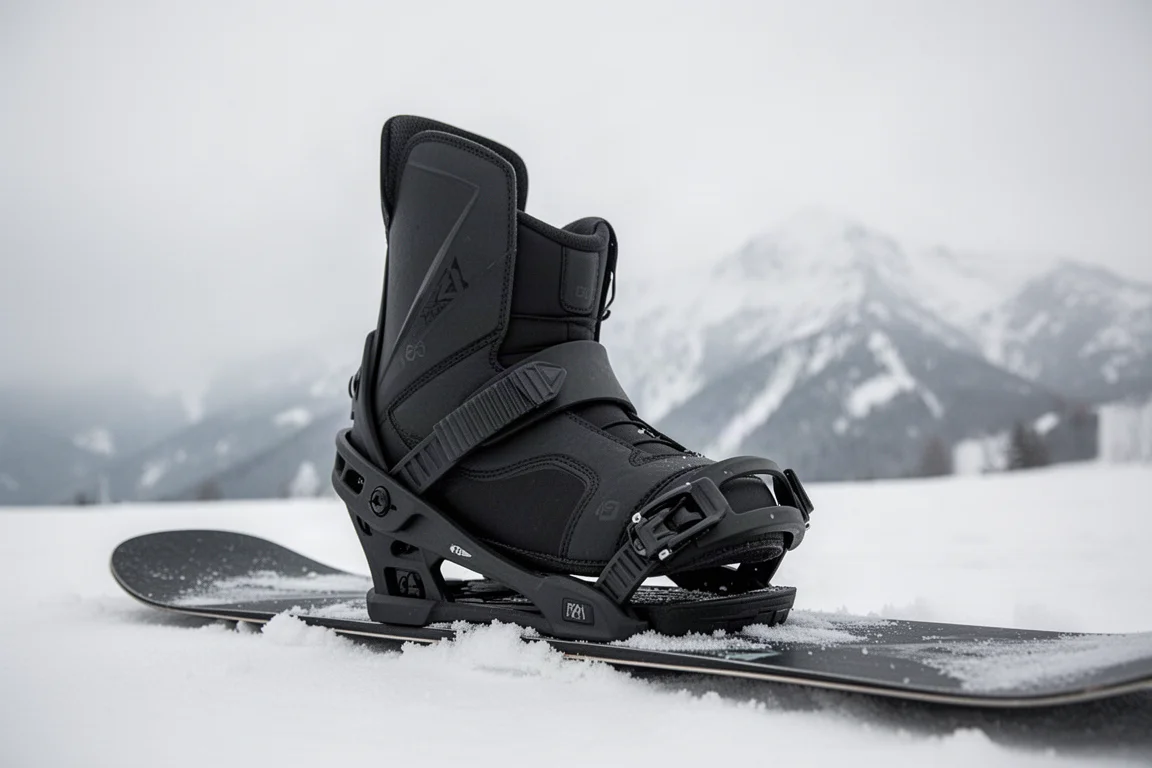
Build quality holds up well. The straps grip, the ratchets stay locked in, and nothing feels like it is likely to become a problem in normal use.
Buying Advice
Buy the Apollo if you want a stiff, powerful binding for all-mountain freeriding and you like your control to come from the binding rather than the boot. The combination of the stiff highback, SkateTech power transfer, the Flip-It strap modes, and swappable bushings gives it a genuinely tunable character.
If you are cross-shopping in the same category, the Ride C10, the Union Atlas, and the Flux XF sit in the same conversation.
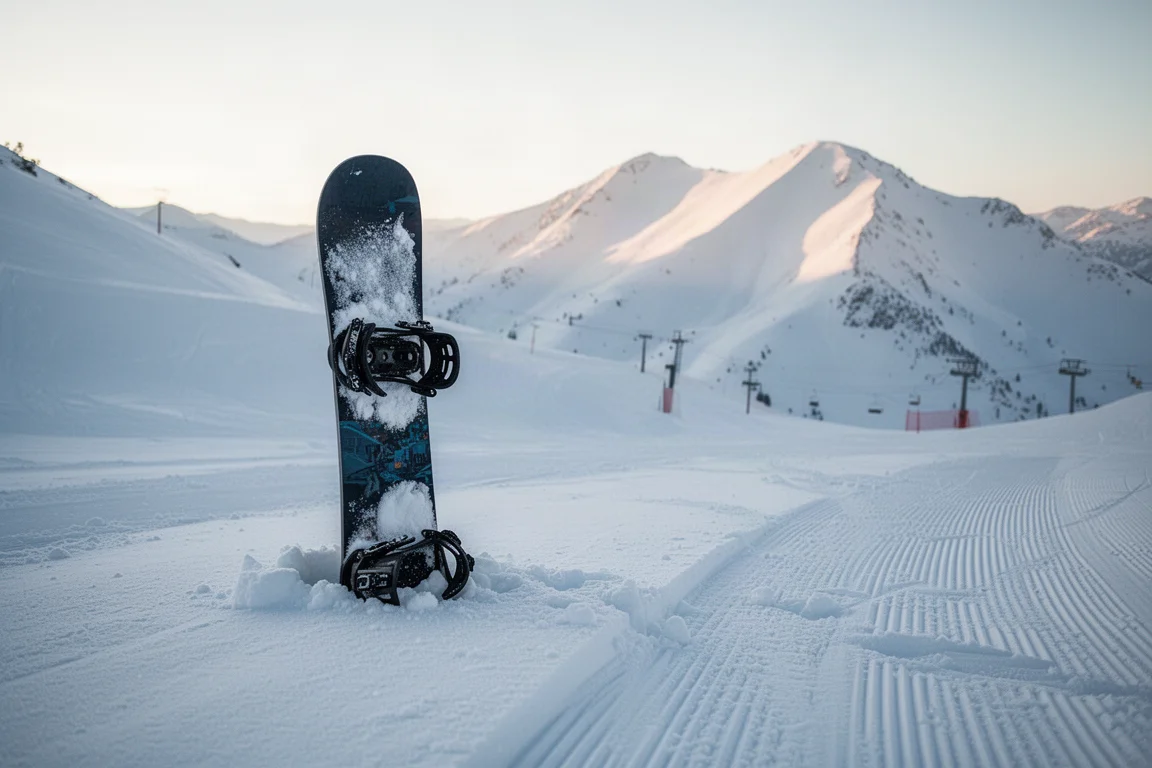
For riders who prefer a softer, more playful binding, or who already get their stiffness from their boots, this is likely more binding than needed.
Conclusion
The Jones Apollo is a focused freeride binding: stiff, powerful, and precise, with a strap package that has improved meaningfully over earlier versions. Its natural forward lean and firm flex make it a poor match for some riders and a very good match for others. For the hard-charging all-mountain rider, the power and edge control are the whole point, and the Apollo delivers them.
Product link
View more details for Jones Apollo Bindings
This product is mentioned in the review. Check the specifications, options, and compatibility before buying.
View more details for Jones Apollo BindingsFurther reading
Related Reviews
Snowboard Bindings
2024 Union Ultra Snowboard Bindings Review: A Cushy, Freestyle-Focused Favorite
Two seasons on the 2024 Union Ultra: a lightweight, tweakable freestyle binding with standout comfort, a damp molecular bushing, and thoughtful hardware fixes.
Snowboard Bindings
32 Team Phase Binding Review: A Fast Entry Binding Built for Freestyle Laps
The first binding from 32 uses the Phase chassis for quick step-in entry with a softer, freestyle-leaning flex. Here's how it performed on the snow.
Snowboard Bindings
Arbor Cypress Snowboard Binding Review: A Laid-Back Cruiser That Can Charge
A closer look at the Arbor Cypress binding's adjustability, strap feel, and that oddly tall highback before you decide to buy.