Snowboards
Jones Air Heart Review: A Directional Twin Snowboard Built for All-Mountain Freestyle
A closer look at the Jones Air Heart, a full camber women's snowboard with a directional twin shape, medium to stiff flex, and a $599 price tag.
Introduction
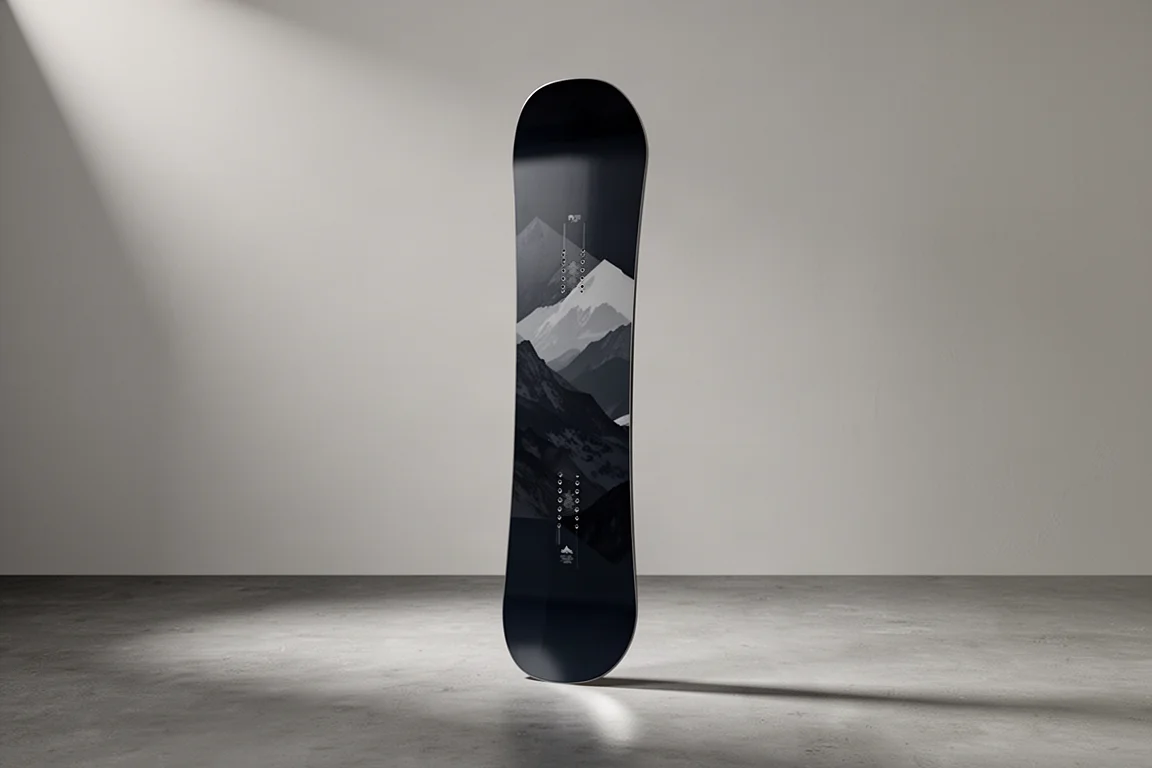
The Jones Air Heart is a women’s snowboard that pairs a twin shape with a directional flex pattern. It is a full camber board with a medium to stiff flex, and Jones positions it as an all-mountain freestyle option rather than a dedicated park deck. At $599, it sits alongside the brand’s other performance-oriented boards, and it is aimed at riders who want a single snowboard that handles groomed runs, natural features, and softer snow without feeling like a compromise.
That combination of a twin outline and a directional flex is unusual enough to be worth unpacking. A twin shape gives you a balanced platform for switch riding, while the directional flex keeps the board driving forward with more support behind the back foot. The result is a board that behaves differently depending on how you set it up and how you ride it.
Who This Product Is For
The Air Heart makes the most sense for riders who already have their fundamentals in place and want a board that can cover a lot of terrain in one day. Because the flex leans toward the stiffer end of medium, it rewards a rider who can load the board deliberately and drive it through a turn rather than someone still working on basic edge control.
It also suits riders who like the idea of a twin board but rarely ride a fully centered stance. The twin outline keeps things balanced for switch, while the directional flex gives the board a more purposeful forward feel when you set it back.
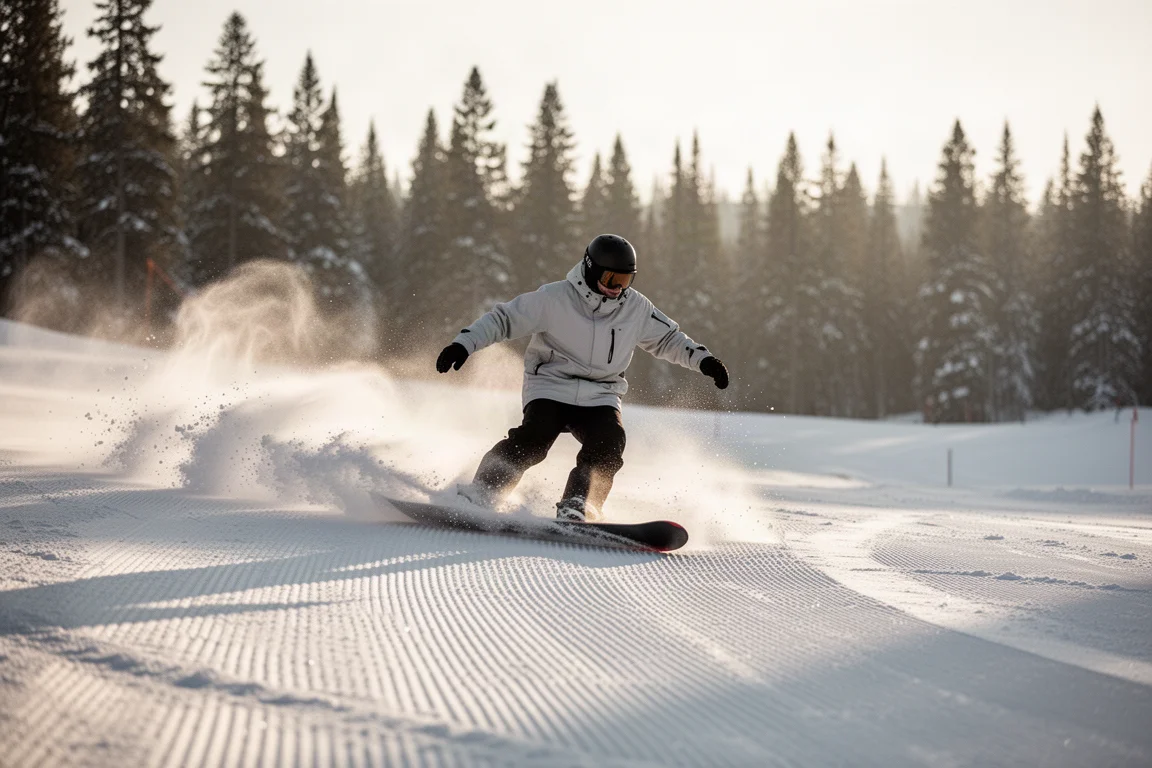
Riders who split their time between groomers, side hits, and whatever soft snow they can find are the clearest fit. The board is not built around one narrow discipline, so it stays useful across a full season rather than only on the days that match a single riding style.
Shape and Flex: Directional Twin Design
The Air Heart is a directional twin, which means the outline is twin-shaped while the flex pattern is tuned to be slightly directional. That gives it a balanced platform underfoot with a bit more backbone toward the tail, so the board still feels natural when you ride switch but pushes a little harder when you finish a turn on the back foot.
Jones rates the flex as medium to stiff, and in the hand it reads closer to the stiffer side, in line with the general feel of the brand’s lineup. For an all-mountain freestyle board, that means solid support at speed and enough resistance to stay composed when you load it up, at the cost of some of the loose, playful softness that softer boards offer.
Camber Profile and Ride Feel
Full camber runs tip to tail on the Air Heart. Camber is the traditional profile that arches upward between the contact points, and it tends to deliver strong edge hold, reliable pop, and a lively finish to turns. Riders who grew up on cambered boards will recognize the feel immediately: pressure builds through the middle of the turn and releases out of the tail.
Paired with the medium to stiff flex, the camber profile makes the board feel energetic and planted rather than surfy. It is a setup that encourages deliberate input and rewards clean technique, which is part of why it works best for riders who already have confidence on edge.
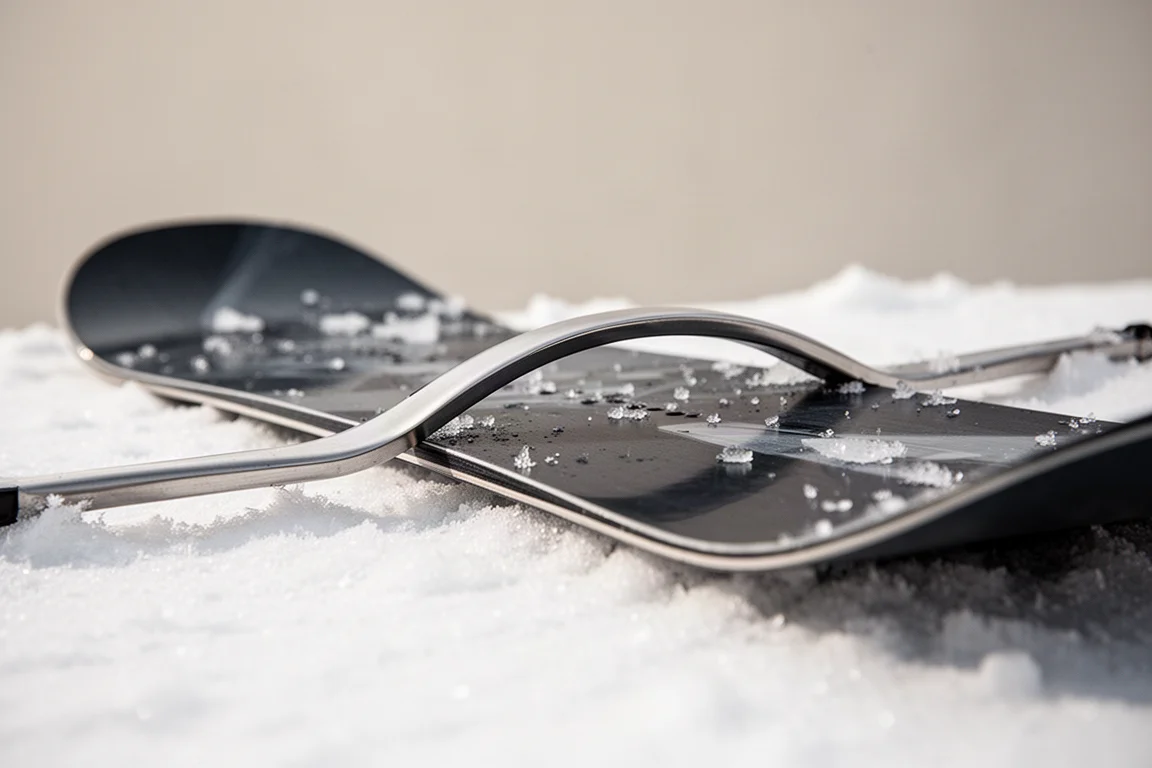
Because the profile is fully cambered rather than hybrid, there is less early rise to float the nose in deep snow. The board can still handle soft conditions, but it is happiest when there is a firm surface underfoot to push against.
Build Quality and Finish
The finish on the Air Heart is one of its more immediately noticeable qualities. The base is smooth and glossy with a clean, polished look, and the overall construction reads as tidy and well executed rather than rough or unfinished. It is the kind of board that looks sharp on a rack and holds that impression once you get it on snow.
That attention to finish matters more than it might seem. A clean, flat base and consistent edges are the foundation for predictable glide and clean turn initiation, and they are the first things a good tune builds on.
Mounting and Stance Options
The Air Heart carries a generous spread of insert packs, which is what makes the directional twin concept work in practice. You do not have to ride this board centered. The extra inserts let you set your stance back by half an inch or an inch, which shifts the ride toward a more directional feel without changing the board’s outline.
That flexibility is genuinely useful. Riders who like to finish turns off the back foot can move the stance back and get more leverage over the tail, while riders who spend more time riding switch can keep things closer to center. One board, several setups.
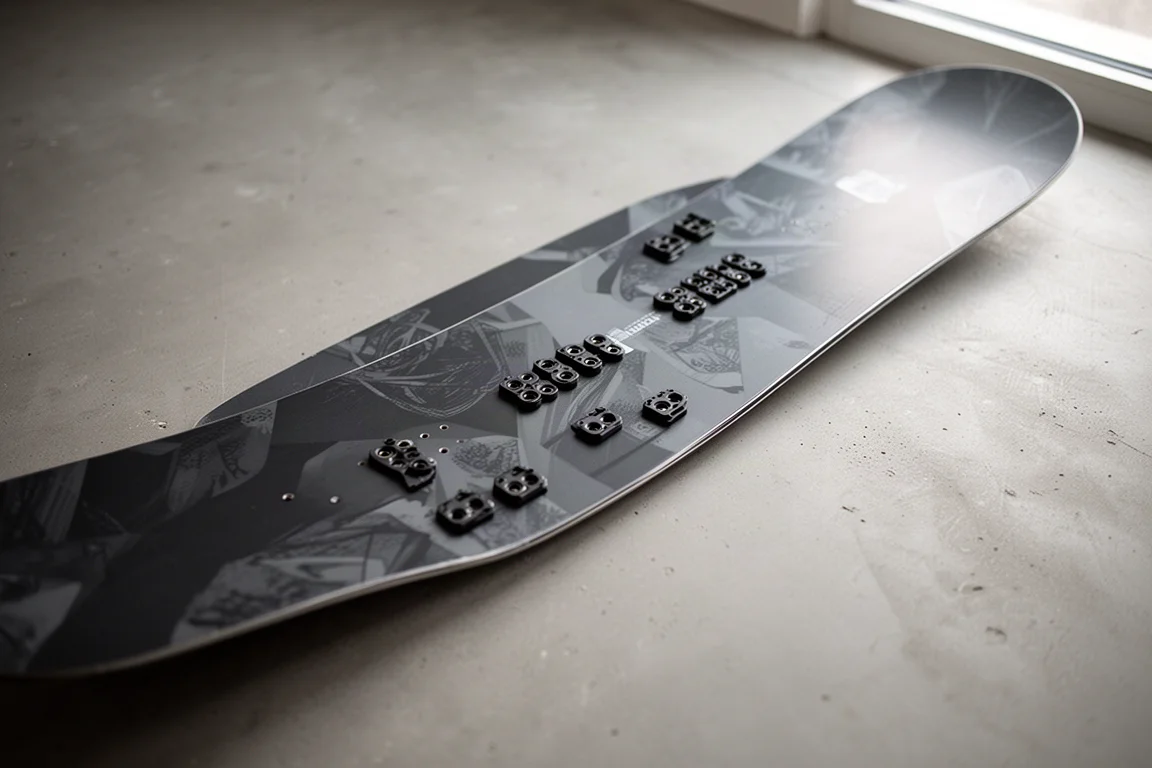
It is worth taking the time to experiment with the stance rather than defaulting to the reference position. Small adjustments of half an inch change how much tail support you feel and how easily the nose stays up in softer snow.
Things to Consider Before Buying
The main consideration is the flex. A medium to stiff board asks more of the rider than a soft, forgiving one, and it can feel demanding if you are still building confidence or if you prefer a loose, surfy feel underfoot.
The full camber profile is the second thing to weigh. Camber delivers edge hold and pop, but it is less forgiving than hybrid profiles when you catch an edge or get caught off balance, and it offers less natural float in deep snow.
Finally, the directional twin design is not the same as a true twin park board. If your riding is mostly centered, switch-heavy freestyle in the park, a symmetrical board will feel more natural. The Air Heart is at its best when you want twin versatility with a directional bias.
Buying Advice
The Air Heart is a strong pick if you want one snowboard for the whole mountain, you are comfortable riding at speed on edge, and you like the idea of a twin shape with a directional flex and adjustable setback. It rewards riders who put input into the board and want that input returned as grip and pop.
If your priority is a soft, playful park deck or a forgiving board for your first few seasons, look elsewhere in the range. If you already know you prefer camber and a stiffer flex, this is a board that should feel familiar from the first run and continue to make sense as your riding progresses.

Sizing matters as much as the model choice here. A board that is too long for your weight will feel like more work than the flex alone suggests, while going too short trades away some of the stability that makes the camber and stiffer flex worthwhile.
Conclusion
The Jones Air Heart is a well-finished, full camber women’s snowboard built on a directional twin shape with a medium to stiff flex and a $599 price. It is not trying to be everything for everyone. It is trying to be one dependable all-mountain freestyle board for riders who want twin balance, camber-driven grip and pop, and the freedom to set their stance back when the day calls for it. For that rider, it is a genuinely easy board to feel confident about.
Product link
View more details for Jones Air Heart
This product is mentioned in the review. Check the specifications, options, and compatibility before buying.
View more details for Jones Air HeartFurther reading
Related Reviews
Snowboards
32 Middle Earth Scott Stevens Pro Model Snowboard Review: A Park Board With a Reversed Flex
A medium traditional camber park board with carbon V reinforcement that is stiffer in the tips and more playful between the feet. Here is how it rides and who it suits.
Snowboards
32 Snafu Review: A Directional All-Mountain Freestyle Board with Serious Pop
The 32 Snafu pairs a directional camber-rocker profile with a stiffening tail for powerful carves, big ollies, and a surprisingly damp ride.
Snowboards
32 XXX Pat Fava Pro Snowboard Review: A Stiff Camber Beast for Hard-Charging Riders
A full-width traditional camber deck that rewards aggression with stability and edge power, but demands effort everywhere else.