Tools
Johnson Line Level Review: The Cheapest Way to Find Level Over Long Distances
A hands-on look at how accurate a five-dollar line level really is over a 40-foot span of Mason's line, plus when to use it and when to avoid it.
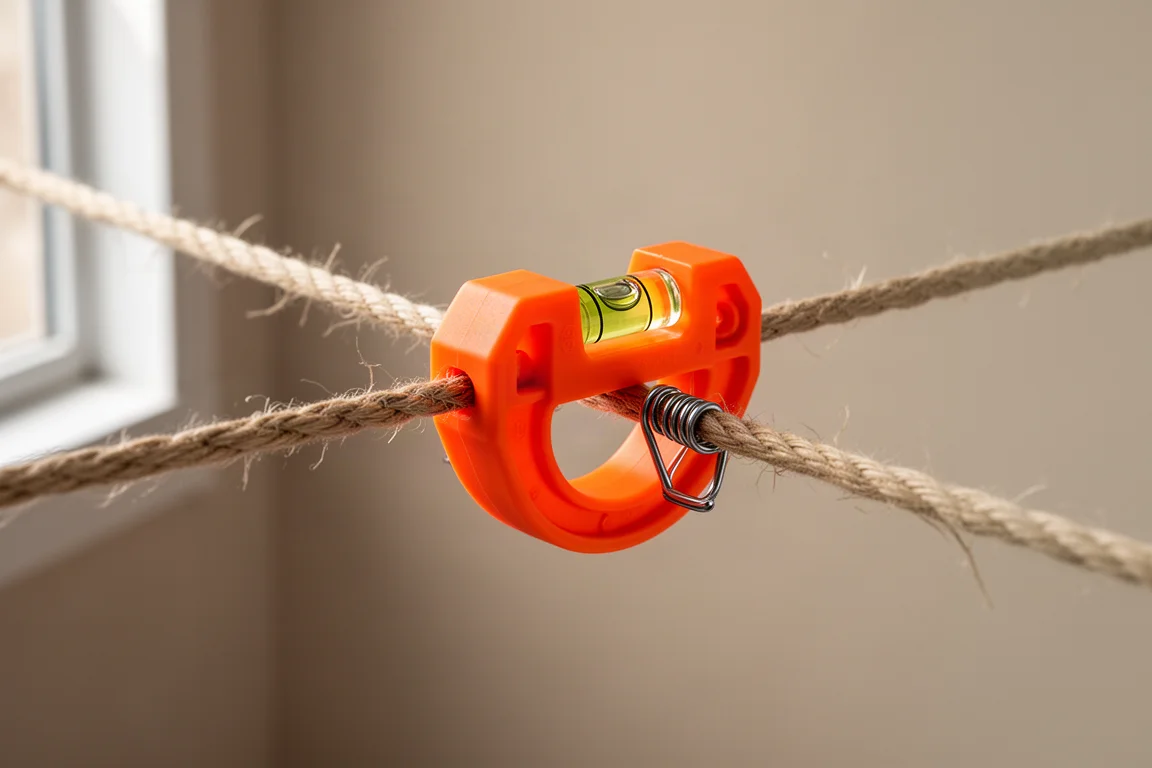
Introduction
Whatever you are building, sooner or later you need to know whether something is level, or where level sits relative to another part of the site. There are plenty of tools for the job, ranging from the level a carpenter uses to check a door jamb, all the way up to transits, builder’s levels, and lasers that can set grade on foundations or check drainage. But sometimes you do not have an expensive machine on hand. Sometimes you just have to get close.
That is where the lowly line level comes in. Clipped onto a length of Mason’s line, it is perhaps the least expensive way to find out whether things are even close to level. This review covers when it makes sense to use one, when you should not even consider it, and a few tips for getting a decent reading if you do.
How the Test Was Set Up
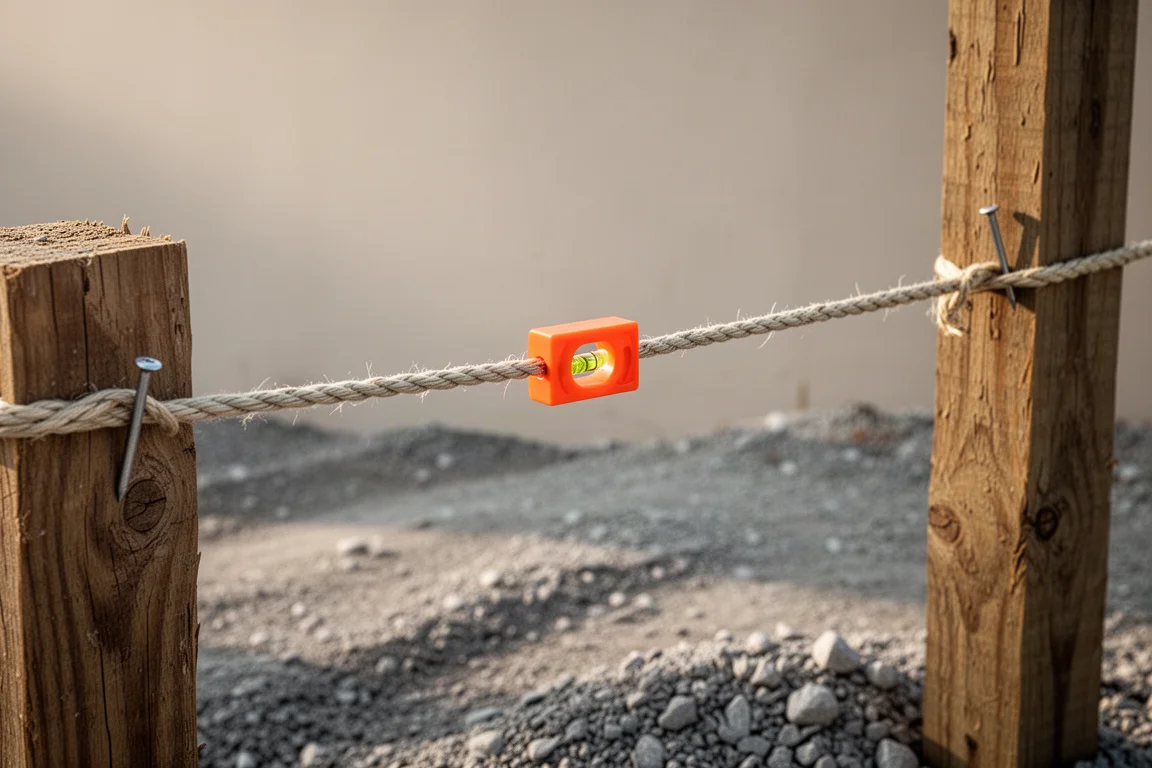
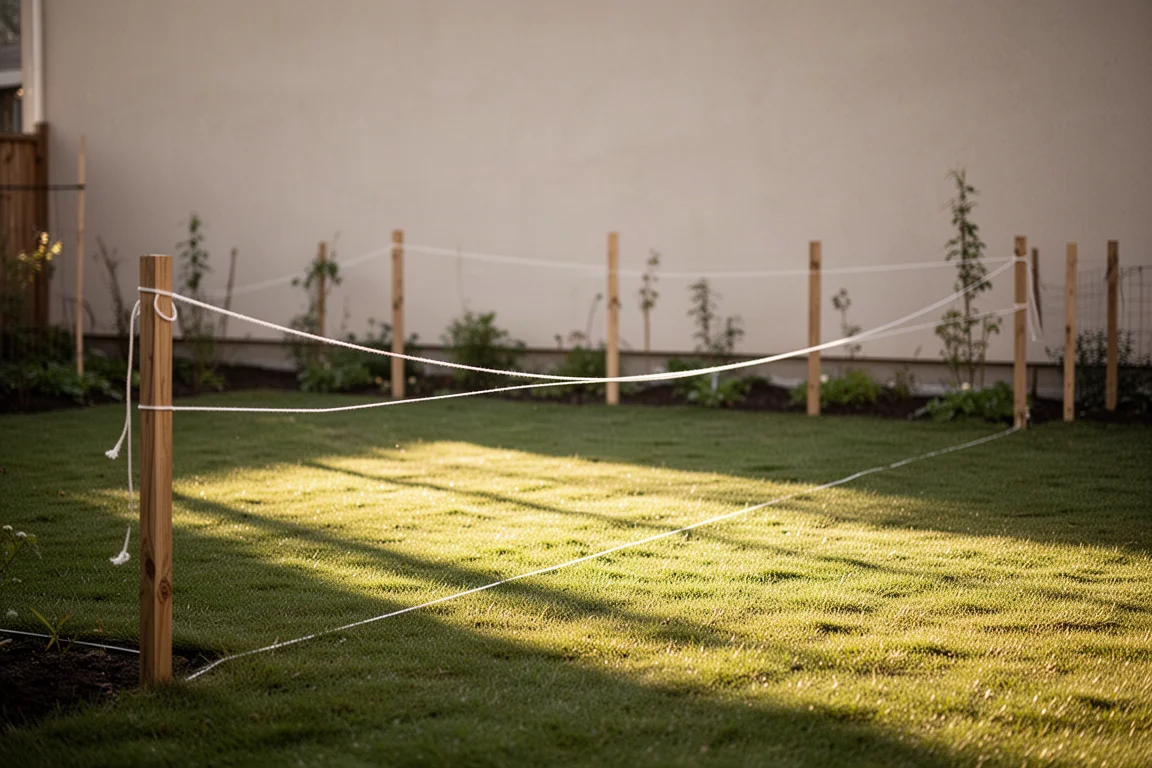
The test used roughly a 40-foot span of braided Mason’s line with a Johnson line level, priced at $4.95, hung right in the middle. The midpoint matters because lines sag, and placing the level in the middle means it sits at the low point of the string. That way, however accurate or inaccurate the tool is, it is at least telling you what the string itself is trying to say.
For reference, the two end points were set with care alongside a Topcon laser and placed probably within an eighth of an inch of being actually level. An optical builder’s level would have made them precisely level, but for testing a line level, this was close enough. The ends of the string could reasonably be treated as level.
How to Get a Decent Reading Out of It
The line level clips onto the string from two different sides of its long axis, which seems designed to keep it from flying off the first time the line gets bumped. Once clipped on, the trick is to put a little weight on it and run it back and forth along the line to wear it in. It is plastic sitting on nylon, and this helps it settle into a happy medium of where it actually comes to rest.
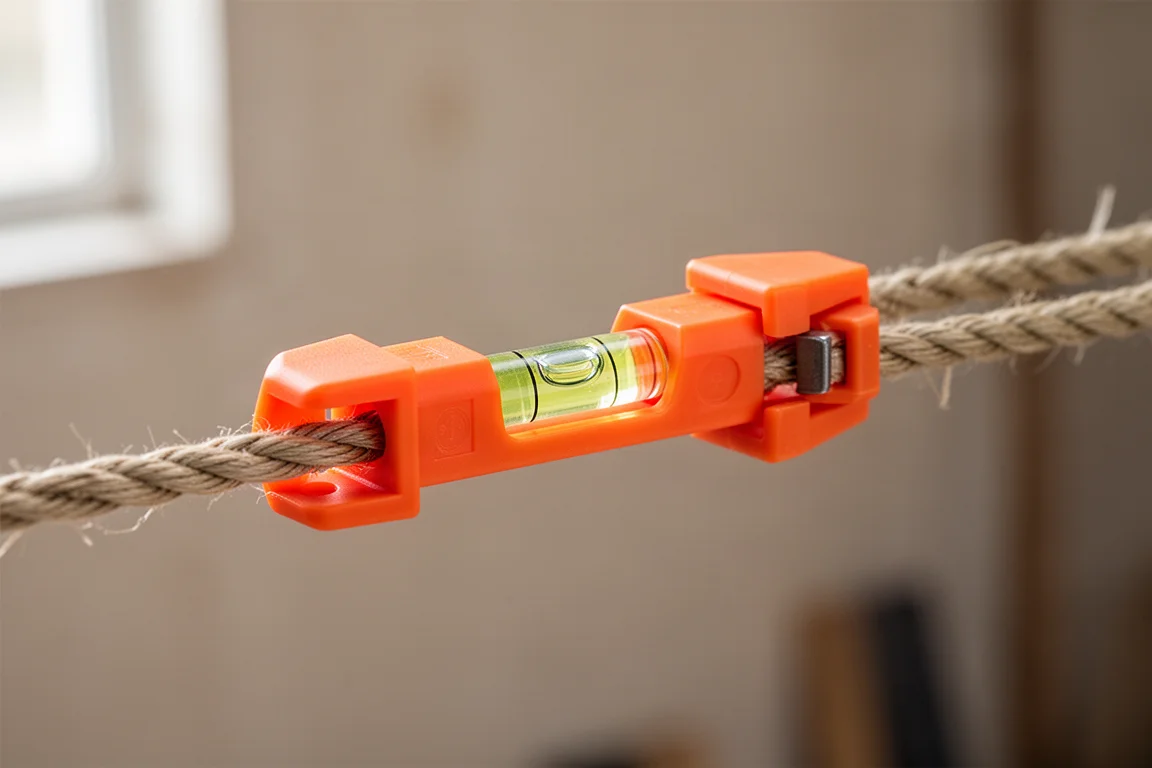
A word of caution: if you flip it enough times, it will eventually tell you whatever you want it to say, so do not be deceived. The goal is just to remove any burrs and let everything come to rest, then stand back and see what it reads.
How Accurate Is It Really?
On the first reading, the bubble showed slightly more distance on one side, indicating one end needed to come down or the other needed to come up. Pushing down on the far end while watching the bubble, the correction needed was 5/8 of an inch over the 40-foot span.
That works out to 0.013 percent, which translates to an eighth of an inch over eight feet, or a sixteenth of an inch over four feet. For a tool this cheap, that is pretty darn good.
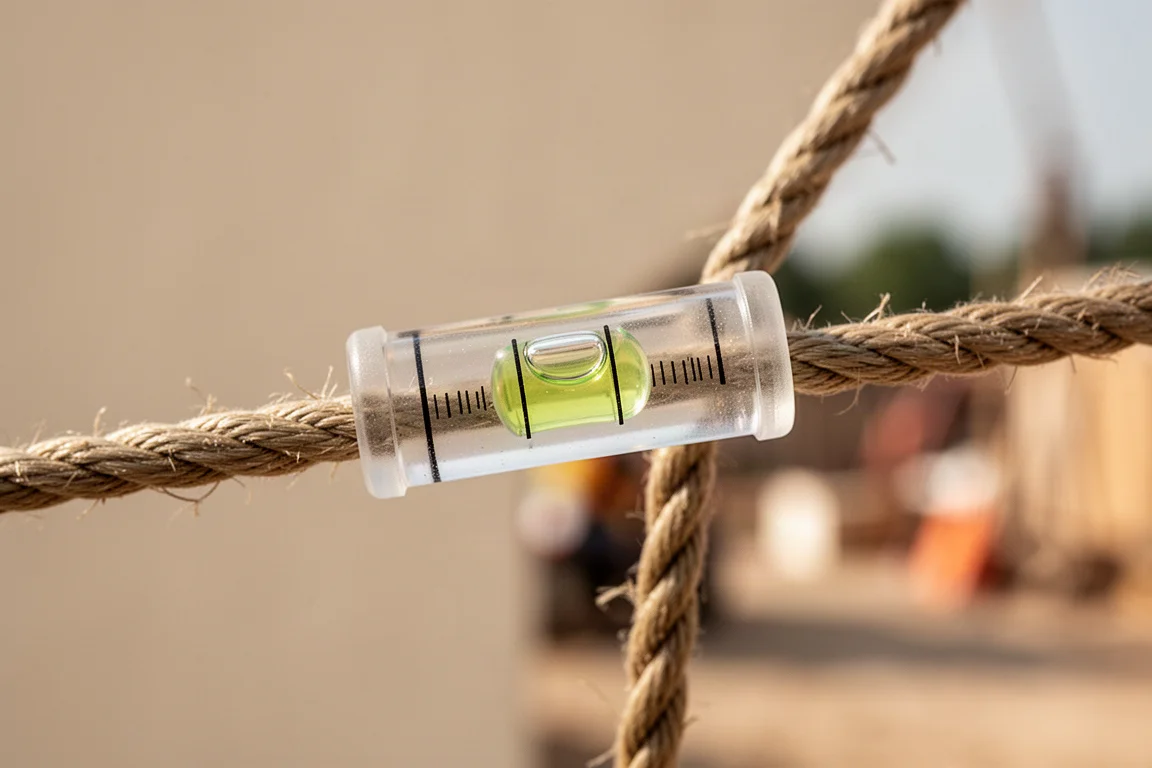
Still, a healthy dose of skepticism is warranted. It seems unlikely to get a reading that accurate on the very first setup every time, and when building things you need the right reading the first time, every time. The result may well have been something of a lightning strike, but it was an encouraging one, because getting off by more than that is easy even with a proper instrument and a helper.
Where It Fits and Where It Does Not
Do not make the mistake of thinking you can use a line level to set the foundation of your house. Do not use it to set level on the edge of a nice big deck overlooking a lake. It is not a replacement for a laser, a builder’s level, a transit, or even a four-foot level.
But it might be enough to establish the drainage on a French drain running across the back of your property, set a footing drain, find the low point in a crawl space, or build a fence. Sometimes it is all you have got, and sometimes it is all you need.
Buying Advice
The usual advice when buying tools is to buy the best you can possibly afford, and the same holds true for line levels. In this case, they are so cheap that the right move is simply to get the best one on the shelf. Consider getting two: you can always put them side by side and take the average of what you are looking at, since it is already established that the reading will not be perfect, but it will probably be good enough.
Conclusion
The Johnson line level is not precision equipment, and nobody should pretend otherwise. But over a 40-foot span, it delivered a reading within 5/8 of an inch of true level, which is far better than its $4.95 price tag suggests. For rough grading, drainage work, fences, and finding low points, it earns its place in the bag, as long as you treat it as a close-enough tool rather than a precision one.
Product link
View more details for Johnson Line Level
This product is mentioned in the review. Check the specifications, options, and compatibility before buying.
View more details for Johnson Line LevelFurther reading
Related Reviews

Tools
Best Contractor Grade Tape Measures 2026: Eight Models Tested Head to Head
We tested eight contractor grade tape measures from Milwaukee, DeWalt, Crescent Lufkin, Tajima, Stanley, Irwin, Gelan, and Craftsman to find the best value and performance.

Tools
Best Precision Screwdriver Sets 2026: Manual and Electric Options Compared
We compare 19 precision screwdriver sets, from budget manual kits to electric drivers, to find the strongest bits and best value.

Tools
Best Stud Finders 2026: Five Popular Models Put to the Test
We tested five popular stud finders on drywall, firewall, and lath and plaster surfaces to see which ones really find studs and avoid false readings.