Running Headphones
JLab Go Sport Plus Review: Budget Running Earbuds That Punch Above Their Price
An affordable ear hook sports earbud with a secure fit, strong battery life, surprisingly good sound, and a few trade-offs worth knowing before you buy.
Introduction
Budget running earbuds usually ask you to give up something important: fit, sound, or battery. The JLab Go Sport Plus, the follow-up to the Go Air Sport, manages to hold its ground in most of the areas that actually matter on a run, and it does so well below the £30 / $30 mark. After extended testing, it earns a place at the top of the list for cheap sports headphones, especially if you are a runner.
Who This Product Is For
The Go Sport Plus is aimed squarely at runners who need an ear hook design to keep earbuds in place. If in-ear buds with wings tend to squirm loose for you, this is the style to go for, and ear hooks generally deliver the most reliable and secure fit of any sports earbud form factor.
It is also a strong pick if you want a dedicated set of running headphones without spending much, for example when you use over-ear headphones for everything else. If you do not need an ear hook, JLab’s even cheaper Go Air Pop takes an in-ear approach instead.
Design and Fit
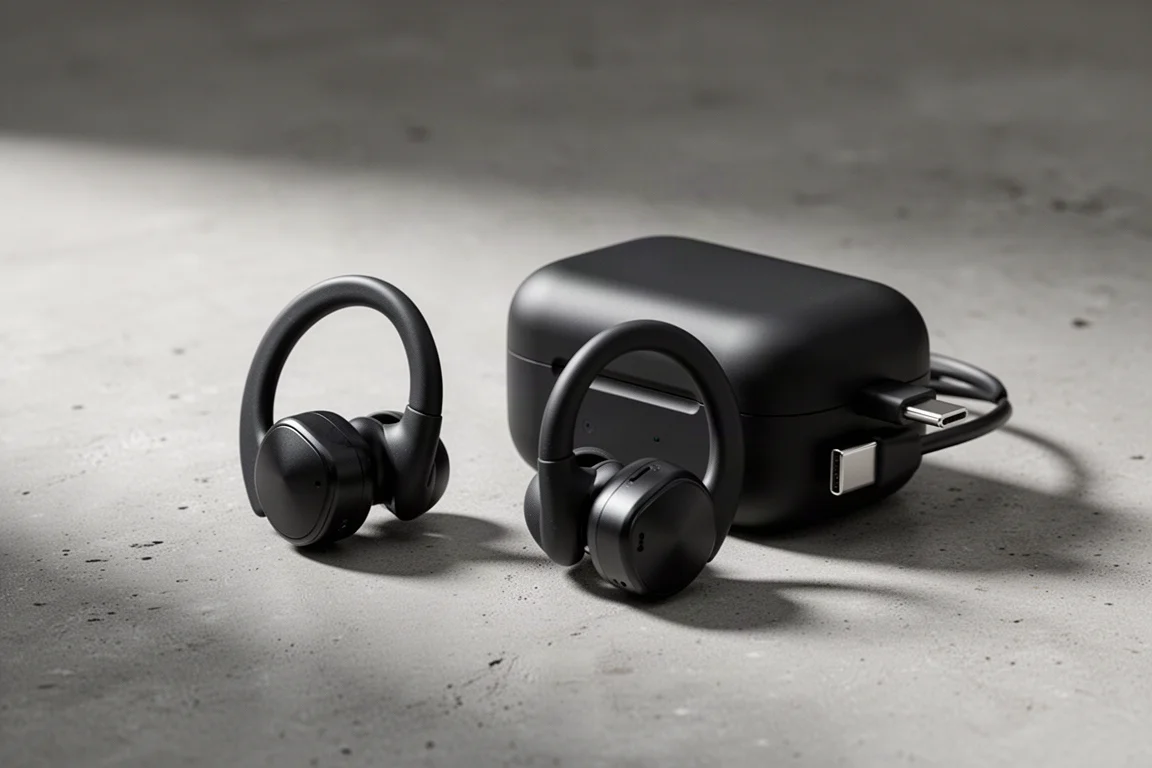
The fit is very good. There is an ear hook with a flexible section at the back of the ear, while the shaping that inserts into the ear canal is fairly rigid. That rigidity means they may not suit every ear shape perfectly, but for testers they delivered a nice, secure fit that stayed put on the run, with the in-ear tip sitting nicely in the ear canal.

One useful trick with ear hook buds like these: you can pull the bud slightly loose to get more awareness of your surroundings while still hearing your music, essentially using it as a semi-open earbud, or plug it right in for a better seal, improved passive noise isolation, and better sound quality. They also sit comfortably alongside glasses and hats on a run, though they are fairly large and not as slim or as flexible as pricier options like the Beats PowerBeats Pro 2.
The build is fairly plasticky on both the buds and the case, so it does not feel like a premium set of earbuds. That said, there have been no durability concerns during testing, and the buds carry a decent waterproof rating.
Controls
This is the weakest area. The Go Sport Plus uses a touch panel rather than physical buttons, and on the move it is fiddly. Play and pause works fine, and at a desk all the controls are easy, including taps up to three taps and a long hold that can be customised in the companion app.
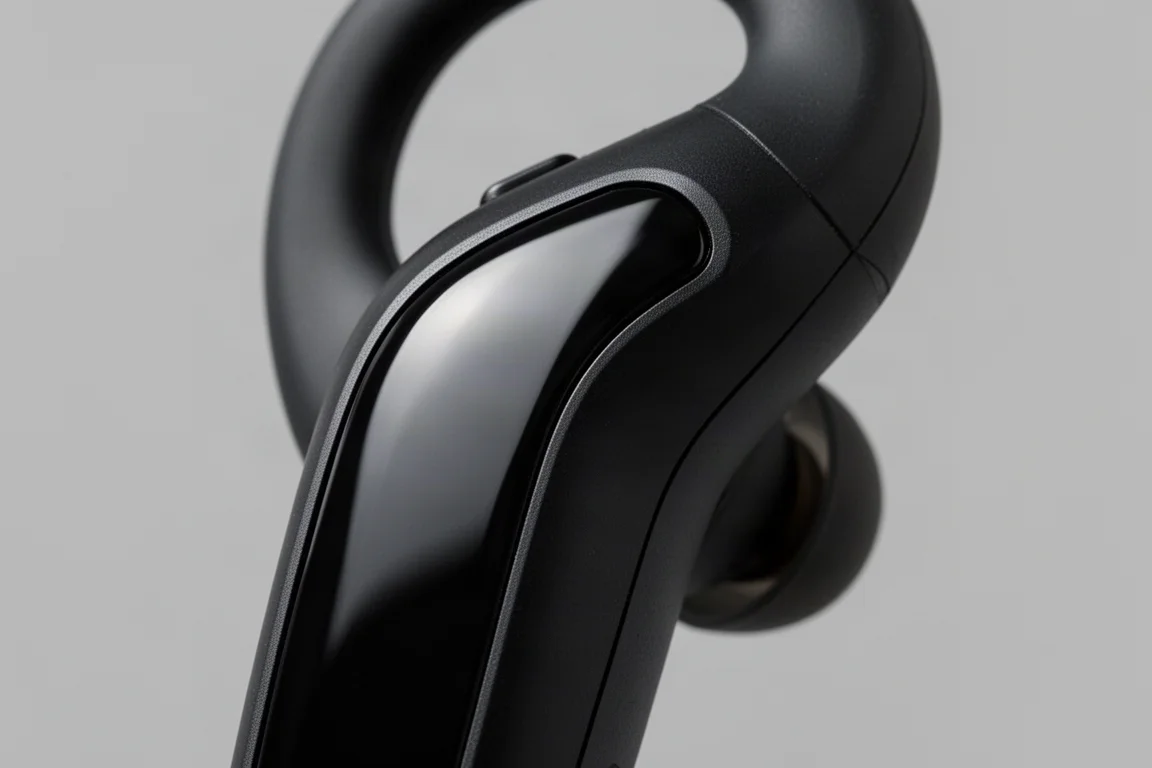
On the run, though, double taps do not register every time, especially with gloves in winter. A precise single tap works, and the long hold performs reasonably well, which matters because that is the quickest way to toggle the Be Aware mode mid-run. Physical buttons would simply be a better fit for running headphones, but the touch controls do handle the essentials well enough.
Sound Quality
This is where expectations were lowest and where the Go Sport Plus surprised most. Many earbuds around this price lean hard on bass and lose clarity, but these stay well balanced, with good bass and very good mids and treble. They will not match the depth, clarity, and power of 200-pound headphones, but they are clear, free of heavy distortion at higher volumes, and perfectly enjoyable as everyday headphones.

JLab’s companion app helps a lot here. EQ modes can be switched from the app or from the buds themselves, and a custom equalizer lets you ramp up the bass or highlight whatever you prefer. Sound isolation is very good, and podcasts stay loud and clear even in busy surroundings. The main weakness is wind: in louder, windier environments the wind cuts noticeably into performance.
There is no active noise cancellation, but you do get Be Aware mode, JLab’s take on transparency or awareness mode. It works effectively for balancing music with your environment, and you can adjust a slider to decide how much external noise comes in. Some wind noise creeps in while running with it enabled, but it is not too bad and it meaningfully improves situational awareness. Call quality via the microphone is satisfactory: volume is decent, clarity is not the best, but calls are handled fine.
Battery Life and Charging
Battery life is a genuine strong point. JLab claims up to 35 hours including the charging case, and real-world testing lined up: an hour-long run typically cost around 10 to 15 percent of the battery, and the buds lasted in line with the quoted figures. A quick charge mode gives you a fast top-up if you forget to charge them, while a full charge from flat takes around two hours, which is not the quickest.
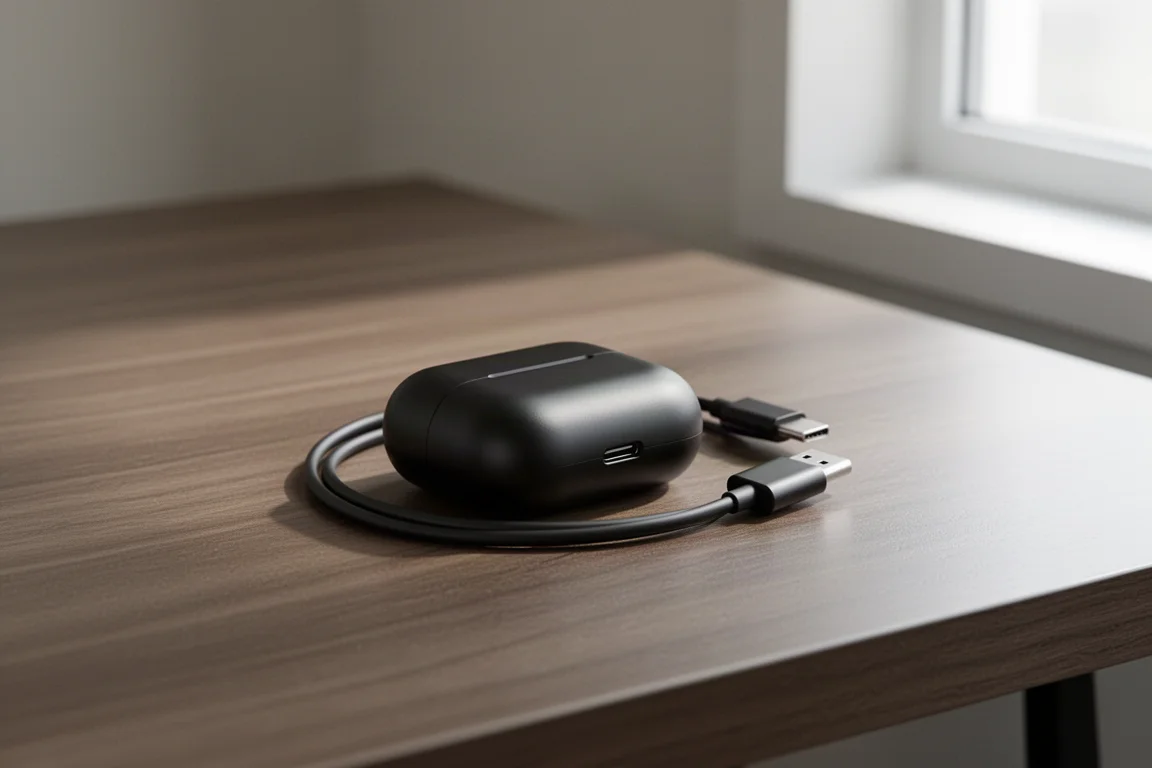
The charging case has a cable built into the back, now upgraded to USB-C from the USB-A cable on the Go Air Sport. It is a light, pocket-friendly case that fits easily into a running belt, and the always-attached cable is genuinely convenient when travelling. The trade-off is worth thinking about: there is no separate charging socket, and if the integrated cable ever fails, there is no obvious fallback beyond replacing the earbuds.
Buying Advice
If you have a budget of around £20 to £30 / $20 to $30 for running earbuds that deliver on fit, sound, and battery, the Go Sport Plus is the best option tested at that price point, and it outperforms more expensive earbuds in several areas. They are frequently discounted by around a third and come in a nice range of colours.
If you want more, JLab’s Epic Air line adds ANC and slightly better sound and battery life, though ANC at that price is not especially good, so the upgrade is only worth it if the price gap is small. At the top of the ear hook market, the Beats PowerBeats Pro 2 offer excellent sound, decent ANC, and a sleeker, more flexible design that may suit a wider range of ears, but at a much higher price.
Conclusion
The JLab Go Sport Plus is an excellent value package: a secure ear hook fit, balanced and customisable sound, an effective transparency mode, and battery life that backs up its numbers. The plasticky build, fiddly touch controls, and wind performance are real but livable compromises. For runners on a strict budget, these are the best affordable wireless running earbuds tested, and many people will find they beat pricier alternatives where it counts.
Product link
View more details for JLab Go Sport Plus
This product is mentioned in the review. Check the specifications, options, and compatibility before buying.
View more details for JLab Go Sport PlusFurther reading
Related Reviews
Running Headphones
Beats Powerbeats Pro 2 Long-Term Review: Still a Top Pick for Runners
After a year of running, battery cycles, and multi-device pairing, here is how the Powerbeats Pro 2 holds up as a sports earbud.
Running Headphones
H2O Audio Tri Run vs Shokz OpenRun Pro 2: Which Bone Conduction Headphones Make More Sense?
A value-focused bone conduction option goes up against the best-sounding pair we have tested. Here is how the trade-offs stack up for running and cycling.
Running Headphones
IO Breezy Bone Conduction Headphones Review: Affordable Open-Ear Running Audio
The IO Audio Breezy (IO iT Geo 1) packs Bluetooth 5.3, an IPX6 rating and a 36g frame into open-ear sports headphones that cost about half the price of the leading rivals.