Fountain Pens
Jinhao 80 vs Lamy 2000: Does an $8 Fountain Pen Really Copy a Classic?
The Jinhao 80 borrows heavily from the iconic Lamy 2000 design. We compare materials, weights, filling systems, and writing performance to see what eight dollars buys you.
Introduction
The Jinhao 80 has become one of the most talked-about budget fountain pens of recent times, and for good reason: it bears a striking resemblance to the Lamy 2000, one of the most beloved designs in the pen world. Whether a pen is inspired by another or is a blatant copy has long been debated among enthusiasts, and opinions rarely agree.
This comparison looks at both pens closely: exterior materials, weight, sections, nibs, filling systems, and how each one writes. Both pens were purchased independently, with the Jinhao 80 selling at two pens for sixteen dollars, or eight dollars each, against a Lamy 2000 that typically costs many times more. The question is simple: how does the eight dollar pen stack up?
Design and Exterior Comparison
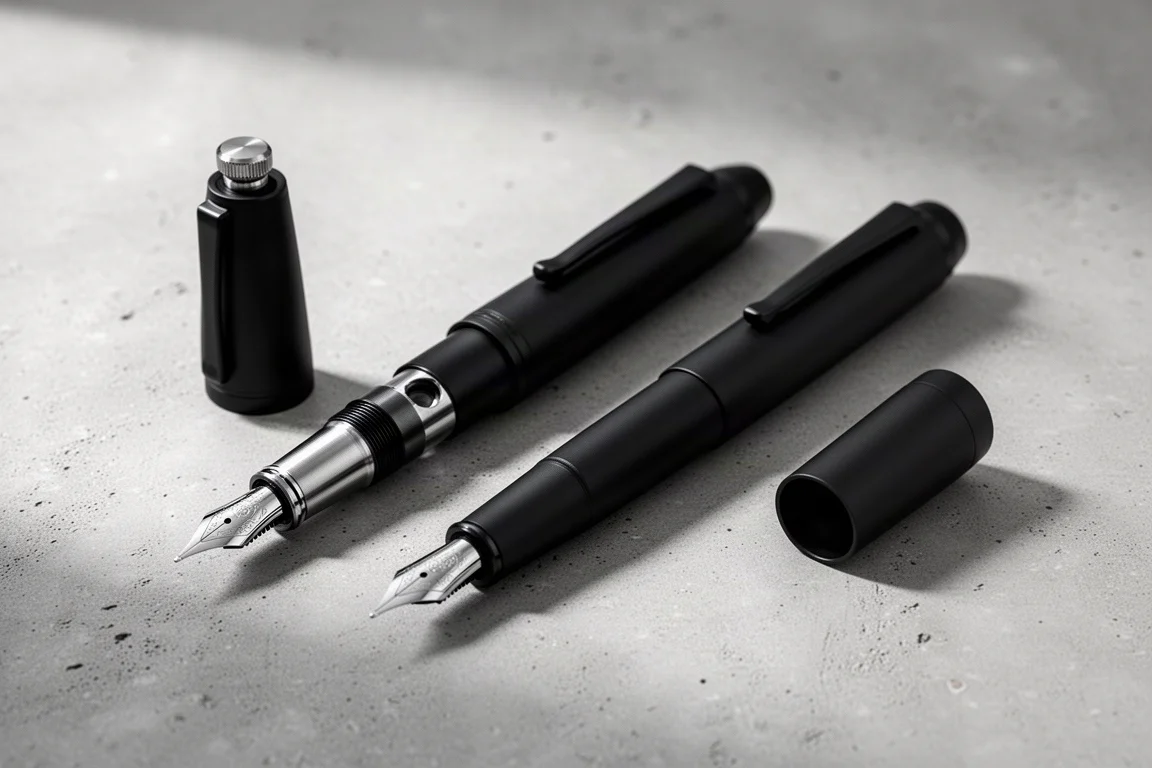
At a glance, the two pens are extremely difficult to tell apart. The dimensions are virtually identical on the outside, except the Jinhao 80 is about one millimeter longer. Both share the same matte black body, the same spring-loaded clip, and the same metal insert at the back of the barrel.
There are subtler differences, though. The Lamy 2000 is made from Macrolon, a high-quality polycarbonate with a warmth to the touch and a texture that is buffed into the material itself. The Jinhao uses a cheaper plastic, and its texture is simply part of the molded plastic rather than ground into the surface. The top of the Lamy cap is slightly more polished, while the Jinhao leans more matte.
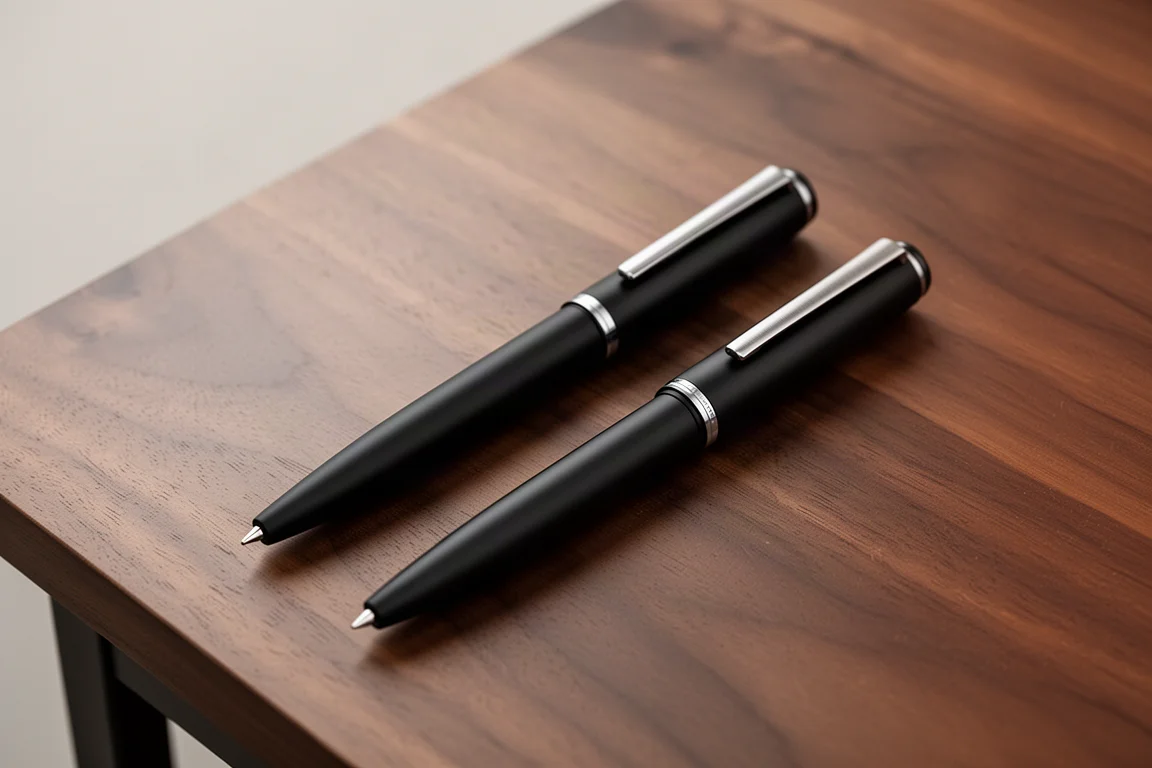
The clips also tell a story. Both use the same spring mechanism, but the Lamy clip is engraved with the brand name and carries a country marking on its underside, while the Jinhao carries no markings at all. On the barrel insert, the Lamy has a brushed metal treatment that is missing on the Jinhao.
Weight and Filling Systems
Weight is where the two pens start to feel different in the hand. The Jinhao 80 comes in at 19.5 grams, while the Lamy 2000 sits just under 26 grams. The Lamy’s plastic is thicker and heavier, and it contains more metal, which accounts for the difference.
The more meaningful difference is hidden at the back of the barrel. The Lamy 2000 is a piston filler with a piston knob, and because Lamy hides the piston visually so well, the two pens look identical from the outside. The Jinhao 80 is a cartridge converter pen, so there is no piston knob at all.
Inside the Cap: Sections and Nibs
Remove the caps and the biggest differences appear. The Lamy 2000 has a metal section, an ink window, and a capping ring, plus a hooded nib. The Jinhao 80 has a plastic section, no ink window, a small ridge used in the capping mechanism, and a nib that is not hooded but is shaped very similarly to Lamy’s nibs.
The two nibs share very similar feeds and the same distinctive clip-on look. In profile, the Jinhao’s section is slightly thicker, so a little more of the feed is visible than on the Lamy. The Jinhao nib carries the brand name and its emblem of two men riding a cart pulled by a horse, and it is a fine stainless steel nib, which appears to be the only option for this model.
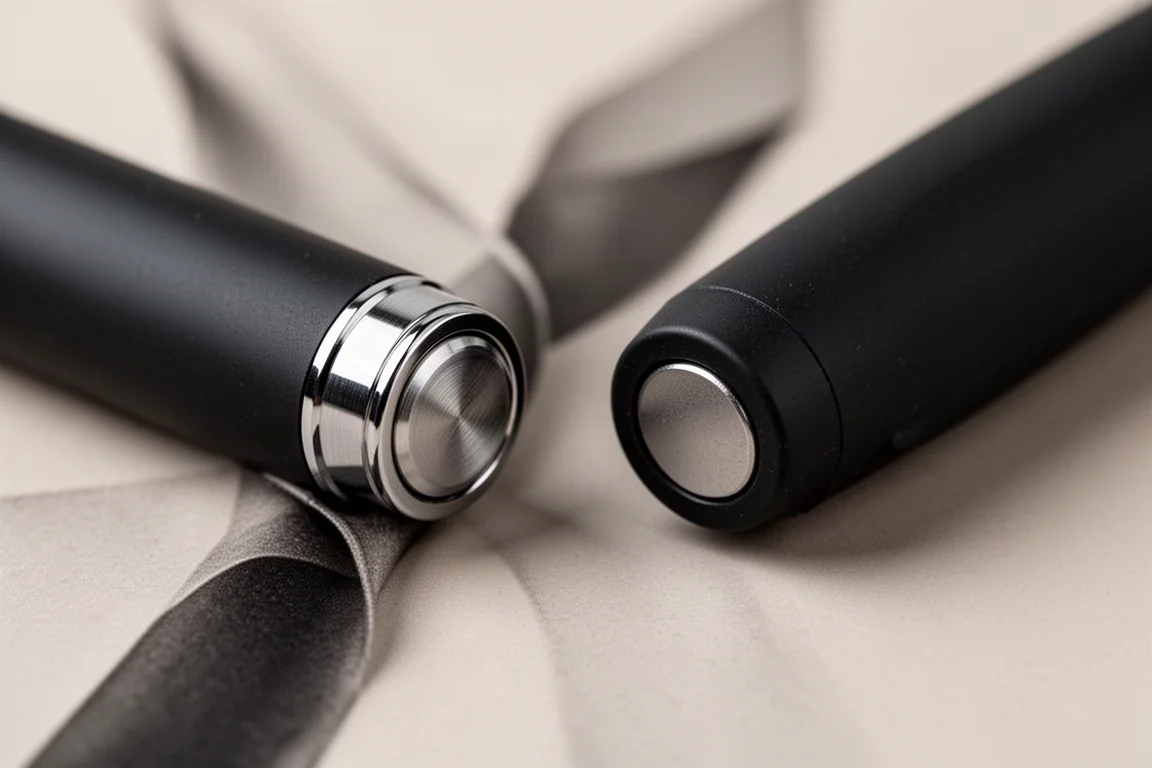
There is also a full black variant of the Jinhao 80, with a black clip, black finial, and black ring, but otherwise identical to the standard version.
Writing Performance
The Jinhao 80’s fine stainless steel nib is better than its price suggests. Ink flow feels decent for a fine point, and the feed keeps up comfortably during fast writing. The nib has a fair amount of feedback: it is not necessarily smooth, but it is not too bad either. Line variation is minimal, which is expected from a fine nib, and reverse writing is very scratchy, so that is clearly not its strength.
The pen overall feels a little lightweight, though at eight dollars that is hardly a surprise. Even for a writer who generally does not enjoy fine nibs, this one proved genuinely decent, which is a solid compliment for the price point.
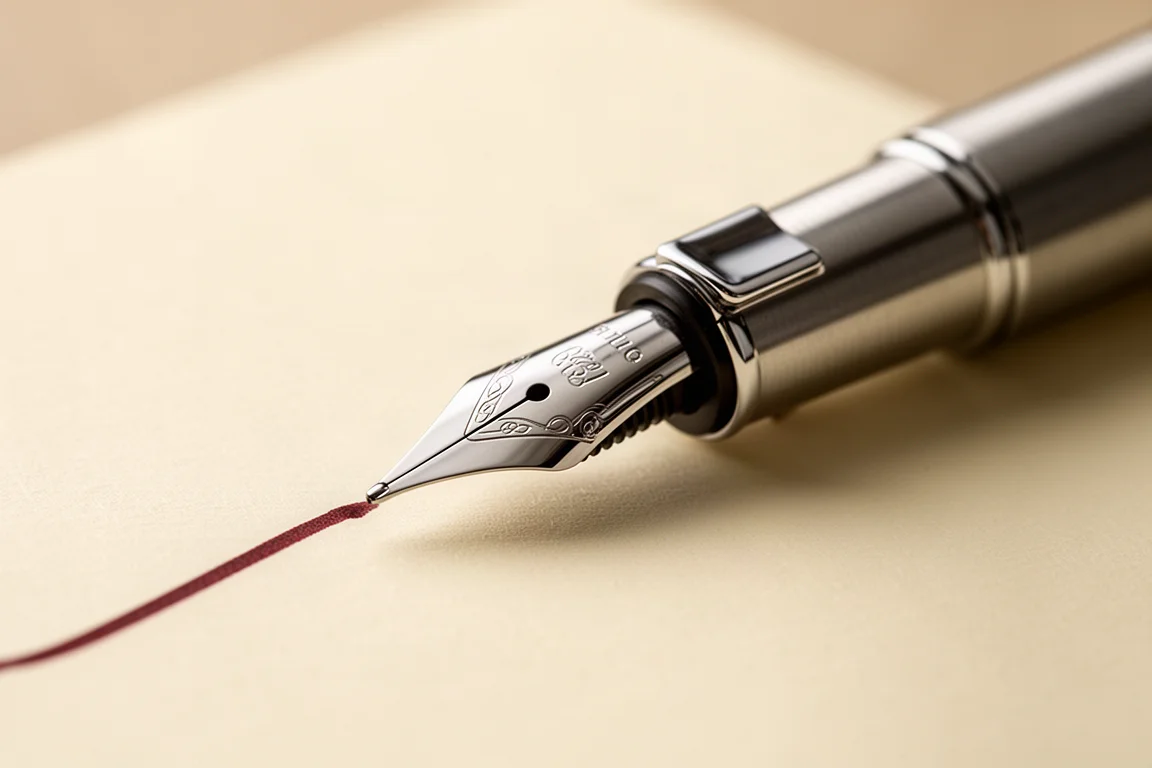
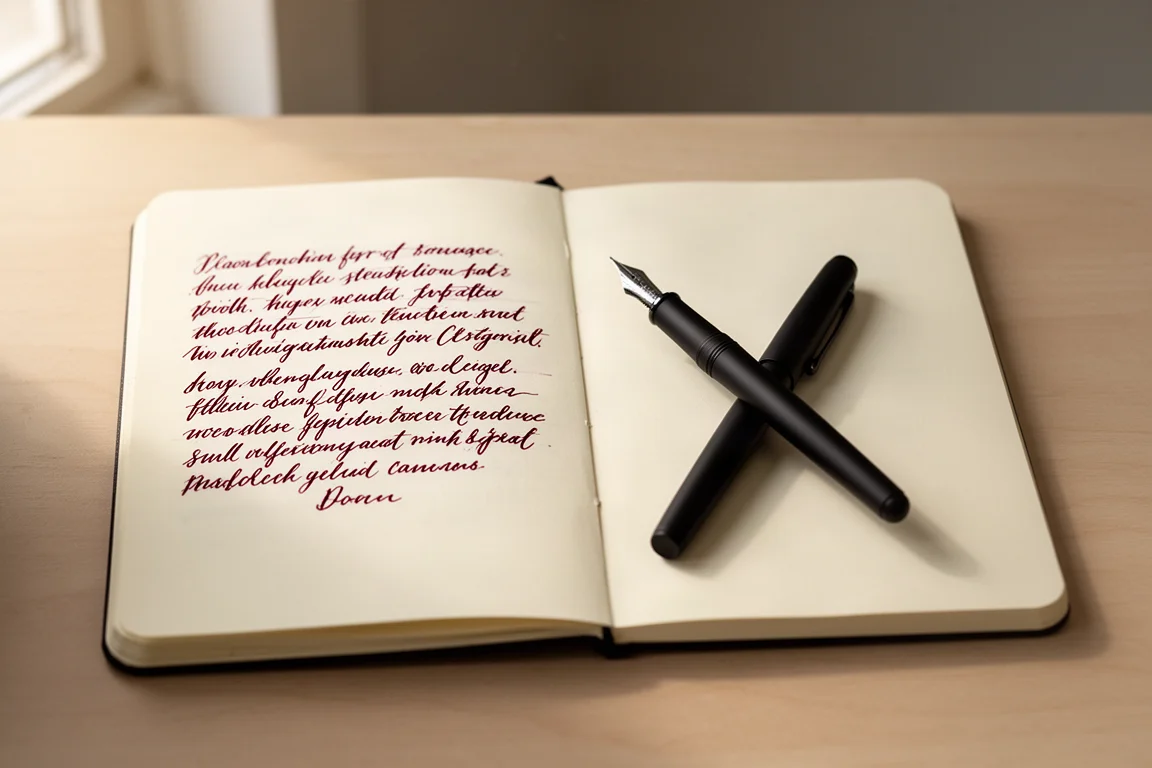
Pairing it with a darker red ink makes for a pleasant, understated writing experience that feels far more considered than the price implies.
Final Thoughts on the Jinhao 80
The Jinhao 80 costs eight dollars, and if the Lamy 2000 did not exist, the quality of construction and overall performance would be genuinely impressive for anything under ten dollars. The real criticism of this pen is not quality or performance but the design itself: it borrows almost entirely from another pen rather than offering something new and unique.
For buyers who are not bothered by that aspect of the design or the company, this is an outstanding value at the price. For those who prefer to support original design work, the Lamy 2000 remains the original in every sense: Macrolon construction, a piston filling system, an ink window, and decades of proven design.
Conclusion
The Jinhao 80 is a surprisingly capable writer for eight dollars, and its build quality holds up well against pens costing much more. Its biggest trade-off is philosophical rather than practical, since nearly everything about it mirrors the Lamy 2000. Choose the Jinhao if budget comes first and the borrowed design does not bother you; choose the Lamy 2000 if you want the original materials, piston filler, and craftsmanship behind the iconic design.
Product link
View more details for Jinhao 80
This product is mentioned in the review. Check the specifications, options, and compatibility before buying.
View more details for Jinhao 80Further reading
Related Reviews
Fountain Pens
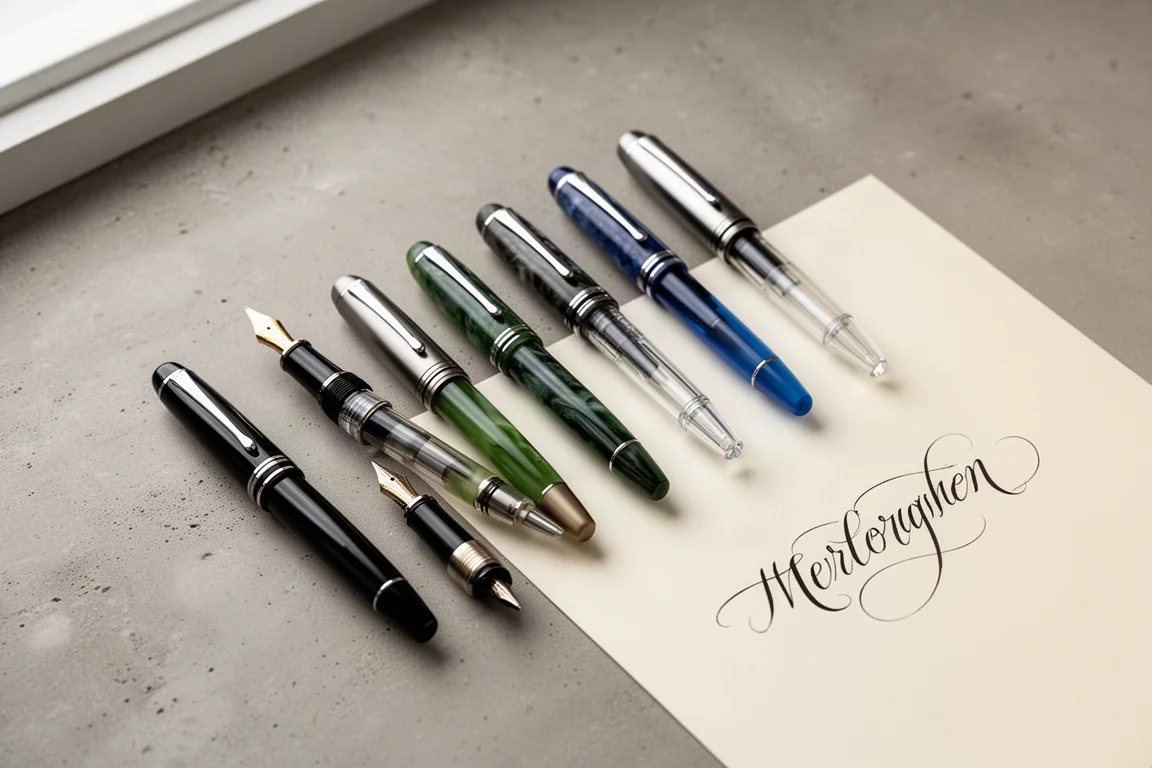
Best Budget Fountain Pens Tested: 9 Pens, One Clear Winner
A hands-on comparison of nine affordable fountain pens for everyday writing, calligraphy, and sketching, with a clear standout for flexible nib fans.
Fountain Pens
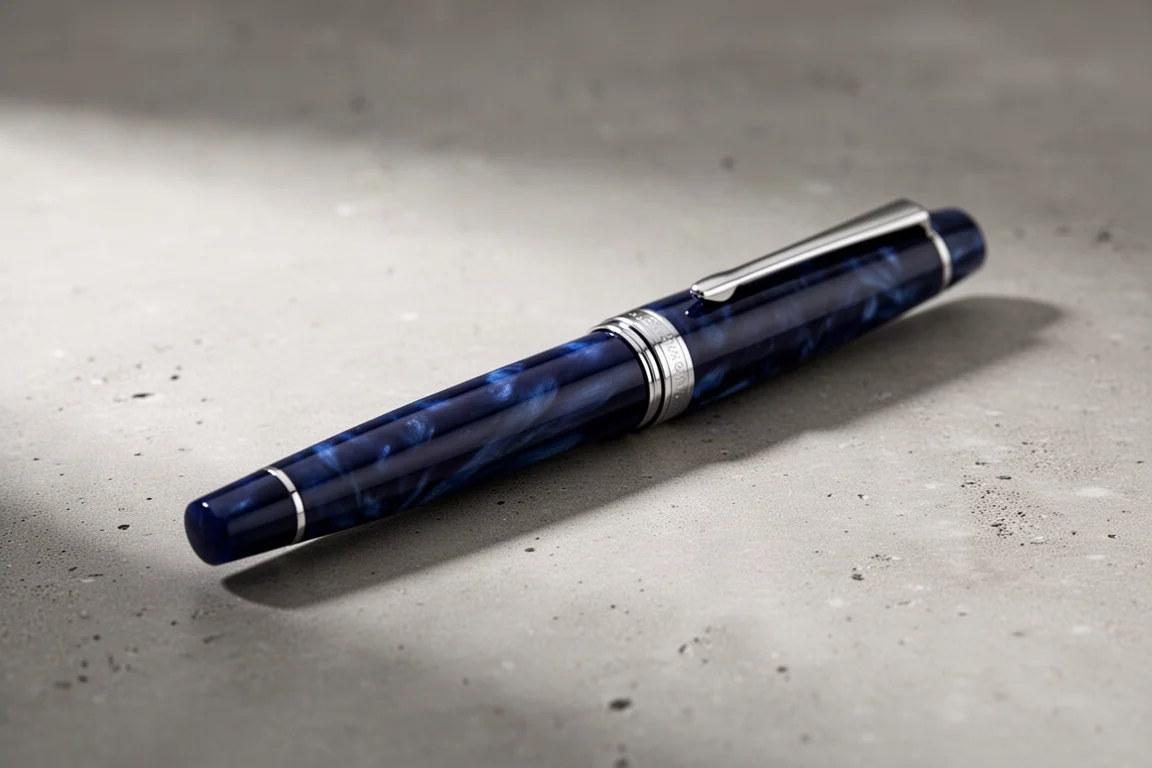
Aurora Optima Review: An Italian Piston Filler That Punches Above Its Price
A 14k gold nib, ebonite feed, and a beautifully deep oraloid body make the Aurora Optima one of the most rewarding piston fillers around.
Fountain Pens
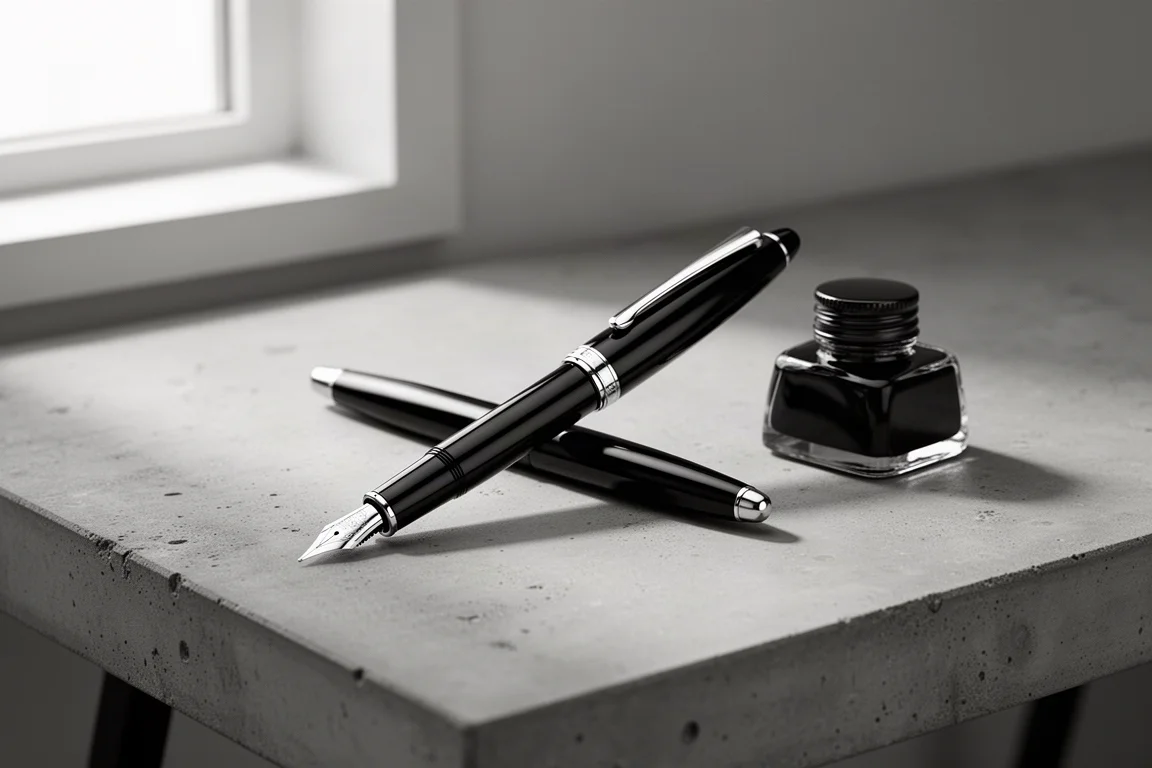
Cross Bailey Light Review: The Entry-Level Fountain Pen Worth Keeping at the Office
A plastic-bodied Cross with a metal clip, snap cap, and famously smooth extra fine steel nib. Around $15, available almost everywhere, and easy to recommend.