Fountain Pens
Jinhao 20 vs Jinhao 10: Two Affordable Retractable Fountain Pens Compared
A side-by-side look at two budget retractable fountain pens, including a 72-hour drying test that revealed a clear winner.
Introduction
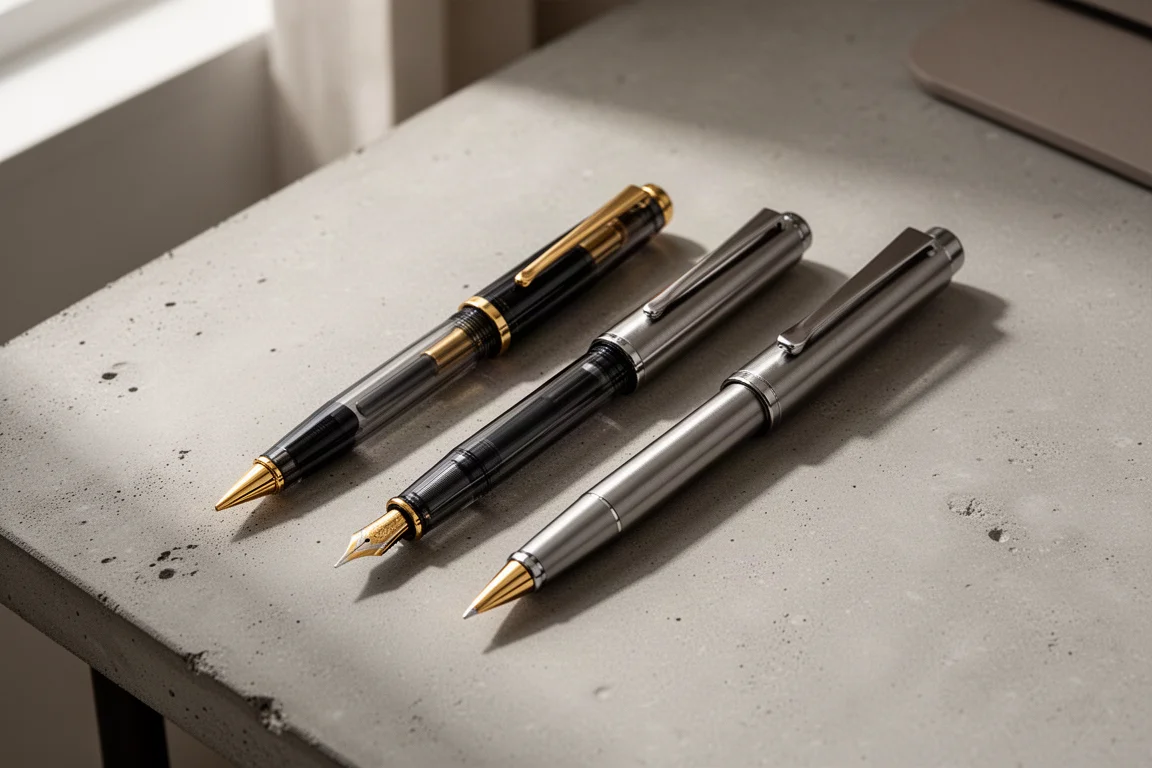
Retractable fountain pens used to mean one thing: a big price tag. The Pilot Vanishing Point, and specifically its slightly slimmer, slightly lighter sibling the Decimo, set the benchmark. Jinhao’s answer to that benchmark comes in two flavors, the Jinhao 10 and the newer Jinhao 20, which arrived around the end of 2025.
The 20 is positioned as an affordable take on the Pilot Decimo concept, and it undercuts the Jinhao 10 on price as well, selling for around $11 compared to roughly $20 for the 10. But price alone is not the whole story. The Jinhao 10 has a known frustration: if left unused for two or three days, the ink dries out and the pen hard starts. The Jinhao 20 is supposed to seal better. So we put both to a simple 72-hour test, freshly filled with the same Sailor Ink Kingdom Note colored ink, to see whether the newer model actually fixes that problem.
Design and Build: The Size and Weight Difference
The first thing you notice is that the Jinhao 20 is noticeably slimmer than the Jinhao 10, especially along the body and the rear section near the retracting button. It is also slightly shorter. That makes the 20 a genuinely better fit for smaller hands or anyone who prefers a more compact writing instrument.
Weight is the other big difference. In the hand, the Jinhao 10 is clearly heavier, likely due to metal inside its construction. The Jinhao 20’s body is primarily transparent plastic, which keeps it much lighter. That matters for long writing sessions, particularly if you hold your pen higher up on the index finger rather than letting it rest in the usual web of the hand, where a heavier metal pen can cause fatigue.
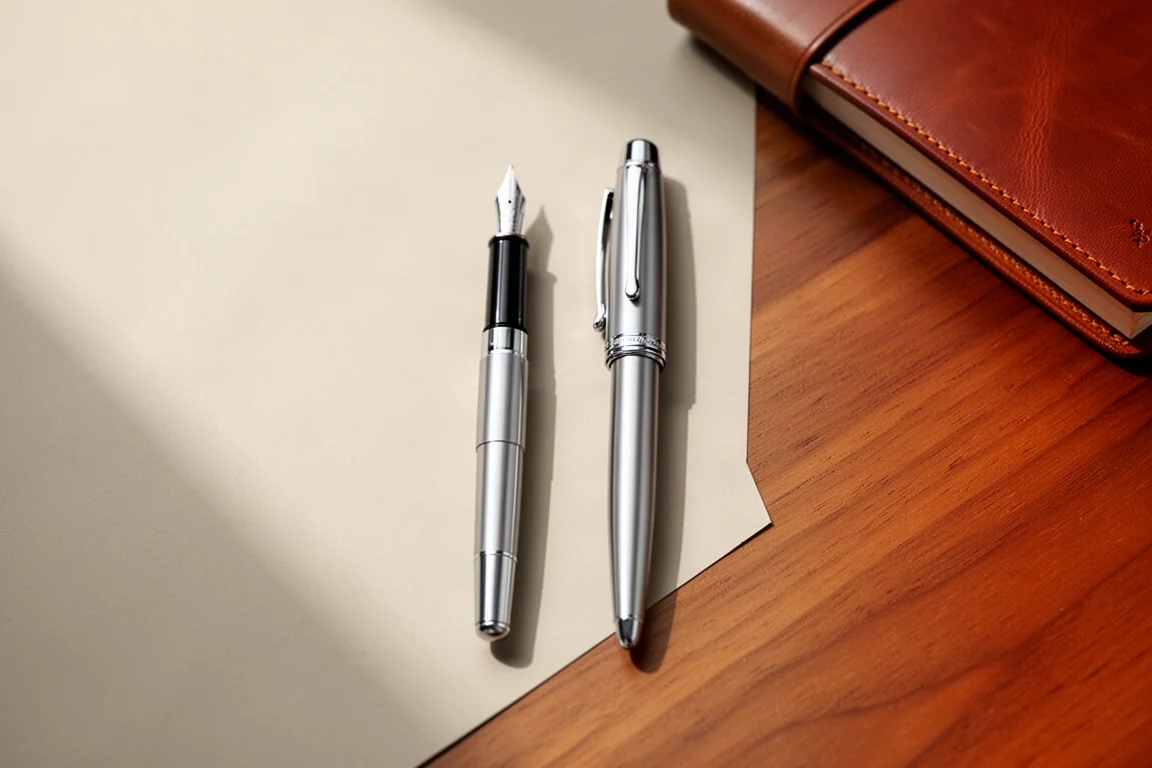
Externally, the clips differ too: the Jinhao 20’s clip is slimmer than the Jinhao 10’s. One curious detail when twisting the pens apart: on the Jinhao 10, the metal band comes off with the lower half of the body, while on the Jinhao 20 the band stays with the top portion. It is a small difference, but worth knowing before you disassemble either pen.
Nibs, Mechanism, and Internal Parts
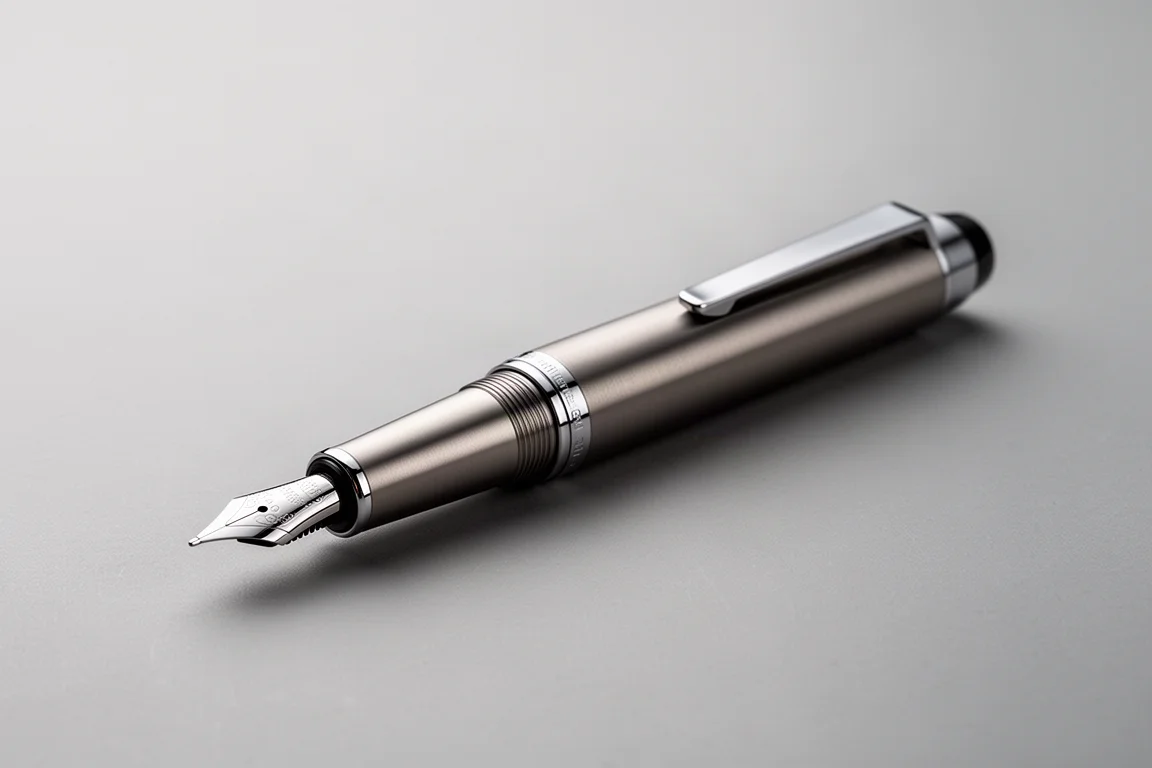
Both pens tested here use fine nibs, and the internal hardware is practically identical: the converter, nib, and metal sleeve appear to be the same shared parts. Jinhao clearly reuses the internals across both models, so the real differences live in the body, the weight, and the sealing.
One quality note in the Jinhao 10’s column: on our unit, the nib did not sit perfectly horizontal when retracted, emerging at a slight angle. The Jinhao 20, at least so far, does not show that issue, which suggests the retracting mechanism may have been refined on the newer model.
The 72-Hour Sealing Test
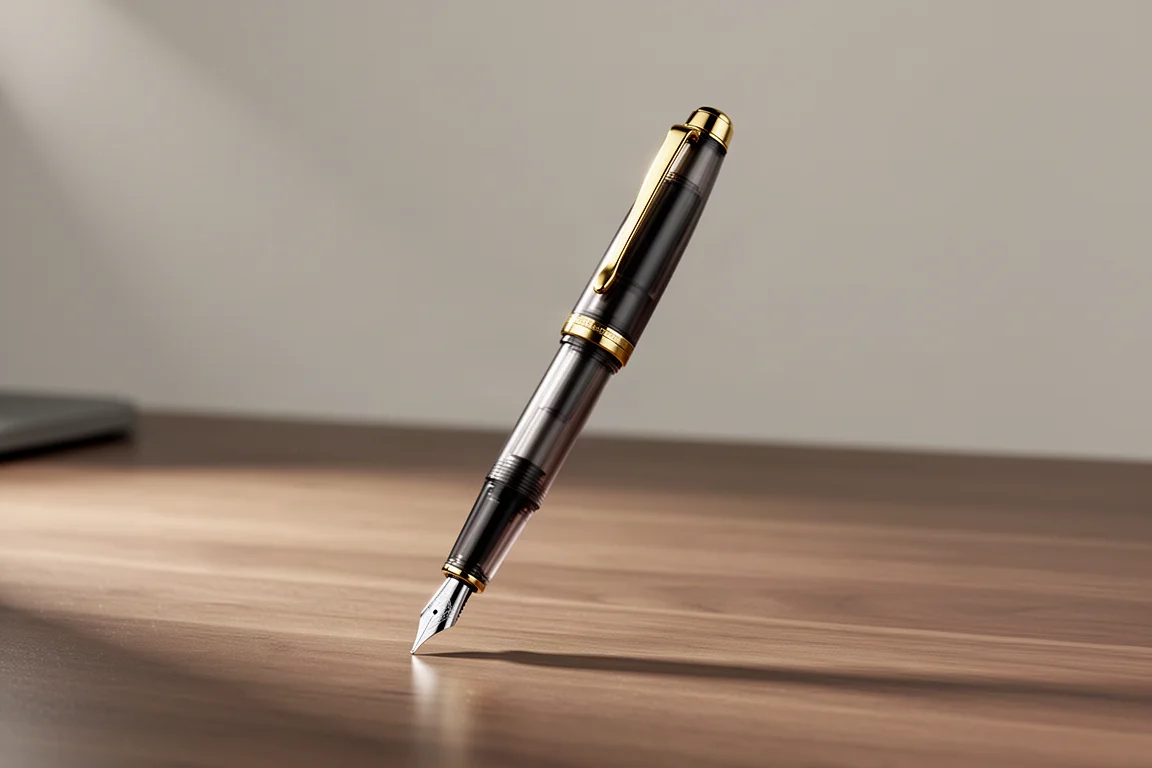
This was the experiment that mattered most. Both pens were filled with the same Sailor Ink Kingdom Note colored ink on a Monday evening, then left untouched on the desk for roughly 72 hours. Colored ink was chosen deliberately so any shading qualities could be observed and compared between the two nibs.
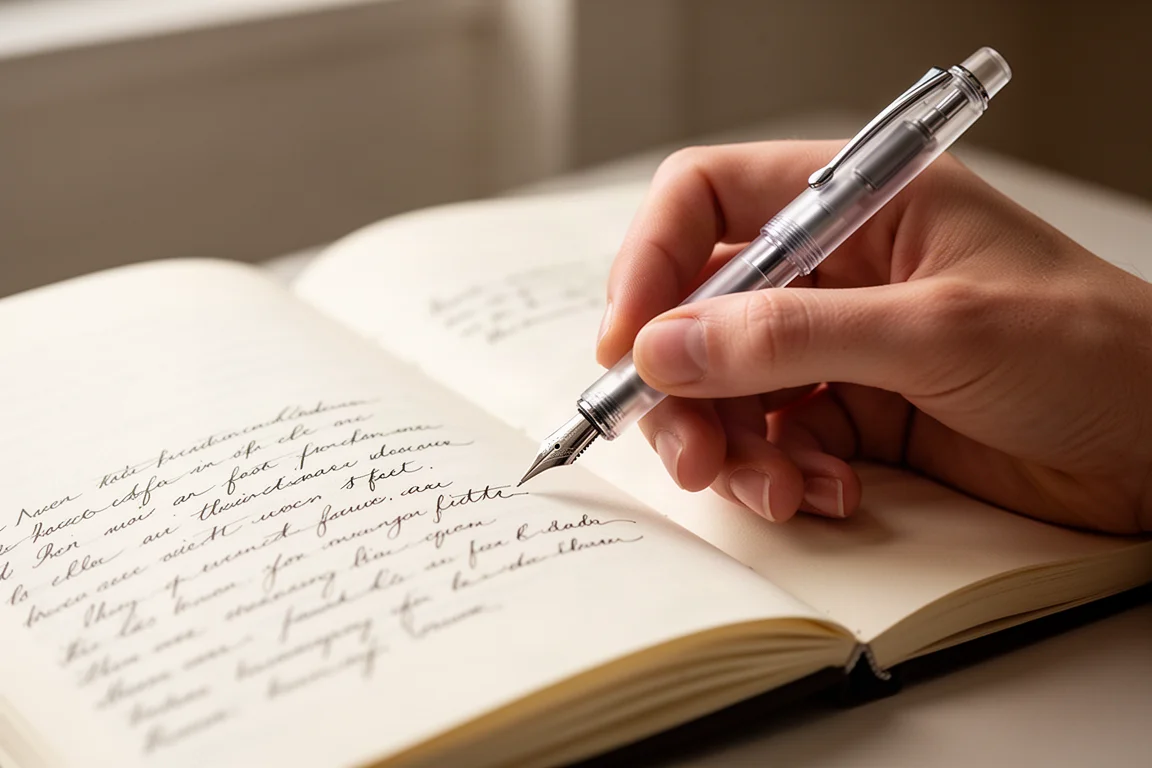
On day one, the Jinhao 20 needed a bit of coaxing to get started, likely because it was brand new and the feed needed to fill with ink, but once going it wrote nicely. Interestingly, despite both being fine nibs, the Jinhao 20 lays down a slightly thicker line than the Jinhao 10, and it shows a bit more of the ink’s shading quality, which is easy to prefer.
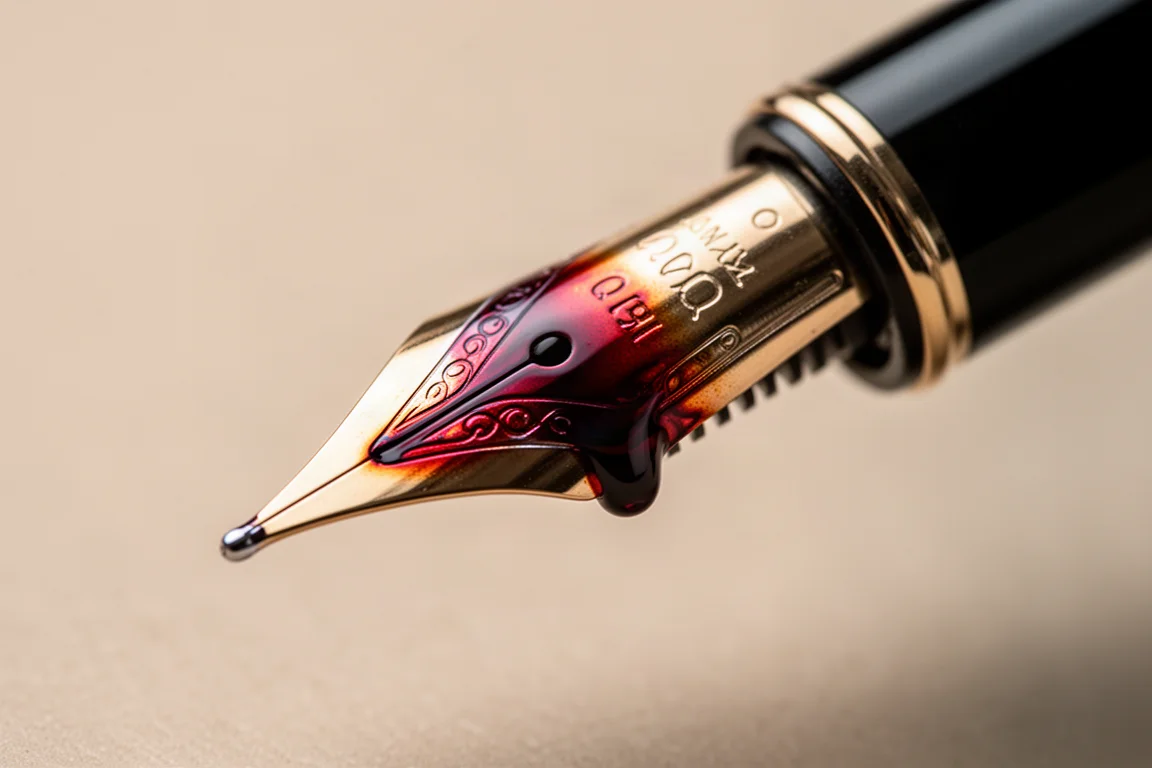
Then came the moment of truth on Thursday, right at the 72-hour mark. The Jinhao 10 was dried out almost completely. The nib refused to write at all despite visible ink remaining in the converter, a hard start far worse than a simple skip. This matches a long-standing frustration with the Jinhao 10: leave it for two or three days and it stalls.
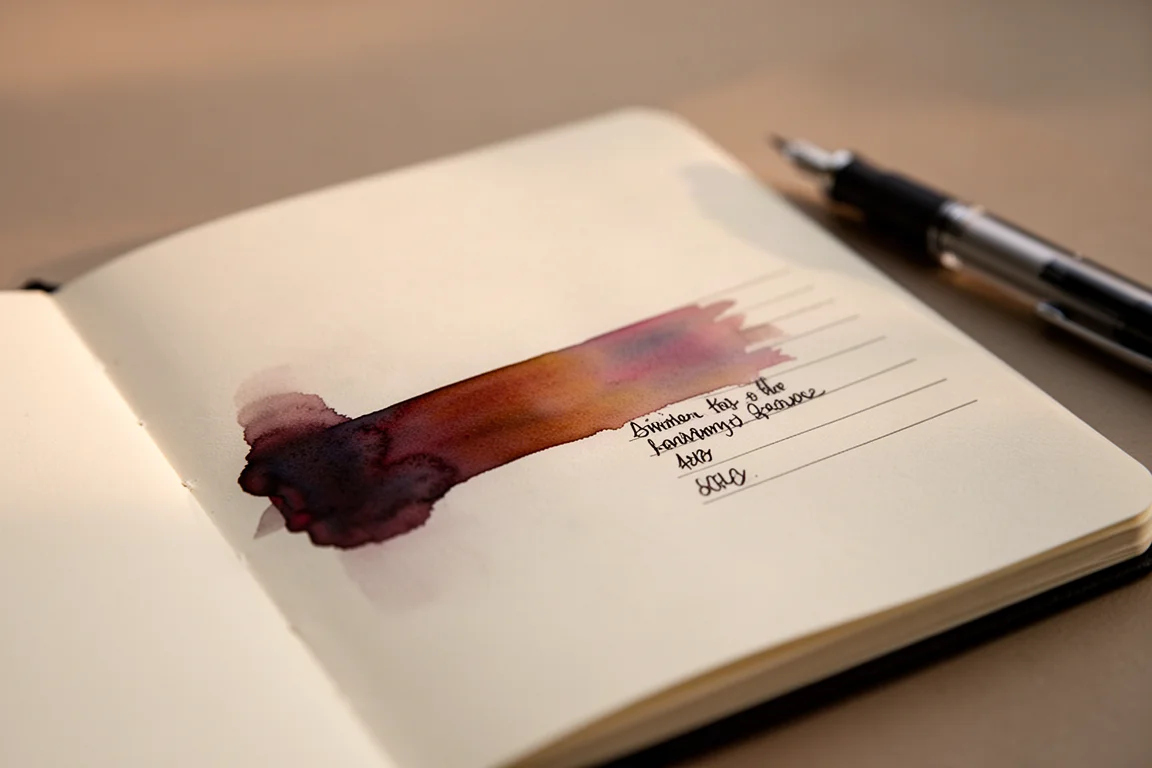
The Jinhao 20, by contrast, wrote immediately after three days idle, with only the tiniest hint of hard starting. The ink looked slightly darker at first because water had evaporated or the pigment had oxidized in the exposed section, but the pen itself started right up. Whatever the plastic body does for the seal, the result is exactly what the Jinhao 20 promised: a retractable fountain pen that survives a long weekend.
Which One Should You Buy?
If you want a retractable fountain pen that works when you pick it up, the Jinhao 20 is the easier recommendation. It is lighter, slimmer, shorter, more affordable at around $11, and it passed the 72-hour drying test that the Jinhao 10 failed outright. The fine nib writes a slightly thicker, more shaded line, which many writers will actually enjoy.
The Jinhao 10 still has defenders, and many owners report good experiences, so it is possible our unit was simply a bad one. It is also worth noting that troubleshooting tricks exist for dried-out Jinhao 10s, but a pen that needs extra steps to stay ready is a hard sell when the alternative simply works without fuss. If you already own and enjoy a Jinhao 10, there is no reason to replace it. If you are choosing between the two, the Jinhao 20 is the safer bet.
Conclusion
The Jinhao 20 takes the retractable fountain pen formula and quietly fixes its biggest pain point. For the price of a couple of coffee drinks, you get a lighter, slimmer pen with a sealing mechanism that survived a full 72 hours untouched. The Jinhao 10 remains a fascinating budget experiment, but the 20 is the one we would keep on the desk.
Further reading
Related Reviews
Fountain Pens
Best Budget Fountain Pens Tested: 9 Pens, One Clear Winner
A hands-on comparison of nine affordable fountain pens for everyday writing, calligraphy, and sketching, with a clear standout for flexible nib fans.
Fountain Pens
Aurora Optima Review: An Italian Piston Filler That Punches Above Its Price
A 14k gold nib, ebonite feed, and a beautifully deep oraloid body make the Aurora Optima one of the most rewarding piston fillers around.
Fountain Pens
Cross Bailey Light Review: The Entry-Level Fountain Pen Worth Keeping at the Office
A plastic-bodied Cross with a metal clip, snap cap, and famously smooth extra fine steel nib. Around $15, available almost everywhere, and easy to recommend.