Kitchen Appliances
Instant Pot vs Breville Fast Slow Pro: A Detailed Multicooker Comparison
Two popular multicookers tested side by side across sautéing, pressure cooking, rice, beans, cheesecake, and steamed vegetables. Learn how they differ in design, interface, and real-world cooking results.
Introduction
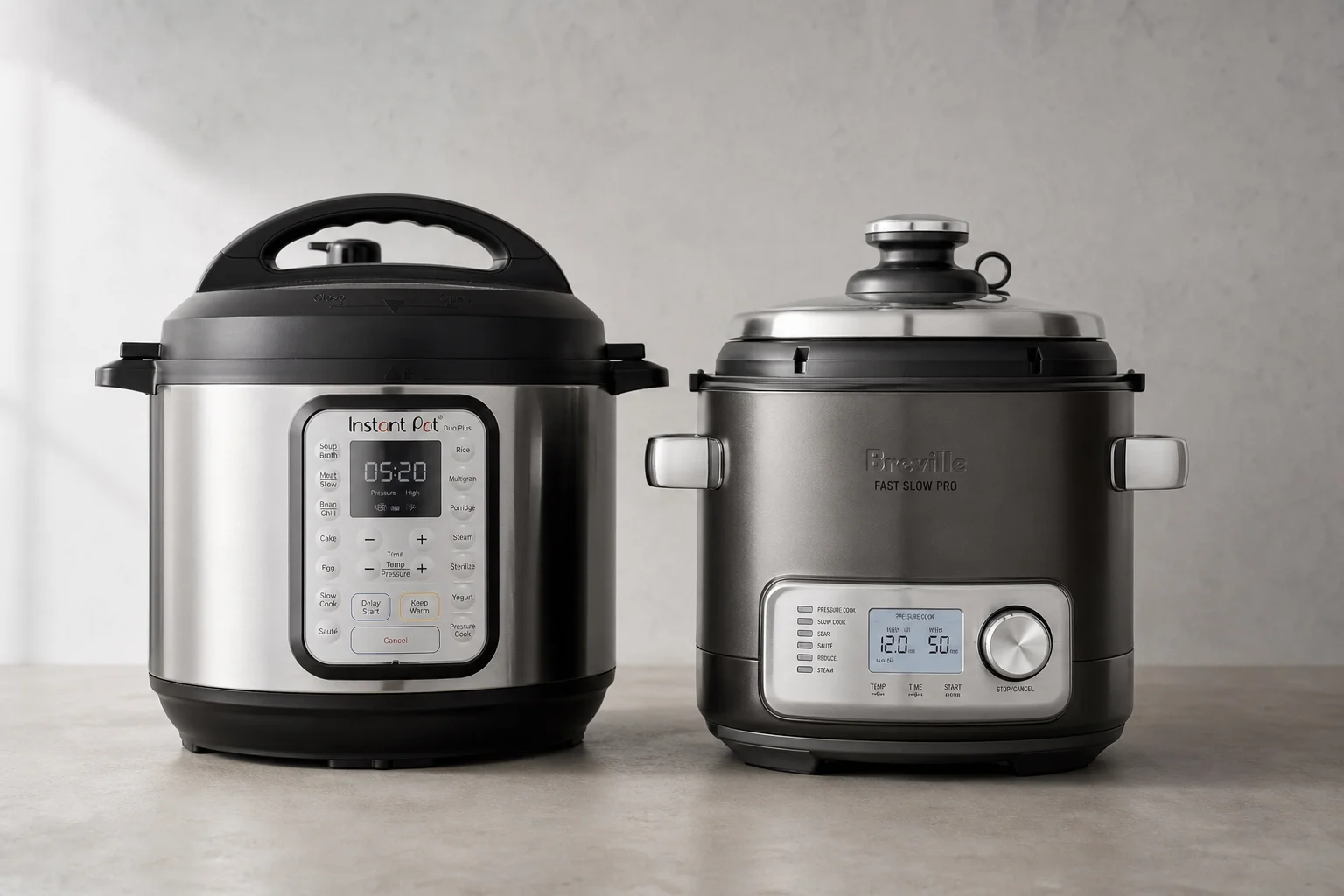
Two multicookers dominate the market: the Instant Pot, a budget-friendly workhorse, and the Breville Fast Slow Pro, a premium alternative priced at around $300. Both promise to replace multiple kitchen appliances, but they differ significantly in design philosophy, interface clarity, and build quality. This comparison examines how each performs across real cooking tasks, from sautéing and pressure cooking to baking cheesecake, to help you understand what you’re actually paying for.
Sautéing and Pressure Cooking Performance
The first test uses pork shoulder to evaluate sautéing and pressure cooking. Both machines include a sauté function that heats the cooking vessel before pressure cooking begins. The Breville browns the meat noticeably faster, achieving even browning across all sides more quickly than the Instant Pot.
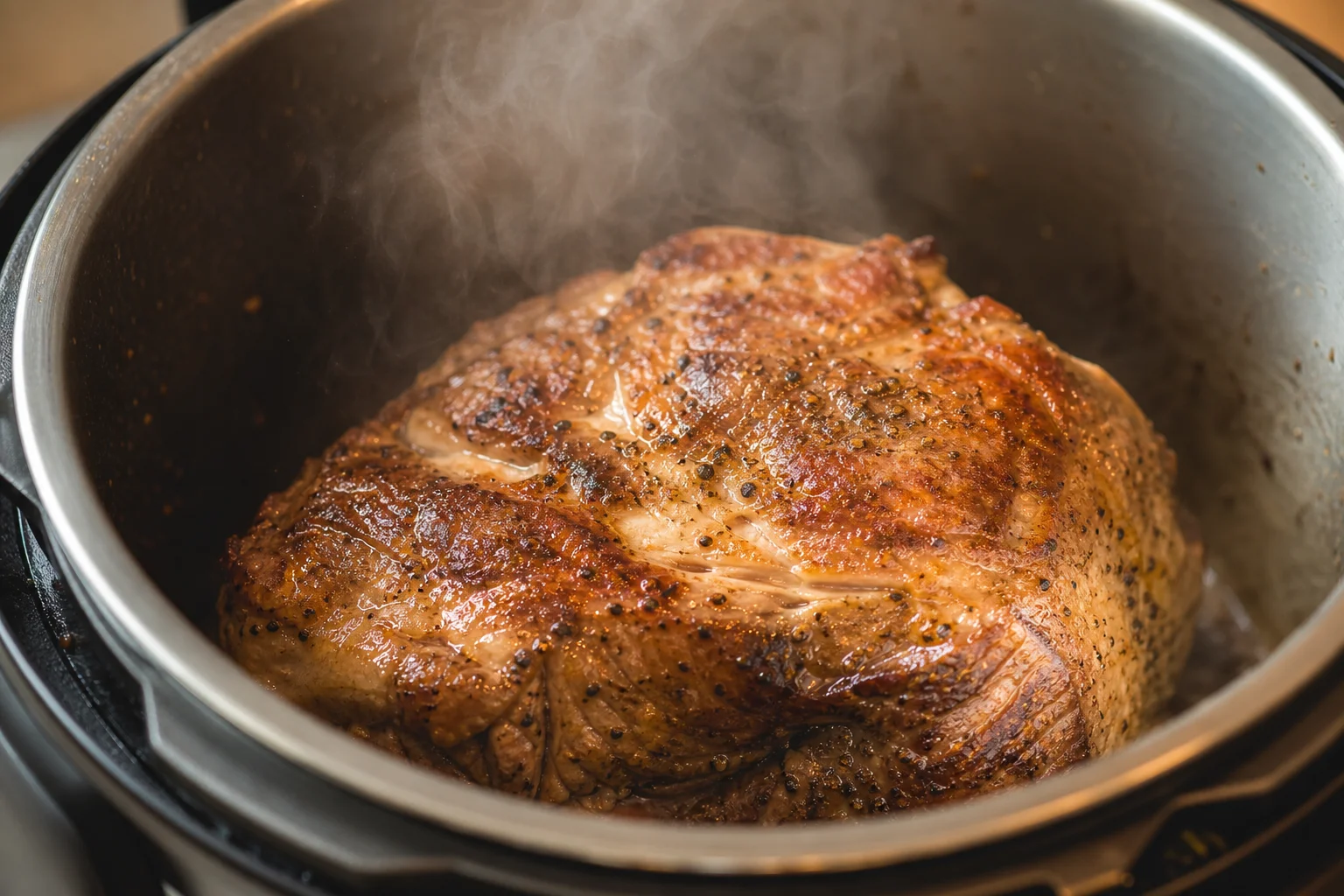
Once sautéing is complete, both machines transition to pressure cooking. This is where the fundamental physics of multicookers becomes important. As the heat plate activates, air inside the sealed vessel expands, building internal pressure. Liquid in the system also heats and creates steam. To manage this safely, both machines include a pressure release valve that regulates buildup and controls steam release, plus a pressure sensor that stops pressure buildup when the limit is reached. Both machines can reach 12 PSI (pounds per square inch), which is still less pressure than a typical soda can. The higher pressure raises water’s boiling point, shortening cooking time while keeping moisture inside the chamber, which intensifies flavor.
The Instant Pot displays minimal information during preheating, showing only that it is on without displaying the countdown timer. The Breville provides more transparency, showing pressure buildup progress. After about 70 minutes of pressure cooking plus 20 minutes of natural release, both pork shoulders are tender and fall apart easily. Taste tests reveal nearly identical results: both are tender, flavorful, and closely match traditional slow-cooked pork. The main trade-off is the absence of crispy skin, which some consider essential for certain dishes.
Bean Cooking and Preset Functions
Next, both machines cook pinto beans using their preset functions. The Instant Pot defaults to 30 minutes at high pressure, while the Breville defaults to 20 minutes at 12 PSI. This immediately reveals a critical issue: preset functions vary widely between machines and do not account for variables like bean quantity, water amount, or whether beans were pre-soaked.
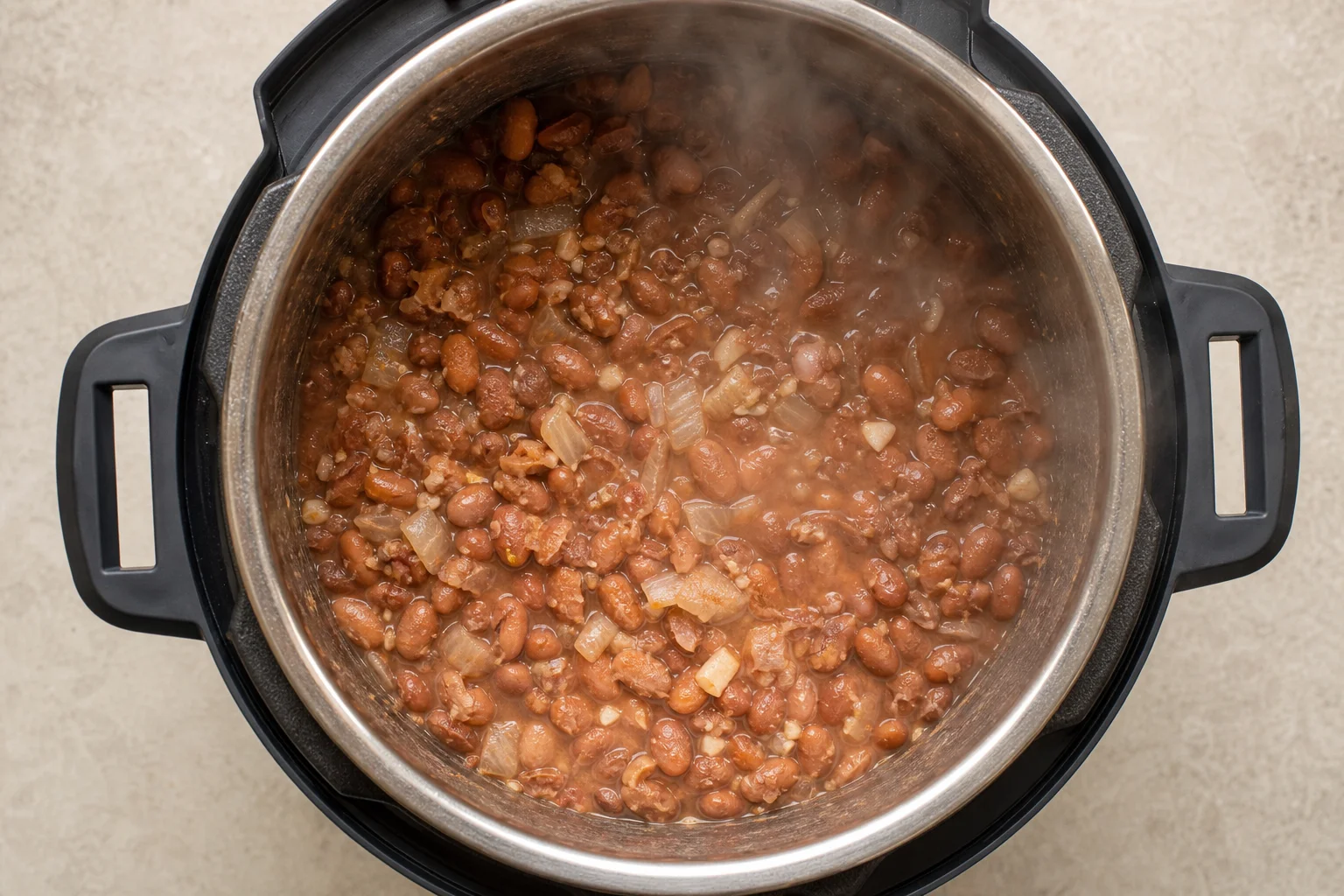
After the initial cook, both machines produce undercooked beans. Adding 30 minutes of manual high-pressure cooking to each results in properly cooked, firm beans with good texture. The lesson is clear: presets are a starting point, not a one-size-fits-all solution. However, the Breville’s interface offers a meaningful advantage here. While the Instant Pot allows only high or low pressure selection, the Breville provides a graduated pressure scale from 1 to 12 PSI, giving users more control over the most critical variable in pressure cooking.
Rice Cooking Results and Cleanup
Testing rice cooking reveals another difference in preset design. The Instant Pot rice preset uses low pressure for 12 minutes, while the Breville uses 7.5 PSI for 5 minutes. In practice, both take approximately 20 minutes total when accounting for preheating, pressure buildup, cooking, and release. This is roughly equivalent to stovetop cooking, so multicookers do not save time for rice.
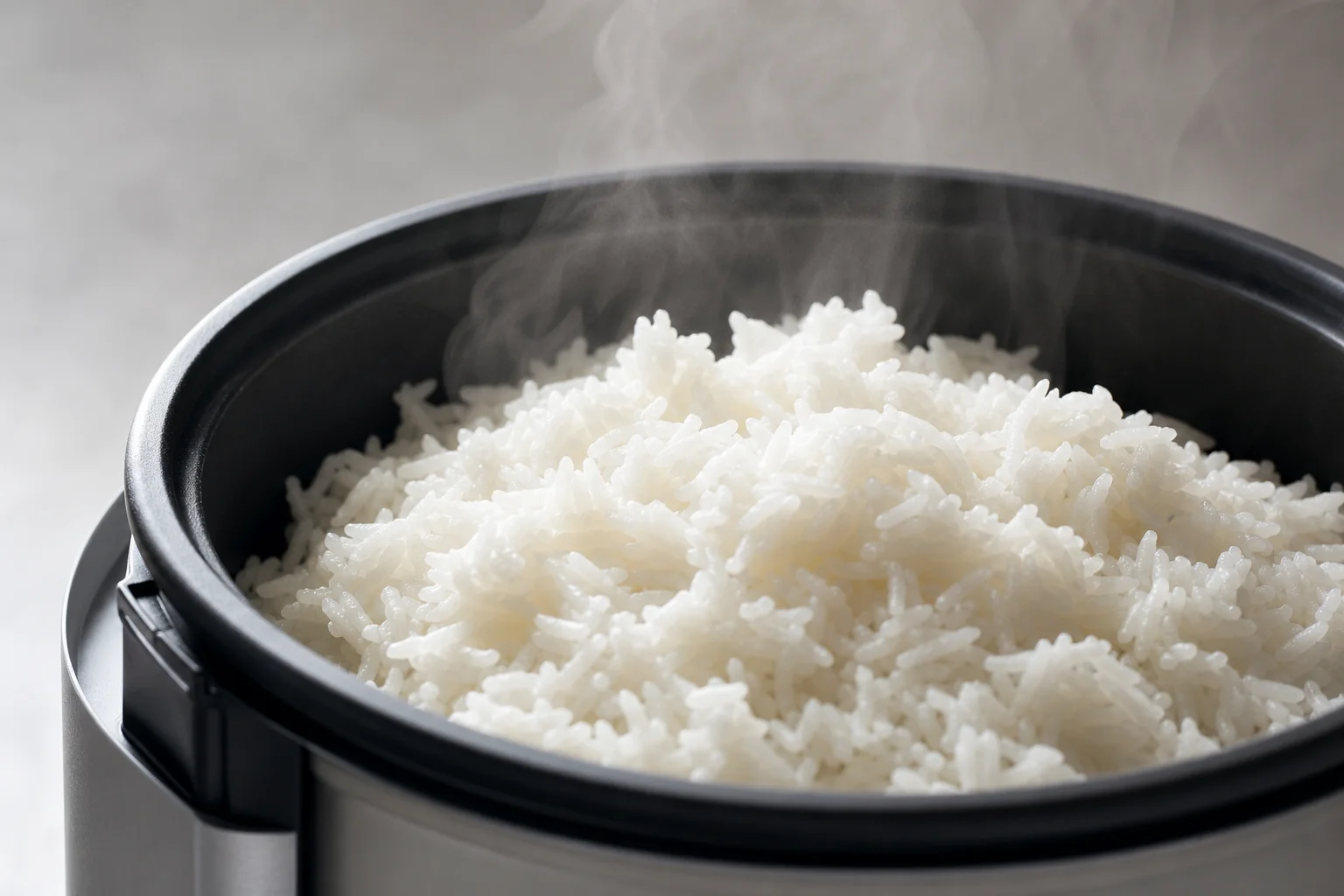
A significant practical difference emerges during cleanup. The Breville uses a nonstick coating on its pot, making rice removal straightforward. The Instant Pot uses standard stainless steel, which is harder to clean and causes rice to stick. The Breville’s nonstick surface is a small but meaningful quality-of-life improvement.
Cheesecake and Precision Cooking
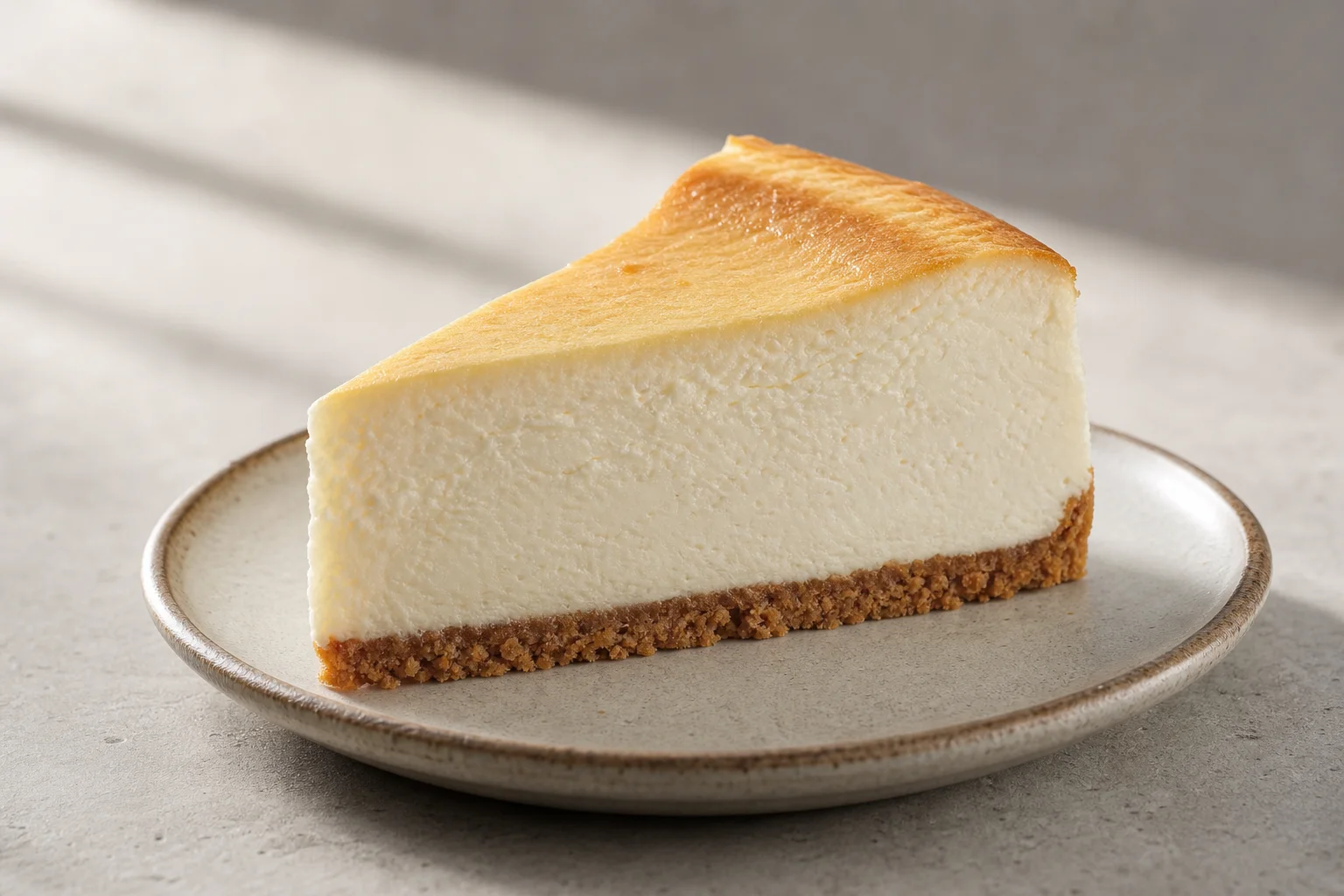
Cheesecake requires precise, low, even temperature control. Both machines can achieve this using their pressure-cooking function. The recipe calls for 25 minutes at high pressure followed by a 10-minute natural release. The Instant Pot produces a lighter, fluffier, creamier cheesecake with a smoother texture. The Breville’s cheesecake is denser, likely because the longer preheating and pressure-buildup process adds extra cooking time. Both are successful, but the Instant Pot’s result is slightly superior. Reducing the Breville’s cook time by 5 minutes would likely produce comparable results.
Build Quality and Design Considerations
Beyond cooking performance, the machines differ substantially in build quality and user experience. The Breville uses higher-quality finished materials with seamless transitions between stainless steel and plastic. Its metal handles are more ergonomic and include plastic inserts to keep hands away from the hot pot. The condensation collector uses thicker plastic, and the power cord is a standard design that makes it easy to pull out and manage. The Instant Pot feels less refined, with more visible plastic and less attention to ergonomic detail.
Both machines include a groove around the lid edge that collects water and food debris, making cleaning difficult due to the narrow space. The Instant Pot’s fully removable lid offers slightly better access. For accessories, the Breville includes a steam basket and trivet, while the Instant Pot includes only a trivet, requiring users to purchase additional accessories or use foil slings for tasks like cheesecake cooking.
Conclusion
Both the Instant Pot and Breville Fast Slow Pro deliver on the promise of multicooking. They can sauté, pressure cook, steam, and even bake cheesecake in a fraction of traditional cooking time. The Instant Pot is the budget choice, offering solid functionality at a lower price point. The Breville Fast Slow Pro justifies its premium price through superior build quality, more intuitive interface design with graduated pressure control, nonstick cookware, and included accessories. For most home cooks, the Instant Pot will handle everyday tasks effectively. If you value design refinement, interface clarity, and long-term durability, the Breville’s higher cost may be worth the investment, especially if you catch it on sale.
Product link
View more details for Breville Fast Slow Pro
This product is mentioned in the review. Check the specifications, options, and compatibility before buying.
View more details for Breville Fast Slow ProFurther reading
Related Reviews
Kitchen Appliances
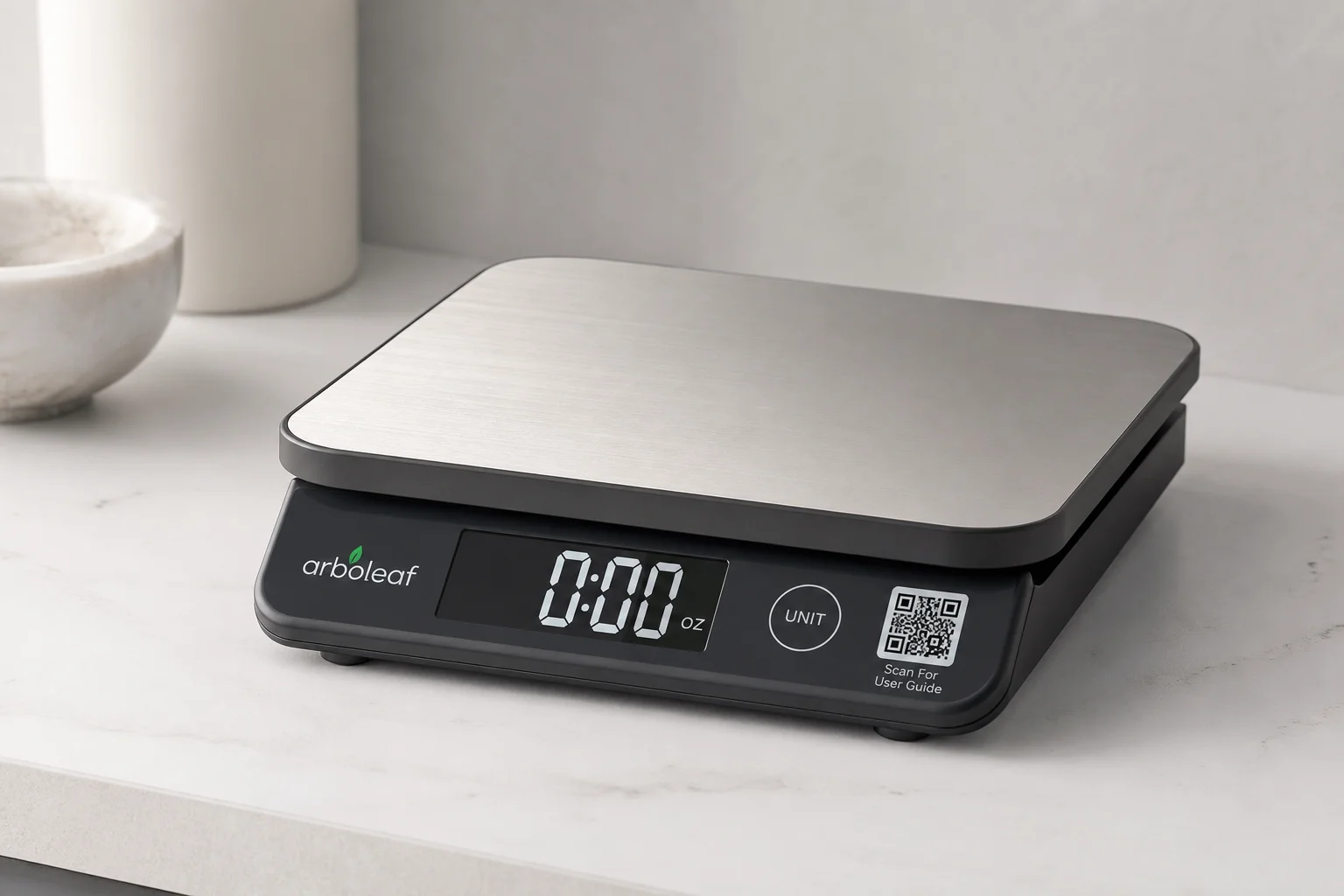
Arboleaf Smart Kitchen Scale Review: Connected Cooking Made Simple
A Bluetooth-enabled kitchen scale that syncs with a nutrition-tracking app, offering real-time weight monitoring and recipe guidance for home cooks.
Kitchen Appliances
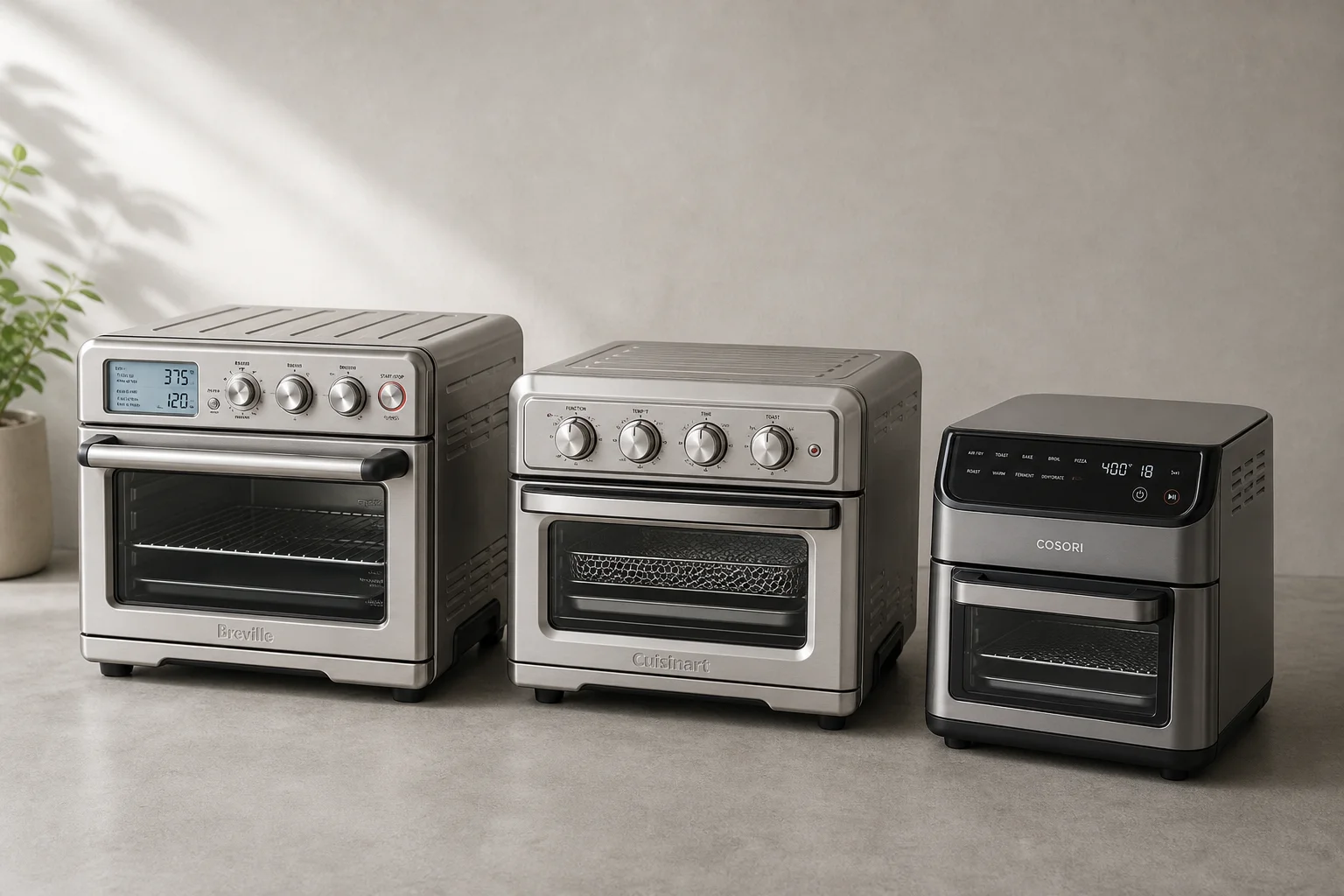
Best Air Fryer Toaster Ovens: Three Top Picks for Multi-Function Cooking
Three high-performing air fryer toaster ovens tested for versatility, ease of use, and real-world cooking results. Find the right fit for your kitchen.
Kitchen Appliances
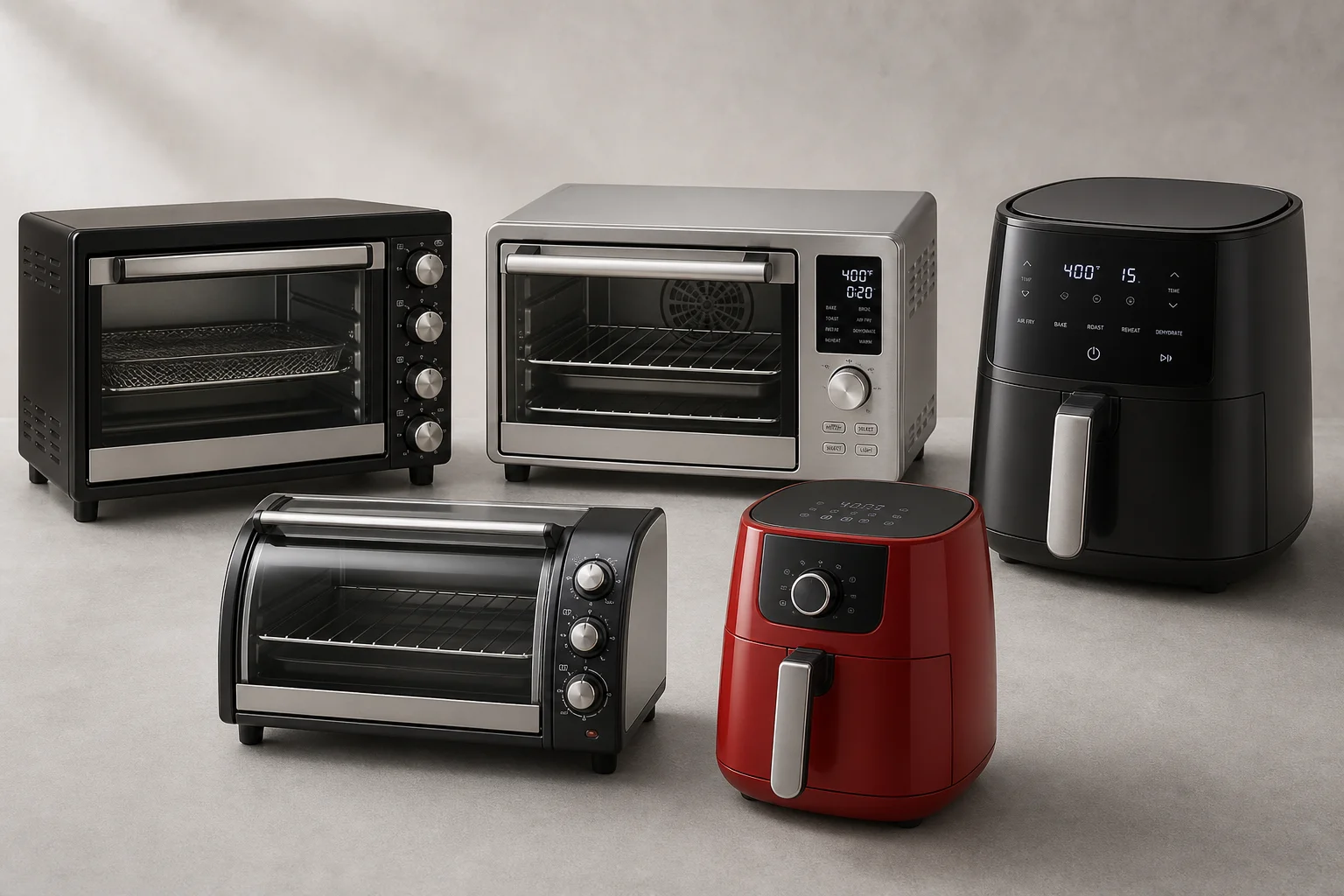
Best Air Fryer Toaster Ovens Under 100: Five Practical Options for Budget-Conscious Kitchens
Five air fryer and toaster oven combinations that deliver real cooking performance without breaking the bank, each with distinct strengths for different kitchen needs.