Thermal Imaging
InfiRay P2 Pro vs Hikmicro B20: Compact Thermal Imaging Cameras Compared
A phone-mounted thermal camera and a handheld thermal imager go head to head, covering image clarity, app experience, portability, and everyday use cases.
Introduction
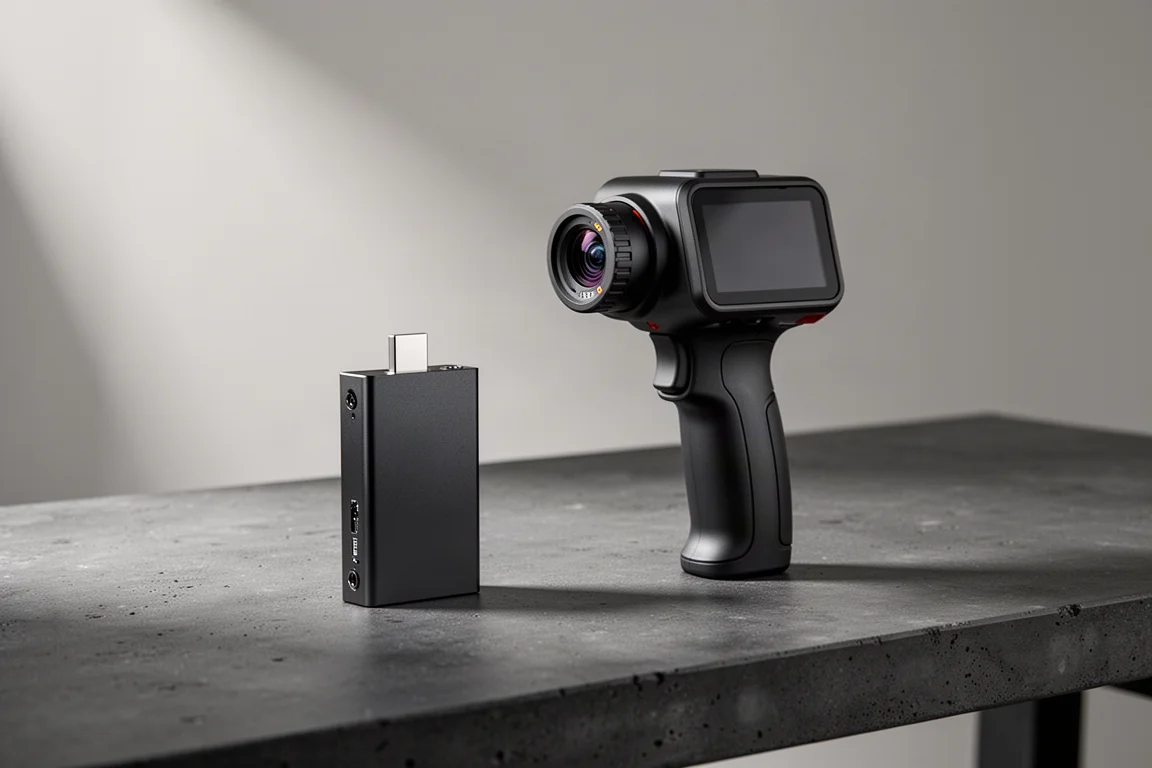
Thermal imaging cameras have become genuinely useful everyday tools, whether you are checking heat buildup on power tools, hunting down drafts, or just exploring what a warm body looks like against a cold background. Most people reach for a handheld unit, but there is now a compelling alternative: a tiny thermal module that plugs straight into your phone.
Here we compare two of them, the InfiRay P2 Pro and the Hikmicro B20, looking at image clarity, ease of use, portability, and where each one actually makes sense.
InfiRay P2 Pro: The Phone-Mounted Option
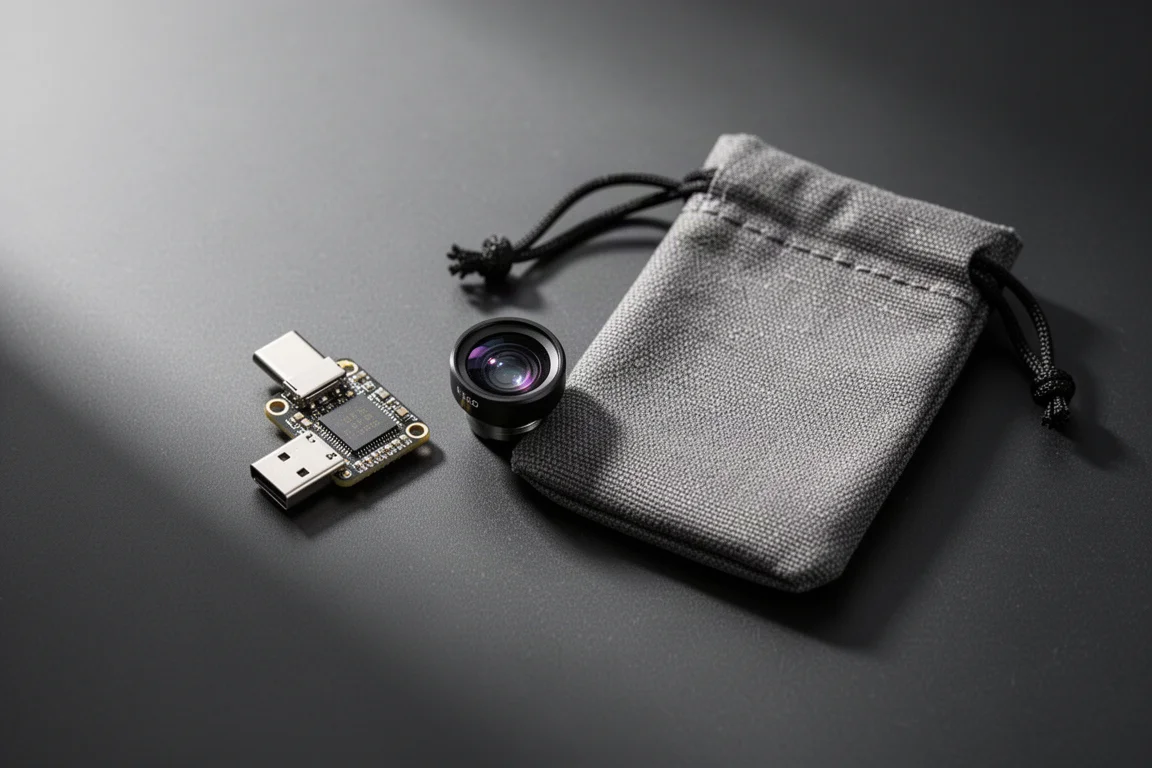
The InfiRay P2 Pro is a very small thermal camera that plugs directly into your phone’s USB-C port and works with the free P2 Pro app. You can download the app even without owning the camera, which makes it easy to explore the interface before committing to a purchase.
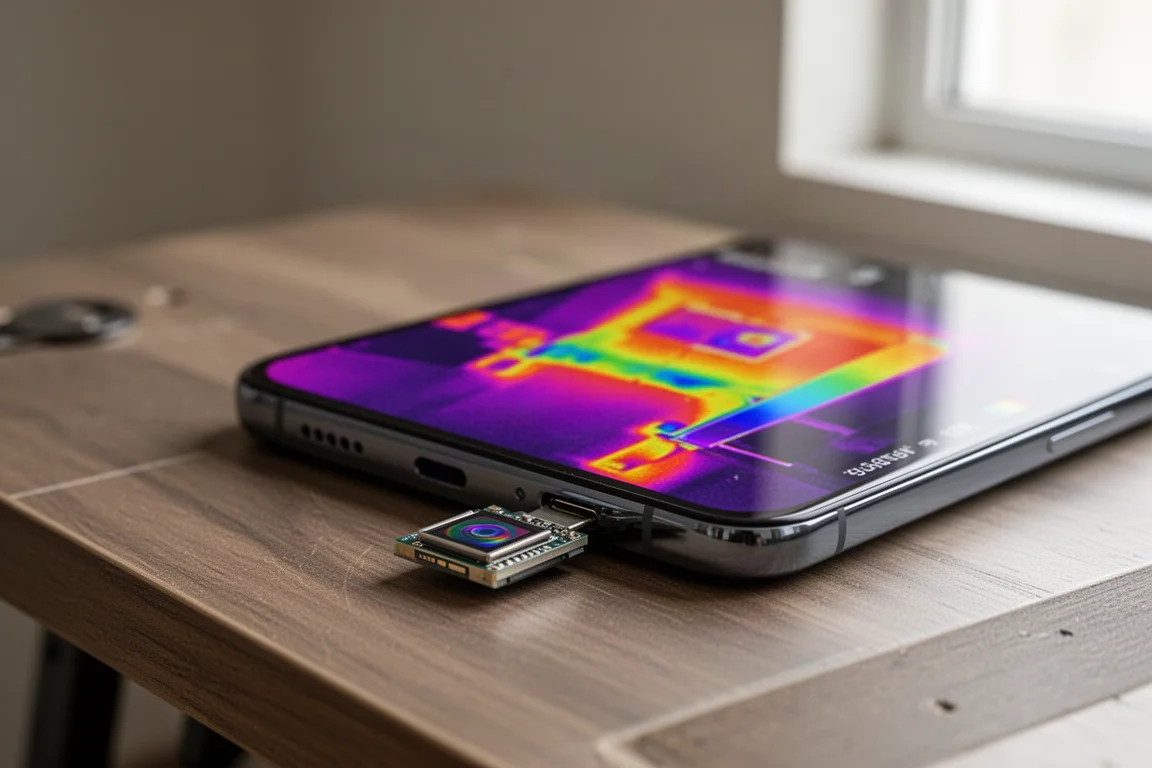
Once connected, the app gives you a lot of control. You can switch between color palettes such as white hot and rainbow, toggle temperature units, record video and take still photos, and dig into settings like professional thermometry. One clever touch is a magnetic macro lens that snaps over the main lens to zoom in further for more focused, detailed work.
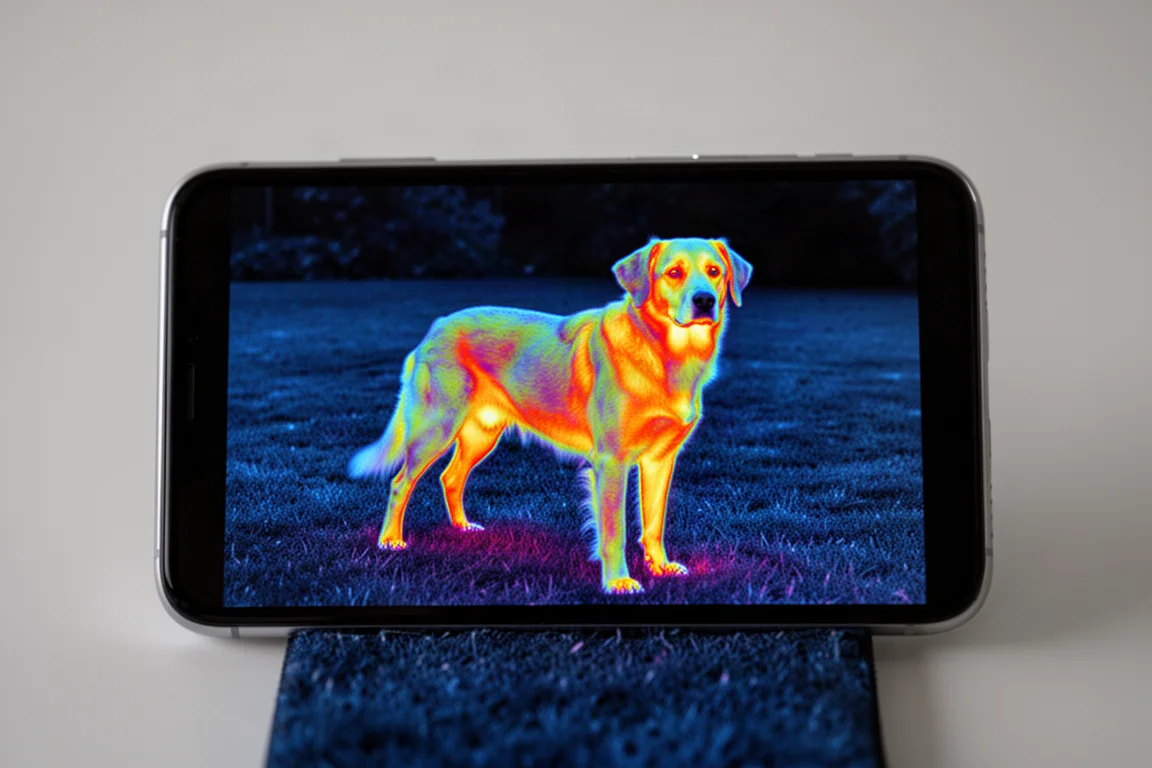
The images hold up well at distance. In real-world testing, the camera could pick out a dog from quite far away in cold weather, showing warm and cold spots on its body clearly. On a heat gun test, detail was close to the handheld Hikmicro B20, though the B20 edges it out slightly on clarity.
Using It Beyond the Job Site
A thermal camera on your phone opens up more than just electrical and mechanical checks. The P2 Pro handles long-distance viewing surprisingly well for its size, and because it lives in your pocket, it is far more likely to be with you when you need it.
That said, this is not a replacement for a purpose-built thermal scope or a dedicated long-range unit. It works, and it is useful, but it has limits, and anyone expecting scope-level performance should look elsewhere.
Hikmicro B20: The Handheld Alternative
The Hikmicro B20 takes the traditional approach: a dedicated handheld thermal imager with its own screen. In side-by-side comparisons, the B20 produced slightly more detail than the P2 Pro, though its screen is much smaller, which can offset that advantage depending on what you are looking at.
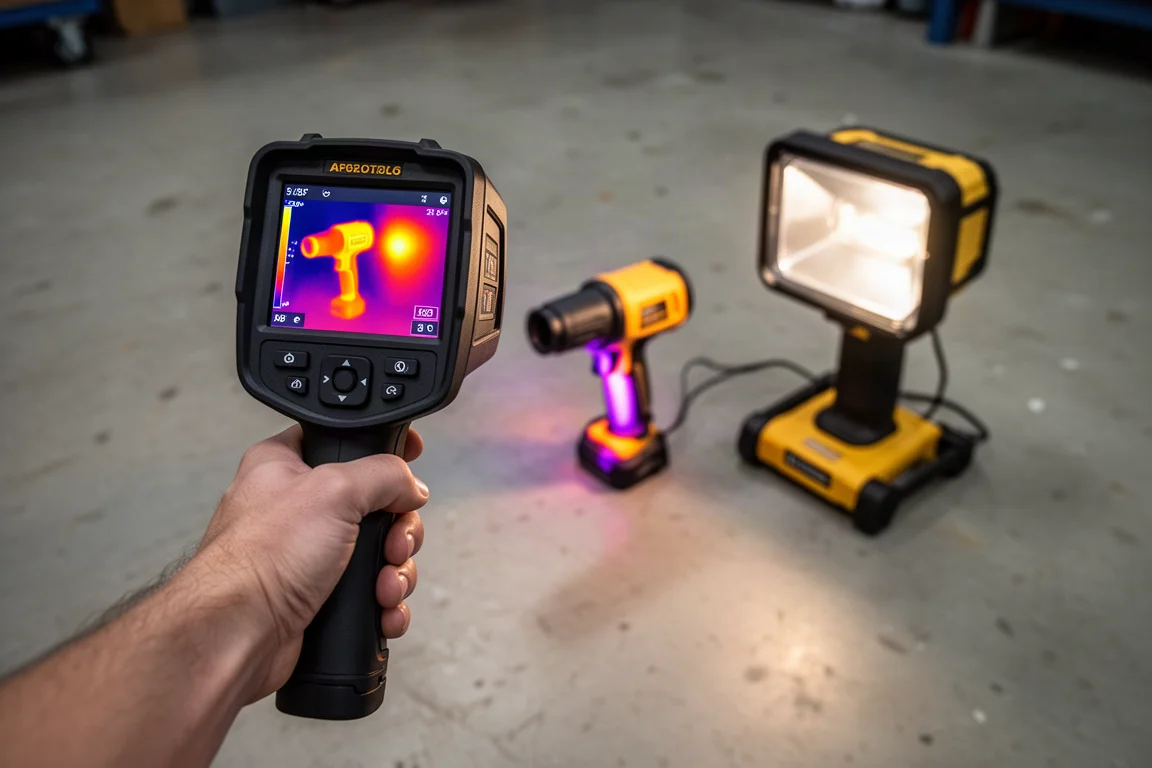
The big practical difference is independence. There is no app to freeze, no phone battery to drain, and no dependence on your phone’s port type. You simply pick it up, point, and read the image. For people who prefer a tool that does one job and stays out of the way of the phone, that is a real advantage.
The App Experience and Its Quirks
The P2 Pro app is generally capable but not flawless. Switching away to another app and returning can occasionally cause a freeze, requiring a restart. The good news is that it reopens with all your previous settings intact; the only setting that does not hold is video mode, which always resets to photo.
There is also the long-term question that comes with any phone-connected accessory: future phone compatibility. If the connector standard changes or you switch to a phone with a different port, the camera may not follow. That is a downside worth weighing against the convenience.
Which One Should You Buy?
The P2 Pro’s biggest strength is speed and convenience. Photos and videos are captured and stored directly on your phone, ready to share instantly, with no memory card to pull out and transfer. On a job site where your phone is already your lifeline, that convenience factor is huge.
The trade-offs are the small size, which makes it easy to lose, and the reliance on the app and your phone. If those concerns do not bother you, the P2 Pro is an easy tool to get used to. If you want slightly better clarity and a self-contained device, the Hikmicro B20 is the safer pick.
Conclusion
Both cameras deliver a solid thermal view at a compact size. The InfiRay P2 Pro wins on portability, sharing, and everyday convenience, while the Hikmicro B20 wins on detail and simplicity of use. Choose based on whether you want your thermal camera living in your pocket or in a toolbox.
Product link
View more details for InfiRay P2 Pro
This product is mentioned in the review. Check the specifications, options, and compatibility before buying.
View more details for InfiRay P2 ProFurther reading
Related Reviews
Thermal Imaging
Best Thermal Imaging Cameras 2026: Top Picks for Accuracy and Value
We tested 12 thermal imaging cameras across accuracy, image quality, and durability to find the best value picks for home and professional use.
Thermal Imaging
Best Thermal Imaging Deals Summer 2026: Five Units Worth Considering
Five thermal imaging scopes with strong summer pricing, from compact monoculars to rangefinder-equipped tube designs. Real strengths and trade-offs for different hunting needs.
Thermal Imaging
Best Thermal Monocular Under $1,000: Five Practical Options for Night Vision
Five thermal monoculars that balance heat detection clarity, battery life, and usability without premium pricing. Real strengths and trade-offs for hunters and night explorers.