Road Bike Wheels
Hunt Sub 50 Limitless Review: A Front and Rear Specific Road Racing Wheelset
Hunt's Sub 50 Limitless pairs a 34.2mm front rim with a 30mm rear, adds in-house CFD and 3D printed prototyping, and lands as a tubeless-only option for riders chasing small gains.
Introduction
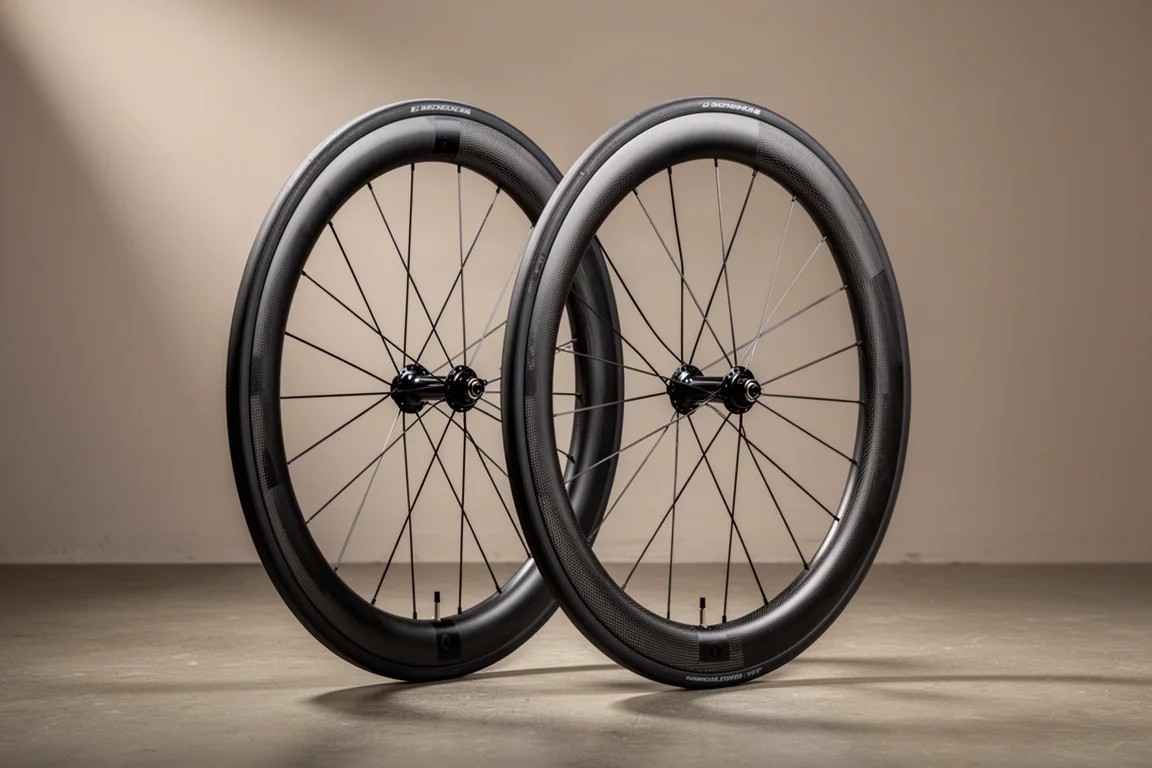
Hunt has introduced the Sub 50 Limitless, a road racing wheelset built around separate front and rear rim profiles. The front rim measures 34.2mm externally and the rear 30mm externally, a deliberate split that reflects how each wheel meets the air. The wheelset is designed around 28mm and 30mm road tires and uses a hookless rim bed, which makes it a tubeless-only product. It sits at the performance end of the Hunt range, aimed at riders chasing small, cumulative gains rather than one headline number.
Some context helps explain the design. Hunt’s earlier 48 Limitless set out to pair a rim far wider than the tire with a 28mm road tire, at a time when most performance rims sat around 29mm to 30mm wide. Hunt says it was the first to bring a rim just over 34mm wide to market for use with a 28mm tire, and it published the supporting wind tunnel data in a white paper so riders could examine the full process.
The new wheelset extends that thinking. Hunt describes the Sub 50 Limitless as an advance in three areas at once: aerodynamic drag, weight, and the way the tire and rim interact. Against the best comparable 50mm wheel, Hunt puts the aerodynamic gain in the region of one to two watts, with a little more against some options.
Who This Wheelset Is For
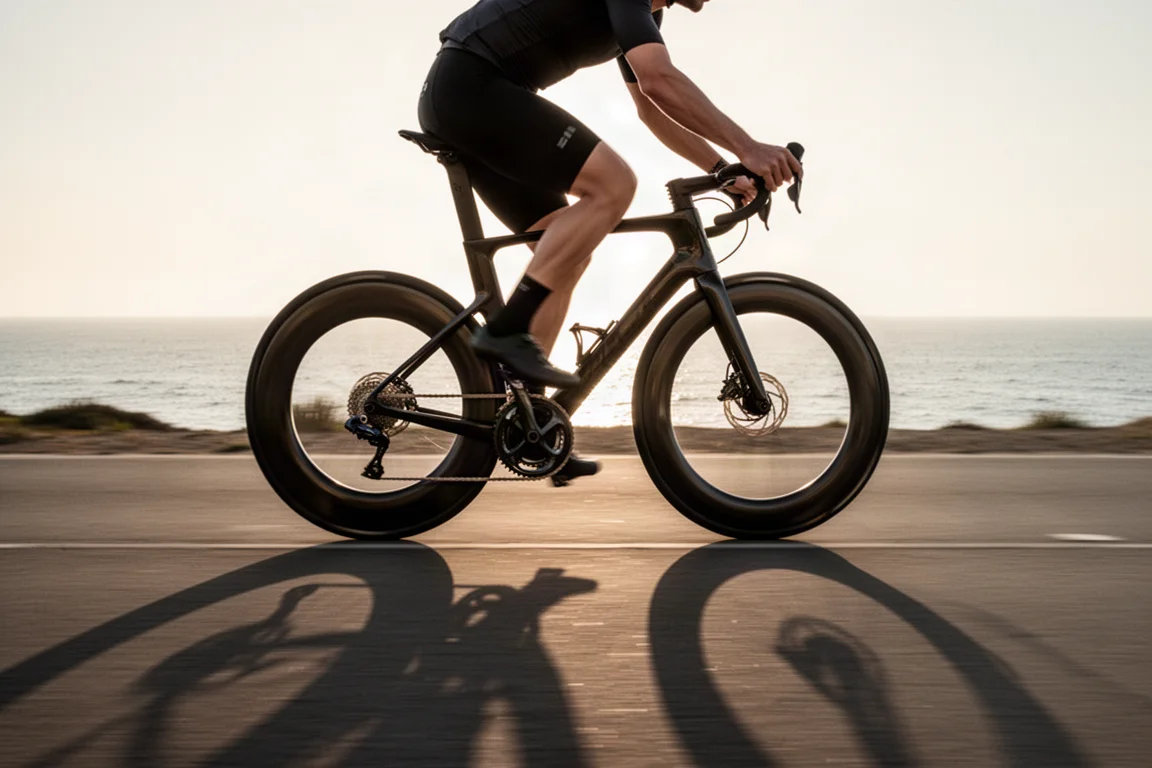
This is a wheelset for riders who have already gone deep on tire pressure and tire width. Hunt’s position is that the Sub 50 Limitless is the product for people looking for genuinely marginal gains and the ultimate in performance, and that those riders tend to have done their homework on how pressure affects the whole rider and bike system.
It follows that the wheelset assumes a certain amount of comfort with tubeless. Riders who have only ever run inner tubes may find the learning curve more significant than the watt savings. Riders who already run wide tubeless road tires, keep an eye on pressure, and race or ride hard in fast groups are much closer to the intended audience.
It is worth being clear about who this is not for. Hunt continues to build hooked rims across a significant part of its range precisely because many riders want something simpler, with no need to research tire compatibility or think about pressure in the same way. Choosing the Sub 50 Limitless is a choice to trade a little convenience for a specific set of performance outcomes.
Engineering and Validation Behind the Sub 50 Limitless
Hunt’s engineering suite houses the test equipment that sits behind this wheelset. There is an impact test rig, and a pressure test rig where tires are fitted to wheels inside a containment box, so that if a tire does derail nothing can fly out and hit anyone. A quality control area holds a very large set of verniers for measuring rim dimensions, along with a depth gauge. At least one wheelset is taken from every batch for measurement.
Development also relies on a 3D scanner that sends light at an object and captures the returning light to build a 3D model, with reflective dots helping the scanner track the part. The resulting point cloud lets the team refine shapes faster, and 3D printing has shortened the path to the wind tunnel considerably. Rim sections are built on an SLA printer, which gives a clean external finish, and those sections are assembled into full wheelsets for testing. A sample taken to the wind tunnel can hold 70 to 80 kgf of spoke tension, roughly two thirds of what goes into a carbon wheel, and stays true with a tire inflated to around 30 to 40 psi.
The practical value is that prototypes test within about 0.2 of a watt of the carbon equivalent. That accuracy let Hunt test 42 different profiles in computational fluid dynamics, something the earlier 48 Limitless project could not do in house, when development depended on repeated wind tunnel trips with physical prototypes. Physical prototype testing remains the reference point, but the ability to explore far more shapes before committing to hardware is what produced the front and rear split on this wheelset.
Front and Rear Specific Aerodynamic Profiles
The most visible change on the Sub 50 Limitless is a much squarer, wider, flatter section across the top of the front wheel. The front rim comes in at 34.2mm external and the rear at 30mm external, and on the finished carbon rims the difference between the two profiles is substantial.
The reasoning is about airflow. On the front wheel, the leading edge where the rim meets the tire is the most powerful part of the system, because that is the first contact the wheel, bike and rider make with clean, undisturbed air. The rear wheel deals with the final condition instead, so a rim much wider than the tire being used tends to separate the air and work it harder than necessary.
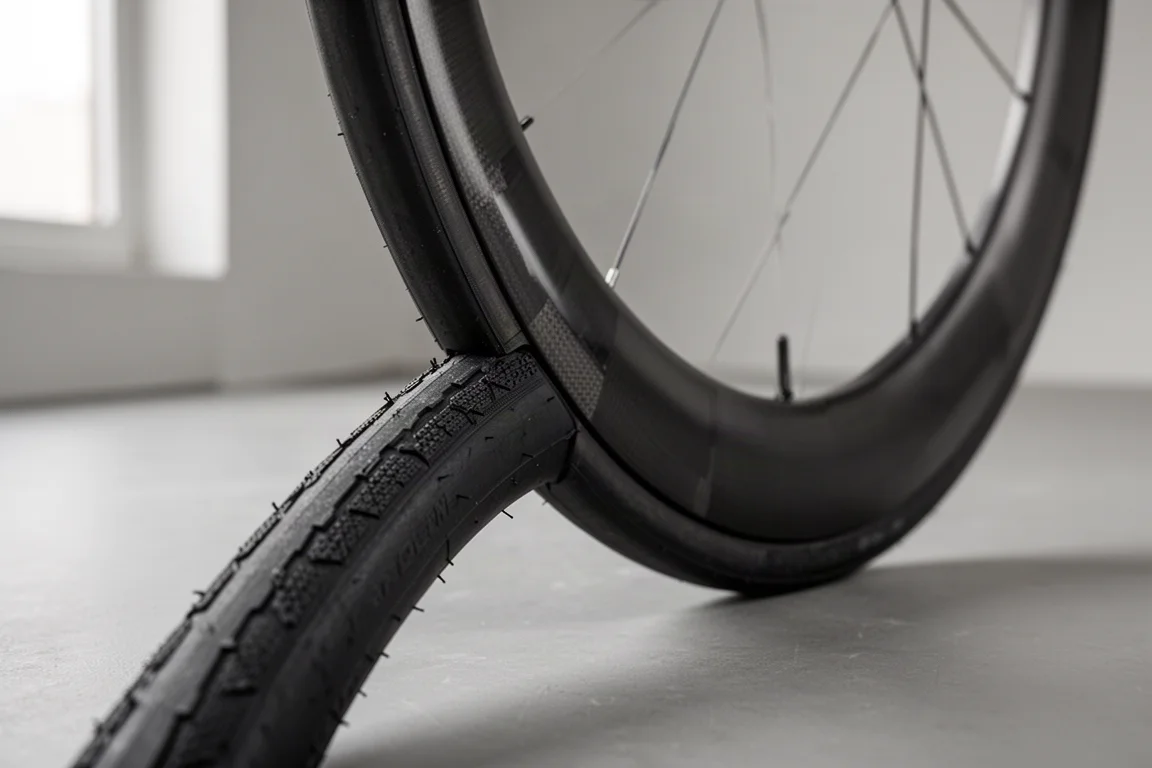
Hunt reports that the front profile delivered significant aerodynamic drag gains, while the rear change was smaller but still an improvement. The narrower rear profile also saves around 20 grams compared with the front rim, which is a modest figure on its own but one that adds to the overall package.
Weight and Tire Fit
Because the rear rim is narrower and lighter than the front, the Sub 50 Limitless is not a symmetrical wheelset in any sense. Hunt’s stated aim was to advance aerodynamics, weight and tire profile together rather than chase a single figure, and the combination is what the brand considers the meaningful step forward.
Tire width is central to that. The wheelset is designed around 28mm and 30mm tires, and Hunt notes that a nominal 28mm tire often measures closer to 29mm or 29.5mm once inflated on a rim. Wider tires are now the norm at the top of road racing, with riders at the biggest mountain stages running tires that measure around 32mm. The Sub 50 Limitless is built for that direction of travel rather than against it.
Riders coming from older, narrower setups should expect the handling and ride quality to feel different, largely because the tire and rim now work as one wider system. That is the point of the design, and it is worth approaching the wheelset with that in mind rather than expecting a direct like-for-like swap.
Tubeless Setup and Lower Tire Pressures
Hookless construction is what makes the Sub 50 Limitless a tubeless-only product. Hunt’s reasoning is that for riders chasing marginal gains, the hookless and tubeless combination delivers the best outcome in tire profile, cornering behavior, rolling resistance, weight and aerodynamics.
Lower tire pressures are part of that argument. Research measuring power output across different road surfaces found that lower pressures generally reduced the power needed to hold the same speed, because the goal is to stop the rider and bike system vibrating. Riders who have worked through that research are the ones most likely to get value from a pressure-sensitive setup.

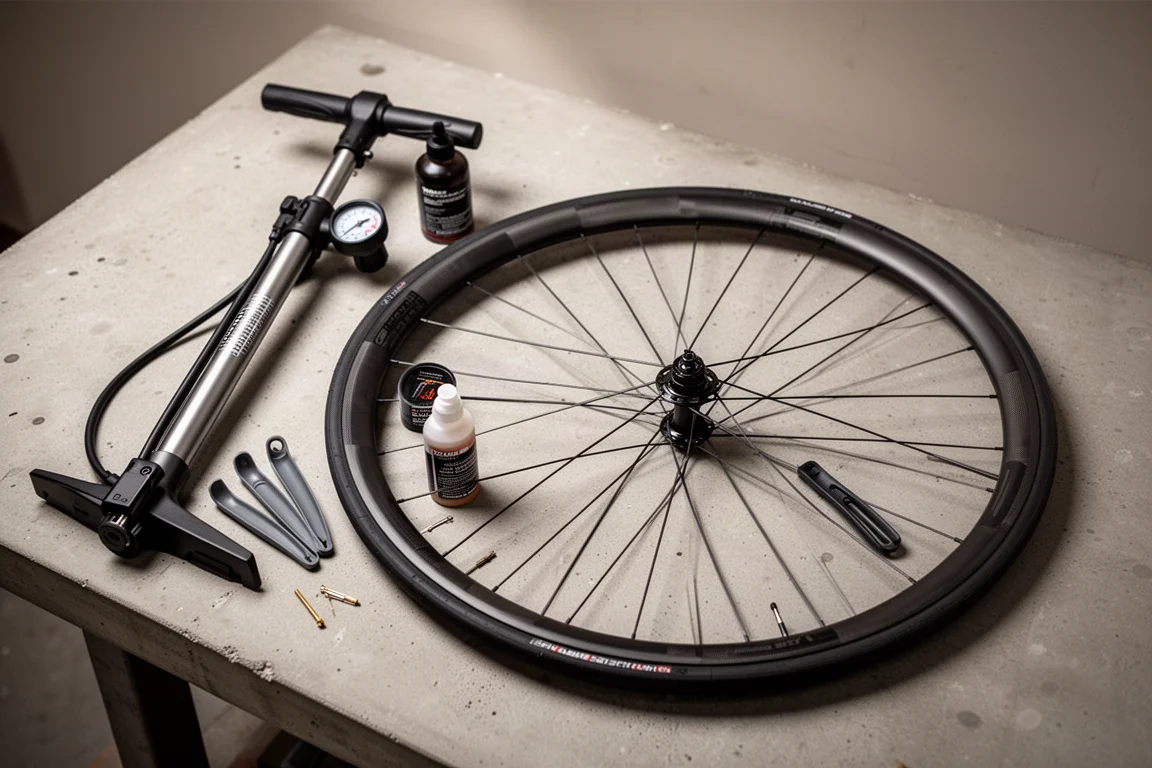
Punctures are the other side of the tubeless case. Hunt points to a race won after a rider punctured, saw the sealant close the hole, and stayed in contention without stopping, something that would not have happened on a tubular. The brand also acknowledges the fitting side honestly: tubeless takes time to learn, but fitting has become significantly easier over the last three or four years, and many riders now treat it as a fit-and-forget job with no special tools required.
Things to Consider Before Buying
- This wheelset is hookless and tubeless only. Riders who want to run inner tubes should look at hooked options in the Hunt range instead.
- Tubeless fitting rewards a little practice. If you have never mounted a tubeless road tire, expect a learning period before it feels routine.
- The aerodynamic advantage is measured in single watts against the best comparable 50mm wheels, with a little more against some. Riders who do not race or ride in fast groups may not notice it.
- Pressure matters more on a setup like this. Hunt’s own position is that the intended buyer has already researched tire pressures and understands why lower pressures work.
- Tire choice should match the rim. The wheelset is designed around 28mm and 30mm tires, and a suitable tubeless tire from a major brand is part of getting the system to perform.
Buying Advice
The Sub 50 Limitless makes most sense for a rider who already runs wide tubeless road tires, has a clear idea of the pressure they want to run, and is looking for the last small gains in a 50mm-deep racing wheel. The front and rear specific profiles, the 20 gram saving at the rear, and the roughly one to two watt aerodynamic improvement are the sort of details that matter to that rider and largely pass unnoticed by everyone else.
If that describes you, this is a coherent package rather than a collection of gimmicks: in-house CFD, 3D printed prototyping, and a rim shape built around the tires people are actually racing on. If you want a wheelset you can fit with tubes, run at whatever pressure is printed on the sidewall, and never think about again, Hunt’s hooked rims are the more sensible purchase and there is no shame in that. Change in cycling tends to arrive because a group of riders finds a real benefit, and the sensible move is to work out whether you are in that group before you spend.
Conclusion
The Hunt Sub 50 Limitless is a focused road racing wheelset with a genuinely unusual design decision at its core: a wider, squarer front rim and a narrower, lighter rear rim, developed with tools that let Hunt test far more shapes than it could a few years ago. The aerodynamic gains are small by the standards of the category, the weight saving at the rear is modest, and the wheelset is tubeless only by design.
Those are the terms. For a rider already committed to wide tubeless tires, low pressures and the pursuit of marginal gains, the Sub 50 Limitless offers a well-reasoned combination of aero, weight and tire profile. For everyone else, Hunt still makes hooked wheels, and the simpler choice is probably the better one.
Product link
View more details for Hunt Sub 50 Limitless
This product is mentioned in the review. Check the specifications, options, and compatibility before buying.
View more details for Hunt Sub 50 LimitlessFurther reading
Related Reviews
Road Bike Wheels
Best Rim Brake Road Wheels 2026: Seven Options for Every Budget
A practical guide to rim brake road wheelsets across almost every price point, plus custom build advice and a secondhand inspection checklist.
Road Bike Wheels
Best Road Bike Wheels: A Practical Tier Guide to Six Sets Worth Buying
Six road and gravel wheelsets compared, from accessible carbon upgrades to World Tour race wheels, with the trade-offs that matter before you buy.
Road Bike Wheels
Campagnolo Hyperon Review: A 37mm Carbon Wheelset Built for All-Round Road Riding
A mid-depth carbon road wheelset that climbs well, stays stable in gusty crosswinds and looks the part, with a few trade-offs worth checking first.