Snowboarding Gear
How to Choose a Snowboard: Twin vs Directional Shapes and Which Boards Fit Which Riders
A practical guide to snowboard shapes, from true twins to heavily tapered powder boards, plus four boards matched to real rider profiles.
Introduction
Choosing a snowboard gets much easier once you stop shopping for the conditions you wish you had and start shopping for the ones you actually ride. That single idea runs through everything below.
This guide works in three steps. First, build an honest profile of yourself as a rider. Second, understand the two main outline families, twin and directional, along with the taper and profile details that sit inside them. Third, match real boards to real rider types.
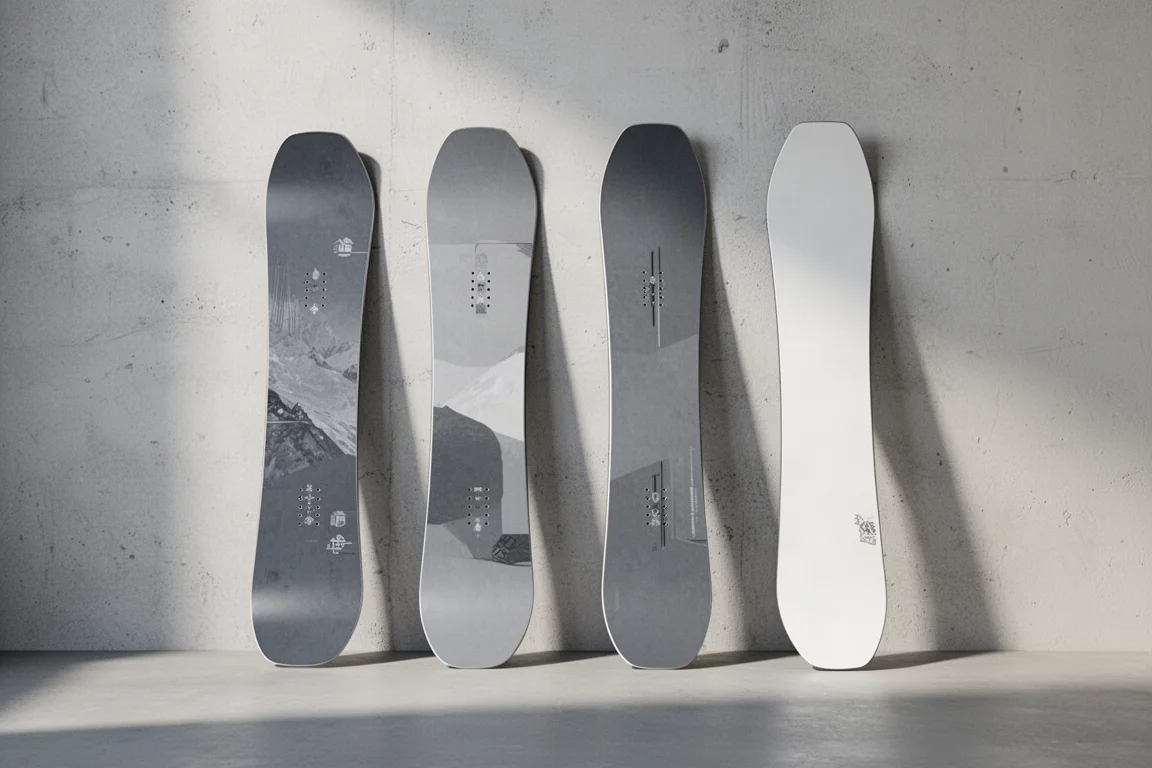
Four boards appear here as examples across the range: the Rossignol Huck Knife, the K2 Instrument, the Arbor A-Frame, and the Rossignol Sashimi. Together they cover a freestyle twin, an approachable directional all-rounder, a stiffer all-mountain option, and a dedicated powder shape.
Start With an Honest Rider Profile
Before you look at a single board, take out a piece of paper and write down a profile of yourself as a rider. Include the terrain you ride most, your ability level, the resort you ride most often, the conditions you ride most, and the people you usually ride with.
Ability level is where honesty matters most. It is easy to picture endless powder fields and perfect conditions, but most seasons are a mix. Being fair with yourself about where you actually ride, and how well you actually ride, narrows the field quickly.
Geography plays a part too. Early season means man-made snow in some places and natural snow in others. If you have a trip planned somewhere different this winter, note it, because a board that works at home may not be the board you want on that trip.
Then think about the shape of your season. Are you a weekend warrior, or out every day? How many days will you realistically ride? Write down whether you want to ride trees, try park riding with jumps and rails, or learn to ride switch. Switch riding is a genuinely useful skill to have, so it is worth putting on the list even if it is not a priority today.
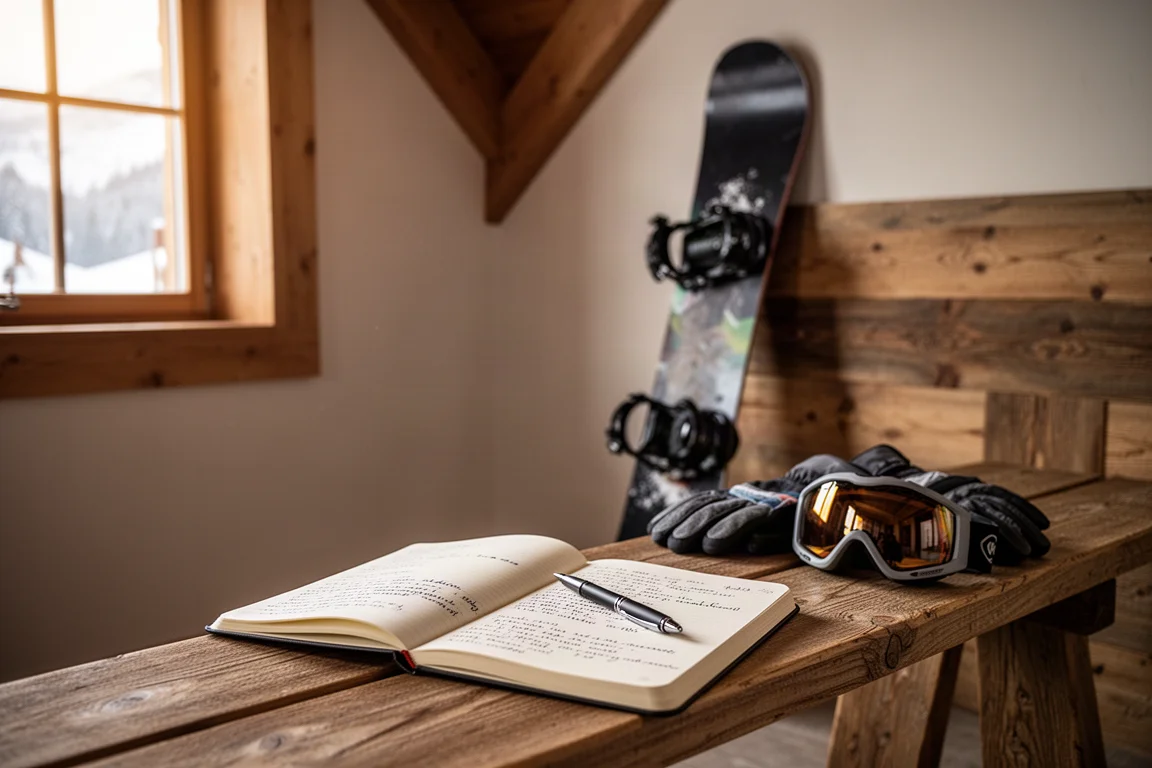
Keep the finished profile nearby. Every decision after this point gets measured against it, and that is what turns a long list of boards into a short one.
Twin and Directional Shapes Explained
Board outlines fall into two broad families: twin and directional. Set aside base profile and sidecut for the moment and look only at the overall shape.
A twin has the same tip and tail shape and the same tip and tail length, and the stance pattern is usually centered on the board, although you can set it back if you prefer. Because both ends match, the board feels the same whichever direction you are travelling. That makes twins the natural choice for freestyle riding: hitting jumps, taking off switch and landing forward, taking off forward and landing switch, and sliding rails and boxes. Twins are also forgiving when a landing comes in slightly off-kilter and you have to finish the trick riding backwards. Even within the twin family there is variation. One twin can have a very different tip shape from another while still matching its own tail, and some use a more traditional rounded tip and tail.
A directional board has a longer nose than tail, and the stance is usually already set back, so you do not need to move it further. That longer nose keeps the nose up and out of the snow in spring conditions, wet snow, and new snow, which is the main job of a directional outline.
Inside the directional family, taper is the detail that changes how a board feels. A non-tapered directional board has the same width at the nose and the tail. It behaves more like a twin, and you can still ride switch on it. A tapered directional board has a wider nose than tail, often somewhere around 8 to 12 mm on freeride and all-mountain shapes. The wider nose pulls you into the turn, the narrower tail follows through, and because the tail is narrower you can put more power into it and sink it slightly in fresh snow, which lifts the nose and adds maneuverability. Tip shapes vary widely here, from rounded noses paired with rounded or squashed tails to swallow-tail inspired designs, and much of that comes down to what you like the look of rather than a major difference in performance.
At the far end of the directional range are shapes with a blunt nose, a blunt tail, almost no rise in the tail, and a stance set well back. These are built to turn a lot more than a twin and are versatile across conditions and terrain.
There are also specialty shapes. One type is a long, stiff board aimed at aggressive, taller riders, often with bigger feet, who already know the length they want. The other is a true powder shape with a very long nose, a very short tail, and heavy taper in the region of 20 to 25 mm. That shape exaggerates everything a tapered board does, letting the tail sink and encouraging a back-foot driven style where you pivot off the tail to manipulate the board. Powder boards like this also perform well on groomers, which is why it is worth riding one on an ordinary day so you know exactly how it behaves when a storm finally arrives.
Camber and rocker sit on top of all of this. A cambered board has a high point in the middle with contact at the tip and tail, which gives more grip and more edge hold. A rockered board is looser and more forgiving, easier for learning tricks, more playful, and works well in softer snow and powder. If you plan to land big jumps squared up, camber is the safer feeling because the board is less likely to squirt out from under you.
Rossignol Huck Knife: A True Twin for Freestyle Progression
The Huck Knife is a true twin. Its tip and tail share the same shape and the same length, and the stance pattern is centered on the board, though it can be set back if that suits you better.
Because both ends match, the board behaves the same whether you are riding forward or switch, which is exactly what freestyle riding asks for. It handles jumps, takeoffs switch, landings switch, rails, and boxes. It is also the friendlier option when a landing arrives slightly off balance and you have to ride away backwards.
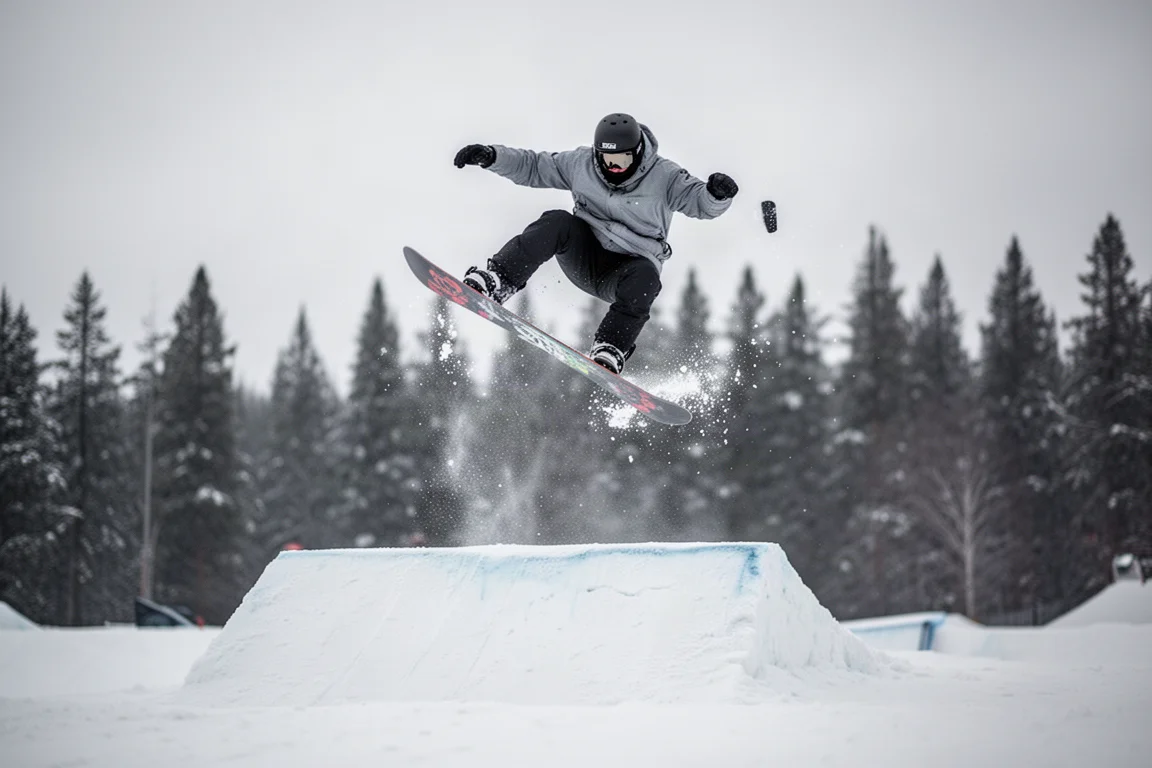
Riders who spend most of their day in the park, or who want one board that handles small features while staying switch-friendly across the rest of the mountain, will get the most out of this outline. If your priority is carving groomers or chasing deep snow, a directional shape will serve you better.
K2 Instrument: A Directional Board for Building Clean Turns
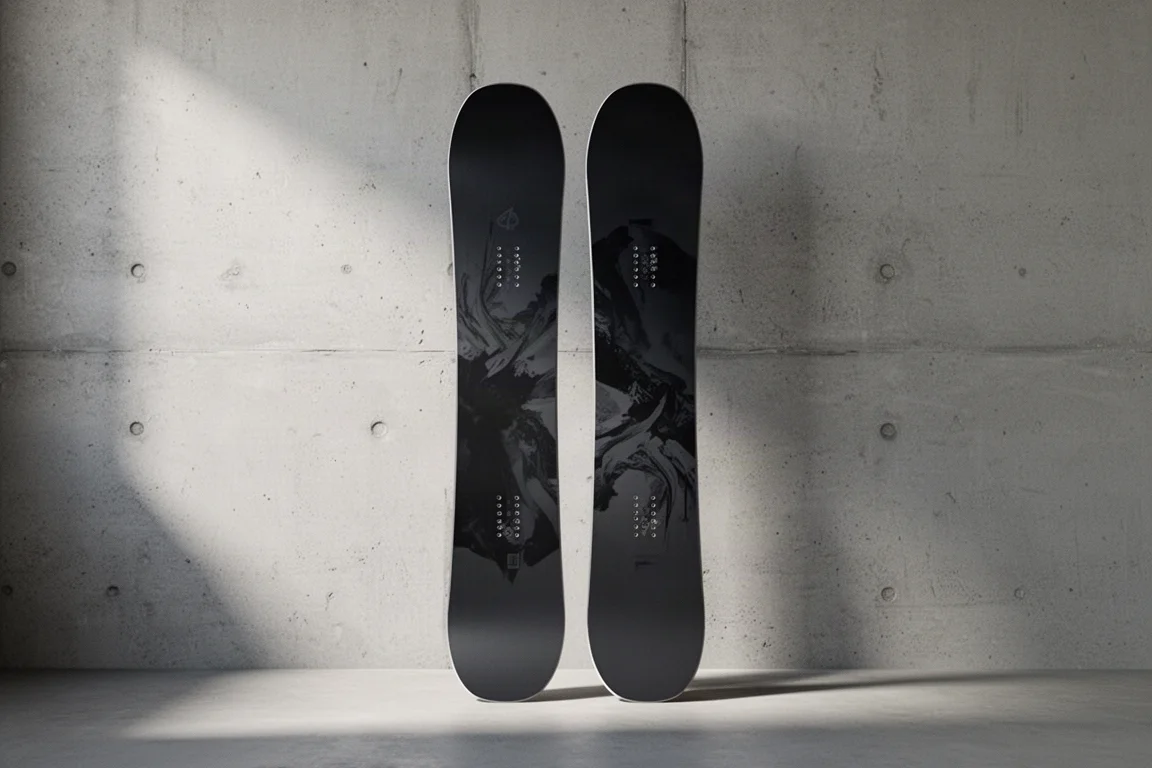
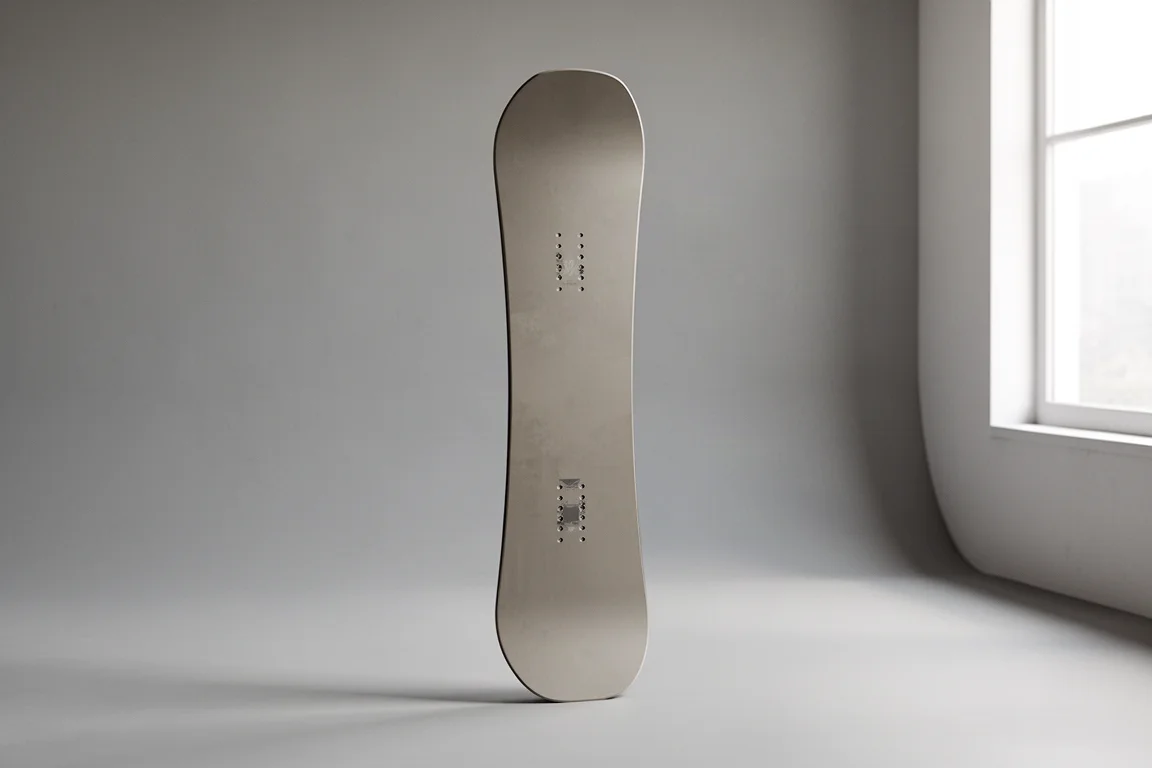
The Instrument is a directional board with a traditional rounded nose and a rounded, slightly squashed tail, plus a modest amount of taper.
That taper is the reason it turns so smoothly. The wider nose pulls you into the turn and the narrower tail follows through under pressure, which is precisely what a rider working on linking carved turns wants from a board. It is also a genuinely versatile all-around option: you can take it into the park for rails and small jumps, ride switch on it, and progress on it across a whole season without feeling the need for a second board. The differences between this tip shape and other directional tip shapes come down mostly to aesthetic preference.
Arbor A-Frame: All-Mountain Stability for Strong Riders
The A-Frame is the all-mountain go-to in this group. It has a long nose length, a stiffer build, and it is available in a wide range of lengths.
That combination suits a tall, physically strong rider who likes to ride fast and aggressively. It also travels well. The same board can handle a local hill and then go out west to bigger mountain terrain for a trip without you needing to step up to anything else.
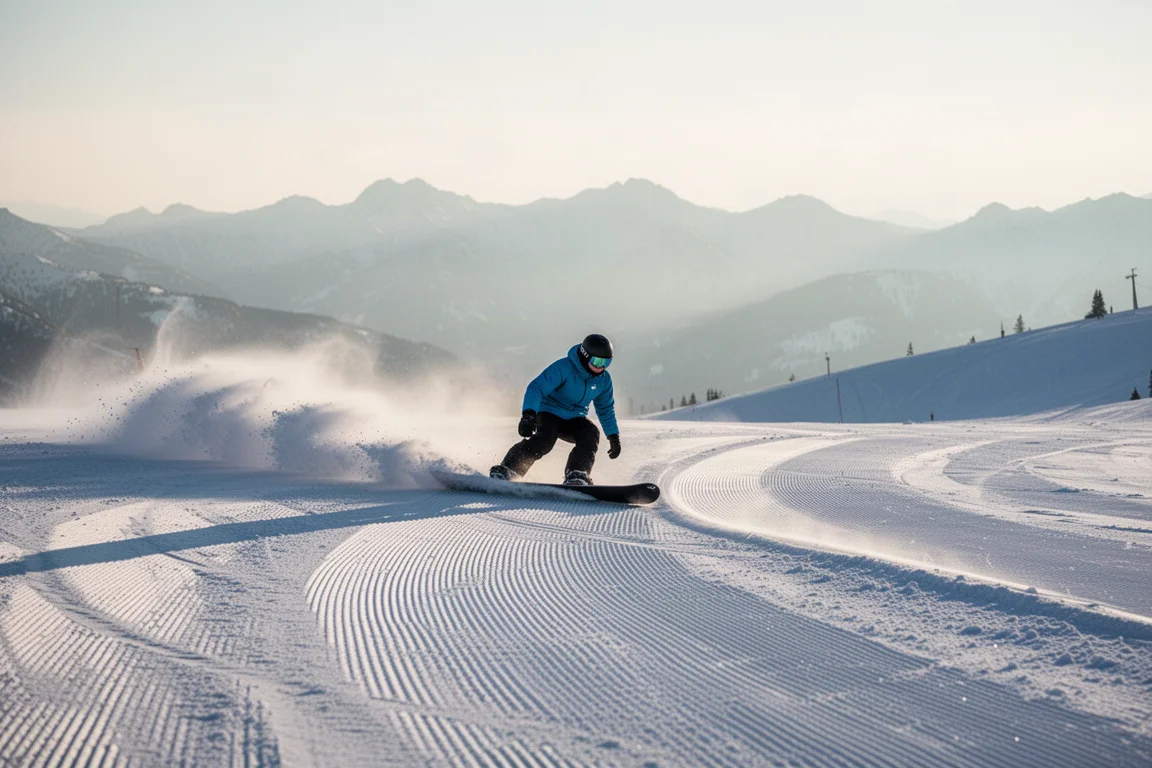
Length deserves real attention here. It is better to ride a board on the shorter and narrower side than one that is too long for you. A stiff, long-nosed all-mountain board rewards a rider with the weight and strength to drive it, so if you are lighter or still building technique, choosing a shorter length within the same model is the more sensible call.
View more details for Arbor A-Frame
Rossignol Sashimi: A Dedicated Powder Shape
The Sashimi is a true powder board. It pairs a very long nose with a very short tail and a large amount of taper, in the region of 20 to 25 mm, which is far more than the directional all-mountain boards above.
That shape amplifies the tapered-board effect. The tail sinks more easily, which lifts the nose, and the ride becomes more back-foot driven, letting you pivot off the tail and manipulate the board through deep snow. This is the board for a major snowstorm.
It also goes well on groomers, and it is worth taking out on a normal day without powder to see what it can do. That way, when a storm does arrive, you already know how the board behaves.
Buying Advice: Matching Boards to Rider Profiles
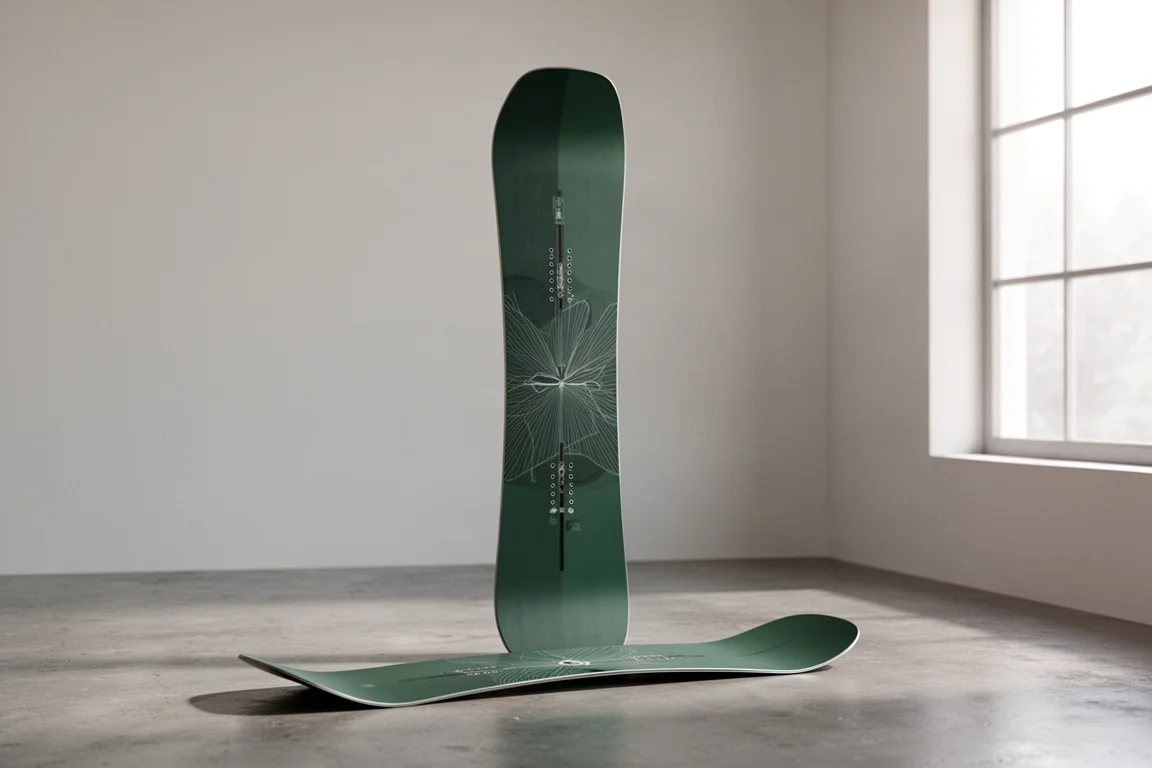
Once the rider profile is on paper, matching gets much easier. Three examples show how the logic works.
A rider who is new to intermediate, stays mostly on groomed slopes, wants to work on linking carved turns, and would like to try small park features now and then fits a directional board with a modest amount of taper, such as the K2 Instrument. It supports turn development, still allows park laps and switch riding, and can carry a rider through a full season.
A tall, strong, aggressive rider who likes speed and takes an annual trip to bigger mountains fits a long-nosed, stiffer all-mountain board such as the Arbor A-Frame, in a longer length. One board covers both the home hill and the trip out west.
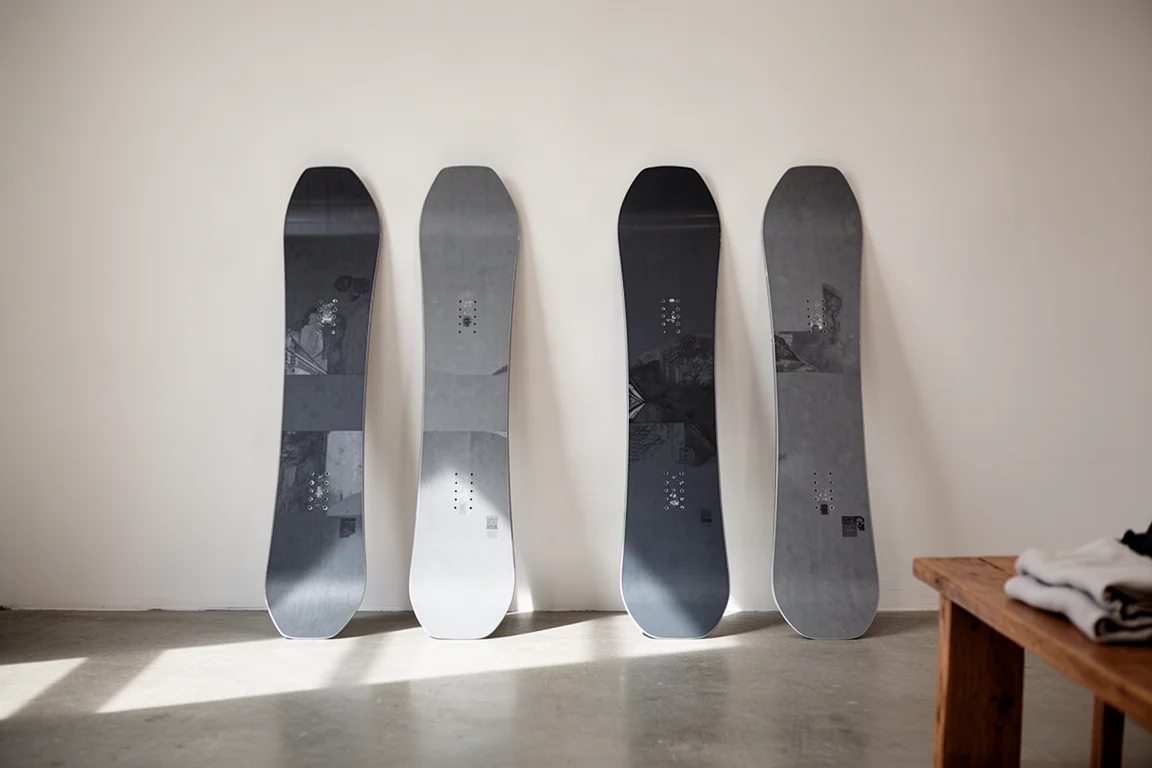
A park-focused rider working on bigger spins and tricks fits the twin range, such as the Rossignol Huck Knife. Within that choice, camber brings more grip and more predictable landing stability, while rocker brings a looser, more playful feel that is easier for learning tricks and better in softer snow.
A rider who plans around storm days fits a dedicated powder shape like the Rossignol Sashimi, most sensibly as an addition to a quiver rather than an only board.
Riders are not black and white, and plenty of people sit somewhere between these profiles, so treat them as guidelines. Two things hold true across all of them. Buy for the conditions you actually ride. And err on the shorter and narrower side rather than choosing a board that is too long for you.
Conclusion
Choosing the right snowboard comes down to three moves: write an honest rider profile, learn the difference between twin and directional outlines and the taper inside them, and then match the board to the terrain and conditions you really ride.
The four boards here show how wide that range is. The Rossignol Huck Knife covers freestyle and switch riding. The K2 Instrument is an approachable directional board for building clean turns. The Arbor A-Frame is a stiffer all-mountain option for strong, fast riders who travel. The Rossignol Sashimi is a dedicated powder shape for storm days. Start with the profile, and the right shape tends to make itself obvious.
Further reading
Related Reviews
Snowboarding Gear
686 Smarty Pants vs 686 Dispatch Bib: Traditional Pants or Bib Pants?
A head-to-head look at two 686 snow pants, weighing warmth, comfort, durability, and breathability to help you pick the right style for your riding.
Snowboarding Gear
Bataleon Thunderbolt Review: A Powerful All-Mountain Freeride Snowboard
A deep-camber freeride snowboard with 3BT and SideKick shaping, tested in powder, chop, ice and soft groomers. Here is who it suits and what to weigh up.
Snowboarding Gear
Best All-Around Park Snowboards: Five Balanced Freestyle Picks
Five park snowboards that balance jumps, rails, and everyday freestyle riding, plus three honorable mentions worth a closer look.