Ski Gear
How to Build a Ski Quiver for 2026: From Five Skis Down to One
A practical framework for building a ski quiver, plus eight skis that cover narrow carving, all-mountain, playful, and powder roles.
Introduction
Ski performance is highly subjective, which makes any “best ski” list tricky. A ski that feels sharp and lively under one skier can feel demanding under another, and the right answer depends far more on where you ski and how often you ski than on any spec sheet.
One useful exercise is to build a quiver from the top down: five skis, then four, three, two, and finally one. The lists themselves are personal, but the reasoning behind them travels well. Each step forces you to decide what you are willing to give up.
This guide walks through the roles that make up a well-rounded quiver and the specific skis that fill them, from a dedicated narrow carver to a dedicated powder ski.
How to Think About Building a Ski Quiver
Start with the snow you actually ski rather than the snow you hope for. A mountain with frequent small storms and a mix of firm and soft days rewards a ski that is versatile over one that is highly specialized.
Width is the first variable. Narrow skis deliver crisp edge grip, quick turn initiation, and strong on-trail performance, but they are dependent on conditions. Wider skis float, stay maneuverable in soft snow, and absorb variable terrain, but they give up precision on firm groomers.
The size of the quiver decides how specialized each ski can be. Five skis justify fringes, which means a dedicated narrow carver at one end and a dedicated deep-snow ski at the other. Three or four skis let you keep one fringe and cover the middle properly. Two skis push you toward a sensible split between something narrow and something wide. One ski means choosing the most middle-of-the-road option available and accepting the compromises that come with it.
In practice, most quivers settle into a pattern: one everyday ski that gets the majority of the days, plus one or two specialists that justify their place a handful of times a season.
Narrow Carving Ski: Atomic Redster X9S
The Redster X9S is a narrow carving ski with crisp, strong on-trail performance. It rewards a deliberate, technical approach, and it tends to grow on skiers the more time they spend on it, which is a good sign for a ski in this category.
The trade-off is condition dependence. A ski this narrow wants firm, smooth, groomed snow, and there are not many days in a typical season where it is the ideal choice. That is fine in a five-ski quiver, where a fringe ski earns its place by being excellent at one thing. It becomes much harder to justify as the quiver shrinks.
View more details for Atomic Redster X9S
The Do-Everything Narrow Ski: Stockli Montero AX
The Montero AX sits at roughly 80 mm underfoot, and that number matters. It is narrow enough to satisfy most of the carving itch, but broad enough to stay usable when the snow turns out to be different from the forecast.
That combination makes it a better fit for a smaller quiver than a pure narrow carver. It can be skied with a technical focus on groomers, and it still holds up when the surface is inconsistent. Going narrower than this is where snow condition dependency really starts to bite.
View more details for Stöckli Montero AX
The Playful Wildcard: Fischer Mirus Core
The Mirus Core is built around an air core, and its purpose is simple: it makes an otherwise ordinary day of skiing feel exciting. At moderate speeds on groomers, it generates the sensation of doing a lot, which is exactly what you want when you are coaching, skiing with family, or sharing a lift with friends who are not pushing the pace.
It also has range. It can produce extreme turn shapes and high edge angles, and it works for freestyle tricks. The catch is that it is a fairly one-dimensional ski that makes an enormous number of turns, so it is tiring over a full day and hard to live with as an only ski. It works best as an addition to a quiver that already covers the basics.
That makes it a natural fit for the largest quiver you are willing to build, and one of the first things to go when you drop to four skis.
The Bump and Tree Ski: Line Optic 88
At 88 mm underfoot, the Optic 88 is the ski for bumps, trees, and low-snow periods. It is light enough to move around easily, but it carries metal in the build, which gives it a damp, solid feel that lighter skis in this width often lack.
The flex is even and easy, and it carves well above its stated performance level. That combination makes it a good companion ski: something to grab when you are skiing on trail, working through moguls, or exploring with less aggressive company.
The One-Ski Answer: Salomon QST 100
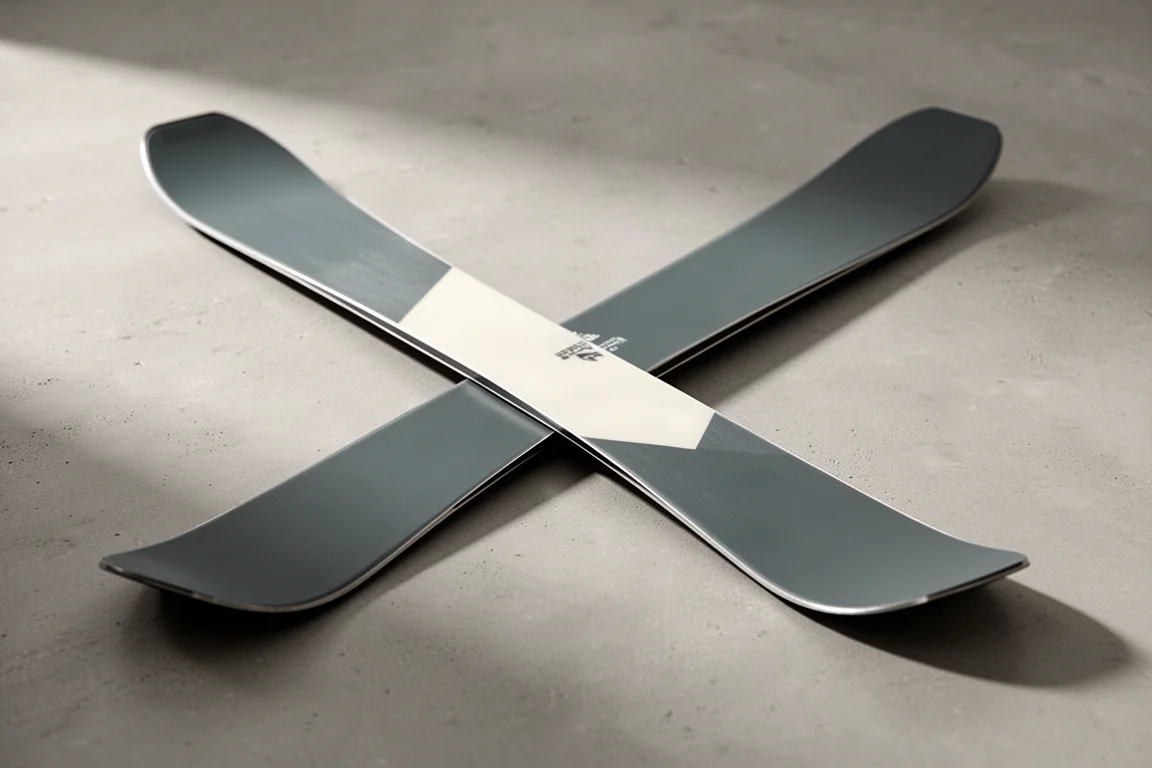
The QST 100 is the most well-rounded ski in this group. At 100 mm underfoot it mixes carving performance, flotation, and maneuverability into a single package, and it does it without any obvious weakness in the middle of the range.
Two details stand out. First, it is an uncommonly good floater for its width, which means you do not need to stretch to a wider ski to handle softer days. Second, it has a lot of energy and feedback through the turn, so it feels responsive rather than vague. It works in trees, moguls, and groomers, and it can take a touring binding if you want the option.
It is not a park ski, and it will not carve like a dedicated frontside model. For a place with frequent small storms, mixed snow, and a share of firm days, though, it is the most sensible single-ski choice.
The All-Mountain Carver: Blizzard Rustler 9
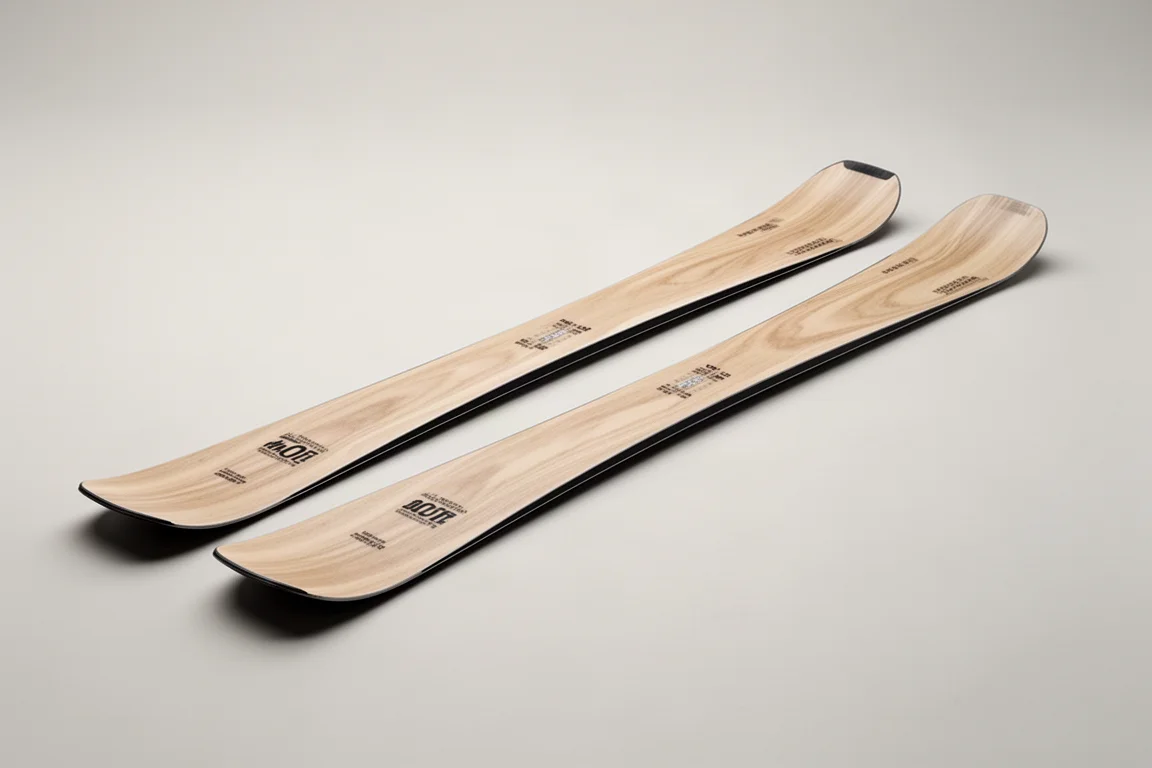
The Rustler 9 is an exceptionally versatile all-mountain ski, and its standout trait is how well it carves. It holds an edge far better than its category suggests, while staying slashy and loose enough to be fun in the trees.
That balance makes it a strong everyday choice for anyone who splits time between groomers and off-piste terrain. It is not as strong in the park as a dedicated freestyle ski, but it can handle occasional park laps without complaint. In a 180 cm length it is stronger than a longer freeride ski, so it satisfies the same stability requirements in a shorter, quicker package.
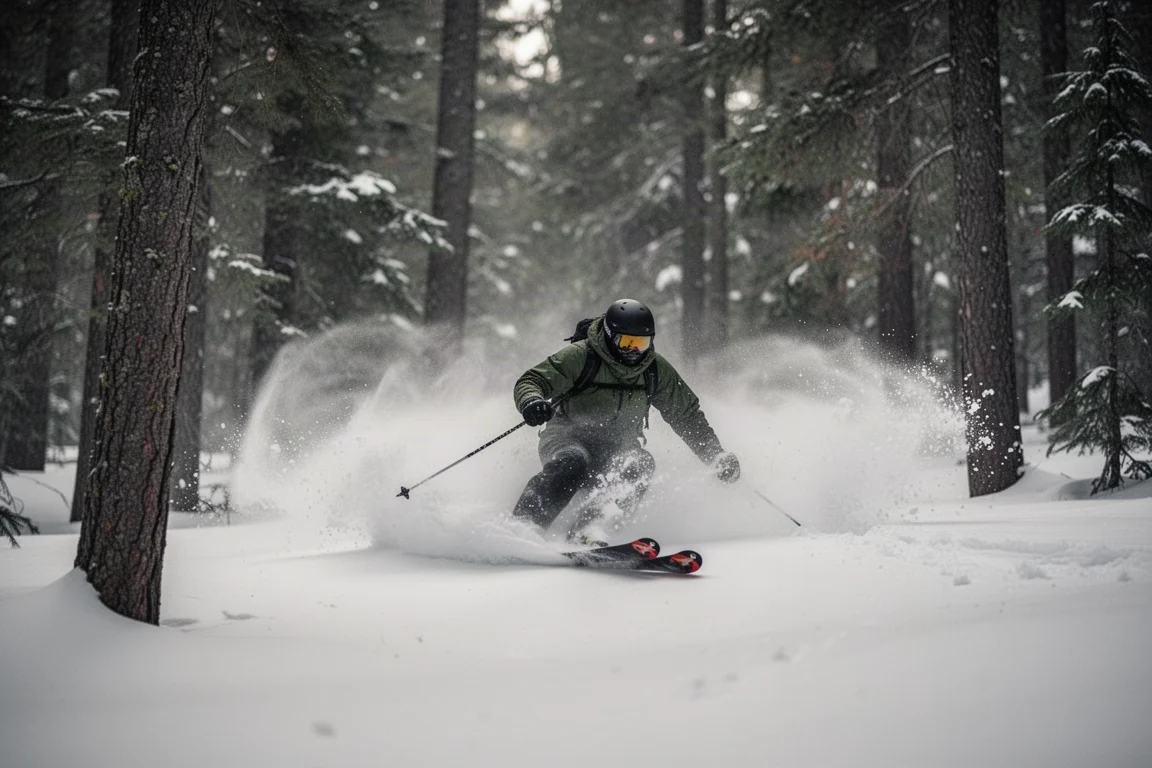
For a two-ski quiver, pairing it with a wider powder ski covers most of the mountain most of the time.
View more details for Blizzard Rustler 9
The Park and Freestyle Pick: Rossignol Sender Free 100
The Sender Free 100 is an extremely well-rounded 100 mm ski that leans chargy and fun. It handles freeride and all-mountain terrain, and it is trustworthy enough in the park to be a genuine option for skiers who spend a meaningful amount of time hitting features.
It is available in a 184 cm length, which adds stability and power for skiers who want to ski fast. The compromises are predictable: it is not as good on firm snow as a carving-focused all-mountain ski, and it is not as playful in the park as a dedicated park model. As a one-ski solution for someone who still wants park performance, though, it is hard to argue with.
The Powder Ski: Blizzard Canvas 108
The Canvas 108 is a 108 mm powder ski that is light, maneuverable, and extremely floaty. In a 180 cm length it stays agile rather than cumbersome, which is what makes a ski this wide genuinely usable in a quiver rather than a novelty.
It is the ski to grab when there is real fresh snow, roughly six inches or more. It is maneuverable enough to work through trees and soft chop, and it floats well enough that you are not hitting the bottom. Below those conditions, a 100 mm all-mountain ski covers the same terrain with more grip.
View more details for Blizzard Canvas 108
Buying Advice: Working From Five Skis Down to One
Building the quiver from five down to one is the most useful direction to work in, because it forces you to rank what matters. The fringes go first. A dedicated narrow carver and a dedicated deep-snow ski are the easiest things to drop, because they only shine in a narrow window of conditions.
What remains is the middle. A two-ski quiver built around something in the low 80s and something around 100 mm underfoot is a sensible split for a mixed climate: one ski for firm, groomed days and one for everything softer and more variable.
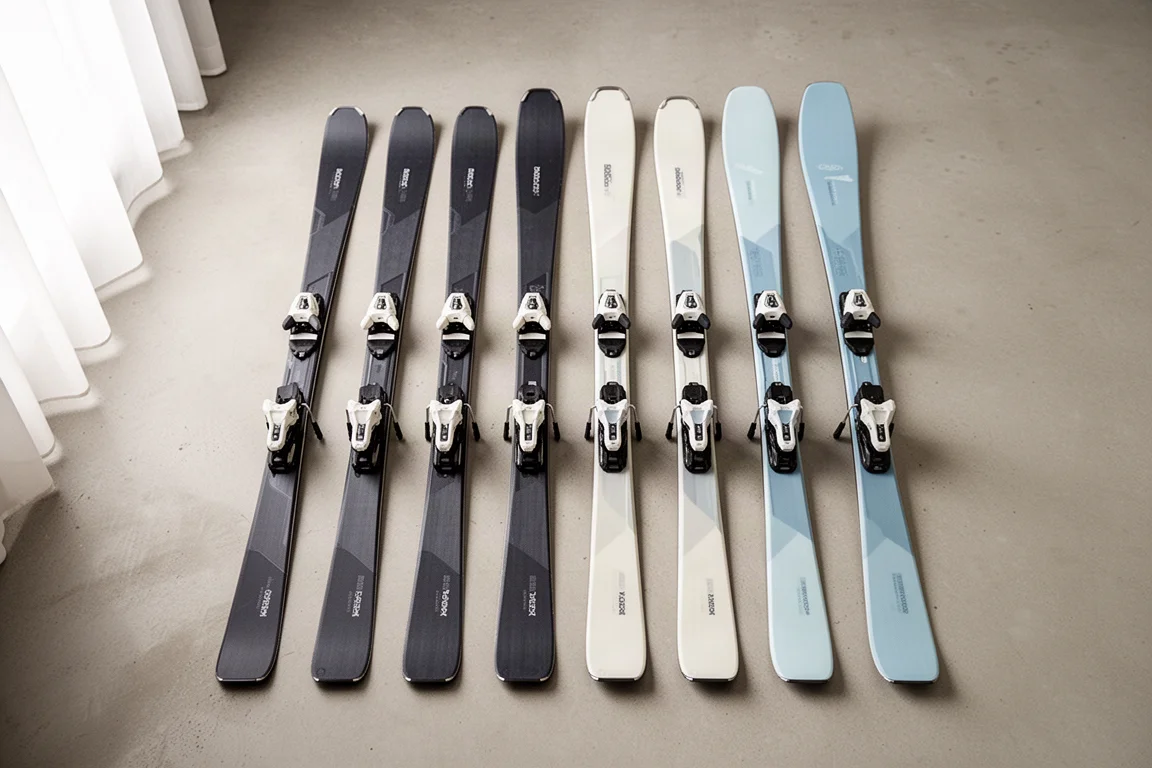
At one ski, the goal is the most middle-of-the-road option you can find. Look for a width around 100 mm, a shape that floats better than its width suggests, and enough energy through the turn that it stays fun on groomers. Accept that it will not carve like a frontside ski and will not float like a powder ski, and you will end up with something you can ski every day of the season without regret.
Conclusion
A quiver is a set of compromises arranged in order of how often you will use them. Five skis let you chase conditions with a specialist at each end. One ski forces you to find the most balanced option and commit to it.
The most useful takeaway is the process rather than the list. Write down the five skis you would own if nothing were off limits, then cut down to four, three, two, and one. The skis that survive the cuts are the ones that actually match where and how you ski.
Further reading
Related Reviews
Ski Gear
2023 Blizzard Hustle vs Rustler: Six Freeride Skis Compared
Blizzard's 2023 Hustle collection rebuilds the Rustler shape with a lighter core and no metal. Here is how all six skis differ, and which one suits your riding.
Ski Gear
2023 Skis of the Year: Atomic Maverick 88 TI, Salomon QST 106, and Look SPX 12 Pro
Three standout ski picks for all-mountain carving, powder days, and reliable binding performance, with practical buying notes for 2023 models.
Ski Gear
2025 Nordica Enforcer 104 Review: A Directional Charger Replaces the 104 Free
The 2025 Nordica Enforcer 104 drops the Free name and the twin-tip personality, gaining weight, stiffness and composure in rough snow. Here is what changed and who it suits.