Triathlon Gear
How Fast Is Modern Triathlon Gear? Four Products Compared
A head-to-head comparison of modern triathlon gear against 1980s equipment, with measured differences in bike speed and running economy and what each product is worth.
Introduction
The first triathlons staged in the UK in the early 1980s were raced on equipment that would look almost unrecognisable today. Wetsuits were not permitted at all in 1983, and by 1986 their use had become the sport’s first major controversy, with one camp arguing that wetsuits eroded the very essence of the challenge and another arguing that freezing swim legs would deter newcomers and hold the sport back.
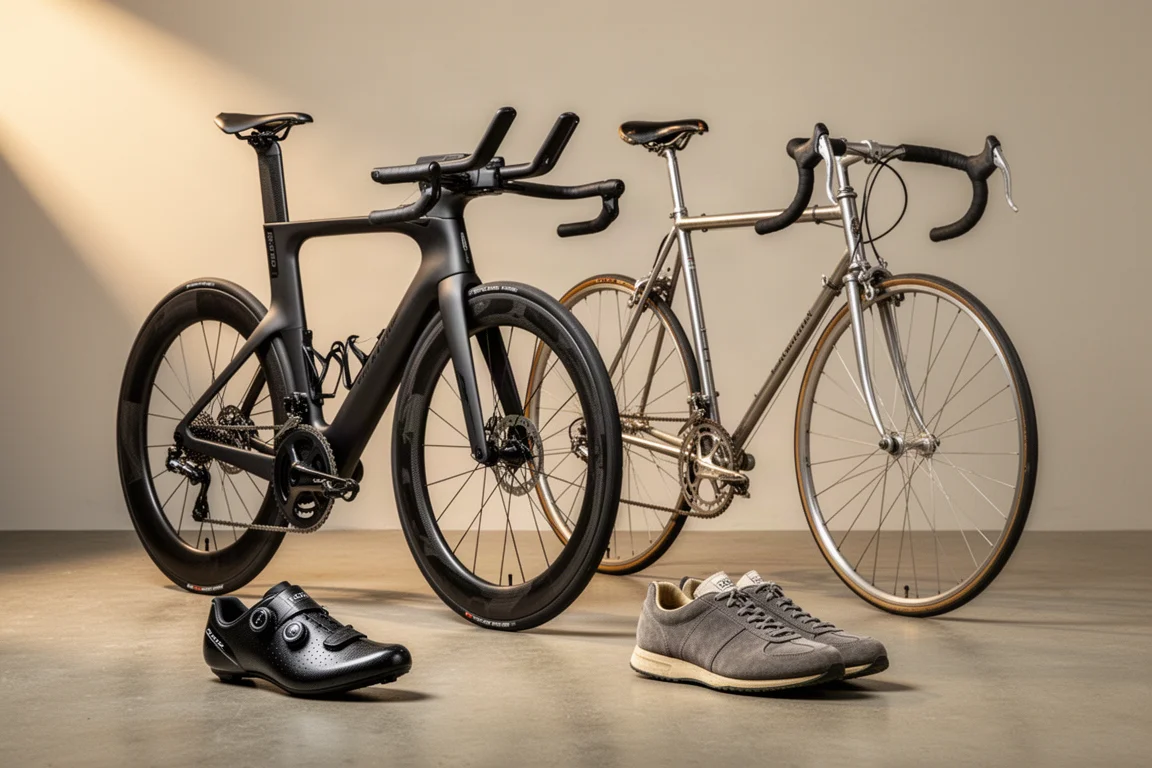
That history raises a practical question for anyone spending money on gear today: how much of the speed in modern triathlon actually comes from the equipment, and how much from better training and better athletes? To get a clearer answer, a 1980s steel road bike and a current carbon triathlon bike were compared head to head on a closed criterium-style circuit, and a pair of 1981 running shoes was measured against a modern carbon-plated racing shoe in a running economy test.
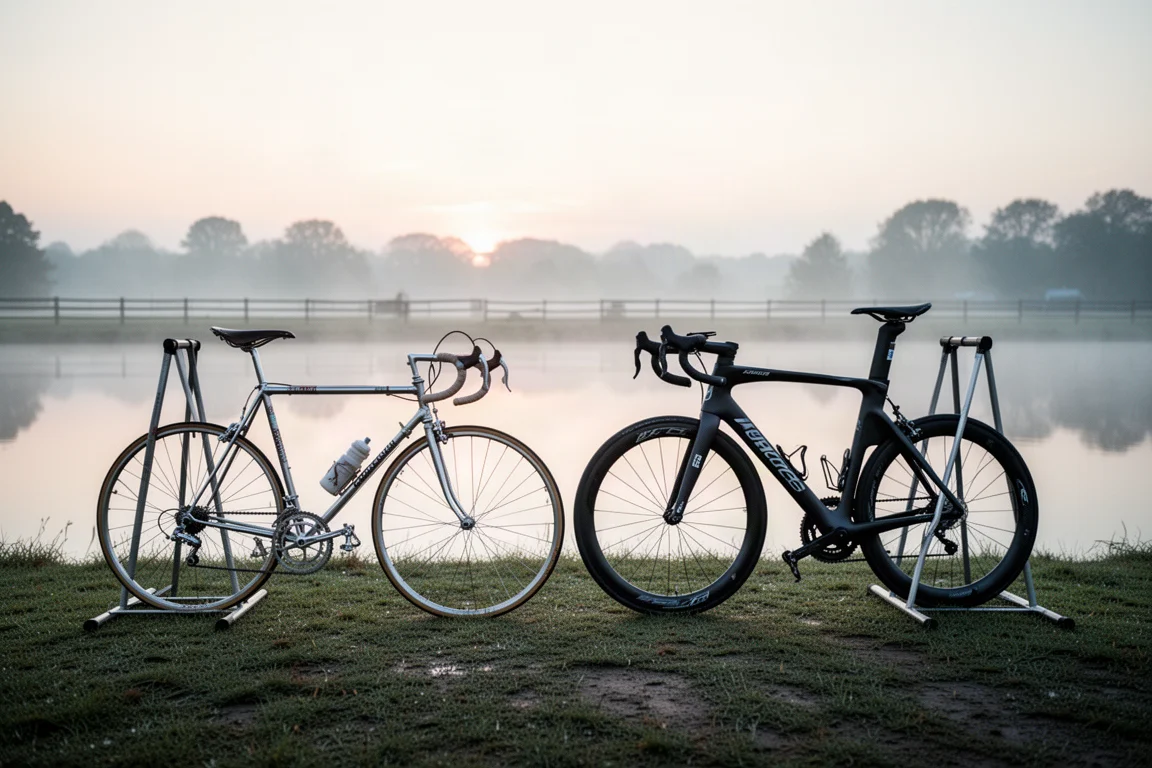
The short answer is that modern gear is measurably faster, and the gap is wide enough to matter over a full-distance race rather than only on a stopwatch in a laboratory.
What We Compared and How
On the bike side, the comparison paired a Raleigh Banana team bike with a Canyon Speedmax CFR. The Raleigh runs a steel frame and a six-speed gearset, with no aero bars and standard wheels. The Canyon uses a carbon fibre frame, DT Swiss ARC 1100 wheels in a 64 mm front and 80 mm rear configuration, an 11-speed Ultegra Di2 groupset and integrated Canyon aero bars.
To keep the comparison honest, the same power-meter pedals were fitted to both bikes, and the same shoes and helmet were used for each run. The plan was straightforward: ride four laps of the circuit as hard as possible and compare heart rate, power and elapsed time. Holding identical power on both machines turned out to be impossible, because the fit and position on the older bike demanded far more effort for the same output, so the test became a full-effort run on each bike instead.
For the shoes, a sports science laboratory measured running economy, which is the amount of oxygen required to run a given distance. Each shoe was tested at 12 km/h and 16 km/h, giving four runs in total. Lower economy scores are better, because they mean less oxygen is used to cover the same kilometre.
Canyon Speedmax CFR: Modern Triathlon Bike
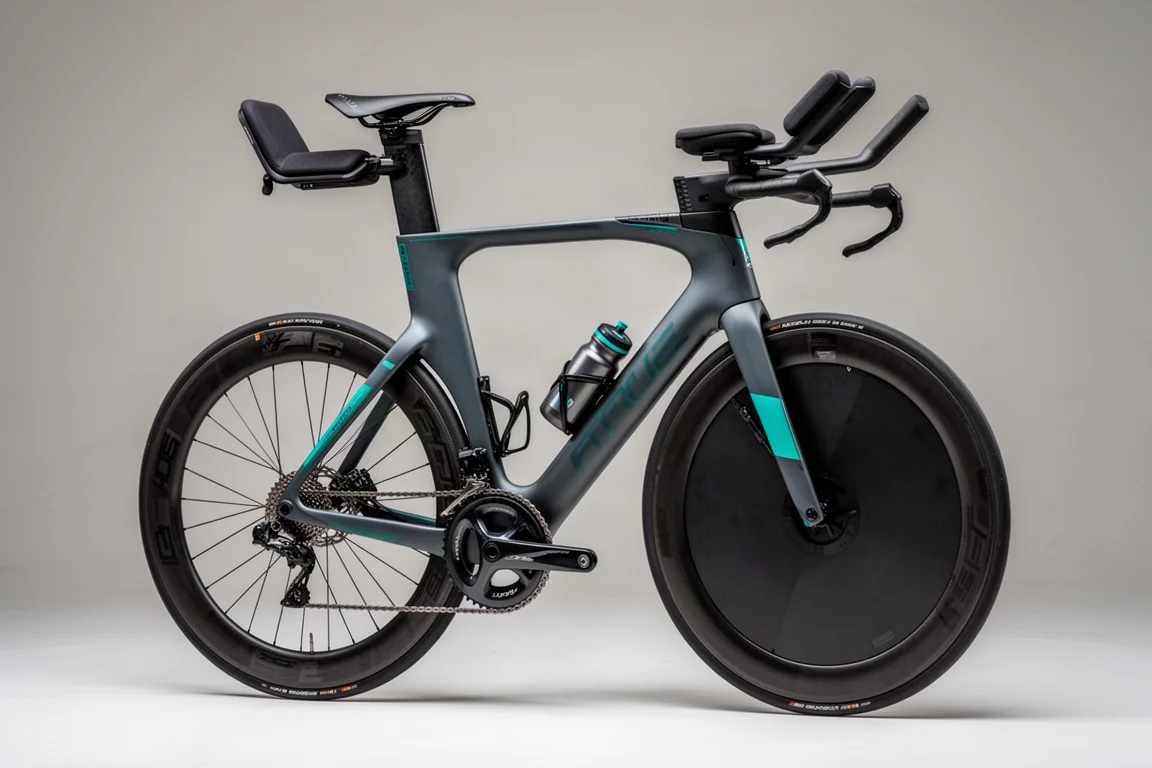
The Canyon Speedmax CFR is a current-generation carbon triathlon machine, and the spec list reflects that. A carbon fibre frame carries DT Swiss ARC 1100 wheels, 64 mm deep at the front and 80 mm at the rear, a Shimano Ultegra Di2 11-speed groupset, and integrated aero bar extensions built into the cockpit.
Over the 6 km circuit, the Canyon completed four laps in 9 minutes 7 seconds, an average speed of 39 km/h at an average power of 342 watts and a peak of 550 watts. Those are strong numbers, and they came with a riding position that made it possible to keep pushing hard for the whole effort.
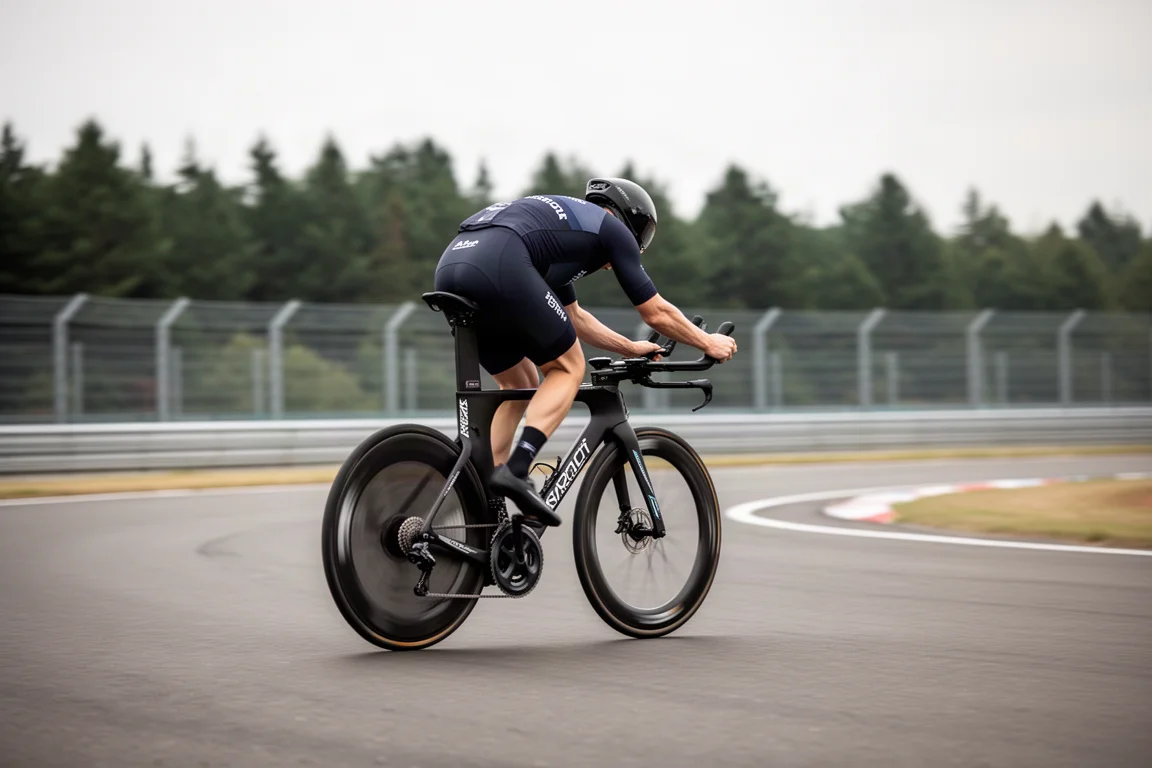
The most telling figure is the gap to the older bike. The Canyon was 48 seconds quicker over just 6 km, which the test team projected as roughly 24 minutes over an Ironman-distance ride. That is a striking margin for a single equipment change, and it comes from aerodynamics, drivetrain efficiency and a position that lets a rider actually use their power.
Raleigh Banana: The Retro Racer
The Raleigh Banana is a genuine classic, and it still looks the part. Its steel frame is paired with a six-speed gearset, wheels fitted simply to get it rolling, and no aero bars at all. Judged purely as a machine, it is handsome. Judged against a modern triathlon bike, it is working with a very different set of constraints.
On the same circuit, the Raleigh was 48 seconds slower than the Canyon, but the reason is more interesting than the time itself. Average power was only 238 watts, roughly 100 watts lower, while heart rate was almost identical across both runs. The limitation was not effort. It was position, fit, and how much the rider trusted the gears and the brakes.
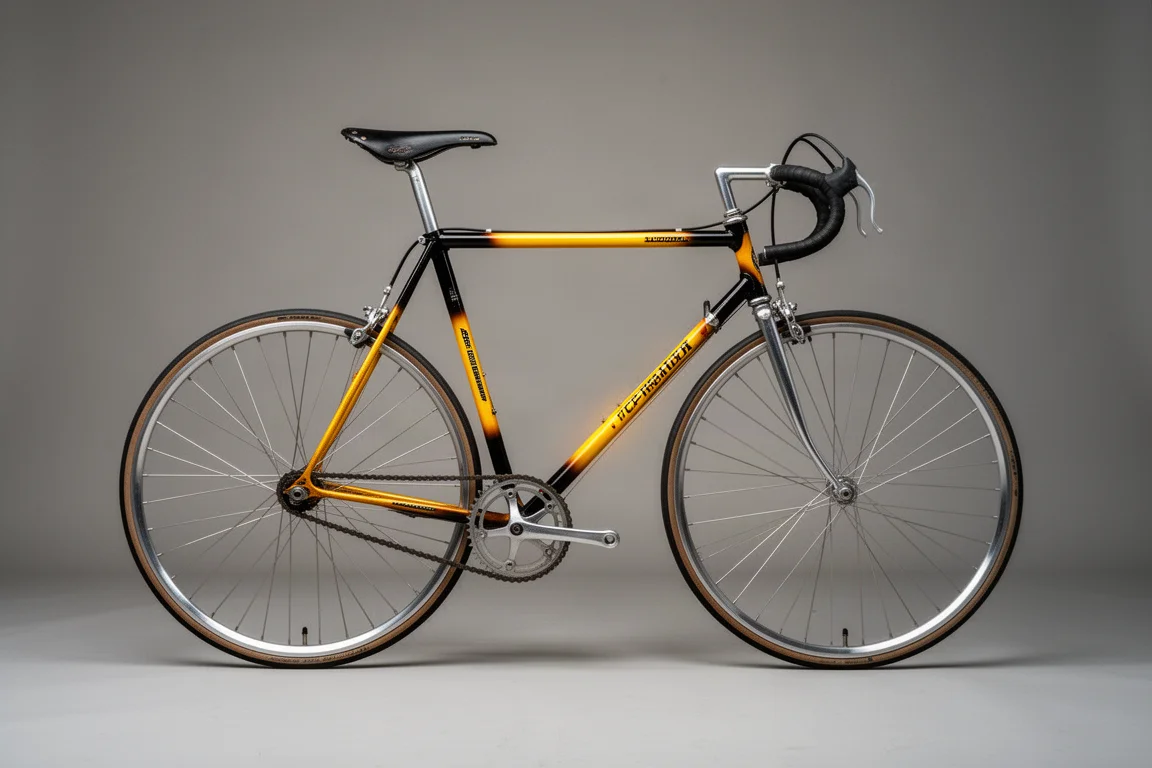
That 48-second deficit over 6 km is what projects to around 24 minutes across an Ironman-distance ride. It is a fair reflection of how much modern bike design contributes to what riders see on a results sheet.
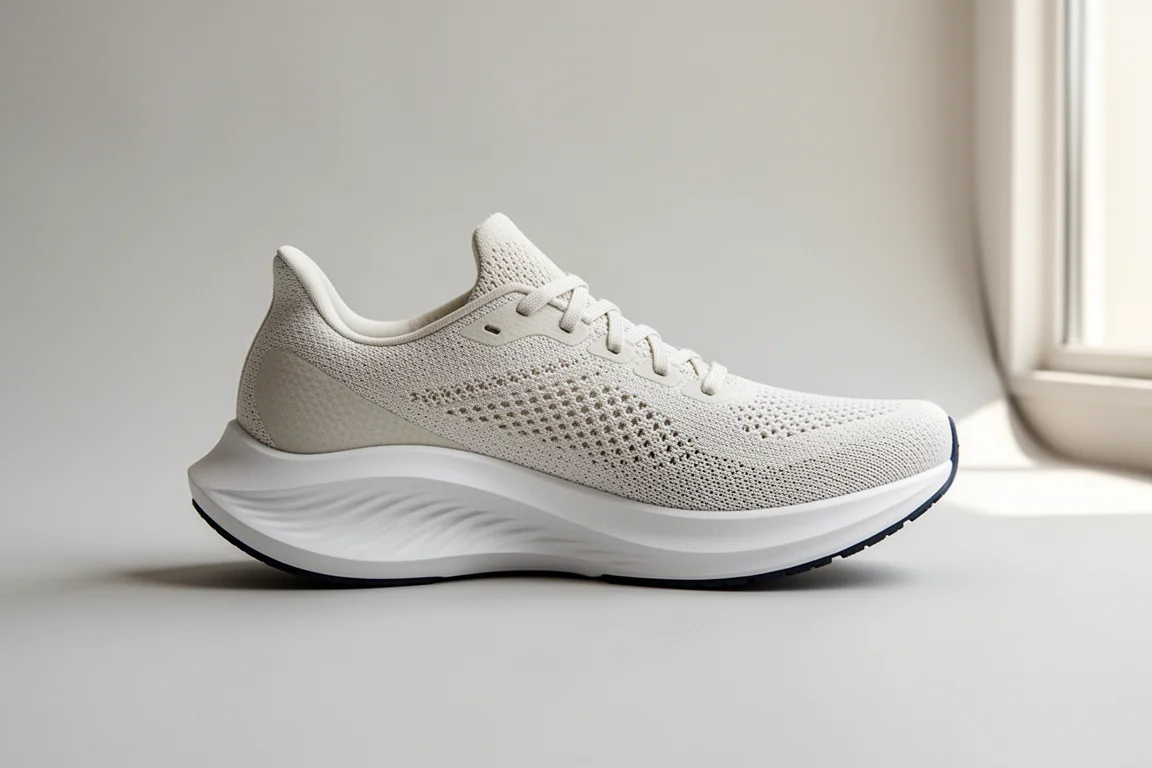
On Cloudboom Echo 3: Modern Running Shoe
The On Cloudboom Echo 3 is a top-tier racing shoe. It uses an extremely lightweight upper, with a claimed weight of 211 g for a UK size 7, and a full-length carbon plate sandwiched between two layers of PEBX foam. The combination is designed to return energy and hold form at speed.
In the laboratory, the Echo 3 recorded economy scores of 201 at 12 km/h and 205 at 16 km/h. Those numbers land in the range typically associated with elite endurance athletes, who sit around 190 to 200, well ahead of the 215 to 220 bracket that is more typical of recreational runners.
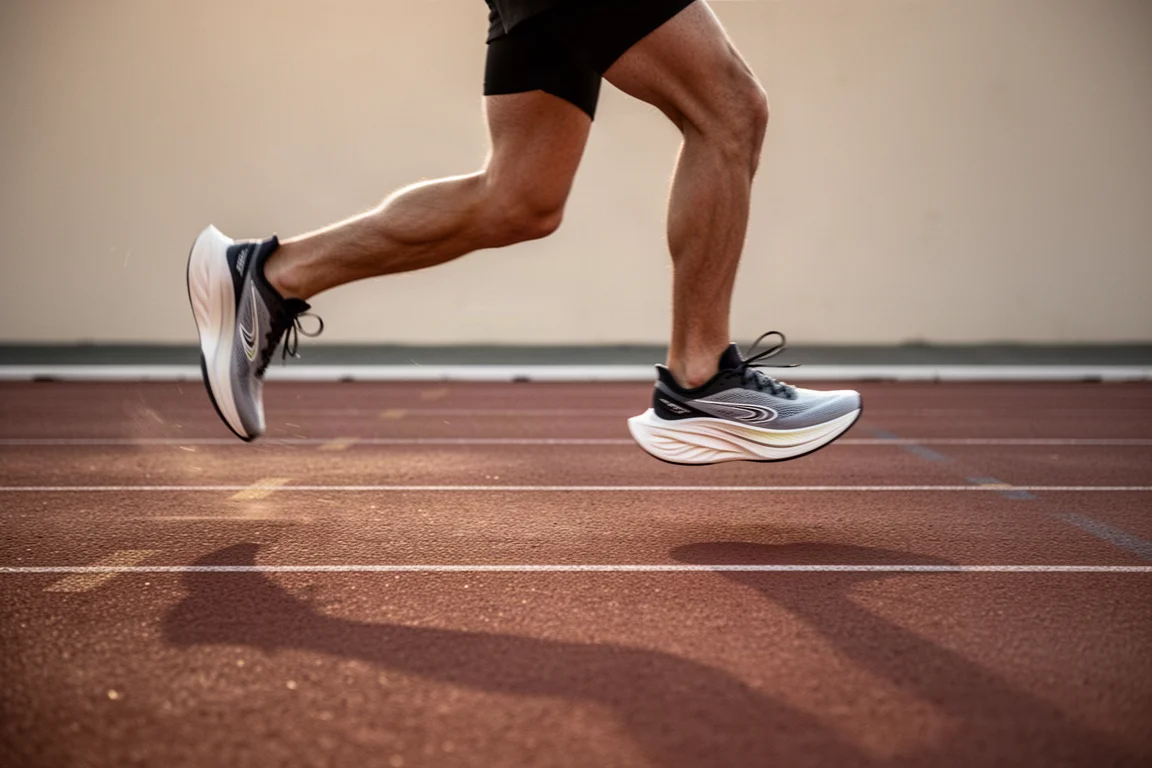
Just as important is how the shoe behaved at the higher speed. At 16 km/h, the effort stayed comfortably under threshold, which is exactly what a racing shoe is supposed to deliver when the pace lifts in the closing stages of a race. A lower economy score at speed is a real advantage, not just a lab curiosity.
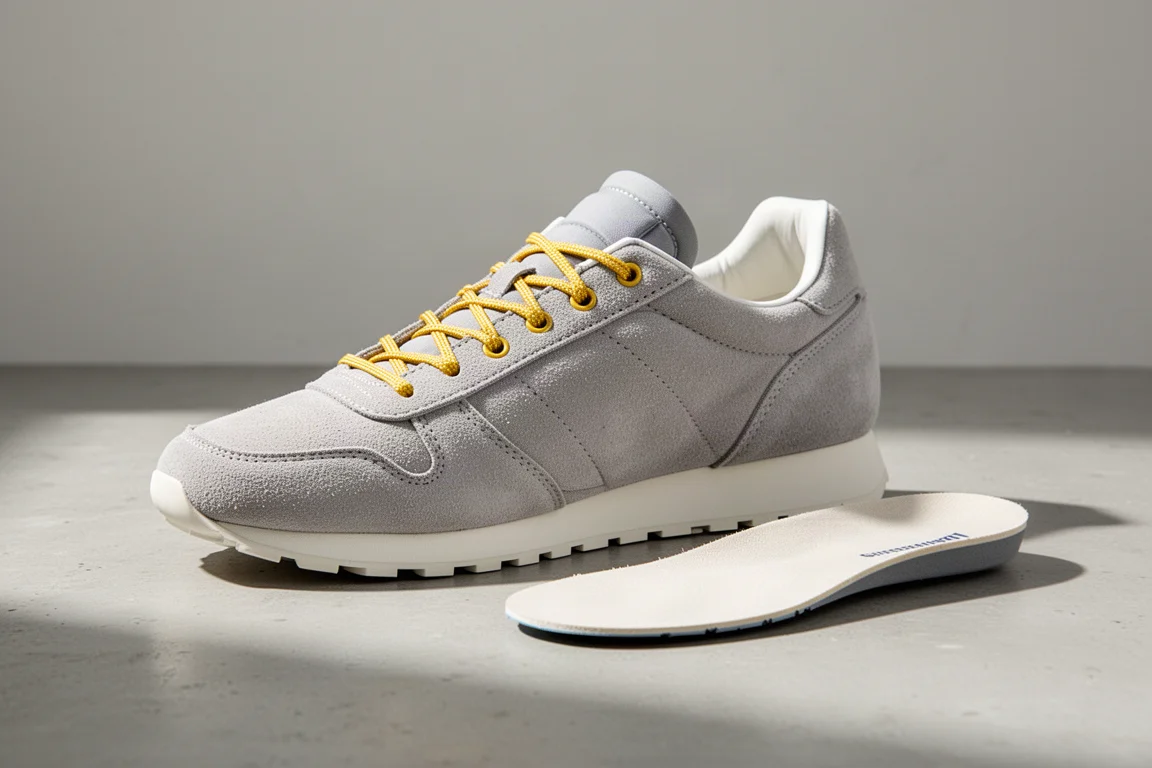
Hi-Tec Silver Shadow: The 1981 Classic
The Hi-Tec Silver Shadow is the shoe that defined the early 1980s running boom. Launched in 1981, it was worn by a staggering 23 percent of competitors at that year’s London Marathon, making it arguably the best running shoe money could buy at the time.
Its construction reads like a time capsule: a lightweight suede upper, soft cushioning on the collar and tongue, nylon D-rings for the laces, hardware in the outsole and a soft removable EVA insole for additional comfort. Everything about it was aimed at comfort and durability rather than propulsion.
Tested side by side with the modern shoe, the Silver Shadow recorded economy scores of 212 at 12 km/h and 215 at 16 km/h. At 16 km/h, the effort crept above threshold in a way the modern shoe did not, which is the clearest illustration of how far midsole foam and plate technology have come in four decades.
Buying Advice
The measured differences are large enough to inform a purchase. Across the two shoes, the economy gap worked out at roughly five to six percent in favour of the modern pair. For a slower runner, that economy gain can translate fairly closely into a time gain, while faster runners closer to three minutes per kilometre might see two to three percent. In practical terms, that is on the order of one to one and a half minutes over an Olympic-distance run, from changing shoes alone.
On the bike, the 48 seconds saved over 6 km is the headline. Modern frames, deep-section wheels, electronic shifting and, above all, a proper aerodynamic position let a rider put down more power for longer. A retro steel bike is a joy to own and ride, but it will not flatter a race result.
The sensible way to spend is to start with the equipment that produces the largest measurable gain per pound, which in this comparison is the racing shoe. A modern triathlon bike follows if the budget allows and the goal is a competitive time, while vintage gear is best treated as a hobby, a restoration project or a piece of the sport’s history.
Conclusion
Forty years of development have produced a genuine performance gap. The Canyon Speedmax CFR was 48 seconds faster than the Raleigh Banana over just 6 km, and the On Cloudboom Echo 3 delivered a five to six percent running economy advantage over the Hi-Tec Silver Shadow at the same speeds.
None of that diminishes the old gear. The Raleigh Banana and the Silver Shadow are historically significant and still a pleasure to use, and they show exactly where the sport came from. But if the goal is speed on race day, modern equipment is not marketing. It is measurable time.
Further reading
Related Reviews
Triathlon Gear
Two Affordable Triathlon Gear Picks: A Race Suit and a Budget GPS Bike Computer
A short-sleeve trisuit and a budget GPS bike computer: two affordable triathlon upgrades with clear use cases, real strengths, and trade-offs to weigh first.
Triathlon Gear
Best Triathlon Tech from Kona 2024: 11 Standout Gear Picks
A roundup of the most interesting triathlon gear spotted at the Kona 2024 Expo, from prototype bikes to smart goggles and recovery boots.
Triathlon Gear
Christmas Gift Ideas for Triathletes: 10 Practical Picks
A practical gift guide for triathletes, covering swim, bike, run, recovery and stocking fillers that solve real training problems.