Camping Gear
Hot Tent Camping Gear: A Budget Four-Season Tent and Three Portable Heaters
A practical look at one budget four-season hot tent and three portable heaters, and how to match heat output to the shelter you actually sleep in.
Introduction
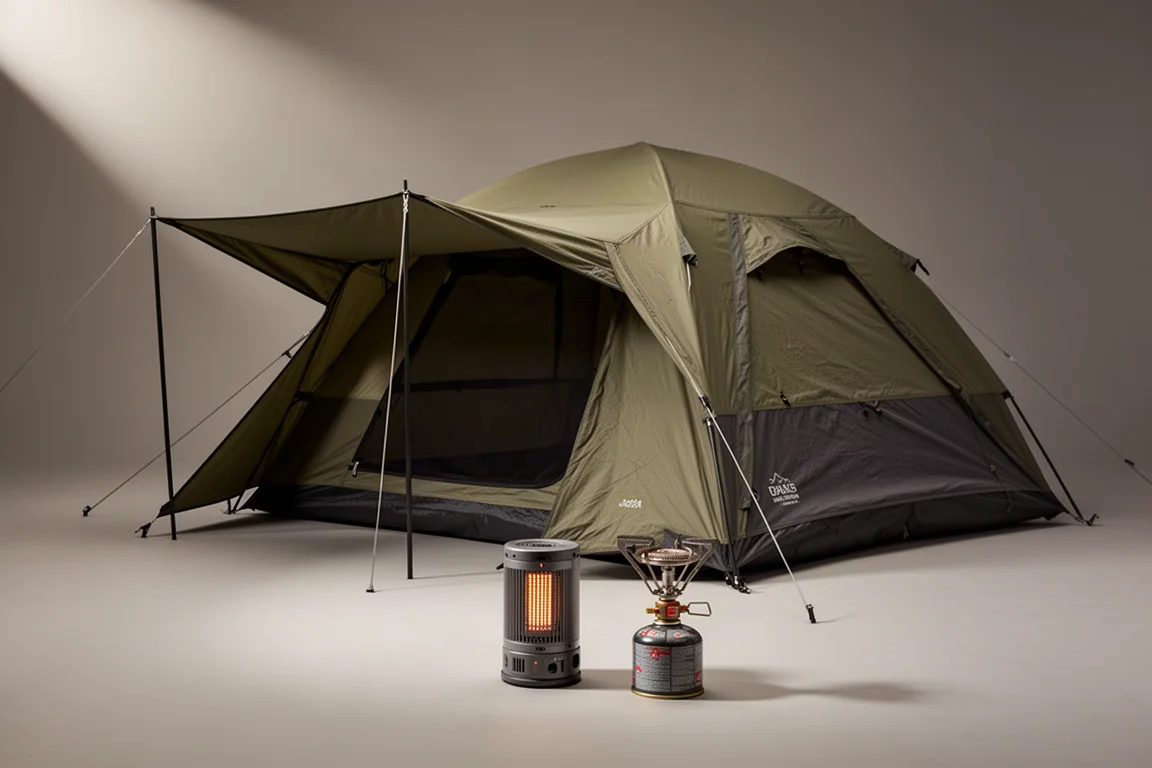
Hot tent camping does not require a wood stove. A large four-season tent with a stove jack, a portable gas heater, and a clear ventilation plan can turn a wet, near-freezing night into a comfortable one. The catch is that not every heater behaves the same way inside a tent, and the difference between a good night and a frustrating one usually comes down to how the heat moves once it leaves the unit.
This roundup covers one tent and three portable heaters, based on a wet, windy overnight trip in the low 40s Fahrenheit with rain, hail and a severe thunderstorm. The tent held up better than its price suggests. The heaters were far less consistent, and one of them is difficult to recommend at all.
How to Evaluate a Hot Tent Setup
Before looking at individual products, it helps to know what actually matters when you are heating a fabric shelter in cold weather.
Volume is the first variable. A heater that comfortably warms a two-person backpacking tent will feel almost irrelevant inside a large four-season shelter, and a heater sized for a big tent will be overpowered in a small one. Wind is the second. Any open flame or radiant heater is affected by airflow, and inside a tent even a modest breeze can push heat into a corner, straight up toward the roof, or out through an open door. Openings matter too: doors, vents and an extended awning all change how much warm air stays where you want it.
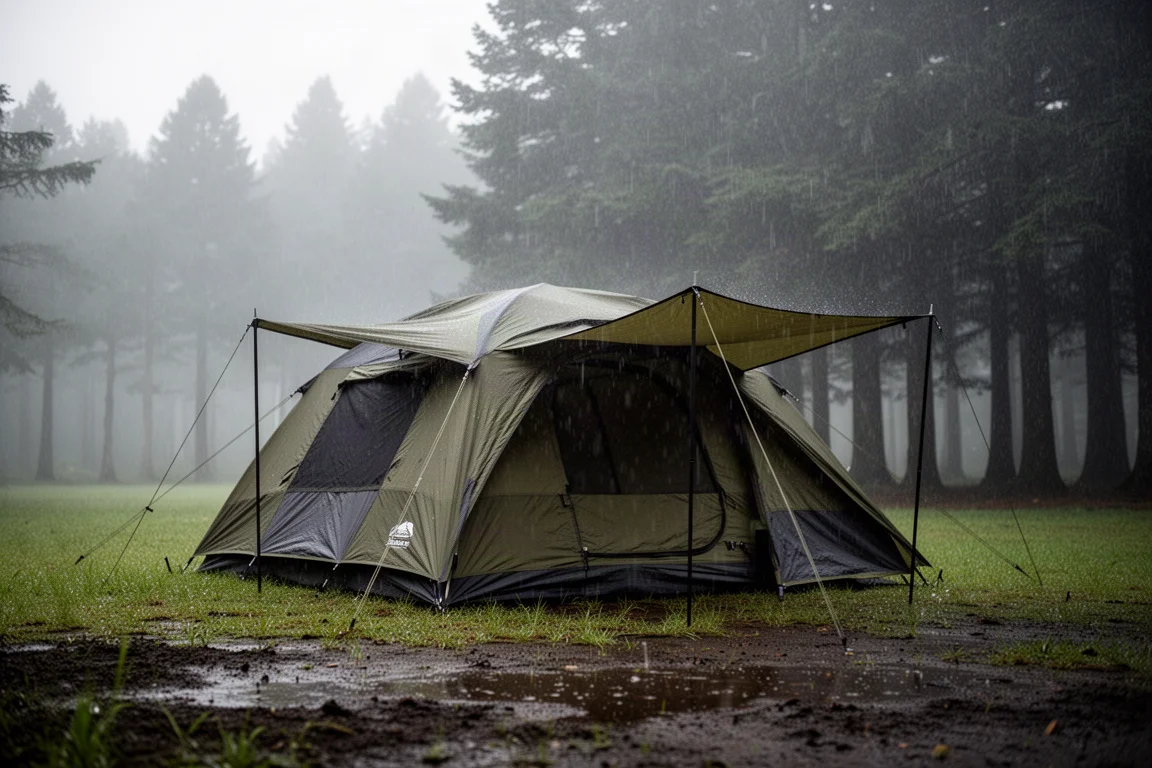
Two smaller details are worth planning for. A ground sheet reduces the moisture rising from wet grass, which in turn reduces condensation on the inner walls once the temperature drops. And if you intend to leave an awning open for the view, position the tent so that opening faces away from the prevailing wind, then add a tarp over the top so rain does not pool on the awning and pour inside.
Naturehike Massif: A Budget Four-Season Hot Tent
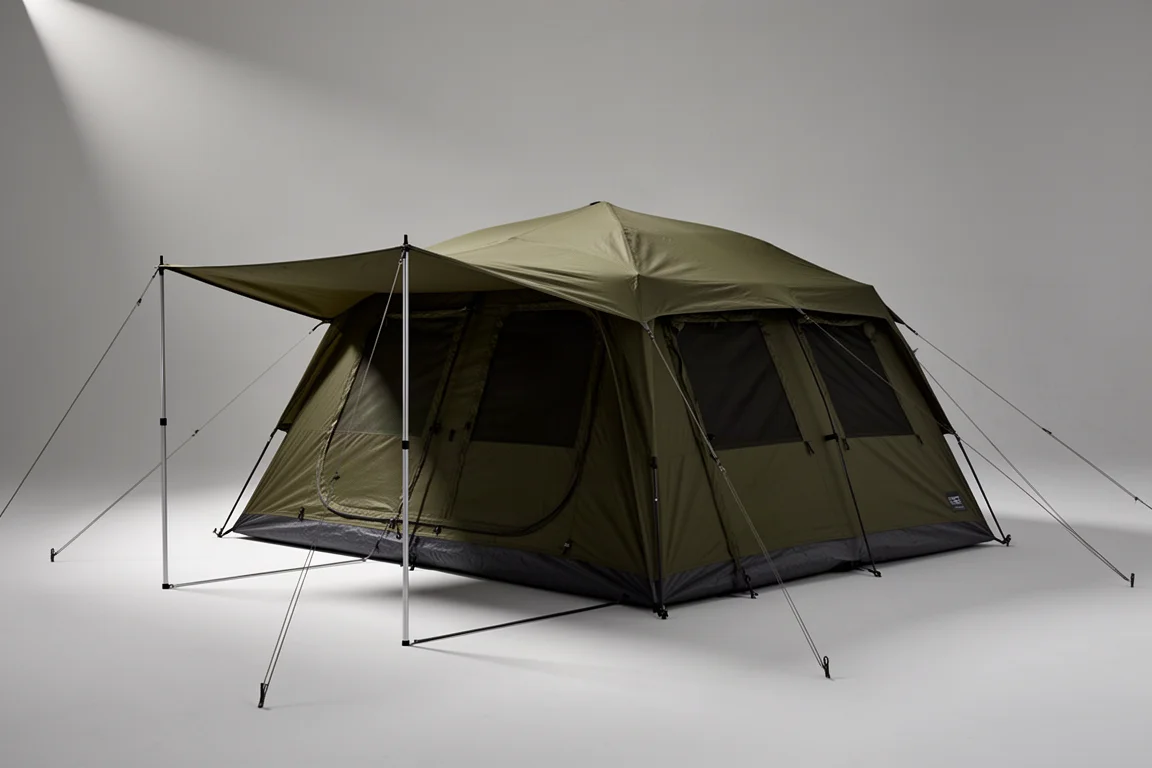
The Naturehike Massif is the headline product here, and the value proposition is genuinely unusual. It is a four-season tent with a stove jack, three doors, and a removable bug inner, and it sells for around $250 direct. The same tent is listed on Amazon for roughly $300, which buys a little more peace of mind on returns and shipping.
Size is the first thing you notice. This is a very large shelter for the money, and it has enough interior height and floor area to stand, move around and store gear without feeling cramped. The stove jack means it can be run as a proper hot tent with a wood stove in colder conditions, and the removable bug inner makes it usable in warmer months as well.
Weather performance was strong. During setup in steady rain, the interior stayed dry, and it remained waterproof through the first hours of the storm. During the most intense part of the thunderstorm, one vent produced a single small drip. Later, after a long night, water appeared at the vents on both sides, though not enough to make it into the living area. Vent leaks are common across tent designs and are easily solved with seam sealant, which is a reasonable fix at this price. On a tent costing several times more, the same drip would be a real complaint. At $250 to $300, it is a minor issue, and further rain testing without a tarp is the sensible next step.
For the money, this is the strongest budget four-season hot tent option available, and it outperforms other budget four-season designs by a wide margin. The one caveat is that you should budget a little time for seam sealing the vents before relying on it in sustained rain.
Kovea Cupid: The Heater That Earned Its Place
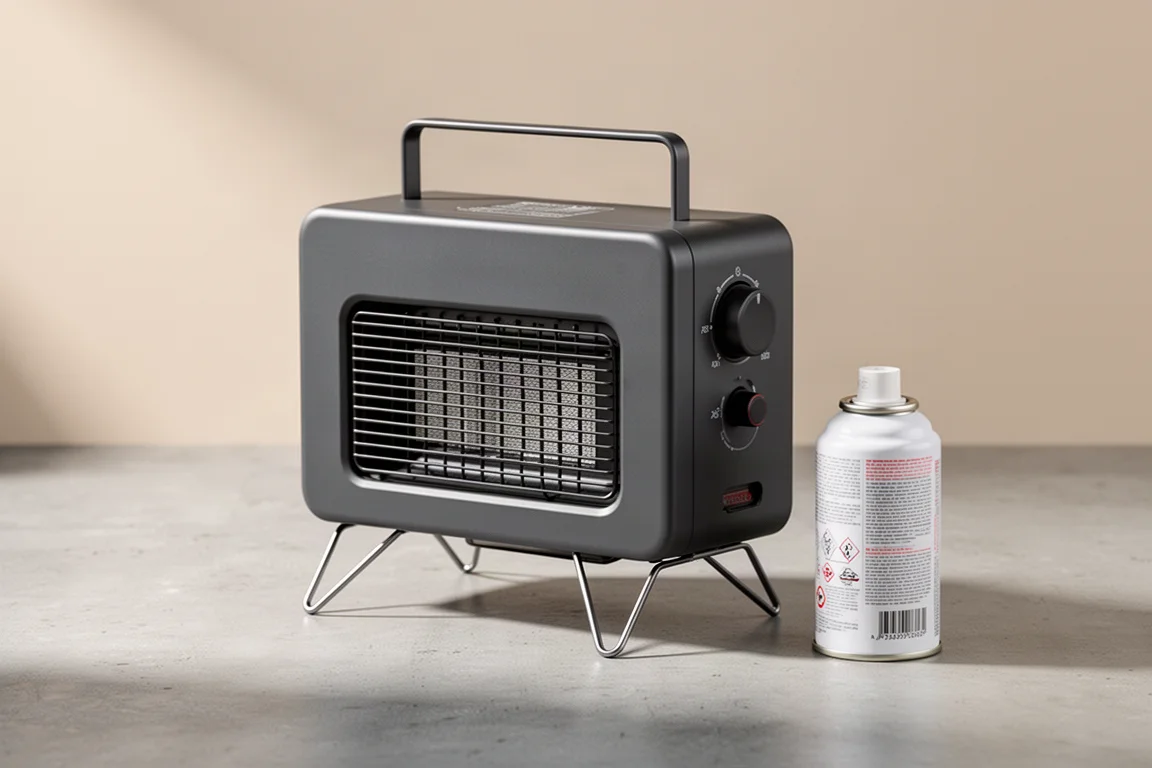
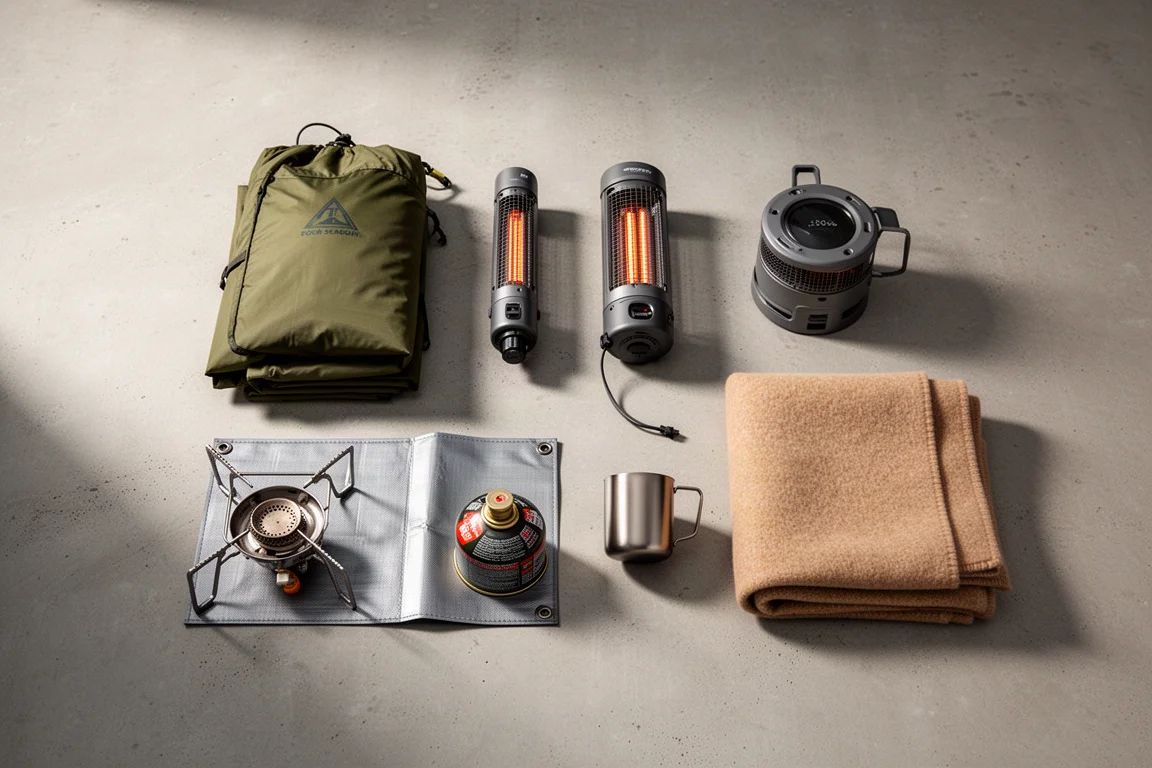
If the goal is simply to stay warm inside a large tent, the Kovea Cupid is the product that delivers. It is a portable indoor heater, and inside a tent of this size it raised the interior to roughly 75 degrees Fahrenheit while the outside temperature sat in the low 40s. That is a substantial temperature gap, and it was enough to make the tent genuinely comfortable rather than merely survivable.
The output is strong for its size. In a shelter this large, most small heaters struggle to make a noticeable difference, and the Cupid did not. It also works well in a vehicle, which makes it useful beyond tent camping. Ventilation remains essential: the door was left cracked and a large section of the second door stayed open throughout, so there was continuous airflow while the heater ran.
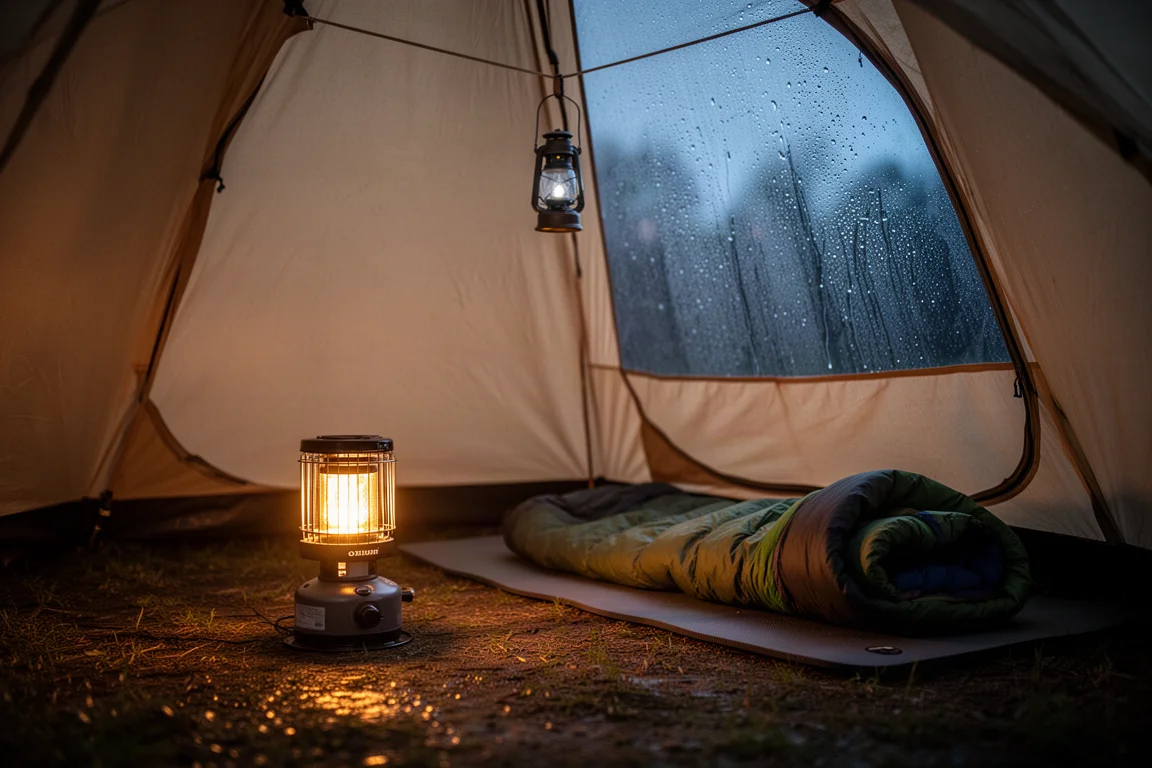
For anyone heating a large tent in near-freezing conditions, this is the heater that makes the setup work. It is also worth noting that a smaller and cheaper shelter paired with a heater like this can achieve the same comfort level for considerably less money.
Fire-Maple Sunflower: Dual Purpose, Mixed Results
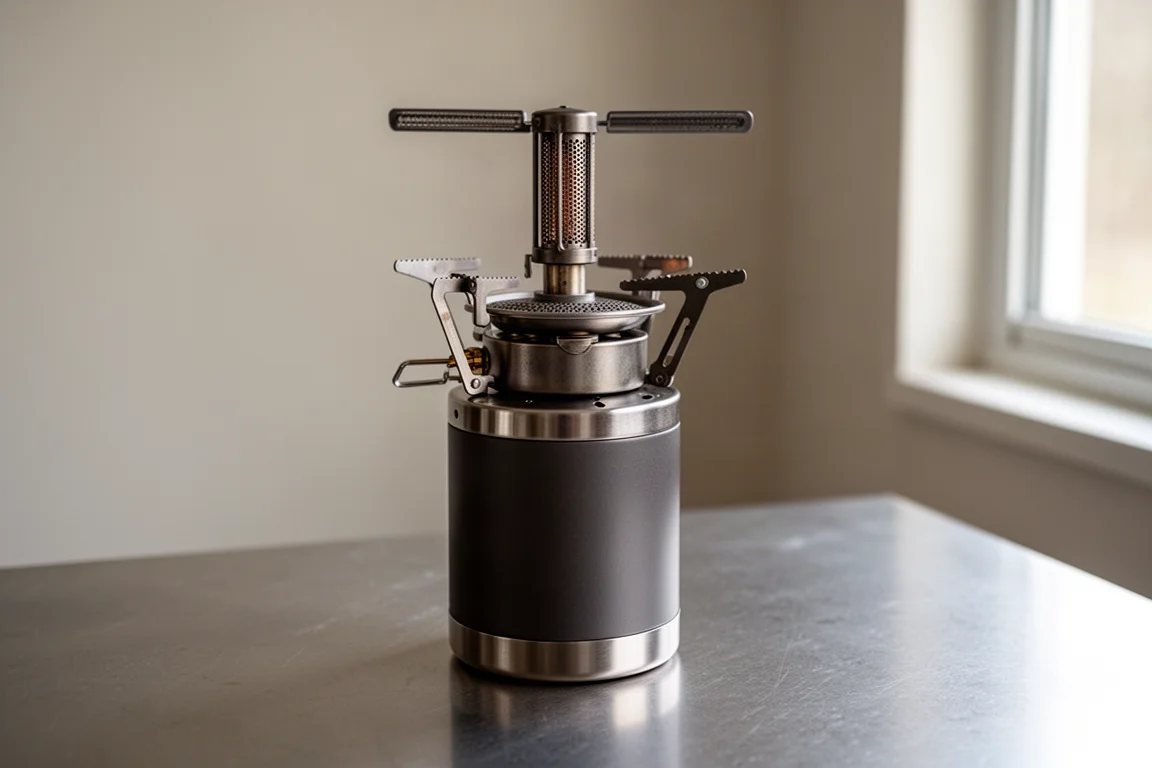
The Fire-Maple Sunflower is marketed as a dual-purpose product: a stove and a heater in one unit. It does boil water and it made a perfectly good cup of coffee, so the stove function is real. The heater function is where it falls apart.
The problem is the shape of the heat. Rather than warming a broad area, the Sunflower produces a narrow column of heat. When the wind is still and pointing the right way, you can feel that column clearly. When the wind shifts, the heat is pushed somewhere else entirely, sometimes straight up, sometimes toward a corner, sometimes straight out of an open door. Inside a tent this is constantly changing, and outdoors it would be even less predictable. There is no useful radiant radius to fall back on.
The unit also offers a poor surface for cooking, which undercuts the appeal of a combined stove and heater. After using it in both roles, this is not a product worth buying for tent heating. If you need a compact gas stove for boiling water, there are better options, and if you need warmth in a tent, the Kovea Cupid is the more sensible purchase.
Mr. Heater Buddy: Plenty of Output, Sometimes Too Much
The Mr. Heater Buddy sits at the opposite end of the scale from the Sunflower. Output is high, and for most tent sizes that output is simply too much. The practical experience is a cycle of switching it on, getting uncomfortably warm, switching it off, cooling down, and switching it on again.
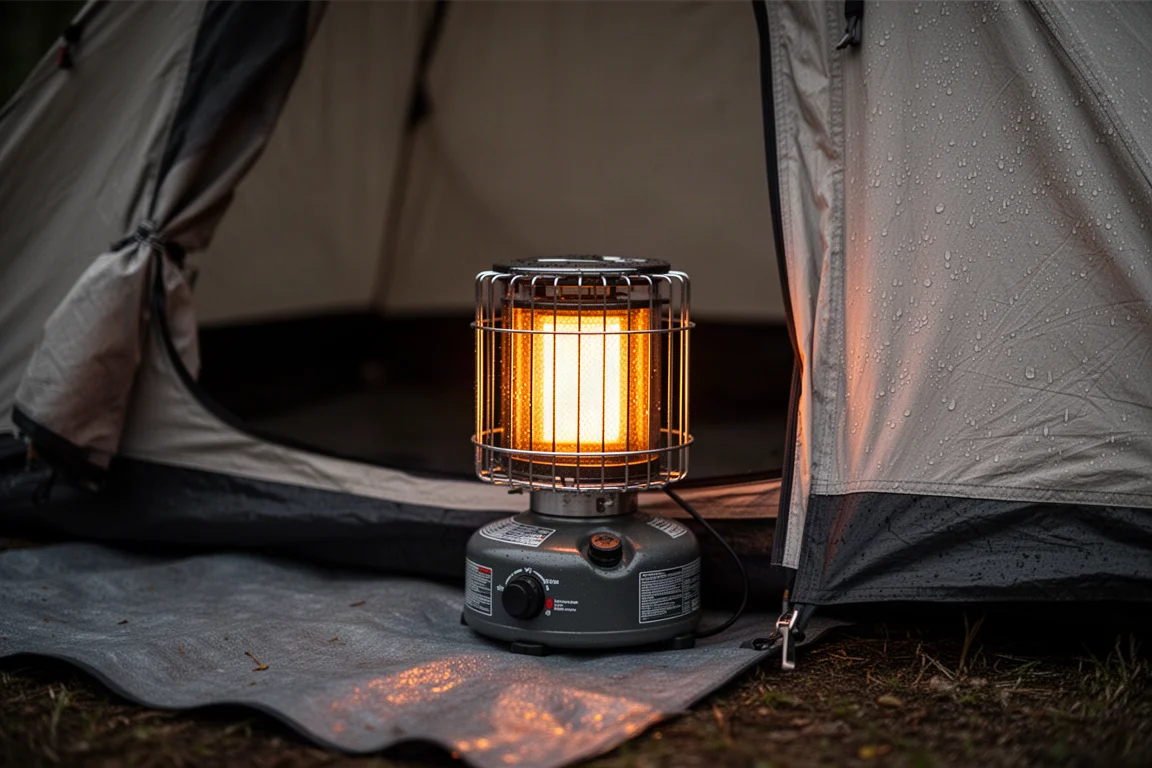
That does not make it a bad heater, but it makes it a heater you need to match to your shelter carefully. In a very large tent during genuinely cold conditions, or in a garage, workshop or other open space, the extra output makes sense. In a typical camping tent, it is more capacity than you can comfortably use.
Ventilation and Safety When Heating a Tent
Any gas heater used inside a fabric shelter needs continuous airflow, without exception. During testing, the tent door was left cracked open and a large section of the second door stayed open for the entire time a heater was running. That is the minimum standard, not an optional extra.
A working carbon monoxide alarm is the other non-negotiable item. If you cannot verify that your alarm is functioning, do not run a gas heater in a closed shelter. Skipping a heater for one cold night is a far better outcome than the alternative. A stove jack and a wood stove remain the safest route for serious cold-weather hot tenting, with portable gas heaters best treated as a convenience for milder conditions and well-ventilated shelters.
Buying Advice: Matching a Heater to Your Shelter
The right choice depends almost entirely on how much volume you are trying to heat and how cold it actually gets.
The Naturehike Massif is the clear pick if you want a large four-season hot tent on a budget, with the understanding that the vent seams may need sealing before a long, wet trip. The Kovea Cupid is the heater to pair with it, since it is the only unit here that reliably warmed a shelter of this size in near-freezing conditions. The Mr. Heater Buddy is worth considering if you need maximum output and can manage the on and off cycling, or if the heater will do double duty in a garage or workshop. The Fire-Maple Sunflower is difficult to justify for heating at all.
It is also worth remembering that the tent is not the only way to build this setup. A large conventional camping tent, a decent sleeping system and a good portable heater will get you most of the comfort for considerably less money. If you plan to run lights, a heated pad or a phone charger through the night, a compact power station makes the whole arrangement easier; a unit that recharges in roughly 40 to 50 minutes keeps the pack light and the downtime short, and it will comfortably run a light through the day plus a heating pad overnight.
Conclusion
The most useful takeaway from this setup is that the tent and the heater have to be sized to each other. A budget four-season hot tent like the Naturehike Massif delivers far more shelter than its price suggests, and the Kovea Cupid delivers the heat to make it liveable. The Mr. Heater Buddy has its place in larger or colder spaces, while the Fire-Maple Sunflower is best skipped if warmth is the goal. Get the pairing right, keep the vents open, and cold-weather camping becomes a genuinely comfortable proposition.
Further reading
Related Reviews
Camping Gear
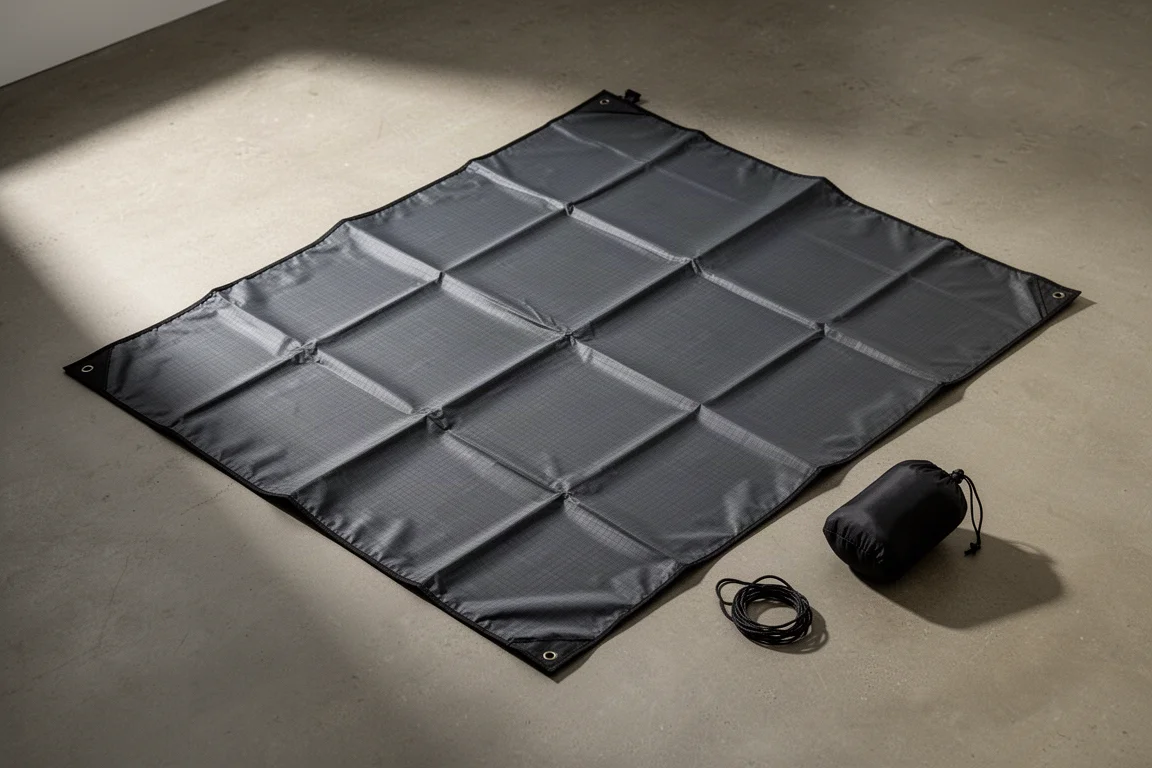
3FUL Ultralight Ground Sheet Review: A Two-Person Footprint Worth Packing
A 6.7 oz two-person ground sheet in ripstop silnylon, priced around $30. Here is what it protects, what it does not do, and who should pack it.
Camping Gear
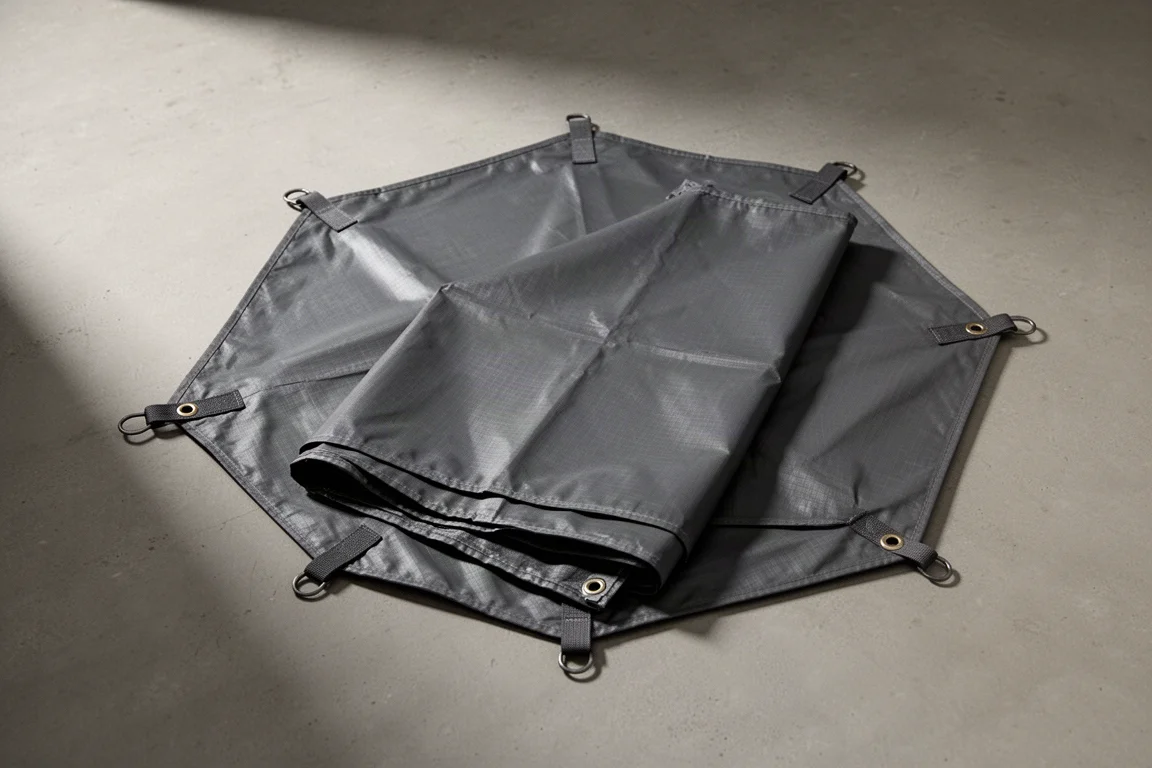
Backcountry Light Dual-Function Tarp and Floor Review: A Footprint First
A dual-purpose tent floor and tarp that keeps falling rain off you, but cannot block wind. Here is where it works and where it does not.
Camping Gear
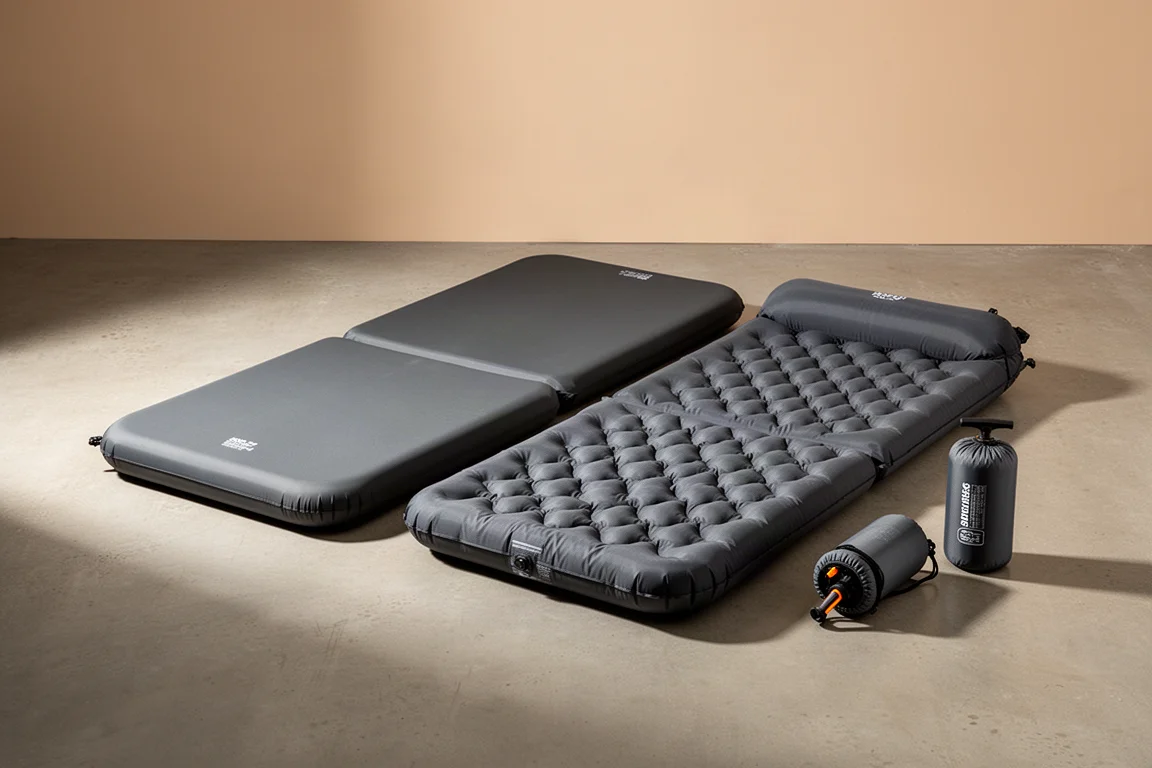
Best 2-Person Camping Mattresses for Couples: 10 Options Compared
A practical comparison of ten two-person camping mattresses, covering self-inflating pads, air pads and air mattresses for couples.