Kitchen
Horl 2 Roller Knife Sharpener Review: Easy Sharpening With a Price to Match
After sharpening more than a dozen knives with the Horl 2, here is a detailed look at how this roller sharpener works, where it excels, and the limitations to weigh before buying.
Introduction
Roller knife sharpeners promise something home cooks have wanted for years: genuinely sharp knives without the learning curve of a whetstone. The Horl 2 is the original and most popular of the bunch, and after using it to sharpen more than 15 knives, from large butcher knives down to small steak and paring knives, the results have been impressive. But it is not perfect, and it is not cheap. This review covers how it works, how well it performs, and the trade-offs you should know about before spending the money.
What Is the Horl 2?
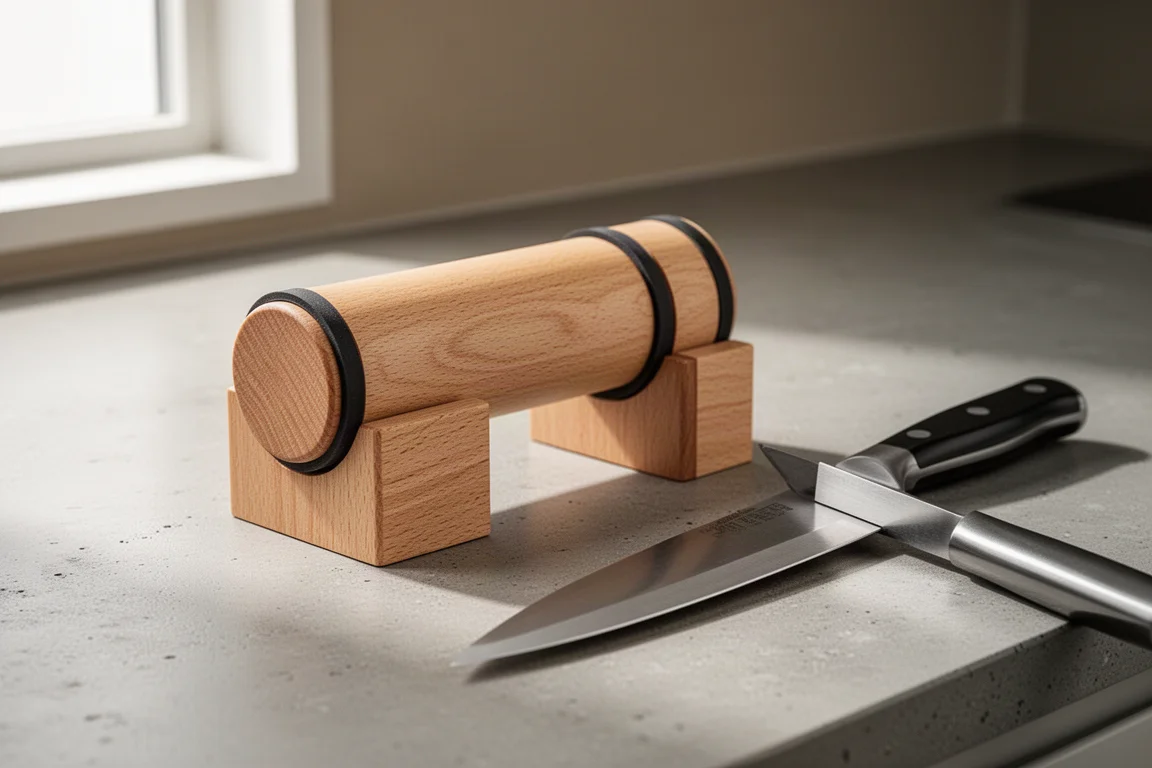
The Horl 2 is a roller-style knife sharpener made in Germany by Horl, the company that originated this design. The body is a wooden barrel available in two finishes, a lighter Oak and a darker Walnut, and it weighs about one pound. It comes with two grinding discs: a 420-grit diamond disc for removing nicks and sharpening, and a 1000-grit ceramic honing disc for refining and finishing the edge.
The system also includes a magnetic angle support that attaches to the side of the knife. It offers two angle options, 20 degrees and 15 degrees, which keeps the edge angle consistent on both sides of the blade every time. Horl also sells a separate Premium Sharpness Set that adds a leather strop for cleaning the edge plus 3000-grit and 6000-grit discs for an even smoother finish. For most home cooks those extras are not necessary, but the discs can be swapped easily by screwing them on and off.
How the Horl 2 Works
Ease of use is the biggest selling point here. You do not need a class, hours of practice, or guesswork about angles, and there is no soaking in water like a whetstone requires. The learning curve is virtually nonexistent.
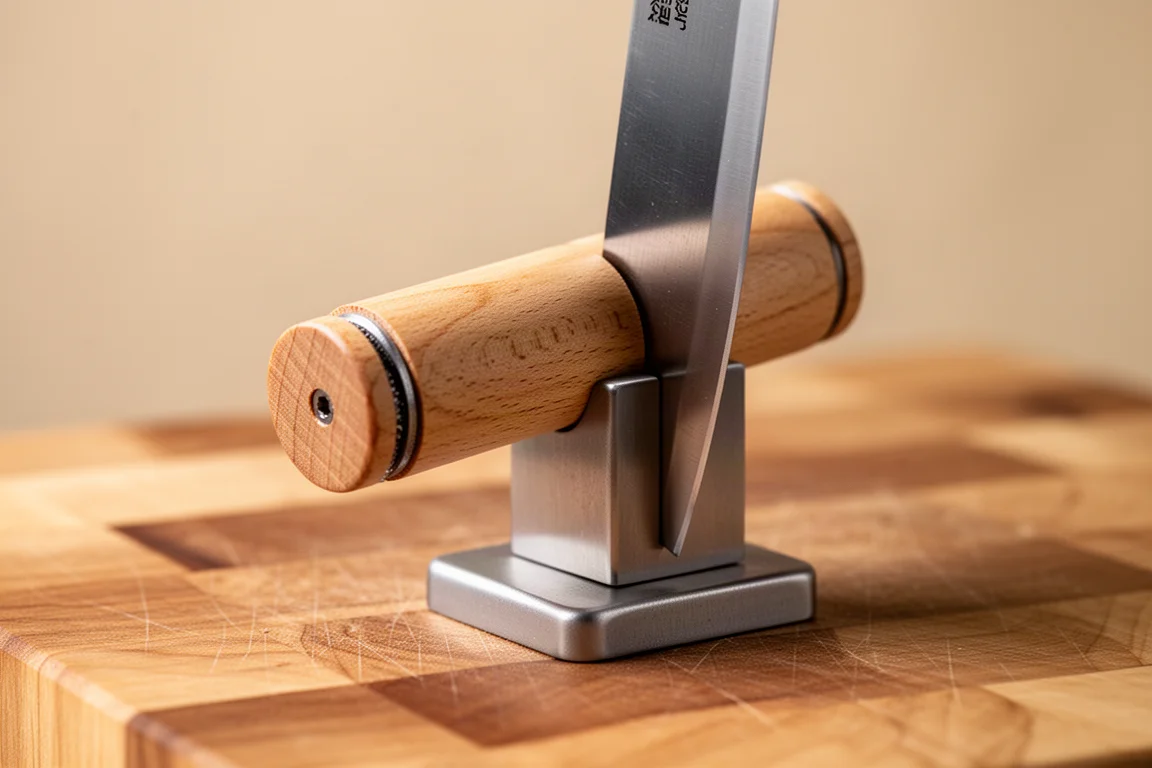
The process is straightforward. First, choose an angle, either 15 or 20 degrees. As a rule of thumb, pick the angle closest to your knife’s factory angle; for example, a knife manufactured with a 15-degree angle per side pairs naturally with the 15-degree side of the magnetic support. Once you have picked the angle, attach the knife with the edge facing up. Then use the roller to gently grind the edge back and forth with the diamond disc. After both sides are ground, switch to the ceramic honing disc to finish each side, and finally remove any remaining particles with a leather strop or cloth.
Timing depends on the angle you want, the type of steel, and the condition of the edge. The first sharpening takes the longest because you are setting the edge, roughly two and a half minutes per side. After that first session, future sharpenings should only need a handful of passes per side.
A few positioning tips help with different knives. For most knives, the spine of the blade sits flat on the cutting board. For steak, paring, and other small knives whose blades are shorter than the height of the magnetic angle support, position the knife higher on the magnet so the edge sticks out. For wide blades that rise higher than the grinding disc, place the knife and the angle support next to a thicker cutting board and roll the sharpener on the cutting board instead.
Sharpening Results
Ease of use means nothing if the edge is not sharp, so the real question is how effective the Horl 2 actually is. Across more than a dozen knives, the results were consistently excellent. Dull knives came back ultra-sharp, and the sharpener also fixed microchips and slightly damaged edges.
One neglected knife that had not been sharpened in over a year had a badly dulled edge with several tiny chips. After a session with the Horl 2, almost all the chips were gone and the edge was smooth. Other frequently used knives, including one with relatively soft steel that needs frequent sharpening, showed a clear before-and-after difference in slicing performance.
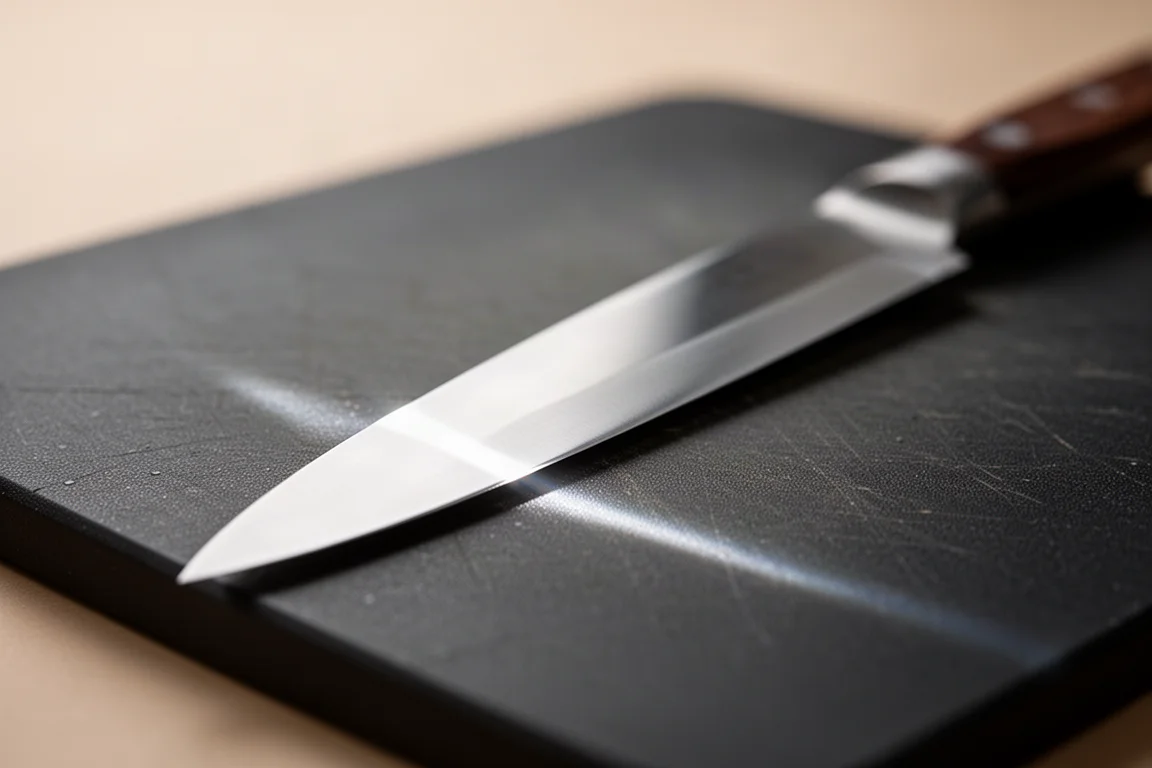
One caution worth knowing: if you sharpen knives with a full bolster, the thick part of the blade near the handle, be careful when rolling back toward the handle. If the diamond disc hits the bolster it will leave a mark. Go slow and stop right before the bolster, and you should not have issues.
There is one design complaint worth flagging. The magnetic angle support is only two and a quarter inches wide, so the end of the knife can bend when rolling toward the tip. This happens often with chef’s knives, which get thinner and more flexible toward the tip. Two solutions help: apply less pressure so the blade does not bend, or sharpen in two steps, doing the first two-thirds of the blade and then moving the magnetic support closer to the tip to sharpen just the tip. It is not ideal, but it works.
Build Quality and Durability
The Horl 2 feels like a premium tool. There are cheaper knockoffs on the market, but Horl is the original, and the quality is obvious the moment you pick it up. At one pound, it feels solid in the hand, spins fast and smooth, and the rubber rings keep it rolling straight without slipping.
The monocrystalline industrial diamonds on the diamond disc are harder than any knife steel, which allows the disc to reshape and grind blades without wearing down. That means you never have to replace the diamond disc. The magnetic angle support has a strong magnet, so the blade will not detach unintentionally, and rubber feet underneath prevent sliding while silicone pads on each side stop slipping and protect the blade. Those silicone pads are not indestructible, though; a knife can nick them, as happened during testing without affecting performance, so handle them with some care.
Limitations to Consider Before Buying
Despite the strengths, the Horl 2 has real limitations. The first is angle choice: you only get 15 and 20 degrees. If you want a finer 10- or 12-degree angle or a wider 25-degree angle, the Horl 2 cannot do it. One chef’s knife with a factory edge of 12.5 degrees per side, for example, can never be returned to its out-of-the-box sharpness with this tool.
The second limitation is grit. The standard setup includes only the 420-grit diamond disc and the 1000-grit ceramic honing disc. Finer or coarser discs are available, but you have to buy them separately, and they are relatively expensive.
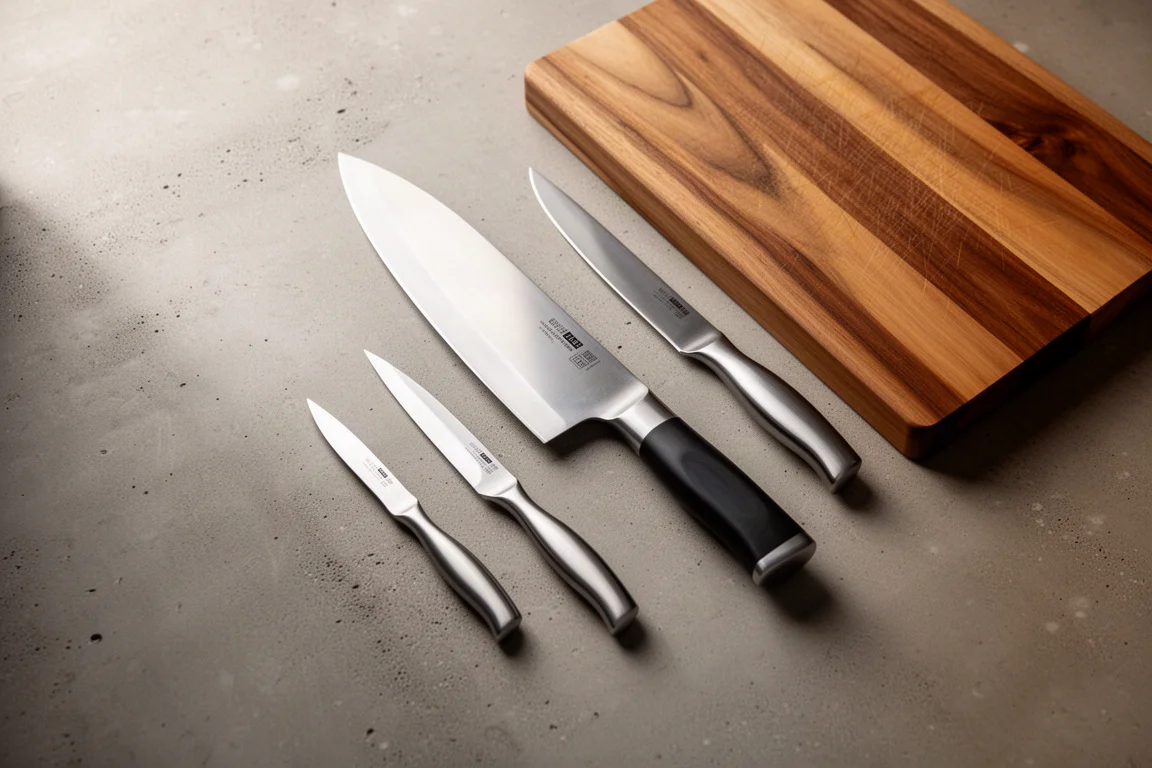
Blade shape matters too. The Horl 2 works great on most standard knives, but it is not ideal for long blades with a significant curve, such as a cimeter. The curve prevents the blade from making full contact with the magnet, and you need to reposition the knife a few times to ensure the edge is even.
Safety deserves a balanced mention. In some ways the Horl 2 is safer than a whetstone or pull-through sharpener because you move the sharpener, not the knife. In other ways it is more dangerous. The main issue is that the edge faces up, so as you roll, you need to keep your hand away from the edge, and the smooth wooden barrel gives your hand little to grip if it slips. If you sharpen several knives at once, clear your workspace and keep the unused knives away from the magnetic angle support, because the magnets are strong enough to pull nearby knives. No safety incidents occurred during testing, but these risks are worth keeping in mind.
Price and Value
The Horl 2 is relatively expensive. It is currently listed on Horl.com for $189, and the Premium Sharpness Set with the two additional finer-grit discs and leather strop adds another $139. You could get a pull-through sharpener or a whetstone for significantly less, so the question is whether the convenience justifies the premium.
Is the Horl 2 Worth Buying?
If you are a knife enthusiast who enjoys learning about sharpening and is willing to spend time practicing and perfecting the process, the Horl 2 is not for you. A whetstone is more versatile, more precise, and in most cases cheaper.
But if you are a typical home cook looking for a simple and effective way to keep your knives sharp, the Horl 2 is absolutely worth it. It does a much better job than a pull-through sharpener, costs less than many electric sharpeners, and has none of the learning curve of a whetstone. It is a simple device that takes the guesswork out of sharpening, and it is genuinely fun and satisfying to use.
Conclusion
The Horl 2 lives up to the roller sharpener promise: consistent, repeatable, very sharp edges with almost no skill required. Its fixed angle options, limited included grits, and premium price are real trade-offs, but for home cooks who want sharp knives without the commitment of learning freehand sharpening, it is an easy recommendation.
Product link
View more details for Horl 2
This product is mentioned in the review. Check the specifications, options, and compatibility before buying.
View more details for Horl 2Further reading
Related Reviews
Kitchen
Best Nonstick Frying Pans Compared: 11 Skillets From $16 to $185, Tested
Eleven nonstick frying pans go head to head in pancakes, eggs, heat distribution, thermal efficiency, and scratch resistance to find out whether a cheap pan can really compete with a premium one.
Kitchen
Vivor Stainless Steel Kitchen Sink Review: A Solid Drop-In Upgrade With One Weak Spot
An all-stainless single-basin drop-in sink with easy-clean rounded corners and a drain-sloped base, at a roughly $200 price point.
Kitchen
Best Bamboo Steamers: Two Tested Picks for Dumplings, Bao, and More
After hands-on steaming tests with dumplings and bao, two bamboo steamers stood out for build quality and staying in alignment.