Running Shoes
Hoka Tecton X vs Speedgoat 5: Trail Racer Meets Trail Trainer
A head-to-head look at two of Hoka's most popular trail shoes, covering grip, midsole feel, fit, durability, and which one belongs on your feet.
Introduction
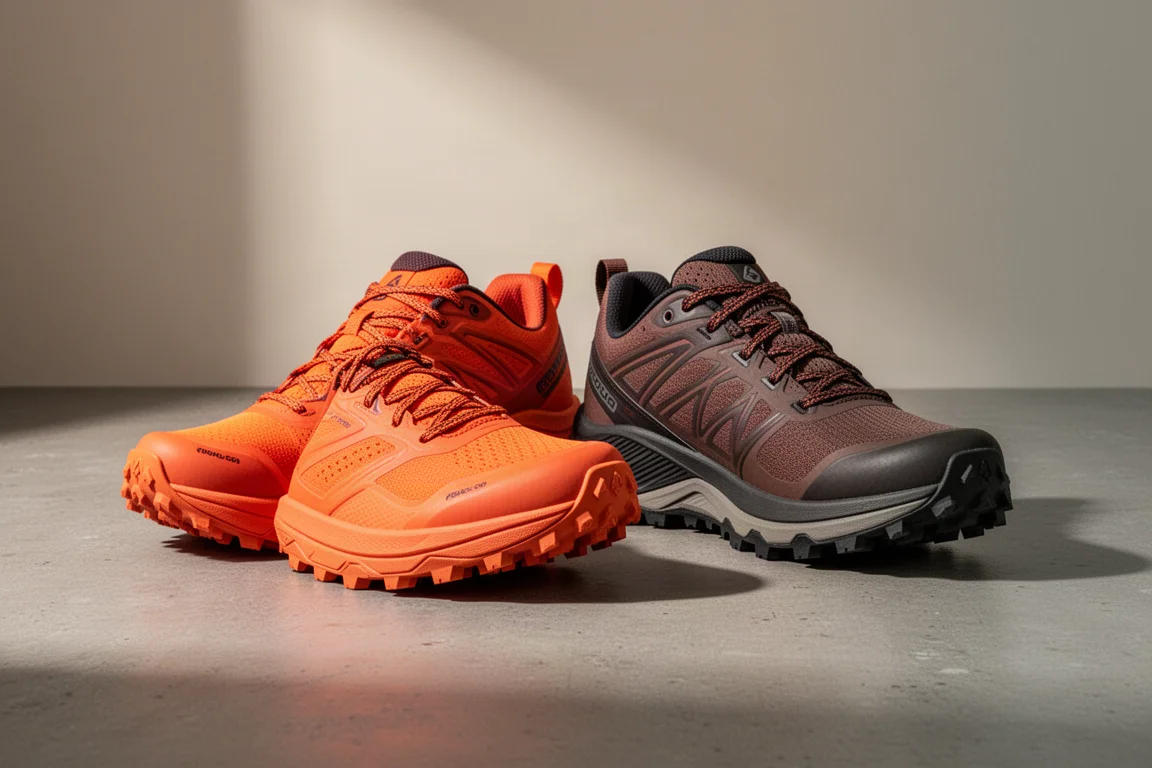
Few shoe matchups are as telling as a head-to-head between a Hoka trail racer and a Hoka trail trainer. At trail races everywhere, one shoe seems to dominate the starting line: the Speedgoat 5. Its reputation is built on comfort, dependable grip, and all-day versatility. The Tecton X, on the other hand, is Hoka’s carbon-plated race-day option, and it brings a very different set of priorities to the trail.
This comparison breaks both shoes down across grip, midsole, upper, fit, durability, and price, with the important caveat that one is designed and marketed as a racer and the other as a trainer. That distinction matters, because a training shoe keeping pace with a race shoe in most categories says a lot about why so many runners keep choosing it.
Grip and Outsole: Vibram Megagrip with a Twist
Both shoes use Vibram Megagrip rubber, widely regarded as the benchmark for trail traction. But Hoka applied its LightBase approach to the Tecton X outsole: lugs are attached in a different way that uses less rubber overall, dropping the shoe’s weight without giving up the Megagrip compound.

For muddier conditions, the Speedgoat 5 gets a slight lean thanks to its deeper, more traditional lug setup. The Tecton X takes the category win, though, because the lighter outsole is genuinely clever and raises an interesting durability question worth watching: how the reduced-rubber lugs hold up past 300 miles.
Midsole: Comfort Versus Propulsion
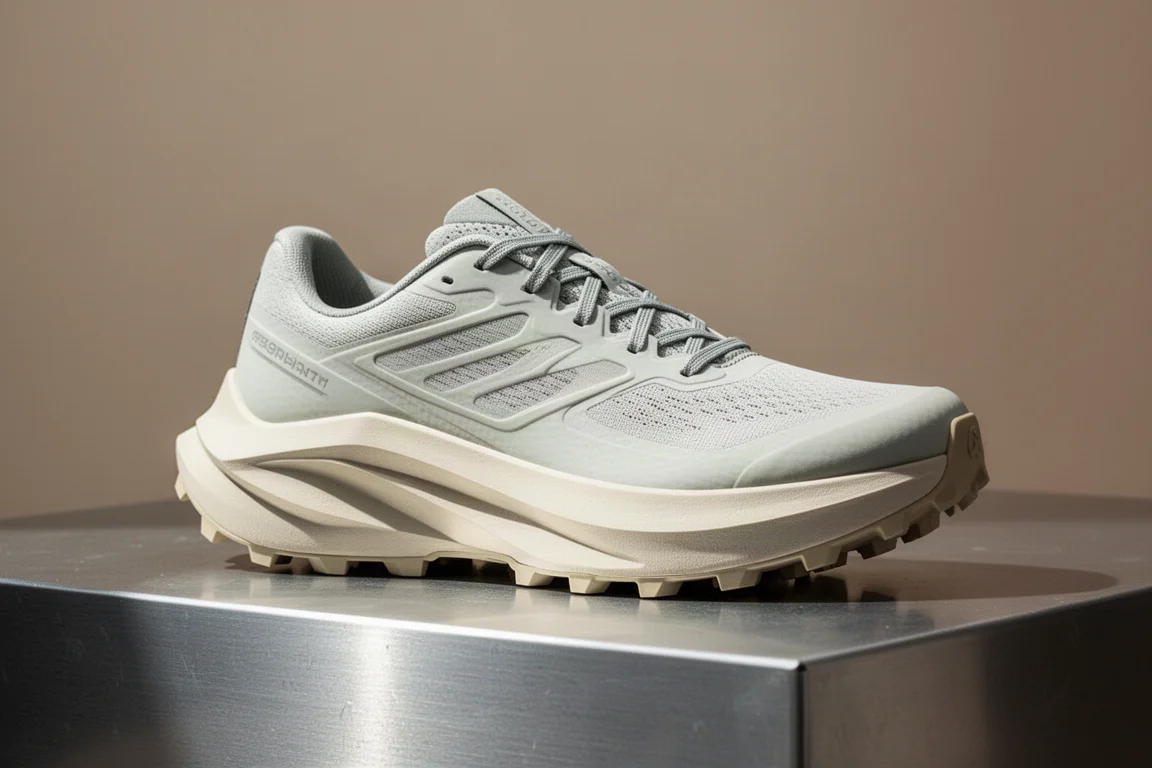
The Speedgoat 5 runs on CMEVA (compression-molded EVA) that is noticeably lighter than the foam in the previous Speedgoat 4. It scores slightly higher for bounce and energy return, and it delivers the kind of cushioned, forgiving ride that has made the Speedgoat line a training staple.
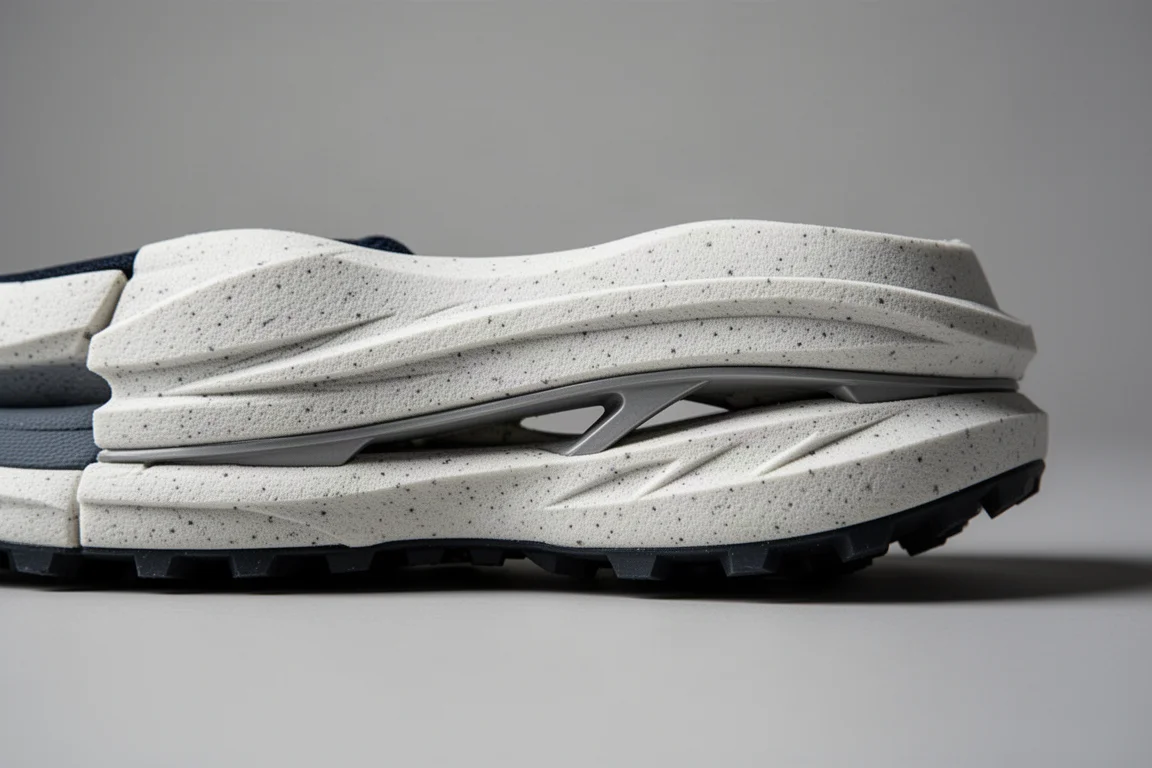
The Tecton X takes a different route with a dual-density midsole and an X-shaped plate, which is where the shoe gets its name. It rides leaner than the Speedgoat 5, and the plate design also keeps pebbles from lodging under the midfoot, a small but appreciated detail. Still, the energy return does not feel dramatically livelier, and a touch more softness would suit the ride better. The Tecton X does show better midsole durability, with minimal creasing compared to the Speedgoat 5.
Upper and Fit
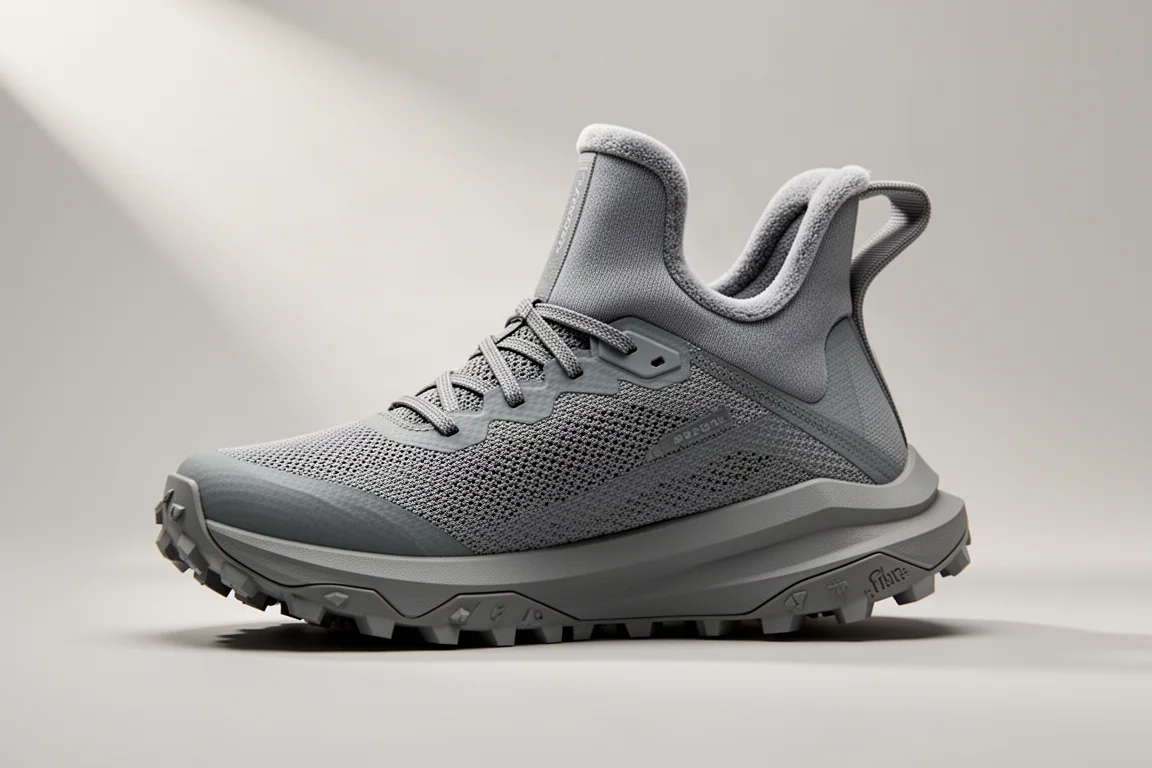
Both uppers use jacquard mesh, and breathability is very similar between the two. Both also feature a semi-gusseted tongue, so if you like that construction, you get it either way. If you prefer a little more padding in the upper, the Speedgoat 5 is the better pick.

Where the Tecton X pulls ahead is lockdown, which is genuinely special in this shoe and exactly what you want from a race-day option. The heel counter and heel tab differences are minor, and both shoes feel secure overall. For durability, the edge goes to the Speedgoat 5, whose simpler upper and midsole construction should hold up better over the long haul.
Price and Value
The Tecton X sits at a premium $200 price point, and that figure has not come down yet. At that price, some runners may reasonably look at alternatives with better energy return and possibly even better grip for the money. The Speedgoat 5 is the clear value winner of this matchup, delivering close to the same overall performance as a racing shoe at a friendlier price.
How You Should Use Each Shoe
The Tecton X is a racer: think 50Ks, and races from half marathon up to marathon distance on trails. It is versatile enough that you could technically train in it, but at $200 it makes more sense to save it for race days. It is also worth noting that opinions on plates on the trail remain mixed; some runners still prefer the simplicity of a non-plated midsole.

The Speedgoat 5 is the opposite philosophy: a trainer you can also race in. Its cushioned CMEVA ride, comfort-focused upper, and proven grip make it the shoe you reach for on daily trail runs and long efforts alike. It is no accident that it dominates trail race starting lines.
Conclusion
The category count favored the Tecton X, but the overall winner here is the Speedgoat 5, and the reason is simple: a training shoe keeping pace with a $200 racing shoe across most categories is remarkable value. If you want maximum race-day performance and lockdown, the Tecton X earns its spot. If you want one shoe to do nearly everything at a better price, the Speedgoat 5 is the smarter buy, and it explains why it is everywhere on the trails.
Further reading
Related Reviews

Running Shoes
Best Road-to-Trail Running Shoes: Three Versatile Options for Mixed Terrain
A practical guide to three road-to-trail running shoes that handle both pavement and mild trails, with clear strengths and trade-offs for different runner types.

Running Shoes
Best Running Shoes for Achilles Tendonitis: Three Options Explained
Three running shoes with different heel drops and support features designed to help reduce Achilles tendon pain during walking and running.

Running Shoes
Best Running Shoes for Women: Five Top Choices Ranked
A ranked guide to five women's running shoes, from versatile daily trainers to high-performance racing options, with real strengths and trade-offs for each.