Trail Running Shoes
Hoka Speedgoat 5 vs New Balance Fresh Foam X More Trail v2: Trail Shoe Battle
Two high-stack trail running shoes go head to head on weight, lockdown, ride, grip, durability, and value. One narrow winner emerged.
Introduction
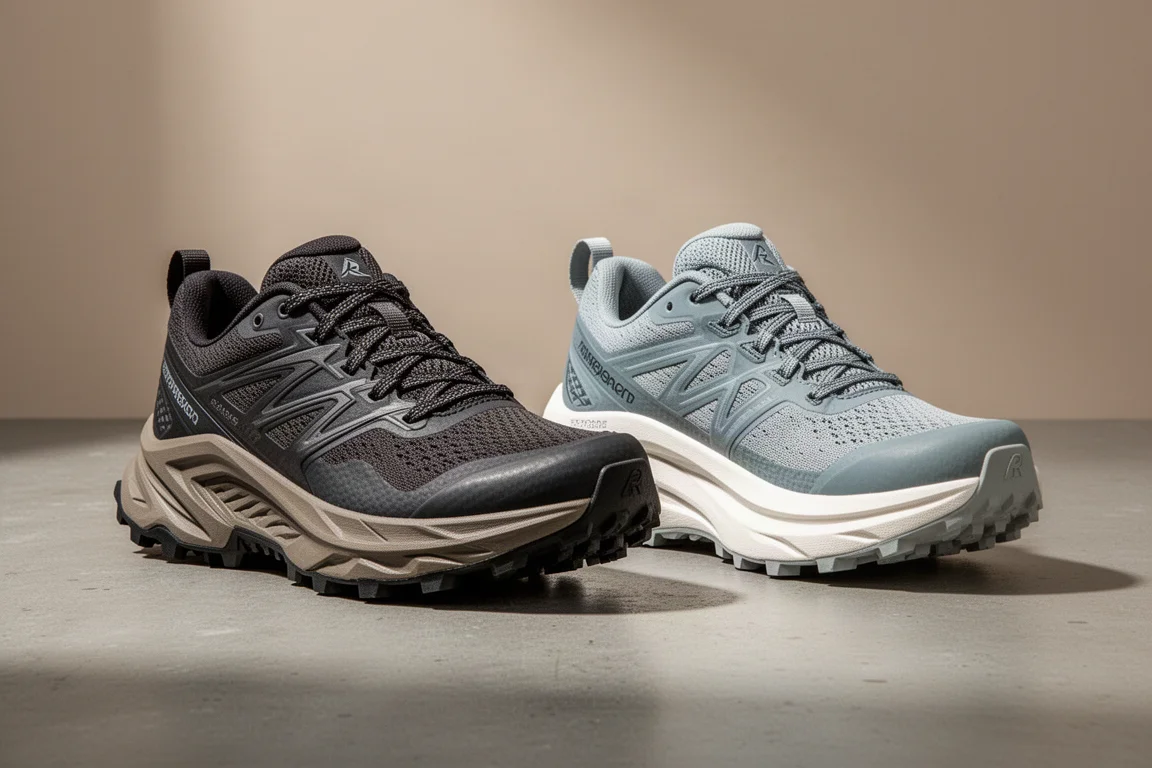
This is one of the closest trail shoe comparisons we have scored, and the result proves how much the decision comes down to what you personally value most. When you shop for running shoes, it helps to ask yourself a few simple questions before anything else: is the ride the most important thing, is upper lockdown the priority, is price the deciding factor, or is it durability? Scored across those categories, the Hoka Speedgoat 5 and the New Balance Fresh Foam X More Trail v2 finished nearly even, with the New Balance edging ahead on the final tally.

Neither shoe ran away with the win. Some categories ended in ties, several were decided by razor-thin margins, and the final scores landed almost on top of each other. That makes this a genuine buyer’s dilemma rather than an easy recommendation.
Weight and Upper Lockdown
The Speedgoat 5 takes the win in the weight category. It is the lighter shoe of the pair, which matters most on longer efforts when every gram on your foot starts to add up.
On the upper side, the Fresh Foam X More Trail v2 has a noticeably wide platform, and it is a heavier shoe overall. What it gives up in weight, though, it partly gives back in comfort: the tongue is remarkably comfortable over the top of the foot, and the upper scores well for lockdown. If you are sensitive to pressure points or hot spots on long runs, that plush tongue is worth paying attention to.
Ride and Midsole
Both shoes sit in the high-stack, max-cushion camp that has come to define modern trail running. This is part of a broader industry trend in recent years: midsoles keep getting chunkier, with more volume and more girth under the foot. That is not always the best solution, but it is clearly where the market has gone.
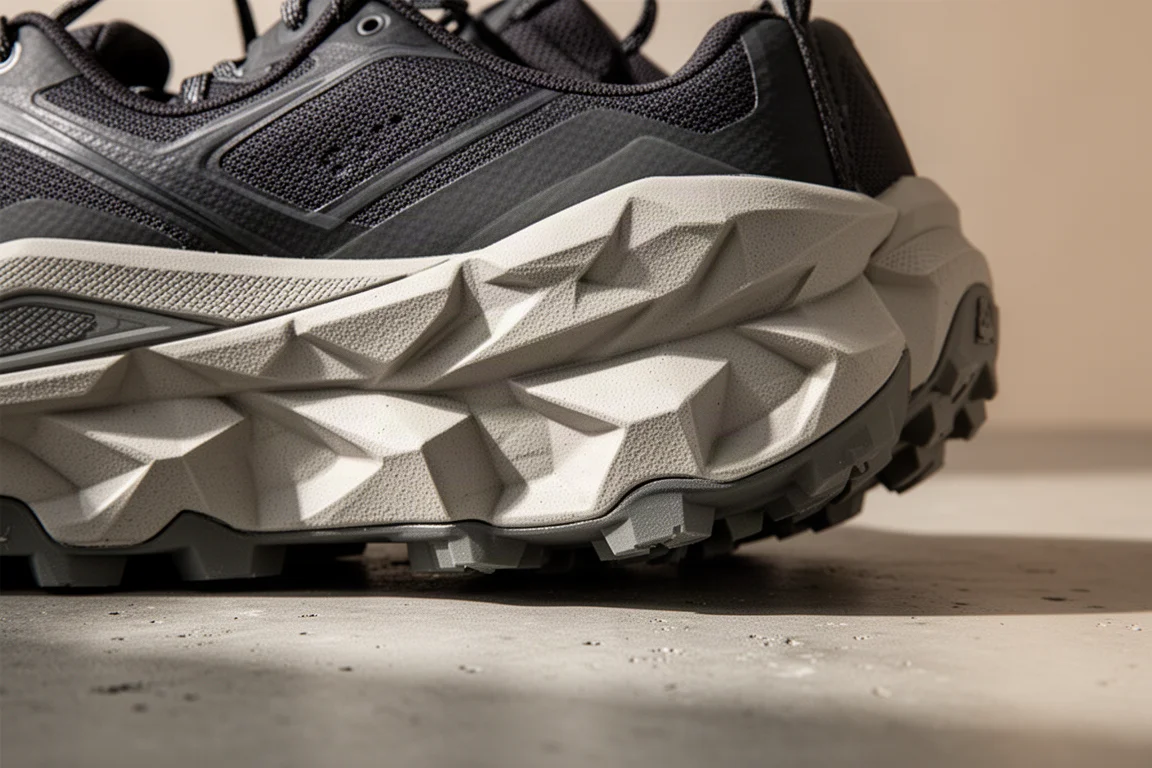
The Fresh Foam X midsole in the New Balance is a uniquely formulated injection EVA, molded and heat-pressed to give it its distinctive shape. The Speedgoat 5 uses a compression molded EVA midsole. Both deliver a cushioned, high-stack ride with solid energy return, and the Speedgoat 5 scored slightly better on that front, with the New Balance not far behind.
Outsole and Grip
Here is a striking overlap: both shoes use Vibram rubber on the outsole. Vibram essentially owns the outsole market in trail running right now, and both shoes benefit from it.
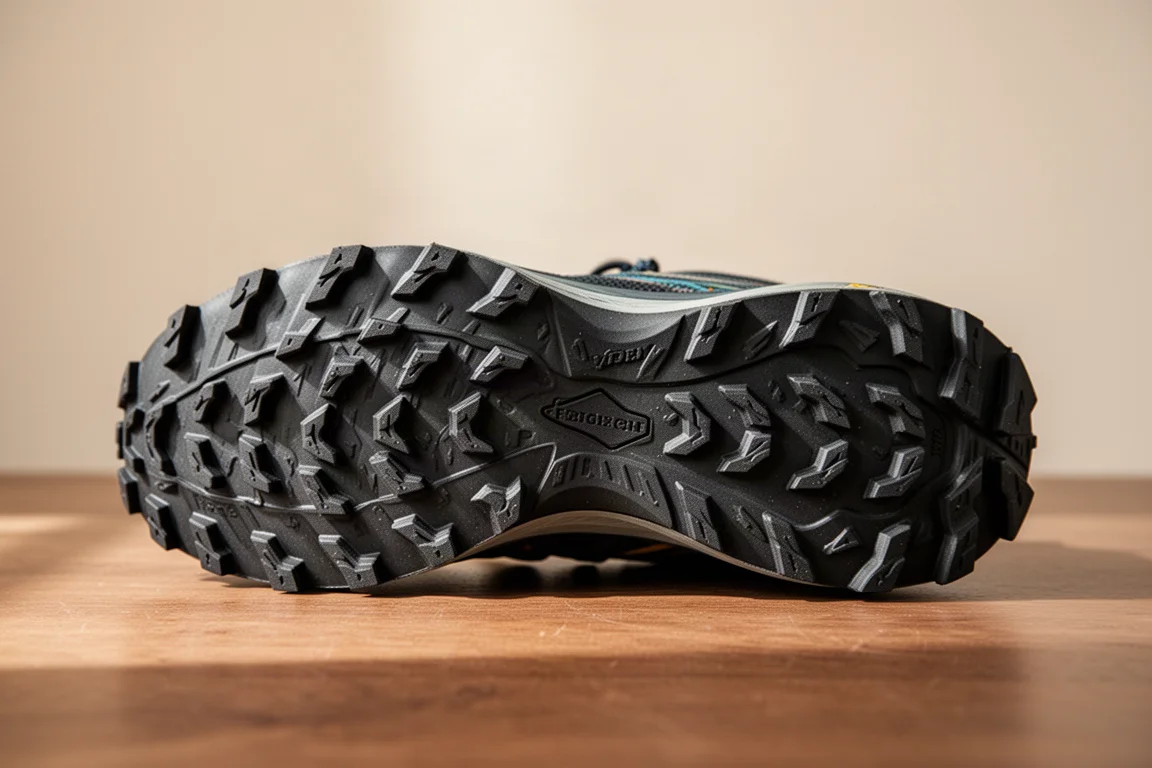
The scores here were extremely close. If conditions were a little muddier, the Speedgoat 5 would get the lean, thanks to its grip and bite on softer ground. For slightly more buffed-out trails, the New Balance holds its own just as well. Durability, meanwhile, ended in a tie.
Which Shoe Should You Buy?
The Speedgoat 5 scored the win on weight, energy return, and overall ride, and it represents strong value if you want one shoe to do everything. Its versatility is the beauty of the Speedgoat lineup: if you only want to buy one shoe to train for everything from a half marathon up to a 50K, and even race a 50 miler in, it covers that crossover convincingly. It leans toward slightly more aggressive trails and long runs, and it would not be a stretch to race in it.

The Fresh Foam X More Trail v2, on the other hand, leans toward long runs on more buffed-out trails, and it may quietly be a sleeper pick. It does not have the race-sponsorship visibility of some bigger trail brands, but owners describe it as extremely comfortable with no hot spots and great traction. If comfort over the top of the foot and a softer, wider ride rank higher on your list than weight, this is the one to pick. It also comes in at a friendlier price point in this pairing.
Conclusion
This comparison was a barn burner: a narrow category win for one shoe, a broader set of wins for the other, and a couple of dead heats in between. If you want one do-everything trail shoe for aggressive terrain and race day, the Hoka Speedgoat 5 is the safer bet. If you want maximum comfort, a plush wide ride, and a better price for long days on smoother trails, the New Balance Fresh Foam X More Trail v2 might be the sleeper that outperforms its profile. Either way, ask yourself what matters most, and both shoes will reward the right buyer.
Product link
View more details for Hoka Speedgoat 5
This product is mentioned in the review. Check the specifications, options, and compatibility before buying.
View more details for Hoka Speedgoat 5Further reading
Related Reviews
Trail Running Shoes
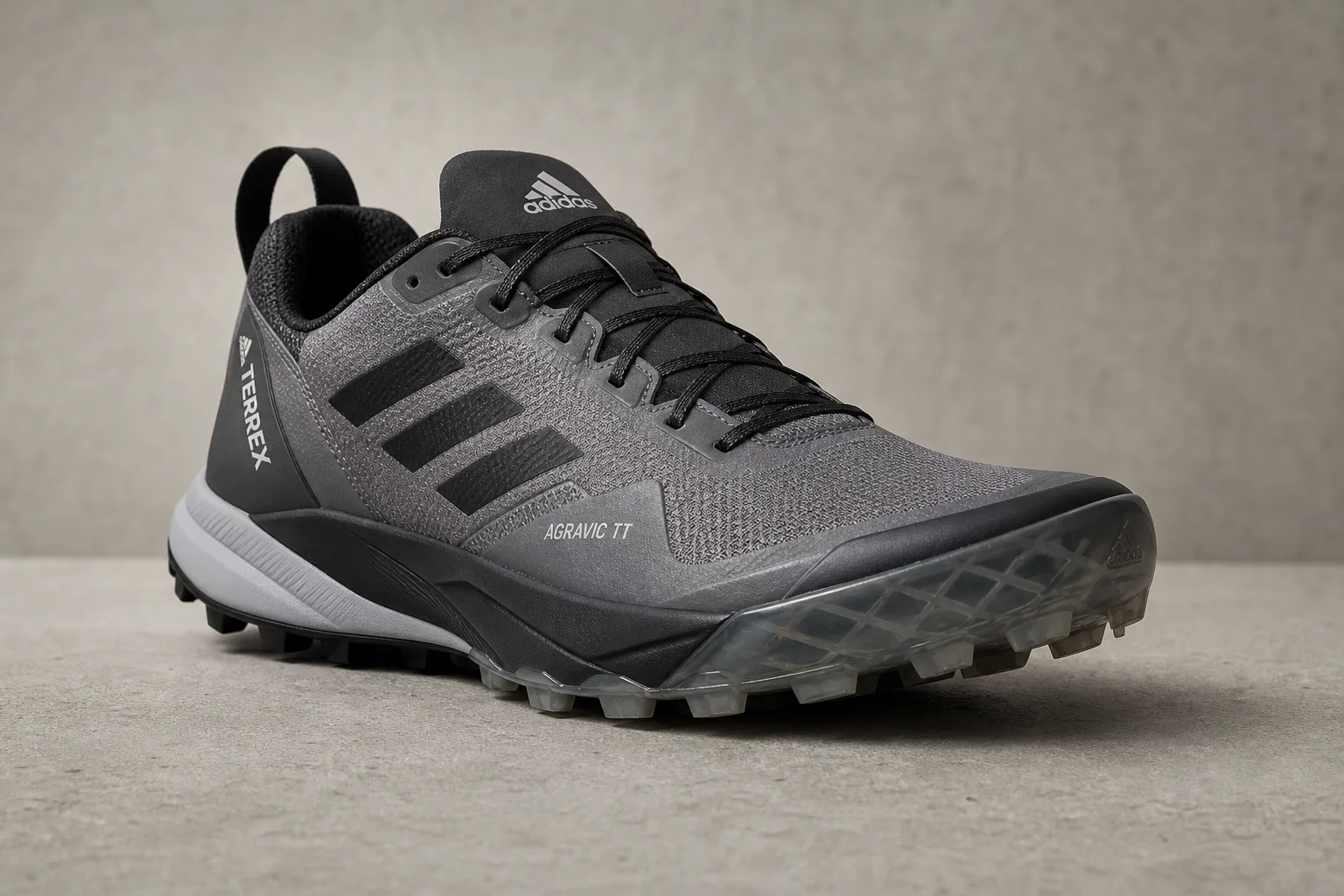
Adidas Terrex Agravic TT Review: A Technical Trail Shoe Built for Rocky Terrain
The Adidas Terrex Agravic TT combines a full-coverage rock plate with a firmer midsole to deliver protection and stability on technical, rocky trails. A capable choice for runners who prioritize underfoot defense over lightweight cushioning.
Trail Running Shoes
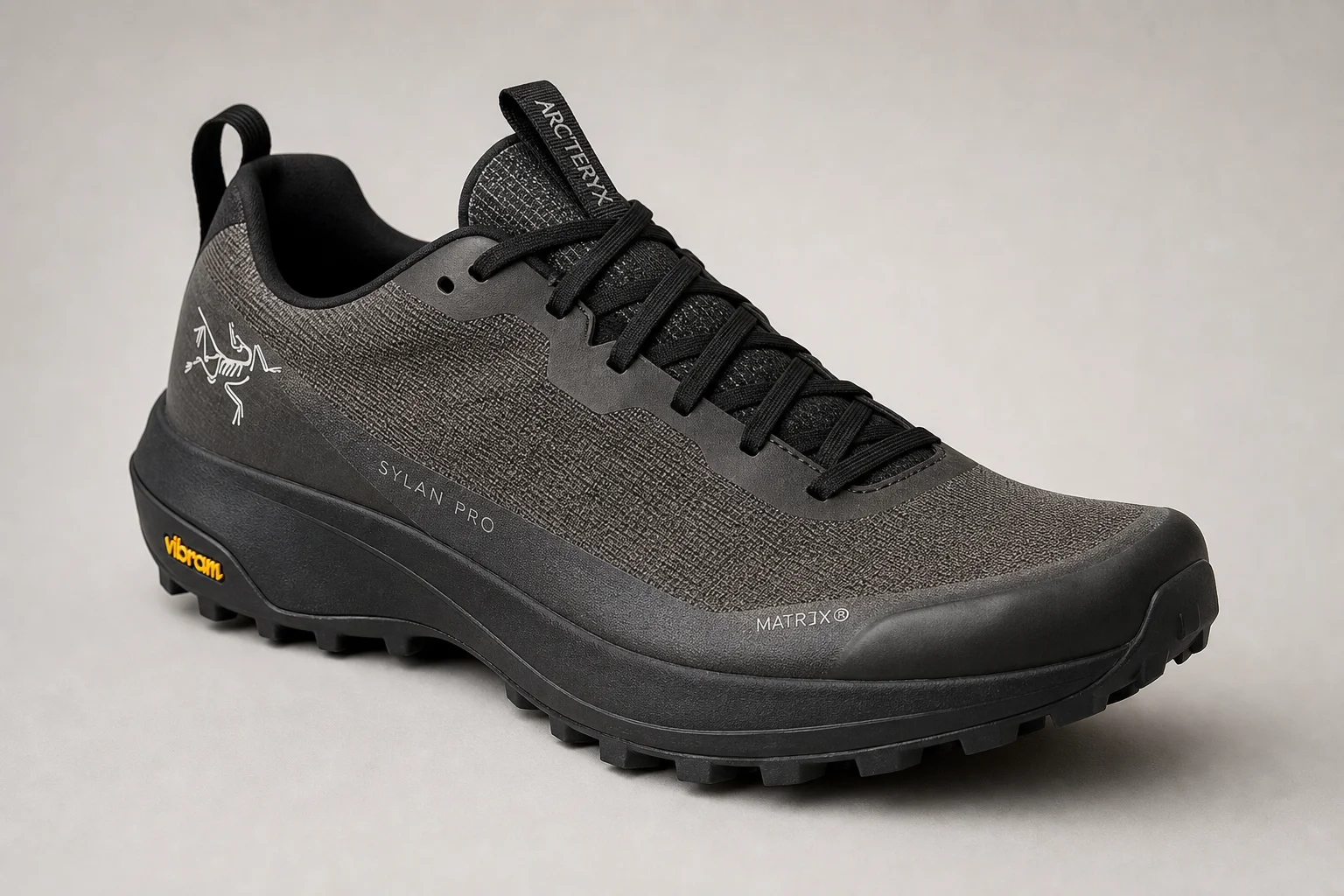
Arc'teryx Sylan Pro Review: A Rocker-Focused Mountain Running Shoe Tested on 20 Miles
The Arc'teryx Sylan Pro brings a pronounced rocker geometry and secure fit to mountain terrain. We tested it on a 20-mile Sawtooth loop to evaluate its climbing efficiency, protection, and handling of technical descents.
Trail Running Shoes
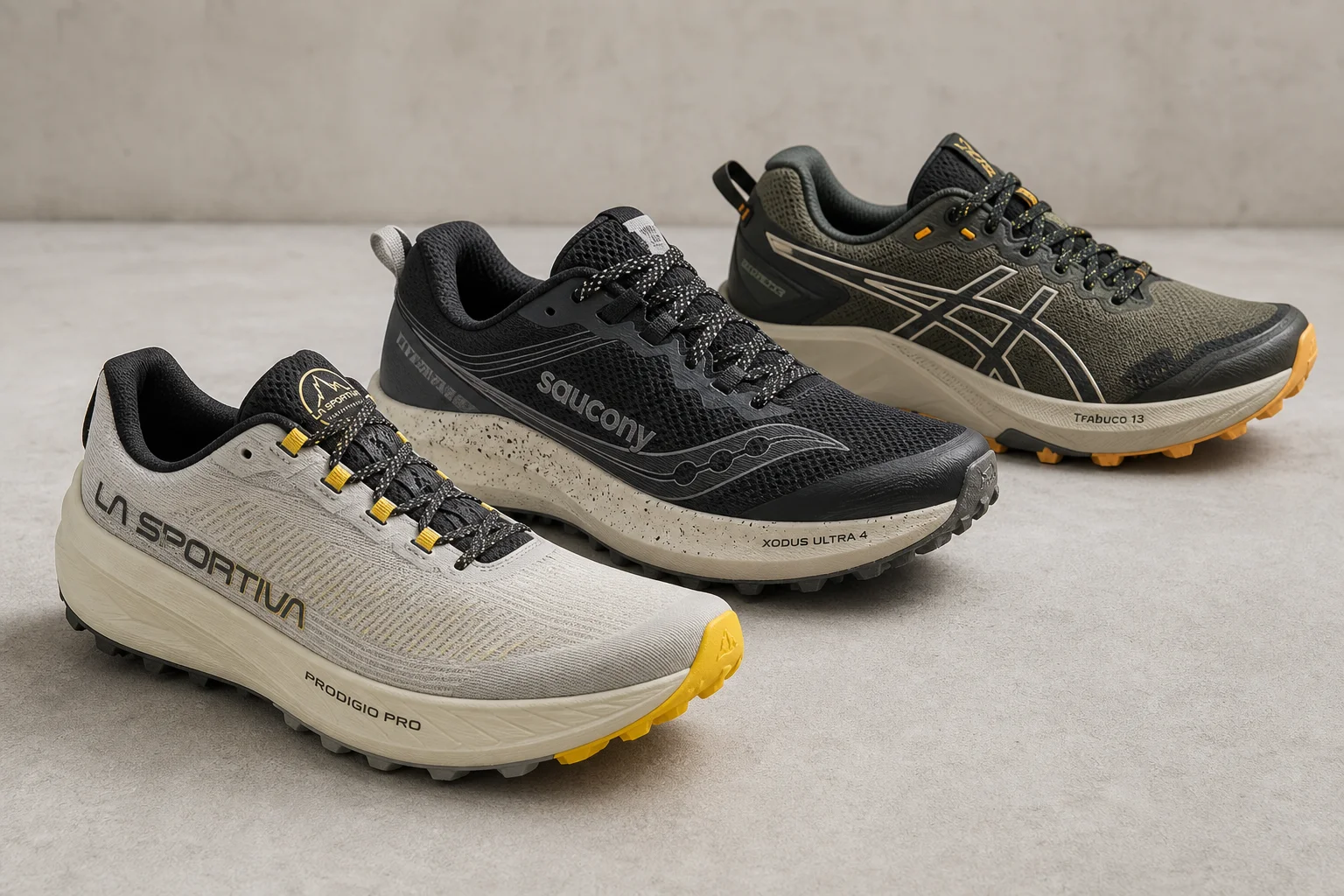
Best All-Mountain Trail Running Shoes: Three Versatile Options for Any Trail
A focused roundup of three all-mountain trail running shoes that handle technical terrain, long distances, and variable conditions with real strengths and practical trade-offs.