Running Shoes
Hoka Mach 7 vs Adidas Adizero Evo SL: Which Lightweight Trainer Deserves a Spot in Your Rotation?
Two of the best lightweight daily trainers go head to head, with clear differences in stability, speed, and fit to help you pick the right one.
Introduction
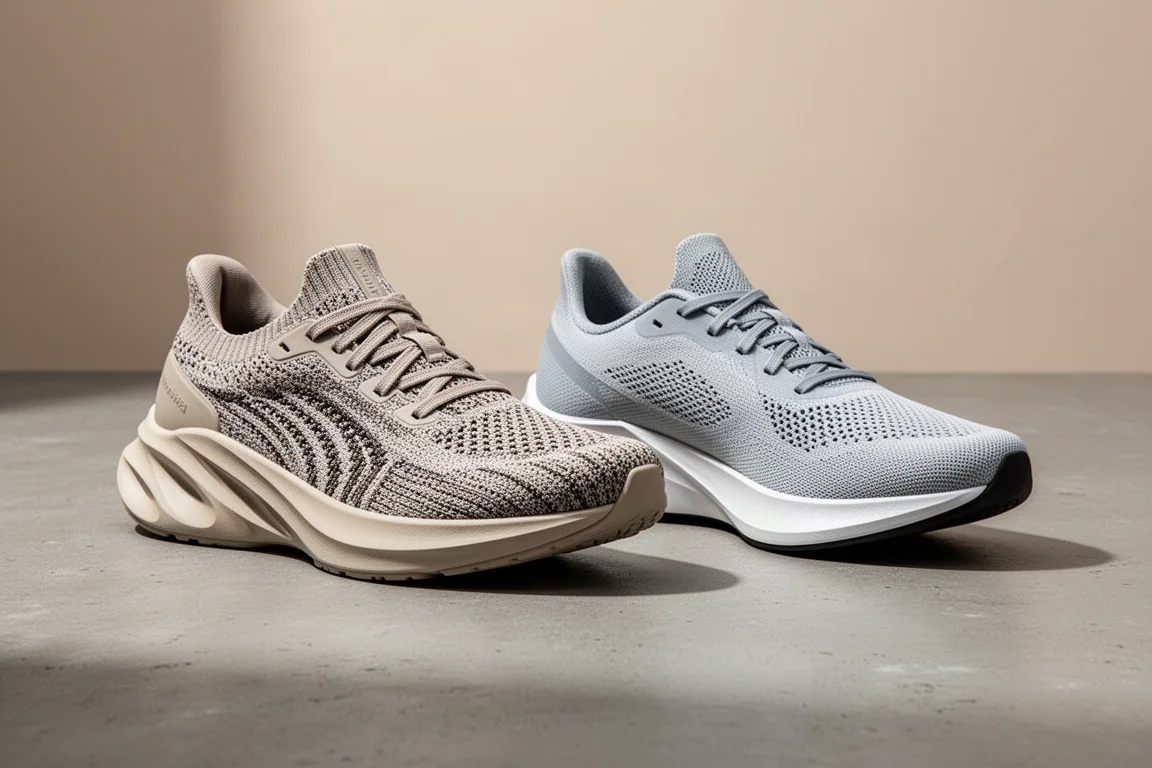
The Hoka Mach 7 and the Adidas Adizero Evo SL are two lightweight daily trainers that have earned a lot of praise, and for good reason. Both are versatile shoes that lean toward speed while still handling easy runs, long runs, and workouts, and both sit at a reasonable price point. The Hoka costs £140 in the UK and $145 in the US, while the Adidas is slightly cheaper in the UK at £130 but a touch more expensive in the US at $150.
They are remarkably close on the fundamentals. Both test pairs weigh almost exactly the same: the Evo SL comes in at 224 g (7.9 oz) and the Mach 7 at 225 g (7.9 oz) in a UK 9, which is a US 9.5 in both brands. The Evo SL has a 6 mm drop, the Mach 7 a 5 mm drop, and both are well-cushioned without exceeding 40 mm at the heel, landing in the upper 30s. In short, these are two very similar shoes on paper with very different personalities underfoot.
Hoka Mach 7 vs Adidas Adizero Evo SL at a Glance
Before diving into the details, it helps to frame the matchup. The Evo SL is the livelier, bouncier, more aggressive option of the two, while the Mach 7 is firmer, more stable, and arguably the better all-around daily trainer. Both shoes were tested across a wide variety of runs, with roughly 190 km logged in the Evo SL and about 120 km in the Mach 7.
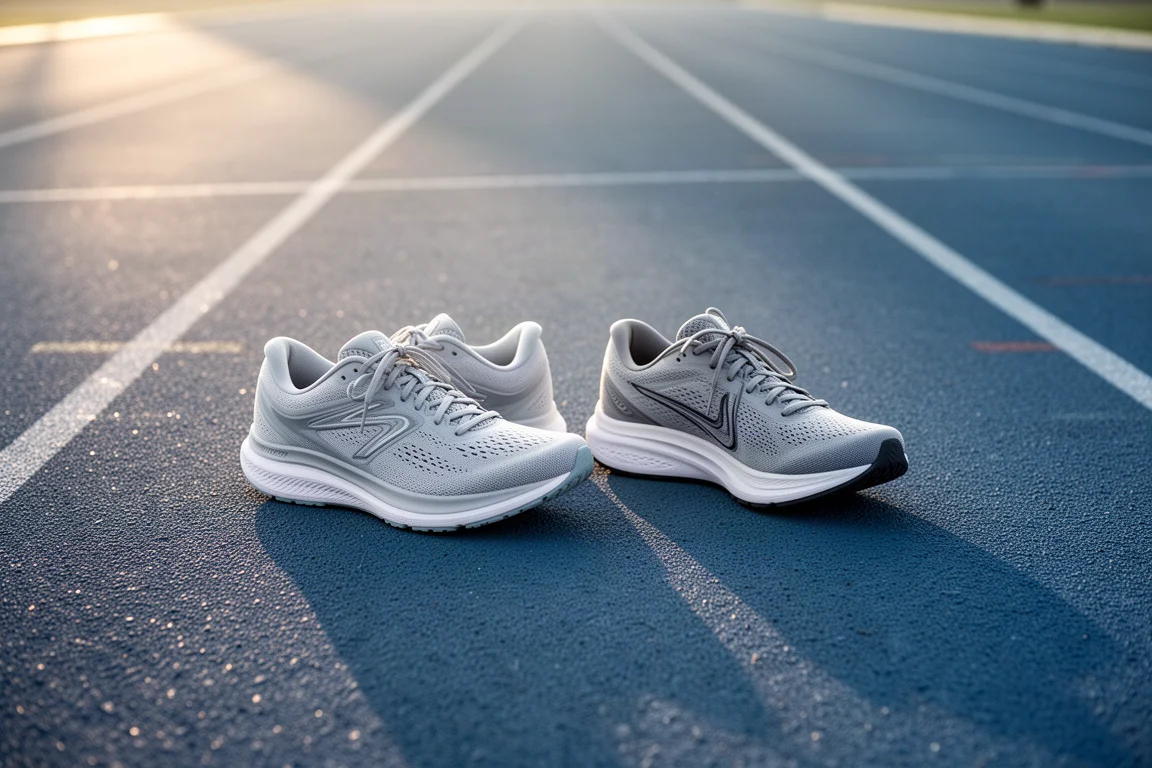
If you already know your priorities, the short version is simple: pick the Evo SL for speed and fun, pick the Mach 7 for stability and a smoother cruiser. Keep reading for the details that might change your mind either way.
Design and Construction
The Evo SL uses a mesh upper with a little padding around the back of the shoe, keeping the overall design lightweight. Underfoot you get a Lightstrike Pro midsole, a springy and responsive foam, with a small nylon shank at the midfoot that gives the shoe a slightly stiff feeling. There is also a very sharp forefoot rocker. The outsole combines Continental rubber on the forefoot with clear rubber at the heel.
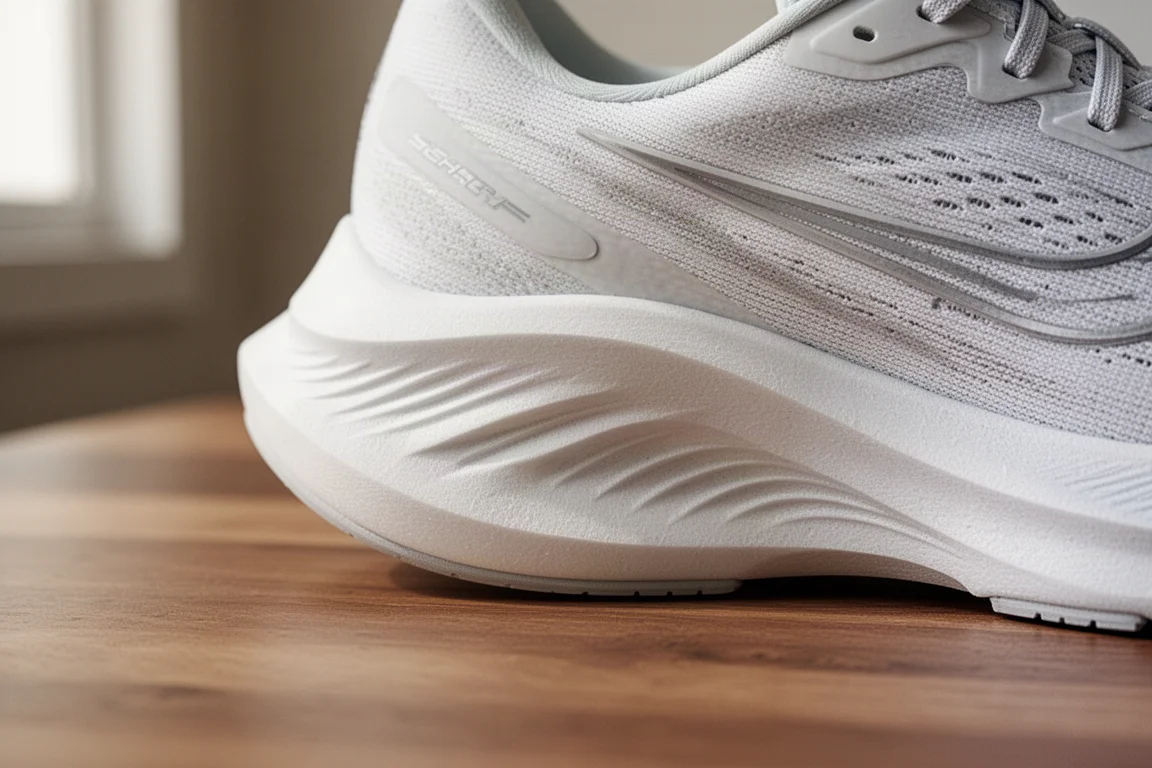
The Mach 7 takes a different approach. Its creel jacquard upper is a little thicker and more padded than the Evo SL’s, though still lightweight overall. The midsole uses supercritical EVA foam with Hoka’s signature gentle rocker profile. The outsole again uses two rubbers: a sticky compound on the forefoot and a dual-density abrasion section at the heel.
Fit and Sizing
Both shoes fit true to form for their testers in a UK 9 (US 9.5). The Evo SL runs slightly tighter around the toes than the Mach 7, though it did not cause problems during testing. With Adidas racing-style shoes, going half a size up is sometimes necessary, so that is worth considering for the Evo SL. With Hoka, sticking to your normal running shoe size is the safe bet.
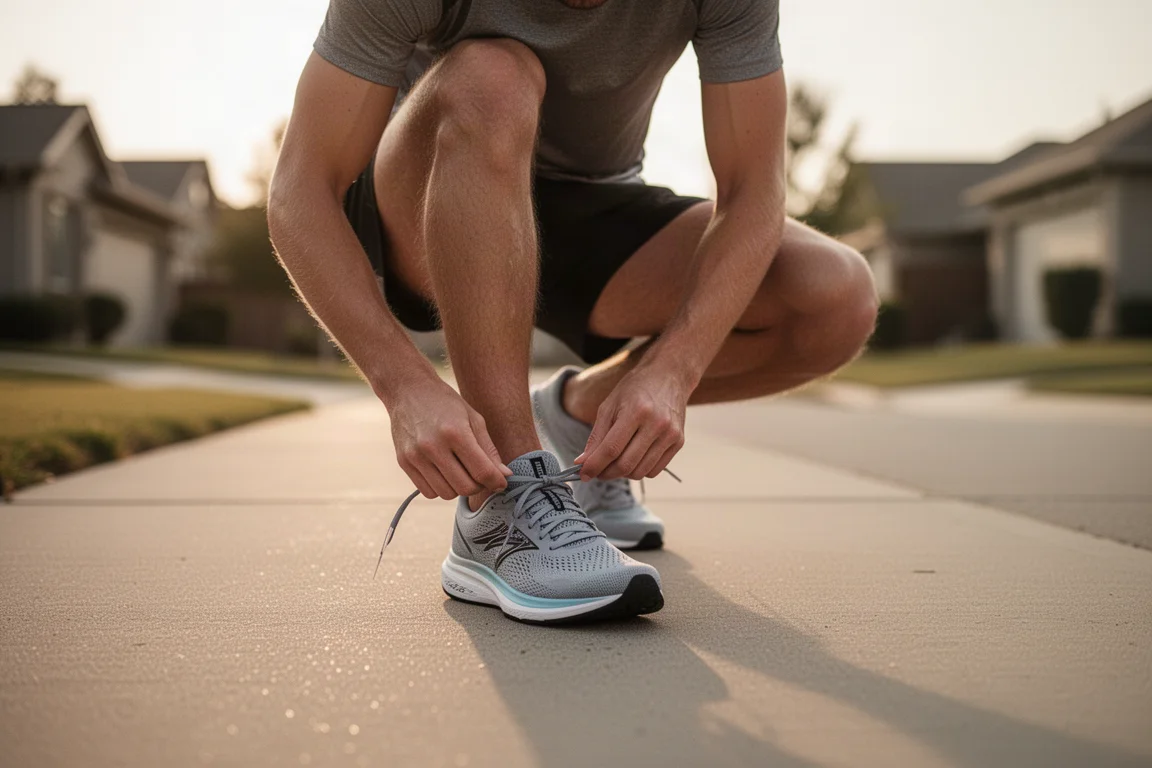
Both shoes have minimal uppers that hug the foot closely, so if you prefer a roomier feel, you could go half a size up in either. Both offer good hold around the heel and midfoot with no rubbing concerns, which is impressive for such lightweight shoes.
Ride Feel and Performance
The Evo SL has the livelier, bouncier midsole feel. The Lightstrike Pro foam is not so soft and squishy that it becomes unstable, and it gives back a strong response off the toes. The sharper forefoot rocker pushes you forward more aggressively, and the shoe turns over beautifully for all-out speed work, even racing. It feels best on short, sharp efforts like 400 m reps at the track, though it also performs well on easy runs and long runs.
The trade-off is stability. The Evo SL has a medial side cutout and rolls inward slightly more than the Mach 7. It is not stable enough for every runner to use as an all-around daily trainer, and some may prefer to reserve it as a dedicated speed shoe.
The Mach 7 is firmer and more stable. Its base is a little wider and filled in on the medial side, so there is no inward rolling at relaxed paces. The gentler rocker ticks over beautifully at easy paces, making it excellent for long runs and recovery runs, yet it remains responsive enough for faster efforts and longer workouts, where it helps you sustain pace with a smooth, natural feel.
Durability and Long-Term Use
Both shoes have felt very durable so far. While neither should be expected to last as long as a big, chunky daily trainer with a massive outsole and higher stack, both the midsoles and outsoles have gripped well and shown no signs of wear after substantial testing. They perform exactly as they did when new.
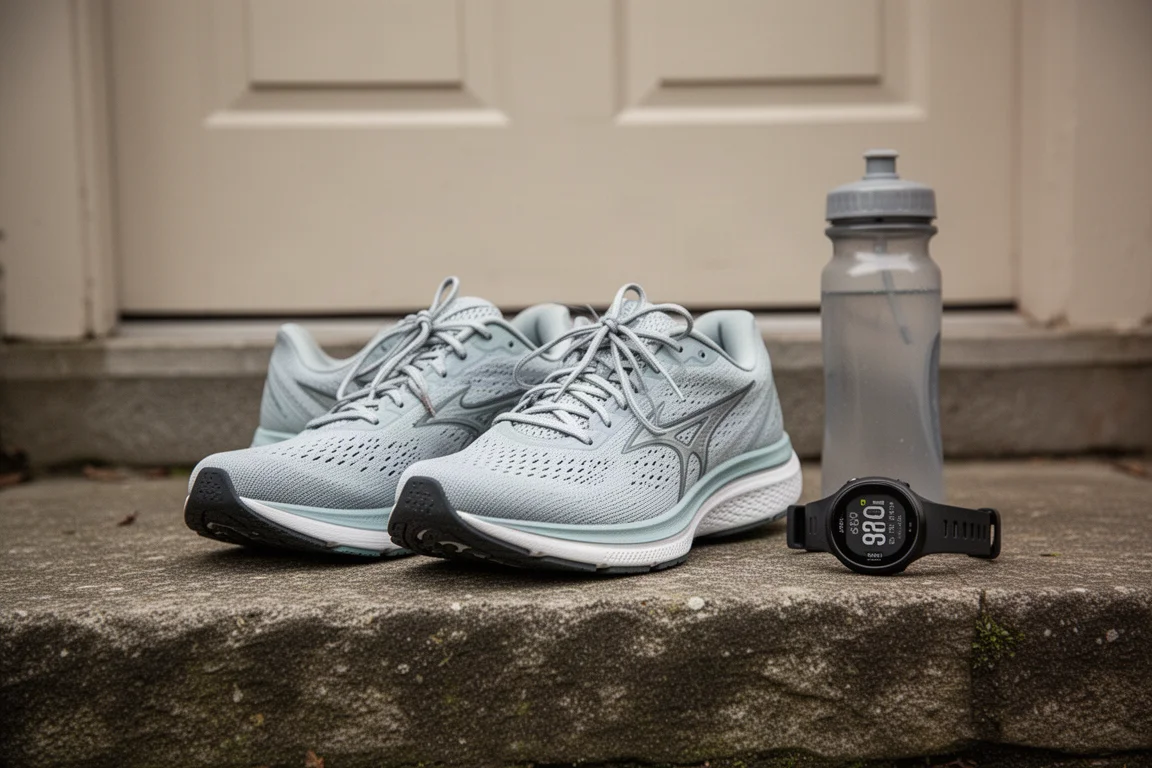
One useful note: there is a newer version of the Evo SL available called the Evo SL Woven, but it is the same shoe underfoot with a slightly different upper. If you like the performance but want a different fit, that is an alternative worth checking out.
Which One Should You Buy?
The Evo SL is the more exciting, faster, bouncier shoe and the better pick if you want a pure speed shoe to add to a rotation. It even works for racing, particularly over shorter distances rather than half marathons and marathons. If you are not worried about stability at all, it is also a very good all-rounder.
The Mach 7 is still a fast shoe, but it is more stable, more supportive, and better as a cruisy daily trainer. It is very similar to the Mach 6, so much of what applies here carries over to that model too. Do not discount it just because it uses an EVA midsole: how the foam feels on the run is what matters, and it feels fantastic across a wide variety of runs.
There is real overlap between the two, but there is also space for both in a rotation. The Mach 7 works as a cushioned shoe that can still handle fast work, with the Evo SL picking up faster sessions and the occasional race, forming an affordable two-shoe setup. If you want a more cushioned daily trainer alongside a speed shoe, the Evo SL fills the speed role a little better. For most runners after a single all-rounder, the Mach 7 is the safer choice.
Conclusion
The Adidas Adizero Evo SL is the quicker, bouncier option and a fantastic speed shoe, while the Hoka Mach 7 is the more stable, more supportive all-rounder that suits easy and long runs beautifully. Both are versatile, lightweight, and good value, so the right choice comes down to whether you prioritize top-end speed or everyday support.
Further reading
Related Reviews

Running Shoes
Best Road-to-Trail Running Shoes: Three Versatile Options for Mixed Terrain
A practical guide to three road-to-trail running shoes that handle both pavement and mild trails, with clear strengths and trade-offs for different runner types.

Running Shoes
Best Running Shoes for Achilles Tendonitis: Three Options Explained
Three running shoes with different heel drops and support features designed to help reduce Achilles tendon pain during walking and running.

Running Shoes
Best Running Shoes for Women: Five Top Choices Ranked
A ranked guide to five women's running shoes, from versatile daily trainers to high-performance racing options, with real strengths and trade-offs for each.