Running Shoes
Hoka Mach 6 vs Asics Novablast 4: Which $140 Daily Trainer Fits Your Running?
Two $140 daily trainers with very different characters: the firm, protective Novablast 4 and the soft, fast Mach 6. Here is how to pick the right one.
Introduction
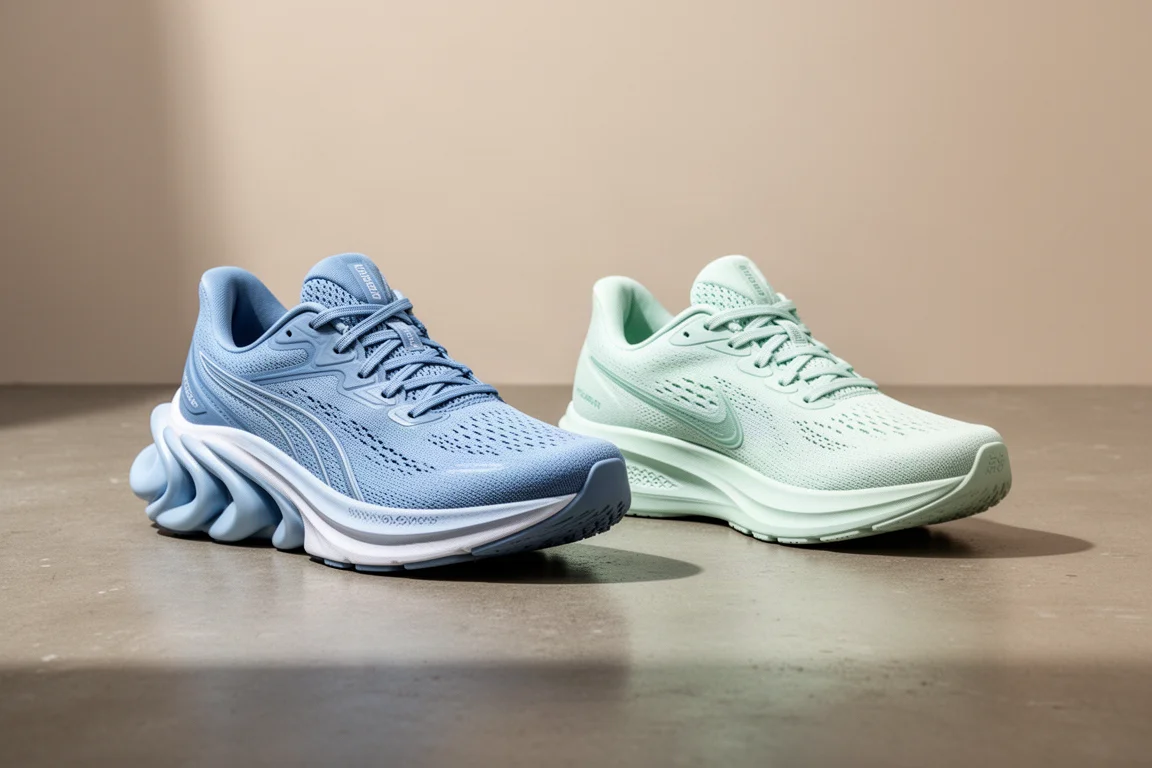
The Hoka Mach 6 and Asics Novablast 4 sit in the same corner of the daily trainer market: both priced at $140, both built on EVA-based midsole foams, and both designed for everyday running miles. They are also nothing alike in how they feel, and that difference is the entire answer to most shoe-shopping questions between these two.
Put simply, the Novablast 4 is firm and structured while the Mach 6 is soft and bouncy. One protects, the other propels. After roughly 50 to 60 miles of testing across treadmill runs, long runs, and wet-weather miles, here is how they break down.
Two Very Different Rides at the Same Price
The headline difference comes down to midsole construction. Both shoes use EVA foam, the classic training foam found across most shoes at this price. But the Mach 6’s EVA blend goes through a supercritical process, where gas is injected into the foam to make it softer, bouncier, and airier. It has a cushioned, almost water-bed-like give underfoot.
Asics does not disclose the full composition of its FF Blast Plus blend, but in the Novablast 4 it produces a firmer, more structured feel. This is not a flexible shoe, and it does not have the soft, forgiving ride of a max-cushion shoe. Instead, it uses geometry: a wide trampoline-style platform in the forefoot, foam wrapping up the sidewalls, and roughly three-quarters of an inch of foam jutting out behind the heel. That shape makes it an excellent choice for heel strikers who want a stable, protective landing zone.
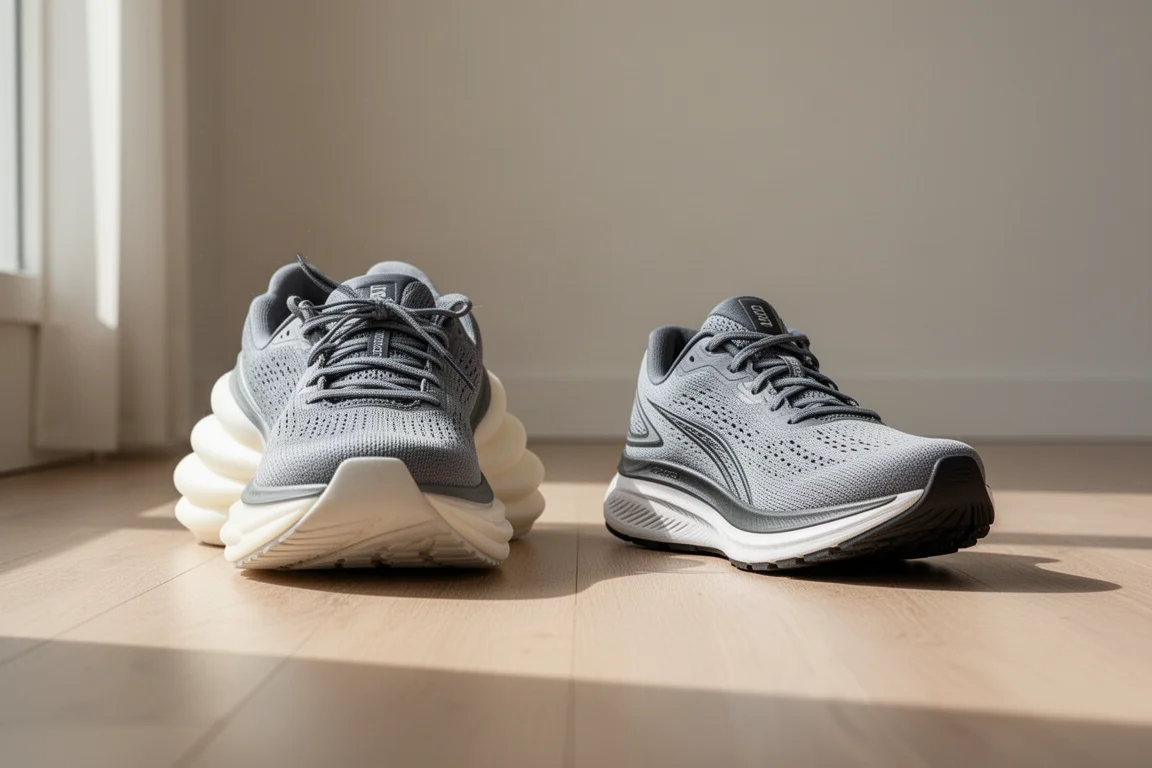
The stack numbers tell part of the story. The Novablast 4 comes in around 42 mm in the heel with a 34 mm forefoot and an 8 mm drop. The Mach 6 is lower, at roughly 37 mm in the heel and 32 mm in the forefoot. Hoka bumped the Mach up significantly from the previous generation’s roughly 30 mm heel, clearly aiming to compete directly with the Novablast.
Upper Comfort, Fit, and Breathability
The uppers are where these shoes really diverge. The Novablast 4’s upper is soft, padded, and built up, almost like a worn-in old t-shirt. Comfort is excellent and the toe box is roomier, which makes it the better pick if you have slightly wider feet or prioritize a plush fit. The trade-off showed up in warm 65 to 70 degree runs, where feet started to heat up, echoing breathability issues Asics has had with other soft-cloth uppers.
The Mach 6 upper is lighter, thinner, and airier, closer in feel to a stiff camp chair fabric than a soft shirt. Padding is minimal, though not harsh, and it follows the current market trend toward leaner uppers. Breathability clearly favors the Hoka. Both shoes have gusseted tongues, solid lockdown, and laces that stay tied without any drama.

One important caveat on the Mach 6: sizing has been inconsistent. Two pairs in the same US men’s 10.5 fit noticeably differently, with one pair running a full size snug. You may need to size up or down depending on the pair and colorway. The Novablast 4 runs roomy enough that some could even size down half a size, though staying true to size is the safer bet.
Outsole Grip and Durability
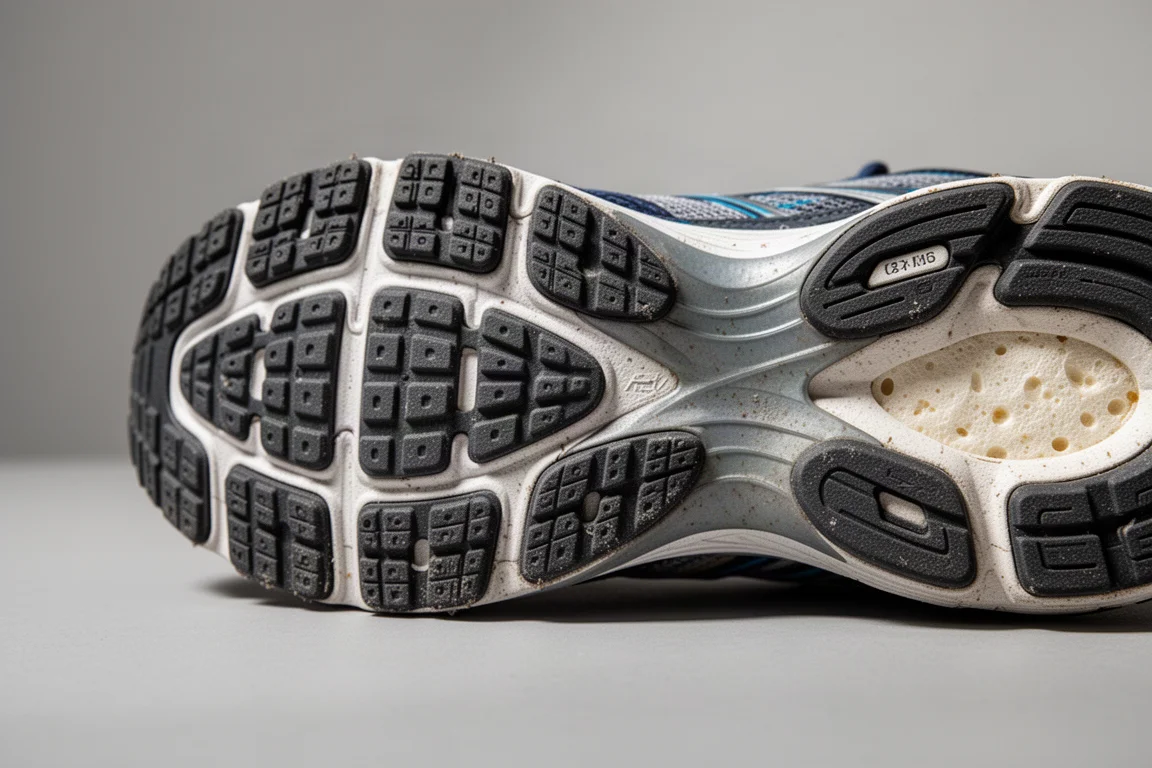
Both shoes add rubber this generation while leaving a patch of exposed foam at the heel, a curious choice in both cases. The Novablast encourages heel landings with that rear foam bulge, yet leaves that exact area exposed, and early wear was visible within 60 to 70 miles. The Mach 6 shows some minor wear on its exposed foam too, though Hoka’s previous generation held up well and full durability remains to be seen.
Wet-weather grip is a real separator. The Novablast 4’s rubber was genuinely poor in the rain, slipping noticeably on pavement, corners, and downhills. The Mach 6 rubber impressed by comparison, offering solid, confident traction in the same conditions, a big step up from its predecessor’s lack of rubber.
Neither shoe is a great walker. Both are running-first shoes, and neither feels natural for errands or all-day standing compared to more traditional hybrid trainers. The Novablast’s chunky heel flare makes it feel like a shoe built purely for running, while the Mach 6 feels a bit more like a regular sneaker on foot.
Which Shoe Should You Buy?
Both shoes have removable insoles, both run true to their purpose, and both deliver real value at $140. The question is which character fits your training.
The Mach 6 is the fun one. It is light, bouncy, and fast, and it consistently pushed testing pace faster than planned, with most runs ending up in the seven-minute-per-mile range almost by accident. It feels good at nearly every effort, works well at steady and faster paces, and offers enough cushion to avoid bottoming out. Its weaknesses are stability, which has dropped versus the previous generation, inconsistent sizing, and uncertain long-term durability of the softer foam. If you want a modern, no-frills, lightweight daily trainer with genuine pop, this is the pick, and it feels like what a next-generation Pegasus should be.
The Novablast 4 is the protective workhorse. It is heavier, around 294 g per shoe versus roughly 240 g for the Mach 6, and it runs like every bit of its 42 mm heel. But it is stable, supportive, and excellent for high mileage, recovery days, and long runs, where it felt great past the first hour. Heavier runners and anyone who wants a protective, non-plated long run shoe will get the most from it. Lighter, more nimble runners may find it too much shoe.

If you are choosing between them, the rule of thumb is simple: need protection and stability, buy the Novablast 4; want speed and fun, buy the Mach 6. Some runners will find a place for both in a rotation.
Conclusion
The Hoka Mach 6 and Asics Novablast 4 prove that two daily trainers at the same price can serve completely different runners. The Mach 6 is the softer, lighter, faster option that makes easy miles feel quick. The Novablast 4 is the firmer, more protective, more stable option built for big mileage and tired legs. Match the shoe to what your training actually needs and either one will earn its keep.
Product link
View more details for Hoka Mach 6
This product is mentioned in the review. Check the specifications, options, and compatibility before buying.
View more details for Hoka Mach 6Further reading
Related Reviews

Running Shoes
Best Road-to-Trail Running Shoes: Three Versatile Options for Mixed Terrain
A practical guide to three road-to-trail running shoes that handle both pavement and mild trails, with clear strengths and trade-offs for different runner types.

Running Shoes
Best Running Shoes for Achilles Tendonitis: Three Options Explained
Three running shoes with different heel drops and support features designed to help reduce Achilles tendon pain during walking and running.

Running Shoes
Best Running Shoes for Women: Five Top Choices Ranked
A ranked guide to five women's running shoes, from versatile daily trainers to high-performance racing options, with real strengths and trade-offs for each.