Running Shoes
Hoka Mach 5 vs New Balance Rebel v3: The Two Best Non-Plated Daily Trainers
Two lightweight, plate-free trainers with very different ride personalities. Here's how the Hoka Mach 5 and New Balance Rebel v3 compare across fit, feel, speed, and comfort.
Introduction
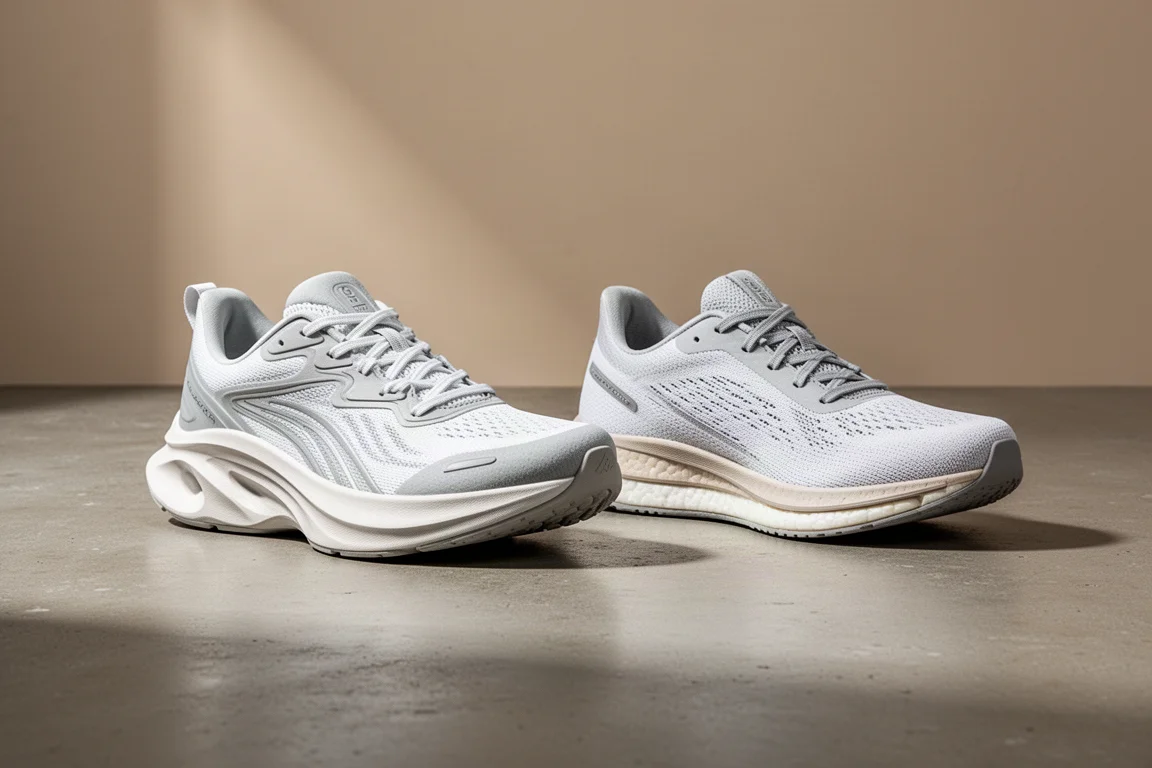
The Hoka Mach 5 and New Balance Rebel v3 are arguably the two best non-plated daily trainers on the market right now. Both are lightweight, both are versatile enough to handle a wide range of runs, and both come in a bit cheaper than plated all-rounders like the Saucony Endorphin Speed 3 or the Asics Magic Speed 2.
Neither shoe uses a plate, yet both borrow heavily from the modern running shoe revolution: the Rebel v3 gets New Balance’s bouncy FuelCell foam, while the Mach 5 brings a dual-density midsole and Hoka’s signature rocker geometry. Choosing between them really comes down to ride feel and the type of running you do most.
Specs and First Impressions
The New Balance Rebel v3 is the slightly lighter shoe at 216g (7.6oz) in a UK size 9, with the Mach 5 not far behind at 229g (8.1oz) in the same size. The Rebel v3 has a 6mm heel-to-toe drop, the Mach 5 a 5mm drop, and neither shoe has a super high stack; both come in just under 30mm as far as can be told, and New Balance hasn’t published official specs for the Rebel v3.
On pricing, the Rebel v3 costs £130 in the UK and $130 in the US, while the Mach 5 is £130 in the UK and $140 in the US.
Hoka Mach 5: A Smooth Cruiser
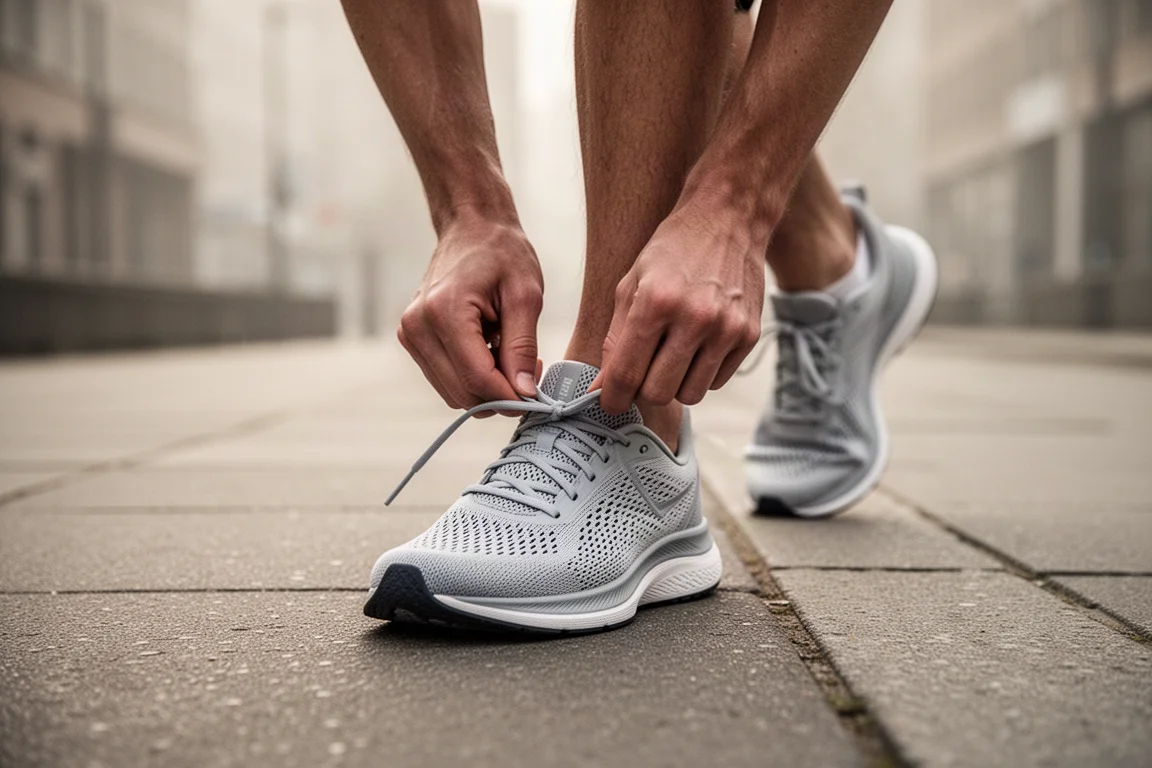
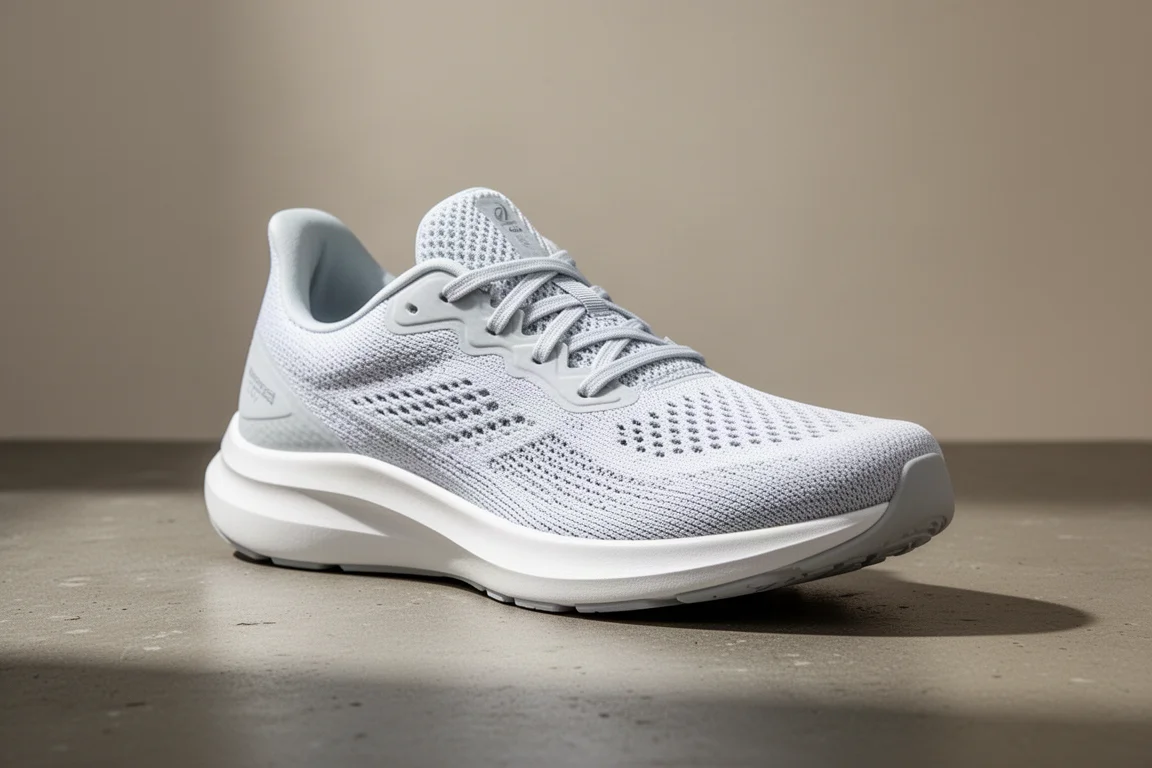
The Mach 5 uses a lightweight mesh upper with a little padding around the heel and Hoka’s extended heel tab, which makes the shoe easy to slip on. The dual-density midsole pairs a top layer of Hoka’s ProFLY+ foam, responsive but fairly soft, with a firmer rubberized EVA bottom layer. You sink slightly into the softer foam on top, hit the firmer base underneath, and bounce on your way. It also has a distinctive rocker profile that’s common across Hoka’s range.
That rubberized EVA layer doubles as the outsole, with no extra rubber added. It likely contributes to the smooth ride feel, but it means the sole will wear a bit faster since it is essentially exposed foam, even if it’s a harder EVA than the exposed foam on the Rebel v3.
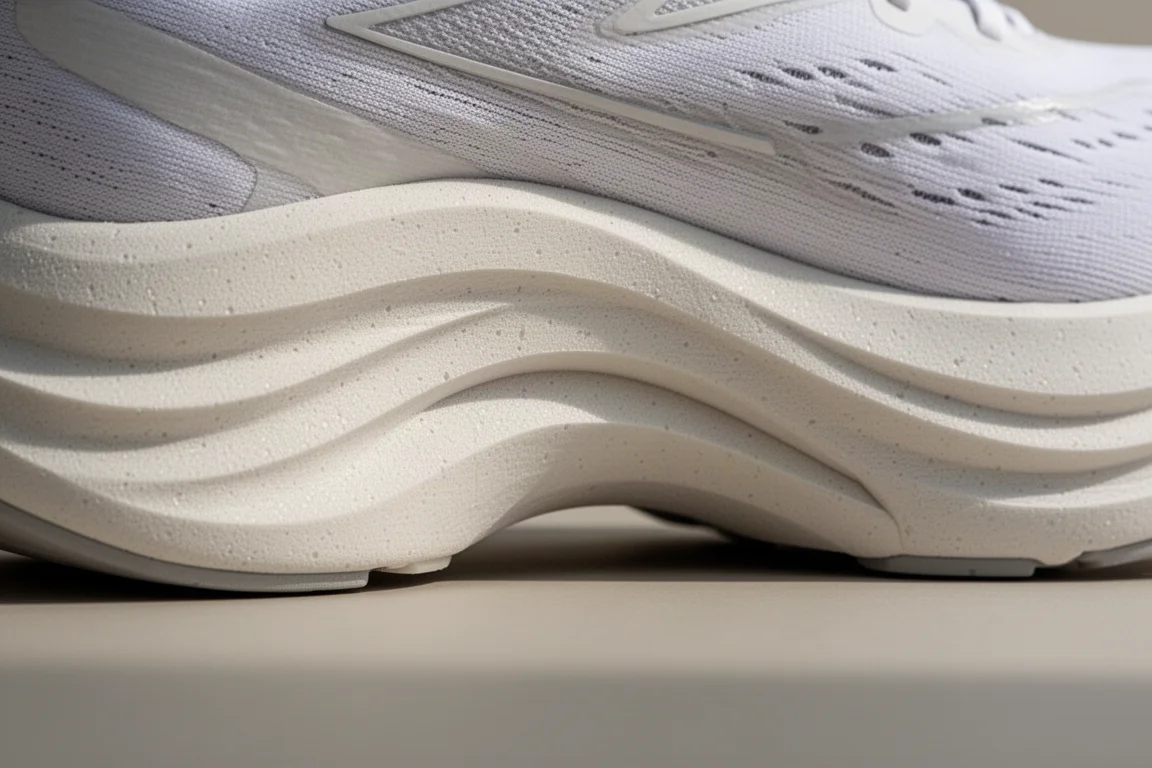
On the run, the Mach 5 has a very smooth and natural feel. It’s light enough to disappear on the foot at any pace, and the well-designed rocker geometry lets you just roll along. It gives a little more back as you pick up the pace, and while it can handle short reps, it really excels on longer runs. It’s a comfortable long-distance option, and it’s one that comes to mind for racing a marathon if you can’t use carbon-plated shoes: lightweight, fast, comfortable over long distances, and happy to just get on with the job.
New Balance Rebel v3: Bouncy and Fun
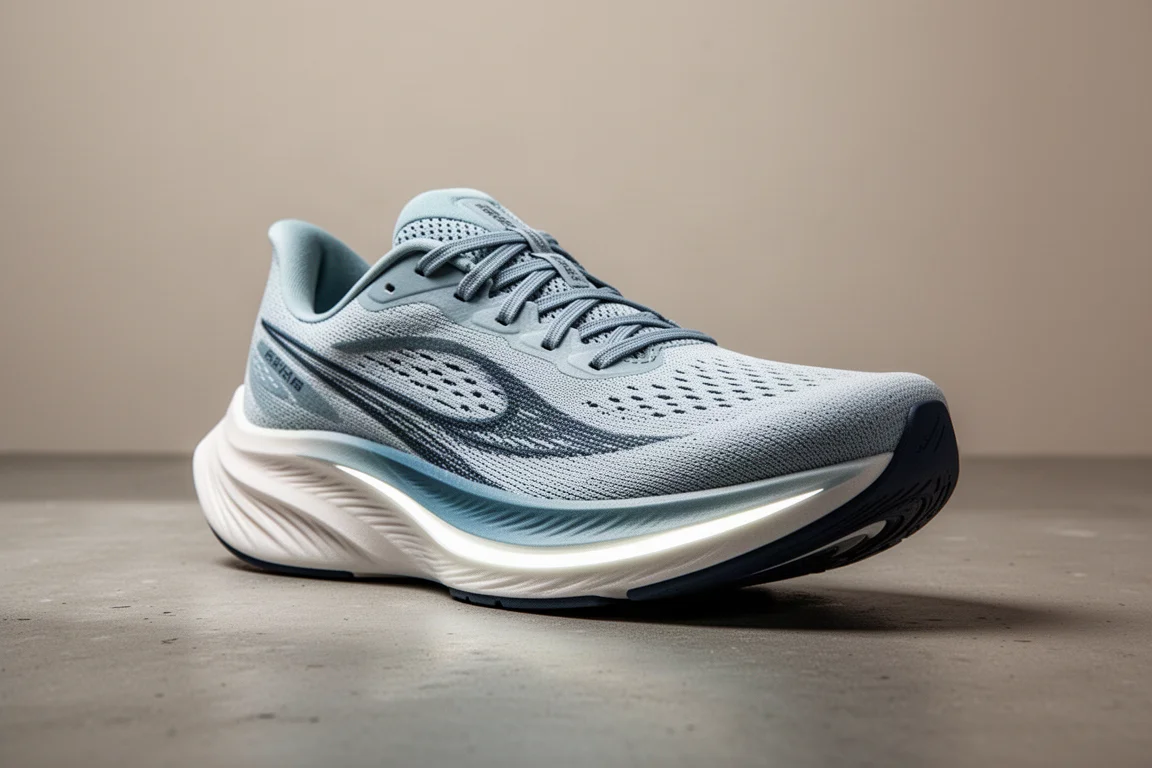
The Rebel v3 uses a FuelCell midsole, a nitrogen-infused foam that feels very soft and bouncy. The lightweight mesh upper is a little thicker than the one on the Rebel v2 for added durability, with a bit of padding around the heel. The outsole has decent forefoot coverage and two strips at the back, but the rubber is thin and sits almost flush against the exposed midsole foam, so you may see some wear on that foam over time, even though grip hasn’t really been a problem.
Key updates over the v2 include a slightly higher midsole stack and a slightly wider forefoot base.
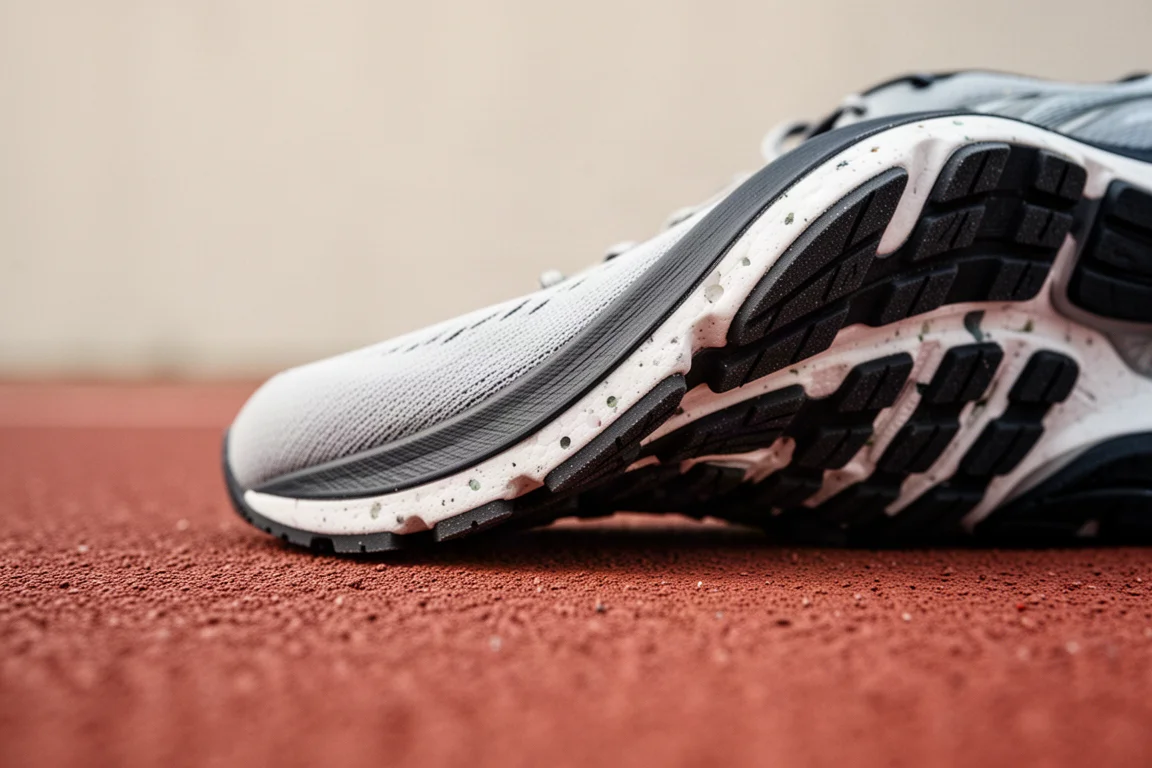
This is a much more noticeable shoe than the Mach 5, but in a good way. It’s genuinely fun to run in: very flexible, plenty of ground contact, and punched along by the springy FuelCell foam, especially when you push the pace. It’s excellent for shorter runs and short, fast reps, arguably better than the Mach 5 in that regard. FuelCell is arguably the better foam of the two midsoles here, but the trade-off is comfort: the Rebel v3 doesn’t feel as cushioned underfoot, and on easy or longer runs it can occasionally feel like not quite enough shoe.
Fit and Sizing
The Rebel v3 is a fairly small, tight-fitting shoe. It fits fine in normal size, but a little more room would help, and going half a size up is the safer bet. Midfoot and heel fit are solid with no concerns.
The Mach 5 fits true to size, at least for narrow feet. Some runners find Hoka’s toe boxes cramped, but for narrower feet it fits nicely as-is.
Durability: The Shared Weak Spot
Durability is the main concern with both shoes. The Rebel v3 has minimal rubber coverage with exposed foam, and the Mach 5’s rubberized EVA outsole is essentially exposed foam too. Neither is a high-stack shoe with big, thick outsoles, and heavy use will beat up the foam.
Where high-stack trainers with chunky outsoles might last 400 to 500 miles (800km), these are probably closer to 300 miles (500km) at their absolute best. There isn’t much distinction between the two here; both are durable enough to enjoy, just not the most hardwearing options in the category.
Which One Should You Buy?
Both shoes handle a full range of training well, but their strengths differ. The Rebel v3 is lighter, bouncier, and more fun, ideal for shorter runs, especially short and fast sessions, and for runners whose daily training revolves around 5K to 10K efforts. The Mach 5 is more of a cruiser: lace it up, forget about it, and roll through almost any run. It shines on long runs and progression runs where you build the pace over 10, 15, or 20 miles, and it protects your legs on easy days while still being light and fast enough when you want to go.

If your idea of versatility is lots of different short runs at varying speeds, the Rebel v3 does a great job. If you want something that goes longer and stays comfortable on long runs, the Mach 5 is the better pick. Either way, both are genuinely good shoes that are easy to recommend to anyone after a non-plated daily trainer.
Conclusion
The Hoka Mach 5 and New Balance Rebel v3 prove you don’t need a plate for a modern, high-performance daily trainer. Pick the Rebel v3 for bounce, speed, and short snappy runs; pick the Mach 5 for smoothness, comfort, and long-distance versatility. Both are among the best in the category, and neither will disappoint if it matches your ride preference.
Further reading
Related Reviews

Running Shoes
Best Road-to-Trail Running Shoes: Three Versatile Options for Mixed Terrain
A practical guide to three road-to-trail running shoes that handle both pavement and mild trails, with clear strengths and trade-offs for different runner types.

Running Shoes
Best Running Shoes for Achilles Tendonitis: Three Options Explained
Three running shoes with different heel drops and support features designed to help reduce Achilles tendon pain during walking and running.

Running Shoes
Best Running Shoes for Women: Five Top Choices Ranked
A ranked guide to five women's running shoes, from versatile daily trainers to high-performance racing options, with real strengths and trade-offs for each.