Backpacking Tents
Hilleberg Nammatj 2 Review: A Four-Season Tunnel Tent Built for Hard Weather
A close look at the Hilleberg Nammatj 2, a two-person, four-season tunnel tent with Kerlon 1800 fabric, twin end vents, and a 105 cm vestibule.
Introduction
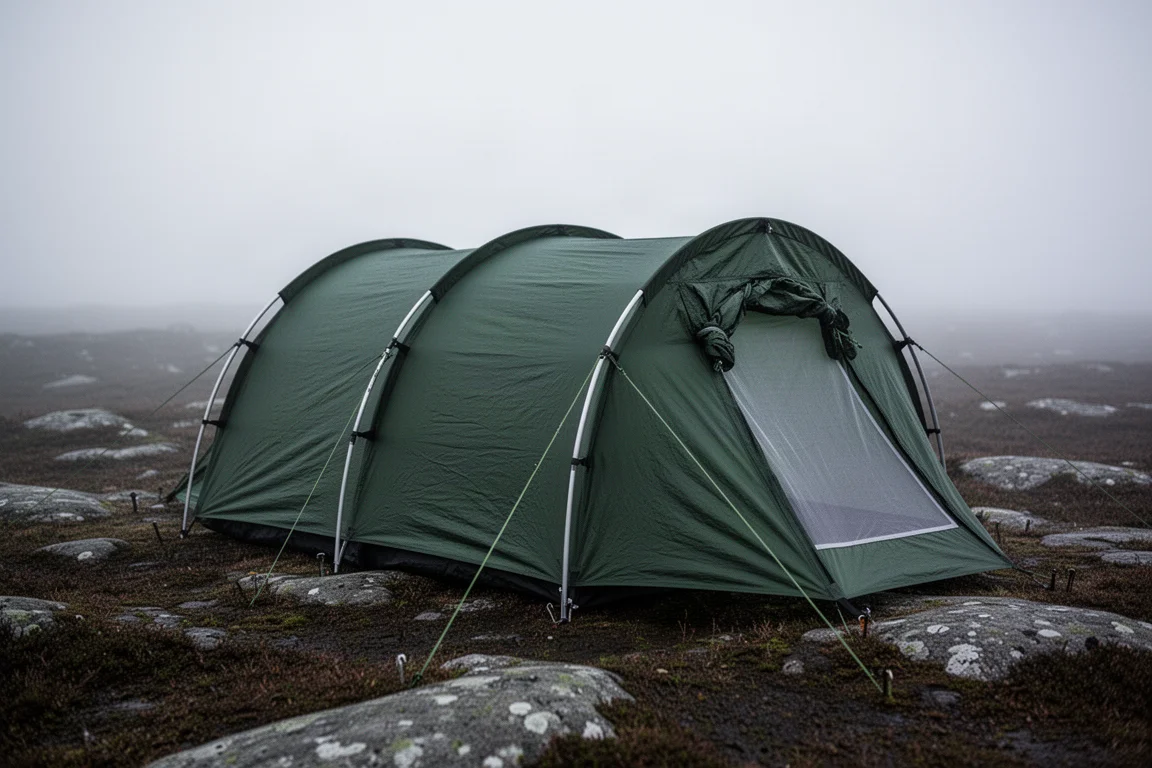
The Hilleberg Nammatj 2 is a two-person tunnel tent built for genuine four-season use, and it sits at the top of the Black Label range. It costs £1,179 and weighs exactly 3 kg. That combination places it firmly in the heavyweight, high-durability corner of the market, and it is a shelter designed around weather resistance rather than saving grams.
It pitches inner and outer together, so the sleeping area stays dry while the tent goes up, and the whole process is unusually quick for a tent of this size. What follows is a close look at what you get, how it behaves in the field, and who should seriously consider spending this much on a shelter.
Who This Tent Is For
This is a tent for backpackers, wild campers, and mountaineers who expect to be out in proper winter conditions and who would rather carry a heavier pack than wonder whether their shelter will hold. The Nammatj 2 is a true four-season design, and everything about it, from the 10 mm poles to the thick floor, is chosen for durability rather than low weight.
It also works well for solo adventurers who want a lot of living space. The packed tent is bulky at 51 cm by 17 cm, but once the poles and pegs are removed it can be carried in a dry bag and brought down to roughly half that volume without being over-compressed.
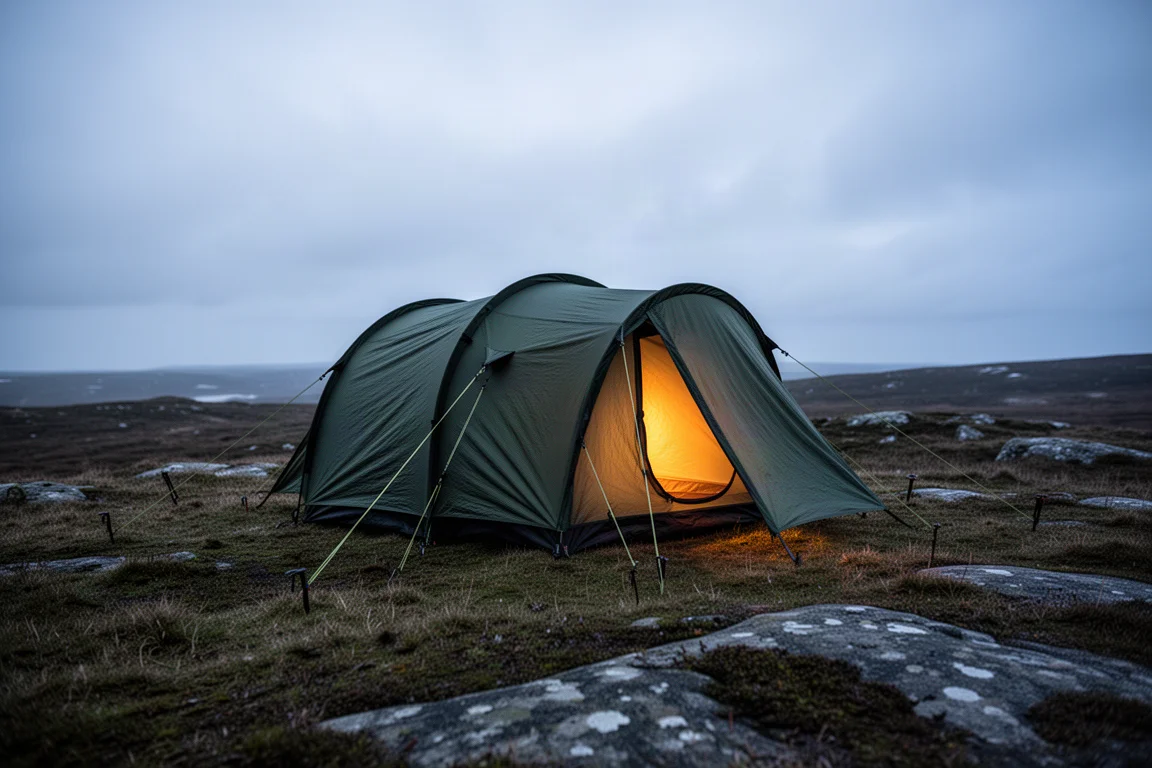
The layout also suits anyone who values a large, usable vestibule. There is enough room in the front porch to sit down, keep a backpack alongside you, and strip off wet clothing before moving into the inner tent.
Main Strengths: Build Quality and Weather Protection
The Nammatj 2 uses Kerlon 1800 fabric, a 40D high-tenacity ripstop nylon with a hydrostatic head rating of around 5,000 mm. The floor is a 100D construction, which is thick by backpacking standards, and the whole package is built to be seriously waterproof.
The poles are 10 mm DAC NSL models from the Black Label specification, and they are strong and well finished. Two poles run the full length of the tent, and both arrive pre-bent. Hilleberg also supplies 18 Y pegs, which grip the ground firmly and stay put once they are set.
The windward end of the tent is anchored by four pegging points, and the fly can be pulled very tight at both the rear and the front. Before the guy lines are even deployed, the tent already sits taut, and with every guy point in use the structure feels remarkably solid. Tunnel tents are known for their strength to weight ratio, and this one sits at the very strong end of that scale.
Interior Space and the Vestibule
Inside, the tent measures 220 cm long, 130 cm wide at the door end, and 118 cm at the tail end, with a peak height of 95 cm. For someone around 172 cm tall with a long back, headroom is close to the ceiling when sitting upright, but there is still clearance when slouched or lying on a sleeping pad. The walls run fairly vertical, which means usable height extends towards the edges rather than tapering away.
The vestibule is 105 cm deep and feels wider and taller than that figure suggests. An inset vent at the front adds headroom to the porch, which makes it genuinely comfortable to sit in while changing out of wet gear.
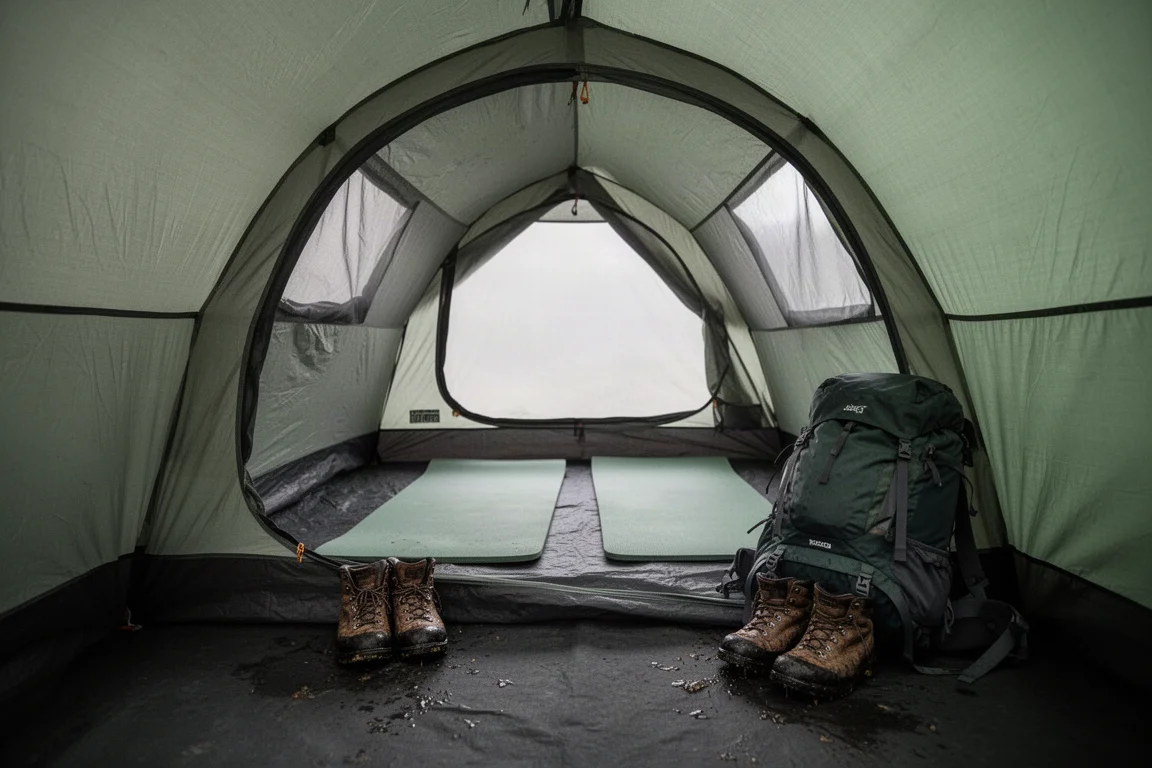
The door uses a double zip and can be configured two ways. The solid fabric panel can be zipped off to leave just mesh, and the whole door can be rolled back at the top and bottom and stashed in its own pocket, giving full access to both the inner tent and the vestibule.
Ventilation and Pitching
The standout feature is the pair of large vents, one at each end of the tent. Each vent has two zips and a solid fabric panel that ties back to expose fine mesh, keeping insects out while letting air through. Both panels can also be unzipped completely for maximum airflow, which is useful for drying the tent out or for warmer days. With the door closed, the mesh still gives a clear view outside.
Pitching is straightforward. The poles feed through sleeves rather than clipping in, and they seat into thick cups at the far end. Two pegs go in at one end, the poles slide through, and the tent is pulled out and pegged at the other end. The key to a good pitch is getting the distance between the two poles taut, which keeps the fabric from flapping. There is only one door, on one side, so it pays to think about wind direction before committing to a position.
Things to Consider Before Buying
The most obvious trade-off is weight. At 3 kg, the Nammatj 2 sits at the heavy end of the tunnel tent spectrum, and lighter alternatives exist. What you get in return is a structure and material package that is very hard to beat for strength.
The packed size is chunky at 51 cm by 17 cm, and while splitting the load into a dry bag helps, it still takes up meaningful space in a pack. There is only one door, positioned on one side of the tent, which limits options when the wind shifts after pitching. A second door would add airflow and give more flexibility in how you enter and exit.
Storage inside is limited to the door pocket and one additional pocket, which feels light for a tent where weight is not the primary concern. In strong, shifting wind, the long unsupported side panels can flap, as they do on most tunnel tents. The Nammatj is not a particularly flappy design, but it is worth knowing that the large fabric panels along the sides have no additional fixing points.
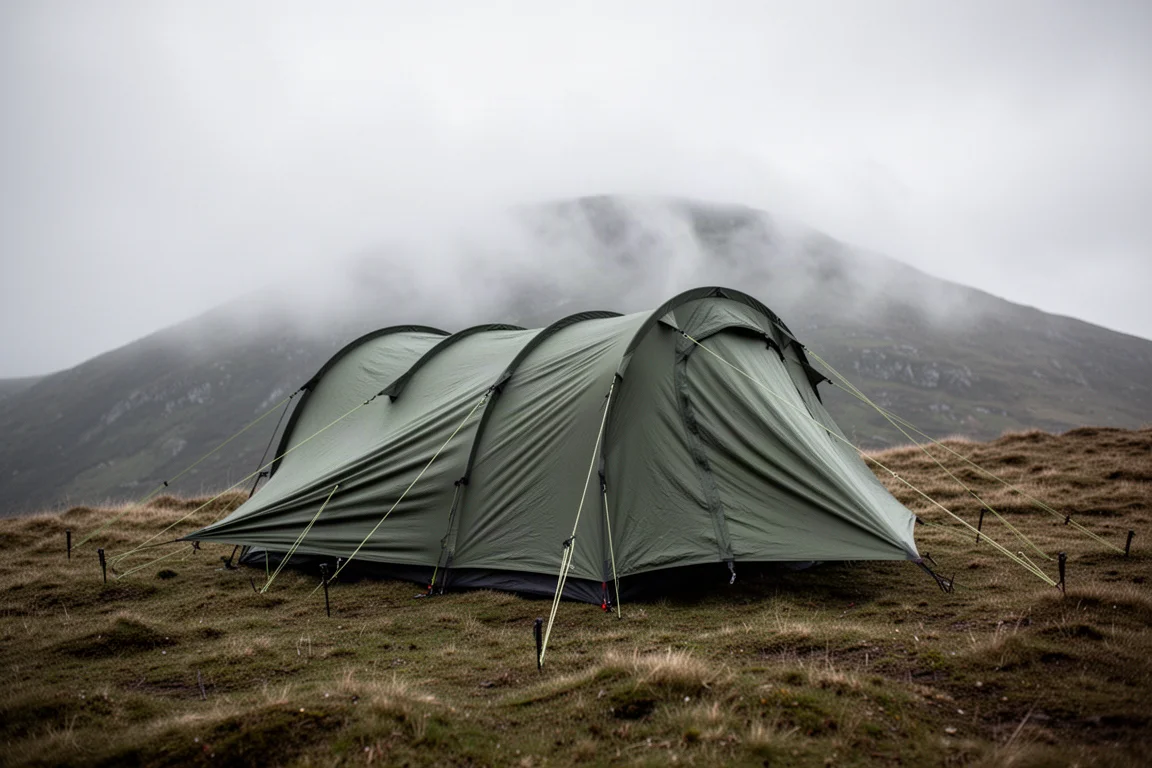
Snow loading is another consideration. As with tunnel tents generally, this shape is not ideal for heavy snow accumulation, even though the tent is built for four-season conditions.
Weight, Pack Size, and Value
The £1,179 price puts the Nammatj 2 in premium territory, and there is an optional footprint available for somewhere between £125 and £150 that attaches underneath and extends over the vestibule area. The counter-argument is longevity. The materials, poles, pegs, guy lines, and fittings are all high quality, and this is a tent that should last for many years of hard use.
For context, the Fjallraven Abisko Light 2 is a lighter alternative with a much smaller pack size and a lower price, and it uses a clever mix of 40D and 20D fabrics. It comes close, but the Nammatj 2 remains the stronger and more weatherproof option of the two. Within the Hilleberg range, the Nallo 2 is the other obvious comparison, and if carrying the extra weight is acceptable, the Nammatj 2 is the one to choose.
Buying Advice
Buy the Nammatj 2 if you want a two-person, four-season tunnel tent that can take a beating and keep you dry, and if you are comfortable carrying 3 kg to get that. It is the easiest tent of its size to pitch with gloves on, the ventilation is genuinely effective, and the vestibule is large enough to make wet, cold mornings far more manageable.
If pack weight is your first priority, a lighter tunnel tent such as the Abisko Light 2 will make more sense, and it costs less. If maximum strength and long-term durability matter more, the Nammatj 2 is the more convincing purchase. Check the packed dimensions against your backpack, consider the optional footprint, and plan your pitch so the single door faces away from the prevailing wind.
Conclusion
The Hilleberg Nammatj 2 is a serious four-season shelter with outstanding weather protection, excellent ventilation, and a build quality that justifies a long service life. Its 3 kg weight and bulky pack size are real considerations, and the single door and limited pockets are compromises worth weighing up. For backpackers who put protection first, it is one of the strongest two-person tunnel tents available.
Product link
View more details for Hilleberg Nammatj 2
This product is mentioned in the review. Check the specifications, options, and compatibility before buying.
View more details for Hilleberg Nammatj 2Further reading
Related Reviews
Backpacking Tents
3F UL Lanchan Pro 1 Review: A 1 lb 8 oz Single-Wall Trekking Pole Tent
A practical look at the 3F UL Lanchan Pro 1, a single-wall trekking pole shelter with a 1 lb 8 oz weight, 20D silnylon fabrics, and a roomy 90 x 31 x 49 inch interior.
Backpacking Tents
3F UL Taiji 2-Person Tent: A Convertible Backpacking Shelter Worth a Closer Look
A practical look at the 3F UL Taiji two-person tent, covering its materials, true two-person interior, fly-first pitching, and the seasonal inner swap that lets one shelter cover more of the year.
Backpacking Tents
3FUL Lanshan Twoerson Pro Review: A Light Trekking Pole Shelter That Struggled in Rain
A two-person trekking pole shelter with a 2026 redesign, pitched with sticks and put through a night of steady rain. Here is what worked, what did not, and what to check before buying.