Backpacking Tents
Hilleberg Jannu Review: A Four-Season Tent Built for Serious Weather
A close look at the Hilleberg Jannu, a two-person four-season backpacking tent with a distinctive three-pole frame, genuine storm strength, and a long, low vestibule that shapes how it lives.
Introduction
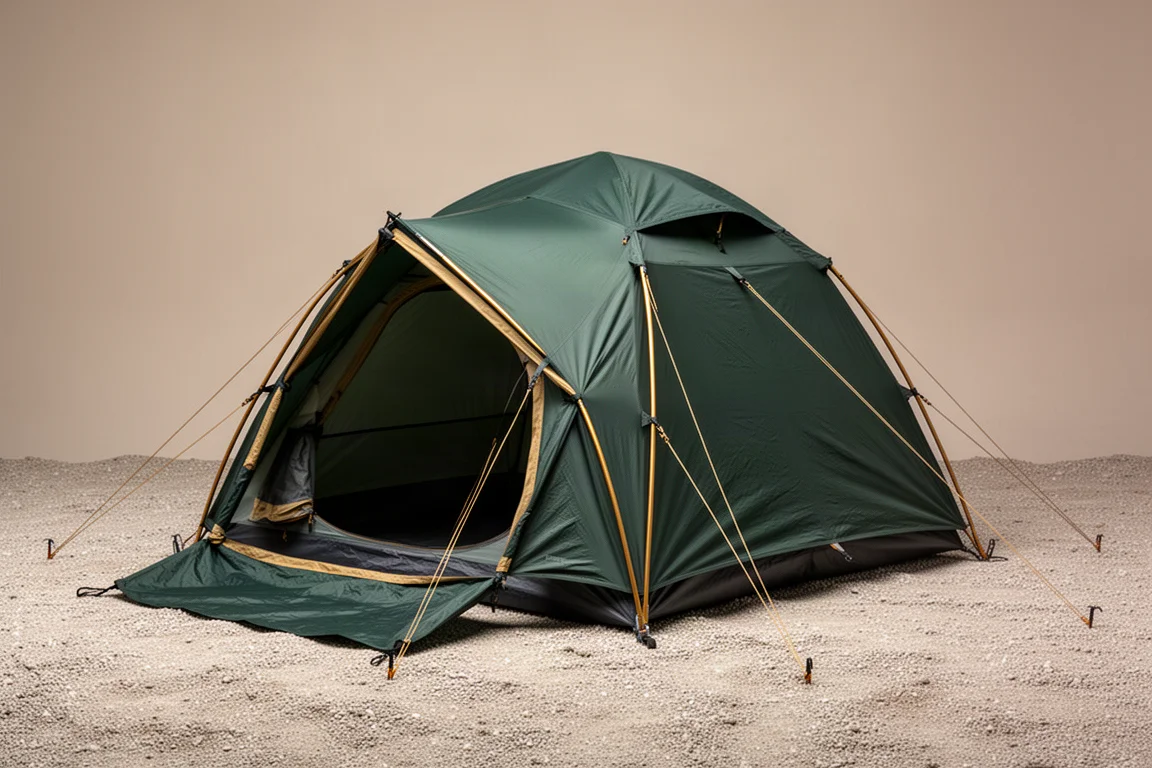
The Hilleberg Jannu is a two-person, four-season backpacking tent built around a single priority: holding its shape when the weather turns genuinely hostile. It sits in Hilleberg’s Red Label range, and its most recognisable trait is a three-pole frame that has very little in common with anything else on the market. On an exposed hillside, it is not a tent you would mistake for another.
This look at the Jannu covers what arrives in the bag, how it pitches, how it behaves in wind and rain, what the interior is like to live in, and the trade-offs worth understanding before committing to the price. The short version is that the Jannu is unusually capable and unusually particular, and both of those things matter when you decide whether it belongs in your pack.
Who the Hilleberg Jannu Is For
The Jannu is aimed at backpackers who head out in winter conditions, camp on exposed ground, and want a shelter that stays put rather than one that merely survives. It is a true four-season design, and it is a Red Label tent, which means Kerlon 1200 fabric, a high tenacity 30D ripstop nylon with silicone treatment on both sides, two coats on the outer and one on the inner, plus 9 mm DAC poles and DAC V-shaped pegs.
One condition matters more than any other. The vestibule end has to be pitched into the wind. That is the entire point of the shape, and if you are not going to set it up that way, there is little reason to buy this tent, because that is where all of its strengths live.
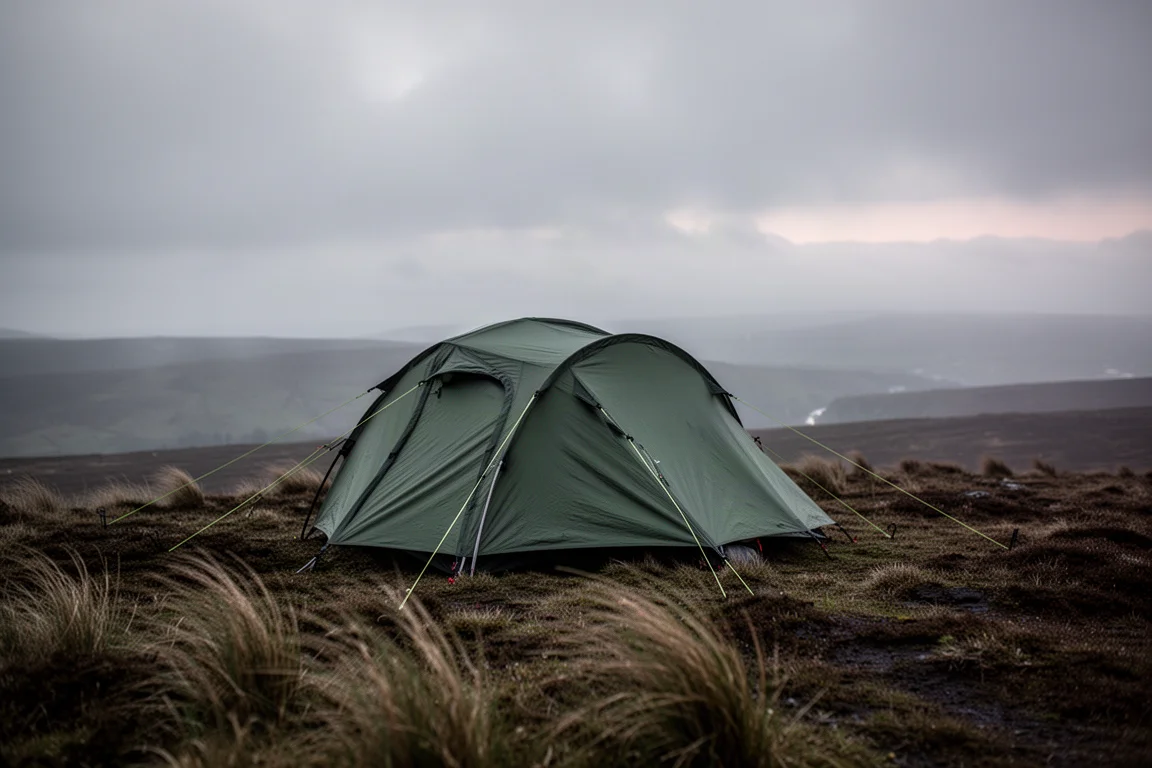
The two-person rating is honest, but the interior is particularly lovely for one person, especially on winter camps where you want your kit close and out of the weather. The inner measures 235 cm in length, so taller users get more usable room than most tents in this class, and there are two large pockets on each side plus tabs for a lantern and drying lines.
What Comes in the Bag and How It Pitches
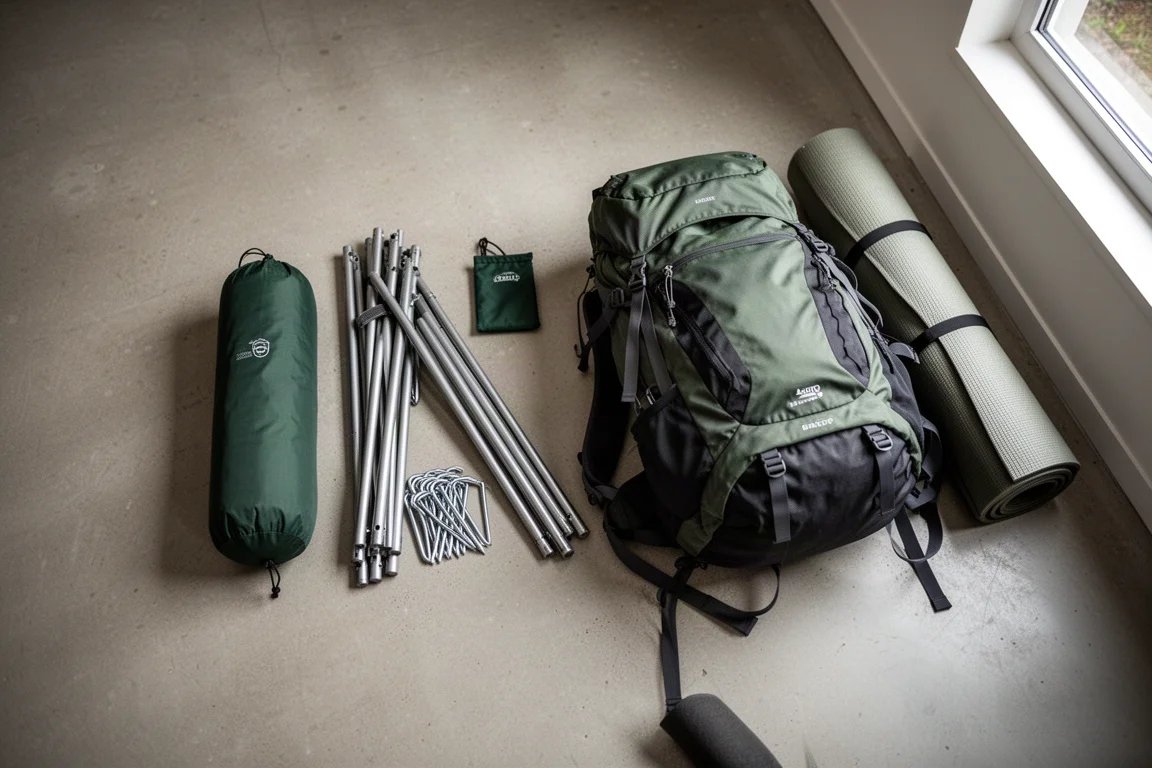
The package is substantial: 52 cm by 18 cm. Inside you get three sets of 9 mm DAC poles, one of them pre-bent for the front of the tent, along with 15 V-shaped DAC pegs. The inner and outer can be pitched together if you add the optional footprint, which clips in and lets you raise the whole tent in one go.
Pitching follows a method common to many Hilleberg designs, and it is a genuinely good one. You peg out the inner and outer flat on the ground first, then feed the poles through the sleeves. Keeping the tent low while the frame goes in means less flapping in wind and less chance of a gust damaging a pole. Six stakes are enough to get the shape started, the sleeves are colour coordinated, and the poles crisscross, with the angled front pole passing over the other two. It is quick and easy, and it stays quick and easy when it is blowing a gale.
There is also a fabric top cap. In fair weather you can leave it off, and ventilation improves noticeably. With the cap clipped on, it sits just clear of the fly to help air move, and when it is pulled down properly the fabric stays taut instead of flapping.
Main Strengths: Stability in Bad Weather
Strength is the headline here. Three poles instead of two, 9 mm DAC poles, and a full set of guy lines add up to a structure that does not budge once everything is tensioned. The Jannu has built a reputation for standing up to severe winds, and the design explains why. The profile is deliberately low, with the vestibule starting at 85 cm high and the highest point of the inner at 100 cm, and the footprint is narrow and compact, which makes it easier to pitch in small spaces and calmer in moving air.
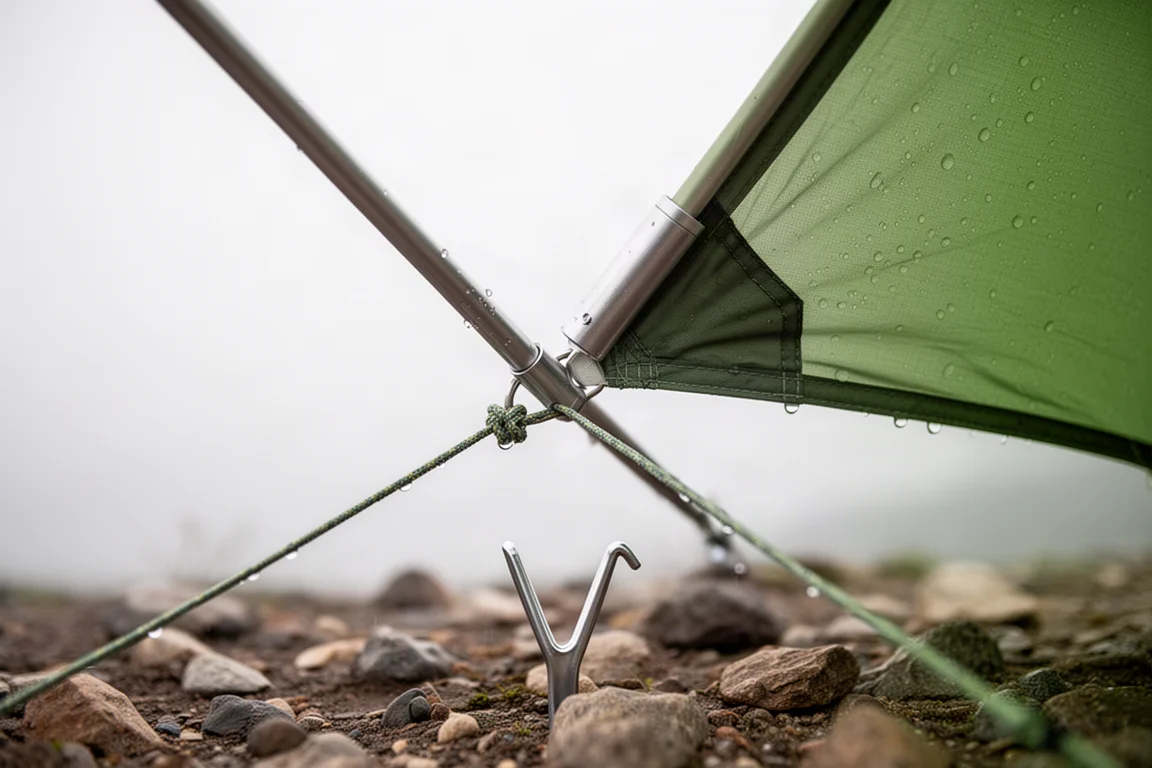
The vestibule plays a structural role as well as a practical one. In strong wind it takes the brunt of the load, so the inner stays rigid and largely unaffected while the outer distorts. For a tent designed around bad weather, that is exactly the behaviour you want. Water resistance is quoted at a 5,000 mm hydrostatic head on the fly, with a 15,000 mm bathtub floor in a thick 70D fabric. Build quality follows the same pattern as the rest of the range: reinforced stress points, fabric pullers for getting everything tight, and an extra pegging point in the middle.
Interior Space and Ventilation
Inside, the Jannu is wider than its low profile suggests. The inner runs 235 cm long, measuring 120 cm across at the far end, 130 cm at the head end, and a maximum of 140 cm in the middle. The vestibule is 106 cm long, which is a lot of covered storage. The top vent is clever: you can remove the solid fabric and leave mesh, remove the mesh as well and open the whole top, or leave it closed. With the cap in place, rain does not get in.
The trade-off is that Hilleberg tents are warm shelters, and condensation is a familiar complaint across the range. Ventilation is not the Jannu’s strongest suit, and there is no rear vent. Given how effective the top vent is, a matching vent at the back would be a welcome addition.
Entrance Options and Vestibule Layout
Access is more flexible than most tents allow. You can enter from the right side, or from the left side by moving a pegging point to the middle. The main door uses a triple zip arrangement that can be pegged right round, and the door panel stashes in a pocket for a maximum opening. The solid door can be swapped to mesh with the solid panel folded at the bottom, and the main door side gives the best access to the inner.
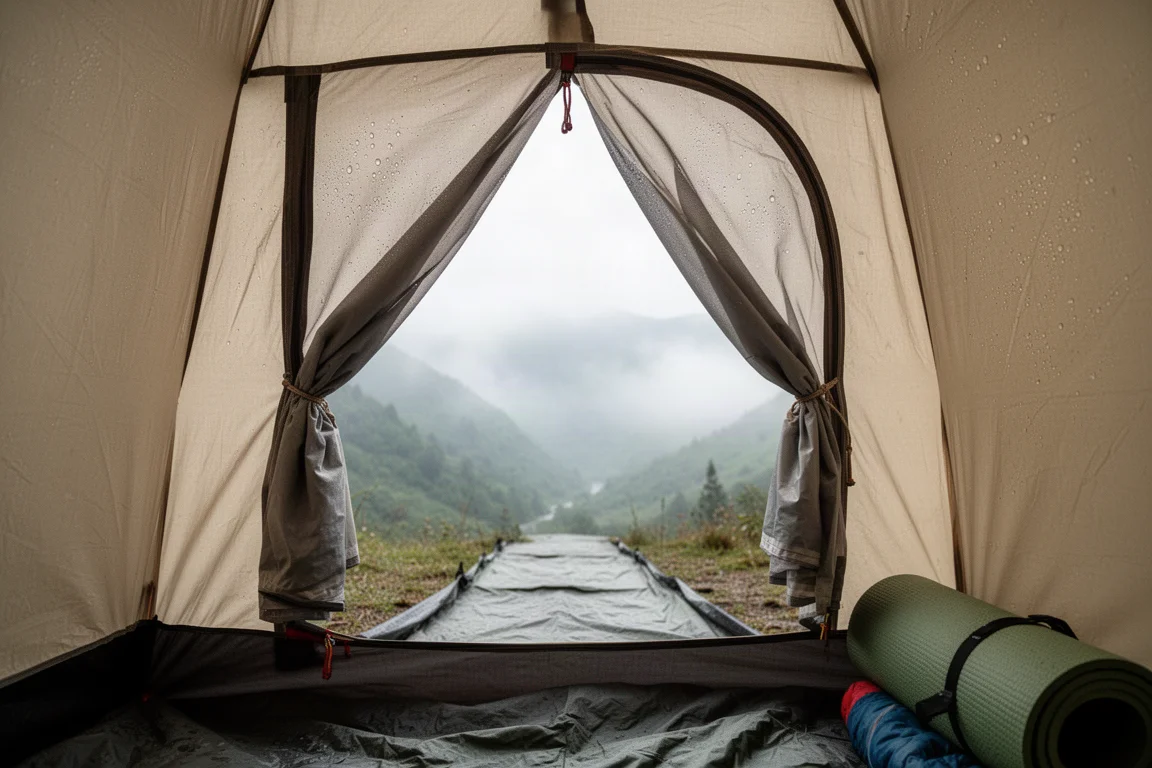
The catch is what happens in the conditions this tent was designed for. If the main door is sealed because of wind and rain, you have to use the left or right side entry instead, and that is genuinely awkward. Condensation on the fly adds to the problem, because getting in and out through a small opening is a good way to end up wet.
The vestibule itself is the most divisive part of the design. It is very long and very low. It starts at 85 cm and drops lower towards the front, which is fine when you are sitting in the middle of the inner, where there is comfortable headroom, but much less comfortable at the entrance. Taller users will be crouching a great deal. The shallow height also makes cooking in the vestibule more challenging than it would be in a taller porch.
Things to Consider Before Buying
Weight is the first consideration at 3.2 kg. For a true two-person, four-season tent with three poles, that is a reasonable figure, but plenty of backpackers will not like it. The packed size is the second: 52 cm by 18 cm is a big bundle, and it will dominate a pack unless you plan around it. A common workaround is to carry the poles on the outside of the pack and the inner and outer together in a dry bag. Without something like that, you are choosing between a large backpack and very little space for anything else.
Price is the third, and the hardest to swallow. The Jannu is £1,469 for 2026. That is a great deal of money for a design that has not changed, and it makes the value question genuinely difficult. The counter-argument is durability: Hilleberg tents last for years, and the Jannu is built to be used hard rather than replaced often.
Finally, think carefully about how you use a vestibule. If cooking under cover and keeping all your kit out of the inner matters to you, the long, low porch here is likely to frustrate. If you mostly want a bombproof sleeping space and accept that the porch is primarily a windbreak, the layout makes far more sense.
Buying Advice
If you camp in real winter weather, on exposed ground, and you will pitch the vestibule into the wind every time, the Jannu earns its place. Its stability, its compact footprint, and its ability to absorb a battering while the inner stays solid are the reasons to pay for it. The pitching method reinforces all of that, and the three-pole frame is a meaningful step up from a two-pole design.
If you mostly camp in milder conditions, the weight, the packed size, and the price are difficult to justify, and a lighter three-season tent will serve you better. This is a shelter that rewards a specific kind of camper, and the people it suits tend to know exactly who they are.
Conclusion
The Hilleberg Jannu is a cleverly designed, distinctive tent that can withstand some genuinely bad weather, and it has the track record to prove it. The three-pole frame, the low profile, and the pitching method all work together, and the interior is more generous than the silhouette suggests.
It is not a perfect design for everyone. The vestibule is long and low, access becomes awkward when the main door is sealed, condensation is part of the deal, and the price is steep for a tent that has not been updated. Buy it for the storms, not for the porch, and it will make a great deal of sense.
Product link
View more details for Hilleberg Jannu
This product is mentioned in the review. Check the specifications, options, and compatibility before buying.
View more details for Hilleberg JannuFurther reading
Related Reviews
Backpacking Tents
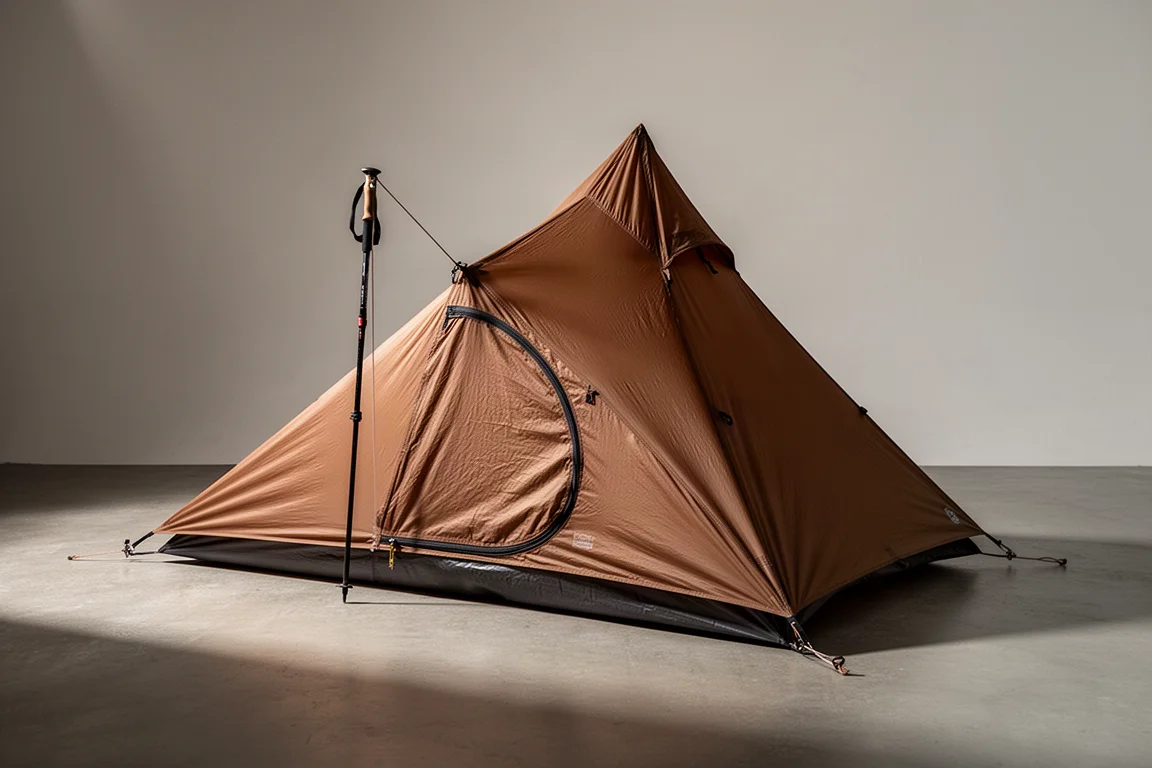
3F UL Lanchan Pro 1 Review: A 1 lb 8 oz Single-Wall Trekking Pole Tent
A practical look at the 3F UL Lanchan Pro 1, a single-wall trekking pole shelter with a 1 lb 8 oz weight, 20D silnylon fabrics, and a roomy 90 x 31 x 49 inch interior.
Backpacking Tents
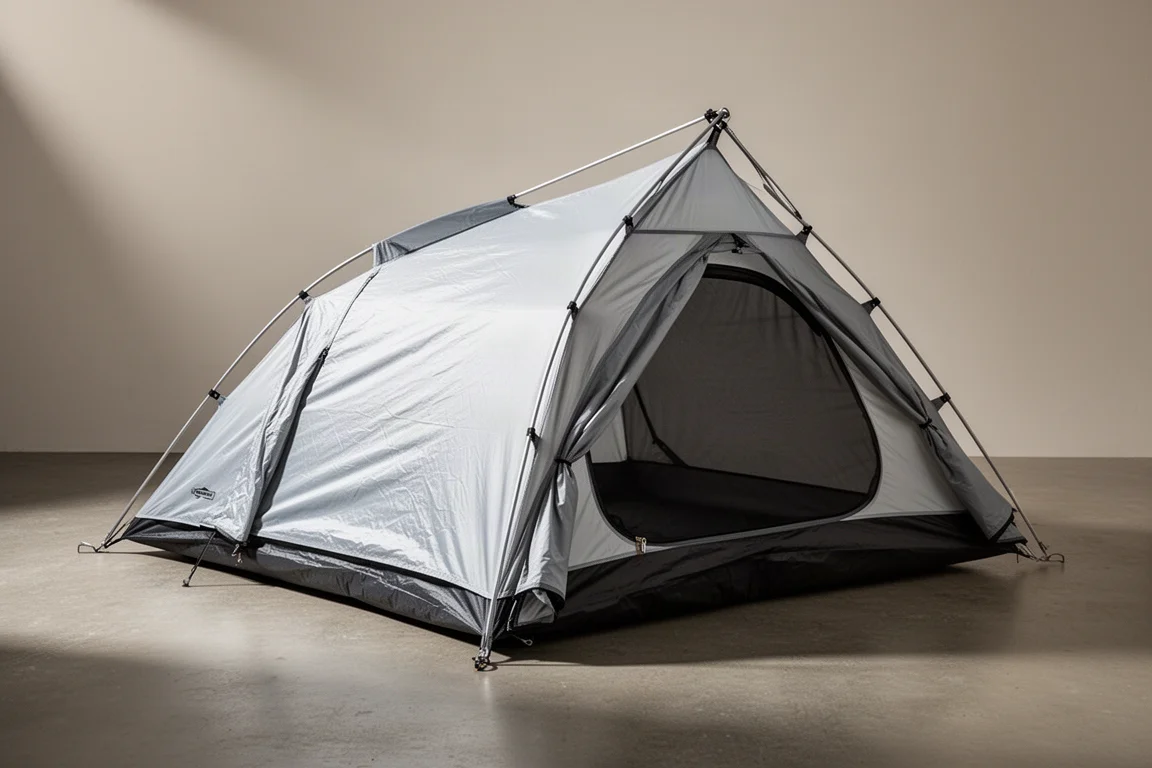
3F UL Taiji 2-Person Tent: A Convertible Backpacking Shelter Worth a Closer Look
A practical look at the 3F UL Taiji two-person tent, covering its materials, true two-person interior, fly-first pitching, and the seasonal inner swap that lets one shelter cover more of the year.
Backpacking Tents
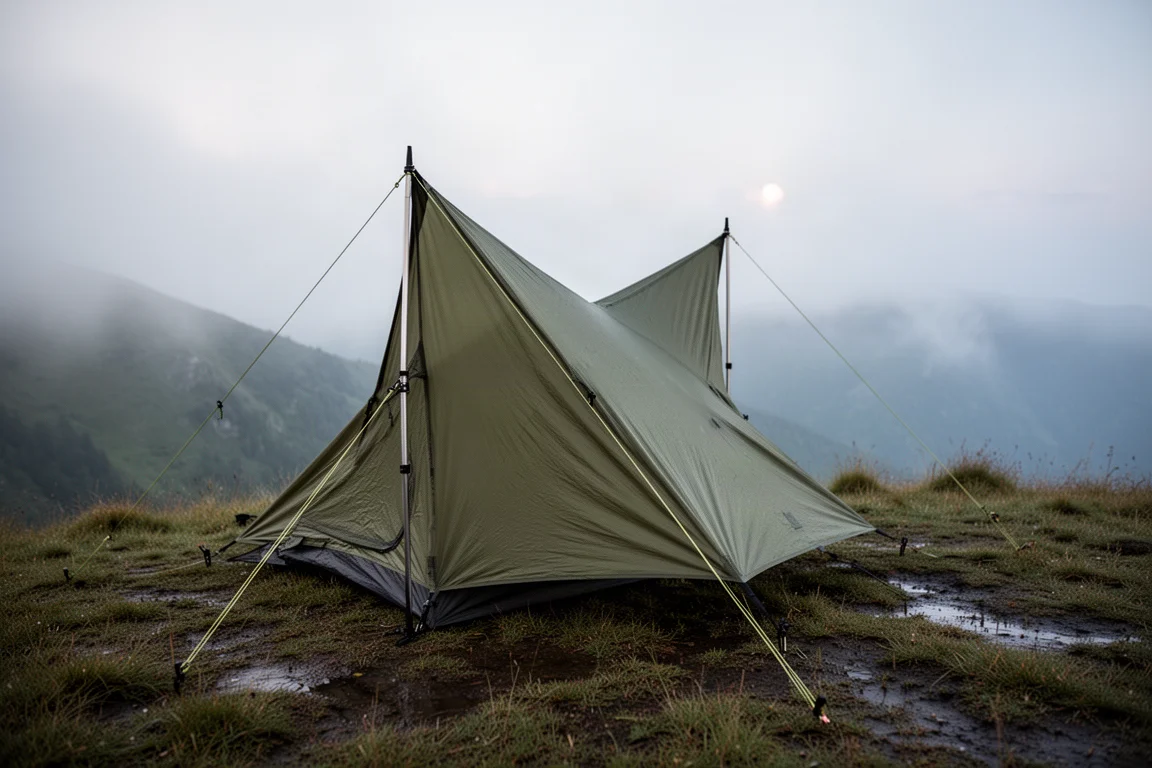
3FUL Lanshan Twoerson Pro Review: A Light Trekking Pole Shelter That Struggled in Rain
A two-person trekking pole shelter with a 2026 redesign, pitched with sticks and put through a night of steady rain. Here is what worked, what did not, and what to check before buying.