Backpacking Tents
Hill Zero Gear Scout One-Person Camo Tent Review: A Three-Season Shelter at a Strong Value
A roomy freestanding one-person three-season tent with a camouflage finish, strong weather performance, and a $259 price that undercuts much of its competition.
Introduction
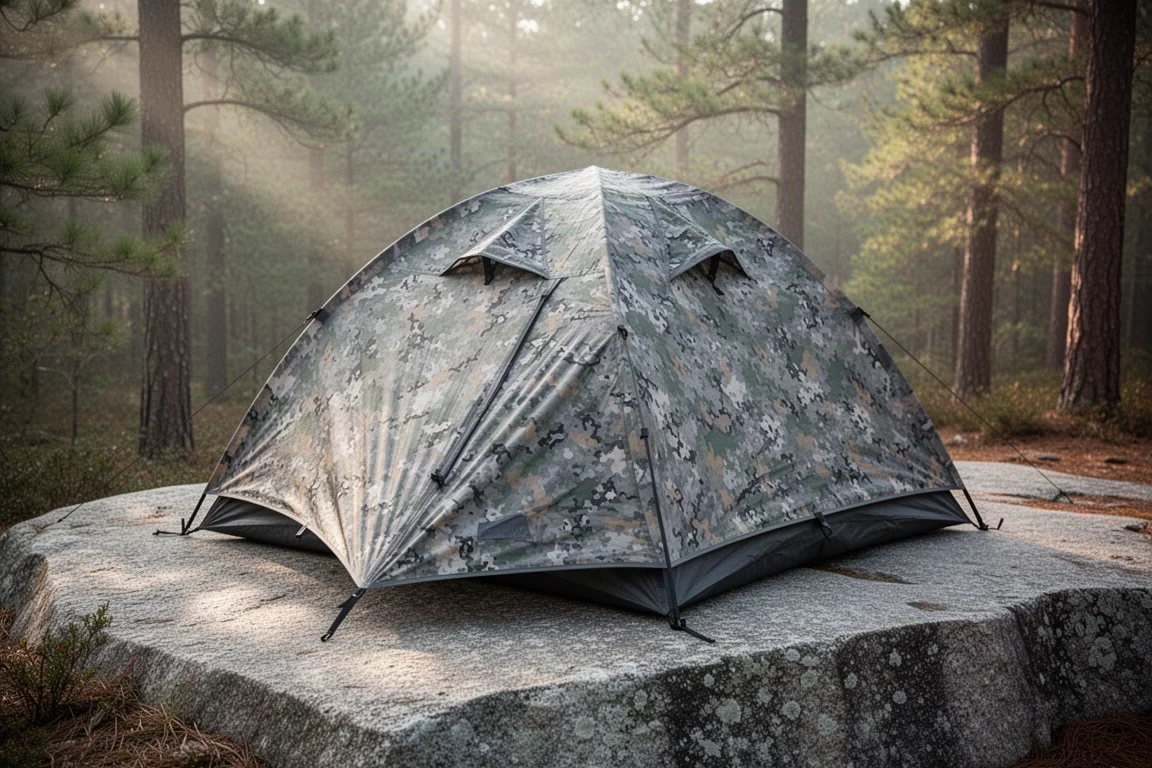
Some tents try to reinvent the wheel. The Hill Zero Gear Scout one-person tent does not, and that is a large part of why it works. It begins with a familiar freestanding dome layout, the kind most backpackers already understand, and then focuses on the details that decide whether a shelter feels merely adequate or genuinely enjoyable after a long day on the trail.
The camo version covered here is priced at $259 in US dollars. A standard version of the same one-person design sells for under $200, using a more conventional pole structure and a generic nylon fabric that adds weight while lowering the cost. The camo model moves up to a stronger fabric and a better pole set, which makes it the more capable of the two.
For context, three-season backpacking tents from brands such as Nemo, Big Agnes, MSR, and Sierra Designs commonly sit in the $500 range. The Scout lands well below that, which is exactly why it deserves a closer look.
Who This Tent Is For
The Scout is built for backpackers who want a one-person shelter with real interior room and do not want to pay premium money to get it. At roughly 85 inches long, 37 inches wide, and 41 inches at peak height, it offers more usable space than the average solo tent, and the floor is fully rectangular rather than tapered.
That rectangular footprint is the detail that changes daily life inside the tent. A wide sleeping pad fits with room left over along the side for gear you want to keep dry and clean, instead of pushing everything out into the vestibule.
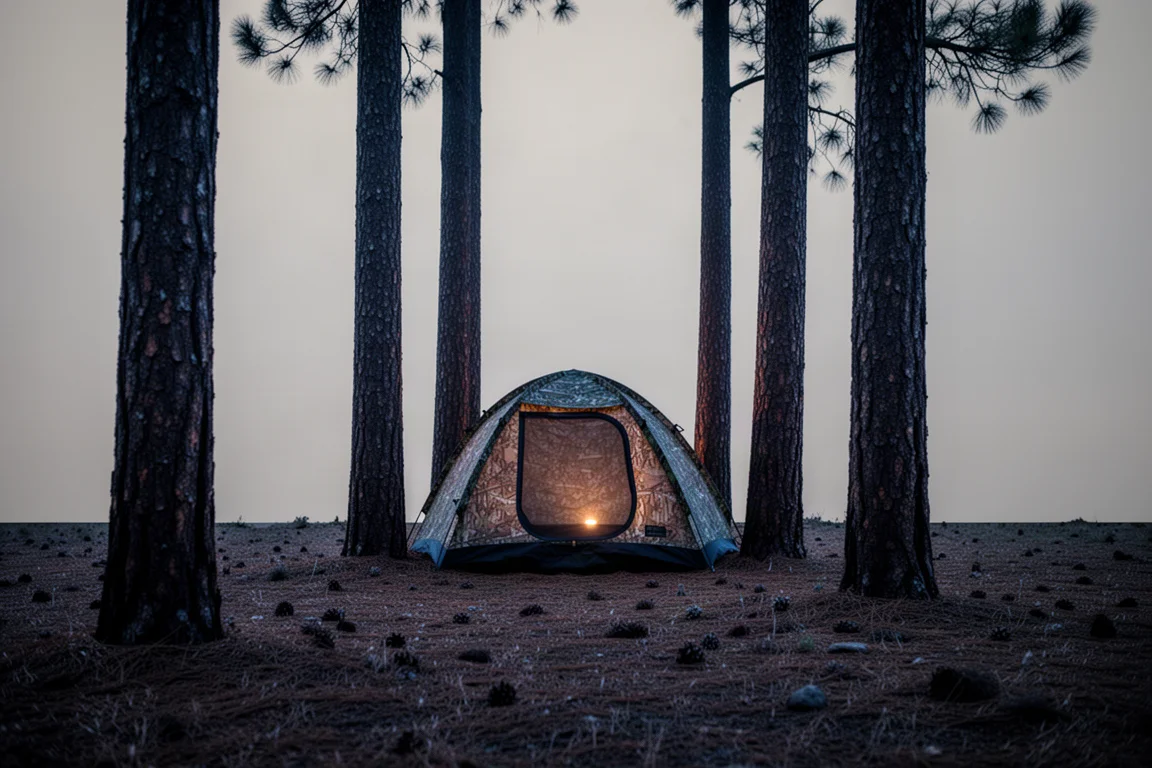
The one measurement worth checking against your own body is length. At about 85 inches, the Scout is shorter than many tents on the market, where 88 to 90 inches is more typical. Anyone under six feet will likely find it comfortable, and long 77-inch pads fit without trouble. Taller backpackers should measure carefully before committing.
A two-person version of the same tent is also available for anyone who wants this layout with more space.
Design, Structure, and Weather Performance
The Scout uses a fully freestanding dome design, which means it holds its shape on its own and can be repositioned after pitching. The pole structure measures 8.6 mm, a slightly larger diameter than you would find on many semi-freestanding or ultralight-focused freestanding tents.
That extra material is deliberate. Combined with a 20-denier fabric in both the fly and the body, it produces a notably strong and stable structure. The tent is built as a true three-season shelter and can handle a snow load, which is more than many lightweight solo tents can claim.
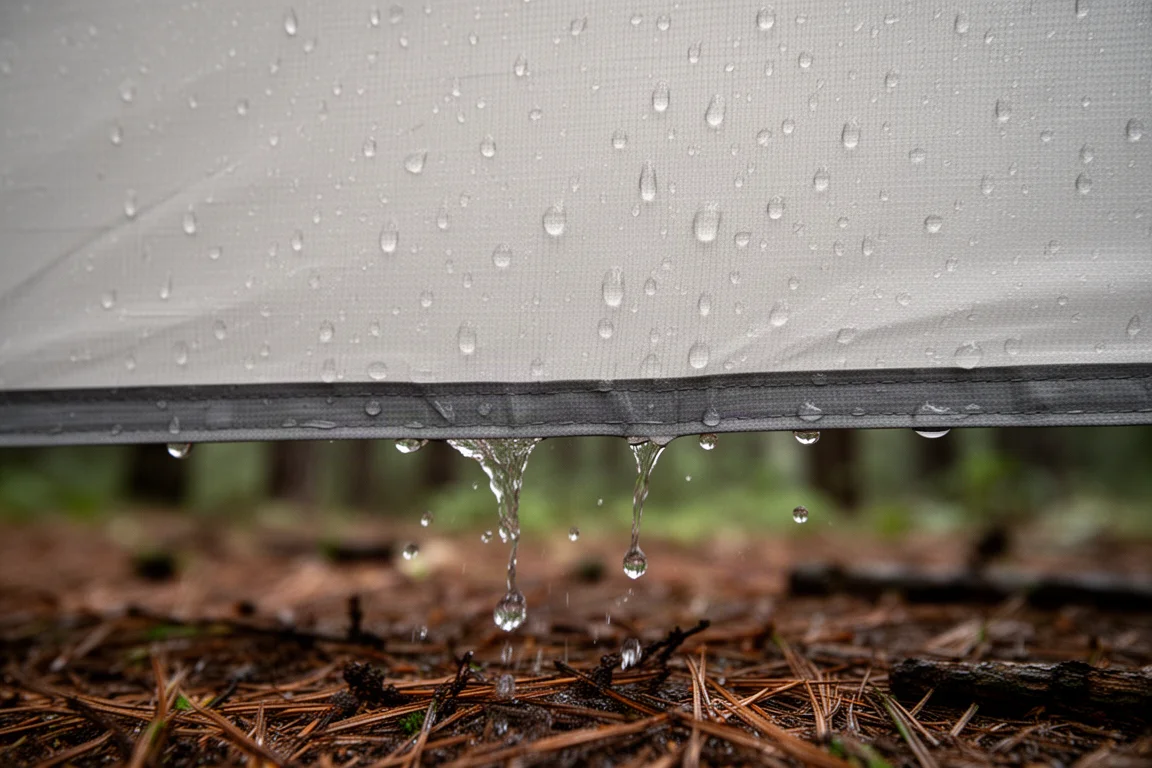
The rainfly offers full coverage and sits low to the ground, so weather protection is comprehensive. During an intense storm with heavy rain, hail, and wind, the tent held up well without needing to be guyed out. The fabric and the structure simply did their job.
Two peak vents sit on the rainfly, one at each end. Their position matters: they are placed high enough to move air effectively through the tent and reduce condensation, but not so high that they compromise coverage.
Interior Space and Ventilation
Inside, the Scout is a comfortable place to spend an evening. The walls stay fairly vertical even as they draw in slightly at the top, and the brow pole remains wide, which keeps the usable volume generous rather than pinching it near your head.
Storage is handled well for a solo tent. There are four pockets for small items and a loop at the top for hanging a headlamp or a small lantern. Mesh panels throughout the body add airflow, and the two peak vents at either end can be opened or closed depending on conditions.
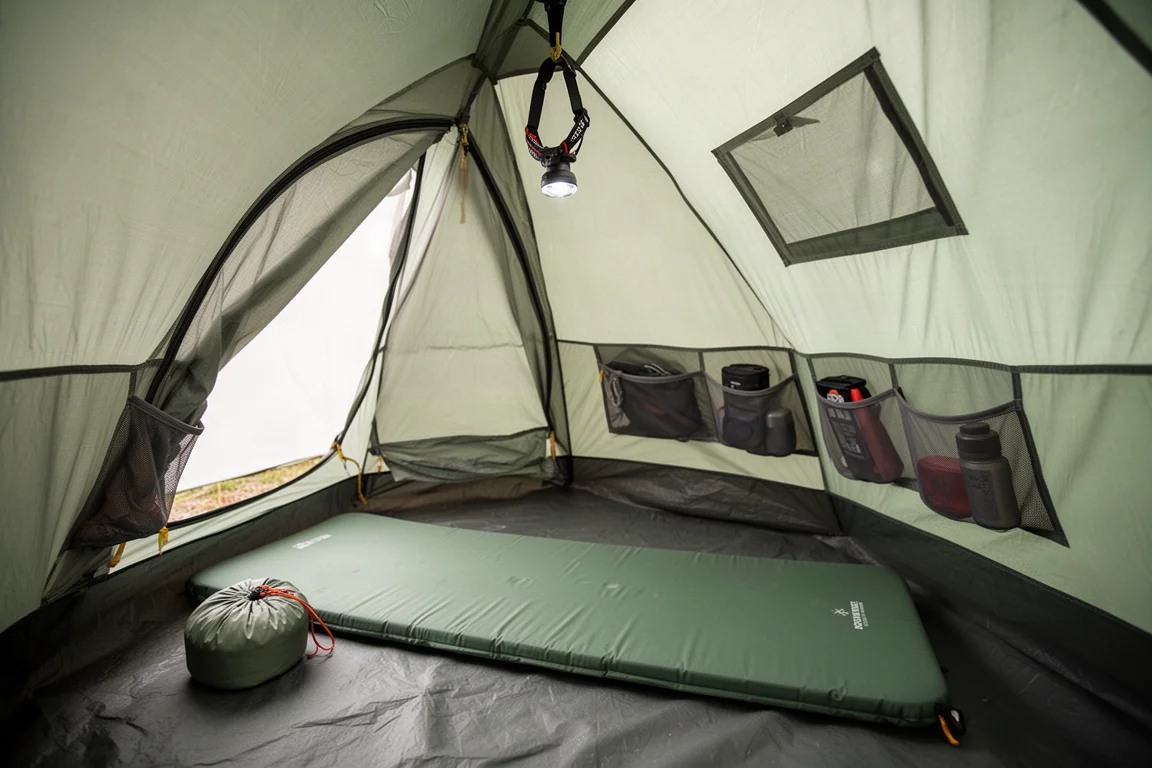
The two-door, two-vestibule layout is unusual in a one-person tent, and it is a genuine convenience. Gear storage is doubled, and because the vestibule doors do not need to double as vents, you can keep them zipped for weather protection without cutting off airflow. Both doors can also be rolled back fully, opening the interior up considerably.
Fabric, Weight, and Packability
The Scout uses a 20-denier ripstop Nylon 66 fabric with a silicone coating and a 2,000 mm hydrostatic head rating. The nylon specification is the important part. Nylon 66 is a higher-quality material than the nylon 6 found on many lower-cost tents: it is stronger and stretches far less when it gets wet.
That difference shows up in real use. Generic nylon can sag noticeably in sustained rain, while Nylon 66 holds its shape better. Because the Scout is fully freestanding, tensioning is easier to manage anyway, but the fabric choice still pays off in a taut, stable pitch.
The trade-off is weight. At 3.19 lbs, the Scout is on the heavier side for a one-person tent. It would be possible to shave weight with a thinner fly or a lighter pole set and drop below three pounds, but the current build is what gives the tent its strength and stability at this price. For backpackers who value a solid, weather-ready shelter over the lightest possible pack, that is a reasonable exchange.
Things to Consider Before Buying
The most significant limitation is pitching order. The Scout requires the inner body to be set up first, with the rainfly attached afterward. There is no fly-first pitch option, which matters to backpackers who regularly camp in sustained rain and want the inner tent protected during setup. In drier regions this is rarely a concern.
A second point is personal rather than universal: the bathtub floor could sit higher above the mesh. Raising the solid, breathable fabric at the base would reduce the amount of dirt and sand that blows in through the mesh during windy desert conditions. It is a preference rather than a flaw, but it is worth knowing if you camp in exposed, sandy environments.
Weight and length round out the list. At 3.19 lbs and about 85 inches long, the Scout asks for a small compromise on pack weight and interior length in exchange for its strength, its room, and its price. Backpackers who need the lightest possible solo shelter, or who are taller than six feet, should weigh those points carefully.
Value Compared With Other Options
Value is where the Scout makes its strongest case. The camo version is $259 and the standard version is under $200, against a market where comparable three-season backpacking tents often sit around $500.
What that money buys is a strong and stable structure, a livable interior with two doors and two vestibules, a high-quality silicone-coated Nylon 66 fabric, and a design that has clearly been thought through rather than assembled from generic parts. The camo finish is also genuinely useful in the field: it keeps the tent low-profile and stealthy in forest settings instead of announcing your position with a bright color.
Buying Advice
If you are shopping for a solo backpacking tent and your priorities are interior space, weather performance, and price, the Scout is a straightforward recommendation. The camo version is the better tent of the two, thanks to its upgraded fabric and pole structure, and $259 is still a modest figure for a true three-season shelter.
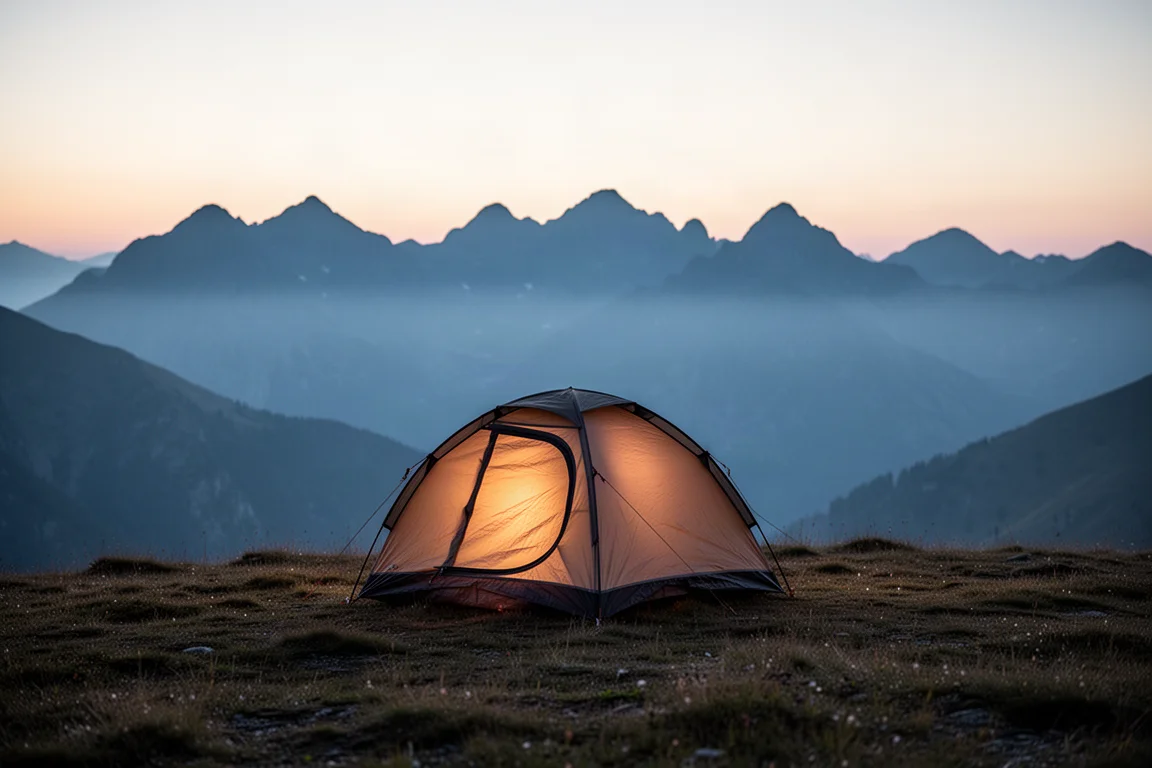
Choose the standard version if budget is the deciding factor and you are willing to accept a bit more weight and a more conventional fabric and pole set for under $200. Choose the camo version if you want the stronger build, better wet-weather behavior, and the quieter look on the trail.
Skip it if you need a fly-first pitch, if you are taller than six feet, or if minimizing pack weight is your top priority. Within those boundaries, the Scout delivers a lot for the money.
Conclusion
The Hill Zero Gear Scout one-person tent succeeds by respecting a proven design and improving the parts that matter: stronger fabric, a sturdier pole structure, two doors and two vestibules, and a rectangular floor that makes solo camping genuinely comfortable. At $259 for the camo version, it is a strong value in a category where prices climb quickly.
Product link
View more details for Hill Zero Gear Scout One-Person Camo Tent
This product is mentioned in the review. Check the specifications, options, and compatibility before buying.
View more details for Hill Zero Gear Scout One-Person Camo TentFurther reading
Related Reviews
Backpacking Tents
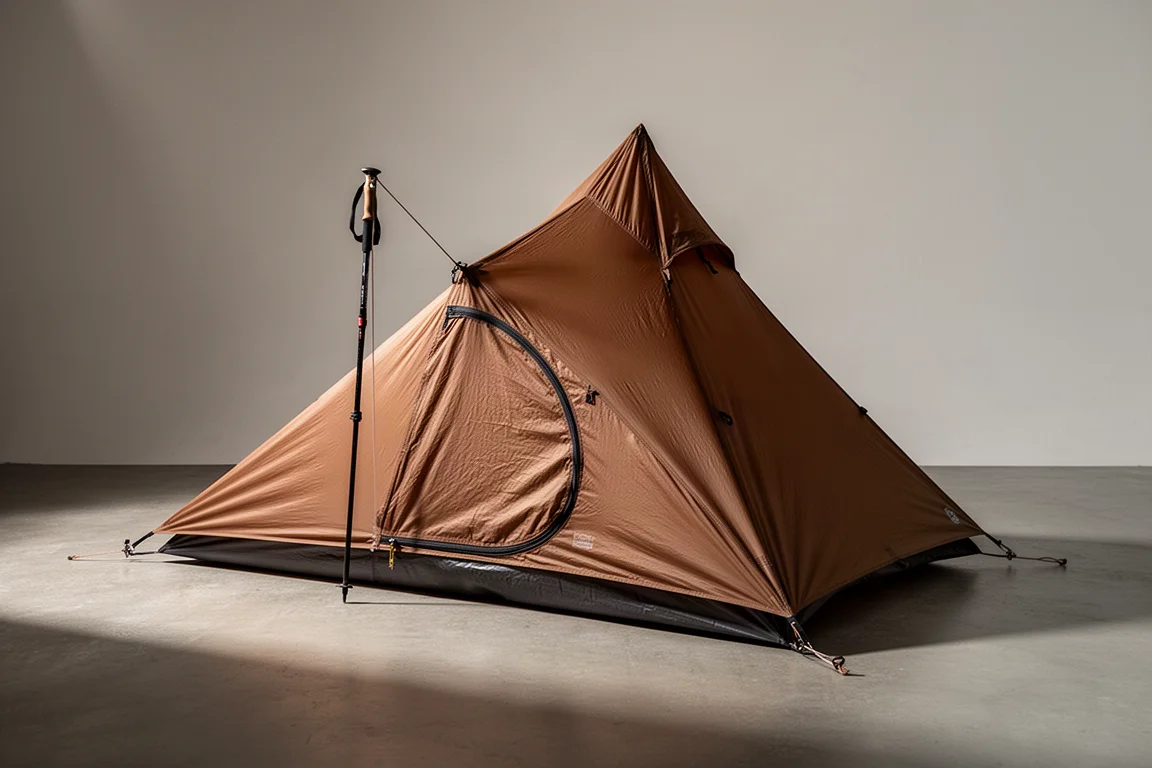
3F UL Lanchan Pro 1 Review: A 1 lb 8 oz Single-Wall Trekking Pole Tent
A practical look at the 3F UL Lanchan Pro 1, a single-wall trekking pole shelter with a 1 lb 8 oz weight, 20D silnylon fabrics, and a roomy 90 x 31 x 49 inch interior.
Backpacking Tents
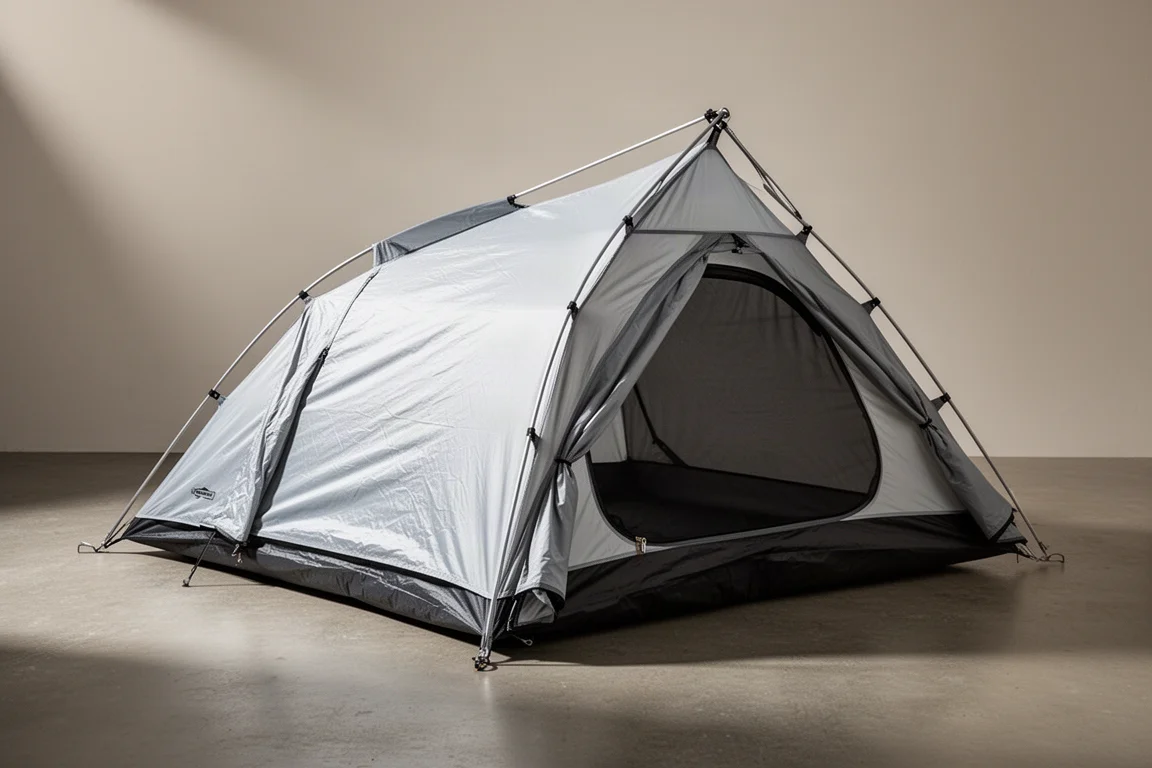
3F UL Taiji 2-Person Tent: A Convertible Backpacking Shelter Worth a Closer Look
A practical look at the 3F UL Taiji two-person tent, covering its materials, true two-person interior, fly-first pitching, and the seasonal inner swap that lets one shelter cover more of the year.
Backpacking Tents
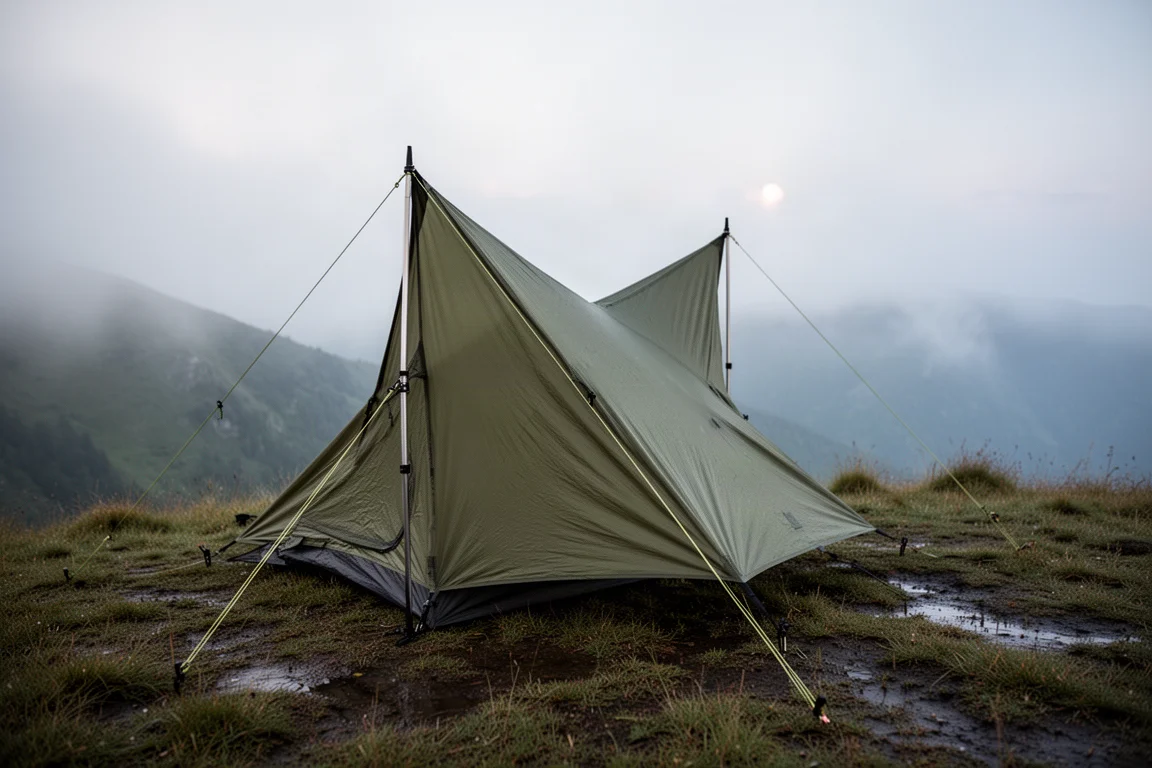
3FUL Lanshan Twoerson Pro Review: A Light Trekking Pole Shelter That Struggled in Rain
A two-person trekking pole shelter with a 2026 redesign, pitched with sticks and put through a night of steady rain. Here is what worked, what did not, and what to check before buying.