Cookware
HexClad vs All-Clad: Which Cookware Is Actually Worth Your Money?
A practical comparison of HexClad hybrid cookware, All-Clad D3 stainless steel, and All-Clad HA1 non-stick, based on hands-on searing and egg tests.
Introduction
HexClad promises the best of both worlds: a pan that sears like stainless steel yet releases eggs like non-stick. To see whether that claim holds up, we compared it directly against All-Clad, one of the most respected cookware brands in the world. This guide breaks down how the two brands differ in construction, design, price, and manufacturing, then shares the results of two hands-on cooking tests to help you decide which brand fits your kitchen.
How the Construction Differs
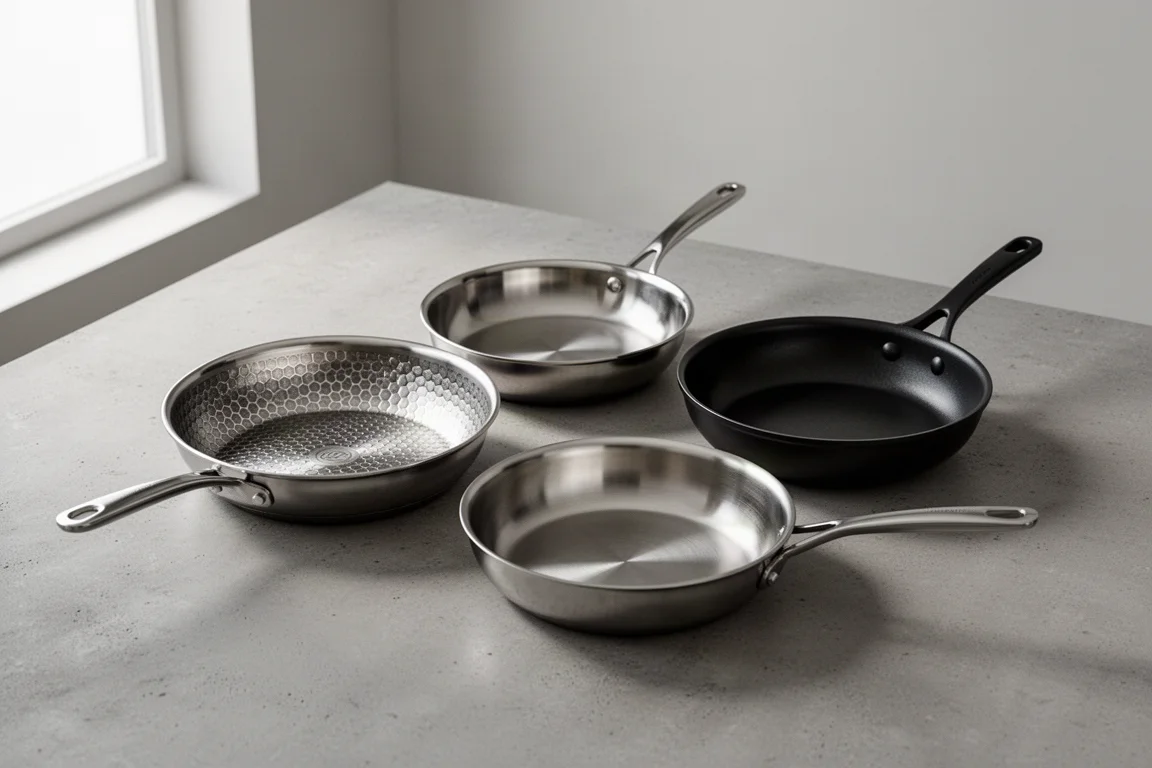
All-Clad specializes in stainless steel cookware across several collections, including D3, D5, Copper Core, and G5. Each collection has its own features, but all of them are fully clad: a steel bottom layer, a core of aluminum or copper for even heat conduction, and a steel cooking surface. For cooks who want non-stick convenience, All-Clad also offers the HA1 and Essentials collections, built on a thick hard-anodized aluminum base with a multi-layer non-stick coating.
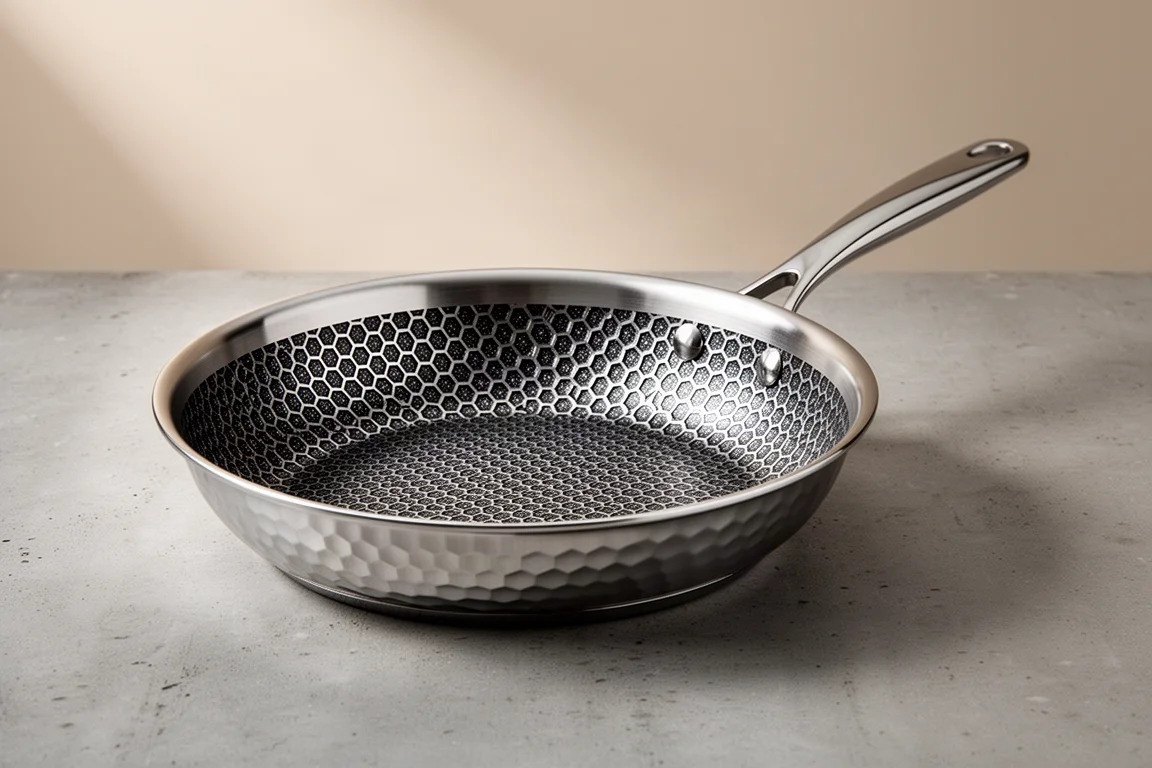
HexClad keeps things simple with a single collection of hybrid cookware. Its pans use 3-ply construction with a magnetic stainless steel exterior, an aluminum heat-conductive core, and a signature cooking surface that blends stainless steel and non-stick.
Every All-Clad pan has a smooth surface, whether stainless or non-stick, with either a brushed or polished exterior or the black anodized finish of the non-stick lines. HexClad pans instead feature a network of stainless steel peaks and non-stick valleys forming tiny hexagons, with the pattern running up the sides and ending in a solid steel band around the rim. The idea is that the steel peaks keep spatulas, tongs, and forks from touching the non-stick coating, so you can cook with metal utensils without scratching the pan.
Handle Design: Comfort vs Control
The handle designs differ in ways that matter in daily use. HexClad uses riveted, polished stainless steel handles that are round and hollow in the middle to disperse heat and stay cool. They look nice and feel comfortable, but they are prone to slipping and rotating in your hand. Grab a pan with an oven mitt to pour boiling pasta water into a strainer, and there is a chance the handle slips.
All-Clad handles are also stainless steel and riveted, but most are cup-shaped with a groove on top. They are less comfortable, yet the shape locks the handle into your hand for noticeably more control. All-Clad handles are also straight and set at a higher angle, giving you better leverage when shaking or flipping food.
Price and Where They Are Made
Both brands are expensive, but pricing varies. All-Clad’s Essentials non-stick collection is the least expensive, while Copper Core and D5 cost the most, with HA1 and D3 in the middle. Typically, HexClad is more expensive than All-Clad’s non-stick and D3 collections but cheaper than D5 and Copper Core.
On manufacturing: HexClad is designed in California but made in China. All-Clad’s stainless clad cookware is made just outside Pittsburgh, Pennsylvania, though the handles and lids are made in China and attached in the US. All-Clad’s hard-anodized non-stick cookware is made in China.
Both brands are oven-safe, but with different limits. HexClad is oven-safe up to 500°F and is not safe under the broiler. All-Clad stainless steel handles up to 600°F and is broiler-safe, while its non-stick pans tolerate up to 500°F but are not broiler-safe.
Searing Test: HexClad vs All-Clad D3
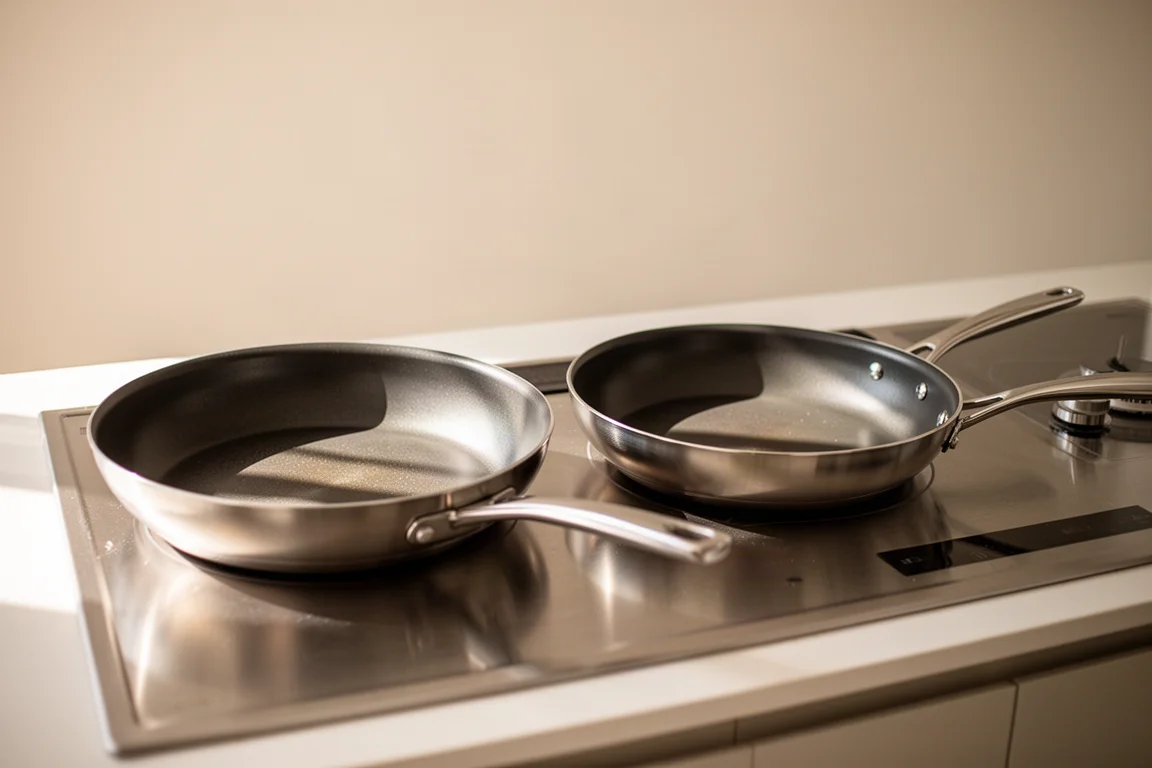
The first test compared HexClad’s searing ability against All-Clad D3, the brand’s most popular stainless collection. Two pieces of salmon were seasoned with salt and garlic powder, both pans were preheated for the same time at the same temperature, then greased with the same amount of oil. The salmon went in skin-side down for a couple of minutes before flipping, and both pans finished in the oven for about four minutes.
The result: both HexClad and All-Clad did a great job. The outside of each piece had good texture and color, and the inside was cooked just right. A thicker piece of salmon seared later confirmed the same story, browning nicely without overcooking.
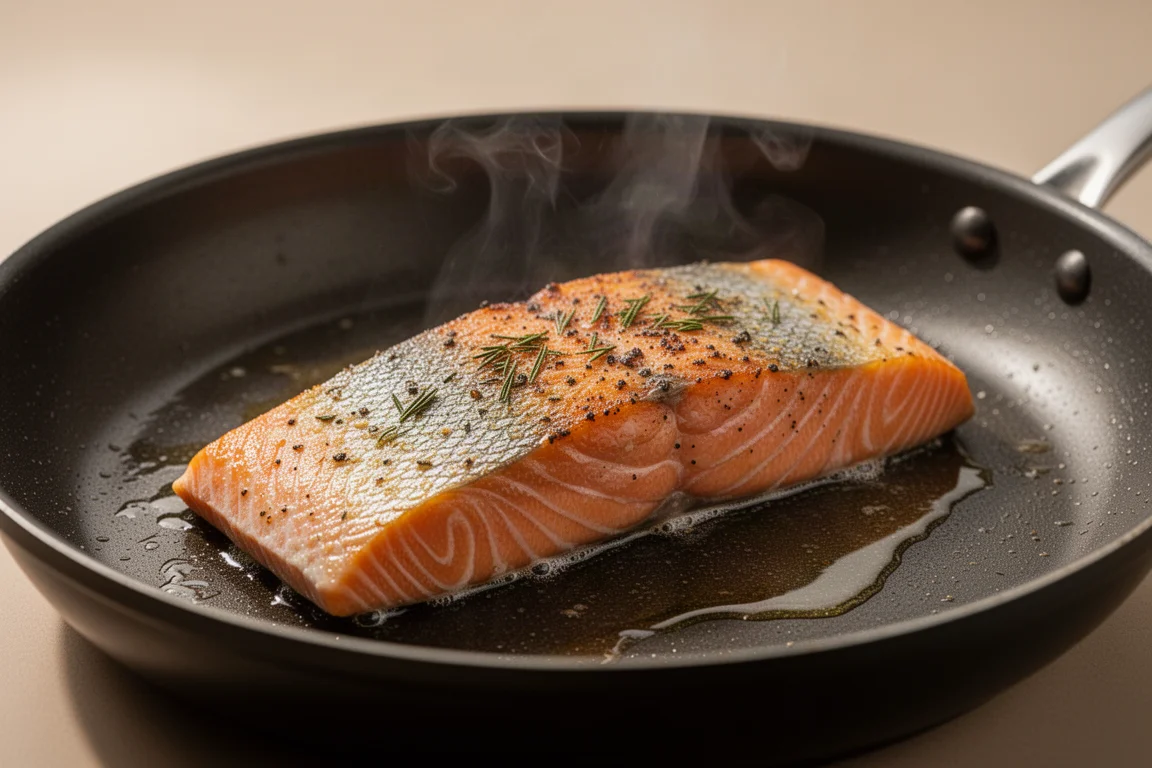
The only noticeable difference came at cleanup. The HexClad pan had barely any residue or discoloration from the oils and took less than 30 seconds to clean. The fish did not stick to the All-Clad pan, but some staining remained and took about a minute to scrub off. Because HexClad’s surface has non-stick coating beneath the steel hexagons, it releases food better than a traditional stainless steel pan.
Egg Test: HexClad vs All-Clad HA1
The second test pitted HexClad against All-Clad’s most popular non-stick pan, the HA1, with no oil or butter at all. After equal preheating, the HexClad pan ran hotter because it is 3 mm thick while the All-Clad pan is 4 mm thick. At first the egg did not stick to either pan, but after flipping, the egg in the HexClad pan began to stick and the yolk broke when nudged with a spatula. Lower-temperature attempts with an ungreased HexClad pan produced even worse results.
The All-Clad HA1 made the eggs much easier. Its thicker walls heat more slowly, so the egg cooked evenly without excessive browning and did not stick at all to the smooth non-stick surface.
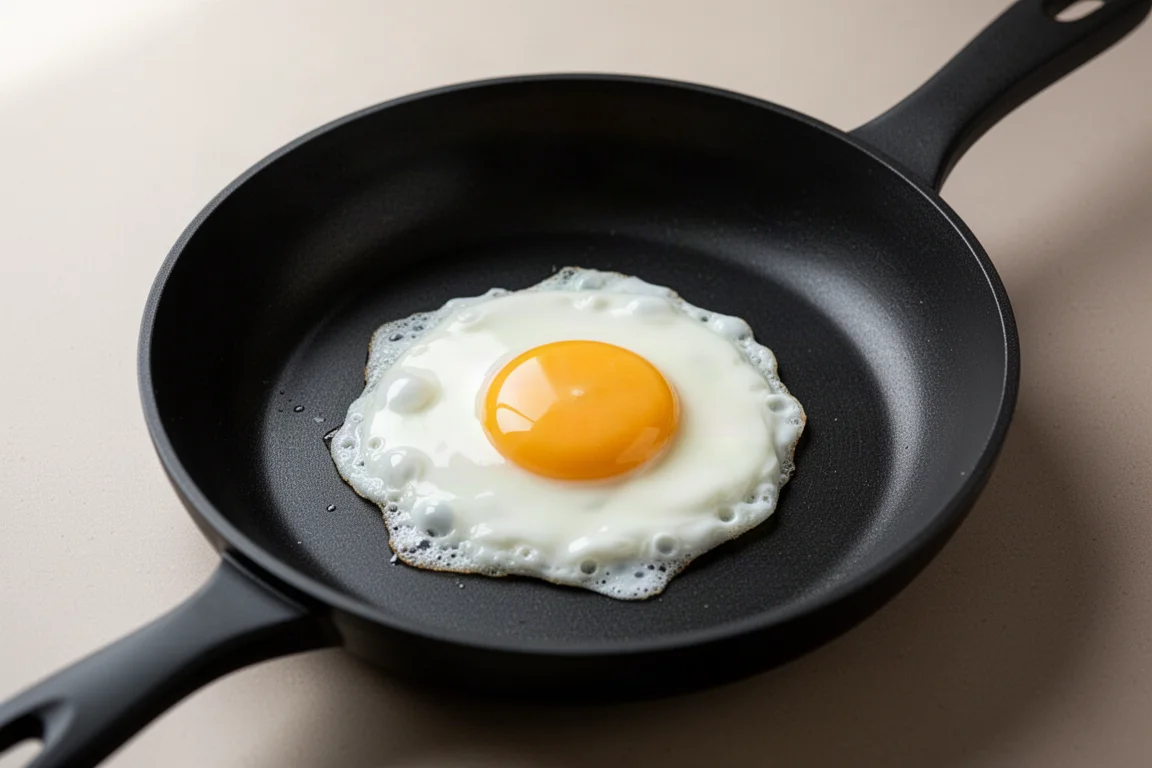
A second round with a little oil and butter changed things: eggs slid around both pans without sticking. Still, after identical preheating, HexClad’s thinner walls made the surface hotter and the eggs overcooked slightly. Lowering the temperature would have corrected that, but keeping the variables equal was the point of the test.
The key takeaway: you absolutely can sear meats and cook eggs in a HexClad pan, but All-Clad non-stick pans are better for cooking with little to no grease.
HexClad Hybrid Cookware
HexClad’s hybrid surface genuinely delivers on its core promise. It sears better than most non-stick pans and releases food better than stainless steel, all while resisting scratches from metal utensils thanks to the steel-peak design. After months of use, it proves convenient and versatile, and the protected coating should extend the pan’s lifespan. The trade-offs are real, though: no broiler use, a coating that will eventually wear down, and a price comparable to high-end stainless steel.
All-Clad D3 Stainless Steel
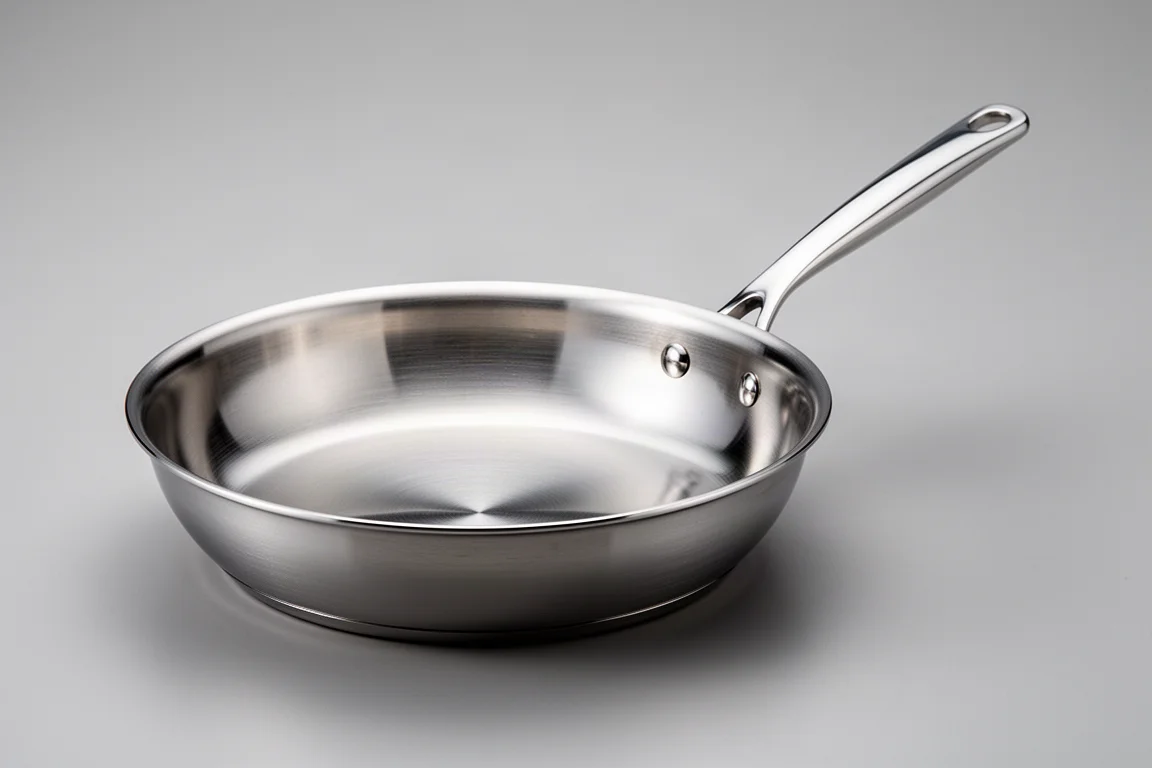
All-Clad D3 is the brand’s most popular stainless collection, and in the searing test it matched HexClad’s results on the salmon with good color and texture inside and out. You get the traditional stainless experience: searing, roasting, frying, broiling, and pan sauces, plus a 600°F oven limit and broiler safety. Cleanup takes a bit more scrubbing than HexClad, and there is no non-stick convenience, but it is American-made fully clad stainless at a typically lower price than HexClad.
All-Clad HA1 Non-Stick
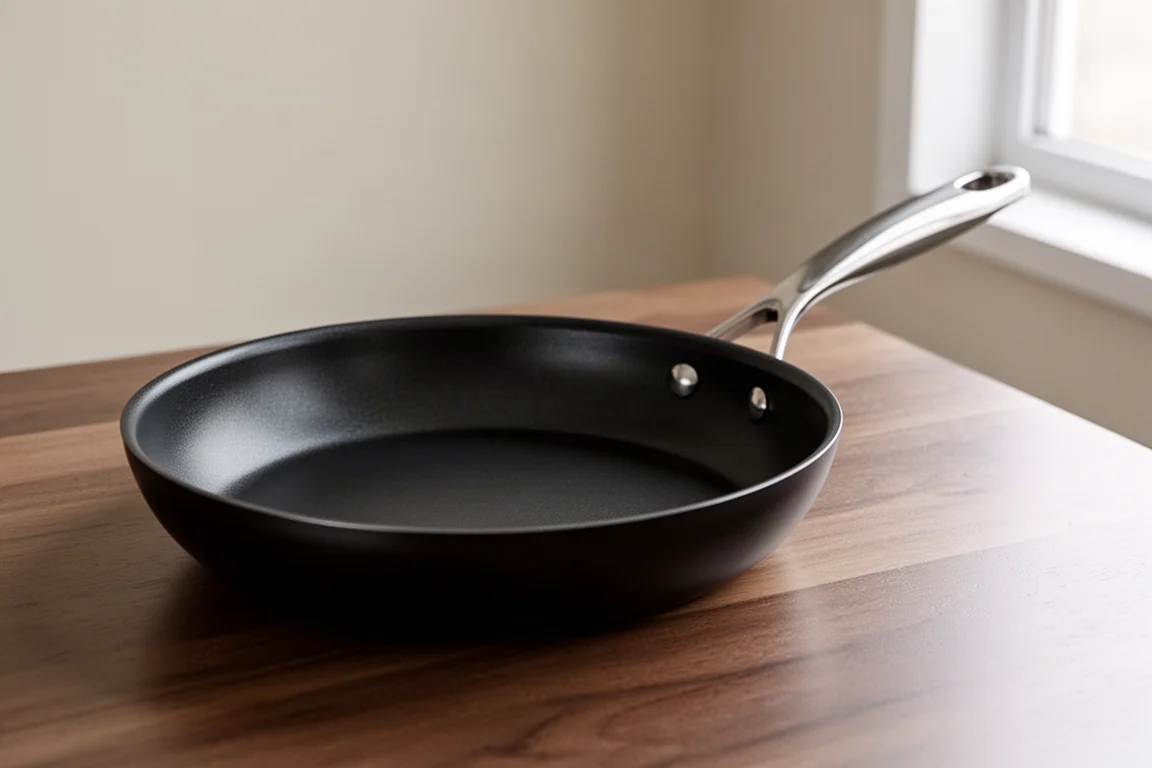
For eggs and delicate, low-fat cooking, All-Clad’s HA1 was the clear winner in testing. Its thick hard-anodized aluminum base heats slowly and evenly, and the smooth multi-layer non-stick surface released eggs completely with no oil or butter. It is oven-safe to 500°F but not broiler-safe, and like all non-stick, the coating will wear over time. If convenient low-grease cooking is your priority, this is the pan that does it best.
Which Should You Buy?
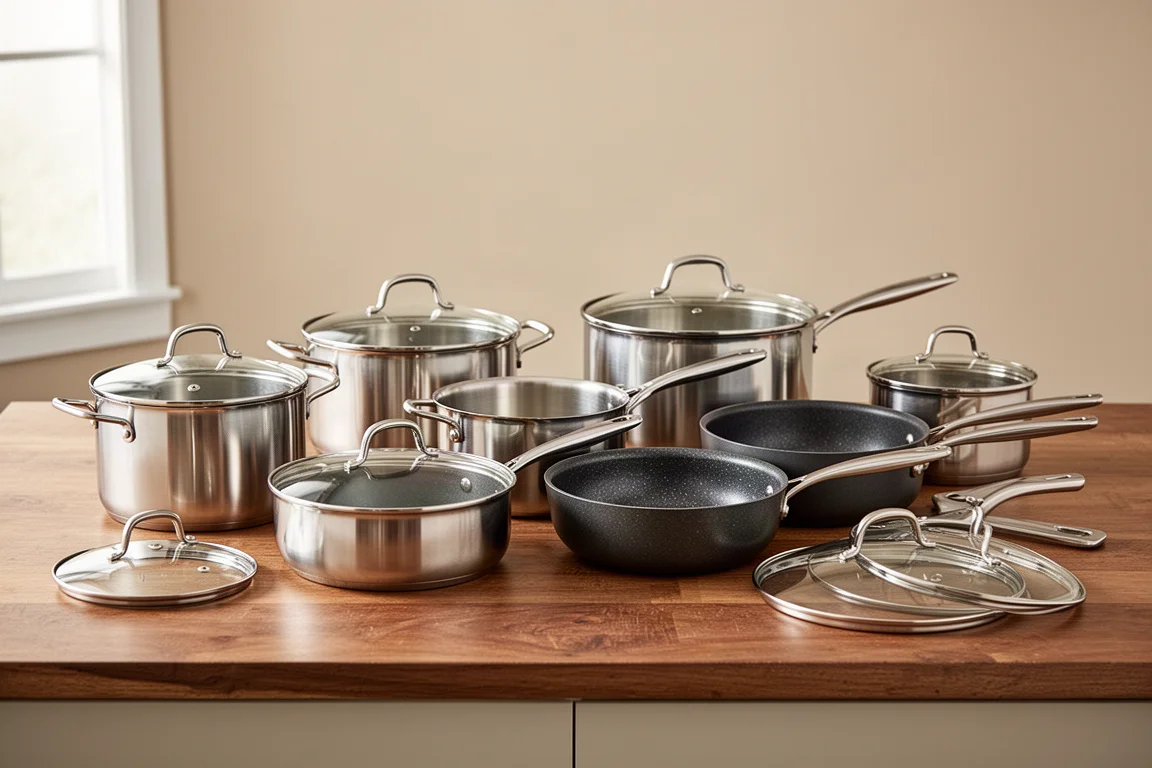
The honest answer is that it depends. Both brands heat up fast and evenly, retain heat well, and handle just about any cooking technique or ingredient. With All-Clad, you get a more traditional setup where you pick the right pan for the job across a range of collections and price points: American-made stainless for high-heat work and broiling, and HA1 non-stick for eggs and low-fat cooking.
HexClad initially looks like a gimmick but cooks surprisingly well, offering a single pan that covers a lot of ground. However, if you are choosing between one HexClad pan and two All-Clad pans, All-Clad is the better call. HexClad combines the benefits of stainless steel and non-stick, but it also carries the drawbacks of each, and it costs as much as a high-end stainless pan.
Conclusion
HexClad is a genuinely capable hybrid that sears well, releases food better than stainless steel, and cleans up in seconds. All-Clad counters with specialized excellence: D3 stainless for searing and broiling, HA1 non-stick for effortless eggs. If you want one versatile pan and value easy cleanup, HexClad earns its place. If you want the right tool for every job at typically lower prices, All-Clad remains the safer investment.
Further reading
Related Reviews
Cookware
Best Carbon Steel Pans Tested: Which Brands Deliver Real Value
We tested eight popular carbon steel pans with controlled durability, heat, and cooking tests. Here's which ones perform best and which to avoid.
Cookware
Best Cast Iron Pans 2026: Five Options from Budget to Premium
A practical breakdown of five cast iron skillets, from affordable Mueller to premium Our Place, with clear strengths and trade-offs for different cooking needs.
Cookware
Best 12-Inch Cast Iron Skillets: Premium Craftsmanship vs. Reliable Budget Option
Two standout 12-inch cast iron skillets tested for heat retention, surface finish, and durability. One premium choice and one budget-friendly alternative that both deliver.