Cookware
Hestan Cookware Review: Is This Luxury Cookware Worth the Price?
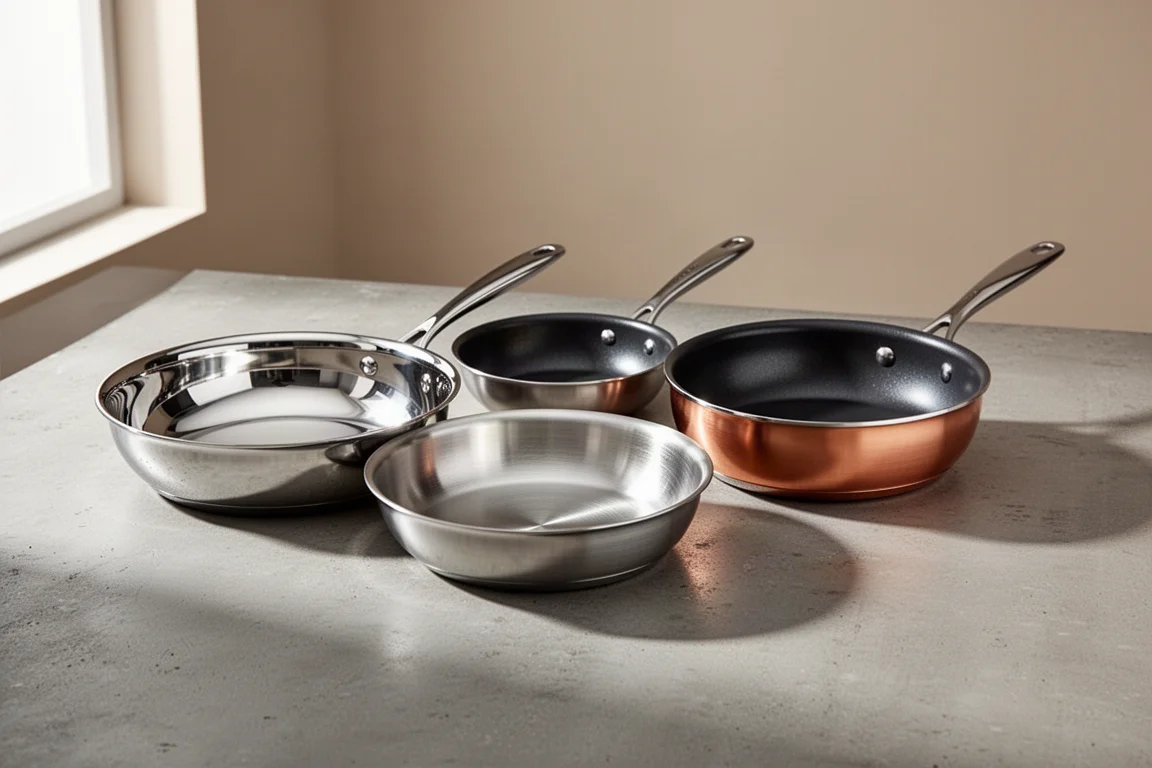
We tested all four Hestan cookware collections, including NanoBond, ProBond, ProBond TITUM, and CopperBond, to see whether the premium price holds up in real kitchens.
Introduction
Hestan sits at the very top of the cookware market, and its prices make that obvious before you even pick up a pan. But high prices do not automatically mean better cooking, so we put the brand’s most popular collections through a full round of design, durability, and performance testing. This review covers what Hestan does exceptionally well, where it falls short, and how it compares to other high-end brands like All-Clad, Demeyere, and Made In. If you are considering an expensive Hestan pan or set, this is everything you need to know first.
Meet the Hestan Collections
Hestan makes several cookware collections, each built with slightly different materials. NanoBond uses three bonded layers with an aluminum core, and its defining feature is a titanium-bonded stainless steel surface on both the interior and exterior. Titanium is not part of the steel alloy itself. Instead, titanium is vaporized into ions in a high-heat vacuum chamber and bonded to the pan’s surface, creating a coating as thin as a human hair. According to Hestan, this makes the surface four times harder than typical stainless steel, non-porous, less reactive, and virtually scratch-proof.
ProBond shares the same bonded construction as NanoBond but uses plain stainless steel inside and out, so it is not as hard. ProBond TITUM takes ProBond and adds a non-stick coating to the cooking surface. CopperBond is the odd one out, built from five bonded layers with a pure copper core surrounded by steel and thin inner layers of aluminum. From the side, it looks like a copper pan, but it is really a stainless steel pan with a copper core, with the outer layers stripped away on the sidewalls to expose the copper. The bottom stays steel because steel is magnetic and required for induction cooking. It is a similar idea to All-Clad Copper Core, just with a much larger copper cutout.
Design: What Works and What Doesn’t
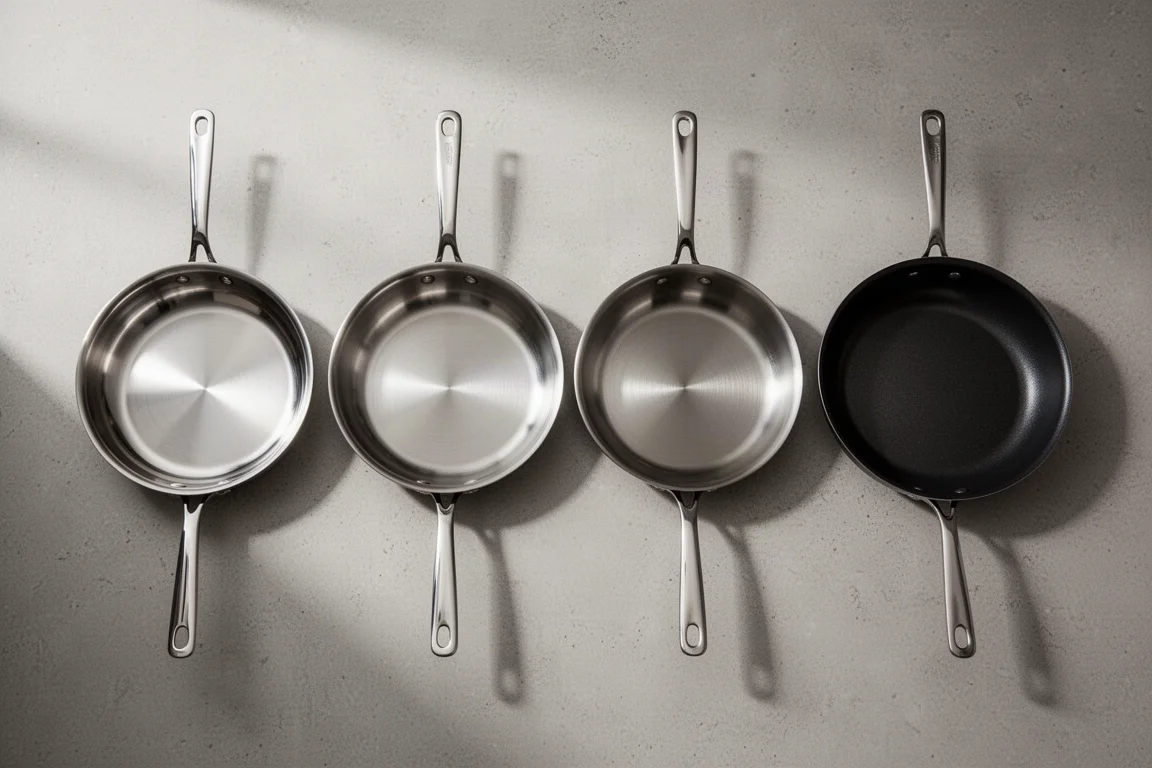
Hestan does a strong job balancing looks and function, though the design is not flawless. The skillets are larger than most, offered in 8.5, 11, and 12.5-inch sizes instead of the standard 8, 10, and 12 inches. That extra half inch lets you cook more food without overcrowding the pan. The gently curved walls are also well judged: shallow enough to slide food onto a plate, flip eggs, and toss ingredients, but not so shallow that liquids splatter over the sides.
The sealed rims on NanoBond and ProBond pans are a genuine advantage. Exposed rims can become sharp after dishwasher washing and can lead to the bonded layers splitting, but Hestan’s sealed rims mean you can clean these pans in the dishwasher without concern. Flat rivets are another upgrade over standard protruding rivets that collect grease and grime, though the seams around them can still catch food, so they are not as easy to clean as rivet-free pans like Demeyere.
The handles are shared across all three collections and are angled upward with a groove on top, a curved bottom that fits the palm, and a bump that warns you when your hand is getting too close to the pan. Rounded handles can slip and rotate when wet, and deeply grooved handles like All-Clad’s can dig into your hand. Hestan strikes a nice balance between safety and comfort. That said, the large hanging loop at the end is a real annoyance. The oversized opening combined with the thin handle means your pinky and ring fingers can slip through, forcing you to adjust your grip closer to the pan. Also note the high handle angle: measuring 4.5 inches from counter to handle end, these pans need at least 5 inches of clearance to fit between oven racks.
Durability: Is NanoBond Really Harder?
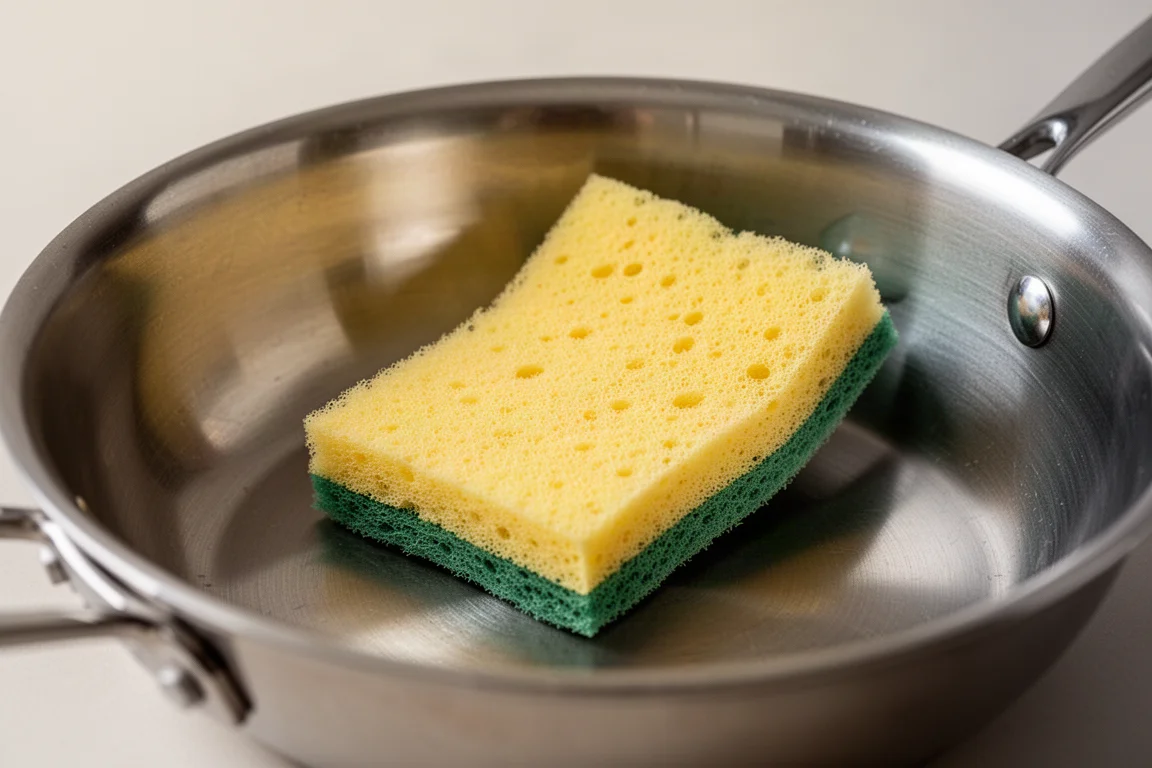
To test the claim that NanoBond is four times harder than typical stainless steel, we ran two quick tests using both the NanoBond skillet and the ProBond skillet. First, applying roughly five pounds of pressure, we rubbed the rough side of a Scotch-Brite sponge inside each pan for ten seconds. The sponge left a very noticeable patch of micro scratches on the ProBond pan. On the NanoBond pan, there were no scratches at all, even after testing a second spot.
For the second test, we swapped the sponge for a serrated table knife, sliding it back and forth about an inch ten times on both pans with the same pressure. The knife gouged the ProBond pan significantly. It also scratched the NanoBond pan, but the damage was clearly less severe. Repeating the test on the pan bottoms produced the same result.
So Hestan is telling the truth: NanoBond is harder and more scratch-resistant than standard stainless steel. It is not scratch-proof, though, and you still need to be careful with sharp metal utensils. The good news is that minor sponge scratches are purely cosmetic and do not affect performance. If you want pans that stay looking near-immaculate for years, NanoBond makes that much more achievable.
Aesthetics: The Reality After Cooking
One thing to know before buying: Hestan pans will not stay sparkling and shiny after a few uses. NanoBond’s slick, polished finish shows fingerprints and smudges the moment you touch it. The brushed finish on ProBond does a much better job hiding imperfections. CopperBond’s exposed copper cutout looks beautiful at first, but tarnishes and turns splotchy after a single cooking session. You can restore it with polish, but it requires ongoing maintenance if you want it looking like new.
How Hestan Cookware Performs
The first thing you notice in use is the weight. These pans are thick and heavy, which means they heat evenly and retain heat well. Across chicken, fish, burgers, vegetables, and more, the NanoBond, ProBond, and CopperBond pans are excellent for searing and browning, while the ProBond TITUM pan is the right pick for eggs and anything prone to sticking. Unlike thinner, cheaper pans, the thick base and walls hold a consistent temperature. They will not overheat and burn food if you accidentally turn the heat too high, and they heat gradually, giving you time to adjust.
Hestan also claims NanoBond pans are stick-resistant. The titanium hardens the surface and eliminates pores, similar to how paint adheres well to porous wood but not to non-porous glass. In testing, NanoBond is the smoothest pan we have used. It feels smoother than standard stainless steel, and you can even hear the difference when you rub your fingers over the surface. In real cooking, it offers slightly better non-stick properties than typical stainless steel, but you still need to preheat the pan and add oil or butter. Get the heat wrong or use too little fat, and eggs will stick just like on any other stainless steel pan. It gives you a little more leeway, but it does not change how you use the pan. Also be aware that after cooking on high heat once or twice, rainbow stains may appear. They are ugly but harmless, and white vinegar removes them easily.
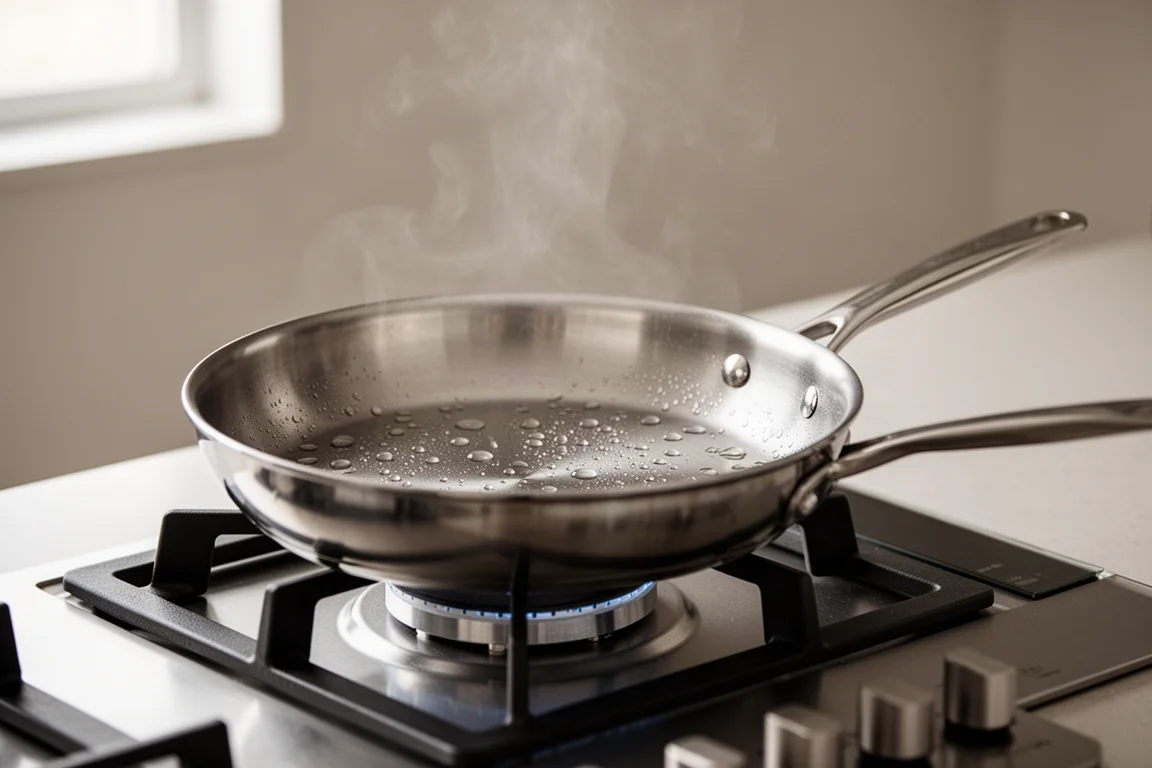
For benchmarking, we ran several heat tests against All-Clad, Demeyere, and Made In. In the water test, pouring two cups of cold water into each pan, Hestan CopperBond heated the fastest, followed by All-Clad Copper Core. That is expected since copper conducts heat far better than the aluminum core in the other pans. Demeyere Atlantis was the slowest to heat, again expected, as it is the thickest pan at 5.5 mm.
After boiling, the heat retention test told a different story. Demeyere Atlantis retained the most heat thanks to its super thick construction, while the two copper pans cooled fastest by design, since copper pans are meant to heat and cool quickly for control. In a second retention test, heating each pan to 400 degrees Fahrenheit in the center, All-Clad, Made In, and Hestan performed similarly, with Demeyere Atlantis again the clear outlier.
In the evenness test, measuring the center, outer edge, and sidewall after one and three minutes on high, Made In and CopperBond had the hottest centers at one minute, but the two ProBond pans heated the most evenly, with edge and wall temperatures closest to the center. At three minutes, All-Clad Copper Core, CopperBond, and ProBond were hottest in the center, while All-Clad D3 had the most uniform temperature. The takeaway: apart from the unusually thick Demeyere Atlantis, Hestan performs on par with highly-rated brands like All-Clad and Made In. If speed, responsiveness, and control matter most to you, CopperBond is the best performer in Hestan’s lineup.
The Price Problem
This is the elephant in the room. The NanoBond 12.5-inch frying pan currently lists on Hestan’s website for $450. For comparison, Demeyere’s most expensive pan, the 12.5-inch Atlantis, is $350, and All-Clad’s most expensive pan, the 12-inch Copper Core frying pan, is $365, often on sale for much less. You could buy seven Goldilocks or Tramontina 12-inch pans for the price of one NanoBond pan.
The other collections are expensive too: CopperBond is $420, ProBond TITUM is $270, and ProBond is $250. Hestan justifies the prices with features like sealed rims, flush rivets, titanium nanolayers, forged construction, and a special non-stick coating, all of which cost more to produce. But the pricing is also strategy. Hestan is owned by the Meyer Corporation, which also owns Anolon, Circulon, Farberware, Great Jones, Rachael Ray, and others, and Hestan is positioned as its high-end luxury brand. The company also held patents on the NanoBond technology, which let it charge a premium without competition. Those patents have recently expired, so it will be interesting to see whether similar cookware from other brands drives prices down.
Should You Buy Hestan Cookware?
If you want cookware to get you from point A to point B without overspending, Hestan is not for you. A $60 pan can cook the same meals as a Hestan pan costing five times as much. However, Hestan offers a combination of features most brands do not, and NanoBond’s ultra-smooth surface makes it one of the most unique cookware collections we have tested.
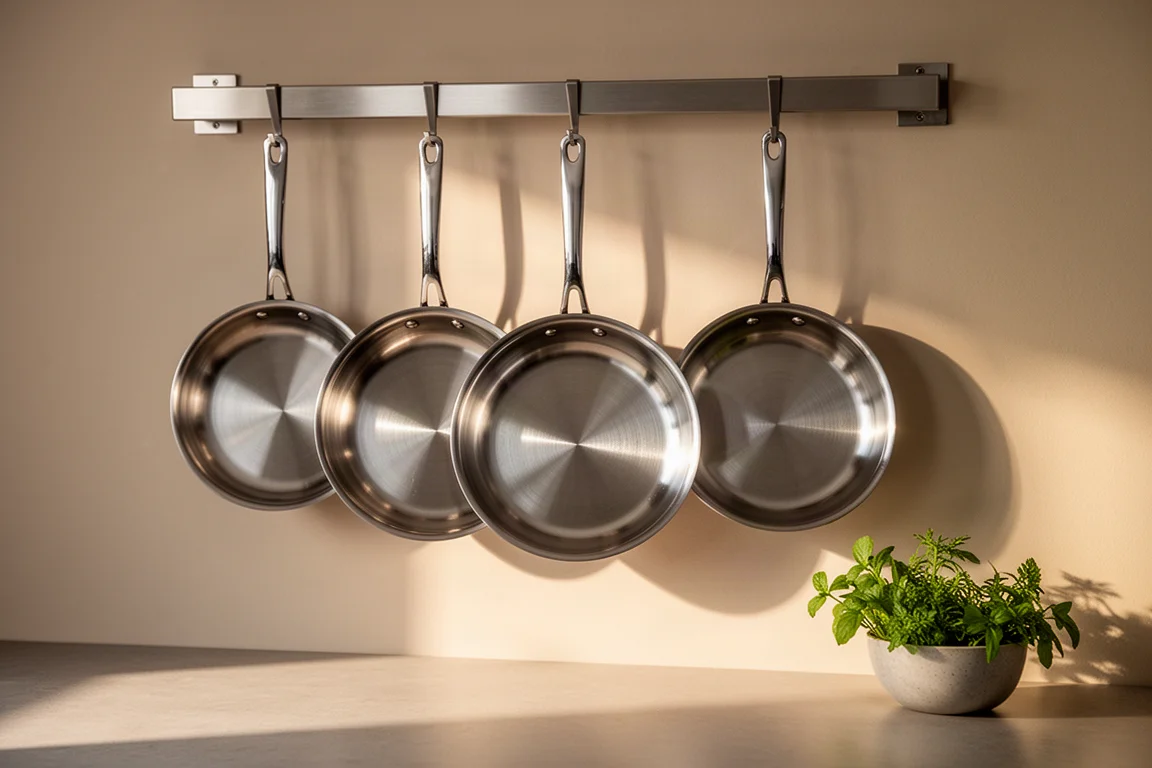
The bottom line: if you want stainless steel with sealed rims, flush rivets, wide cooking surfaces, and scratch-resistant materials that keep their beauty for years, Hestan does it better than almost every other brand. Since stainless steel pans can last a lifetime, splurging for the design you want is a defensible choice. But if you want a non-stick pan, we do not recommend ProBond TITUM. The design and performance are excellent, but no coating lasts forever, and spending that much on a non-stick pan that will eventually need replacing is hard to justify.
If you are seriously considering Hestan and have the budget, also look at All-Clad, Demeyere, Made In, and Heritage Steel. These brands may not have every feature, but they perform on par and in most cases cost significantly less.
Conclusion
Hestan backs up its premium positioning with genuinely superior design details and, in NanoBond’s case, a surface that is measurably harder than standard stainless steel. All four collections performed well in testing, with CopperBond standing out for responsiveness. Whether that justifies prices up to $450 for a single pan depends on how much you value those design refinements and how long you plan to keep your cookware. For buyers who want the very best and will use it for decades, Hestan delivers. For everyone else, the alternatives remain compelling.
Product link
View more details for Hestan NanoBond Frying Pan
This product is mentioned in the review. Check the specifications, options, and compatibility before buying.
View more details for Hestan NanoBond Frying PanFurther reading
Related Reviews
Cookware
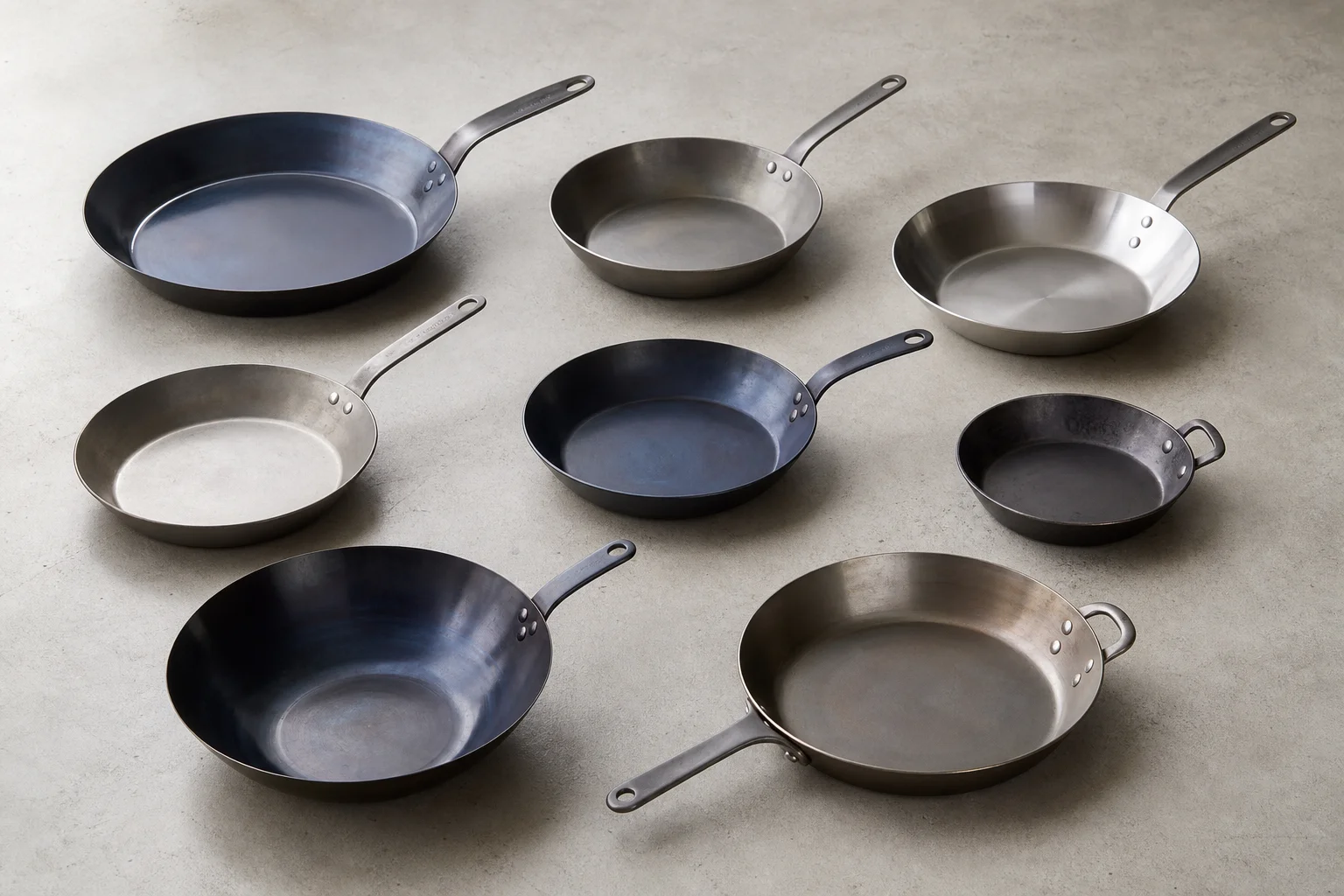
Best Carbon Steel Pans Tested: Which Brands Deliver Real Value
We tested eight popular carbon steel pans with controlled durability, heat, and cooking tests. Here's which ones perform best and which to avoid.
Cookware
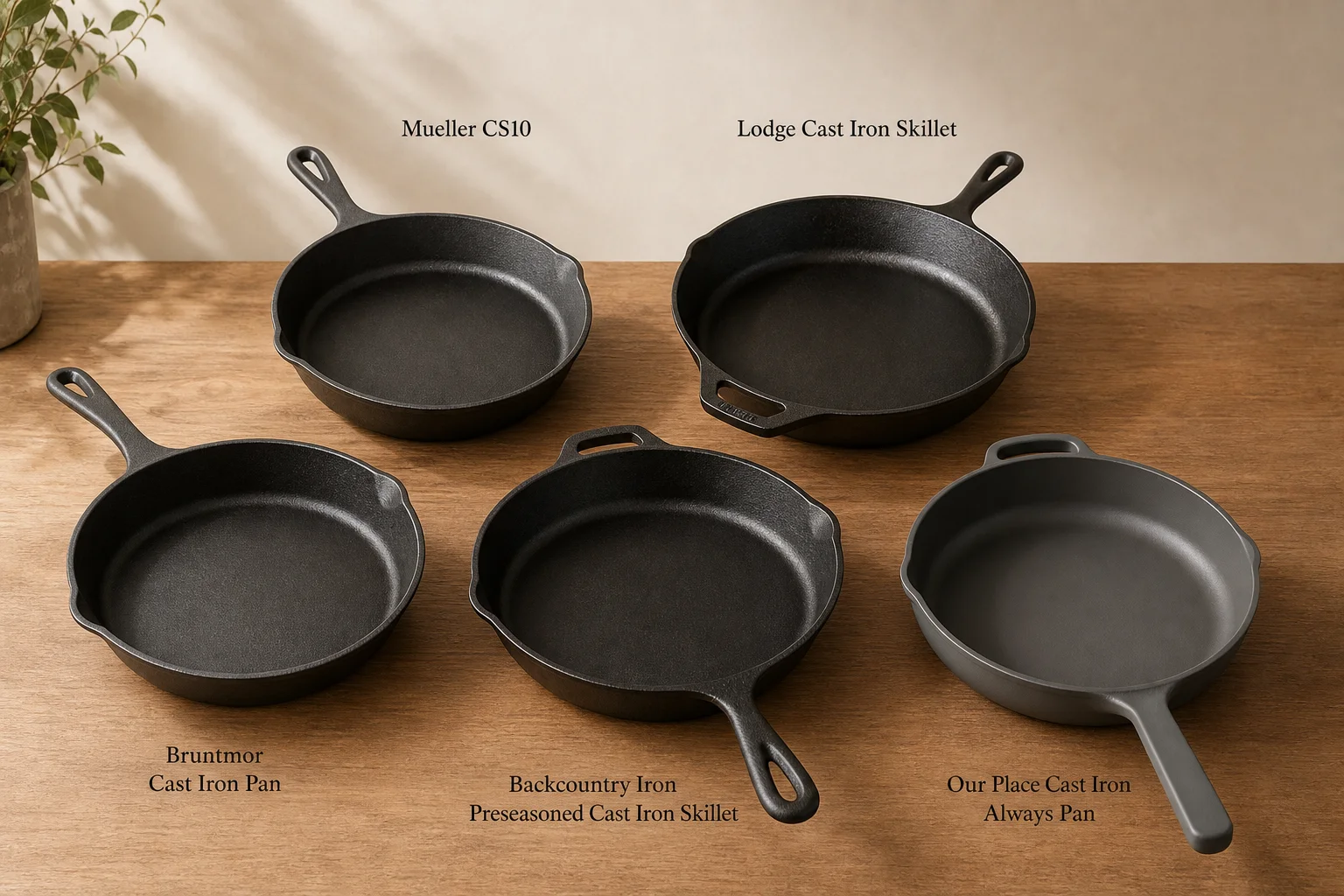
Best Cast Iron Pans 2026: Five Options from Budget to Premium
A practical breakdown of five cast iron skillets, from affordable Mueller to premium Our Place, with clear strengths and trade-offs for different cooking needs.
Cookware
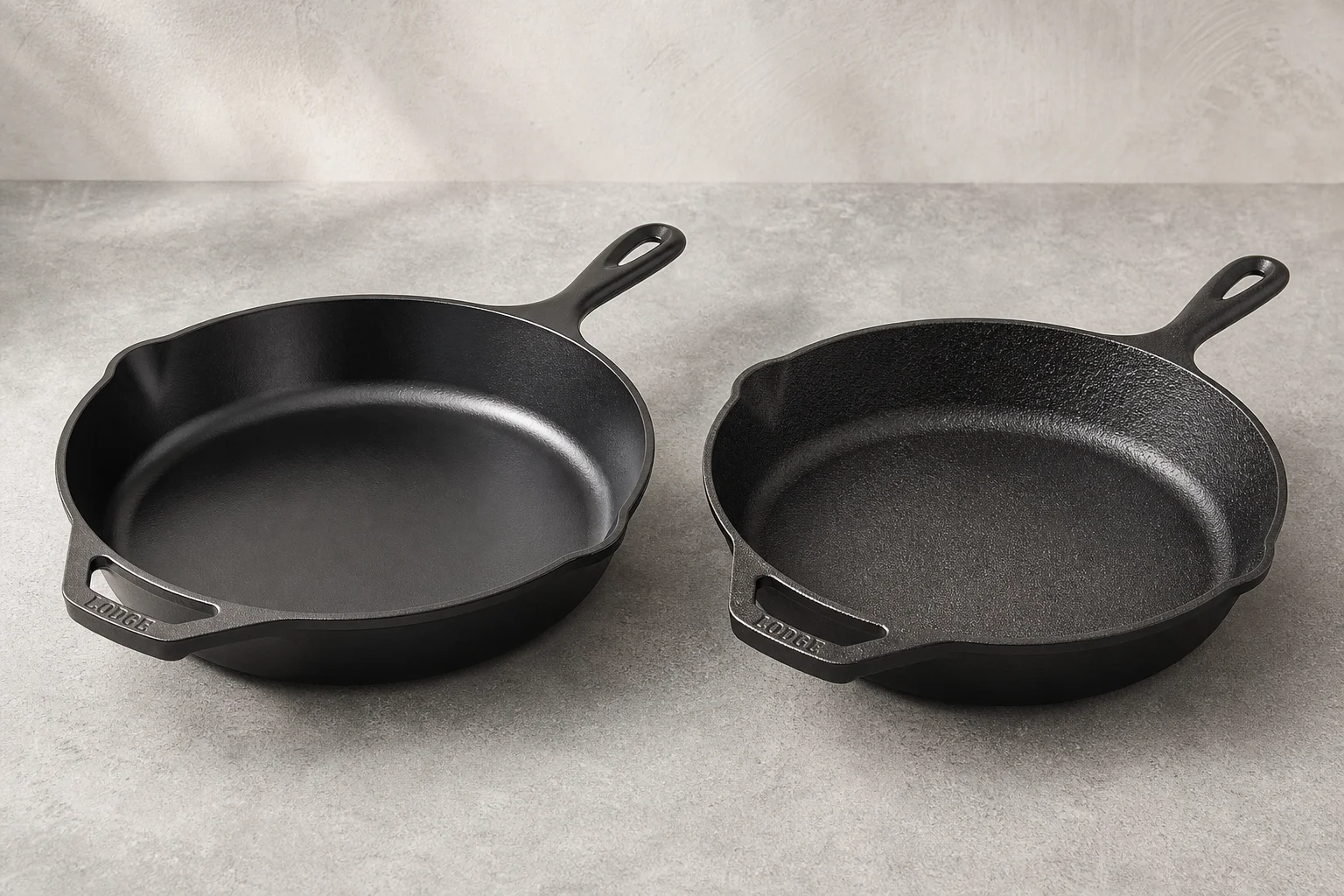
Best 12-Inch Cast Iron Skillets: Premium Craftsmanship vs. Reliable Budget Option
Two standout 12-inch cast iron skillets tested for heat retention, surface finish, and durability. One premium choice and one budget-friendly alternative that both deliver.