Cookware
Heritage Steel Titanium vs Eater Series: Which Cookware Line Makes More Sense?
Two stainless lines from a long-running Tennessee maker, tested side by side. The Eater Series came out ahead on design, value, and overall score.
Introduction
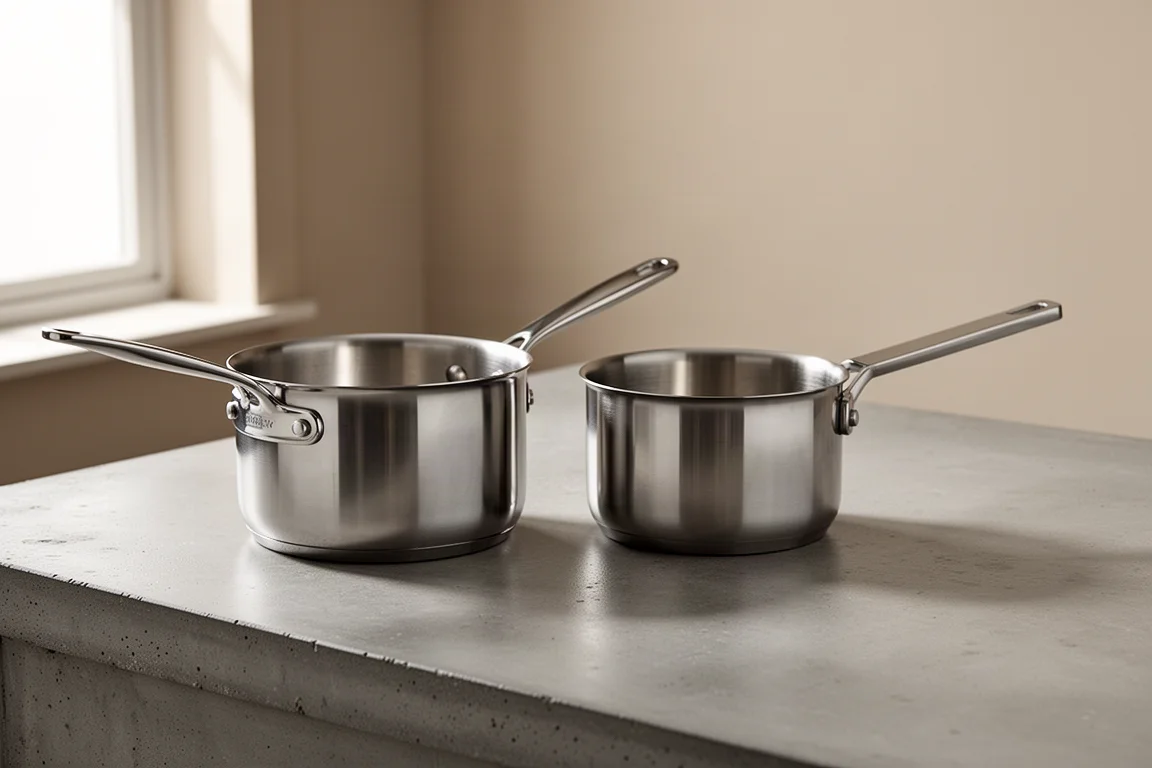
Heritage Steel has been around in one form or another for over 40 years. For the past few weeks we have been testing the brand’s two latest lines: the decade-old Titanium Series and the newer Eater Series, launched in collaboration with Eater just over a month ago.
A quick bit of history: the Hen family bought the Vollrath consumer division and its Clarksville, Tennessee factory back in 1983. Since then the brand has operated under several names, including New Era, Hammer Stahl, and most recently Heritage Steel. The third generation of the family now runs the business.
Both lines were tested under a review policy where the units are donated afterwards and brands get no insight or control over the process whatsoever.
The Core Difference: 316 Ti Versus 304 Stainless
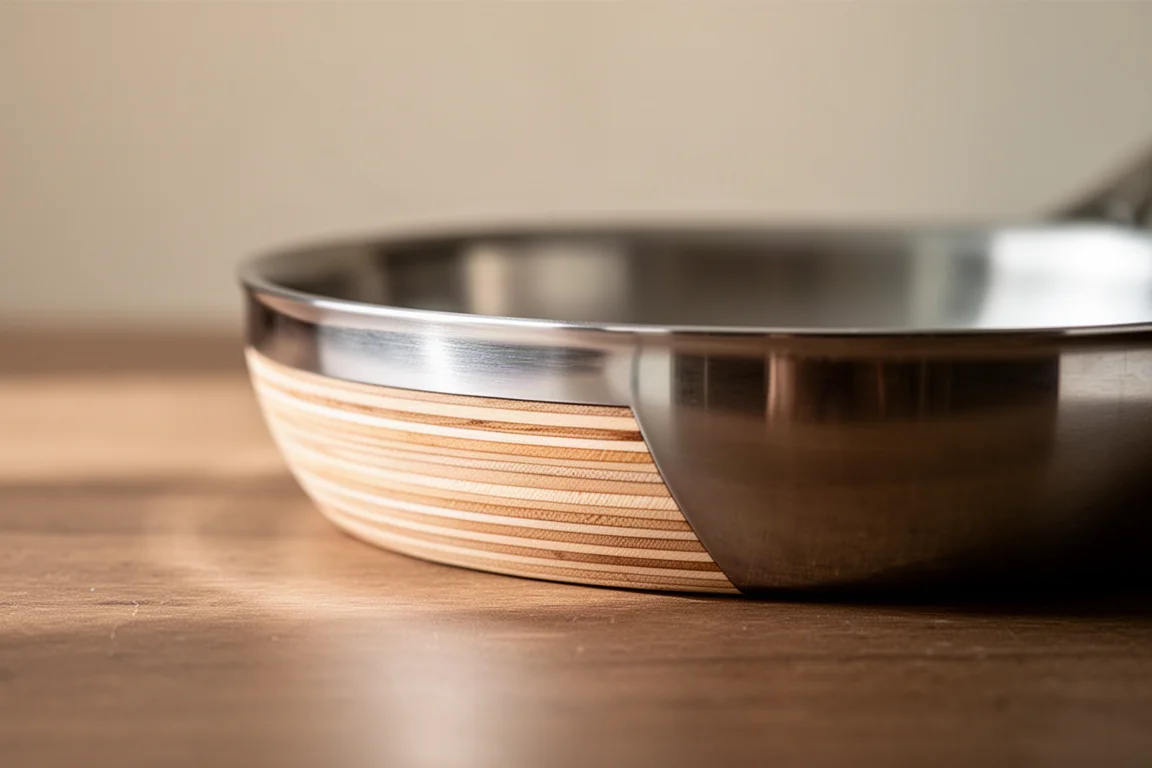
The biggest difference between the two lines, and the recurring theme throughout, is that the Titanium Series uses an inner layer of 316 Ti stainless steel, while the Eater Series uses the more traditional 304 stainless. The 316 Ti inner layer is more resistant to a type of corrosion called salt pitting, which gives it a somewhat longer lifespan.
Is pitting a big deal on a ten-year timeline? Yes. Eventually just about every pan on the market will pit through to the point where the aluminum core is exposed. Note that this is not remotely enough aluminum exposure to be a health concern; it just starts reacting with your food and things can taste a bit off. Heritage Steel also has a replacement policy for cookware that degrades enough that performance is reduced, so even if the Eater Series corrodes faster, it can be replaced at a reasonable price fairly easily.
For care, the Titanium Series scores an 8 and the Eater Series a 6.
Design and Handles: Where the Eater Series Pulls Ahead
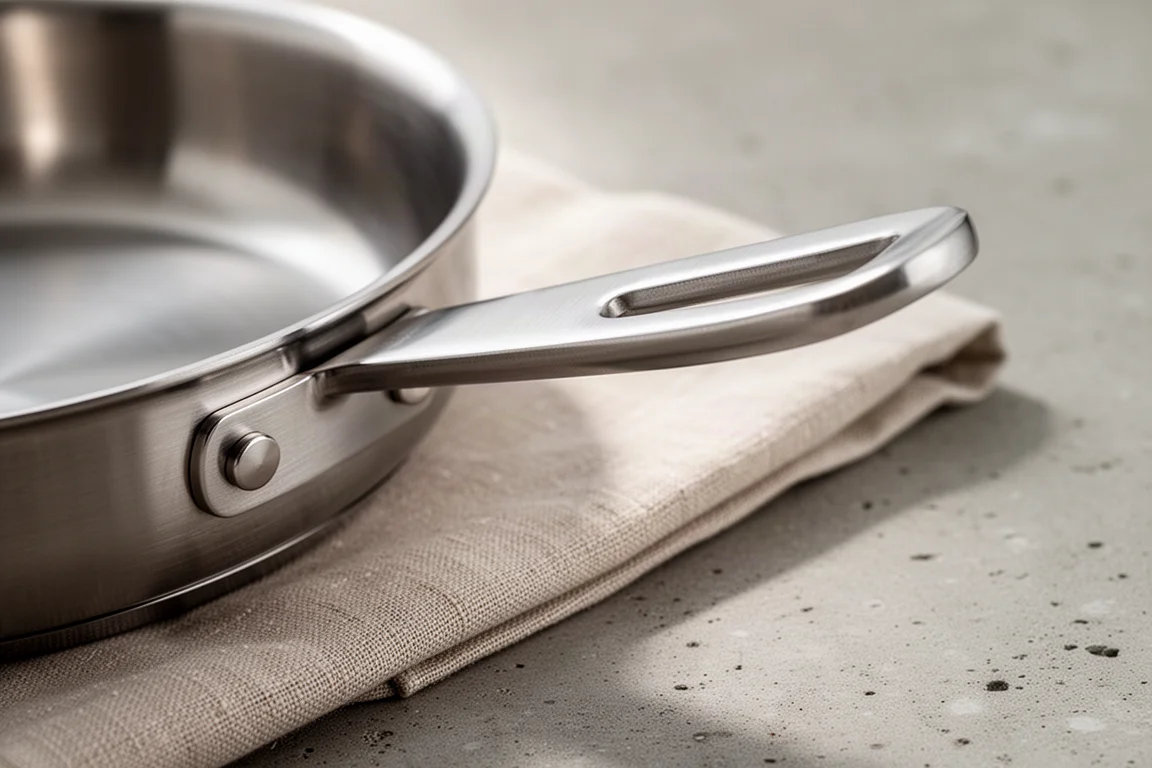
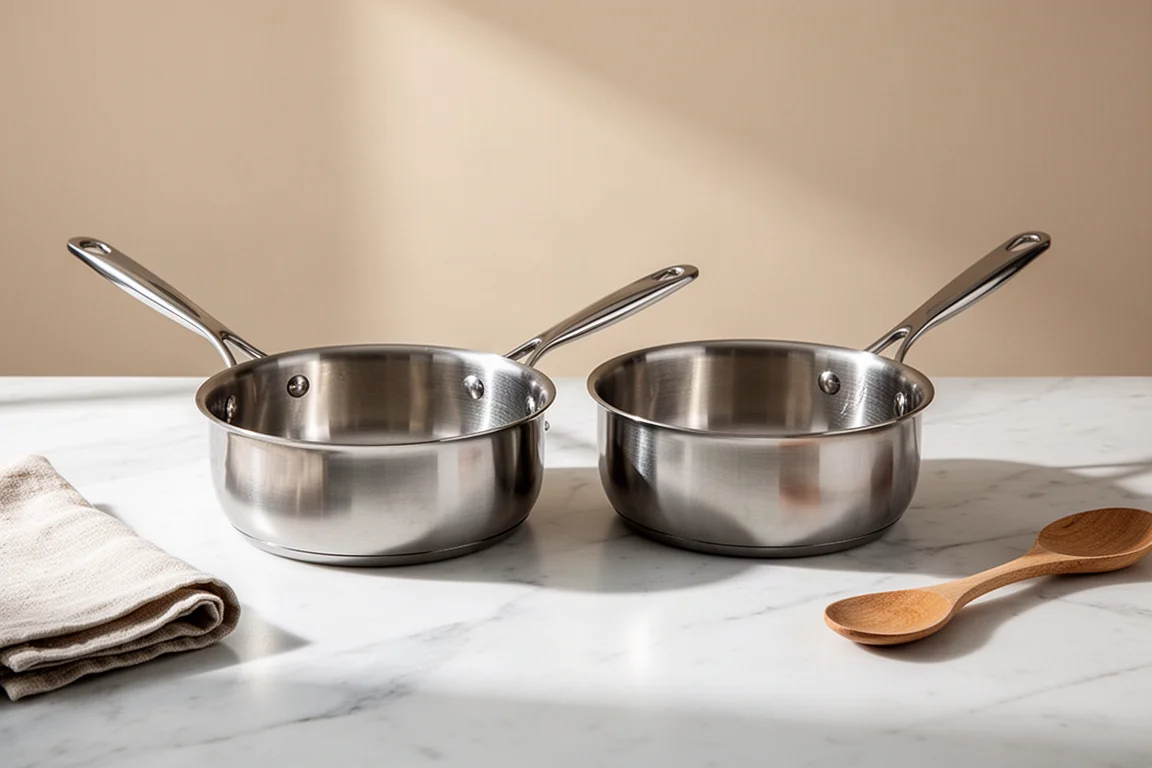
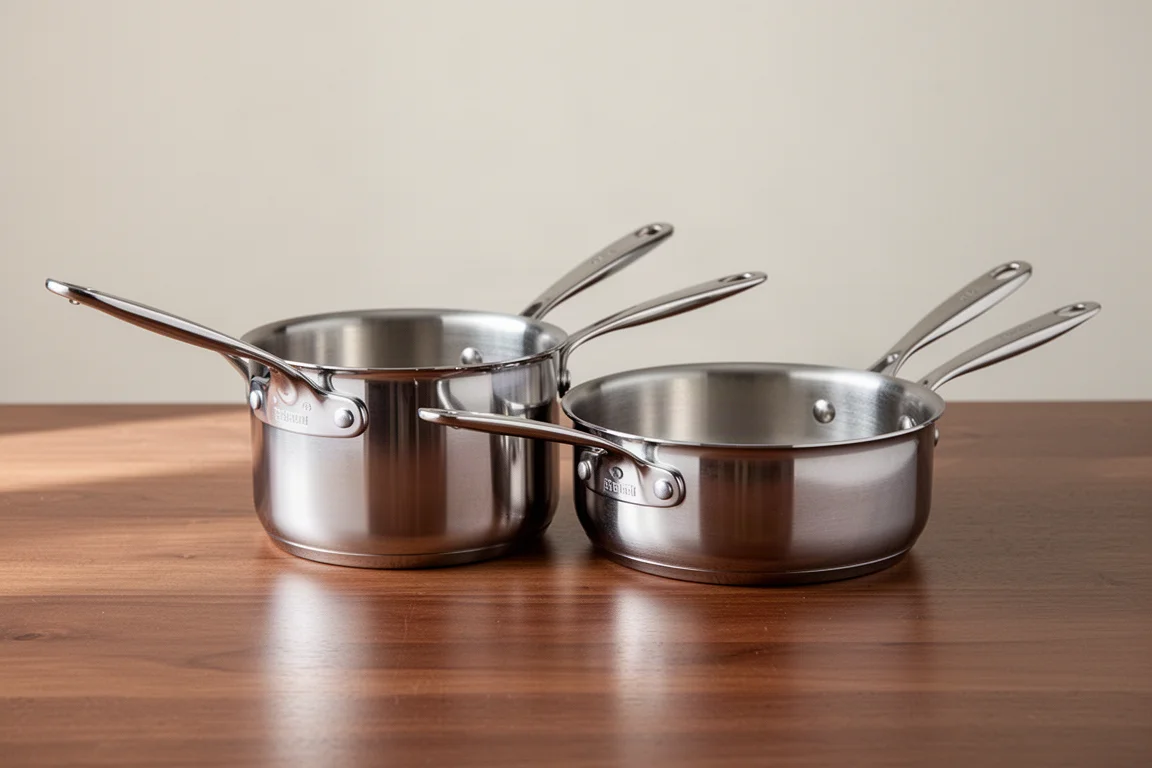
As a cost-saving measure, both lines use the exact same base profiles, with the Eater Series updating the handles and finishes. That might not sound like much, but it is a significant upgrade. The Titanium Series handles feel like off-the-shelf parts from mismatched lines: the lid handles feel dated, and the long handles bring to mind cheap showerhead handles from an early-2000s apartment.
The Eater Series, with its lighter industrial handles and brushed finishes, feels considerably more modern, even though it is notably cheaper. For design, the Titanium Series scores a 4 and the Eater Series a 7.
Materials and Cooking Performance
Material-wise, the Eater Series is in a dead heat with the rest of the market. It is five-ply, but five-ply has been shown time and again to perform just about the same as tri-ply. The Titanium Series uses the same construction but competes on that 316 Ti inner layer, which reduces corrosion rather than stopping it; it simply slows it down.
The main concern going in was that the aluminum layers in the five-ply mix are quite thin. In use, this has not made a significant difference. The pans are responsive and comfortable to hold, and it would be hard to find a performance difference between these and lines like All-Clad D5 without significant scrutiny. For materials, the Titanium Series gets an 8 and the Eater Series a 5.

US Manufacturing: What It Actually Means for Buyers
Heritage Steel’s main value proposition is that its cookware is made in the USA. Whether that meaningfully improves the consumer experience is debatable. One view is that domestic manufacturing gives the company the ability to adapt more quickly and offer greater transparency. The counterpoint is that more expensive labor increases costs and has forced the company to run a fairly limited factory, which can mean production issues.
That showed up in practice: the flagship Titanium Series arrived with misaligned rivets that catch food and some gappy lids, both uncommon issues in this category. The factory has reportedly been upgrading, and the Eater Series units had none of those problems, so it may be a thing of the past.
Value and Verdict on Each Line
The Eater Series is also much more competitively priced, undercutting brands like Made In and All-Clad for a reasonably similar product. For value, the Titanium Series scores a 2 and the Eater Series a 7.
Heritage Steel Titanium Series: it puts all of its metaphorical eggs in the 316 Ti basket, and that one upgrade is not enough to overcome its higher cost and quality-control flaws. It earns an initial overall score of 4.8.
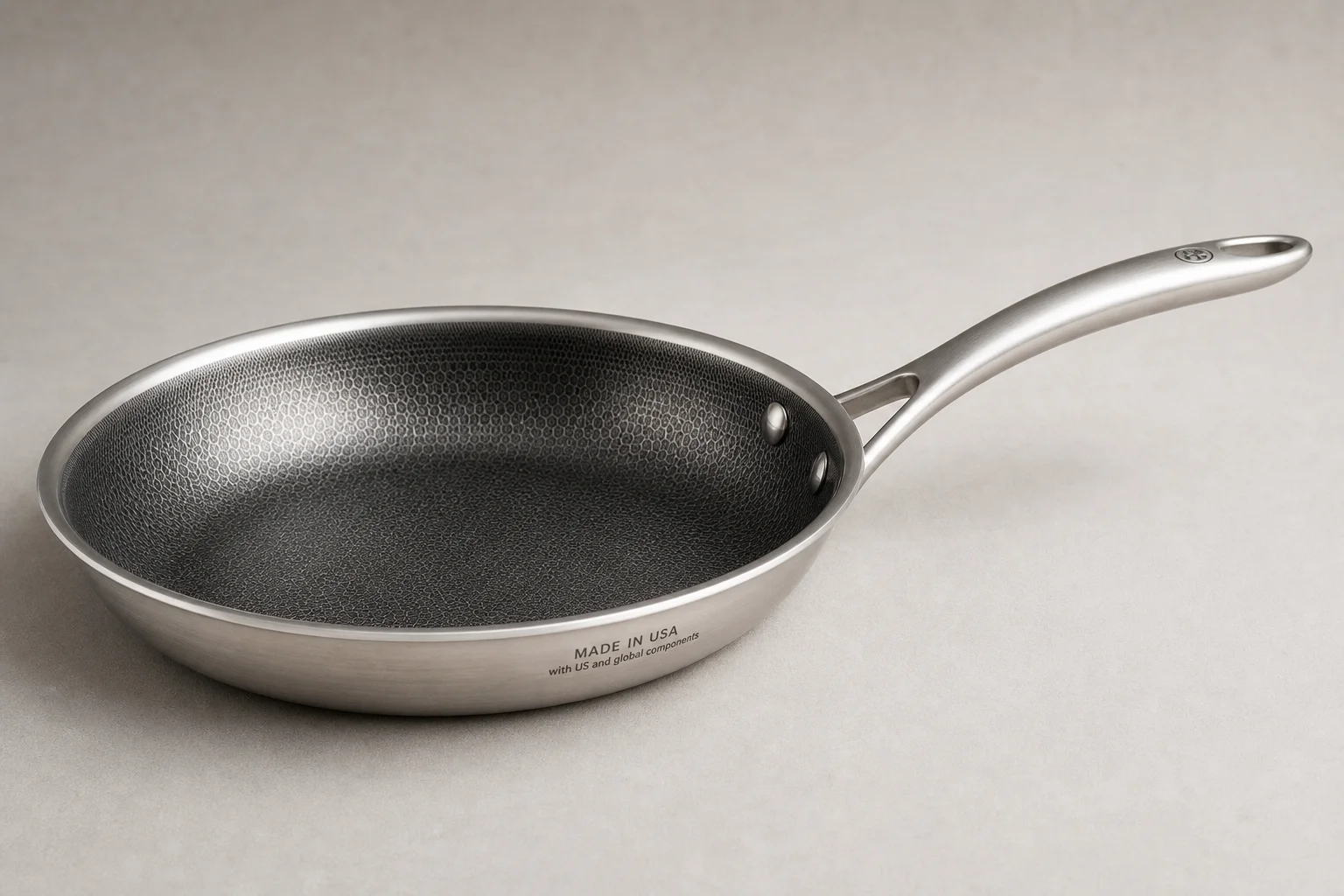
Heritage Steel Eater Series: not a brand traditionally associated with home cookware, but it feels much more in line with what buyers expect today. The longer handles are genuinely nice, and it offers decent quality at a more reasonable price, though how much you will enjoy it may come down to how you feel about the Eater brand itself. It earns an initial overall score of 6.2, and while it lacks the ultra-low price of budget favorite Goldilocks, its nicer construction makes it a solid price-to-performance upgrade.
Conclusion
The Eater Series pleasantly surprised us. The Titanium Series is hard to recommend given its cost and flaws, while the Eater Series offers better design, better value, and fewer quality concerns. If you are choosing between the two, the Eater Series is the one that makes sense for most home cooks.
Further reading
Related Reviews
Cookware
Best Carbon Steel Pans Tested: Which Brands Deliver Real Value
We tested eight popular carbon steel pans with controlled durability, heat, and cooking tests. Here's which ones perform best and which to avoid.
Cookware
Best Cast Iron Pans 2026: Five Options from Budget to Premium
A practical breakdown of five cast iron skillets, from affordable Mueller to premium Our Place, with clear strengths and trade-offs for different cooking needs.
Cookware
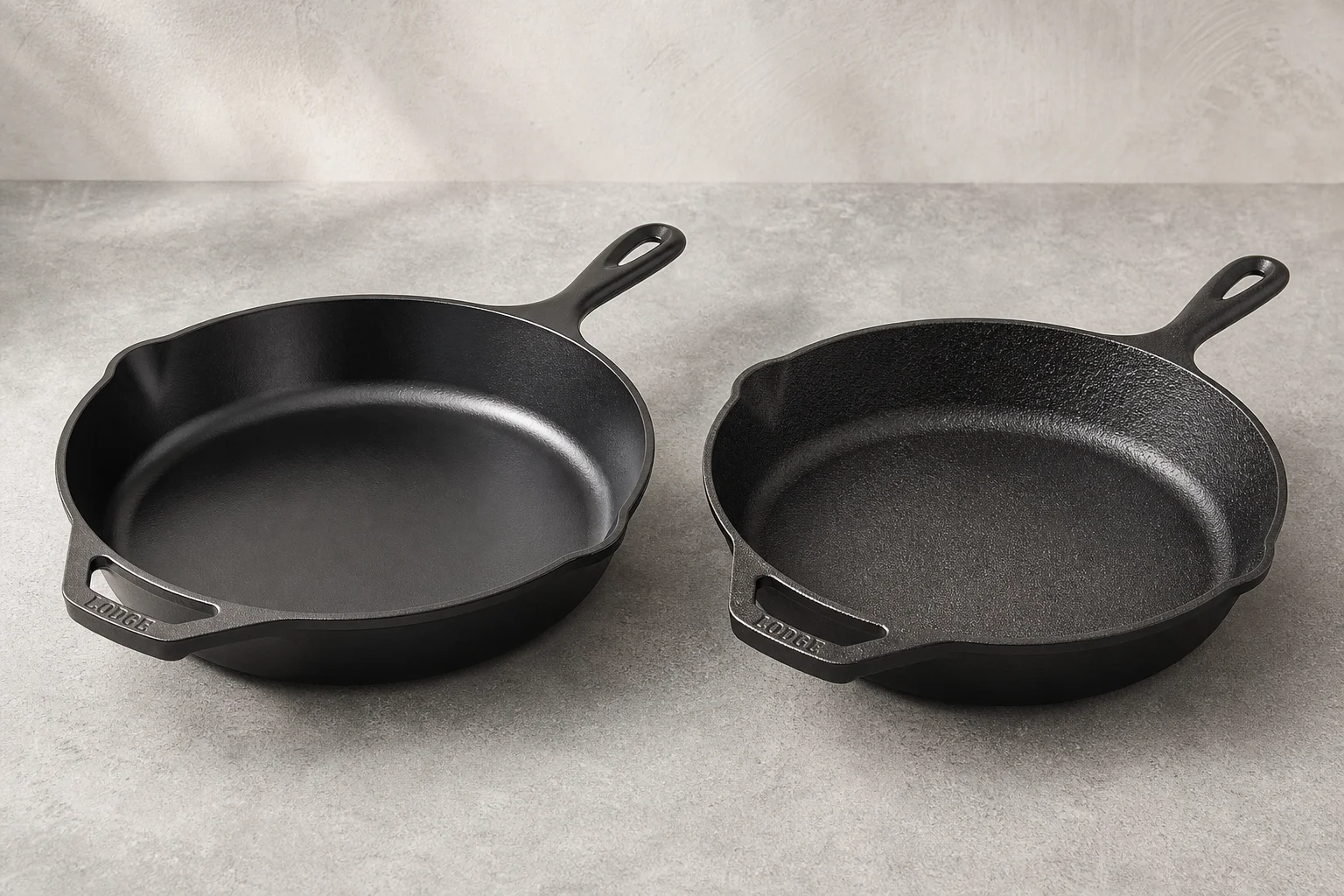
Best 12-Inch Cast Iron Skillets: Premium Craftsmanship vs. Reliable Budget Option
Two standout 12-inch cast iron skillets tested for heat retention, surface finish, and durability. One premium choice and one budget-friendly alternative that both deliver.