Cookware
Heritage Steel Cookware Review: Titanium Series vs Eater Series vs All-Clad D3
A hands-on look at Heritage Steel's two American-made stainless collections, how they compare to All-Clad D3, and which one makes the most sense for your kitchen.
Introduction
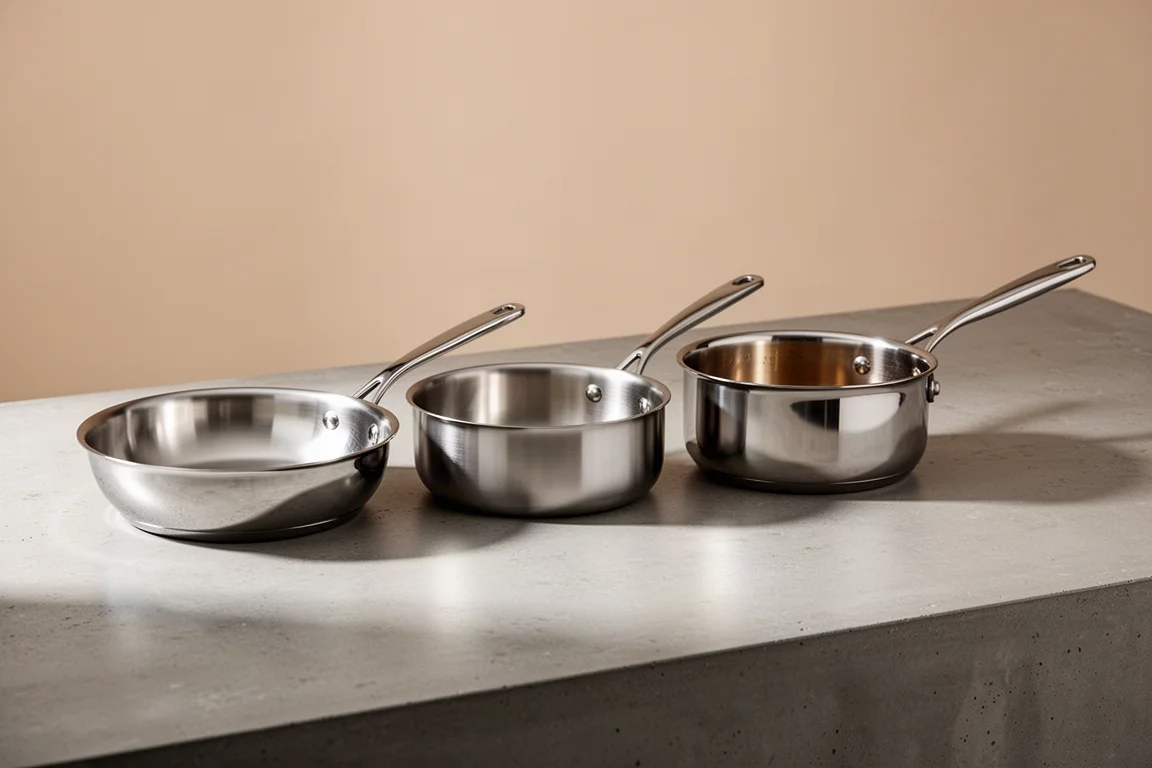
Heritage Steel is a small, family-owned American cookware brand that has been making stainless steel pots and pans in its own Clarksville, Tennessee factory for over 40 years. In a market where most brands outsource manufacturing, that in-house control shows in the final product. But how does it actually perform, and is it worth the price compared with established names like All-Clad?
This review breaks down how Heritage Steel cookware is made, compares its two collections, the Titanium Series and the Eater Series, and puts them head to head against All-Clad’s popular D3 line.
How Heritage Steel Cookware Is Made
Every Heritage Steel pan starts as a flat disc that is punched into shape by a forming press. Excess material around the rims is trimmed away, then each piece goes through a series of grinding and polishing steps to smooth the edges and surface and create the final finish. Holes are punched for the handles, which are attached by rivets.
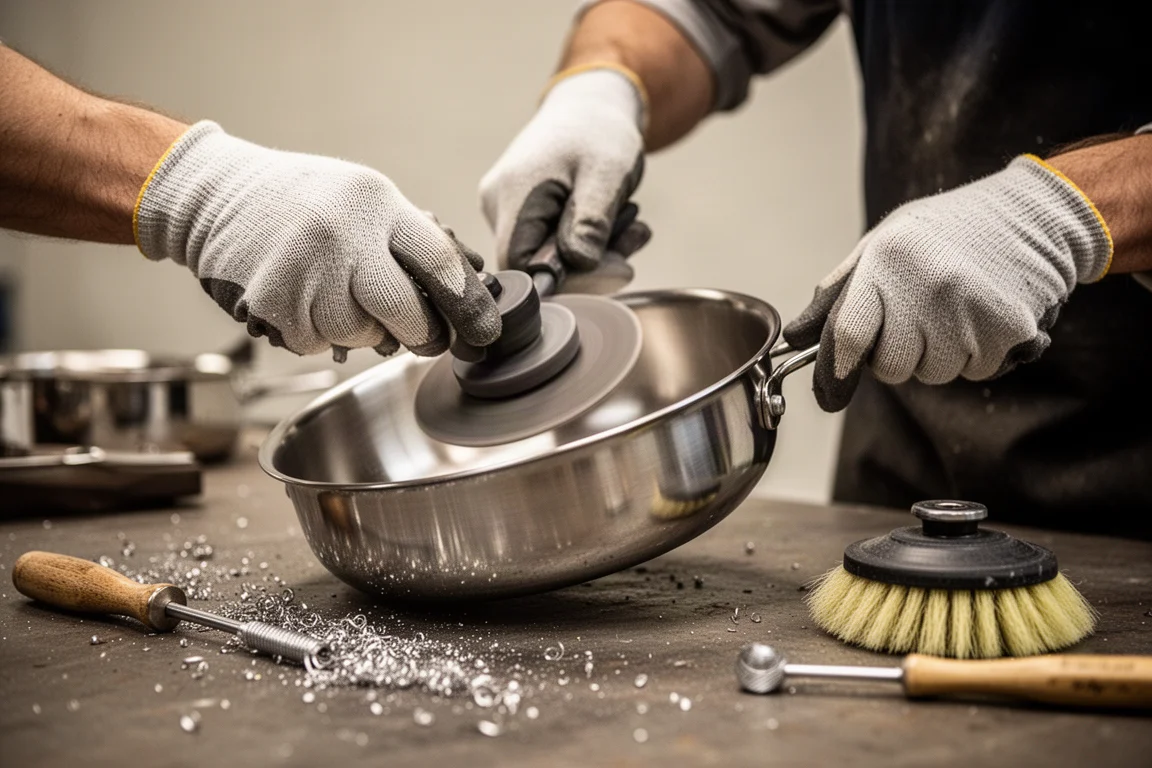
Each piece is carefully inspected by hand, and if it is not perfect, it does not get sold. This is not a company mass-producing thousands of pans per day. Because manufacturing happens in the USA in its own facilities, Heritage Steel has complete control over every detail of the process.
The Two Collections: Titanium Series and Eater Series
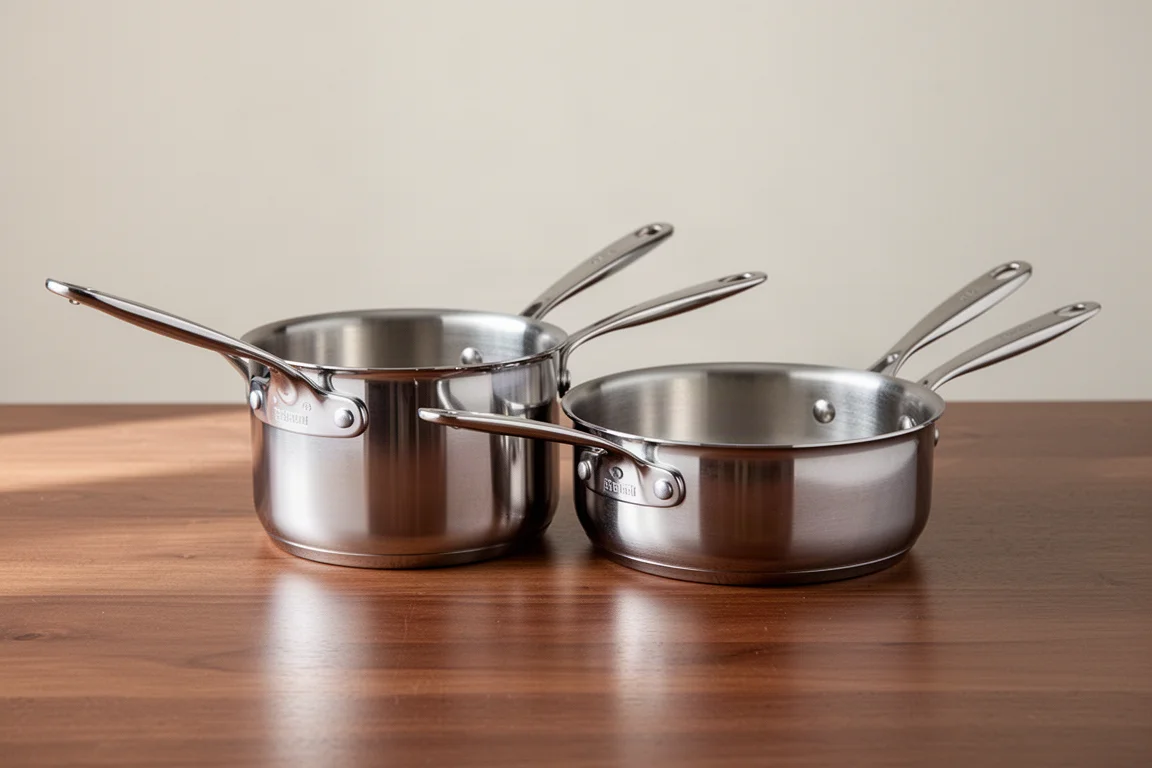
Heritage Steel sells two cookware collections. The Eater Series launched in 2023 and was designed in partnership with Eater.com, one of the largest food websites in the world. Both collections are made in the USA, both are fully clad with an aluminum core so they heat evenly from the center of the cooking surface to the rim, both have flared rims, and both are broiler and oven-safe up to 800 degrees Fahrenheit.
Handle Design
Titanium Series handles are flat on top, rounded on the bottom, wide in the middle, and come to a point at the end. Eater Series handles are flat on top and slightly rounded on the bottom but the same thickness throughout. They resemble Made In handles, except they fork right before the body of the pan to disperse heat and keep the handle cool, with a small bump underneath to warn you when your hand is getting too close to the heat.
Finish and Cooking Surface
The Titanium Series has a shiny polished exterior, while the Eater Series has a brushed finish. The finish does not affect cooking performance, but fingerprints and smudges are less noticeable on the brushed finish.
Both collections are 5-ply with the same 400-series ferromagnetic steel exterior and aluminum core. The difference is the cooking surface: the Eater Series uses 304 stainless steel, the industry standard, while the Titanium Series uses 316Ti stainless steel reinforced with titanium and molybdenum for greater durability and resistance to pitting. Because 316Ti steel costs more and the polished exterior requires more labor, the Titanium Series is the more expensive of the two.
Cooking Performance and Real-World Testing
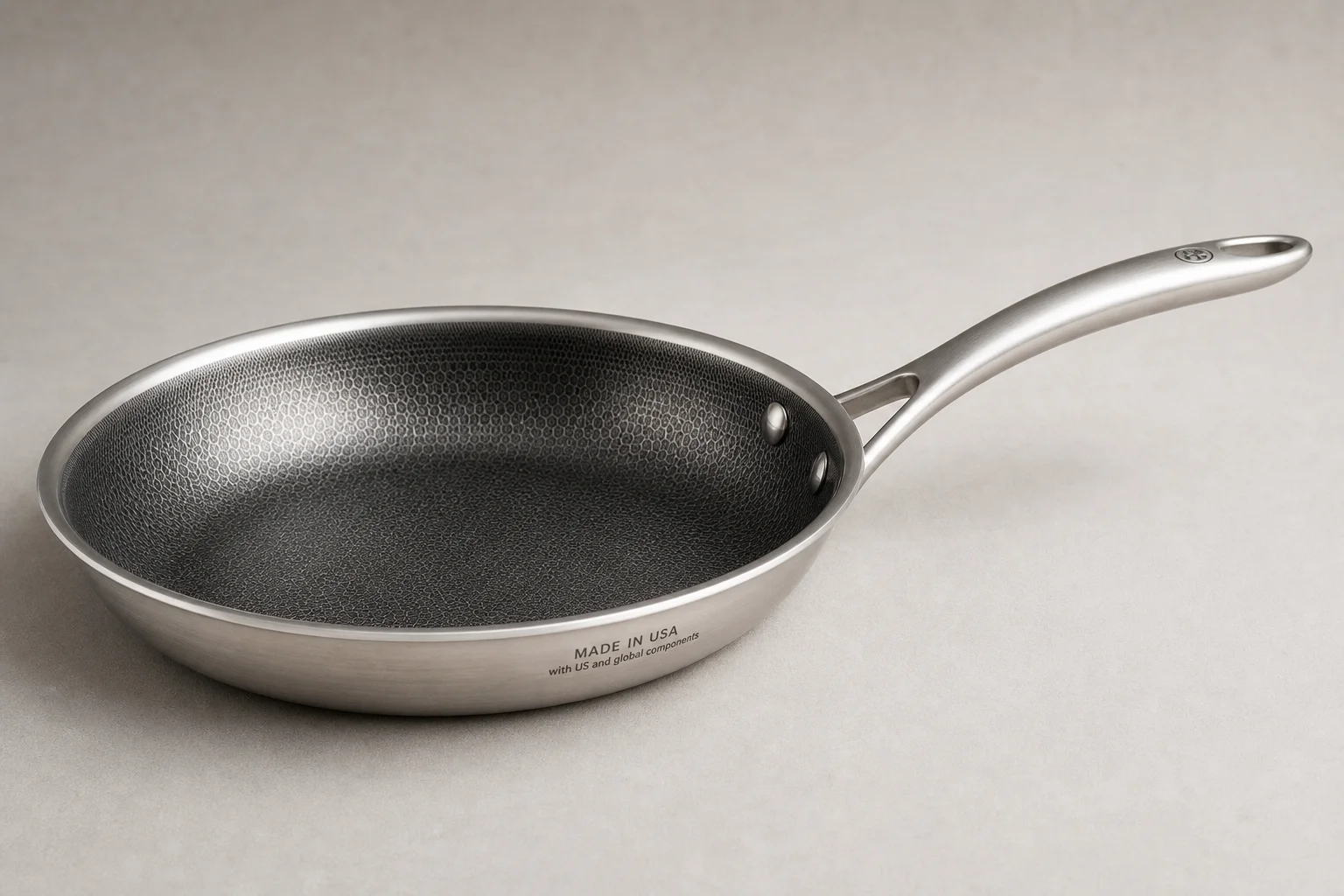
Heritage Steel performs as you would expect quality stainless steel cookware to perform. It heats up fast and evenly, holds its heat when cold ingredients go in, and offers a wide cooking surface. The flared rims make it easy to pour liquids and slide food onto a plate, and the handles stay cool during stovetop cooking.
The 12-inch frying pans in both collections share the same shape, thickness, weight, and conductive aluminum core, so they cook almost identically. With 3 mm thick walls, the pans feel sturdy without being too heavy: light enough to shake and flip ingredients while sauteing, hefty enough to resist warping or denting.
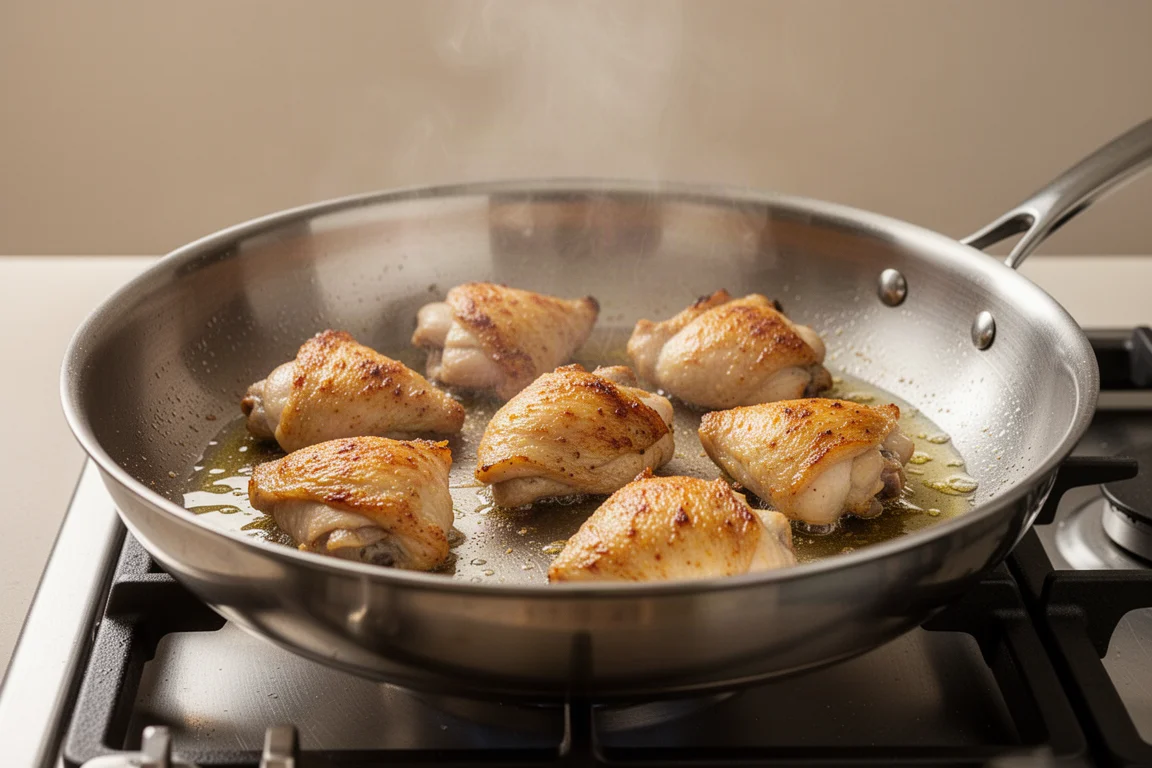
To verify that performance holds up against the competition, both Heritage Steel collections and All-Clad’s D3 collection were tested side by side. Both pans were preheated to the same temperature, the same amount of oil was added, and chicken was cooked in each. The chicken released from the surface without sticking and cooked evenly in both pans. In day-to-day use, Heritage Steel delivers the same reliable performance you get from brands like All-Clad.
How the Pricing Stacks Up
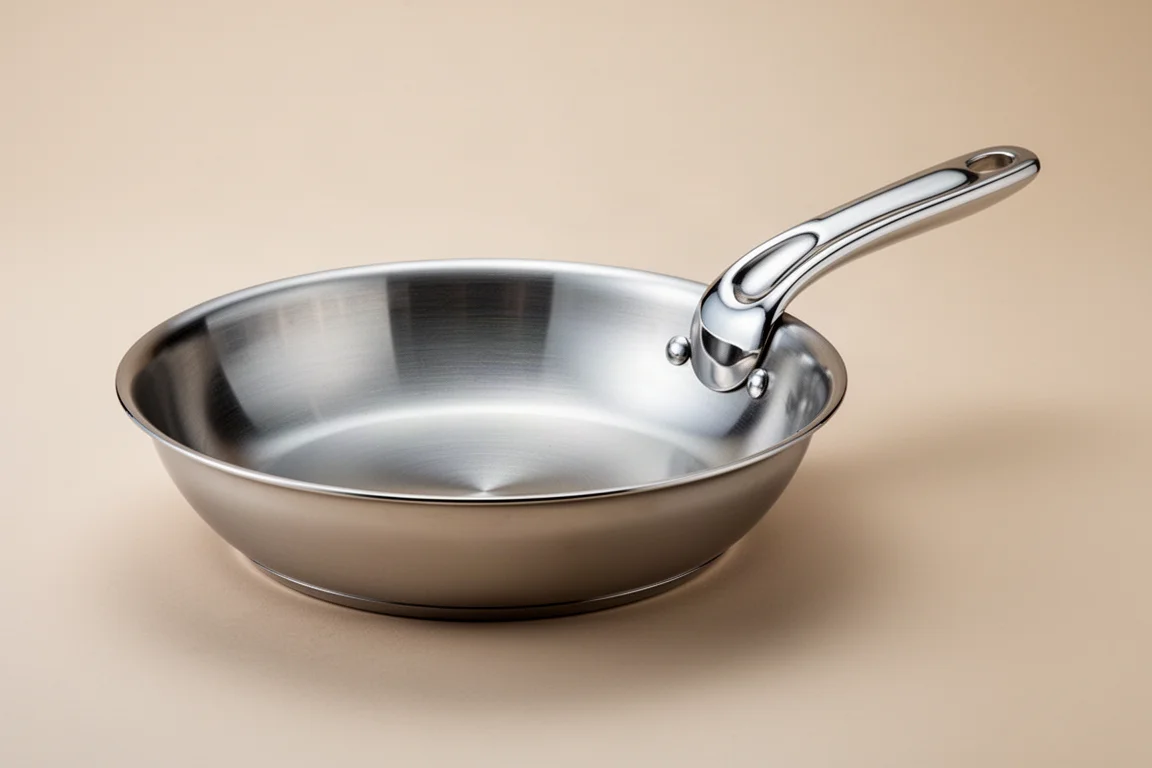
Heritage Steel costs more than brands made in China, like Misen and Goldilocks, but less than high-end brands made in Europe and the US, such as All-Clad, Hestan, and Demeyere. It is priced similarly to Made In and Sardel.
Some reference prices illustrate the gap. Heritage Steel lists the Titanium Series 12-inch frying pan at $140 and the Eater Series 12-inch pan at $100. The All-Clad D3 12-inch pan is currently listed at $200 on All-Clad.com, the All-Clad D5 at $250, and the All-Clad Copper Core at $280. Other US-manufactured brands like 360 Cookware and Viking Professional are also more expensive than Heritage Steel.
Downsides to Consider Before Buying
The Titanium Series handle, being rounded on the bottom, can rotate in your hands when tilting and pouring, and it becomes extra slippery when washing the pan with wet, soapy hands. The flatter Eater Series handle is less likely to rotate and remains comfortable, so it is the stronger design. The handle is also only 8 inches long and gets thinner at the end, so a secure grip means holding the middle of the handle, which is relatively close to the heat. Brands like Sardel and All-Clad D5 use longer handles of around 9 inches.
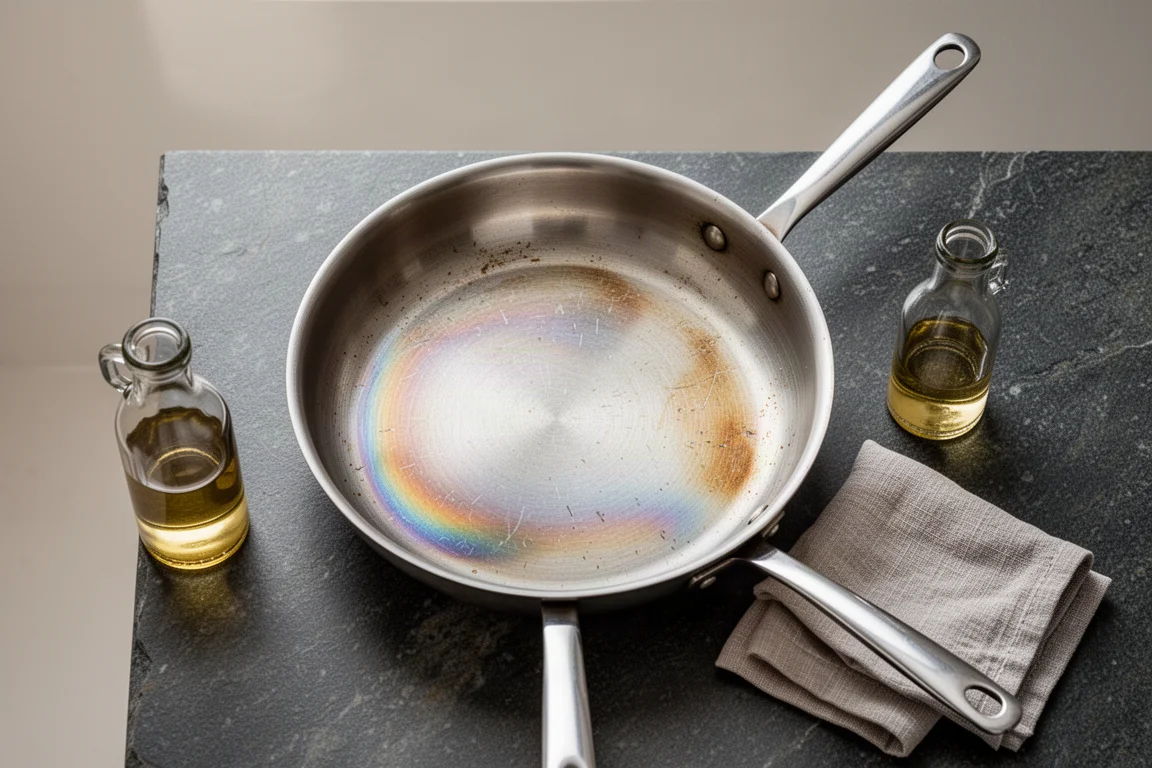
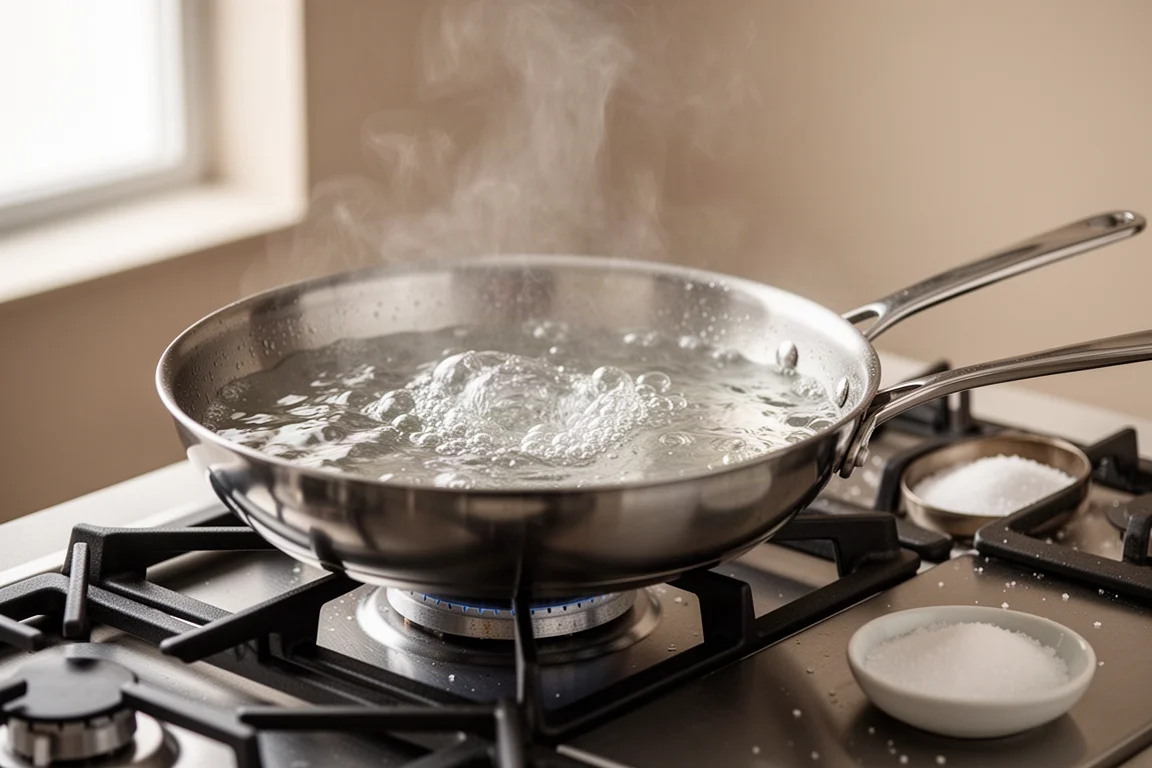
Rainbow stains, also known as heat tint, are common with all stainless steel cookware, but they appear more often on Heritage Steel. The good news is that vinegar and water removes them. The rivets that attach the handles are secure but stick out further on the inside of the pan than those of Made In or All-Clad, and since oil and stains collect around rivets, the more flush they are, the better.
It is also worth knowing that while the brand is American and assembles everything in the USA, some materials are sourced globally: the handles are made in China and attached in the US, and the bonded sheets of steel that start the process come from South Korea. Finally, Heritage Steel specializes in stainless steel and only sells stainless steel. If you want non-stick, carbon steel, cast iron, enameled cast iron, or copper cookware to round out your collection, you will need to shop other brands.
Buying Advice: Which Should You Choose?
Based on testing, Heritage Steel is one of the best stainless steel brands on the market. It performs similarly to All-Clad while costing less, offers a titanium-strengthened cooking surface on the Titanium Series, and the hand grinding and polishing produce noticeably smoother edges.
For most buyers, the Eater Series is the smart pick: it costs less, has the more comfortable flatter handle, and a brushed finish that hides smudges. Choose the Titanium Series if you value the more corrosion-resistant 316Ti cooking surface and prefer a polished exterior. If you want a comparable alternative, Made In is worth considering: the Eater Series and Made In look almost identical, with Made In’s walls a touch taller, slightly wider flared rims, and flatter rivets. Both are excellent choices for quality stainless steel at a fair price.
Conclusion
Heritage Steel makes some of the best American-made stainless steel cookware available, with careful hand craftsmanship, even heating, and prices that undercut All-Clad and other premium US and European brands. The Eater Series is the better value for most home cooks, while the Titanium Series justifies its premium with a more durable 316Ti cooking surface. Either way, you are getting cookware built to last in the USA by a brand that clearly cares about the details.
Further reading
Related Reviews
Cookware
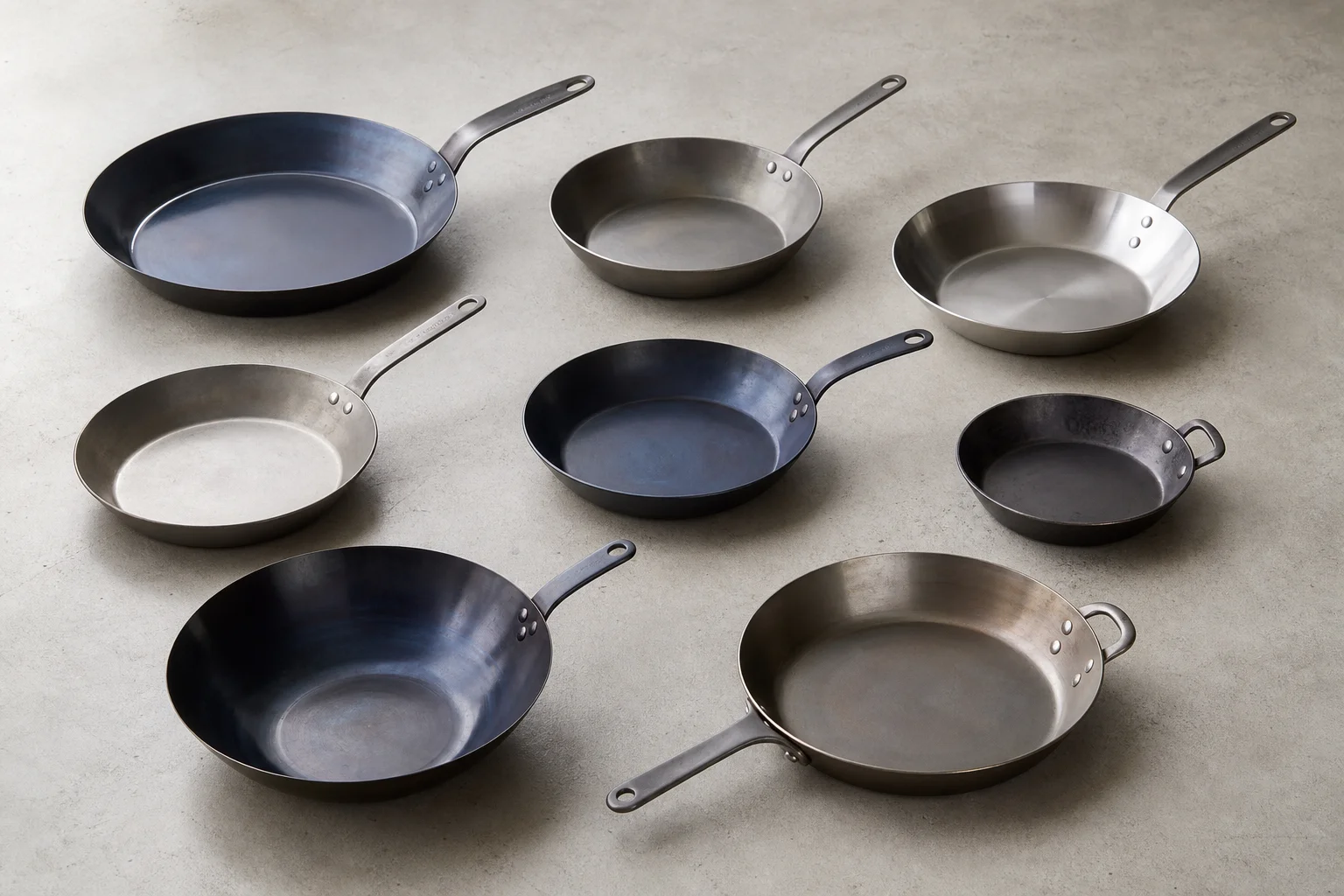
Best Carbon Steel Pans Tested: Which Brands Deliver Real Value
We tested eight popular carbon steel pans with controlled durability, heat, and cooking tests. Here's which ones perform best and which to avoid.
Cookware
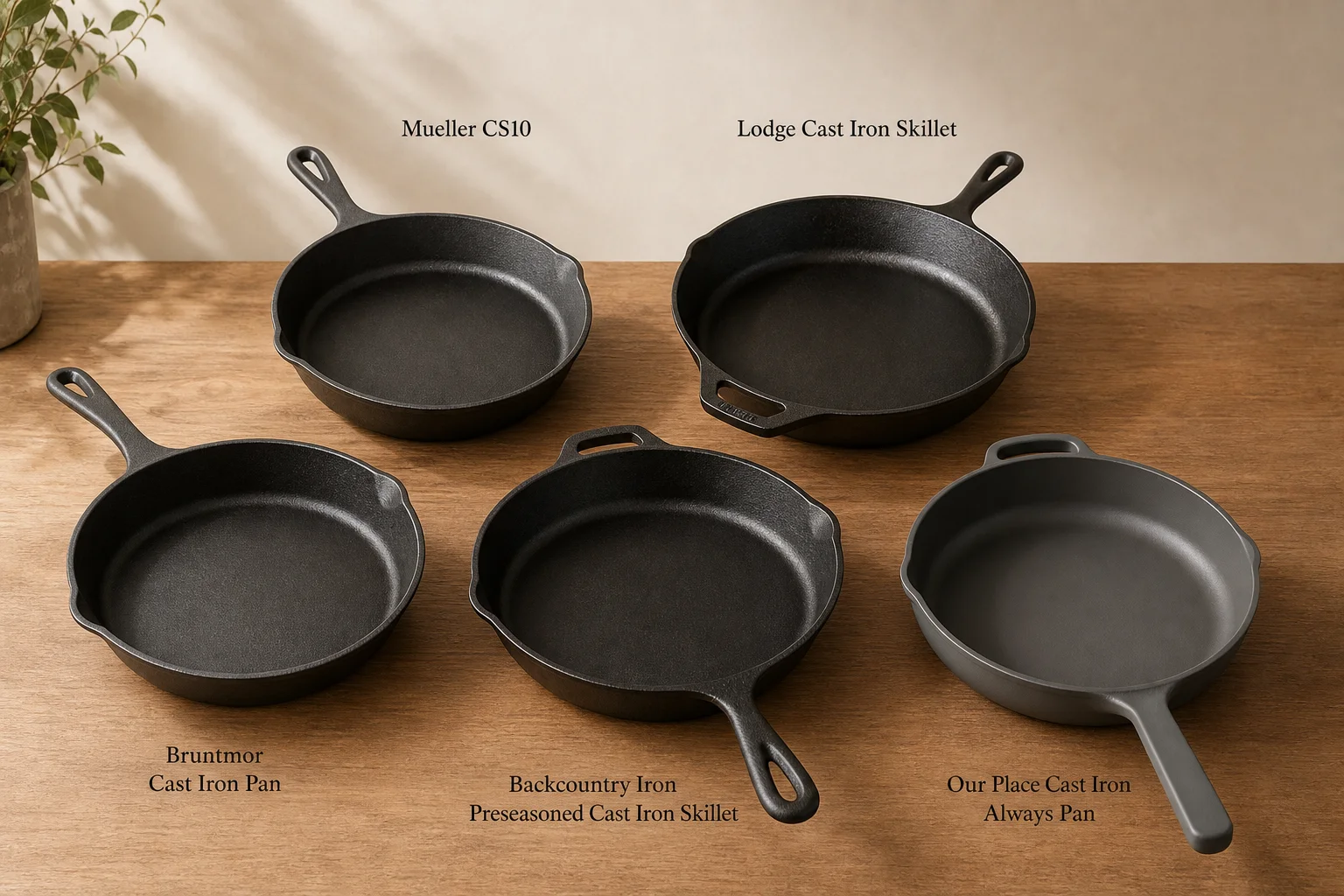
Best Cast Iron Pans 2026: Five Options from Budget to Premium
A practical breakdown of five cast iron skillets, from affordable Mueller to premium Our Place, with clear strengths and trade-offs for different cooking needs.
Cookware
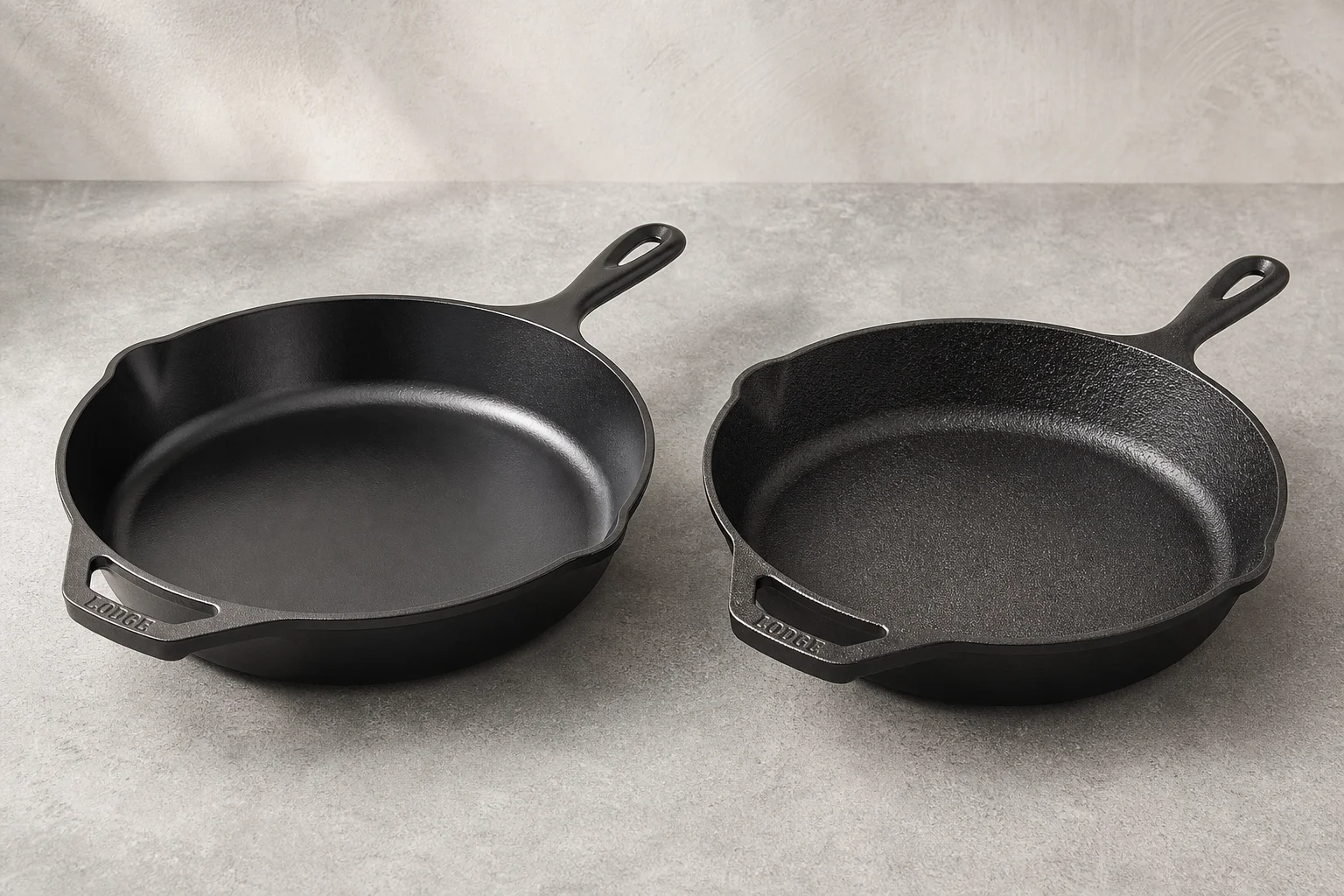
Best 12-Inch Cast Iron Skillets: Premium Craftsmanship vs. Reliable Budget Option
Two standout 12-inch cast iron skillets tested for heat retention, surface finish, and durability. One premium choice and one budget-friendly alternative that both deliver.