Trailers
Four Heavy-Duty Trailers That Caught Our Eye: Live Floor Dumps, Roll-Offs, Tilts, and Equipment Haulers
A closer look at four trailer designs that stand out for clever engineering, including a live floor dump, a roll-off system, expandable tilt trailers, and a robotically welded 16K equipment trailer.
Introduction
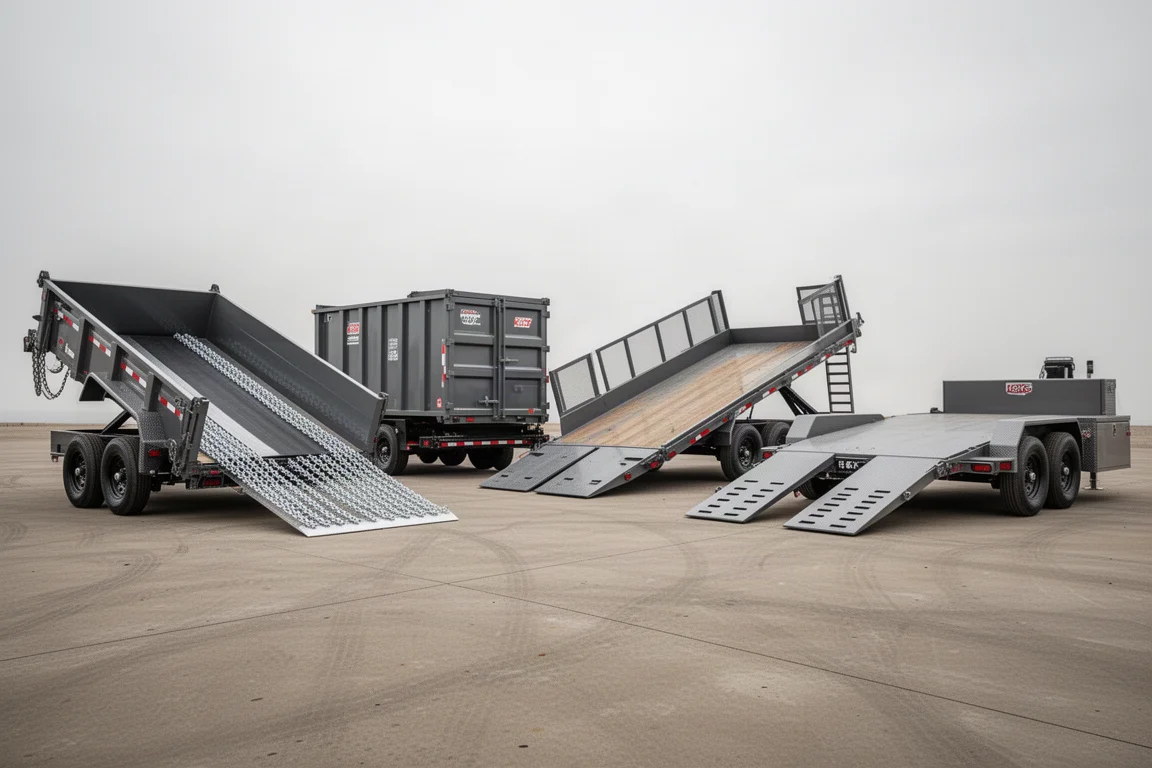
Some trailers earn attention simply by solving a problem differently. That was the case with four trailers that stood out for their practical engineering: a chain-driven live floor dump trailer, a roll-off dumpster system, tilt trailers with expandable sides, and a 16K equipment trailer built with robotic welding throughout. Each approaches hauling from a different angle, and each has features worth understanding before you spend money in this category.
Hollett Live Floor Dump Trailer
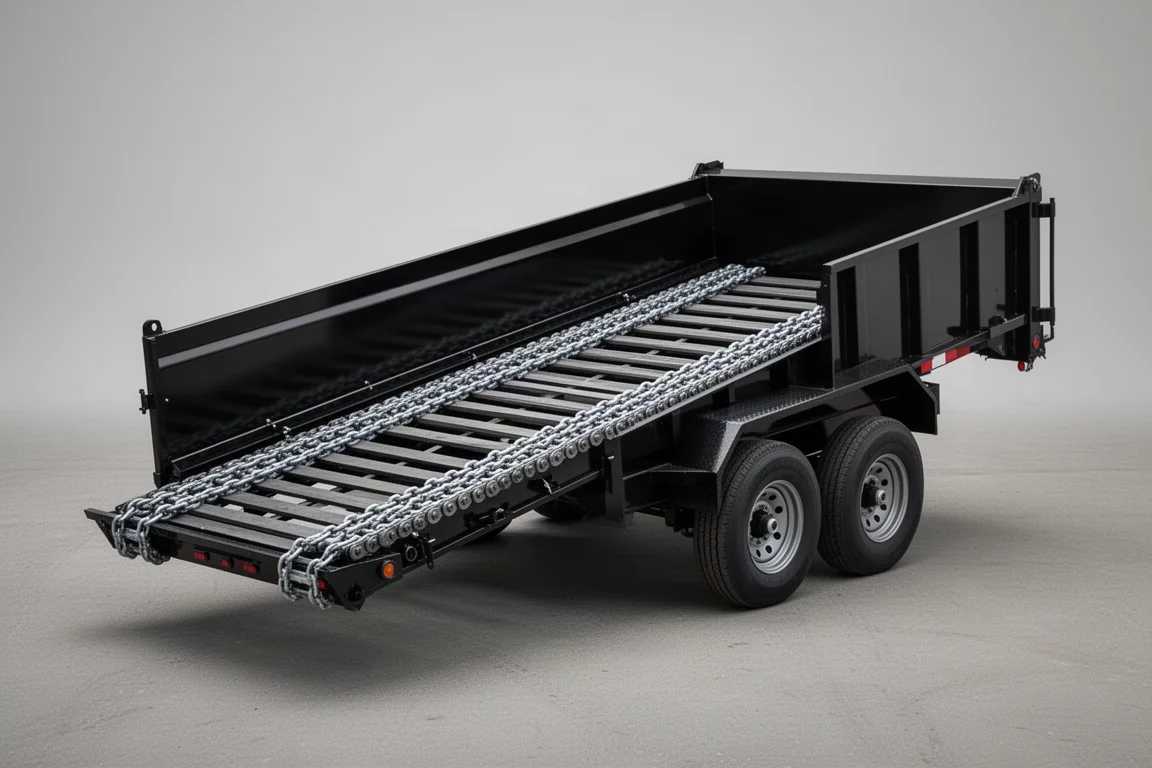
The Hollett live floor dump trailer works like a dump trailer, but instead of a traditional hoist it uses a chain-driven conveyor belt system to push material out the back. Because the floor continuously moves the load, you can dump in place or drive forward while unloading, which makes spreading gravel or dirt considerably easier than with a standard dump bed.
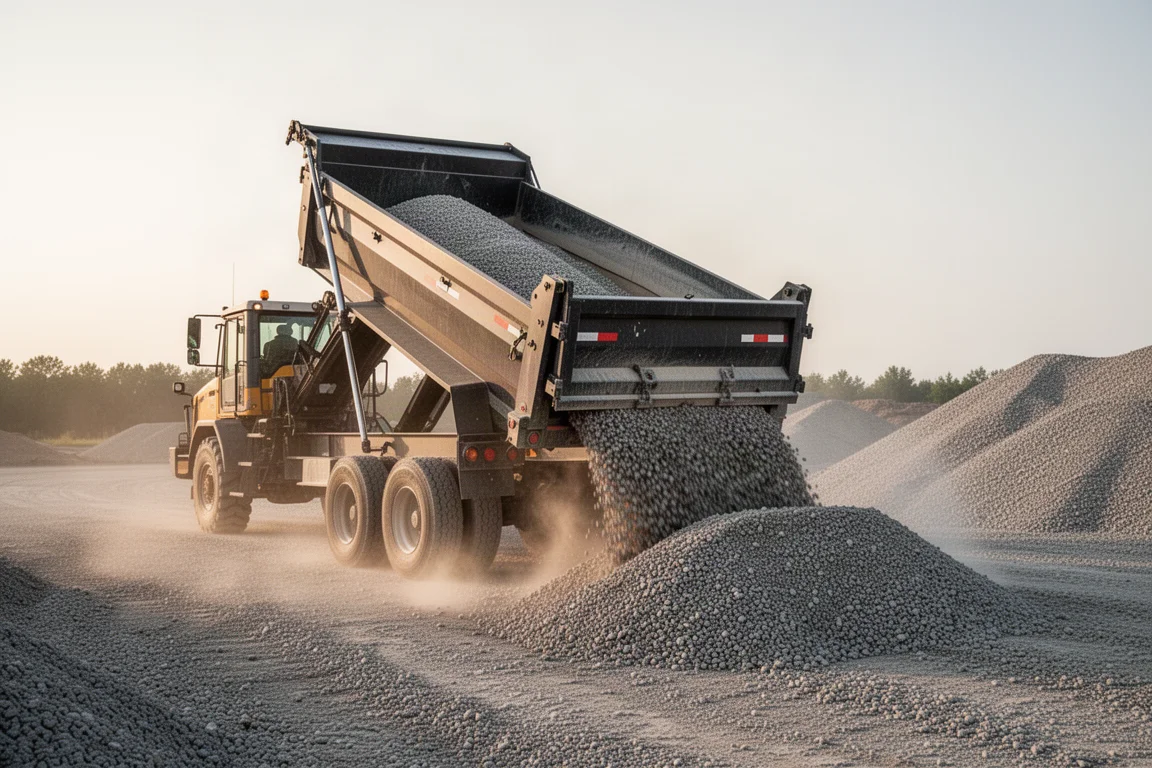
The design has some thoughtful details underneath. Crossbars spaced 23 inches apart carry the weight of the load on top of the bars rather than pulling or pushing it, which reduces strain on the motor drive system. There is also a gap left on the bottom for maintenance access, so the belt system can be serviced without major disassembly.
Power comes from an onboard battery that can run the floor on its own, and plugging the trailer into your truck keeps the battery continuously charged while you work. According to the manufacturer, it handles gravel just as well as softer loads, and it is versatile enough for equipment, hay, rocks, dirt, or a UTV. The company can be reached through its website, hollett.com.
Watchdog Roll-Off Trailer
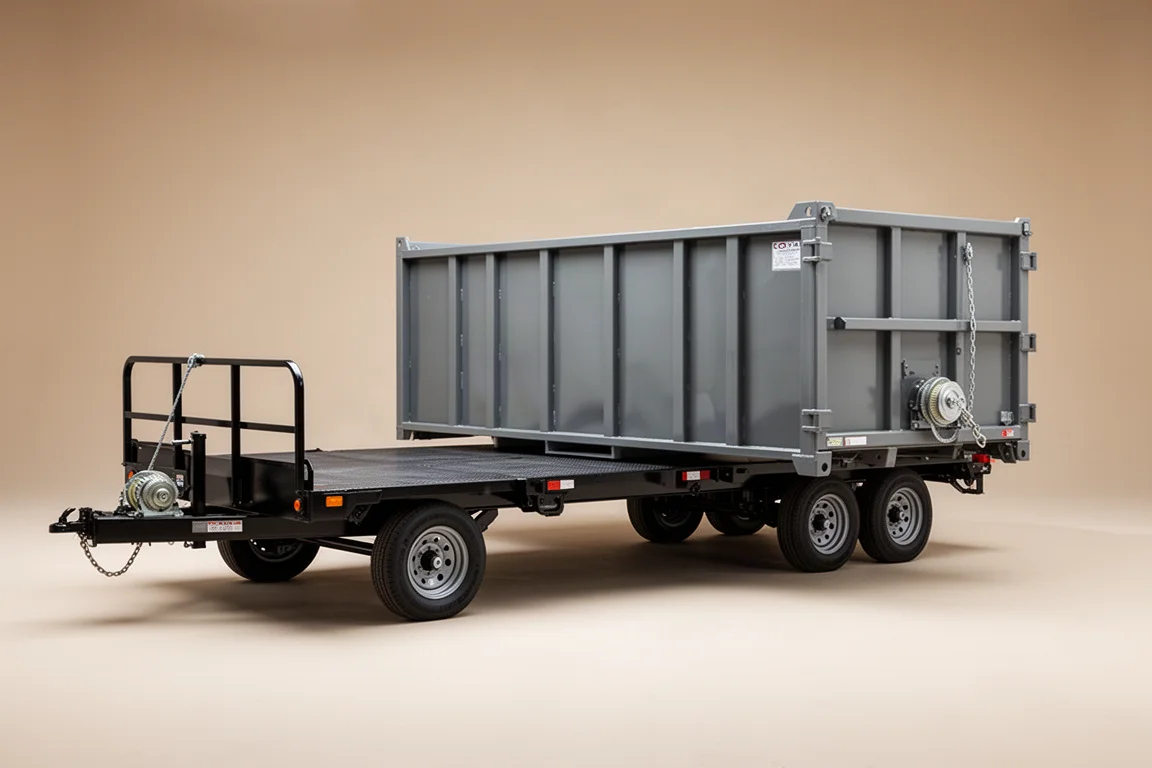
The Watchdog roll-off trailer from Hollett takes a different approach entirely: instead of a fixed bed, it carries latched dumpster containers that can be set down at a job site and swapped out. Containers latch securely onto the trailer, which makes it a strong fit for contractors or property owners who want drop-box style hauling without buying a dedicated roll-off truck.
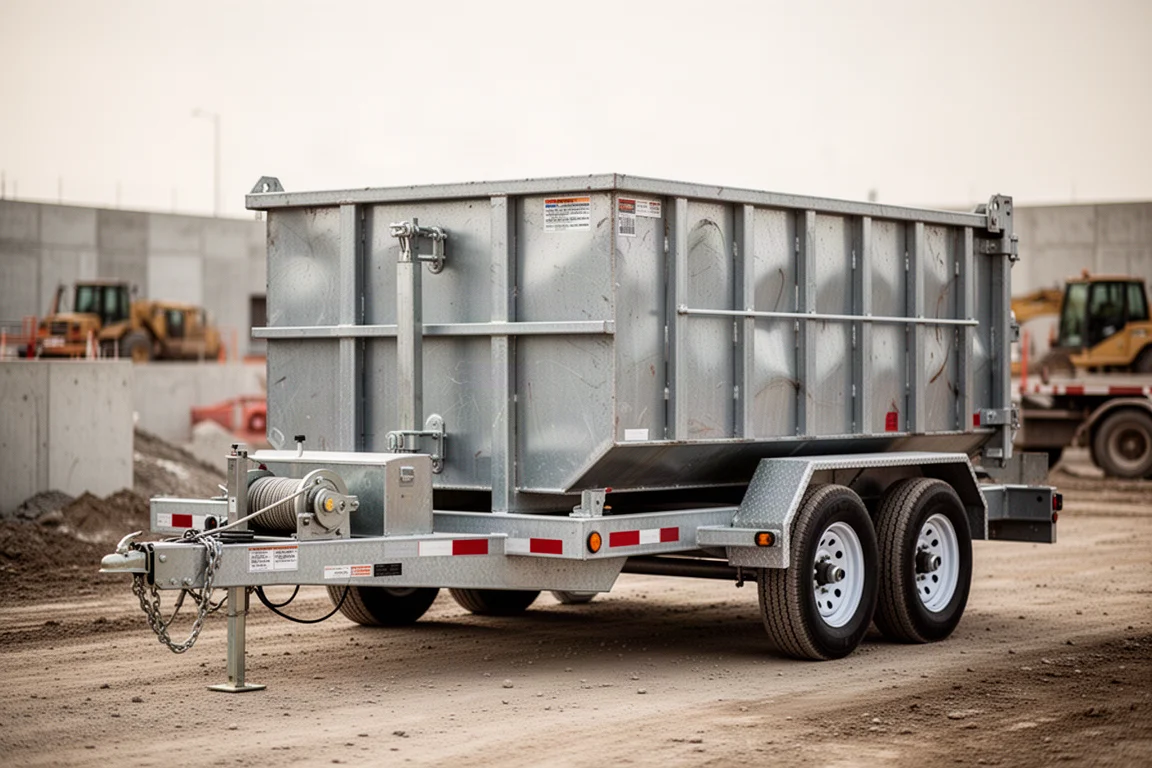
One thing to think through before buying is logistics. Getting heavy containers on and off the trailer is one thing; managing them around a job site once they are unlatched is another, especially if you do not have equipment on hand to move them. For buyers who already run containers regularly, though, the roll-off concept is hard to beat for flexibility.
Durham Tilt Trailers
Durham is a newer name in the trailer market, having entered the scene roughly 18 months before this roundup, but the company behind it brings more than 30 years of manufacturing experience. The brand has grown quickly, offering an unusually wide variety of trailers, and the emphasis at the company is squarely on customer support and dealer satisfaction. Dealers reportedly keep coming back because the trailers sell well and generate repeat business.
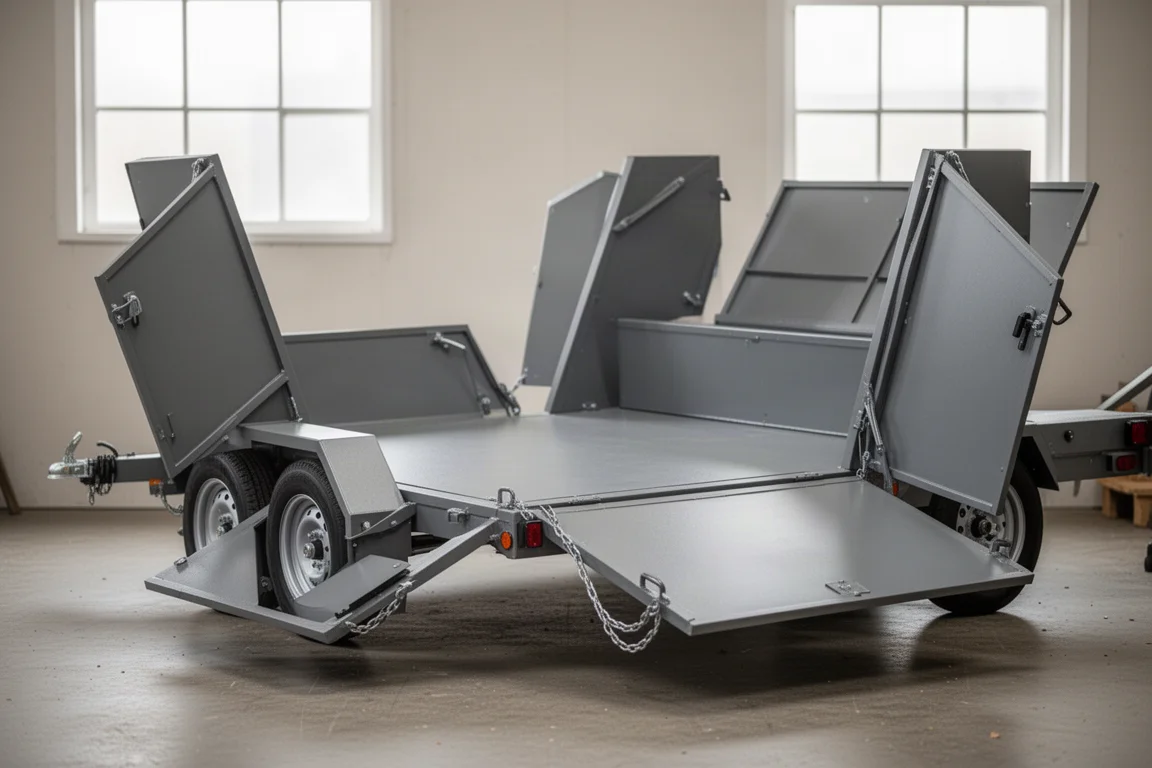
The standout detail on their tilt trailers is a simple one: extendable sides that swing out to add material capacity. Buyers get more volume without paying for aftermarket extensions, since the extra capacity is already engineered and built into the trailer. It is the kind of small innovation that translates directly into more value per load, and it is a big reason these trailers earned a spot in this roundup.
Rice 16K Equipment Trailer
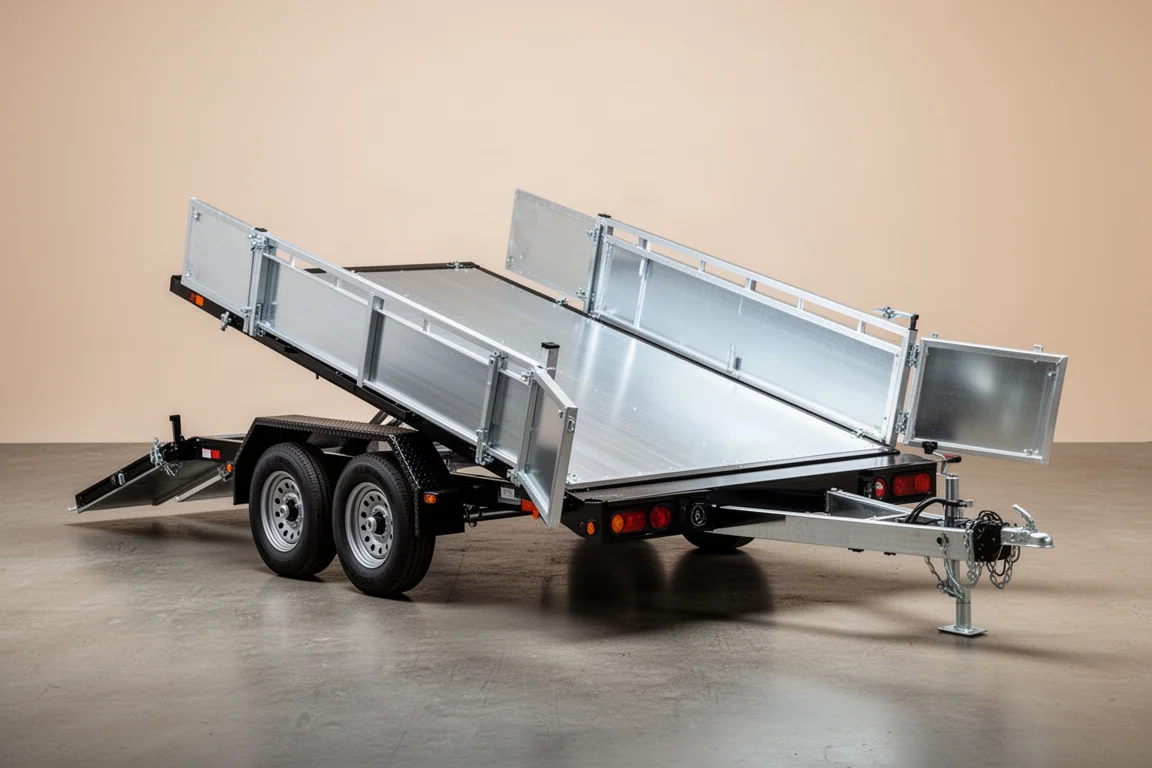
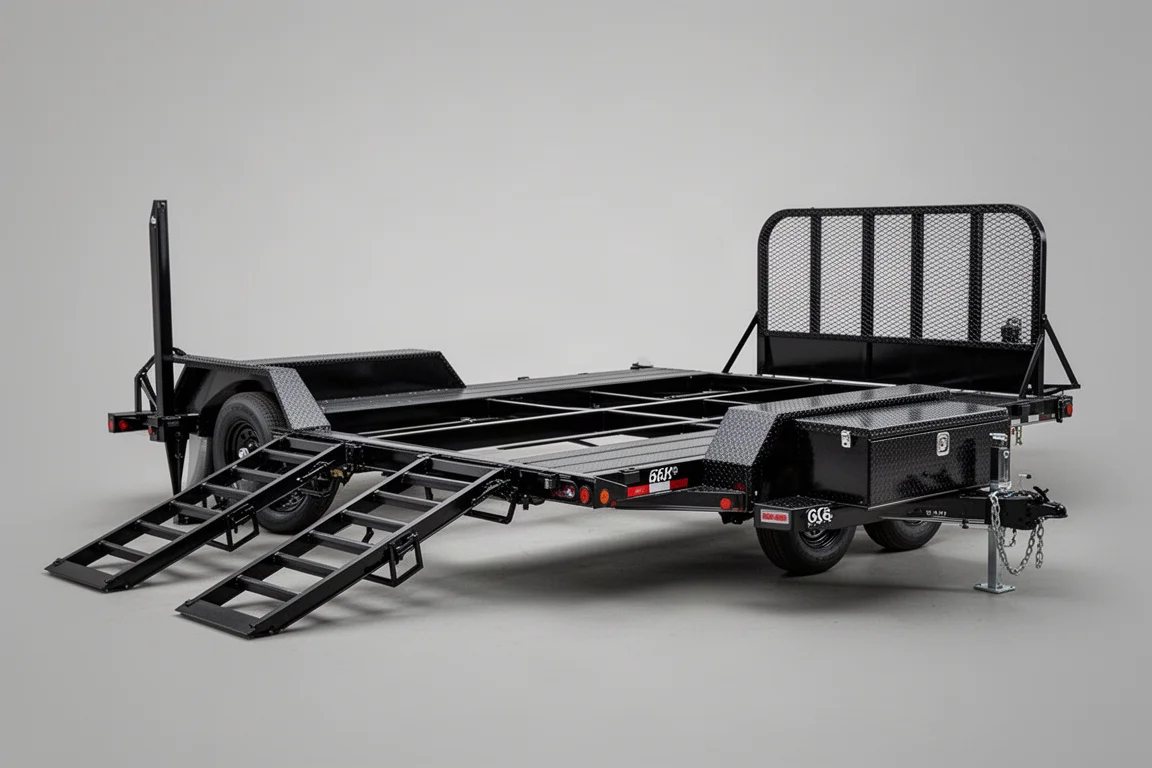
Rice Trailers is a family-owned company based in Missouri, producing utility trailers, car haulers, and equipment trailers, with deckover models on the way. What sets the company apart is manufacturing consistency: nearly every ramp, toolbox, and frame component on their trailers is built with robotic welding. The company even spun that capability into a separate business, Rice Automation, which manufactures robotic welding cells for other factories.
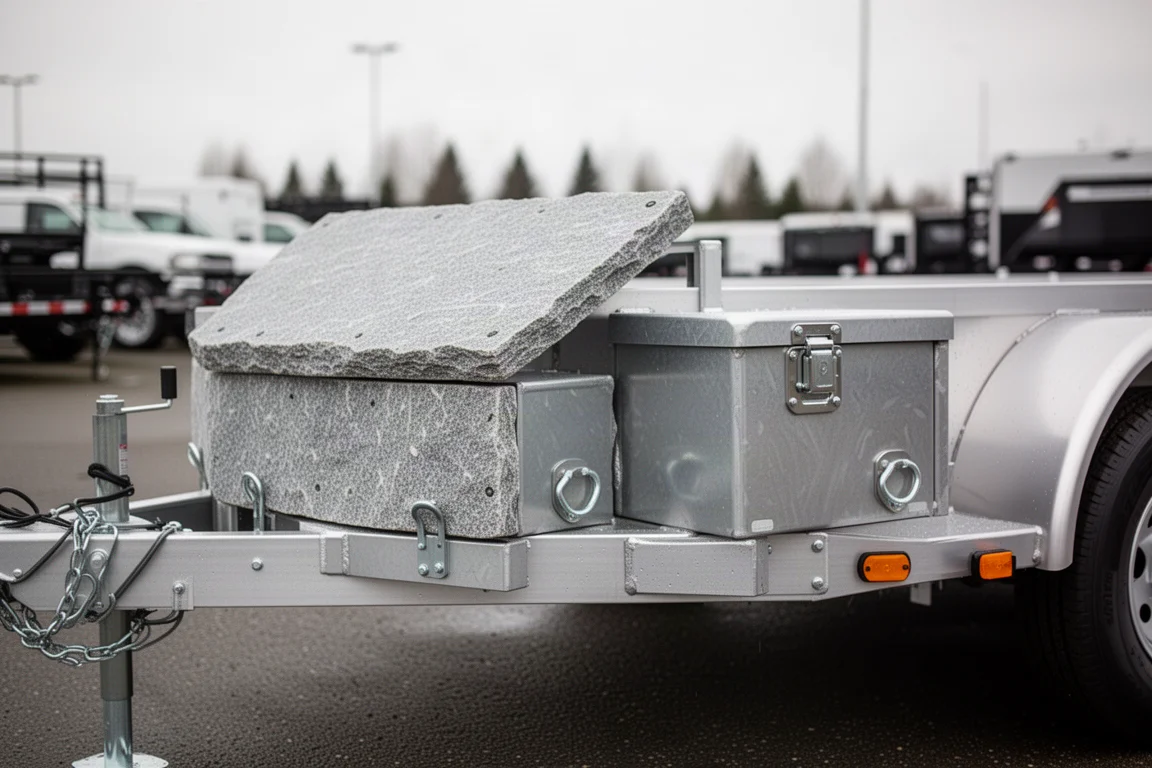
The 16K HP model in question is roughly 60 percent robotically built on a standard six-inch channel mainframe, which delivers repeatable, consistent weld quality across the production line. Practical details abound, including a stone guard that protects the front of the trailer from tire spray, a storage box for chains and scraps, and jack components mounted with u-bolts so they can be replaced individually if something gets damaged. It is worth noting that automation did not cut the company’s workforce; growth from the robotic lines actually required hiring more people. Rice sells through a large dealer network across the United States, and the company can be found through its website.
Overall Buying Advice
Each of these trailers serves a different buyer. If you regularly unload loose material like gravel or dirt and want to spread it while driving, the live floor design is the most distinctive choice here. If you need to leave dumpsters at job sites and swap them out, the roll-off system is built for exactly that workflow. For general dumping and hauling with more volume per load, the expandable-sided tilt trailers offer a clever value proposition. And if you are hauling skid steers, tractors, or other heavy equipment and care about weld consistency and replaceable components, the robotically built 16K equipment trailer deserves a close look.
Before buying, confirm dealer support in your area, check the warranty terms in person, and match the trailer rating to your real loaded weight rather than the weight of a single typical load.
Conclusion
Innovation in trailers often comes down to small, practical decisions: crossbars that carry weight instead of dragging it, side panels that extend for extra volume, stone guards that take the punishment instead of the frame, and robots that guarantee every weld is the same. These four trailers each bring at least one of those ideas to the table, and any of them could be a smart purchase if the use case matches.
Further reading
Related Reviews
Trailers
Best Low-Profile and Drop Deck Trailers: Three Designs That Solve the Ramp Problem
A hydraulic drop deck from Primo, a dedicated single motorcycle hauler from Z-Pro, and a heavy-duty ground loading trailer from Triple L, each built for different kinds of loads.
Trailers
Black Rhino Aluminum Car Hauler Trailer: A Closer Look at a Standout Build
High-quality aluminum construction, clever removable fenders, nitrogen-filled tires, and thoughtful deck details make this car hauler hard to ignore.
Trailers
Diamond C LPT vs GDT Dump Trailers: Two Options for Hauling and Dumping Work
A close look at two Diamond C dump trailers, the heavier-duty LPT and the entry-level GDT, covering build quality, hydraulics, tarping, and everyday usability.