All-Mountain Skis
Head Kore 91W Review: A Lightweight All-Mountain Ski With a Stiff, Precise Flex
A close look at the Head Kore 91W, a lightweight all-mountain ski built for intermediate through advanced skiers who want one pair that handles groomers, trees, and softer snow.
Introduction
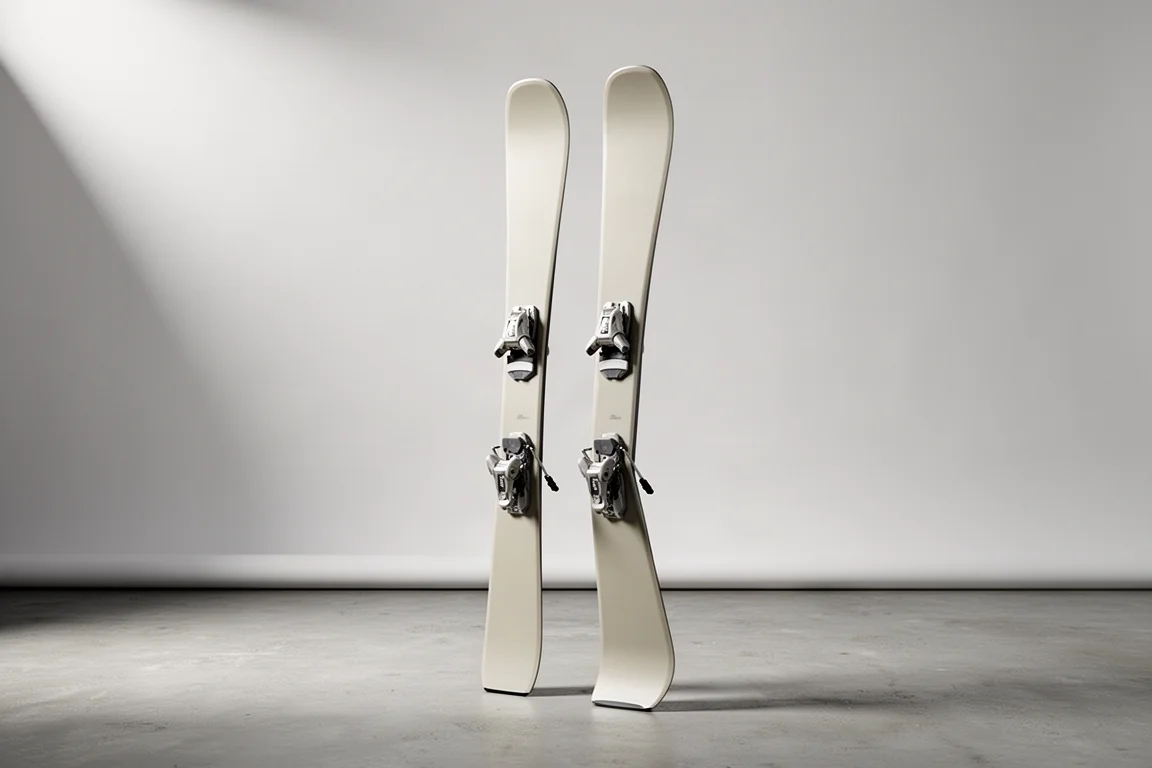
The Head Kore 91W occupies one of the busiest slots in skiing: the roughly 90 millimeter all-mountain category. What makes it stand out is not a single headline number but the way two qualities are combined. It stays very light, and it still flexes stiffly and precisely.
That pairing is the core of the Kore design philosophy. Light weight normally comes with a softer, less responsive feel, and stiffness normally comes with extra mass. The Kore 91W sets out to deliver both at once, and it is aimed at intermediate through advanced skiers who want a single pair of skis for a wide range of days.
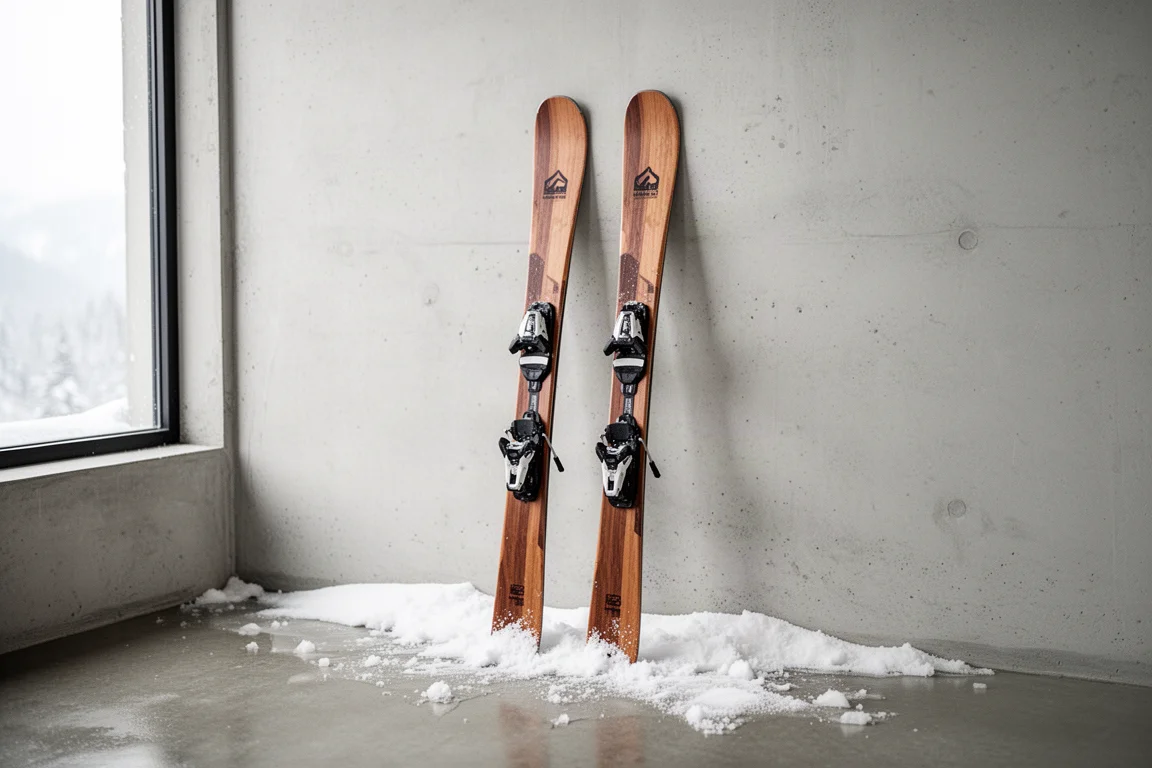
This review breaks down what the ski is built from, how that construction translates into on-snow behavior, and which skiers will get the most value from it. It also covers the one meaningful change made to this version and what it means in practice.
Who This Ski Is For
The Kore 91W is designed for intermediate through advanced level skiers. That is a broad range, and it fits the ski’s character: it is forgiving enough to build confidence on, but it has enough energy and precision to keep rewarding a stronger skier who pushes it.
It suits the skier who wants one pair to cover most of the mountain. With 91 millimeters underfoot, it sits right at the threshold where groomers, powder, trees, and mixed terrain all remain on the table. It is not a dedicated powder ski, and it is not a narrow carving specialist. It is the middle option that most people actually end up skiing most of the time.
Main Strengths
The defining strength is the balance between low weight and a stiff, precise flex. That combination is what the construction is engineered around, and it shows up as a ski that responds quickly to input and feels lively underfoot.
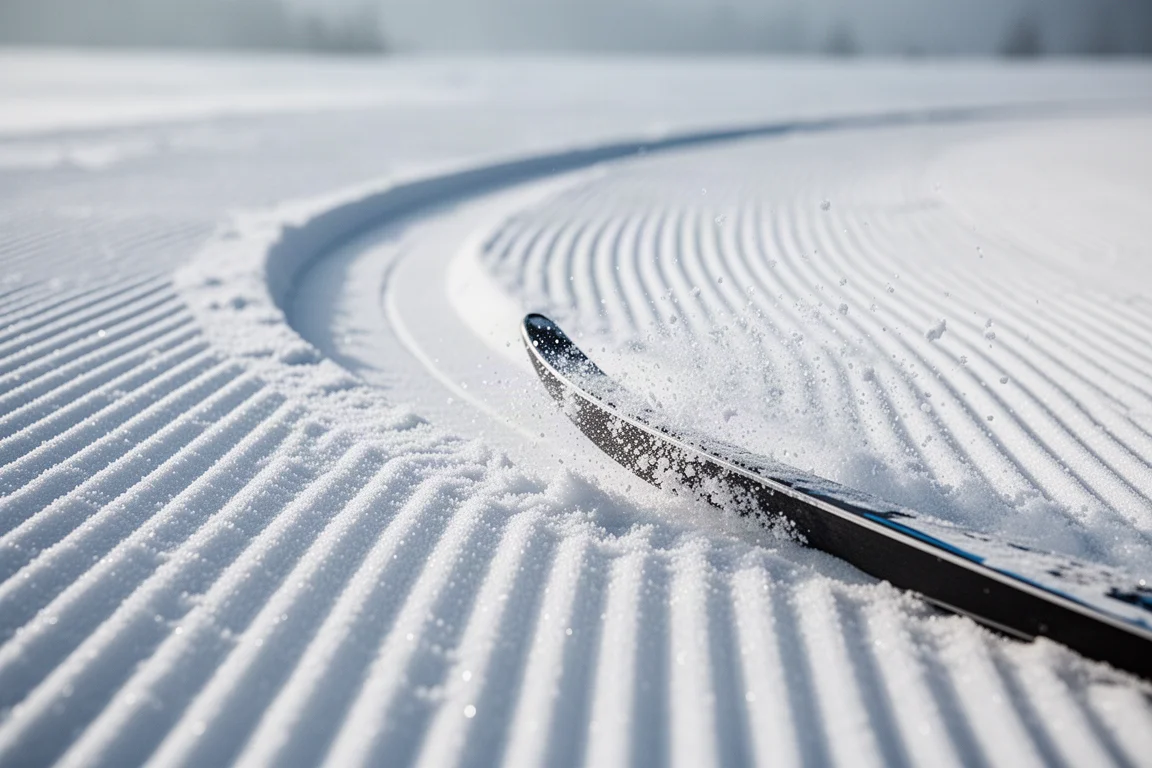
There is also a genuine sense of energy in the ski. Underfoot camber is positive and pronounced, and when you load the ski it gives something back in the form of rebound and pop at the end of a turn. That is the quality that separates a ski that feels dead from one that feels like it is working with you.
Finally, the dimensions and shape make the ski unusually easy to live with. A 13.4 meter turn radius keeps shorter turns accessible, while the overall width and tip profile still allow the ski to handle softer snow without feeling like a compromise.
Build and Materials
The core blends poplar and koruba woods, a combination chosen for light weight, energy, and a degree of dampness. Around that core, Head uses two sheets of carbon, one above and one below, along with a strip of graphene and two layers of fiberglass. It is a layered, technology-heavy build rather than a simple wood laminate.
The upper carbon laminate is the detail worth pausing on. It is curved to follow the three-dimensional shape of the ski’s top rather than sitting flat. When carbon is formed in a three-dimensional shape, it becomes stiffer and more rigid, which is a large part of why this ski turns in sharply and responds so directly to input.
This version also adds a top sheet, which earlier versions of the Kore line deliberately left off as a weight-saving measure. Feedback had suggested the ski could feel chattery, so the top sheet was added. It increases durability and gives the ski a quieter, more composed character. The difference is noticeable rather than transformative, but it is a meaningful refinement.
Shape, Rocker, and Terrain Versatility
The 91 millimeter waist and 13.4 meter turn radius are the numbers that define the ski’s range. It handles groomers comfortably, and the width is enough to keep it capable in powder and trees. Across the Kore series, wider models come with more taper and rocker, but the 91W keeps a moderate profile.
There is a decent amount of tip rocker with noticeable splay, and a tapered shape that shortens the effective edge. That taper helps the ski turn more tightly while keeping the shovel up out of the snow, which contributes to a smooth, floaty feel in softer conditions.
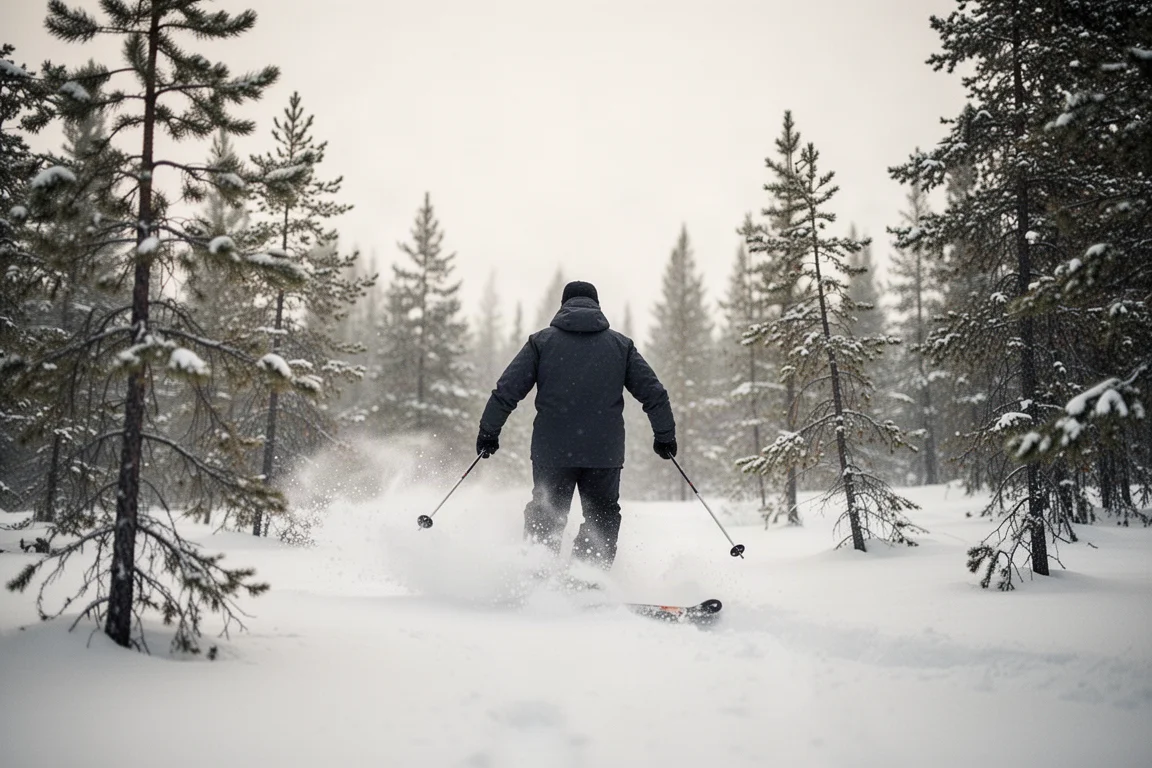
Tail rocker is deliberately low. There is not much going on behind the binding, which places the ski firmly on the all-mountain side of the spectrum rather than the freeride side. The rounded shape and taper help with flotation, but that is not the ski’s main personality. Its real strength is a well-rounded, on-trail character that still has enough width to stay useful when conditions soften up.
Things to Consider Before Buying
The low tail rocker is the clearest limitation. Skiers who spend most of their time in deep snow or who want a surfy, freeride feel in the back half of the ski will find the 91W biased toward the trail rather than the deep end.
The category itself is also crowded. A 90 millimeter all-mountain ski is one of the most common shapes on the market, so the Kore 91W has to earn its place. It does so through the light weight and stiff flex combination, but a skier who prioritizes maximum damping and a heavy, planted feel may prefer a different approach entirely.
Finally, this is a ski for intermediate through advanced skiers. Beginners will likely find more value in something softer and more forgiving, and experts looking for a pure carving or pure powder tool will want a more specialized shape.
Buying Advice
If you want one pair of skis for the majority of your days and you value a light, quick, energetic feel over mass and damping, the Kore 91W is a well-rounded choice. The 91 millimeter waist is the sweet spot for a single-ski quiver, and the stiff flex means it will not feel like a limitation as your skills progress.
The added top sheet is a point in its favor for anyone who skied or considered an earlier version. Durability and a more composed ride are real, practical improvements, even if the change is subtle rather than dramatic.
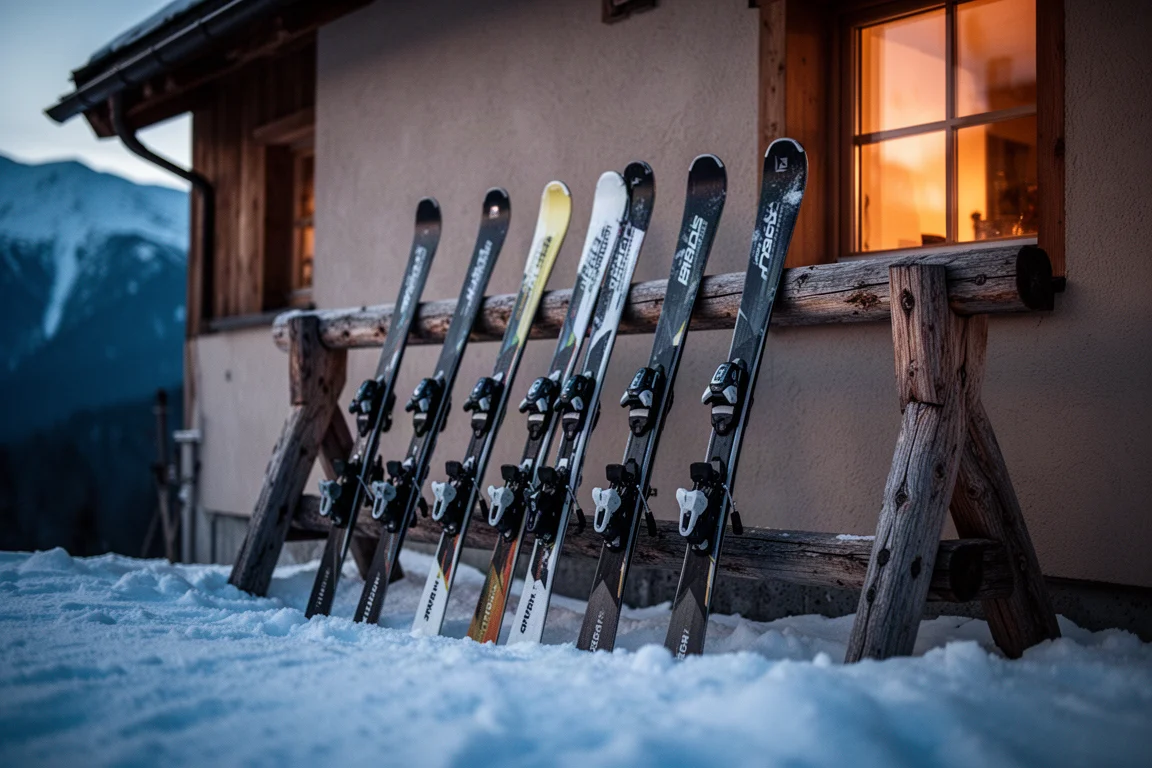
Think about your typical day before deciding. If most of your runs are groomers, trees, and mixed terrain with occasional powder, the dimensions line up well. If your season is built around deep snow days, a wider, more freeride-oriented shape will serve you better.
Conclusion
The Head Kore 91W does something genuinely useful in a crowded part of the market. It stays remarkably light while keeping a stiff, precise flex, and it pairs that with dimensions that work almost everywhere on the mountain. For intermediate through advanced skiers who want a single versatile ski, it is a confident, well-considered option.
Product link
View more details for Head Kore 91W
This product is mentioned in the review. Check the specifications, options, and compatibility before buying.
View more details for Head Kore 91WFurther reading
Related Reviews
All-Mountain Skis
100mm All-Mountain Skis Compared: 23 Versatile Models Worth Knowing
A practical walkthrough of 23 all-mountain skis around 100mm underfoot, covering weight, rocker, metal construction, and the rider each model suits best.
All-Mountain Skis
2026 Black Crows Camox Review: A More Stable, More Versatile All-Mountain Twin Tip
The 2026 Black Crows Camox adds an ash layer underfoot, wider tips and tails, and a revised rocker profile. Here is what those changes mean on snow.
All-Mountain Skis
Armada Antimatter 88 Review: A Light, Lively All-Mountain Ski That Rewards Any Style
The Antimatter 88 pairs a poplar core with carbon stringers for a surprisingly energetic ride that suits intermediates and experts alike.