Kitchen
Hasegawa vs Parker Asahi Cutting Boards: Which One Fits Your Kitchen?
A hands-on look at two Hasegawa cutting board lines and how they compare with Parker Asahi, covering surface texture, stability, cleaning, and everyday cutting feel.
Introduction
Hasegawa is a Japanese brand that dates back to 1955 in Chiba, and it started out in a somewhat unexpected industry: ski manufacturing. The company found a way to bond a polymer surface to a wooden core, and that idea eventually became the cutting board line it is known for today. If you have spent any time around knife enthusiasts, you have probably heard the brand come up in conversation, often right next to Parker Asahi.
This guide walks through two Hasegawa boards from different product lines, how they performed in real cutting sessions with everything from garlic and eggplant to a large cut of meat and strawberries, and how they stack up against Parker Asahi boards.
Meet the Boards: Two Hasegawa Lines
Hasegawa does not make it easy to decode its lineup. The model names read a bit like warehouse inventory codes rather than plain descriptions of thickness and intended use, so it helps to break them down.
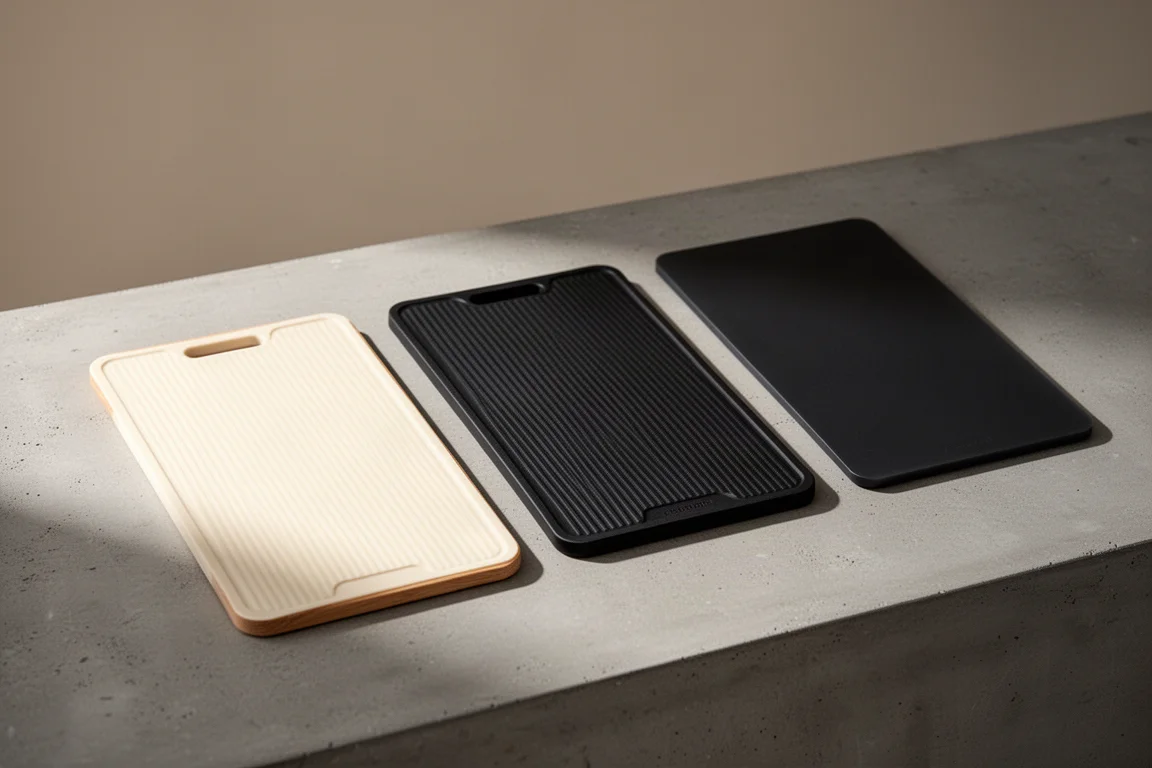
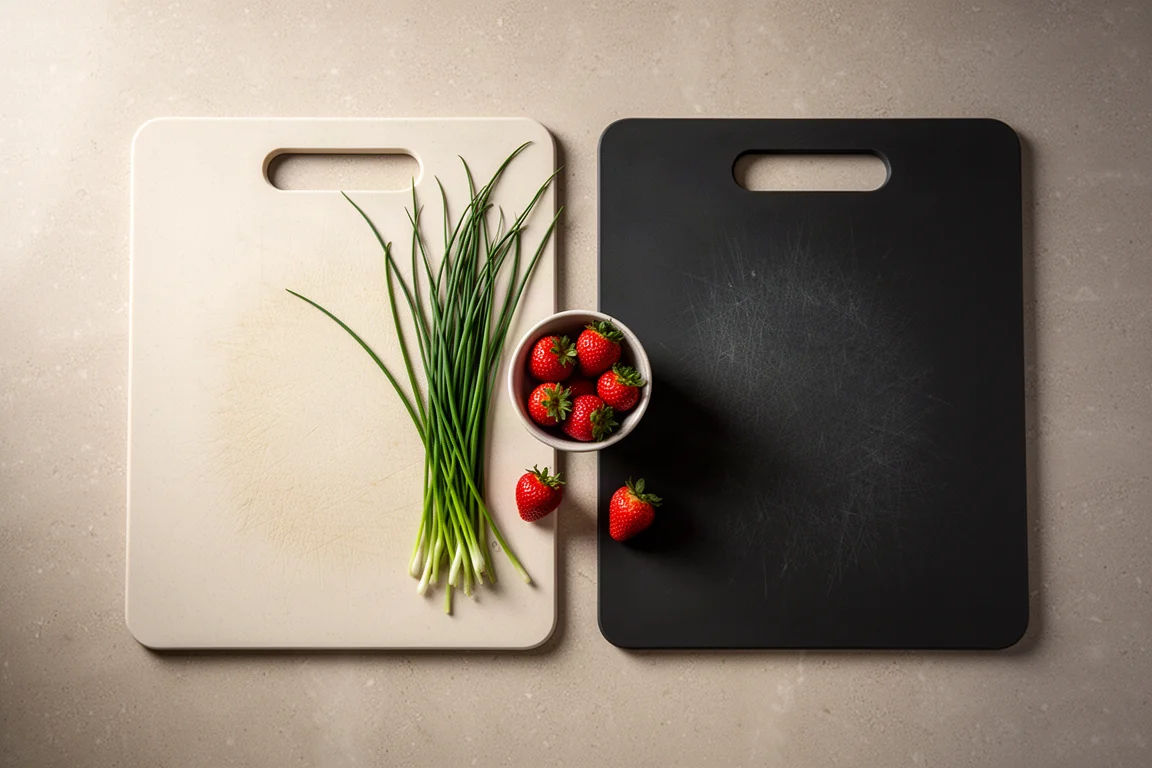
The cream-colored board is from the FR series, which is positioned as the softer home-use option. It is essentially an elastomer with a wood core, measuring 410 mm long, 230 mm wide, and 20 mm thick. The black board is the FP series Pro-Light, a harder board designed for heavier impact, made from polyethylene over a wood core. It runs slightly longer and wider at 440 mm by 290 mm, but thinner at 18 mm.
Both boards share two important specs: they are heat resistant up to 90 degrees Celsius and bleach resistant. Those details matter later when cleaning comes into play.
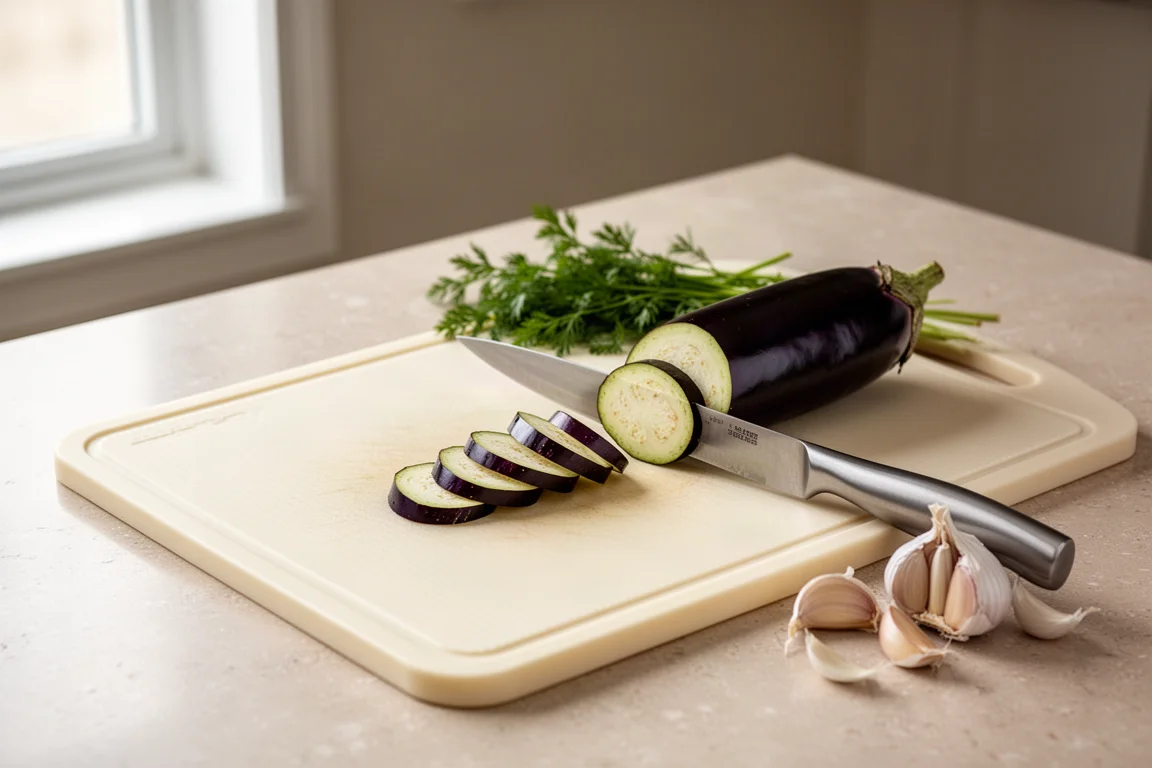
The first thing you notice holding either board is the rigidity. There is essentially no flex at all, and that is the whole point of the wood core. It keeps the board stable on the counter and, more practically, means the board can survive a dishwasher cycle as long as the water temperature stays below 90 degrees Celsius. The wood core did not change the cutting feel in any noticeable way, but it is a genuine advantage if you want to toss the board in the dishwasher after cooking.
Surface Texture and Knife Contact
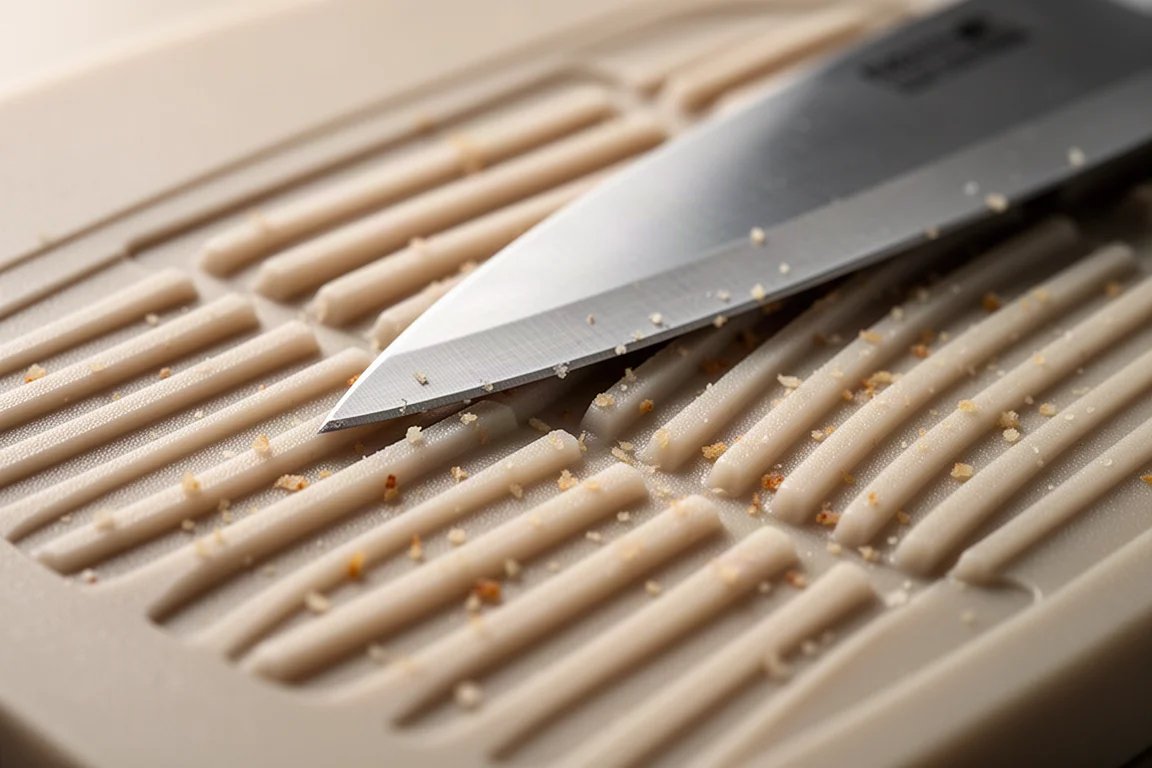
Unlike the completely smooth surface of a Parker Asahi board, both Hasegawa boards have a textured, ribbed pattern. The idea behind it is that your knife blade never fully sits flush against the surface, so food and the blade do not suction or stick into the board the way they can on a smooth-surfaced competitor.
In practice, that claim holds up. Rock chopping was noticeably easier: the blade pulls into the board slightly rather than skating across it. Chives were rock chopped with no slippage of the blade along the entire length of the cut. If you are a rock chopper frustrated by a blade gliding over a slick surface, this texture is the main reason Hasegawa gets recommended.
The trade-off is in the grooves. Food particles can settle into the texture pattern, and they are not the easiest to chase out.
Cleaning and Drying Experience
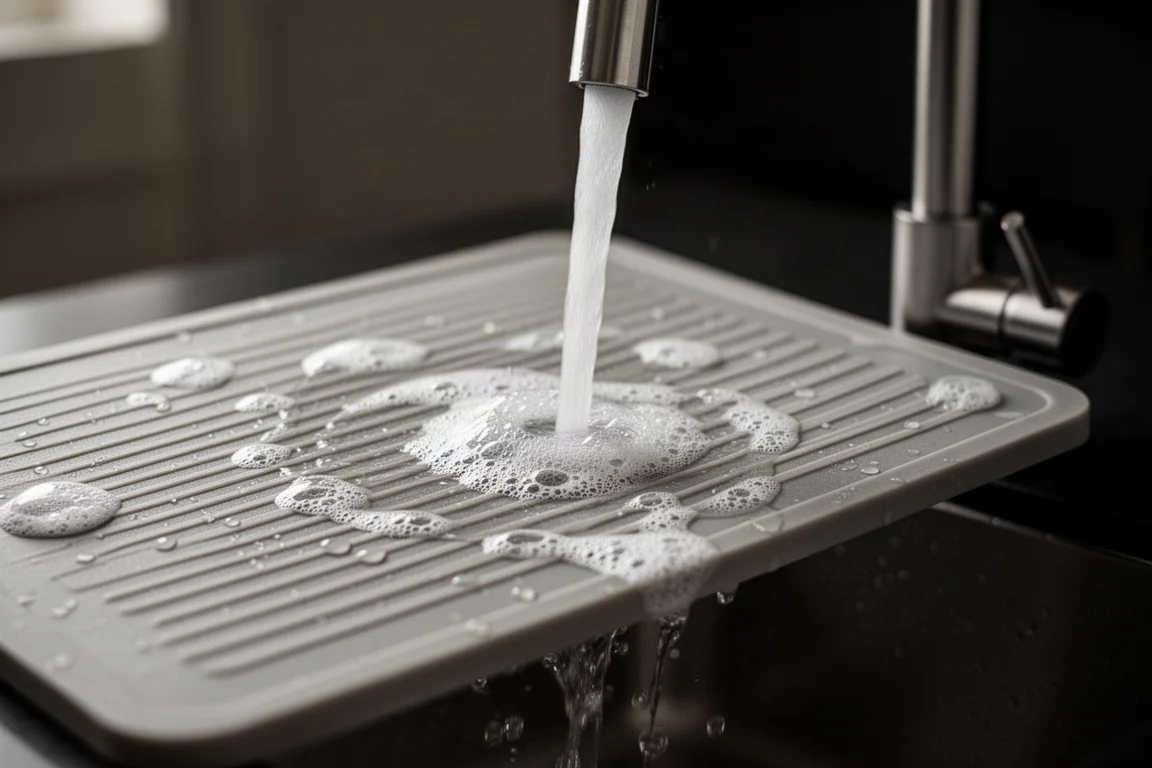
Both boards washed well with the soft side of a sponge and some soap. The texture does produce a distinctive sound when rubbed, a bit like running your nails across a rain jacket, which you will notice the moment you start scrubbing.
Drying is the first real pet peeve. Whether using a cotton towel or a microfiber towel, both boards left little residues behind and never felt properly dried by hand. The practical answer is the same one that applies to Parker Asahi boards, which behave the same way: skip the towel and let them air dry. Even after air drying, the black board still felt slightly messy to the touch when picked up, which is likely why the brand itself points users toward the dishwasher.
Weight, Staining, and Everyday Cutting
For their size, both boards are remarkably light. The cream-colored FR board in particular is lighter than comparable Parker Asahi boards, which matters if you move your board around the kitchen frequently.
The FR board is positioned as the softer option for precision cuts and lighter use rather than heavy chopping, so it was put to the test with strawberries. The juices looked like they would stain, but after washing, the board came out completely clean. After roughly 30 minutes of total cutting time, close inspection revealed only a few minor marks and nothing significant.
Between the two, the black FP Pro-Light was the preferred board. The knife feel on the harder material was better, the darker surface simply looks cleaner when cutting brightly colored ingredients, and the extra depth makes it more practical for anyone who cuts multiple ingredients in one session rather than prepping one item at a time.
Hasegawa vs Parker Asahi
The most meaningful difference is the wood core. The Hasegawa boards are completely rigid with no torque or flex, while the Parker Asahi has a slight amount of give. Does that flex matter in everyday cutting? Arguably not. Where it does matter is the dishwasher: if you want to throw your board in the machine, the rigid Hasegawa construction is built for it.
Weight is another difference. The Hasegawa boards, especially the cream FR, are lighter than the Parker Asahi boards, though the gap is not dramatic.
The cutting surface is where preference comes in. The ribbed Hasegawa texture gives the knife a bit more bite, while the smooth Parker Asahi surface lets the blade slide more freely. If you like your knife to grip into the board a little, Hasegawa is the better match. If you prefer the freedom of a slicker surface, Parker Asahi wins.
Sound is a subtle but real distinction: the Hasegawa boards produce a more plasticky sound when the knife lands, while the Parker Asahi delivers a deeper, more satisfying thump.
Both boards are slippery on the counter, so a towel underneath is a sensible habit, and Hasegawa reportedly sells a rubber mat designed for its boards to sit on.
One common assumption deserves pushback. Hasegawa is often described as the home-use board while Parker Asahi is cast as the professional choice. That framing does not really hold up. A professional kitchen is more likely to rely on the dishwasher for turnaround speed, and the Hasegawa’s dishwasher-friendly rigidity fits that reality. The better question is simply whether you want to be able to machine-wash your board and whether you prefer a textured or smooth cutting surface.
Which Board Should You Buy?
If dishwasher convenience, low weight, and a textured surface that helps with rock chopping appeal to you, the Hasegawa line is the stronger fit. Within that line, the black FP Pro-Light is the more versatile pick for mixed prep sessions, while the softer cream FR suits precision work and lighter use.
If you prefer a smooth surface that lets the blade slide, and the deeper thump of knife on board, Parker Asahi remains an excellent choice. There is no single best board here, just the best board for how you cook.
Conclusion
Hasegawa’s polymer-over-wood-core construction delivers genuine stability, dishwasher tolerance, low weight, and a textured surface that keeps knives from sticking, with the main trade-offs being grooves that trap food and boards that are awkward to towel-dry. Parker Asahi counters with a smooth surface, a more satisfying sound, and a more fluid cutting feel. Both are great options, and the right one depends entirely on your cleaning habits and cutting style.
Product link
View more details for Hasegawa FR Series Cutting Board
This product is mentioned in the review. Check the specifications, options, and compatibility before buying.
View more details for Hasegawa FR Series Cutting BoardFurther reading
Related Reviews
Kitchen
Best Nonstick Frying Pans Compared: 11 Skillets From $16 to $185, Tested
Eleven nonstick frying pans go head to head in pancakes, eggs, heat distribution, thermal efficiency, and scratch resistance to find out whether a cheap pan can really compete with a premium one.
Kitchen
Vivor Stainless Steel Kitchen Sink Review: A Solid Drop-In Upgrade With One Weak Spot
An all-stainless single-basin drop-in sink with easy-clean rounded corners and a drain-sloped base, at a roughly $200 price point.
Kitchen
Best Bamboo Steamers: Two Tested Picks for Dumplings, Bao, and More
After hands-on steaming tests with dumplings and bao, two bamboo steamers stood out for build quality and staying in alignment.