Grow Lights
Happy Leaf Procyon 2.0 vs Soltech Grove Light: Which 17-Inch Grow Light Delivers More PAR?
Two compact grow lights compared side by side for PAR output, mounting flexibility, and real seedling growth results.
Introduction
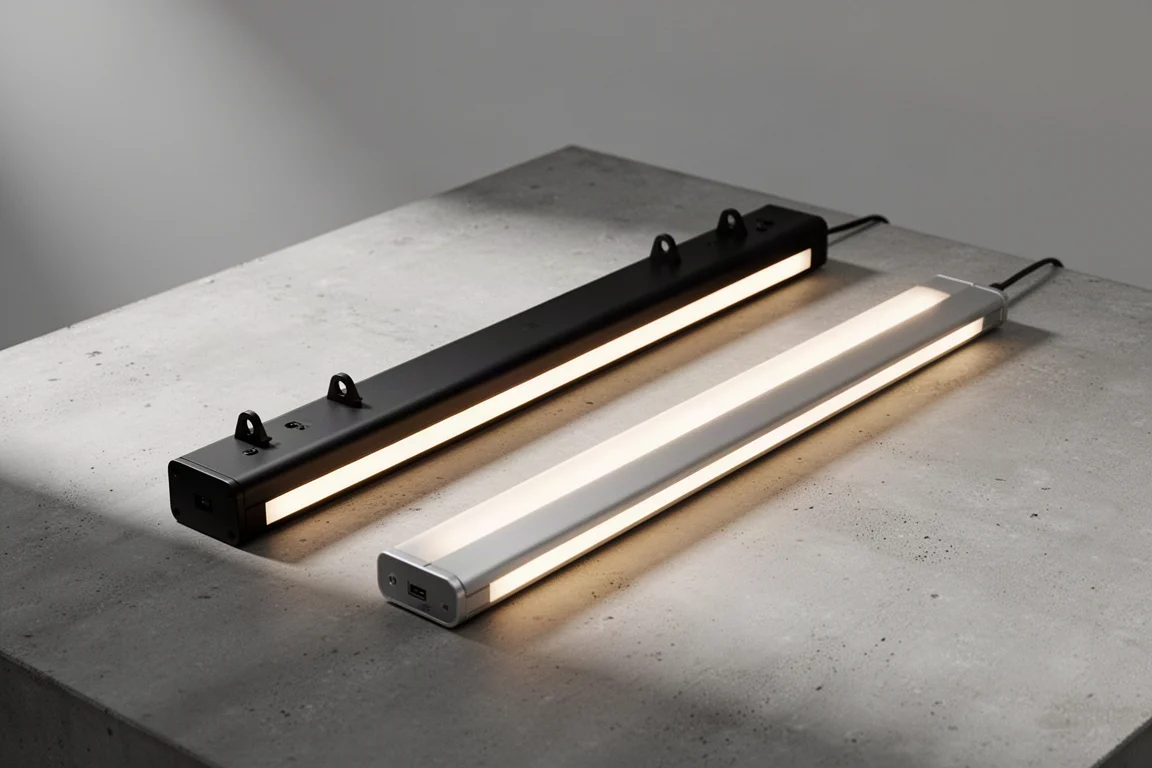
Compact linear grow lights are a popular way to keep houseplants healthy or start seeds indoors, but two fixtures that look similar on a shelf can behave very differently over your plants. This comparison puts two 17-inch-class LED grow lights side by side: the Happy Leaf Procyon 2.0 and the Soltech Grove Light. Both were evaluated for build quality, mounting options, PAR output, and, most importantly, how well plants actually grew underneath them.
Why PAR Matters More Than Lumens
When choosing a grow light, the number that matters to the plant is PAR energy, short for Photosynthetically Active Radiation, measured in micromoles per square meter per second at the plant canopy. Lumens are calibrated for human vision, not photosynthesis, and wattage only tells you how much power the fixture draws, which matters mainly for efficiency. A light with modest lumens can dramatically outperform a brighter-looking fixture if it delivers more usable PAR at the height where your plants sit.
Packaging and Mounting Hardware
The Soltech Grove Light arrives in genuinely well-designed packaging, with a vacuum-formed tray that the light drops into, a small box of screws, and magnetic end caps that snap neatly onto both ends of the fixture. It is an elegant, polished presentation overall.
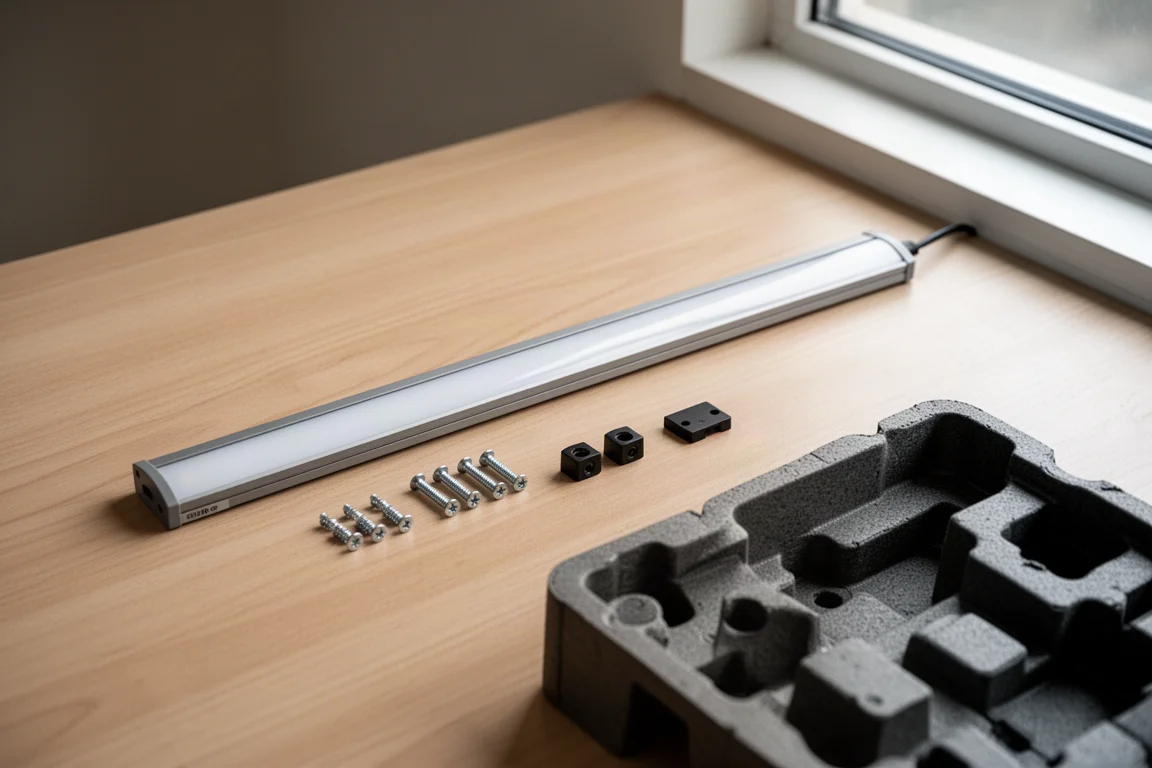
The Happy Leaf Procyon 2.0 takes a more utilitarian approach but focuses on flexibility: the fixture includes eyelets with a captured nut in a slot along the top, so you can hang it by a string at any height, adjust it up and down as plants grow, or even screw it directly under a cabinet through the eyelet.
Why Mounting Flexibility Matters
The Grove Light is clearly designed to be screwed under a cabinet. It comes with positioning aids for the screws, but once mounted there is no built-in way to raise or lower the light, which limits how you can adjust light intensity and clearance as your plants change.
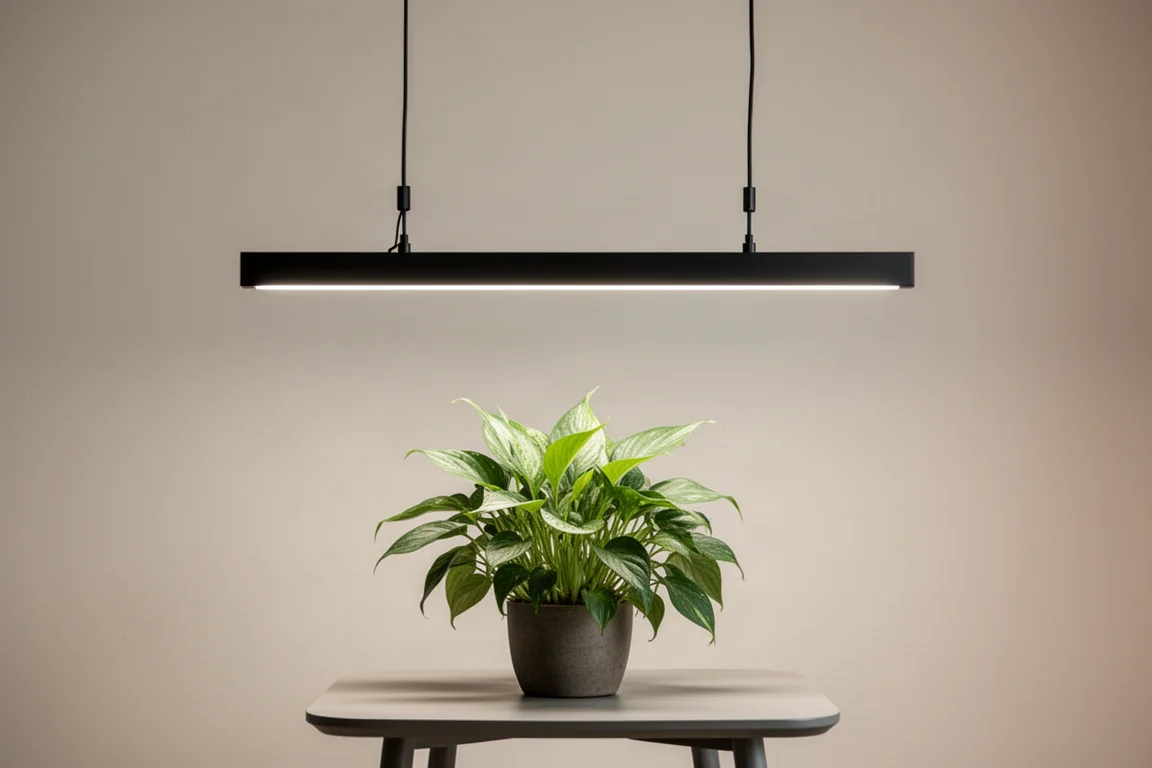
Adjustable hanging matters because light intensity at the plant drops quickly with distance. A fixture you can move up and down gives you more control over whether seedlings, mature plants, or light-tolerant foliage get the right amount of energy.
The Head-to-Head Growth Test
The most direct way to compare two grow lights is to grow identical plants under them. Three-week-old Mascara lettuce from Seed Savers was used, grown from seed with the same nutrients, the same water, and the same schedule under both fixtures.
The difference was striking. The lettuce under the Procyon 2.0 was nearly ready to eat, while the plant under the Grove Light had barely germinated into a very small seedling.
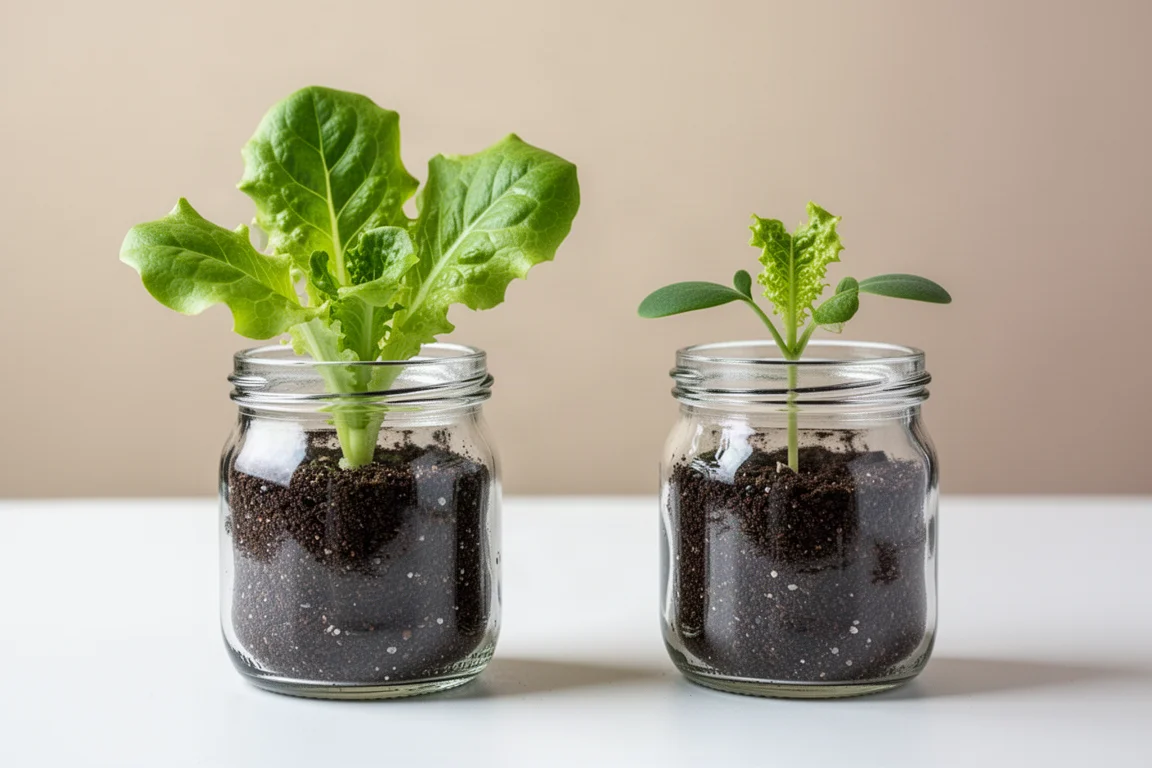
PAR measurements explain the gap. Six inches below the Soltech Grove Light, the reading came in around 125 micromoles per square meter per second. Six inches below the Procyon 2.0 17 inch, the reading was roughly 330 to 340 micromoles, close to three times the light energy reaching the plant. That difference shows up directly in plant size and maturity.
Which Light Should You Buy?
The Soltech Grove Light suits a specific niche: a sleek fixture to screw under a cabinet to keep a plant alive, grow some microgreens, or do light seed starting. Its design and packaging are genuinely refined, and at $130 it is priced close to its rival, which lists at $97.
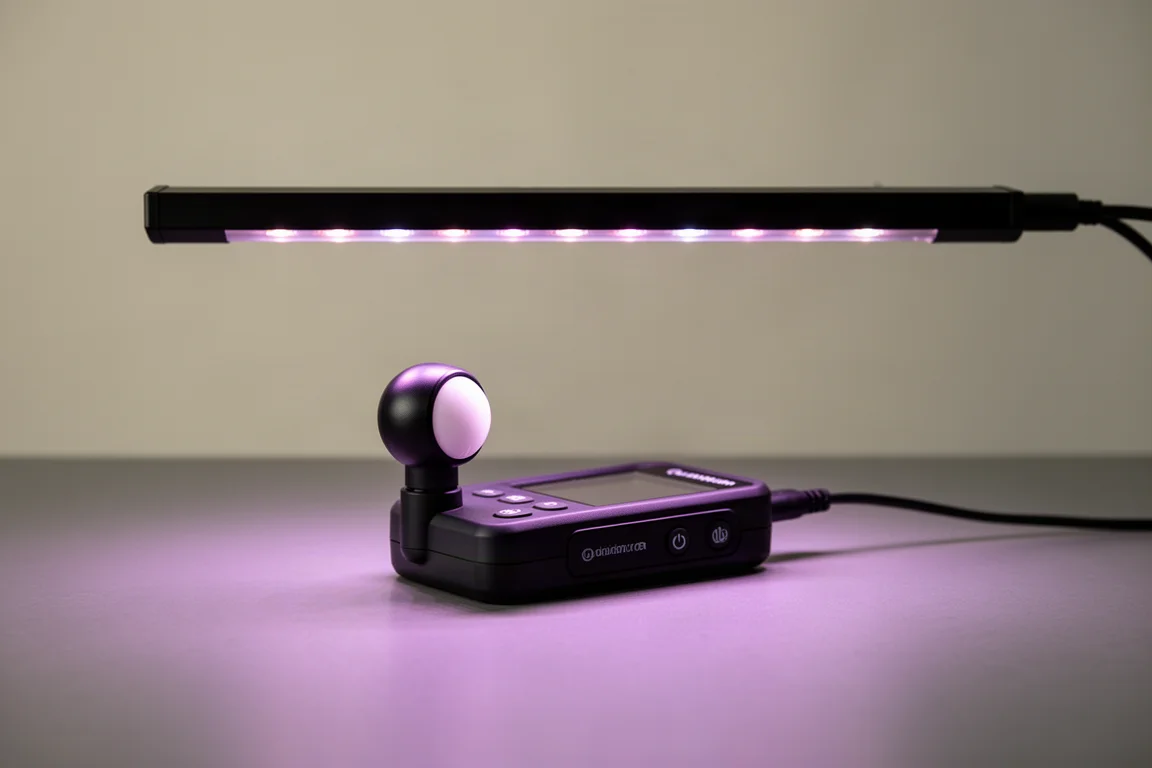
The Happy Leaf Procyon 2.0 17 inch is the better-rounded grower. With roughly three times the PAR at plant level, adjustable string hanging, and a 33 inch version available for larger setups, it is the option to choose if your goal is growing plants to full maturity rather than simply maintaining them.
Conclusion
Both lights are attractive, well-built fixtures, but they serve different purposes. If you want a discreet cabinet light for keeping existing plants alive or sprouting microgreens, the Soltech Grove Light fits that role. If you want to actually grow plants from seed to harvest indoors, the substantially higher PAR output and adjustable mounting of the Happy Leaf Procyon 2.0 make it the stronger choice for the money.
Product link
View more details for Happy Leaf Procyon 2.0 17 inch Grow Light
This product is mentioned in the review. Check the specifications, options, and compatibility before buying.
View more details for Happy Leaf Procyon 2.0 17 inch Grow LightFurther reading
Related Reviews
Grow Lights
AC Infinity Ion Frame A7 Review: The Grow Light That Beats Its Own Spec Sheet
A high-output grow light for 2x4 tents that hits target PPFD at low dimmer levels, with strong efficiency and thoughtful mounting details.
Grow Lights
AC Infinity ION Frame Evo 3 Review: A New Bar-Style LED Grow Light for 2x4 Spaces
Samsung LM301H EVO diodes, app scheduling, and a magnetic frame make the ION Frame Evo 3 a serious option for 2x4 grow spaces.
Grow Lights
AC Infinity ION Grid T24 Review: A Full Spectrum LED Grow Light for 2x4 Spaces
A 260W full spectrum LED grow light with Samsung LM301H diodes, a programmable digital controller, and a complete hanging kit out of the box.