Aquarium Water Testing
Hanna Alkalinity Checker Review: Fast, Consistent Alkalinity Testing for Reef Tanks
A digital alkalinity checker that returns a dKH reading in as little as 30 seconds, with measured variance of only 0.3 dKH in comparison testing.
Introduction
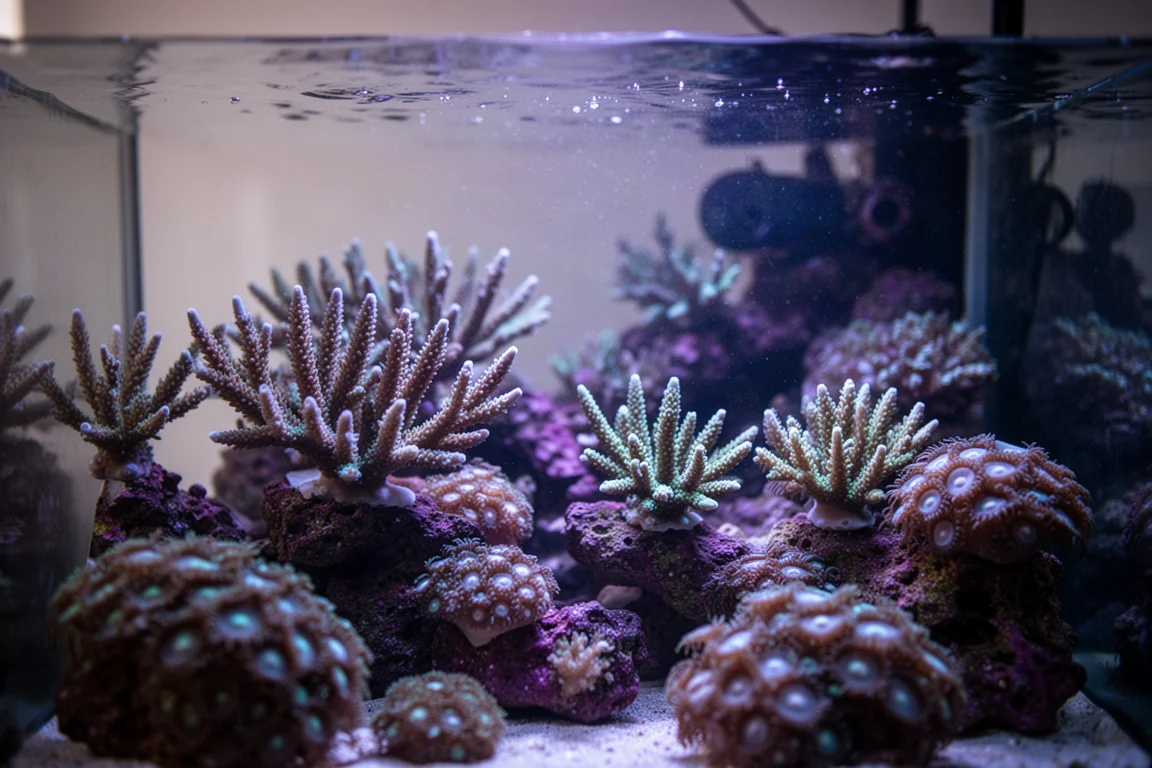
Alkalinity is often regarded as the single most important indicator of coral health and growth. Corals take up calcium and carbonate from the water to build their internal skeletal structures, so alkalinity can drop quickly, and keeping it stable and within optimal ranges depends on testing often enough to catch those changes.
The Hanna Alkalinity Checker is built around that reality. It takes as little as 30 seconds to perform and returns a simple digital readout in dKH, which is a large part of why it has become one of the most popular solutions for testing alkalinity in a reef tank.
A test that takes half a minute is a test that actually gets done. That regularity is what makes alkalinity easier to manage, and it is the main reason this checker has earned a recommended badge from a major reef supply retailer.
Who This Product Is For
This checker makes the most sense for reef keepers who test alkalinity regularly, or who want to. It is a strong fit if you have ever lost confidence in a titration kit: misreading the endpoint color, adding one drop too many, or being unsure which part of the syringe plunger the reading should be taken from. Those small ambiguities add up, and they are enough to make the whole routine feel unreliable.
It is also a practical choice for anyone sharing a tank, or for a household where more than one person runs the tests. Because the result is displayed digitally rather than judged by eye, the reading does not shift much depending on who performs the test.
If you already run titration kits comfortably and enjoy the process, there is less reason to switch. But if alkalinity testing has become something you postpone, this is the kind of tool that removes the excuse.
Main Strengths
The headline strength is speed. The full procedure takes as little as 30 seconds, which slots into a normal maintenance routine without any setup, mixing, or chart comparison.
Accuracy is the second. In side-by-side comparison testing of alkalinity kits, this checker has shown a variance of only 0.3 dKH, which is dramatically better than the other alkalinity test kits measured. Just as importantly, the readings hold up regardless of someone’s reefing experience level.
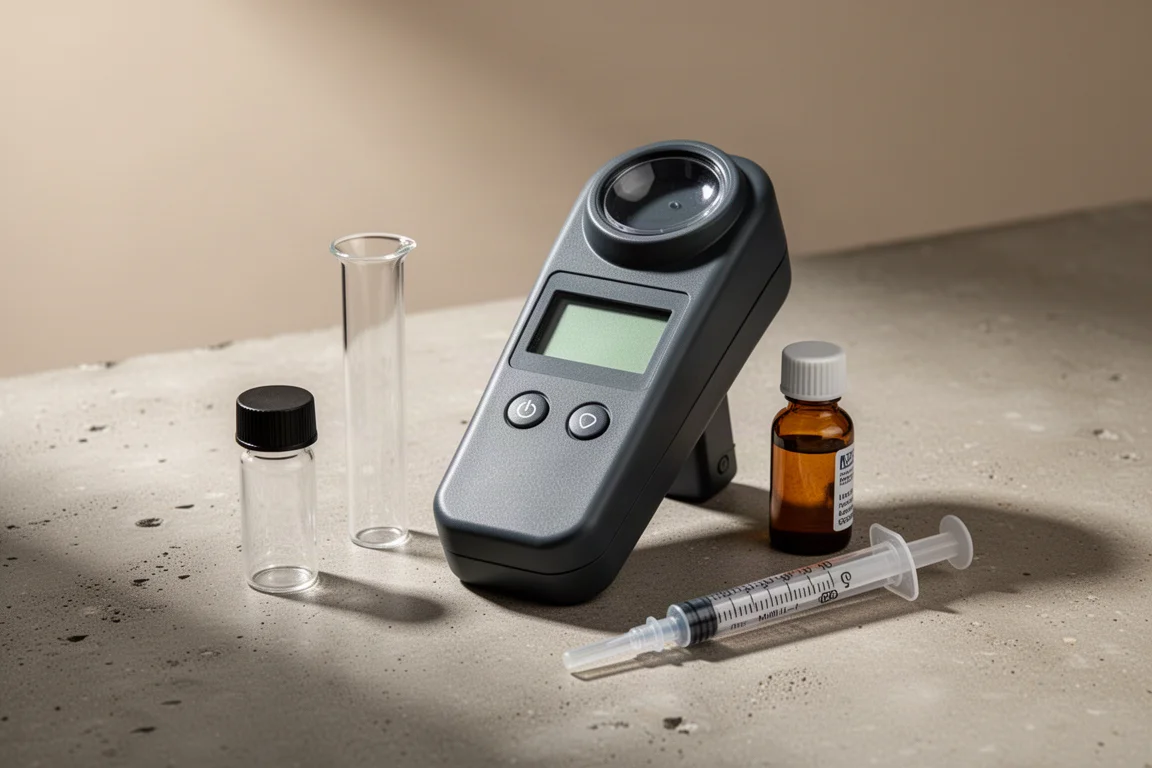
Everything needed is included. The hard case contains the alkalinity checker itself, two cuvettes with caps, a bottle of reagent, a one milliliter syringe, and batteries, so there is nothing extra to buy before the first test.
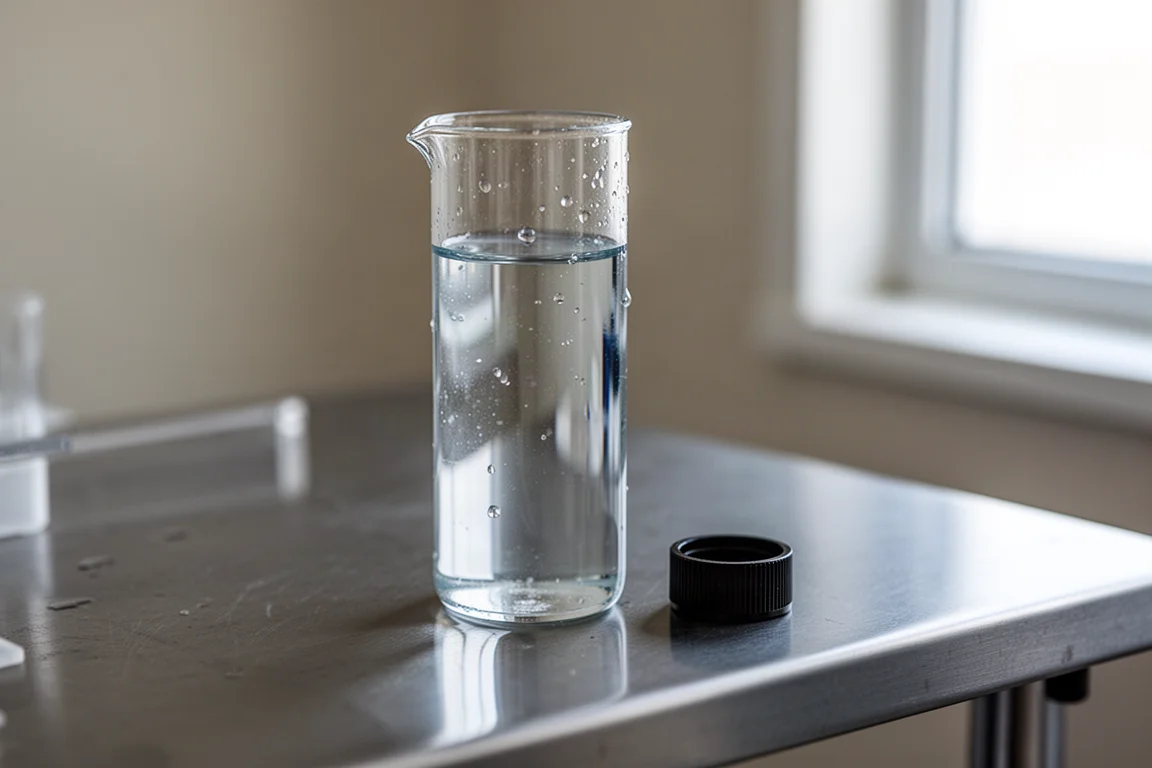
The procedure is short and hard to get wrong. Add 10 mL of sample water to the cuvette and cap it, press the button on the checker, slide in the sample without reagent, close the cap, and press the button again to zero the unit. When it reads add C2, remove the cuvette, add one milliliter of reagent, cap it, invert it five times, then place it back in the checker, close the cap, press the button, and your alkalinity reading is displayed in dKH.
That combination of speed and consistency is what makes frequent testing realistic rather than aspirational.
Consistent, Operator-Independent Results
Titration kits introduce several places for error. The endpoint color is open to interpretation, drops can be added too quickly and skipped past, and it is not always obvious which part of the plunger the reading should come from, or how to compare the amount of titrant used against the chart. Hand the same titration test and the same sample water to five different people and the results can vary considerably.
The checker replaces all of that judgment with a digital number. It has been proven to provide consistent readings regardless of experience level, and it is what is used to keep tabs on dozens of tanks at a major reef supply retailer. For anyone who wants confidence that a reading means what it says, that is the core value.
Low Cost Per Test Regardless of Alkalinity Level
Reagent cost stays predictable. Running costs work out to as little as 36 cents per test, and that figure does not change with your alkalinity level.
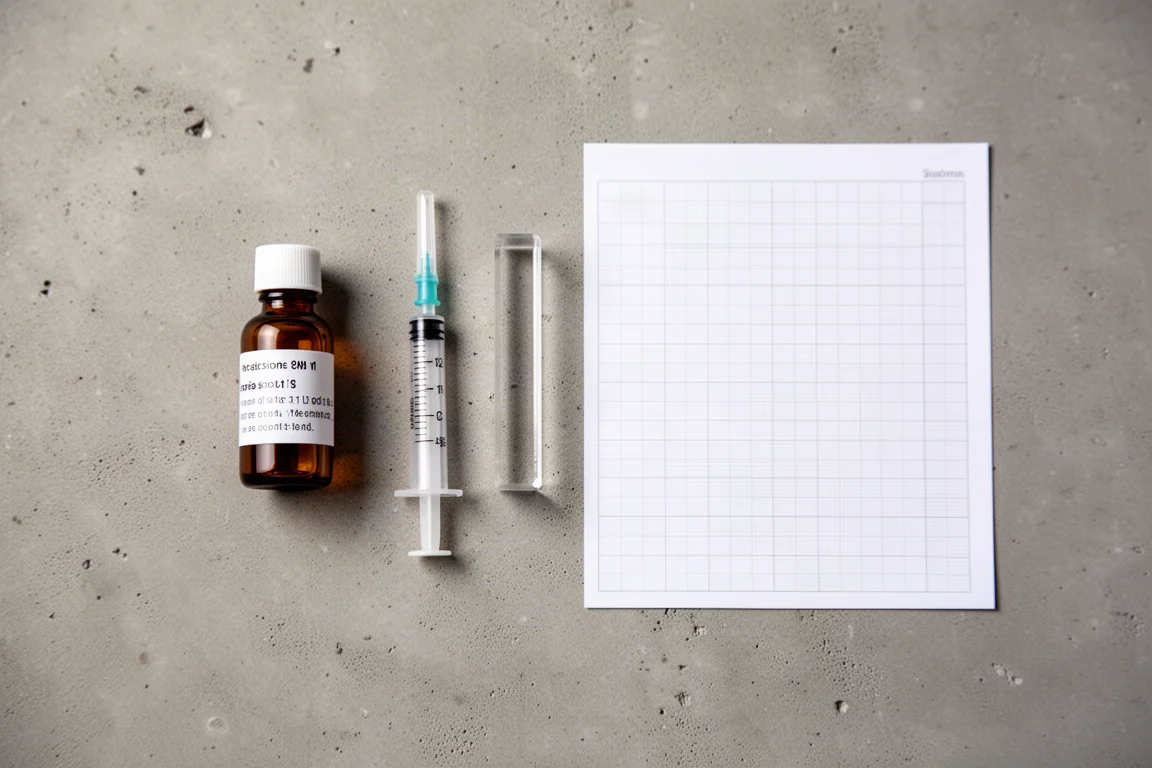
That matters if you keep alkalinity on the higher side. Titration based test kits consume more reagent to read those higher levels, which means fewer tests per bottle of reagent. The Hanna 25 test reagent will perform 25 tests no matter how high your alkalinity sits, so a preference for higher values does not quietly shrink the number of tests you get.
Working through a bottle at a steady, known cost per test makes it easier to plan a testing schedule and stick to it rather than rationing reagents between water changes.
Things to Consider Before Buying
The checker still needs reagent like any test kit, so keep a spare bottle on hand before you run out. A missed week of testing is exactly the kind of gap that lets alkalinity drift out of range.
It is also a dedicated alkalinity tool. If you want to track calcium, magnesium, or other parameters, you will still need separate kits, and many reef keepers pair this checker with other test methods rather than replacing everything at once.
Finally, the readings only help if you act on them. The checker tells you what alkalinity is; deciding how to correct it is still your call, and dosing changes are best made gradually so the tank has time to respond.
Buying Advice
This checker earns its place through reliability rather than features. If you want an alkalinity test that is fast, easy to read, and consistent from person to person, with a predictable cost per test, it is a straightforward purchase: the hard case, two cuvettes, reagent, syringe, and batteries arrive together, so you can run your first test the day it lands.
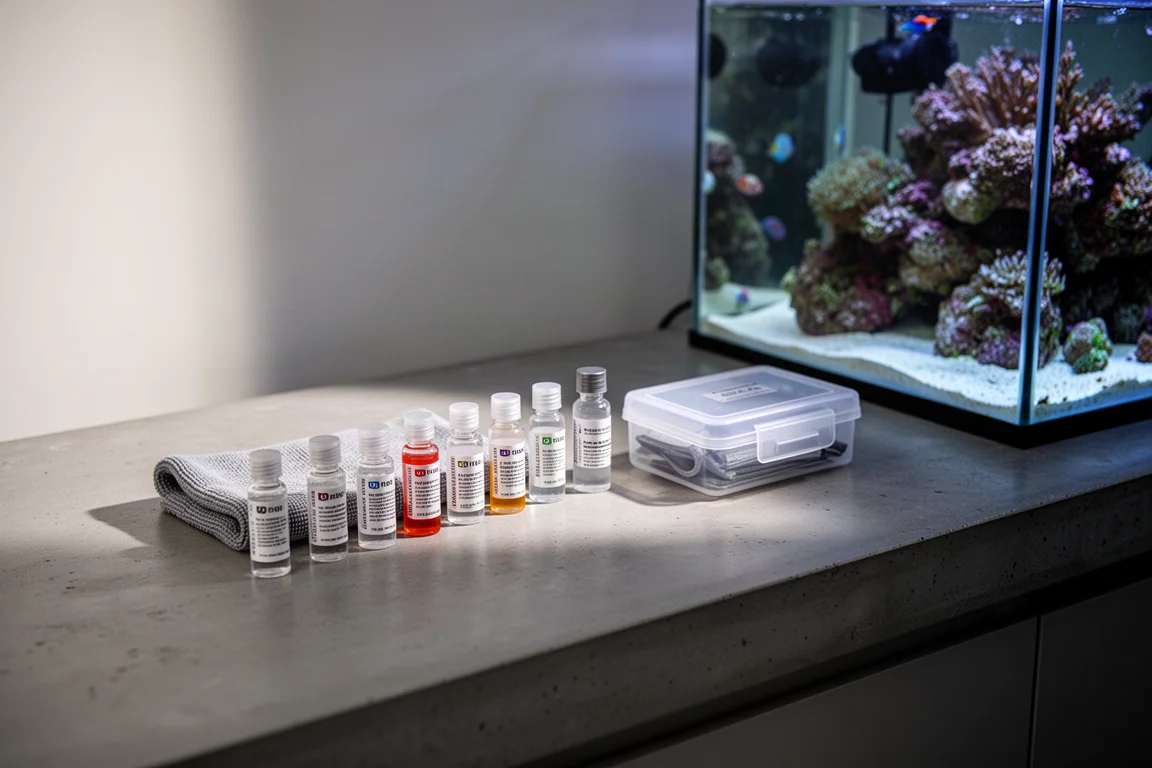
If alkalinity testing has always felt like a chore, or if you have never been fully confident in your titration results, this is the upgrade that changes the routine. Testing frequently is the part that keeps a reef stable, and this is the tool that makes frequent testing realistic.
Conclusion
Alkalinity is one of the clearest indicators of coral health and growth, and it moves quickly enough that regular testing matters. The Hanna Alkalinity Checker answers that need with a procedure that takes as little as 30 seconds and a digital readout in dKH, alongside a measured variance of only 0.3 dKH in comparison testing and a cost per test that stays the same at any alkalinity level. For reef keepers who want accurate alkalinity numbers without the guesswork, it is a sensible, well-proven choice.
Product link
View more details for Hanna Alkalinity Checker
This product is mentioned in the review. Check the specifications, options, and compatibility before buying.
View more details for Hanna Alkalinity CheckerFurther reading
Related Reviews
Aquarium Equipment
Adaptive Reef Controller Cabinet Review: A Practical Home for Reefing Gear
A flat packed, reefing specific controller cabinet with a waterproof PVC build, magnetic front access, and a customizable faceplate system.
Aquarium Equipment
AF4 Review: An Automatic Frozen Food Feeder That Keeps Feeding on Schedule
A closer look at the AF4 automatic frozen fish food feeder, covering its 50-cube reservoir, 21-day food life, self-rinsing cycle, and the accessories that shape a real setup.
Aquarium Lighting Equipment
Apogee One PAR Meter Review: Measuring Aquarium Light Without Guesswork
A handheld PAR meter for reef aquariums, who realistically benefits from owning one, and the practical habits that keep its readings useful.